“A system is corrupt when it is strictly profit-driven, not driven to serve the best interests of its people.”
– Suzy Kassem
(This blog post previously appeared in ROSE Magazine.)
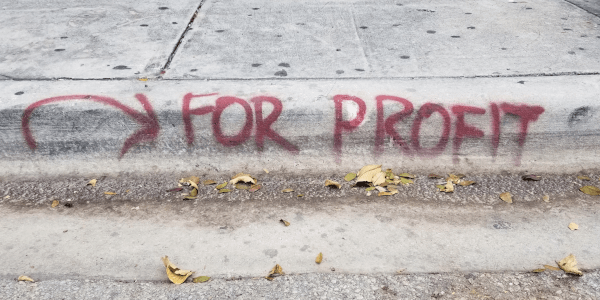
Scotland is one of the most foreign-owned countries in the developed world and the consequence of this is the loss of more than £10 billion pounds every year mostly as a result of shareholder dividends and other forms of profit extraction.
This is the conclusion of my latest policy paper for Common Weal titled Profit Extraction: How foreign ownership drains Scotland’s wealth and is based on recently updated data from the Scottish Government as well as data from the World Bank.
Those who watch economics news and statistics will be familiar with Gross Domestic Product – GDP – as a measure of the economy (even if only to the level held by many politicians who believe that the sole measure of “success” is if GDP went up). This number is inadequate in many ways, not least because it fails to measure the economic “value” of many things like maintaining a home or unpaid care, but it also doesn’t fully capture how the economy of a country interacts with the rest of the world. In essence, GDP measures the value of economic production within a country but doesn’t care who creates that value or where it goes. Another measure, Gross National Income, takes a slightly different track by including data on how value is moved in and out of a country. If a company operating solely in Scotland creates £100 of value, then it will increase GDP and GNI by £100. If that company had a subsidiary in another country and it took £10 from that office’s profits and brought them back to the HQ in Scotland then Scottish GDP would increase by £100 (the value created in Scotland) plus another £10 (the value of the profits imported). The reverse would be true if a foreign company took profits from its Scottish outpost and shipped them back to HQ.
The latest figures from the Scottish Government – published in June 2023 but only presenting data up till 2021 – showed that while £26.4 billion was imported into Scotland in 2021 – largely through investments and wages paid to workers in Scotland from HQs outwith Scotland – we also saw £36.5 billion drawn out of Scotland (largely through profits and repayments of investment loans). In short, £10.1 billion was extracted from Scotland in 2021. For every £20 pounds of economic value created in Scotland in that year, £1.12 was net exported outwith Scotland.
The Scottish Government data covers the entire Devolution period from 1999 till 2021. Scotland saw a profit extraction deficit in every one of those years and a total extraction of £277 billion. More than a quarter of a trillion pounds has been extracted from Scotland since the start of devolution.
Why is this happening?
Part of it is a consequence of Scotland’s integration into the UK – which itself runs an economic model based almost entirely on wealth extraction into the core of London and the South East of England – but this has been a decreasingly important factor as the balance of profit extraction has been shifting from extraction to the rest of the UK to extraction outwith the UK to the rest of the world.
The largest part of the problem is the lack of public ownership in critical assets like energy. Despite now-broken promises from the Scottish Government and despite a consensus of agreement across all of the left-of-centre political parties in Scotland, we currently do not have a national public energy company. The result of this is that our energy infrastructure is largely owned by foreign multi-national companies (for example, Scottish Power is owned by Spain’s Iberdrola whose major shareholders include the sovereign wealth funds of Norway and Qatar as well as American hedge funds like Blackrock) or they are owned by foreign public energy companies like Norway’s Equinor or Denmark’s Ørsted. A substantial chunk of your energy bills are ultimately exported from Scotland to either line some shareholder’s pockets or to actively subsidise the public services of the countries who kept their energy in public hands.
This is made worse by the Scottish Government’s current attitude towards economic development in Scotland which is far too focused on “Inwards Investment”, that is they celebrate companies based outwith Scotland coming in with investment cash to either build or, more likely, to buy up existing assets. That Inwards Investment always, by definition, demands future Profit Extraction so increasing the former now can only ever make the problem of the latter worse. We no longer celebrate companies being founded in Scotland, we instead celebrate when they are bought out. We should instead be using vehicles like the Scottish National Investment Bank to build our domestic economy not for ‘supercharged growth’ but for resilience and sustainability (words that are anathema to shareholders who only demand ever higher dividends).
The level of profit extraction from Scotland is far too high for a country of our size and economic development (most countries with our GDP/capita are net importers of profits). This should be politically, socially and economically unacceptable and its reversal should be considered a core part of strategic economic planning going forward.
Discover more from The Common Green
Subscribe to get the latest posts sent to your email.
 The Common Green