Covid lessons should have been learned in real time

“A man may plant a tree for a number of reasons. Perhaps he likes trees. Perhaps he wants shelter. Or perhaps he knows that someday he may need the firewood.” – Joanne Harris

This blog post previously appeared in Common Weal’s Daily Briefing newsletter. Sign up for the newsletter here.

If you’d like to support my work for Common Weal or support me and this blog directly, see my donation policy page here.

A stock photo of vials of Covid-19 vaccines

Common Weal looks at the second report of the UK Covid Inquiry with some frustration. It’s not that we don’t agree with the findings, its that we were reporting on these issues in real time. There is no finding in this report that Common Weal did not raise at the time.

We believe there is a conclusion to be drawn from this; society needs more than a small political class talking to a small community of corporate and public sector leaders in private and a small media class in public. We need national debate to include many more voices and perspectives and for those to be taken seriously.

Let’s look at three of the key findings. First, that we were lax to begin the lockdown and poorly prepared for it when we did. This is something Common Weal identified early. We were warning that we should have moved to lock-down early in March 2020 and had already been raising fears the previous month.

By 16 March 2020 we were utterly bemused at the decision to allow 9,400 people to attend a Lewis Capaldi concert in Aberdeen less than a week before we were in full lockdown. We were issuing almost daily warnings in the week running up to lockdown. And then, when lockdown started, Common Weal warned that the UK Government was making a mess of it and that Scotland’s determination to stick to a ‘four nations’ approach was a mistake.

So when Scotland gradually started to diverge, we warned that it was too little too late. Again, as we approached the end of the first lockdown we warned that nothing like sufficient preparation had been made to suppress the virus once we were (partially) reopened.

But it is perhaps the second main conclusion that is most important here – the failure of testing. The difference between needing one lockdown and needing multiple lockdowns was the extent to which we could suppress the virus in the interim period via a testing regime. The entire first lockdown should have been focussed on developing a comprehensive approach. We warned this at the time.

Yet against all the global public health advice, the official Scottish Government position was that “testing is a distraction”. This was inexplicable and we were so concerned that Common Weal strayed out of our comfort zone to produce a public health policy paper in which we set out a testing regime we thought had the best chance of successfully suppressing Covid.

We published it as Ending Lockdown. The Scottish Government ignored it and so as the second lockdown approached we produced a more detailed version. Eventually a watered-down version of our proposals was belatedly put in place. We continue to believe that there remains a chance that the second lockdown could have been avoided altogether if a more rigorous approach was taken.

It is also worth noting that while Common Weal suggested that an elimination strategy was the only one that had actually worked (in New Zealand), it would take steps the Scottish Government would see as too radical to achieve that – closing roads outside airports, ports and the border and putting ‘testing borders’ in place.

For some reason the then First Minister thought it was possible to start talking about a strategy of elimination without taking any of these measures. That she did anyway certainly justifies the criticism of this stance in the report. It was vainglorious rather than credible.

And that leads to the third main conclusion – that there was a narrow and closed-off leadership approach which harmed policy creation, and that the First Minister spent too much time doing television briefings which should have been shared among other senior figures.

Again, this problem was quite clear at the time and something that we commented on a number of times but was not picked up in wider media debate. This resulted in a failure to scrutinise what was actually happening.

There are other issues we expect the Scottish inquiry to cover, including the cover-up of the first outbreak of Covid which took place in a large corporate hotel and policy of sending Covid-positive patients into care homes. Certainly there is no doubt that in Scotland we did not see the utter chaos and rampant corruption that we saw at Westminster, but this is a low bar.

While this report is welcome, we believe that there remains insufficient scrutiny of the extent to which civic Scotland stopped asking questions and stopped challenging decisions for months on end. Common Weal managed to derive policy positions which are now being vindicated from publicly available source material and we did it at the time. Nothing in the inquiry report published yesterday cannot be found from the content in the links above.

The problem is that the sense of national emergency, the political culture of the Sturgeon court, the legitimate universal fear and uncertainty that the lockdown induced and unhelpful and uninformed social media commentary combined to suspend politics and reduce scrutiny at a point where it was never more needed.

What is the lesson we should really learn from the pandemic? Don’t wait for lessons to be learned, pay attention at the time and ask difficult questions. It leads to better decisions. Then again, we did warn about this in the first week of lockdown…
Covid lessons should have been learned in real time

Repowering Scotland – A missed opportunity

“Not knowing when the dawn will come
I open every door.” –  Emily Dickinson

This blog post previously appeared in Common Weal’s weekly newsletter. Sign up for the newsletter here.

If you’d like to support my work for Common Weal or support me and this blog directly, see my donation policy page here.

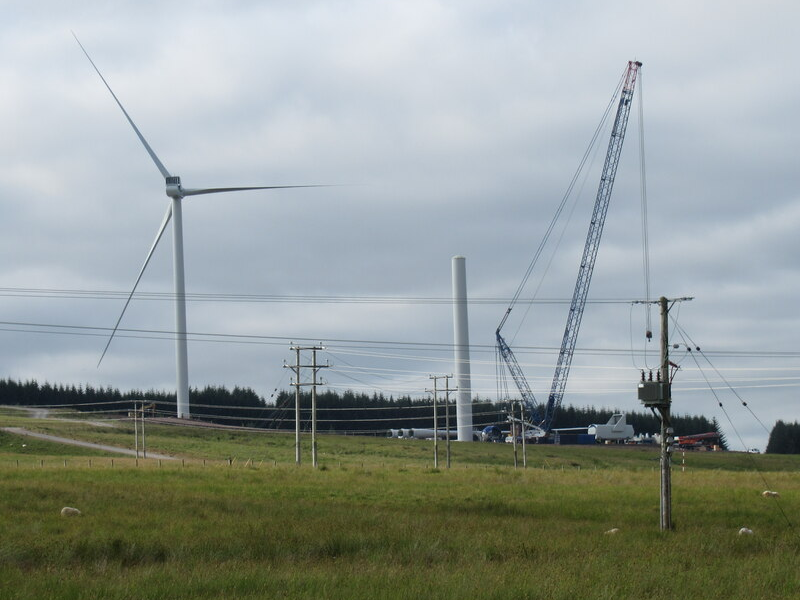
A photo of construction works at Hagshaw Hill wind farm during an extension to the development

Image Source: Alan O’Dowd, Geograph

The Scottish Government has squandered an opportunity to nationalise Scotland’s oldest onshore wind farm and has hailed as a “success” a deal that will see the local community earn below the bare minimum in community benefits.

Hagshaw Hill in South Lanarkshire is a notable name in Scottish energy circles. In 1995 it became the site of Scotland’s first onshore wind farm, developed by Spanish-owned multinational company Iberdola under their subsidiary Scottish Power Renewables. It’s also visible from my village, so has formed part of the backdrop of my horizon for three quarters of my life.

Technology, as it is want to do, has moved on the previous thirty years and the turbines on the site have aged to the point of needing to be replaced. Rather than merely replace them like-for-like, however, the 26 turbines have been replaced by 14 new, larger and more efficient modern ones. The site promises to generate around five times as much energy as it previously did despite there being fewer turbines.

This process of replacing an existing wind farm with newer, larger turbines is known as “repowering” and Scotland is embarking on a wave of these projects as the first generations of renewable generators reach their end of life. This is in parallel with the ongoing expansions of new generation sites that will secure our transition to a fully renewably powered nation.

However, the Scottish Government has dropped the ball in at least two major ways when it comes to this site and it does not bode well if this shapes the precedent of the ones to follow.

First, is the level of community benefit paid by the company to local people whose environment is effectively being rented for the purpose of electricity generation. The villages surrounding the site – Douglas, Lesmahagow and Coalburn (my own Kirkmuirhill is just outwith the catchment area) – will see their shared community benefit increase as it is linked to the maximum power capacity. They will now receive around £400,000 per year.

Which sounds like a lot and it is a substantial uplift from the approximately £15,000 per year they were receiving up till now, but it works out at only £5000 per MW of turbine capacity. This is the bare minimum level of community benefit that the Scottish Government has recommended for many years now. If the level had merely been uplifted to account for inflation since it was first introduced, then it would now be closer to £7,500 per MW per year or closer to £600,000 per year for the communities – enough to fund at least half a dozen community development officers or to retrofit and insulate half a dozen houses every year to lift the most deprived people in what can be a substantially deprived area out of fuel poverty forever.

In our response to the Scottish Government’s consultation on community benefits we stated that the £5000/MW number was far too low – this point has been acknowledged and accepted by Ministers when I’ve spoken to them about it – and that it’s no longer appropriate in general anyway. A sum based on the maximum MW capacity of a generator doesn’t take into account the capacity factor of the generator (the amount of actual energy it generates on average over a year.

For wind, this can be around 30%. For solar panels, it can be 10-20%) and nor does it take into account financial factors like the cost to build and maintain the generator or the price of electricity (when the price of electricity goes up, wind turbine owners make more profit and the community pays higher energy bills but the community benefit payments stay the same).

Instead, we called for the local community to be granted an ownership stake in the turbines – say, 10% – instead of making benefit payments. This idea has had some traction within the Scottish Government and the previous First Minister Humza Yousaf appeared to be particularly keen on it but the current administration appears to have both ignored that idea and has apparently ignored their own consultation on reforms to the benefit scheme.

This error will cost the communities around Hagshaw Hill several hundred thousand pounds per year – at least – for the next several decades meaning that millions of pounds that could have been invested in the area – an area that was shattered by the loss of coal mining at the end of the last onshore energy boom – will instead likely be granted as dividends to shareholders including US asset management firm BlackRock, the Norwegian Pension Fund and Qatar’s National Wealth Fund.

“Scotland could, in effect, renationalise all of our energy for free.”

The second error lies in the “repowering” itself. Many wind farms in Scotland are leased for a specified length of time. In this case, the old turbines were previously granted a 30 year lease and the new turbines have been granted the same. This is not always the case – it’s not unusual for operators of wind farms to be granted a 60 or 99 year lease with the anticipation that the lease would cover several generations of turbines. Additionally, the leases often specify a maximum capacity per turbine as part of the contract (this is to satisfy planning permission limits based on the visibility of the turbines). If a developer wishes to extend the use of the site beyond the term limit OR if they wish to repower the site above the capacity limit, then they are required to apply for a new lease contract.

In this case, the contract was simply given back to Scottish Power but it would have been perfectly legal for the Scottish Government to use the moment of repowering to hand the operational contract instead to a Scottish publicly owned energy company. Even if that company had to contract Scottish Power to build the new turbines for them, this would have allowed Scotland to bring the entire farm into public ownership, not merely the 10% that they could have (but didn’t) grant to the community.

This could be done with every renewable site in Scotland – both on- and offshore. Over the course of 30 years or whenever new technology makes it feasible to replace an older generator, Scotland could progressively transition out private energy sector into a public one. The kicker is it wouldn’t cost you, the Scottish taxpayer and energy consumer, a single penny more than it is going to cost you to not renationalise our energy. The turbines are still being replaced and the cost of the replacement will still form a chunk of your energy bill regardless of who owns the turbines. Scotland could, in effect, renationalise all of our energy for free.

Unfortunately, the Scottish Government has chosen to not do this. The official position is still that Scotland doesn’t have the power to bring onshore wind energy into public ownership (despite Orkney Council doing just that within the past month). This too will cost Scotland dearly, not just in terms of the lost opportunity bring vital sectors into public ownership, but also in terms of the loss of ability to use the profits to improve the lives of people who live under the turbines and to take the edge off the bills of everyone in Scotland who pays for the energy generated here but can only watch as the profits from those bills leave for Spain, the US, Norway, Qatar and elsewhere.

Thirty years ago, Scotland began a renewables energy transition that led to us making the same mistakes as we did with coal and oil. Now, as the turbine spins back around and we begin the second phase of that transition, it appears that we’re making the same mistakes all over again.

When banks own housebuilders, house prices go up

“A banker is a fellow who lends you his umbrella when the sun is shining, but wants it back the minute it begins to rain.” – Mark Twain

This blog post previously appeared in The National as part of Common Weal’s In Common newsletter.
If you’d like to support my work for Common Weal or support me and this blog directly, see my donation policy page here.

The way we build houses in the UK could be costing you an average of almost £67,000. This could be fixed by making housebuilding a public infrastructure project rather than a means for very rich shareholders to transfer your wealth to themselves.

Volume housebuilder Taylor Wimpy released its annual report for 2024 yesterday and the details in it, which look excellent from the viewpoint of a corporate shareholder, reveal much that is broken with the UK’s housing sector.

The first important number in their report is the number of houses completed. Taylor Wimpy is one of the UK’s largest volume housebuilders – likely to be in the top three this year in terms of completed projects – yet built only 10,593 houses in 2024 – a substantial reduction over the previous three years (though they claim to be on track for about 14,000 this year).

The second is their claimed operating pre-tax profit of £416 million. The word “profit” is a very fluid term in the world of corporate accountancy as it’s relatively easy for companies to move money around via “one time charges”, inflated director bonuses or “loans” to subsidiaries or parent companies, so a better number to judge a company like this is the money it granted to its shareholders as a dividend as this represents money extracted from the company and not reinvested in any way (not even in the form of the labour of those hypothetical overpaid directors). The dividend for shareholders in 2024 was £339 million.

This means that the houses built by Taylor Wimpy in 2024 generated a dividend to shareholders of an average of almost exactly £32,000 per house. This is how much lower house prices could have been had the company not been in the business of extracting profits via dividends. Had the company been a not-for-profit business entirely, then its houses could each have been almost £40,000 cheaper.

It gets worse for you, the house-buyer, because it’s very likely that you’d be taking out a mortgage to buy that house and you’ll be required to pay interest to the bank on that loan. £40,000 added to a 25 year mortgage at 4.5% interest will result in you paying back £66,700 over that time. To say again, this isn’t the cost to you for paying for anything to do with the construction of the house itself. This is the cost to you for paying interest on the additional loan you took out to pay for the profits of the company, most of which were paid out as dividends to the company’s shareholders.

And who are those shareholders? Our old friends, US based asset managers BlackRock and Vanguard Group are near the top of the heap, owning about 15% of the company between them. Several of the other owners are banks like HSBC and Barclays. This means that if you have a Barclays mortgage, then part of the interest you are paying on your mortgage is being used to service the loan you took out to pay the dividend they gave to themselves to inflate the price of your house.

If Scotland had a National Housebuilding Company as we’ve advocated for the best part of the last decade, then we could be building houses at as close to not-for-profit as possible and could reinvest any surpluses into other public infrastructure to make the places around our houses and the services we need in our community more resilient.

If we built the houses to the plan proposed in Good Houses for All, then they would be constructed at a far higher quality than the conventional timber frame “diddy boxes” (our Board Director and premier architect Malcolm Fraser’s not-so-affectionate name for them) favoured by the volume development sector and would force remaining private developers to drastically improve the quality of their constructions (doing so wouldn’t even reduce their profits because such buildings are now cost-competitive with the diddy-boxes and then create further savings in terms of energy costs).

“If the whole of the UK brought in a Land Tax equivalent to our suggested baseline value of 0.63%, then Taylor Wimpy would owe an additional £2.14 million per year on its banked land”

A final point to note in their report is the amount of landbanking they do. Landbanks are when a company buys up land but then does not build on it for an extended period of time (or sometimes never, or the land itself becomes a commodity to be traded between companies). The report states that the company currently owns £3.4 billion worth of land spread across 79,000 “short term plots” and 139,000 plots in their “strategic pipeline”. They also purchased more plots last year than their number of completions so the total size of their landbank has increased. Given their completion rate over the past few years, they could stop buying land for around 20 years without risking running out.

Decreasing the supply of land without putting it to the intended use of housebuilding is a major factor not just in inflating the price of land but also actively preventing land from being used for building either by other volume developers, by Local Authorities or even by enterprising self-builders. Scotland should consider bringing in a Land Tax to charge companies for the land they own and should consider an additional surcharge on the land tax to account for vacant or landbanked land (which would encourage developers to build so that they can get the land off their books). If the whole of the UK brought in a Land Tax equivalent to our suggested baseline value of 0.63%, then Taylor Wimpy would owe an additional £21.4 million per year on its banked land – still a small fraction of its overall profits.

The way we build houses in this country is badly broken and has resulted in volume developers constructing cheap, cold, damp houses that are not fit for the purpose of living because the purpose of the houses is to extract wealth and deliver it to shareholders. Until we move to fix that and to end the financialisation of housing, we’ll all keep paying a very real and very substantial price for the roof over our head.