The Scottish Parliamentary Election 2026:- The Manifestos

“Politics is the art of looking for trouble, finding it whether it exists or not, diagnosing it incorrectly, and applying the wrong remedy.” – Ernest Benn

This post and the research underpinning it is undertaken in my own time and outwith other political work that I do. It is presented here free to access as a public service but if you’d like to throw me a wee tip to support this work, you can here.

It is that time again. Scotland faces another election for its devolved Parliament at Holyrood. As I have done in the previous several Scottish and UK General Elections, I want to collect here as many of the political party manifestos as I can so that you, the voter, can find them all in one place as they can sometimes be surprisingly difficult to find (they also tend to disappear from the internet after the elections which can make it difficult to hold parties to their promises later – but that’s for a future article.

The Scottish Elections tend to be quite vibrant in terms of the number of parties involved and this year promises to shake the main parties to a degree not seen in generations so I want to give voters the change to see as broad a set of candidates as I can.

Unfortunately, there are limits. It’s difficult in this format to present Independent candidates fairly as they often don’t present a traditional manifesto and even when they do, by definition, they can only stand for one seat in Scotland (constituency or regional).

That said, if you spot a political party manifesto out there in the wild that I haven’t yet listed below, please let me know. The criteria for entry are fairly simple:
1) The party must be registered as a political party with the Electoral Commission.
2) They must be standing at least two candidates across at least two constituencies and/or regions (one person standing in both a constituency and a region doesn’t count).
3) They must have published a manifesto of election promises and commitments to voters. It needn’t be called a “manifesto”. Alternative names like “contract”, “election promise” or similar may be similar enough for inclusion.

This means that “manifestos” produced by trade unions, think tanks or third sector organisations who are seeking to influence politics but who aren’t standing candidates under their party banner won’t be included.

This is going to be live article for the next several weeks to follow me on social media or check back here regularly for updates.

Note:- Parties marked in square brackets are placeholders for now and the prospective list may change as manifestos are published, parties emerge or, indeed, parties drop out of the electoral race. If a party produces several focused manifestos (e.g. a Manifesto for the Islands, or a Manifesto for Young People) then I may link to them, but the main banner image shall point only to their primary manifesto.

Incumbent Parties

The following parties were represented by at least one MSP at some point during the 2021-2026 Parliament and are standing at least two candidates in the upcoming election. These parties may not be standing in all constituencies or electoral regions.

[Scottish Conservative and Unionist Party]

[Scottish Green Party]

[Scottish Labour Party]

[Scottish Liberal Democrats]

[Scottish National Party]

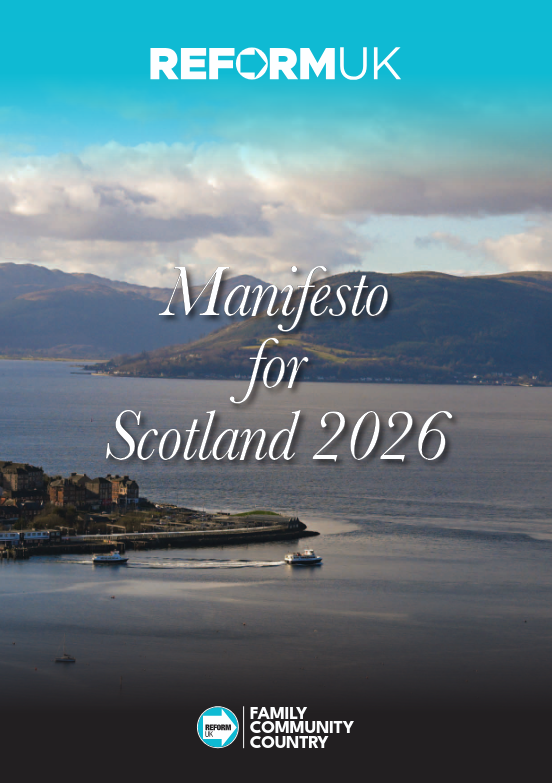
Reform UK
Insurgent Parties

The following parties were not represented in the 2016-2021 Parliament. These parties may not be standing in all constituencies or electoral regions.

[Check Back Soon]

[Check Back Soon]

[Check Back Soon]

[Check Back Soon]


A regulated economy is one that works for all of us

“They’ll re-regulate within ten years. There’ll be a string of crashes, and they’ll do it. the free marketeers will scream, but the fact is, free markets don’t provide safety. Only regulation does that. You want safe food, you better have inspectors. You want safe water, you better have an EPA. You want a safe stock market, you better have an SEC. And you want safe airlines, you better regulate them too. Believe me, they will.” – Michael Crichton

This blog post previously appeared in Common Weal’s weekly magazine. Sign up to our Daily Briefing and Weekly Magazine newsletters here.

If you’d like to support my work for Common Weal or support me and this blog directly, see my donation policy page here.

It was a sombre weekend for me last week. The fire at Union Street in Glasgow hit me hard. I know it was by far not the worst disaster happening even at that moment – as Trump and Netanyahu’s illegal war spread burning oil rains over Tehran in a manner that would surely be an example of a prosecutable offence under the proposed Scottish Ecocide Bill on top of war crimes and crimes against humanity.

But still, that corner of Union Street was Common Weal’s office for several years and I realised that I’m the only member of the team remaining who worked in it on a daily basis (Robin had always habitually worked from home even before the Covid pandemic pushed the rest of us to do it too) and so the pang of personal connection was particularly strong.

As one of our Daily Briefings said this week, there are a lot of questions to be asked about the cause of the fire and many that may never be answered. If early reports are accurate though, it may well be that the vape shop where it started was not properly following business regulations and, simultaneously, the regulations around shops that sell highly addictive and highly flammable substances like vapes is nowhere near strong enough given the risks that the devices pose.

(By the way, if you are subscribed to Common Weal’s weekly Magazine but not yet subscribed to our Daily Briefing newsletter then you’re missing out. Every weekday we’ll send you our take on a news story that caught our eye that morning – one that you may not have noticed or may not have clocked the particular significance of from a Common Weal focus. Subscribe to the Daily Briefings for free here. And if you like it, please consider sending us a wee donation to help us keep it going.)

There are going to be questions in the coming weeks, months and possibly as part of the upcoming Scottish Parliamentary elections about how to better regulate these shops specifically. Even the Reform Party is calling for a review of regulations and they have usually been a party ideologically wedded to the idea that “cutting red tape” is the way to boost the economy.

And this is perhaps the core of the issue. The call for more or fewer regulations in anything from businesses, through banking, to regulations over cross-border food imports and exports, or even the regulation of government itself, appears to run like a swinging pendulum. When things are going fine, people think that the regulations are holding them back and call for the red tape to be cut. We become complacent and perhaps forget that the problems the regulations prevent ever even existed – almost like living in a world where people call for cuts to the fire service because it’s been years since they saw a building burn down.

When things crash (as they so, so often do) people wonder why the regulations didn’t save them and want more to prevent the causes of the previous crash happening again. This works until a different crash blindsides everyone who wasn’t listening to the folk who were warning about it, or folk start to feel safe and start talking about cutting red tape again.

There’s another aspect of regulation that sits underneath that broad cycle of tying up and cutting the red tape and that’s our willingness to enforce the regulations that do exist. This, too, could run from vape shops not being checked to make sure they are registered out to ensuring that the food being imported into the country are actually being checked to make sure they are meeting agreed standards rather than just being ‘waved through’ because there just aren’t the resources there to properly secure the border.

A regulation that isn’t enforced is even worse than one that doesn’t exist because it’s often not never enforced but instead merely enforced selectively. Which means enforced for us, but not those with the money or the power or the “too big to fail” scale to avoid having to play by trivialities like “the rules”.

“We can no longer allow the failure to regulate to simply be priced into the cost of doing business.”

Common Weal has been working on a broad group of policies around the topic of governance – mostly focus at Government itself but this all applies everywhere too. One of the foundational principles is that “no-one should govern themselves”. This means that government isn’t allowed to vote against transparency measures under the excuse that the mandatory rules merely replicate voluntary rules that they’re not following.

It means that the boards that are supposed to govern our regulatory bodies can’t be solely conscripted from the ranks of the bodies they are supposed to be regulating. It means that conflicts of interest must be rooted out and it means that lobbyists who advocate for changes to or immunity from regulations must do so in plain site of our democracy – we now argue that the Lobbying Register is insufficient and that ALL lobbying meetings with the Government (even ours) should be recorded and posted for public scrutiny.

And when it comes to regulation of the private sector, we can no longer allow the failure to regulate to simply be priced into the cost of doing business. There needs to be adequate deterrent and punishment for those responsible for failure that doesn’t just take the form of a fine that is smaller than the cleanup costs. That way lies the principle of CATNAP – Cheapest Available Technology, Narrowly Avoiding Prosecution – where companies don’t even just barely meet what regulations there are but happily sell us illegal products from unsafe vapes to unsafe houses knowing that no-one is about to stop them from doing so.

It’s said that “every rule is written in blood” and this is very much true when it comes to regulatory practices and especially with health and safety. Those who break out the scissors must be able to articulate why those rules came about and what they were designed to protect us from before being allowed to start cutting or even to just stop enforcing what we have – especially in the name of profit.

Otherwise, when the pendulum swings again, the blood that the next set of rules will be written in might well be our own.


Process over policy was never a route to Indy

“Il nous faut de l’audace, encore de l’audace, toujours de l’audace!” – Georges Jacques Danton

This blog post previously appeared in Common Weal’s weekly magazine. Sign up to our Daily Briefing and Weekly Magazine newsletters here.

If you’d like to support my work for Common Weal or support me and this blog directly, see my donation policy page here.

The Scottish Parliament’s Constitution Committee has recently concluded a short investigation into legal mechanisms for triggering a second independence referendum. The final report and the reports of the evidence sessions are worth reading, but the conclusions are fairly simple albeit in a direction that probably won’t please anyone who has an especially vested interest in the process for Scottish independence.

Essentially, the principle of becoming independent is itself legal (as opposed to many states which have constitutions that explicitly prohibit the secession of components of the state) but there is currently no legal mechanism in place that would allow for Scotland either to unilaterally declare independence nor to unilaterally hold a public referendum (even an “advisory” one) on the question of Scottish independence. This stands in contrast with various other states which explicitly legislate to allow components to secede either unilaterally or provide a mechanism to translate the democratic will of their residents into the legislative process of independence.

Instead, the processes which would allow for independence cannot be enacted unilaterally and may only be enacted via the UK Government or UK Parliament. This includes a mechanism similar to the one in place for Northern Ireland which would allow for a poll on leaving the UK and reunifying with Ireland if public sentiment makes it seem likely to the UK Secretary of State for Northern Ireland that such a poll would return a result for reunification. That’s a slightly technical wording but the crucial point is that public polls in favour of reunification are only a mandate for a referendum if the UK Government chooses to not be wilfully blind to them – the veto is still in their hands.

As is the legislative process of becoming independent – that can’t be done by the Scottish Parliament passing a ‘Divorce Act’, but instead by Westminster passing legislation to enact independence. The obvious route to my mind is that they would amend the Scotland Act to delete Schedule 5 and so remove the list of reserved powers – essentially devolving everything not already devolved.

Then it might add Scotland to the Statute of Westminster 1931 which essentially says that new UK laws won’t apply to Dominions and the Commonwealth nations unless they explicitly request or consent to it. Only then could this be followed by a Scottish Act or Constitution Article to make it unlawful to request or consent to such laws plus further laws to remove the role of the UK Supreme Court and other state apparatus that may remain plus something to clarify questions around Crown succession or to remove the Magic Hat entirely and become a Republic.

Another crucial conclusion is that there is no international law that can be applied to legislatively compel Westminster to act on public sentiment or on the calls for a referendum. The UN isn’t going to send in blue-helmeted peacekeepers to enforce some hypothetical ‘Decolonialisation Mandate’ or something like that.

Instead, the Committee concludes, that the question of independence was less a legislative question but more a diplomatic and democratic one. Essentially, that independence could be legislated for should it need to be, but this is only going to happen in practice when the UK Government decides that it needs to be.

Here’s the thing – This was also pretty much exactly the thought process that went in to us writing our books Direction in 2023 and our policy paper Within Our Grasp in 2019. It’s important to note that the latter paper was written before the Supreme Court ruled that a unilateral advisory referendum would be unlawful – a decision that at the time seemed likely but far from assured and therefore until that moment was ambiguous.

“Our goal should be to set up the situation where Westminster has absolutely no choice but to come to the negotiating table to enable independence because not doing so would be worse for them.”

We recognised long before this Committee was even conceived that the question of independence was going to be more about democracy and diplomacy than sheer legislation and we’ve taken quite some flak over the years from trying to push back against elements of the independence campaign who tried to magic independence into being by finding ‘one weird trick the lawyers won’t tell you about’ that would somehow invalidate the Act of Union and prove that Scotland had, in fact, been independent all along. I remember with wry fondness one person who reacted to my explainer of the legislative process above by calling me a “Colonialist Westminster Shill”.

Wishing independence into being isn’t going to make it happen, but the lack of a clear legislative process with goalposts and milestones isn’t a weakness either. Goodhart’s Law very much applies here in that some process that demands that, for example, public polls show 60%+ support for a sustained period of six months before a referendum can be considered could always be knocked into the long grass by a single 59% poll or – perhaps worse – could bounce us into campaign mode without a plan for the day after (like Brexit). Even the SNP’s foolish target of calling for a referendum if there’s an SNP majority in May grants the UK Government the ability to decline that offer even if every single MSP in Holyrood is openly pro-indy, but only 63 of them are SNP.

Instead we should recognise that the precise legislative formulation for independence is ultimately irrelevant. If Westminster has the ultimate veto over whether or not it goes ahead, then we must recognise that they will always enact that veto if doing so causes them fewer problems than not doing so. This is why Sturgeon’s 2017 demand for a referendum was dismissed with a curt “now is not the time” and every other attempt with even less.

This was the purpose of our book and policy paper. Our goal should be to set up the situation where Westminster has absolutely no choice but to come to the negotiating table to enable independence because not doing so would be worse for them. I’ll leave the details of that strategy behind the links to the book and paper (please go read them and buy the book) other than to say that only one component of it is building the public support for independence to undeniable levels.

We also need to consider building an escalating pressure campaign whereby Westminster essentially realises that governing a Scotland that no longer wants to be governed is more hassle than it’s worth (which, if the propaganda is true, is already not worth much because we’re such a money sink).

We weren’t invited to give evidence to the Committee, despite the detailed work we’ve done on the topic, but if we had been we may have questioned the reason for the inquiry being called. Its conclusion was obvious to us long before it was even started and so should have been obvious to the people who called it. I fear that the inquiry was never designed to be part of a coordinated ladder of escalating pressure but was instead another attempt at substituting process for policy.

There’s a simple test of whether I’m right or not. One that will separate a checkbox exercise designed to let the parties tell potential voters they’re doing something from one where they are actually doing something to bring about independence.

The Committee’s final conclusion calls for the Scottish Government and UK Government to negotiate a pathway to exercising Scotland’s right to determine its constitutional future as a matter of urgency.

The test is this: What will you, the politicians, do when (not if) Westminster once again says ‘No’?

Scotland is already losing out on green energy. Here’s what we can do

“It’s called socialism. Or, for those who freak out at that word, like Americans or international capitalist success stories reacting allergically to that word, call it public utility districts. They are almost the same thing. Public ownership of the necessities, so that these are provided as human rights and as public goods, in a not-for-profit way. The necessities are food, water, shelter, clothing, electricity, health care, and education. All these are human rights, all are public goods, all are never to be subjected to appropriation, exploitation, and profit. It’s as simple as that.” – Kim Stanley Robinson

This blog post previously appeared in The National, for which I received a commission.
If you’d like to support my work for Common Weal or support me and this blog directly, see my donation policy page here.

photo of truss towers

Scotland has an extremely poor track record of benefiting from our own energy resources. The decline of the First Age of energy wealth – based on coal – can still be seen in the scars of deprivation it left behind especially in the Central Belt towns and villages around where I live and where mining was most intensive.

In the Second Age, our oil wealth was – as Gavin McCrone warned – downplayed and then squandered under successive UK Governments while leaving Scotland vulnerable to oil shocks and we’re now seeing how we’re being held liable for the costs (economic and social) of drawing down the sector as it absolutely must be drawn down as the world wrestles with the challenges of the climate emergency caused largely by that oil even as the rich owners of the assets reap the profits and continue to lobby to delay or prevent change.

The problem is that unlike almost every other country that found itself with large reserves of energy wealth, we collectively decided that Scotland shouldn’t own any of it.

Rather than building up a robust public-owned oil sector, the UK Government flogged off the rights to exploit the resources to the lowest bidder, even offering generous subsidies rather than taxing their profits. The downstream infrastructure was privatised too not just sucked vast amounts of wealth into the pockets of billionaires like Jim Radcliffe but also granting them vast political power and the ability to make hypocritical statements about immigration while living the high life in their own offshore tax haven.

The Third Age of Scottish energy is our Green Transition – built initially around our vast onshore and offshore wind resources but now increasingly diversifying into other areas like solar and battery storage.

We see here that Scotland is in the process of losing out once again when it comes to energy resources that, if anything, vastly outstrip anything the oil sector could have ever promised because, unlike oil, the sun and the wind will continue to deliver that energy long after the last barrel of oil is extracted from the ground.

It promised to finally bring some ongoing benefit to communities that would be hosting the generators but even that failed. Neither Scotland nor the UK showed interest in developing public ownership of the assets and the “community benefit” funds were set at the lowest possible level of £5,000 per MW of capacity for wind (not uprated for inflation) and zero for other forms of renewables. It is estimated that a community owned wind turbine generates around 34 times as much revenue for the local community as does a privately owned one that pays its £5,000/MW community benefit. There is some evidence emerging that even this paltry sum is not being met in many cases with The Ferret reporting a shortfall of about £50 million across Scotland’s community benefit funds.

Offshore is arguable worse with the debacle of the ScotWind auction selling off the options to develop one of the largest offshore wind projects in the world in an auction that, for reasons still not adequately explained, set a maximum price cap on bids and potentially cost Scotland anywhere between billions and tens of billions of pounds in upfront capital.

Most crucially of all, we don’t even make the renewable generators and batteries that we don’t own. Decades of climate-denying politicians telling people that we shouldn’t bother trying to avert climate change because China wasn’t doing anything conveniently ignored that China was, in fact, rapidly building up its industrial base and was starting to sell the generators to the world.

So Scotland now imports the materials to build wind turbines that are owned by multinational companies and foreign public energy companies that export their profits elsewhere and pay communities sometimes less than the bare minimum. We don’t even get cheaper energy for it because the UK’s grid and pricing structures are still based on assumptions laid down in the Coal Age.

So what of the Fourth Age of Scottish energy? The thing about the current generation of privately owned energy assets is that they will eventually need to be replaced, and fairly soon – perhaps in 25 years time. This gives us an opportunity to start planning now.

Scotland needs to start building up its domestic wind and solar manufacturing base. We need to use our excellent universities to develop the materials to ensure that those generators are built to Circular Economy standards (current generation fibreglass wind turbine blades are disposable and are sent to landfill after use). We also need to start aggressively bringing assets into Scottish public ownership. Every time a renewable energy lease is up for renewal, it should be transferred to a Scottish public energy company (nationally or locally owned). This can also happen when a site is up for “repowering” – when old, smaller turbines are replaced with larger, more powerful ones but which exceed the previous lease’s maximum capacity terms.

New renewable sites should have their leases signed aggressively in favour of public ownership too. Rather than 60 or 99 year leases that cover the lifespan of multiple generations of turbines, they should be set to as low as 10 years. Enough time for the private developer to recoup their investment but also enough time for the Scottish public sector to take over the site and also make a profit without merely being saddled with the liability of decommissioning as we’re doing with the oil sector.

If any of this is not possible within devolution (some of it certainly is) and the UK is not willing to allow it, then while we are doing what we can, the case must be made for independence so that we can finish the job.

All of this will take time to set up which is why we need to start preparing the ground now. I don’t want to be here in 25 years talking being asked to comment on why we’re importing the next generation of technology and exporting the profits again. If we want to sit under a tree in 2050, maybe the best time to plant it is today.

It’s a lack of will, not consensus, that prevents Council Tax reform

“We need an assembly, not for cleverness, but for setting things straight.” – William Golding

This blog post previously appeared in Common Weal’s weekly magazine. Sign up for our newsletters here.

If you’d like to support my work for Common Weal or support me and this blog directly, see my donation policy page here.

The Joseph Rowntree Foundation has published a significant intervention into the upcoming Scottish election, saying that the next Parliament must stop cringing away from reforming Council Tax.

The Scottish Government’s current position is that they can’t make that change because there’s no political consensus for what comes next. This is a disingenuous take, given the chances they’ve squandered or deliberately suppressed in order to manufacture that situation.

Everyone, even the Scottish Government, agrees that the Council Tax is fatally broken. No other tax is based on valuations that were set a third of a century ago (imagine suggesting that your income tax should be based on what your salary was in 1991). No other tax so badly misvalues so many houses (imagine there was a 50:50 chance that your income tax code wasn’t even based on the job your doing right now). Almost not other tax gives such a high tax break to so few at the expense of so many. It absolutely must change and should have changed 30 years ago.

There have been several alternatives to the Council Tax that have been mooted over the years. Some have been better than others. But to my mind at this point there really are only two possible positions in the debate.

On one side, there are those who advocate for a fair and proportionate Property Tax that applies the tax based on a percentage of the present value of a home. Our own proposal to this effect models – for the purposes of making the argument – a flat percentage rate across all homes but there’s absolutely no reason why that rate can’t be varied by Local Authorities, surcharges for multiple ownership or even, as our friends at Future Economy Scotland have mooted this week, why there couldn’t be a progressive element for very high value homes.

The key point to this though is that if your neighbour who differs from you only in that they own a house that costs ten times as much as yours does, then it is fair and just that they pay ten times as much Property Tax than you do.

On the other side of the argument there is everyone else – who, regardless of what they are putting forward in terms of a reform plan – fundamentally believe that the top 10% of property owners in Scotland should have their lifestyles subsidised by the rest of us – even those of us who are going increasingly into debt just trying to keep a roof over our heads.

That sounds harsh, but let me explain.

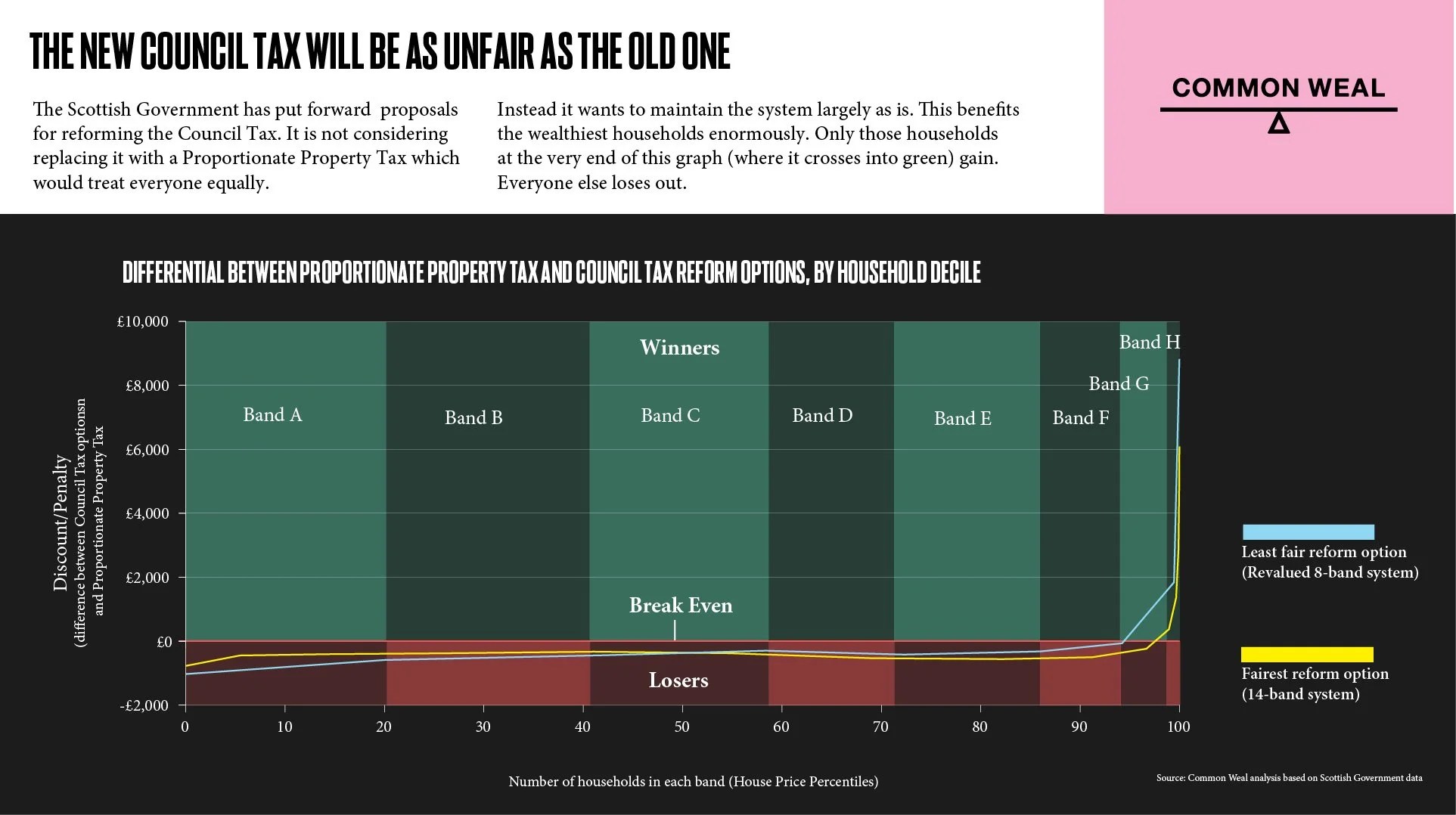
If you believe in a banded Council Tax similar to the current one or perhaps modified by the proposals in the recent Scottish Government consultation (or their plan for a mansion tax that came out of nowhere while that consultation was still live) then houses in the top band will always and by definition win a tax cut. Even under the “mansion tax” proposal, a £20 million house will pay the same Council Tax as a £2 million house. This is not fair.

Under our proportionate Property Tax and even under its nation-wide flat rate of 0.63% (or £630 per year on a £100,000 house) we found that despite bringing in the same amount of total revenue, almost everyone whose house cost less than £400,000 would get a tax cut. The same would also be true if any of the Government’s consultation options were adopted and then we decided to move to out Property Tax later. The banded system simply doesn’t work and ALWAYS leads to a subsidy for the rich.

The same is also true for replacing Council Tax with an income tax (a position the SNP had in 2007 and some other parties still have). Wealth inequality is far higher than income inequality and property speculation is itself a major driver of that wealth inequality. Failing to tax wealth would release the brakes even further on property speculation and allow those who bought houses when they were cheap to profit even more when they sell them (The myth of the aged widow with no income living alone in their mansion with no-where else to go is largely that and would be better solved with individual discounts or exemptions and providing more appropriate housing they could move to).

But if, after that, the political parties still can’t agree to reform Council Tax in the only way they should then they should have stopped being the problem. In the run up to the 2021 election, the SNP made a manifesto promise to hold a Citizens Assembly on local tax reform, including Council Tax reform. They failed to deliver on that promise. That Assembly could have created the consensus that Robison is using as a shield against inaction – which is probably why they failed to deliver.

As I point out when I wrote about this last time, the major weakness of the idea of a Citizens Assembly is that politicians fundamentally don’t want them to work. For them to work, the politician has to step out of the way. They have to accept that the Assembly is happening because they weren’t able to do their job. They have to give the power to make the decision to the citizens who form the assembly and then they have to agree – ahead of time and not just if the final answer suits them – to carry out the instructions given to them by the Assembly.

If Shona Robison or her successor wishes to claim that the reason they can’t reform Council Tax is because of a lack of consensus then it is incumbent on them to create that consensus. If they can’t do it themselves, then they need to accept that they are part of the cause of that lack of consensus and should step out of the way.

The debate on Council Tax reform has gone on far too long. Everyone agrees that things need to change. No-one, it appears, wants to be the one to take the responsibility of making that change happen. This isn’t good enough. I’ll be watching the party manifestos closely in the coming weeks. If any of my local candidates can’t tell me what their party is going to do about this failure of responsibility that leads to 90% of people in Scotland effectively subsidising the top 10%, then I’m going to have to ask them who I should vote for instead of them.