It’s Time To Tax Scottish Land

“All I wish to make clear is that, without any increase in population, the progress of invention constantly tends to give a larger proportion of the produce to the owners of land, and a smaller and smaller proportion to labor and capital.” – Henry George

This blog post previously appeared in The National as part of Common Weal’s In Common newsletter.
If you’d like to throw me a wee tip to support this blog, you can here.

image_2024-09-09_204513798

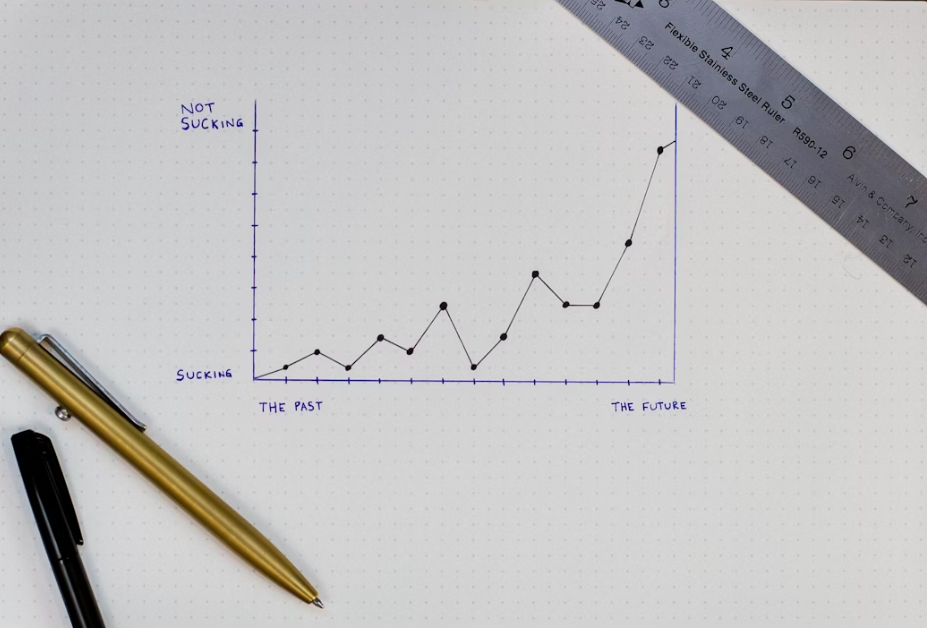
Last week, I had the pleasure to address SNP members at the Revive Coalition’s fringe meeting on land reform where I presented Common Weal’s proposal to bring a land tax to Scotland. As the meeting wasn’t filmed, I want to discuss the issue here for the benefit of members (and non-members) who couldn’t be there. I am also delighted that after our fringe, members gave overwhelming support to two motions that would enable such a tax. Taxing land in Scotland is now solidly SNP policy and the Scottish Government should bring forward a Bill to enable it at the earliest opportunity. With the Scottish Government pledging to bring in fresh cuts of in excess of £500 million, to ignore a tool that would almost entirely avoid the need for them is simply unacceptable.

Continue reading

How Not To Dispose Of Disposable Cups

If it can’t be reduced –
If it can’t be reduced
Reused, repaired – REUSED REPAIRED
Rebuilt, refurbished, refinished, resold
Recycled or composted – OR COMPOSTED
Then it should be – THEN IT SHOULD BE
Restricted, redesigned – RESTRICTED
REDESIGNED or removed – REMOVED!
From production – FROM PRODUCTION
Pete Seeger

This blog post previously appeared in Common Weal’s weekly newsletter. Sign up for the newsletter here.
If you’d like to throw me a wee tip to support this blog, you can here.

image_2024-08-29_130259512-1

The Scottish Government still doesn’t understand what a Circular Economy is or how to bring the public with them as they implement it. This has been made clear by their latest ad hoc and misjudged approach to dealing with disposable cups. Their consultation on the levy has been launched here and Common Weal will get our response in in due course, please make sure your voice is heard too.

The proposal shouldn’t be as contentious as this and I should shouldn’t be on the side of fighting it – especially as I both agree with and support the goal behind the policy; to reduce resource use and waste produced by our single-use consumerism.

The policy as it stands, a 25p levy on disposable cups purchased as part of a takeaway drinks order, though risks seeing people as consumers to be punished into doing the “right thing” even as producers are allowed to make it impossible to make the right choice.

Continue reading

GDP Growth Is The Problem, Not The Solution

“No society can surely be flourishing and happy of which by far the greater part of the numbers are poor and miserable. ” – Adam Smith

This blog post previously appeared in The National, for which I received a commission.

image_2024-08-29_102618230

(Image Source: Unsplash)

Ahead of the reopening of the UK Parliament next week, Prime Minister Keir Starmer painted a bleak picture of a broken Britain that he plans to break further so that he can mend it in the service of his “number one priority”, GDP growth and “wealth creation”. He’s going to ask us to accept “short term pain, for long term good”.

If that sounds like a promise you’ve heard before then you are, like me, old enough to remember George Osborne making a very similar promise in 2010 when he kicked off the decade and a half of Conservative Austerity that we’ve endured ever since.

The big difference between then and now, of course, is that more Labour pain is coming on top of that previous Conservative pain so it’s little wonder that many are asking how much more we need to bear.
There were very few actual policies – and fewer new ones – in Starmer’s speech and those that were there are doing a lot more heavy lifting than he’s likely to let on. GB Energy, which he mentioned several times, is going to be miniscule. With only £8 billion worth of funding, it wouldn’t be big enough to renationalise the energy sector enough to make a difference. It might be one of the best public energy schemes the UK has seen since the Scottish Government dropped their plans for a public energy company, but it’s almost being deliberately designed to NOT disrupt the energy market that has been largely responsible for the inflation and cost of living crises of the past few years.

If Starmer wants to actually get to the root of the problem, to actually plan long term for the benefit of the UK and everyone who lives here then he needs to understand that a good chunk of that root is, in fact, his number one priority – chasing after GDP growth and “wealth creation”. GDP has been growing for decades without solving our economic problems so we need to ask if it is the solution, how much more does it need to grow before it starts working?

It’s not the solution because whenever GDP growth has occurred, the benefits of its have almost always gone mostly to the already wealthy. It has also almost always resulted in more damage to the environment. A long-term beneficial economy is one that focuses on sustainability and wellbeing instead and regardless of growth. Britain needs fewer prisoners, not more prisons. Fewer shops and more libraries (a policy that would improve wellbeing while actively shrinking GDP). And we need fewer of us working to barely meet our needs while we enrich others, and more from the already rich using their ability to do more to make it all happen. A smarter man than myself said something similar once. I don’t think he’d be too welcome in Starmer’s Labour party these days. That, too, is probably part of the problem.

TCG Logo 2019

The Devolution Deficit

“Humanity’s true moral test, its fundamental test…consists of its attitude towards those who are at its mercy” – Milan Kundera

This blog post previously appeared in Common Weal’s weekly newsletter. Sign up for the newsletter here.
If you’d like to throw me a wee tip to support this blog, you can here.

image_2024-07-31_145228020-1

Despite plenty of warning before the elections, new Chancellor Rachel Reeves has suddenly discovered a massive “hidden” black hole in the UK’s finances and she needs to make “difficult choices” to fix it. This is hardly to excuse the last 14 years of Conservative rule – it’s not as if they made a particular secret about their attempts to hollow the nation out for their own benefit – but as Robin has explained, political figures never seem to make “difficult choices” that would make things difficult for those who can afford it.

Continue reading

Actions for Peace

“Just war theory has been converted into a form of apologetics for whatever atrocities your favored state is carrying out.” – Noam Chomsky

This blog post previously appeared as an article in Secure Scotland‘s Whit Noo? magazine, for which I received a commission.

Peace

People sometimes mistake pacifism for inaction when it is the very opposite. To choose and to strive for peace is just as affirmative an action as to choose and to strive for violence. It is not something that happens due to the absence of violence or because we are protected by violence from some threat outwith or within. I write these words on the 14th of July 2024. The day after an attempted act of horrific violence against Donald Trump – a person with whom I share little in terms of worldview or aspirations and yet he is a person who, as with all people, I do not wish the harm he received nor the harm he very narrowly avoided and which some others that day sadly did not.

This essay is not about those events nor the events that led to them nor those that shall follow from them other than to say that my mantra that we should all strive always for peace is very much at the top of my mind as I write.

Continue reading

Vote Dalȝell for Lord Provost! (Please Don’t!)

“Dictators are not in the business of allowing elections that could remove them from their thrones.” – Gene Sharp

This blog post is an extended edition of an article that previously appeared in The National as part of Common Weal’s In Common newsletter.
If you’d like to throw me a wee tip to support this blog, you can here.

image_2024-07-17_140638770-1

How would you feel if I, personally, had total control over the strategic direction of several key areas of public services that affect you? The odds of me being able to make a successful bid to win election as a Scottish “metro mayor” if they are introduced up here are not zero. I’ve been in politics long enough to have become well known at least in political circles, I have a few friends and hopefully not many more enemies. And though I’m not a member of a political party, I do get asked by several of them if I’d be willing to join and even if I didn’t, a run as an independent candidate wouldn’t be impossible. It’s even possible that you’d like some of my policies.

Continue reading

Billionaire Discovers UBI

“The coronavirus pandemic is exactly the kind of cataclysmic event that brings about drastic changes. I think Medicare For All and UBI are now inevitable. It’s either that, or complete chaos.” – Oliver Markus Malloy

This blog post previously appeared in Common Weal’s weekly newsletter. Sign up for the newsletter here.
If you’d like to throw me a wee tip to support this blog, you can here.

image_2024-07-24_131253905-1

Techbro Billionaire and founder of OpenAI, Sam Altman, has just concluded one of the longest running Universal Basic Income experiments to date. He launched the project after becoming intrigued albeit unconvinced by the idea (and as accusations grew that tools like his AI could become an increasing threat to jobs) and he made a show of personally funding the scheme that saw 1,000 low income people being paid $1,000 a month plus 2,000 people receiving $50 as a control group. All participants had a household income below 300% of the federal poverty line (the limit below which people start to qualify for federal low income support – the various thresholds can be found here) and the average household income of participants was $29,000 (approx £22,500 as of current exchange rates).

The results of the study have been overwhelmingly positive and entirely in line with other studies of UBI.

Continue reading

Unburdening Myself

“Sometimes, sitting here in the dark, slowly slowly creating strategy, she wondered if she was only fooling herself to think her plans were clever.” – Vernor Vinge

This blog post previously appeared in Common Weal’s weekly newsletter. Sign up for the newsletter here.
If you’d like to throw me a wee tip to support this blog, you can here.

Virus

I spent last Thursday reading the first of the UK Covid inquiry reports and I really can’t tell you how unburdened it made me feel. A stain on my soul that I’ve carried for years may well be healing.

As someone in the world of think (and do) tanks and in lobbying I don’t expect to have everything I say adopted before the ink is even dry on the page. That’s not how it works. Our greatest policy successes have been long, hard struggles and because much of the hardest work happens in the background, when the success does come folk can wonder why we felt we had to fight so hard because, in hindsight, how could it have gone any other way? It led me to coining the phrase that everything in politics seems impossible until the moment it becomes inevitable.

Continue reading

The Election That Everyone Lost

It is almost unnecessary to observe that the British Government had for more than a century been and could only be a Whig Government; and that the present administration is, as every administration in this country must necessarily be, a Whig administration. – UK Government Ministerial Memorandum to the Prince Regent, 1812

This blog post previously appeared in Common Weal’s weekly newsletter. Sign up for the newsletter here.
If you’d like to throw me a wee tip to support this blog, you can here.

image_2024-07-11_103309275-1

Who were the winners in the General Election? I can tell you who won power for the next few years, but it’s harder to find who actually “Won” rather than just who lost less hard than everyone else. This is a major problem for democracy in the UK and one that needs to be fixed before the next election or we’re going to be put in a potentially very dangerous situation. The low turnout and catastrophically unfair First Past The Post voting system we have has resulted in a government with massive power, almost no possible accountability but simultaneously the most brittle mandate for that power possible.

Continue reading

Extracting Oil and Profits

“No idea is above scrutiny and no people are beneath dignity.” – Maajid Nawaz

The following are two short articles I had published last week. The first, on Foreign Direct Investment, appeared in The Herald and the second, on Ed Milliband ending oil licences, appeared in The National.

If you’d like to throw me a wee tip to support this blog, you can here.

image_2024-07-15_125309614

Scotland must drop its addiction to foreign investment

Ian McConnell’s highlighting of Scotland’s continued dependency on “foreign direct investment” offers a welcome opportunity to once again explain why the policy – supported by multiple Scottish Governments – is acting to the detriment of the Scottish economy.

All investment demands an expectation of a return on that investment and the fact that the investment is coming from outwith Scotland obviously means that those returns must leave via the same route. Scottish Government figures show that since the start of devolution, more than a quarter of a trillion pounds has been net extracted from Scotland and that around £10 billion was extracted from Scotland in the most recent year we have data for. Further analysis by Common Weal shows that as a proportion of our economy, this is the highest rate of profit extraction of any of our peer nations with the exception of a handful of micro-states and tax havens as well as higher than any of the World Bank’s income groups, including the poorest and most indebted nations. Scotland, in that sense, runs an economy with European levels of economic development but with West African levels of foreign exploitation and profit extraction.

This isn’t just an issue of money. Companies that are mobile enough to invest in Scotland are mobile enough to remove that investment unless they get the political kickbacks they want (see the discussions around Scotland’s Green Freeports, for example. Or Grangemouth.) and thus present a direct intervention against our democracy. They also tend to more weakly embed jobs and skills in the economy and are more willing to leave workers on the scrapheap if some other nation decides to attract their “investments” instead of us.

The Scottish Government should drop its addition to FDI and should concentrate on building up domestic sources of investment (starting with reforms to the Scottish National Investment Bank) and should focus not on quick “GDP Growth” and accelerations of shareholder profits but on sustainable development not just of companies but of their workforces and the wellbeing of the communities in which they live.

Ed Miliband’s stance is welcome but it does not go far enough

The news that Ed Milliband has halted new oil and gas licences is a very welcome change of direction for UK politics and effectively brings the UK Government into line with what was the Scottish Government’s policy on new oil and gas in January last year. As it stands now though, the Scottish Government has backtracked on their opposition to new oil and has been extremely vague about the conditions under which it would support a ban. To be clear, it is one thing to state that you’d only support a licence if environmental checkpoints are met but if you don’t state what those checkpoints are or what a properly compliant oil licence would look like, then all you are doing is deferring responsibility for the decision either way.

The Supreme Court’s ruling last month that oil extraction must fully account for all oil emissions is significant here. Until then, a case was being built that a “Net Zero” oil rig would be one that transported workers to and from it without burning fossil fuels (Scope 1 emissions) and was powered by renewable energy instead of a fossil fuel power plant (Scope 2 emissions) but that basically washed its hands of whatever happened to the oil it extracted (Scope 3 emissions). If you bought some of their oil and burned it, that wasn’t their problem. This can no longer be the case and so brings into question the very possibility of a compliant oil rig. The Scottish Government should outright admit that either their support for oil must be ditched, or their remaining climate policies must.

As welcome as Milliband’s decision is, it likely doesn’t go far enough. He’s equally stated that he won’t revoke licences already granted but not yet being exploited nor will he shut down oil wells that are still economically producing oil. Half a decade ago in 2019, Friends of the Earth’s “Sea Change” report found that if the world is to meet its collective climate targets then not only must new licences be blocked and unexploited licences revoked, at least 20% of the economic oil in wells that are currently open must stay in the ground.

A Just Transition for workers is vital and I sympathise with Unite’s “no ban without a plan” slogan, but I fear that the politicians will stick to the easy option of “no ban” rather than what they should do, which is to bring those workers into the room immediately and help them design the plan that grants them the Just Transition they want and deserve before another political deferral forces a chaotic collapse of the oil industry and sees oil workers dumped just like their predecessors in the coal industry were.

TCG Logo 2019