The Scottish Government wants to avoid reforming Council Tax

“I hate paying taxes. But I love the civilization they give me” – Oliver Wendell. Holmes

This blog post previously appeared in Common Weal’s weekly newsletter. Sign up for the newsletter here.

If you’d like to support my work for Common Weal or support me and this blog directly, see my donation policy page here.

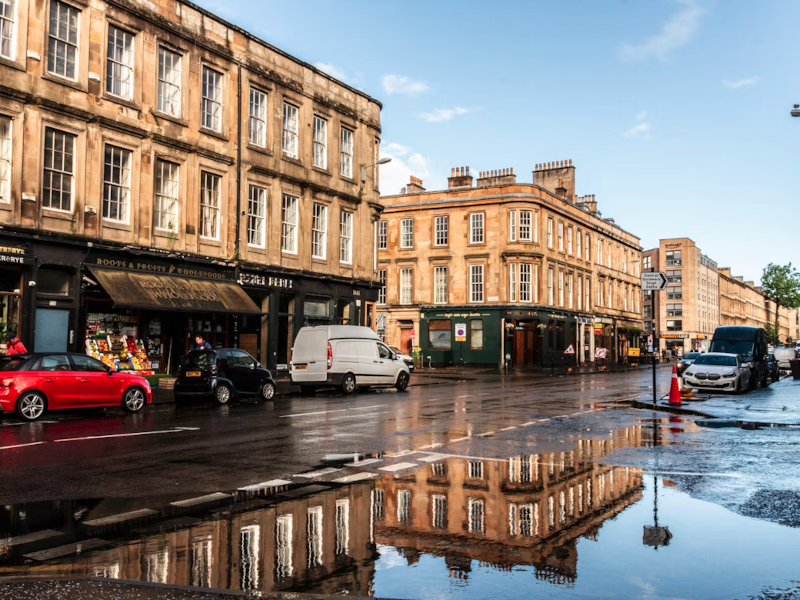
A stock photo of a street in Glasgow emphasising a row of above-shop flats

Image Source: Unsplash

In the run up to the 2021 Scottish Parliamentary Elections, the SNP published their election manifesto with a promise to hold in depth discussions about reforming local taxation, culminating in a Citizens’ Assembly on the subject. After they were returned to Government, they embedded that idea in the 2021 Programme for Government and explicitly elevated the idea that Council Tax reform would be part of this discussion from an idea to an promise.

I remember this being an exciting time in Scottish politics. I was still riding the high from being an expert witness in the Scottish Climate Assembly (and didn’t yet know how badly the Government would let them down). After multiple years of failure to reform or replace one of Scotland’s most badly broken taxes, this was finally a change for politicians to admit that they were part of the problem, to step out of the way and to let citizens tell them what to do instead.

It was never going to be that simple. Despite the success of the Climate Assembly to produce radical ideas – or because of that success in the face of the politicians’ unwillingness to relinquish power and implement those ideas – the promise of a Citizens’ Assembly before the 2026 election dragged on. It was never formally dropped, but Nicola Sturgeon’s Government did not appear to take any action towards setting it up.

When she resigned in 2023, time was tight for the Humza Yousaf Government to pick up the policy. One lesson from the Climate Assembly was that they can take a year to plan, several months to undertake and then a year to properly analyse the results. By his tenure, there was still time to create the Assembly but he’d be passing the job of actually reforming Council Tax to the next Parliament.

And then he, too, resigned. Without once to my knowledge even mentioning the Assembly and not doing much at all to reform local tax by other means (other than his disastrous ad hoc announcement of a freeze to rates during a local government revenue crisis).

And now, in the waning days of the Parliament and with zero time to implement anything new at all, John Swinney’s Government still hasn’t formally cancelled that 2021 manifesto promise but they have clearly decided that they’ll break it.

Instead of a Citizens’ Assembly, his Government has put out a very standard public consultation on some options that they’ve considered around reforming Council Tax while also stating that even if they accept one of them after next year’s election that we shouldn’t expect any actual change to the tax any time within even the next Parliament. We’ll submit our formal response to that consultation and you can too here, but I wanted to use my column this week to discuss their proposed options.

The first thing to say is that they’ve effectively ruled out replacing Council Tax entirely.

The Scottish Government has presented four proposals for reform of Council Tax. This first is the most minimal change possible, though it’s one that has been advocated for as long overdue. The current Council Tax isn’t based on what your house is worth now but what it was worth in 1991. Keeping the current rates and bands but revaluing houses to ensure they are all in the correct and appropriate band would fix problems that have crept in over 30 years of rampant but uneven house price speculation (I’ve seen houses worth £30,000 and worth £300,000 both marked as Band D for Council Tax).

This has been designed to be “revenue neutral” with the current system and as such doesn’t do much to cut taxes for people already in appropriate and low bands or to raise taxes for those appropriately in high bands. It does fix the problem of possibly half of Scotland being in the wrong tax band but this effectively means a lot of upheaval to the system for comparatively little actual gain – even where that gain is necessary.

Two intermediate steps are to change the current 8 Band system to a 12 Band system with one aimed at keeping taxes more or less the same for folk in lower band houses and adding addition bands for the extremely wealthy at the top and the other being more “progressive” by reducing tax rates slightly for lower bands and and increasing it for upper bands.

And finally, there is a 14 band system that looks much like the 12 band “progressive” proposal but with a slightly greater cut for lower bands and a slightly higher increase for upper bands.

The problem with all of these proposals is that the banding system for Council Tax is inherently unfair. Not just in its present form where a house worth 10 or 100 times more than a cheap, Band A house will still only pay about 3.5 times more in Council Tax, but even if the bands were reformed or extended as the Government has proposed here, that problem will always exist.

The very rich who live in houses in the top band will always pay less than their fair share of tax and that means that those in the poorest households will always pay more than their fair share. Even the 14 band system would only apply a maximum differential rate of about eight times as much Council Tax for a house sitting near the bottom of the highest band (starting at £1.83 million) compared to one sitting at the top of the lowest band (£65,000).

This means that a house worth more than 28 times another will only pay about eight times as much tax. What the Government is claiming is a more progressive tax proposal than the current system is still nonetheless deeply regressive and its claim of being “revenue neutral” still means, in effect, the poor are paying a massive tax subsidy to the rich.

“Nine out of ten houses in Scotland are worth less than £400,000.”

Instead, we argue for a proportionate Property Tax similar to the one used in many countries in Europe where the property tax is based on a percentage of the current value of the house – doing away with bands entirely (One could argue to make things even more proportional and add surcharges on very expensive houses in the same way that we don’t pay a flat income tax rate but a progressive one based on how high our salary is – but let’s make the case for a flat percentage tax first, then we can discuss going further). This removes the inherent problem of banding. A house worth ten times as much will always pay ten times as much tax.

One of the arguments against property taxation as opposed to taxing income is the “ability to pay”. It’s often held up that there will be asset rich, income poor people stereotyped as a lonely widow living in her mansion after the kids leave the family home. The truth is that while I’m sure that there will be people in a situation like that, there are better mitigations available than holding the rest of the country back from reforming and replacing an outdated tax system.

The consultation document itself considers a couple of these such as phasing in the tax over several years to make it easier for people to adjust their finances to copy with any increases or allowing people to defer the tax for several years – perhaps until the sale of the house or the death of the owner, though this may result in people having to face a large lump sum tax bill when that time comes.

Another option, one that we may suggest in our response, might be to limit the increase someone pays due to the transition to some percentage of their income or to expand Council Tax discounts to cover people in that situation. Over time though, this would become less of a problem. House prices in general will adjust to reflect their tax bill and houses that are currently overvalued may reduce in price as a result of a high tax burden attached to them (something that wouldn’t happen if we abolished property taxes for a local income tax as some have suggested).

A final point to make in this column is the fact that people don’t really understand just how unequal property wealth actually is in Scotland. This can be seen in the Daily Express’s claim that the Scottish Government’s proposal would mean a tax of up to £6,600 on “hard working families”, without mentioning that this is what would be paid only in the biggest change proposed (the 14 band system) and this rate would only apply to the most expensive houses worth more than £1.83 million.

Very few “hard working families” in Scotland live in £1.8 million houses. In fact, thanks to this consultation, we now know how many households live in worth £1.83 million or more. This band would cover just 0.02% of houses in Scotland – fewer than 15,000 out of Scotland’s more than 2.6 million homes.

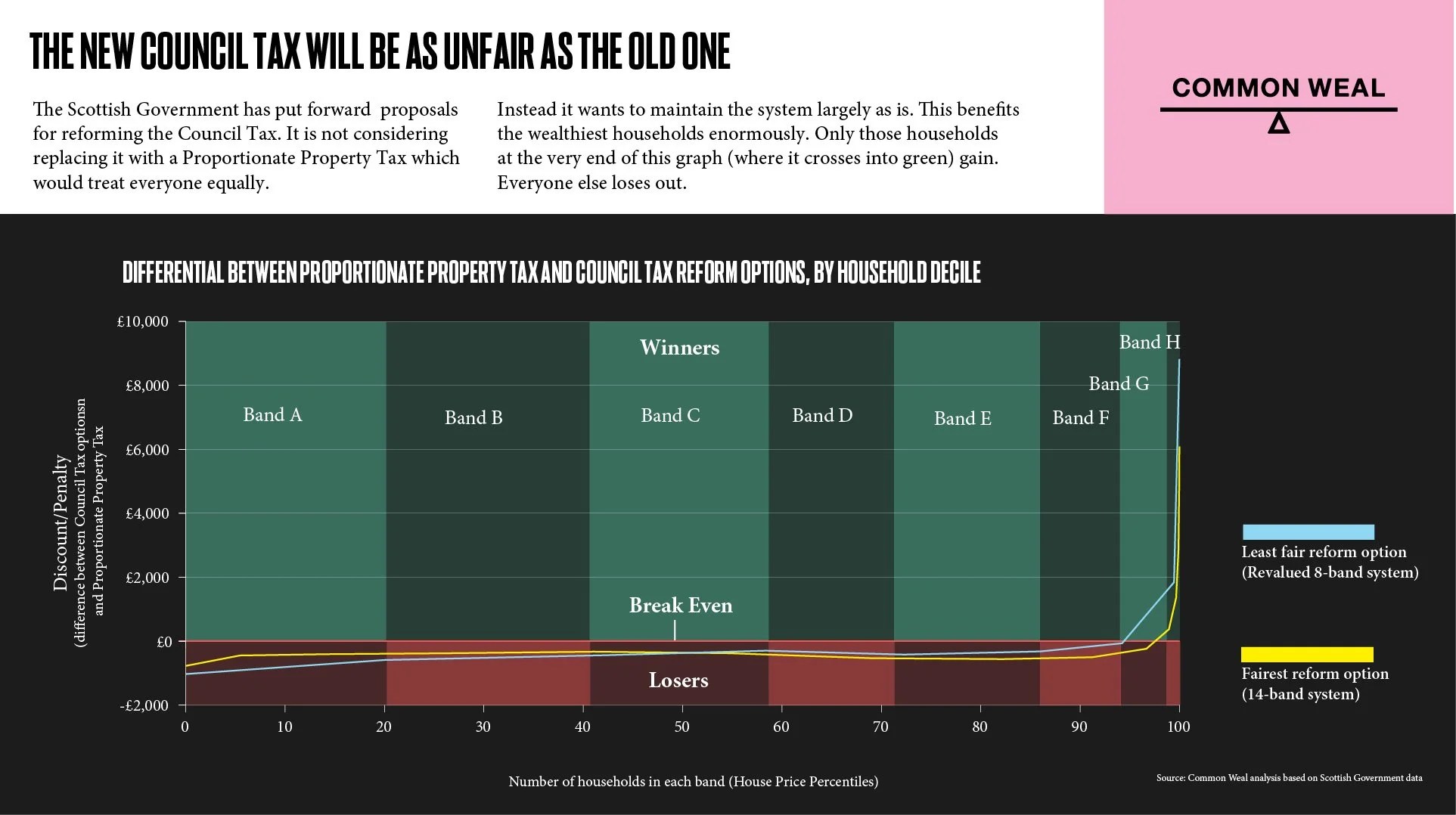
In fact, as you can see in our Graph of the Week this week, we can plot the various government proposals (in this case we’ve just plotted the most and least progressive of the four) in comparison to how much more or less people would pay in Council Tax compared to a fair Property Tax. If we moved to our Property Tax then a small house in Band A could see its tax bill halve, while a £2 million mansion would see a substantial increase of £6,000 or more. The “breakeven” point between the current Council Tax (and, in fact, all four of the Government’s proposed reforms) is a house worth £400,000 that is or should be in Band F.

This threshold is at about the 90% percentile of house prices. Nine out of ten houses in Scotland are worth less than £400,000. That means that nine out of ten households in Scotland are currently paying more than their fair share of Council Tax and would benefit from a fair percentage based Property Tax. It also means that all four of the Government’s proposed Council Tax reforms would tweak but would not remove this inequality.

The Scottish Government is, in effect, continuing to protect Scotland’s top 10% of property owners at the expense of everybody else. This is a key lesson that we will be including in our response to the consultation and I hope you will too.

The Council Tax is outdated, unfair and needs to change. The argument of that fact was won more than a quarter of a century ago. That the Government accepts the need for a progressive and fair tax but still cannot bring itself to propose one is a dereliction of duty. That they’ve broken a manifesto commitment to let the people come up with a solution instead is a democratic scandal.

And that they’ve stated that even if they win the next election, they’re not going to implement the solution in the next Parliament just means that this consultation looks like it’s much more about delaying change for another decade rather than righting the wrongs of the lack of change so far.

We can do better than this, especially when the solutions are already clear and understandable. Please submit a response to this consultation and do make clear to your local MSPs that you want to see Council Tax fixed properly, fairly and for the ultimate benefit of All of Us.

You Have Options Too: An Open Letter to John Swinney

“Squeezing the lives of people is now being proposed as the saviour of the planet. Through the green economy an attempt is being made to technologise, financialise, privatise and commodify all of the earth’s resources and living processes.” – Vandana Shiva

This blog post previously appeared in The National.
If you’d like to support my work for Common Weal or support me and this blog directly, see my donation policy page here.

wind turbines on snowy mountain under clear blue sky during daytime

DEAR First Minister John Swinney,

The UK is running away from the hard choices on energy. Its dismissal of ideas like zonal pricing – ­currently the only scheme yet presented that would allow the UK to maximise renewable energy generation, minimise infrastructure costs like ­pylons and to reduce fuel poverty while giving communities more incentive to take control of their own local energy generation – has been rightly criticised by you last week in a statement where you called out the UK for not doing enough on energy policy.

It was concerning to note, though, that your critique wasn’t backed up by much on what you want the UK to actually do instead. Even as you complained about the UK “ruling out all options to bring down ­energy bills” by abandoning zonal pricing, I’m not clear if you support it or would bring it in if you had the power to do so.

We all know that Scotland’s devolved powers in energy are limited and that, right now, you couldn’t do something like this, but also missing from your critique was what you plan to do with the powers you do have.

Scotland’s own devolved energy ­strategy has been woefully lacking in recent years – from the sell-off of ScotWind at ­bargain basement prices, through ­dropping ­climate targets that were designed to push ­action ever forwards, to flogging off (sorry, “­encouraging foreign direct investment in”) every piece of our renewable energy sector to multinational companies and ­foreign public energy companies to ensure that everyone in the world can profit from Scotland’s energy except us.

We can take another path, though. ­Scotland must ensure that we own our own renewable energy future and the way to do that is by bringing it into public ownership. Here are several ways that you could do it.

1) A National Energy Company

This is what most of us think of when we think about “Scottish public energy”, and it’s the model that the Welsh Government adopted under the name Ynni Cymru. This is a single national company, owned by the Scottish Government or by Scottish ministers (similar to Scottish Water), that would own, generate and sell energy to consumers.

There is a snag to this plan in that the Scotland Act currently prohibits the ­Scottish Government from “owning, ­generating, transmitting or storing” electricity, so if we want the National Energy Company to be based around supplying ­electricity, then the first thing that the Scottish ­Government could be doing is mounting a pressure campaign to amend the Act – it puts Scotland in the ridiculous position that it’s legal for the Welsh Government to own a wind turbine in Scotland but not the Scottish Government.

Until that campaign is successful, there is something you can do.

The Act quite specifically bans your Government from owning electricity ­generators. It does not ban other forms of energy. A National Heat Company based around deploying district heat networks could supply all but the most remote of Scottish households.

While this would be a large infrastructure project, it wouldn’t be larger than the one required to build the electricity pylons we need if we’re going to electrify heat instead and the pipes would have the advantage of being underground and out of sight while ultimately providing heat to homes in a cheap, more efficient and ultimately more future-proof way that the current setup of asking people to buy heat pumps and just hoping that the grid can cope with the demand.

2) Local Electricity Companies

So, First Minister, let’s say that you’re not a fan of campaigning for the devolution of more powers and really want Scotland to be generating electricity. You can’t create a National Electricity Company but you can encourage local authorities to set up their own Local Electricity Company.

Conceivably, the 32 councils could even jointly own one National Electricity Company – the Scotland Act merely bans the Scottish Government from owning the company.

In many ways, this would be an even better idea than the Scottish Government doing it. Government borrowing ­powers are far too limited and you’d need to ­campaign for more borrowing powers to get the scale of action required to build the infrastructure we need – but councils have a trick up their sleeves.

They are allowed to borrow basically as much money as they like so long as the ­investment the borrowing allows brings in enough of a return to pay back the loan. This is very likely how Shetland Council will finance its plan to connect the islands via tunnels – the construction would be paid for via tolls on traffic.

Energy, as we know, is very profitable indeed so there should be absolutely no issue with councils being able to pay back their loans and then to use the revenue from their energy generation to subsidise local households against fuel poverty and to support public services.

If we want to go even more local than this, then councils and perhaps the Scottish National Investment Bank could support communities to own their own energy.

We’ve seen multiple times that community ownership generates many times as much local wealth building – as well as skills and jobs – than the current model of private ownership plus paltry “community benefit funds”.

3) A National Mutual Energy Company

This is another national-scale energy company that the Scottish Government could launch but in this case wouldn’t own or control. Instead, the “National Mutual” would be owned by the people of Scotland.

In this model, every adult resident of ­Scotland would be issued one share in the company. They wouldn’t be able to sell it and they’d have to surrender it if they ever stop living in Scotland, but ­other than this, it would be much like owning a share in companies like Co-op.

The company would be run as any other commercial company and would be beholden not to the Government but to its shareholders – us. We’d jointly ­decide ­future energy strategy and even potentially have a say in how much of the company’s operating surpluses are invested in future developments or distributed to shareholders (again, us) as a dividend.

This model would be particularly suited to very large energy developments that cut across local authority or even national borders or to help develop offshore assets. Imagine ScotWind had been owned by the people of Scotland, instead of being flogged off to multinational companies in an auction that had a maximum bidding price attached.

Conclusion

First Minister, I applaud you for keeping up some sense of pressure on the UK Government on energy.

As we make the necessary ­transitions ­required of us under our obligations to end the climate emergency, this is one of the sectors of Scotland that will change the most. It’s vital that we get this ­transition right, or not only will ­Scotland see yet another generation of energy ­potential squandered in the same way that the coal and oil eras were, we’ll see Scottish ­households bear the weight of others ­profiting from that transition while we still experience crushing levels of poverty and economic vulnerability.

The UK Government may be ruling out all of their options on energy but that doesn’t mean that you need to do the same. We don’t need to wait until independence – as vital as it is – or to wait until Westminster gets its act together – which may or may not happen. We – you – have options too. It’s time to take them.

Yours, expectantly …

How to Launch a Scottish Wealth Tax

“I am opposing a social order in which it is possible for one man who does absolutely nothing that is useful to amass a fortune of hundreds of millions of dollars, while millions of men and women who work all the days of their lives secure barely enough for a wretched existence.” – Eugene V. Debs

This blog post previously appeared in The National.
If you’d like to support my work for Common Weal or support me and this blog directly, see my donation policy page here.

person holding fan of us dollar bill

(Image Source: Unsplash)

“From each according to their ability, to each according to their need”. This used to be the core credo of parties of the Left – particularly the Labour Party in Britain – but it appears to have been eroded to the point of meaninglessness. Wealth inequality is increasing at an unimaginable rate and is currently substantially higher than income inequality. The rich are taking from all of us far more than they need and are giving back far less than what they are able to. This is a self-reinforcing problem such as where people who were able to buy houses when they were cheap (perhaps during Thatcher’s Right to Buy demolition of the social housing sector) became able to rent them out at ever increasing rates to people who can’t now afford to save the deposit to buy a house because house prices are rising faster than they can save due to the amount they have to spend on rent. Even the Office of Budget Responsibility is now warning (as I did several years ago in my book All of Our Futures) of the fiscal risks looming due to the number of people still privately renting when they retire and who will simultaneously be unable to afford to keep paying those rents and won’t have any capital saved in their house to subsidise their inadequate state pensions.

It’s not for no reason that the British public are increasingly demanding that the UK Government brings in a wealth tax to rebalance our increasingly unstable economy. I will say that there are good reasons for the UK to not bring in “a wealth tax” – by which I mean a single annual payment calculated as a certain percentage of the value of all of the assets and possessions that you own. Prof. Richard Murphy has articulated many of them well. It’s hard to value those possessions. Easy to hide them. And there are other taxes that the UK could use – such as reforms to taxes on stocks, shares, pensions and capital gains – that would achieve much of the same result. Not that the UK Government is going to do any of that either unless the pressure escalates to the point that the impossible becomes inevitable.

Let’s say, however, that the Scottish Government wants to take the first step. Could we do it here instead of waiting for the UK?

The patterns of wealth ownership in Scotland are substantially different than in the UK (particularly in London and the South East). We don’t have quite as many financial billionaires floating about the place. We don’t have as much wealth in stocks and shares – mostly because we don’t have a stock exchange in Scotland any more. Our generally lower rates of pay mean comparatively lower rates of wealth stored in pensions. There are, however, two sectors in Scotland where wealth is substantially stored and which could be taxed using devolved tax powers – Land and buildings.

Scotland already has its Land and Buildings Transaction Tax but despite the Scottish Greens seeking to apply what they called a “mansion tax” to it this would remain merely a surcharge on the transfer of assets, not a wealth tax applied to the holding of them. If you never bought another mansion, you’d never pay the mansion tax.

Council Tax is the most outdated and badly broken tax Scotland still insists on inflicting on the poor. The Scottish Government has stated that they’re not even going to think about reforming it until the end of this decade. This is completely unacceptable, especially as the solution is obvious. We need to scrap Council Tax and replace it with a tax based on a percentage of the present market value of the property. Common Weal argued that a rate of 0.63% would have been revenue neutral compared to Council Tax at the time we published the paper. That number could be recalculated now but we estimated then that a “revenue neutral” rate would actually mean a tax cut for eight out of 10 households as the burden of paying the tax would be placed more fairly on those who lived in the most expensive houses. We calculated that the “break even” point then would have been a house worth something like £400,000. This is based one a flat rate of tax too. We would argue that Councils should have the power to add progressive rates on extremely valuable properties like £1mn+ mansions or, as is the case with the current Council Tax, additional multipliers for multiple home ownership.

This would immediately act as a wealth tax both on the most expensive properties but also on multiple property ownership. Unlike Council Tax that is paid by occupants, our Property Tax would be paid by property owners and they could only pass on to their tenants the basic rate of tax. Landlords would have to pay any multiple ownership surcharges themselves.

The second wealth store in Scotland – land – is probably the greatest store of almost untaxed wealth in the country. Many countries tax the ownership of land as a distinct tax from properties built on it (sometimes because of local democracy, for example you might pay the land tax to your municipal government and your property tax to your regional government) but in Scotland there may be good reason to not do that but to simply extend the Property Tax to cover not just the land under and around your mansion but also the broader estate you own with it. Given that the two are often sold together, this will be much easier to put a price on than trying to calculate a separate Land Value Tax. We’ve estimated that doing this at the same flat rate as the Property Tax would bring in around £450 million a year in revenue – though this could be adjusted down to account for subsidies for small farms or up to better tax the 422 people who own half of Scotland.

One of the major advantages of both of these taxes – one that negates objections from both the UK and Scottish Government whenever taxes on the wealth have been suggested – is that it completely bypasses the idea that the rich will simply leave the country. Recent studies have shown that the idea of “millionaire flight” basically isn’t a thing (it’s not just a huge logistical hassle for comparatively little financial gain to pack everything up to go and live in a tax haven, even millionaires have friends and family as do their kids and tearing up those social bonds to save a bit of money just isn’t worth it) but this hasn’t stopped the media pushing that line anyway. Even if it was true, the wealth they have locked up in Scottish land and housing can’t move with them. The tax still needs to be paid by whomever owns them regardless of where they live (and many of the largest landowners in Scotland already don’t live here so the point is particularly moot there).

One of the biggest sources of instability in our current society and economy is wealth inequality. It urgently needs to be reigned in and reversed. If the UK Government persists in refusing to do it then there is at least something that the Scottish Government can do without having to wait for them. And if the current Scottish Government doesn’t want to do it either well, there are elections next year. Maybe politicians could suggest who we should vote for who will?

Democracy By All Of Us

“Politics should be the part-time profession of every citizen who would protect the rights and privileges of free people and who would preserve what is good and fruitful in our national heritage.” –  Lucille Ball

This blog post previously appeared in The National as part of Common Weal’s In Common newsletter.
If you’d like to throw me a wee tip to support this blog, you can here.

Chamber

With a single act, the Scottish Parliament could radically overhaul our devolved democracy and put people at the heart of holding our legislators to account.

I’m grateful for the coverage The National gave to the the Independence Forum Scotland National Convention last weekend. It was wonderful to see the building activism in the room and delegates certainly kept me on my toes during the Energy World Cafe. The desire to see Scotland bring more of its energy resources into public hands is strong and I was glad to lay out how it could be done despite the limited powers of devolution.

Another question came out of the day about navigating similar limits in another area. One of Common Weal’s calls for the strengthening of our democracy is the creation of a second chamber in the Scottish Parliament that could take some of the weight off of the scrutiny committees, could make sure our laws are fit for purpose and – perhaps most crucially – could oversee the Parliamentarians themselves and hold them to account if and when they fall short of the standards expected of them. In this way it would act very much like the House of Lords down south or the elected or appointed upper chambers in many other countries (Scotland is one of the very few national-scale polities that don’t have an upper chamber – even most of the US states have one) but we want to improve on the highly corruptible model of appointing Lords for life based on their loyalty or political donations (still waiting on Labour delivering on the manifesto promise they made over a century ago to fix that one down south) or even the counter productive model of electing party-loyal people to that chamber (and thus replicating the US model where there is zero accountability when one party controls both houses and zero progress when they don’t). Instead, we want a Citizens’ Assembly where all registered voters in Scotland are entered into a lottery similar to jury duty and are called to serve in the Parliament. Appointments would be by random selection initially but the long list would be adjusted to ensure that the actual Assembly is balanced demographically across age, income, geographic representation and other factors (this model was used to great success in the 2021 Scottish Climate Assembly). Appointments would be generously paid (on par with MSP salaries) and would last a fixed time – we suggest a one year appointment with a third or a half of the chamber rotating out periodically – and there would be the same protections on returning to your job as there are for jury duty or paternal leave. The comparison to juries is a strong one. If we trust our peers to determine if it has been proven or not proven that someone has broken the law, then we are more than capable of determining whether or not the laws themselves are broken.

Sounds great, but the question we were asked at the Convention was whether or not Scotland has the power to set up such a Chamber.

If we were independence, it would be a relatively trivial matter to write the structure of the Chamber into our constitution but until then, the constitutional document we have to follow is the Scotland Act. Yes, the UK does have a constitution – it’s just not written down in one place and unlike the constitution of most nations, Westminster has sovereignty over it rather than being subordinate to it and so can change it whenever it likes.

As the Scotland Act doesn’t mention an Upper Chamber in its framework and as Westminster is extremely unlikely to exercise its power to write one into the Act, how could we set one up pre-independence?

Essentially we act as if we can.

The Scottish Parliament can set up advisory bodies or Commissioners to oversee the work of Parliament and even though we couldn’t mandate that they must follow the advice of those bodies (this was ultimately the source of the failure of the Climate Assembly – the Government decided they didn’t like the advice they were given so largely ignored it), Parliament and Government could collectively agree to follow those instructions – there’s nothing in the Scotland Act that actively prevents them from doing this just as nothing prevents parties whipping their members into voting along certain lines despite that not being an “official” part of our democracy.

Such an “unofficial” upper chamber wouldn’t be nearly as powerful as a constitutionally mandated one but that’s not to say that it would be powerless. Yes, something created by an Act of Parliament alone could be scrapped by one (a constitutional amendment would require a referendum). Yes, the Government could simply stop listening to its advice. This would place it on par with the other Commissioner bodies that exist around the Scottish Parliament. Yes, Westminster could overrule the Scottish Parliament and write a specific prohibition into the Scotland Act or elsewhere. This would place it on par with any other piece of legislation the Scottish Parliament has ever passed. If either of these barriers are enough to stop us, we might as well just give up on devolution entirely.

Scenes playing out across the world right now only serve to highlight how precious and vulnerable the very concept of democracy is and how no single person or even multi-person office can be trusted with more power than it needs. Scotland’s highly centralised form of government needs to be spread out a lot more locally but we also need more scrutiny and accountability at all levels from the top down. The best people to do that are All of Us appointed not to a House of Lords, but to a House of Citizens.

TCG Logo 2019

Continue reading

The Only Way To Fix Council Tax

“When it comes to decreasing inequalities of wealth for good or reducing unusually high levels of public debt, a progressive tax on capital is generally a better tool than inflation.” – Thomas Piketty

This blog post previously appeared in Common Weal’s weekly newsletter. Sign up for the newsletter here.

If you’d like to support my work for Common Weal or support me and this blog directly, see my donate page here.

In the run up to the 2021 Scottish Parliamentary Election, the SNP – like most other political parties, published their manifesto of the things they promised to do if returned to power after the election. They’ve since deleted it from their website but it has been archived here. In that, one of their promises to the voters who put them back into office stated that they would run annual Citizens’ Assemblies during this Parliamentary term “to help find consensus on issues where people have sharply divided opinions…such as such as reform of Council Tax.” Making that issue in particular more than a mere suggestion, a few pages later they stated clearly that “We are committed to reforming the Council Tax to make it fairer…We will ask a Citizens’ Assembly to consider the way forward alongside the question of wider powers for local government.”

After the election and their return to Government, they held one Citizens’ Assembly on Climate Change (the process of which showed an outstanding example of the future of democratic governance but the outcome of which was a single new policy promise, later broken) but didn’t hold any others. The Citizens’ Assembly on Council Tax Reform was never formally cancelled, but no effort or resource was ever put in to organising it. There is now no time to hold such an assembly before the end of the Parliamentary Term and no ability to even throw one together at the last minute given that neither the Programme for Government nor the final budget covering a full year of the remaining term mentioned such an Assembly.

This week, the Government published their proposal for a replacement to this manifesto promise. A series of “public engagements” this Autumn consisting of three key elements:
• A formal public consultation process.
• A number of public events or ‘town hall’ meetings held over the autumn months, ensuring a reasonable geographical spread and diversity.
• A set of focused discussions with key stakeholders and experts.

This strikes me as remarkably similar to their “engagement” series on land reform in 2022 where the “town hall meetings” included gathering a dozen or so members of the public into a hall named for one of Scotland’s largest landowners to tell them that they were going to try to limit the scope of the land reform bill to only cover the management of the very largest estates in Scotland so that they could keep the costs of the reform to a minimum. They’ve since reduced the threshold of that management in the proposals for the current Bill but it is still far too high, far too limited and far too easy to evade.

This is a column about that Council Tax reform though – I’ll happily come back to Land Reform in a future column.

To say I have little faith in the SNP (or any other political party in Scotland right now) actually making meaningful steps towards reforming this badly outdated tax would be an understatement but we are an impartial think-tank and we are very much one of the “key stakeholders and experts” who should be at the table later this year (I’ll let you know if we get an invite) so fine – I’ll once again lay out the options for reform and explain why the only possible rational option is to adopt our policy paper on replacing Council Tax with a Property Tax based on the present value of a home.

Continue reading

Scottish Budget 2024 – Still Spinning Plates

“Our economic models are projections and arrows when they should be circles.” – Wade Davis

This blog post previously appeared in Common Weal’s weekly newsletter. Sign up for the newsletter here.

If you’d like to support my work for Common Weal or support me and this blog directly, see my donate page here.

image_2024-12-12_094119113

Finance Secretary Shona Robison must have breathed a sigh of relief at the UK budget the other month (covered by me here) but if she did, it was the shallowest one she could get away with. The extra money from the UK that has gone into this year’s Scottish Budget has largely been accounted for in terms of public sector pay deals and reserved tax rises applied to those wages (not that I’m complaining about those pay deals – quite the contrary, even with them many public sector works are still lagging behind fair pay after over a decade and a half of austerity) or has gone into replacing cuts from last year’s budget so it’s clear that despite the relative expansion to Scottish finances there still wasn’t going to be a huge amount of play in the figures to do much more than work a little less hard to keep all of the plates spinning in the air.

Continue reading

The Climate Climbdown

“If a pandemic can induce governments to take emergency actions, why can’t a climate breakdown that threatens to kill off the very life-support systems of the planet do the same? After this, there can be no more excuses for passivity.” – Andreas Malm

This blog post previously appeared in The National as part of Common Weal’s In Common newsletter.
If you’d like to throw me a wee tip to support this blog, you can here.

image_2024-11-13_090439965

Scotland – once a nation that held itself up as a world leader in climate ambitions – has formally repealed important carbon emission targets in a vote that would have had unanimous support but for the abstention of the Greens.

The Scottish Government still holds that Scotland will be a “Net Zero” nation by 2045 but has yet to demonstrate how we will actually reach that goal, especially as interim targets like the 2030 target just repealed continue to be missed.

To be clear on why this vote took place, the Scottish Government put the target into actual legislation as a show of force on its climate ambitions. A “mere” government policy target could have simply been broken and forgotten about as is all too common amongst governments of all colours but once placed in law, the government would have been acting unlawfully if the target was missed.

Continue reading

How To Show Scotland Still Cares

“In the heart or every caregiver is a knowing that we are all connected. As I do for you, I do for me.” – Tia Walker

This blog post previously appeared in Common Weal’s weekly newsletter. Sign up for the newsletter here.
If you’d like to support my work for Common Weal or support me and this blog directly, see my donate page here.

image_2024-11-04_105025523

A lot is happening in politics circles right now from the budgets (UK and Scottish) through to Common Weal’s own tenth birthday (did you see our celebration email? If not, you can read it here).

As someone who’s own political journey basically started because of what would become Common Weal (you can read about my first ever encounter with Robin McAlpine here) it’s been an incredible journey that I remain proud to be a part of especially through my contribution to the policy library which, as our celebration email mentioned, now stands at 112 policy papers plus dozens more briefing notes and consultation responses. That’s an average of one paper per month (excluding the Christmas break…mostly…) for a solid decade. We couldn’t have done it without you.

It’s the latest of those 112 policy papers that I want to spend a bit of time talking about in our newsletter this week. It came out last Friday – just a bit too late for my writing deadline then – and is essentially a last ditch effort to salvage some good out of the seemingly doomed National Care Service Bill.

Continue reading

UK Budget Review – 2024

“Death, taxes and childbirth! There’s never any convenient time for any of them.” – Margaret Mitchell

This blog post previously appeared in The National, for which I received a commission.
You can read my donations and support policy here and if you’d like to throw me a wee tip to support this blog, you can here.

image_2024-11-06_110201644

The first budget of the new Labour Government and the first in 14 years is one that would have been more hotly anticipated if it wasn’t for the fact that the Government leaked so much of it to the media ahead of time – in direct contravention of Parliamentary procedure and in a way that would have seen Ministers resign not many years ago – and would have seen Labour complain about had they still been in Opposition. The Speaker rebuked them thoroughly, but – of course – lacks the power to actually sanction anyone involved (in Holyrood, the Presiding Officer could have technically cancelled the budget speech but even when the Scottish Government has leaked material like this, they’ve managed to stay on the side of a mere threat).

Nevertheless, the budget was delivered and it’s worth us taking a look at just a few of the things that happened that will affect Scotland.

Continue reading

PfG 2024 – Serving Scotland

“When the dispute over the Means Test was in progress there was a disgusting public wrangle about the minimum weekly sum on which a human being could keep alive.” – George Orwell

This blog post previously appeared in Common Weal’s weekly newsletter. Sign up for the newsletter here.

image_2024-09-10_091756759

Serving Scotland, what exactly?

The Scottish Government’s latest Programme for Government, titled “Serving Scotland”, is little more than a list of platitudes covering some of the most brutal public service cuts in years coupled with a paring back of all sense of ambition in what should be a critical year of laying groundwork for the next election (if you take a short-termist political party view of things) or the rapid ramping up of actions to halt and mitigate climate change (if you’d prefer there to be a liveable biosphere in the next couple of generations).

The PfG is divided into four of the Government’s overarching strategies so it’s worth picking them apart one by one.

Continue reading