It’s Time To Tax Scottish Land

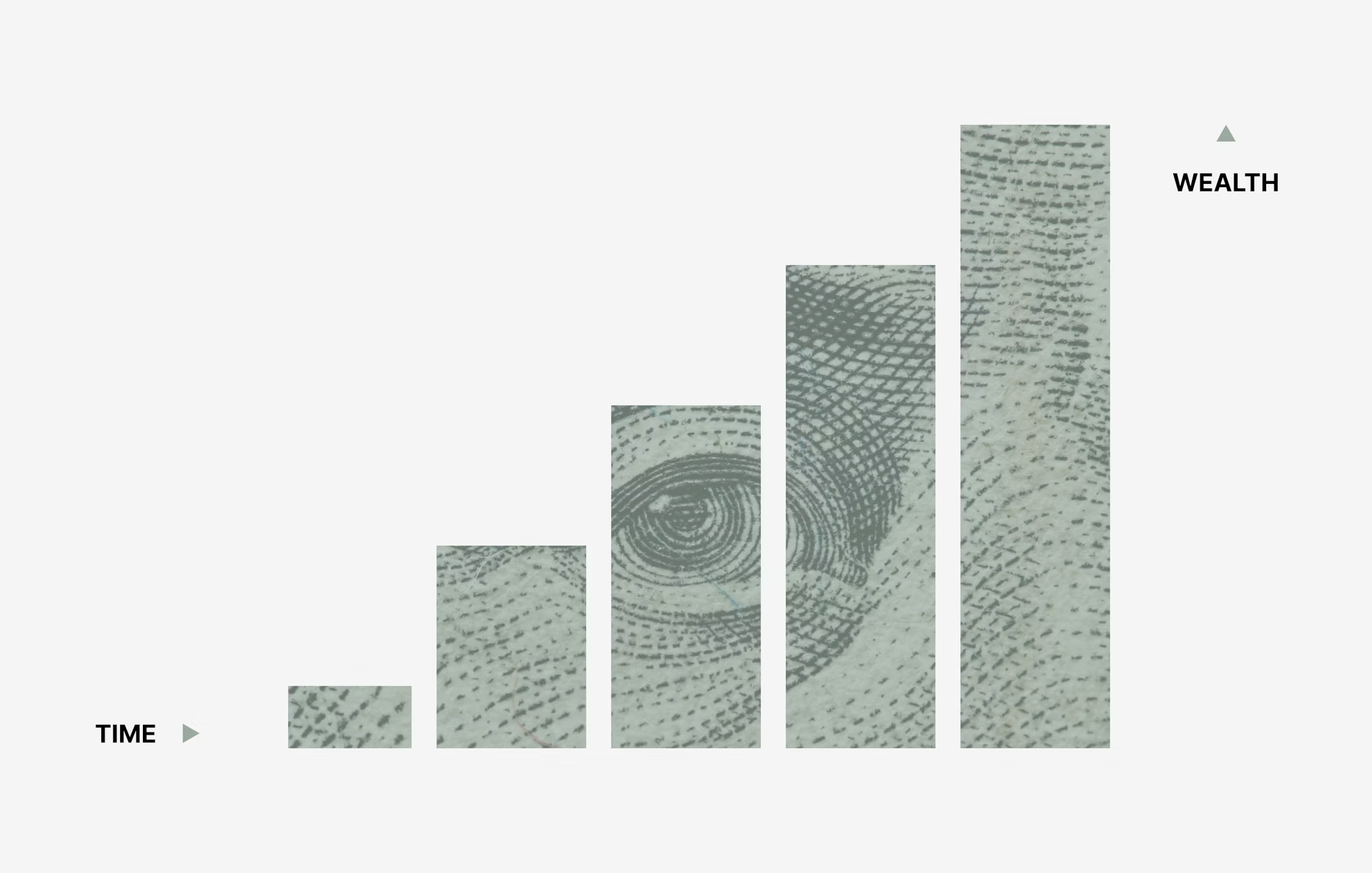
“All I wish to make clear is that, without any increase in population, the progress of invention constantly tends to give a larger proportion of the produce to the owners of land, and a smaller and smaller proportion to labor and capital.” – Henry George

This blog post previously appeared in The National as part of Common Weal’s In Common newsletter.
If you’d like to throw me a wee tip to support this blog, you can here.

image_2024-09-09_204513798

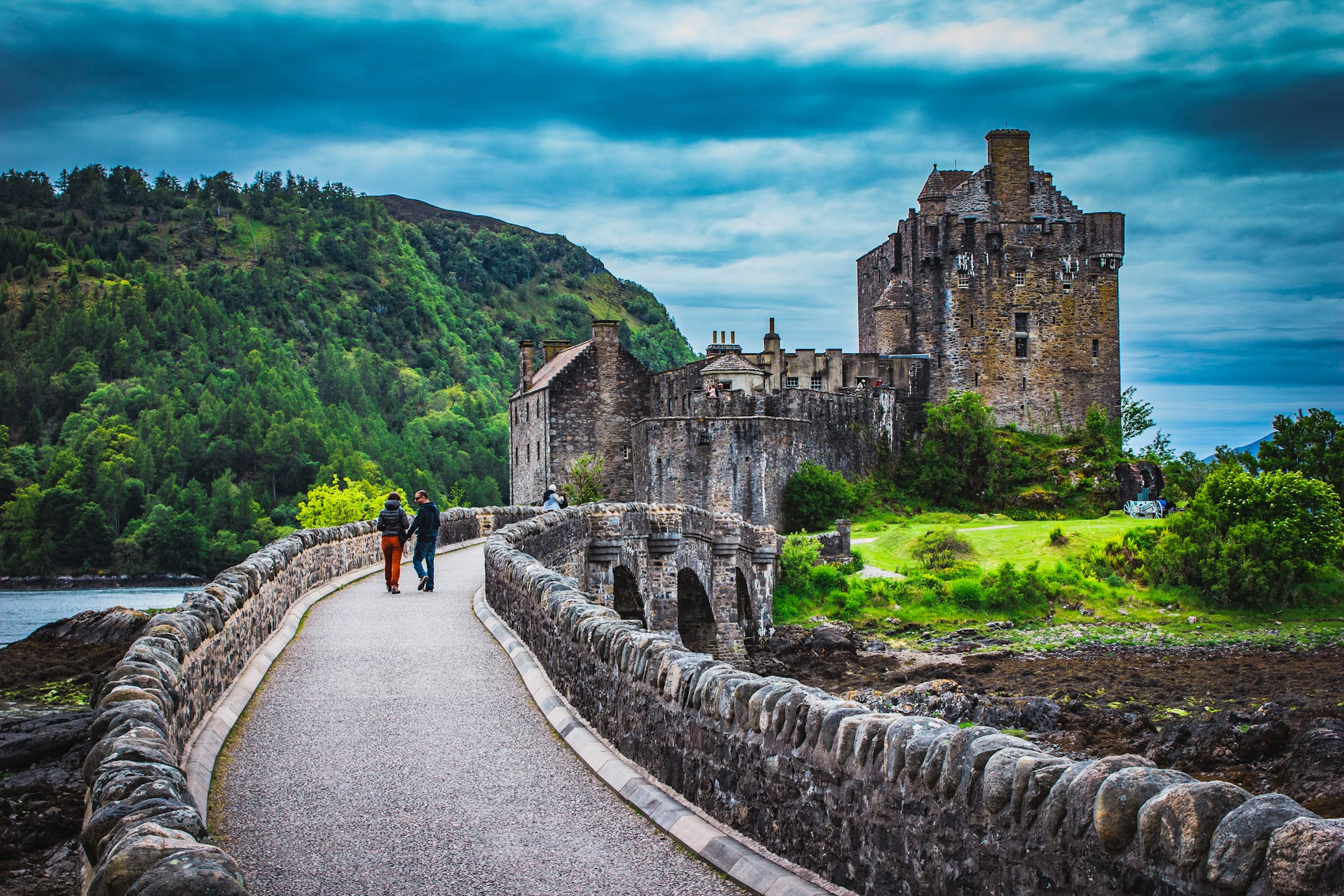
Last week, I had the pleasure to address SNP members at the Revive Coalition’s fringe meeting on land reform where I presented Common Weal’s proposal to bring a land tax to Scotland. As the meeting wasn’t filmed, I want to discuss the issue here for the benefit of members (and non-members) who couldn’t be there. I am also delighted that after our fringe, members gave overwhelming support to two motions that would enable such a tax. Taxing land in Scotland is now solidly SNP policy and the Scottish Government should bring forward a Bill to enable it at the earliest opportunity. With the Scottish Government pledging to bring in fresh cuts of in excess of £500 million, to ignore a tool that would almost entirely avoid the need for them is simply unacceptable.

Continue reading

The Devolution Deficit

“Humanity’s true moral test, its fundamental test…consists of its attitude towards those who are at its mercy” – Milan Kundera

This blog post previously appeared in Common Weal’s weekly newsletter. Sign up for the newsletter here.
If you’d like to throw me a wee tip to support this blog, you can here.

image_2024-07-31_145228020-1

Despite plenty of warning before the elections, new Chancellor Rachel Reeves has suddenly discovered a massive “hidden” black hole in the UK’s finances and she needs to make “difficult choices” to fix it. This is hardly to excuse the last 14 years of Conservative rule – it’s not as if they made a particular secret about their attempts to hollow the nation out for their own benefit – but as Robin has explained, political figures never seem to make “difficult choices” that would make things difficult for those who can afford it.

Continue reading

Can An Economy Be ‘Big Enough’?

“Anyone who believes that exponential growth can go on forever in a finite world is either a madman or an economist.” – Kenneth E. Boulding

(This blog post previously appeared in The Morning Star. You can throw me a tip to support this blog here.)

image_2024-06-16_094808259

Those of us on the left have rarely been truly excited by the prospect of the Establishment crowning their next temporary placeholder, though I don’t know about you but this upcoming general election seems to offer even less in the way of actual choice or a chance for change than usual.

The Conservatives are in freefall, ejecting ballast as fast as they can (personnel as well as policies), Keir Starmer’s “changed Labour Party” seems to be trying to do as little as it can to uphold the traditions of the middle word in that catchphrase and even in Scotland, where for the last several elections, the SNP provided some sense of counterpoint (either as a credible voting option or at least as an anchor against rightwards triangulation), that party seems to have hit the end of its road in terms of ideas.

This time around, all of those parties (and several others) have congregated on a single line when it comes to how to manage the economy. Growth at all costs, no matter who profits from it or how much damage is done to the planet in the process.

Continue reading

Selling The Earth

“Privatize everything, privatize the sea and the sky, privatize the sea and the sky, privatize justice and the law, privatize the passing cloud, privatize the dream, especially if it’s during the day and open eyed. And finally, for the embellishment of so many privatizations, privatize the States, surrender once and for all their exploitation to private companies through international share offering. There lies the salvation of the world…” – José de Sousa Saramago

(This blog post previously appeared in The National. You can throw me a tip to support this blog here.)

Private

“Natural capital is our geology, soil, air, water, plants and animals.”

Remember that definition, for it is the one the Scottish Government uses to introduce their “Market Framework for Natural Capital”, which they are consulting on at the moment.

Not content with their previous attempts to privatise nature in Scotland (see their “PFI For Trees” scandal last year and their “Green Investment Portfolio” a few years before that), the Government now wants to expand the remit of potential privatisation to all aspects of Natural Capital:- our geology, soil, air, water, plants and animals.

Continue reading

Extremism Bingo

“Face your political opponents according to legitimacy, democracy, and the constitution, not hypocrisy, autocracy, and transgression.” – Ehsan Sehgal

(This blog post previously appeared in Common Weal’s weekly newsletter. Sign up for the newsletter here.)

Bingo

Rishi Sunak’s recent speech on the dangers and risks facing the UK said much more about his perceptions of the risks to his premiership than about the risks facing the people of the country itself.

This week Rishi Sunak gave a speech hosted by the Policy Exchange – a think tank that scores the lowest possible rating for financial transparency and which doesn’t appear on either the UK or Scottish Lobbying Registers. In it he unofficially but totally officially used his position as head of government to launch a party political campaign aimed to try to save his career ahead of a general election that he will have to announce within the next few months (Note: Since the initial publication of this article, Sunak has indeed called that General Election) – knowing that had he given that speech during that campaign, he almost certainly would have been forced to rewrite much of it to stay within election campaign rules. As it is, the “official” transcript of the speech is loaded with redactions where he crossed the line between Prime Minister of the Government and Leader of the Conservatives. Not that anyone who watched the speech on the TV would have been exposed to those redactions. It’s certainly an innovative approach to political transparency – to say things on the record knowing that they’ll be safely redacted from the record.

Continue reading

The In Tray

[The purpose of] clarification is not to clarify things. It is to put one’s self in the clear” – Jonathan Lynn & Anthony Jay, Yes Minister 

(This blog post previously appeared in Common Weal’s weekly newsletter. Sign up for the newsletter here.)

I was hoping for a bit more of a shakeup in John Swinney’s Ministerial reshuffle. As it was, it’s barely a wobble. Some space was carved out to give Kate Forbes a Cabinet Secretary position without much in the way of actual power. The changes are most notable in their absences. Just a day before the reshuffle I was in a Committee hearing that discussed, in part, the “signal” sent when the issue of, say, “Older People” is moved from the title of a Cabinet Secretary to the title of a more junior Minister, and then dropped from titles altogether and moved into the middle of the list of responsibilities of a Minister or dropped completely. As Dr Hannah Graham has pointed out on Twitter, the list of terms that no longer exist as Ministerial titles include:- Migration & Refugees, Europe and International Development, Planning, Fair Work, Community Wealth, Just Transition, Biodiversity, NHS Recovery, Active Travel, Innovation and Trade, and Independence. Journalists take note, when those lists are published – the Wayback Machine is your friend. Compare the new list of responsibilities to the old one to see what has been promoted and what has been demoted entirely as an issue of importance for the Swinney Government.

Nevertheless. Even though most of the faces haven’t changed and most of them haven’t even moved office, we do have a new Government and that is always an opportunity for new and returning Ministers to review their goals and objectives. I’d like to place into each of their In Trays at least one Common Weal policy paper relevant to their brief that we’d like them to take on in the coming months.

Continue reading

Freeports Don’t Come For Free

“Freeing yourself was one thing, claiming ownership of that freed self was another.” – Toni Morrison

(This blog post previously appeared in The National.)

red and blue crane under blue sky during daytime

The National dedicated last week to the issue of Freeports and I’m glad they did. These deregulated tax havens have not been interrogated nearly well enough by our politicians or our media and the information coming from the ports themselves – even when asked directly – has been too little and too vague. This hasn’t allowed for a proper democratic debate around their merits or demerits, has allowed their failures to go unreported and, perhaps worse, has allowed outright conspiracy theories to rise up to replace the information vacuum which has, in turn, made it harder to campaign against them on the basis of the facts on the ground (something which suits their proponents whose agenda thrives equally in an empty well of information as it does in a polluted one).

Continue reading

Paying the Price of Climate Delay

“How is it that we already have so many solutions to the climate crisis that don’t compromise human rights or justice, but the only solutions being seriously considered are the ones that do?” – Mikaela Loach

(This blog post previously appeared in The National.)

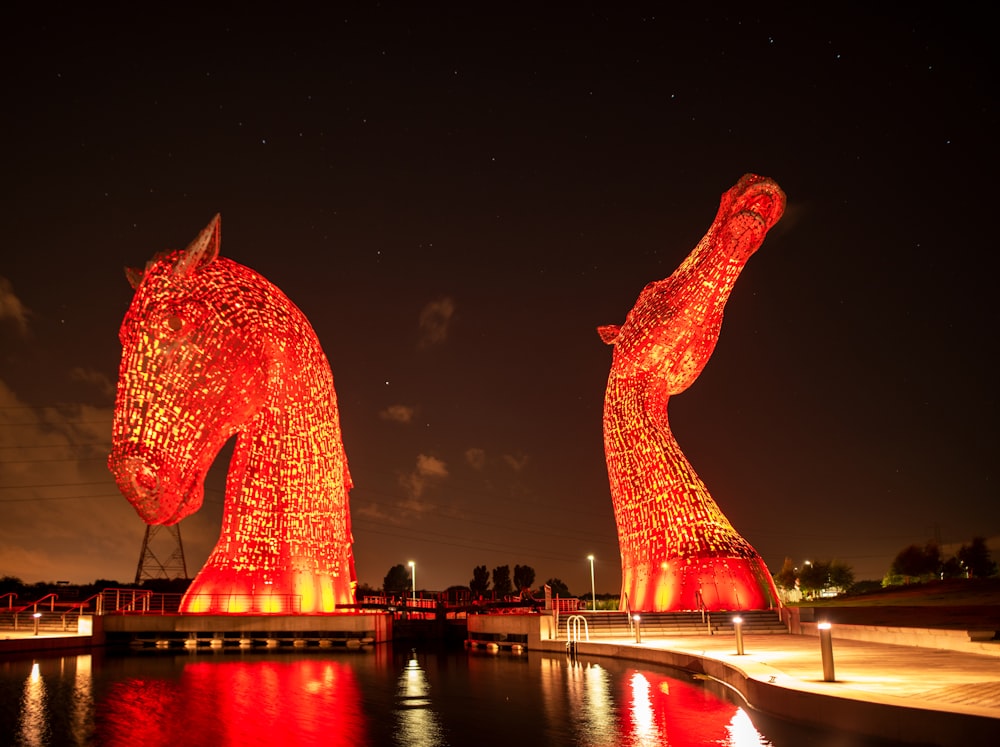
red dragon statue near body of water during night time

The Climate Change Committee has declared that it no longer finds the Scottish Government’s Net Zero plan to be credible. That the Government will breach its statutory duty to reduce carbon emissions by 2030 by 75% (with no catch up plan in place to reach Net Zero by 2045) and that instead of there being a comprehensive strategy to reach Net Zero, the best we have is a serious of ad hoc, disconnected announcements. This comes off the back of the Scottish Government being found to be acting unlawfully by not publishing the expected carbon impact of its policies, in line with those statutory targets. Not to mention that “Net Zero” is itself insufficient as it merely promises that Scotland will continue to pollute until 2045 before stopping but makes no promise to fix the damage we’ve already caused (particularly on the Global South both in the present and during our colonialist exploitation of those nations).

Continue reading

Land Reform, Or Another Power Grab?

“The free society is characterized by the radical decentralization of all kinds of power. Confederal structures do not rule over communities; they are the means by which communities cooperate.” – Roy San Filippo

(This blog post previously appeared on Bella Caledonia.)

Corgarff

The Scottish government has introduced land reform legislation to encourage community ownership by granting ministers powers to intervene in the sale of estates of more than 1,000 hectares. The ruling Scottish National party said the bill, the biggest package of reforms in years, aimed to “revolutionise land ownership in Scotland” by empowering rural and island communities and increasing transparency in large land transactions.

In 2016 the last round of Land Reform made it easier for communities to buy out parcels of land, however the rampant rise in land prices – often now driven by so-called “Green Lairds” looking to cash in on carbon credits – have locked those same communities out of being able to afford to buy that land. With a few exceptions – such as in Langholm – the parcels of land being bought by communities have been getting smaller.  A report published in 2022 found that despite a steady rate of successful community buyout projects continuing much as it had since the start of devolution, the actual hectarage of land transferred had all but stalled with around 97% of all community owned land in Scotland being transferred before the passing of the 2016 Act.

Continue reading

A Hollow Frame

“Spare your words, your actions will speak for you.” – Akiroq Brost

(This blog post previously appeared in Common Weal’s weekly newsletter. Sign up for the newsletter here.)

Imagine you’re applying for planning permission to build a house. Normally, the process would involve drawing up fairly detailed plans about what the house would look like. No plan goes perfectly to plan though and some changes are inevitable as the building process occurs but if the final building does deviate substantially from the initial plan there can be consequences up to and including being ordered to tear the whole thing down and start again. What you can’t do is gain permission to build “a house” without answering the basic questions like “What size is it?”, “How many bedrooms will it have?” or “Will it be made entirely of asbestos?”.

Over the past few months Common Weal have been incredibly busy replying to just a few of the public consultations that the Scottish Government and Scottish Parliament have been publishing. I’ve written before about the sheer volume of them, how much effort goes into each response and how little they often achieve despite the rare moments of serious influence or the fact that if folk don’t respond to them then vested interests end up dominating the responses and thus what the Government can point to as justification for their plans.

Continue reading