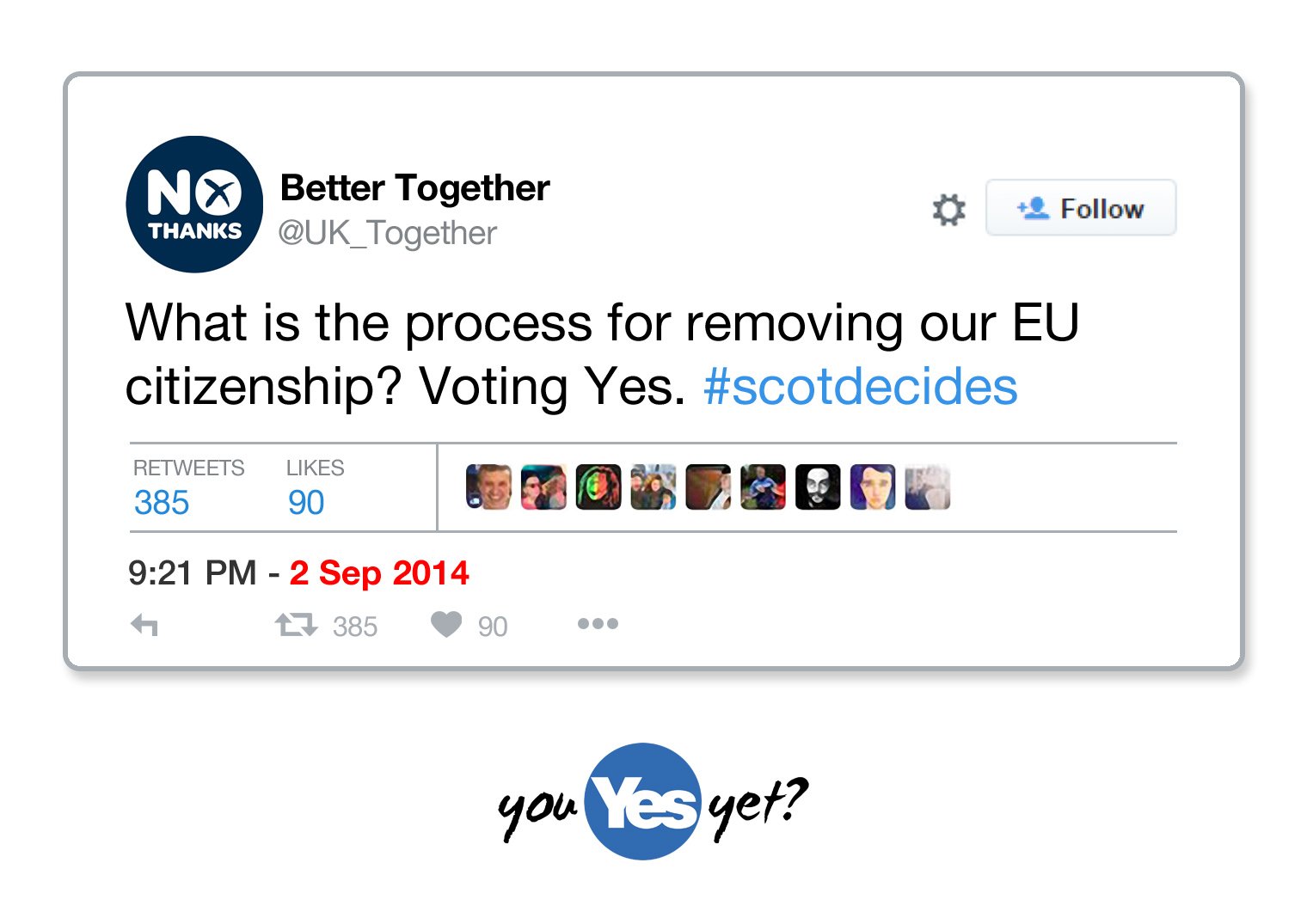
On the 18th of April, Theresa May called an election which was not required, so she could increase a majority she already had, so that she’d have a mandate she didn’t need to negotiate with an EU delegation which doesn’t care about such mandates.
“Remember, the EU isn’t as keen on “Special Deals” as it once was”, The Common Green, 11th February, 2017.
I’m always more than happy to be proven wrong especially when it’s in a pleasantly surprising manner.
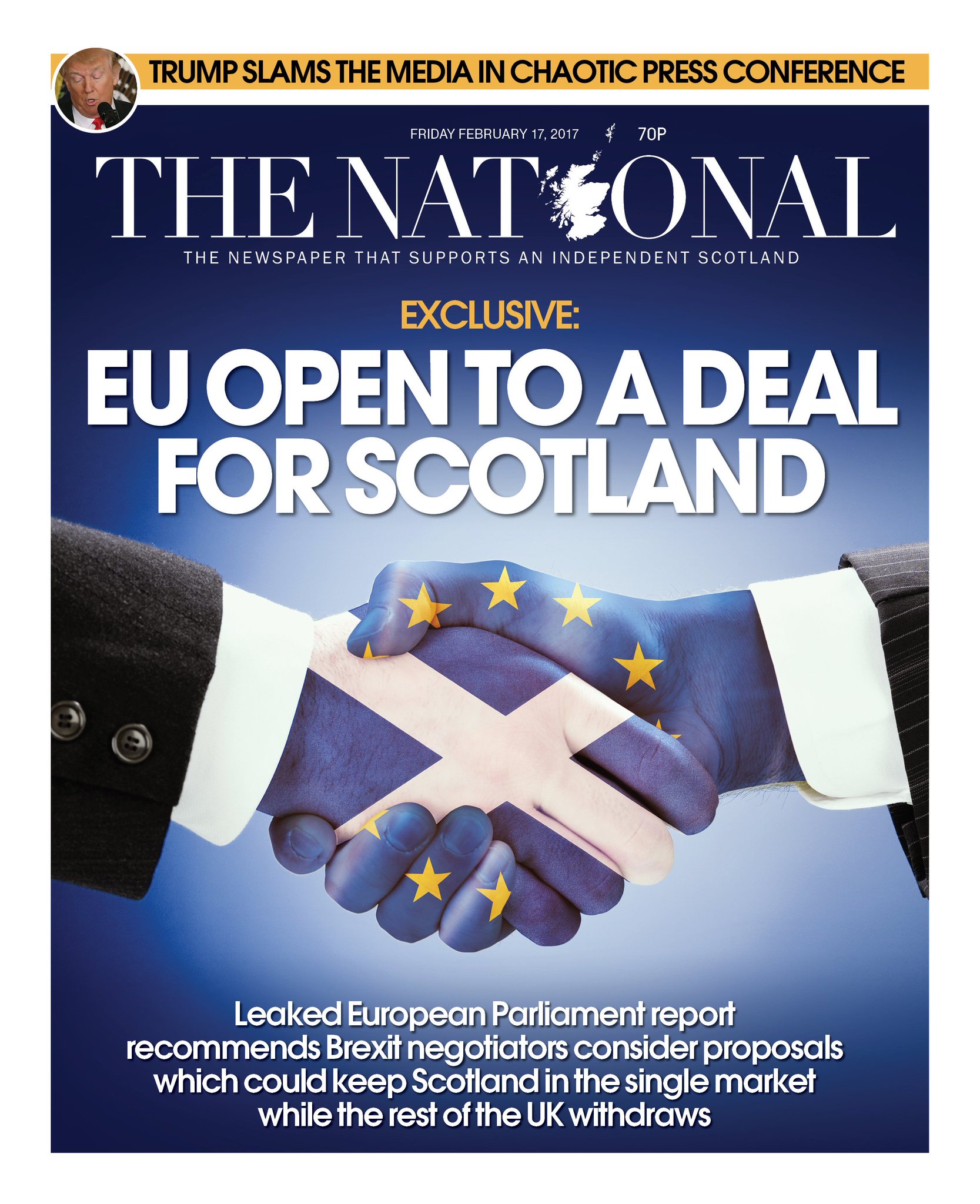
This week saw the news story in The National that, contrary to my impressions up till now, that a report had been written by the European Parliament’s Committee on Constitutional Affairs recommending that the EU should indeed be considering some kind of “Special Deal” for Scotland which would allow it stay within the Single Market even if we remain within the UK after Brexit.
“Work as if you live in the early days of a better nation.” – Alasdair Gray
Today I get to announce the launch of a very long awaited project I and the rest of Common Weal have been working on for quite some time now. We announced back in September that we have been working on renewing the case for Scottish independence by publishing a successor to the Scottish Government’s “Scotland’s Future” document.
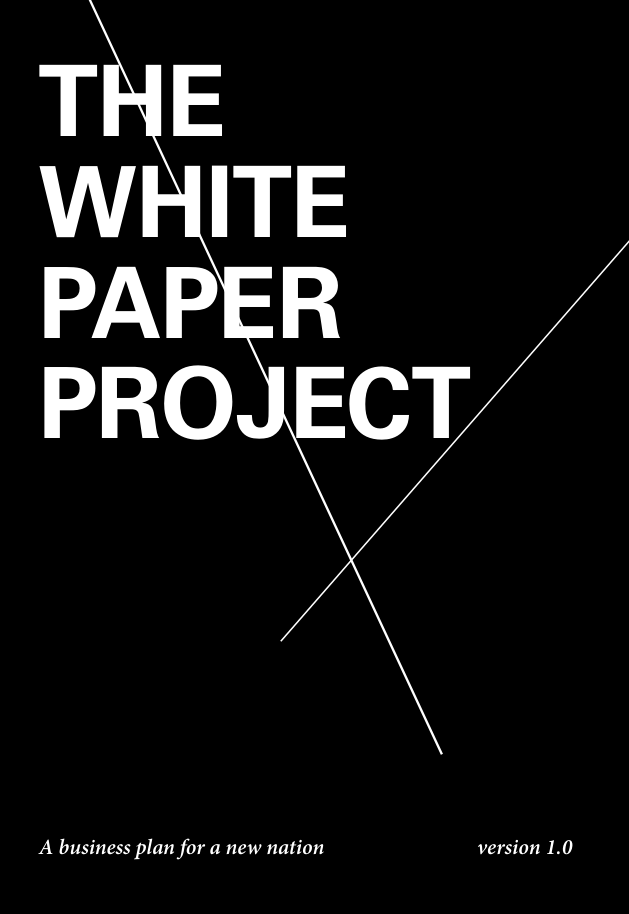
Version 1.0 of the Common Weal White Paper can be download here or by clicking the image above.
This is a leaner document than Scotland’s Future was. That document was as much a party political campaign device as it was a blueprint for independence. It not only sought to describe the powers which would come to Scotland independence but also sought to convince voters of the SNP’s own vision for independence. There was nothing inherently wrong with this latter task per se and other parties too sought to promote their own distinct visions as well – as they will all do so again throughout the next independence campaign but this is not the task of an independence White Paper. This paper shall, as far as possible, not seek to propose a list of policy ideas which an independent Scotland could do nor shall it attempt to convince you of the merits of those policies. It merely lays out the technical and structural requirements which must be in place for Scotland to become an independent country once we, the voters, decide that it should become so.
It is a “consolidated business plan for the establishment of a new nation state”.
To this end, the White Paper is split into several broad sections. Part 1, Process and Structures, covers the foundation of a National Commission – a cross party and cross administration body which will be tasked with designing and implementing the institutions and systems which need to be set up in the time between the independence referendum and the formal independence day. It is one thing to state, for instance, “There shall be a Scottish Central Bank”. It is quite another to decide how large it needs to be, where it needs to be based and who needs to be hired to run it. The National Commission shall also be given interim borrowing powers so that it is able to issue bonds, raise capital and fund the construction of the vital infrastructure Scotland would need to either move from rUK or build from fresh.
Part 2, Key Institutions of an Independent Scotland, covers all those things we kept being asked questions about during the last referendum. Would we have a constitution? A currency? What would we do about borders? Defence? All these and more. Of course it’s not yet possible to answer every question in this regard. Some of it will be up for negotiation with rUK, some of it will be dependent on the shape of the Brexit deal between the UK and the EU and Scotland’s relationship with both in the run up to independence but we’re making a stab at as much as we can and this is the section which will perhaps be most expanded upon as the Project is iterated in future versions.
Speaking of negotiations, Part 3 covers the prospective shape of some of these – chiefly the allocation of debt and assets and what rUK’s response to our leaving shall mean for our claim on them. Also covered to some degree is how Scotland will interact with various international and supranational organisations although it should be stated once again that no case shall be strongly made for Scotland’s joining or refusal to join any of these organisations. That shall be left to the party or parties which seek to form the first independent Scottish parliament.
Finally, Part 4 outlines the position of Scotland as far as finance and borrowing goes as well as outlining as best we can the default fiscal budget for year one of independence. It is, of course, almost impossible to place any kind of actual certainty or promise on such a budget as it is based on several key assumptions such as the desire to keep both public spending and the various tax revenue streams broadly similar to their position at present. If a party decided to scrap the entire tax system and replace it with one of their own devising then it would have to be up to them to explain how that worked and project the revenue to be gained from it and how it would be spent. Other assumptions include Scotland spending the money assigned to it in GERS for various “UK projects” on projects of similar value and in similar accounting lines (so that, to pick an arbitrary example, our “share” of UK economic development funding spent outside Scotland but from which Scotland “benefits” would instead be spent on economic development within Scotland). Again, whether or not this happens will be a case for the individual parties to make and will depend entirely on accurately and precisely how the current fiscal projections for a devolved Scotland within the UK map onto the fiscal situation of an independent Scotland.
Once again, this is not the completion of the White Paper. This is the beginning. You will see that there are several sections which need to be expanded and built upon and items like costs and figures will be updated as time goes on (the default budget, for instance, is based on 2015-16 figures but – as we’ve probably noticed by now – Scotland didn’t become independent in 2015-16 so these precise figures will be revised as and when they should be). Some areas require the attention of people with specific experience and expertise in them to be able to complete so we are openly calling for those experts who are able and willing to contribute. Please contact us if you want to be involved. Let’s work to build the early days of our better nation.
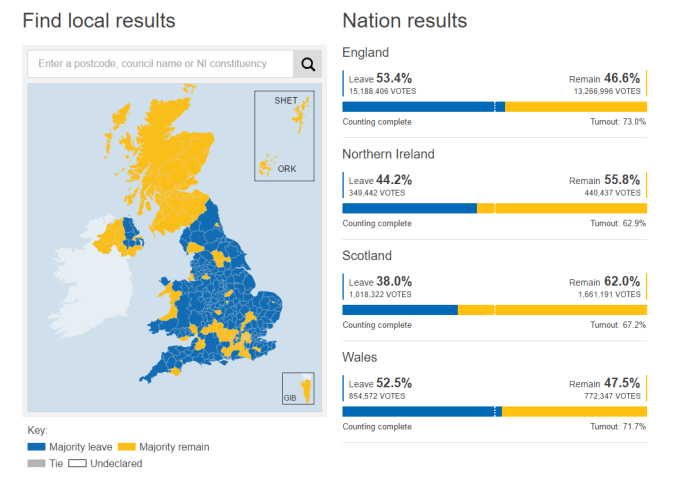
Well that’s that then. Votes cast and counted and the UK, by a margin of 51.9% to 48.1% have voted to Leave the European Union. The long, fractious and never really embracing journey that the UK has been on shall now enter a new phase. I can only guess as to where it’ll end up.
You may have heard by now though that the vote across the nations and regions of our “One Nation” was not homogeneous.
England and Wales voted to Leave. Scotland and Northern Ireland voted to Remain. It represents yet another rejection by Scotland of “UK” politics and I believe that, as previously stated, a second independence referendum is now inevitable. The First Minister has herself confirmed this morning that the Scottish Government is now going to actively pursue one whilst also seeking to negotiate directly with the EU to try to preserve and protect our relationship. I do not believe that we will find that door to be particularly tightly closed.
As for Leave, once they’ve dealt with the resignation of David Cameron, probably a few key allies too, and have taken over the Tory party they’ll have to get into the grit of actually disengaging with the EU.
The EU Commission has already made it clear, understandably, that they would prefer Article 50 to be triggered as soon as possible so that they can get the whole business done and dusted. Leave, however, are still trying to be cagey. Some of the talking heads in the media today are still even hinting at an “alternative” plan like a Vienna Convention type disengagement. The big problem with that idea is that, even if it’s possible, it can be vetoed by any of the remaining 27 states. If the EU insists that Article 50 and a formal discussion is the way to go then it can indeed insist that it shall be.
It’s still very far from certain what the UK’s future relationship with Europe will actually be once all is done and dusted.
Indeed, there’s an outside chance that a Brexit may not yet happen. It could be that the Tory leadership changeover results in a General Election…which the Tories then lose. Labour, especially one which actively campaigned on the point, could well ignore the referendum result. At this point I wouldn’t discount any possibility, no matter how unlikely.
Assuming though that Boris Johnson and chums take the reigns and we go through Article 50 and Brexit happens, there’s still several possibilities (ranging from EFTA, through a set of Swiss style biateral treaties, through a CETA/TTIP type deal and out to the “default” WTO regulations only) which I outlined here.
I’m particularly disturbed by some of the rhetoric which stuck. Lord Ashcroft’s on-the-day polling found a solid correlation between likelihood of voting Leave and support for the argument that it would help “Take Back Control”.
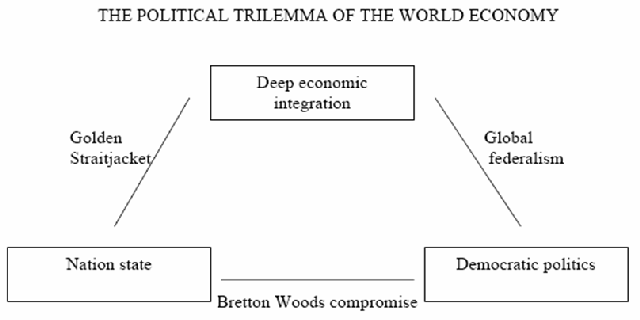
I mentioned in my article on sovereignty that countries which pin themselves to the idea of national level politics, especially to the point of it becoming a geas, can bind themselves into the Globalisation Trilemma. If, as I suspect they will, Leave use their win to forge towards turning the UK into some kind of Free Market paradise then the concept of democratic politics could find itself severely compromised.
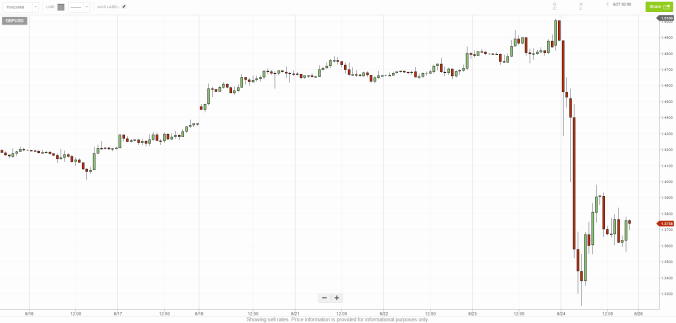
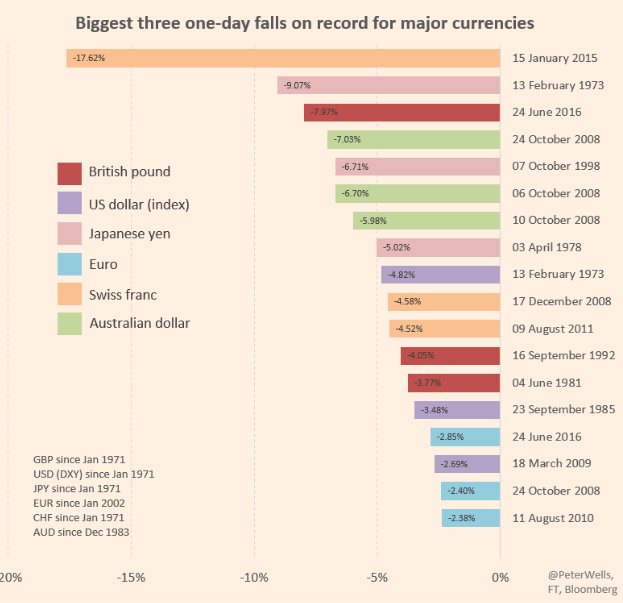
Speaking of the Free Market, it was in the financial world that the most “excitement” of election night was to be found. The polls, public and private, in the days running up to voting day had starting indicating a Remain vote. This had pushed the value of the GBP up significantly as traders started “buying the rumour“. When the Sunderland vote came in though it was the first indication that things were not going to go well for Remain. That one result caused a panic sell in the markets which did not improve as the night went on. By morning, the “Great” British pound had fallen to the weakest point seen since 1985 and, after a morning-after retracement, had lost 8% of its value. This is the worst single day hit that the pound has ever taken, twice as deep as plunge as 1992’s “Black Wednesday” and the third deepest single day hit ANY major currency has taken in modern times. History books shall be written on this point alone.
It should be of very careful note that against the Euro, the Pound lost about 10% of its value compared to 2015. This is important because the UK had a trade deficit with the EU of about £68 billion in 2015. Assuming all things other than currency being equal then that trade deficit could be expected to rise to £75 billion simply because it’s now more expensive to import goods and services from Europe.
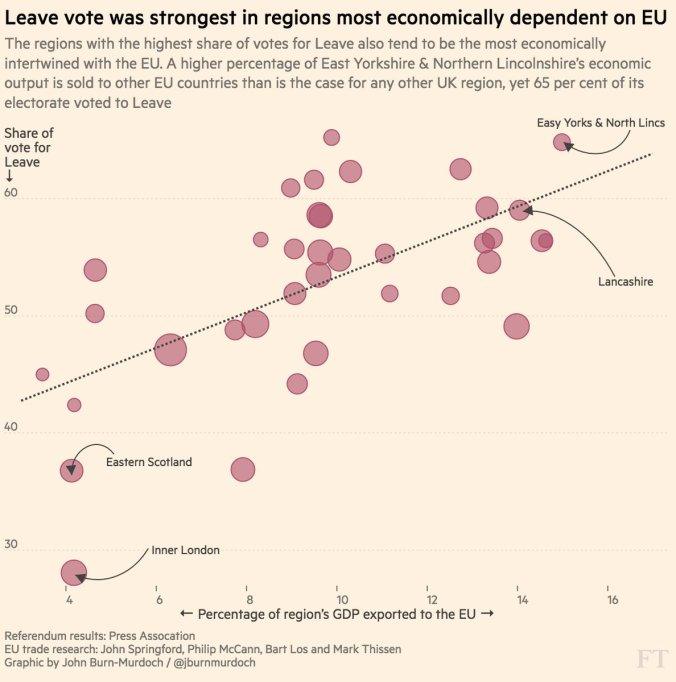
This difference in trade, around £7 billion, represents almost exactly the amount that Leave claimed that we’d “save” in net contributions to the EU. There may well be no gains, no money for the NHS or anything else that was promised. I hope I’m wrong. Because if I’m not, the areas which most voted Leave are also the areas most likely to be dependent on the EU for trade. They will be the areas most reliant on a good deal and/or economic plan for what comes after.
As for Scotland, it’s looking now almost inevitable that this result will hasten another go at an independence referendum and, this time, not only will it not be called until we’re ready but it’s looking rather like a lot of former No voters who had been promised that their vote would ensure their EU membership have now seen that whisked away. It has been enough to convince many that independence is now the best option ahead of Scotland. If you happen to be one of them, Welcome.
The Greens and the SNP, will now be exploring all options to protect and preserve our EU relationship. We’re in very uncertain times now with few precedents to guide us so what form this will all take is a matter of pure speculation.
My own preferred option could take the form of direct negotiations between the Scottish Government and the EU resulting in some kind of deal whereby if an independence referendum is held and won in the period before formal Brexit then a newly independent Scotland could “inherit” the UK’s old seat with no loss of continuity. Of course, this would require the co-operation of the Westminster government to allow such negotiations to take place or to even acknowledge that the result in Scotland is significant. It would be a tragedy of democracy if we were simply ignored.
I’ve got no easy answers for the next few months, or years. I’m as much an unwilling passenger as everyone else who voted Remain yesterday. I’ll try my best to work out where we’re going just as soon as it becomes apparent though. And who knows. Maybe, just maybe, we’ll get off early.
I’ll confess to being a lightweight. I snuck off for a few hours sleep right after the Clydesdale results were called and woke up right after the Lothian list so unlike virtually every other political pundit in Scotland right now, I’m able to type only marginally less coherently than normal.
So. How about those results?
The Green contingent has expanded three-fold and whilst I’m more than a little upset that neither of the two candidates covered by my branch, Kirsten Robb and Sarah Beattie-Smith, made it in I’m heartened by the success of the others notably Andy Wightman in Lothians. Who Owns Scotland? We’re about to find out!
My hypothesis that the SNP would come back with another majority appear to have been disproven although a clear pro-independence majority remains. Arguably, the Greens could call this a result significantly in our favour as we move to the wrangling over Parliamentary positioning begins.
I’m willing to be wrong again but I can’t see much appetite for an offer of a formal coalition. It doesn’t seem like good game theory for the SNP to offer up a Ministerial position (almost certainly something like Energy or Environment) just to avoid a two seat minority. Especially when they already have form for running a minority government with a fair degree of success.
I could see a discussion over some kind of Supply and Confidence arrangement based on some concessions that the Greens have campaigned on and over which there’s already a substantial level of support within the SNP membership.
I’ll make one prediction on this point. Unless the SNP are willing to rely on Tory support, Fracking will not happen in Scotland. Good.
I’d be hoping that there might be some more movement over local taxation and, perhaps, the Scottish Government will let Andy formally get his teeth and claws into the Land Reform Bill. That’ll be a joy to watch. The Greens campaigned on giving the Scottish Government the courage to be bolder on a range of issues. Here’s hoping it can.
So, on the vote itself. We saw hints of the total flight of the Right and Unionist vote within Labour as early as November last year but even as the last polls came in they appear to have underestimated the depth of that flight. Ruth Davidson’s campaign to get people to vote Unionist, rather than Conservative, appear to have been successful. What shall be interesting to watch now is what she does with that support. How far can they be pushed on Austerity (or how far can blame for it be deflected) before the Union-at-any-cost vote starts to tally up just that?
Where it leaves Labour is another great unknown. They’ve been utterly wiped from their birthplace in Glasgow and Lanarkshire and have retreated to the Morningside Reds of Edinburgh. They appear to have three choices ahead of them. Either ossify as an increasingly marginal voice in Scottish politics; Abandon the Unionist vote and try to out-left the SNP (I don’t think at this stage that even a drastic Home Rule or Federal position would draw back those now set on independence) or try to out-right the Tories (which would mean claiming, adopting and accelerating Austerity). I cannot honestly see a route back to the forefront of Scottish politics for Labour barring some singularity event such as actual independence or some act of self-destruction within the SNP greater even than the one that UK Labour appear bent on.
The proportionality of AMS was stretched rather to its limits last night. Despite narrowly missing out on a majority the SNP, as the largest party, were the largest beneficiaries of the system gaining approximately 9 seats more than their regional vote percentage would have suggested. The Tories though also benefited gaining about two more seats than their regional vote share whilst Labour broke about even, the Greens losing one seat and the Lib Dems being rather drubbed by the system, losing three seats to the maths. This calculation would have been mitigated by the addition of 6 “Other” seats which, on these results, would have more likely have been distributed amongst the sitting parties rather than going to smaller ones. In most proportional voting systems around the world a minimum threshold of 5% is often applied and, in our case last night, no small party achieved more than 2% nationally or more than 4% in any single region.
It’ll be interesting to see if there are any calls for electoral reform based on these results the way even the SNP made a mild complaint about their overwhelming success under FPTP last year.
Another topic which will now need to be thrashed out is the position of Presiding Officer. I reckon that this year the wrangling over whether the party/ies of government or of opposition give up an MSP for the post will be particularly intense this year given the slim margins and the tactical situations faced by each of the parties. The SNP won’t want to dilute their minority any further, Labour won’t want to shrink further either, the Tories and Greens will want to capitalise on their gains to maximum effect and if the Lib Dems lose one more MSP they cease to be an official parliamentary group.
Personally, I’m rather disturbed by the concept of choosing the PO from the MSPs in the first place. Why should the electorate who have only just chosen their representatives have to give one up as the PO must remain neutral, must resign from the political party and whip and have severe restrictions on where and how they vote (Only in the event of a tie and only to maintain the status quo or further the debate). To me, this isn’t a job for a Member of the Scottish Parliament. I’d look towards inspiration from the “checks and balances” of the US. Perhaps the PO should be appointed from a pool of senior judges or similar judicial positions? They are already used to applying impartially the rule of law so should trivially be able to manage Parliament in a neutral manner.
Of course, an alternative to a Presiding Officer could be an elected President, but that is likely to be a discussion for a post-independence situation…
Where do we go from here? I honestly have no idea. Going from bracing for a substantial majority and “the most boring Parliament” of the devolution period (as one pundit put it) to back to the days of actual discussion about policy I think the next five years could be one filled with potential…if we choose to allow it. For a last word:
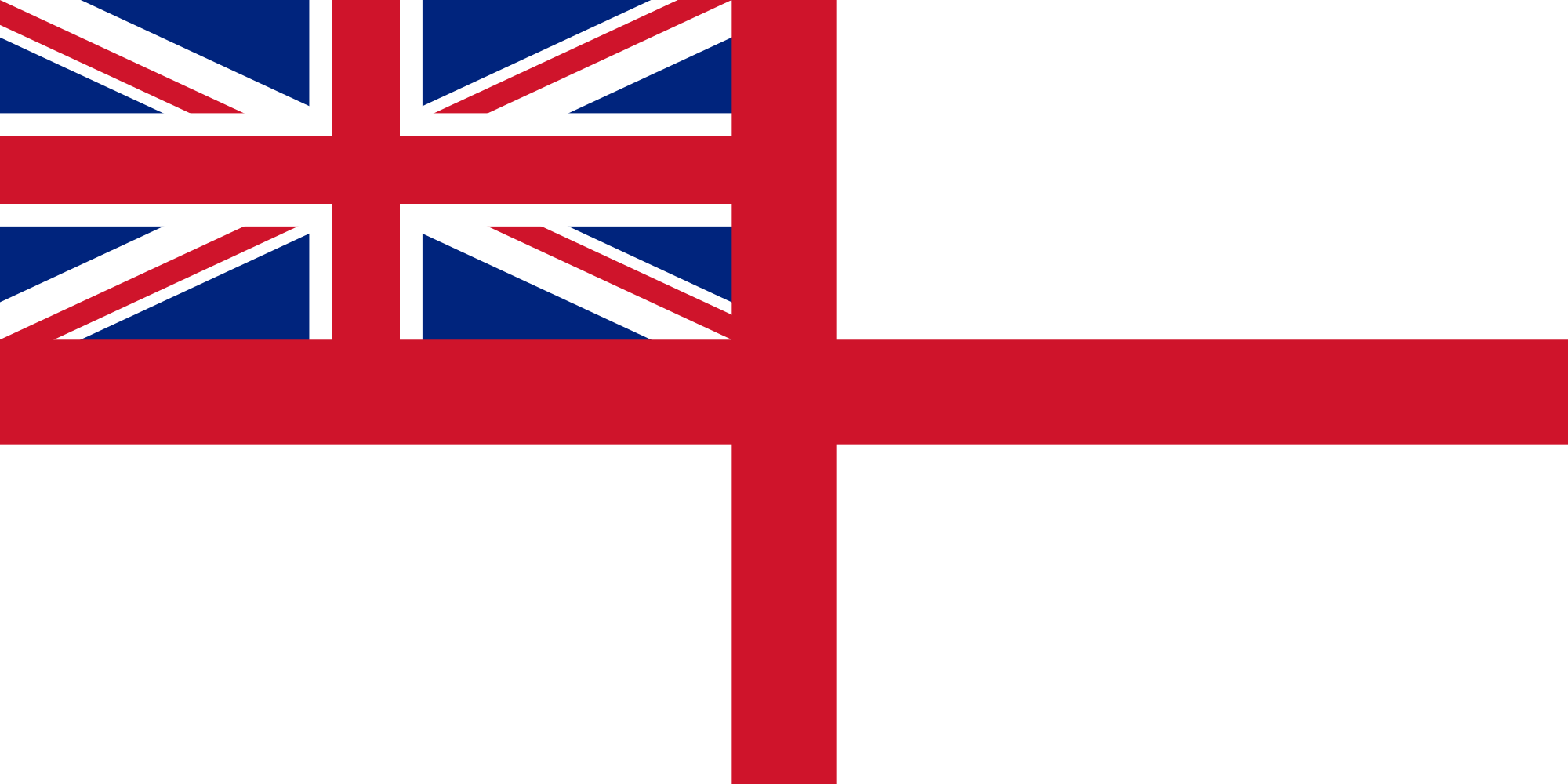
The White Ensign. Possibly a fitting flag for the United Kingdom of England (plus others).
Thursday, October 22nd 2015. The day that Westminster ended, finally, any pretence that the United Kingdom consisted either of “One Nation” or of four nations joined as equals.
Now we live in a state in which one of those nations maintains a right and power over the other three and representatives from those latter nations have fewer rights to speak, to influence and to legislate than their colleagues and, by way of extension, voters from those nations have less control over how their state is run.
The Debating Chamber of the Scottish Parliament Building. Source: Wikipedia
I know that it feels like we’ve just finished a rush of politics and campaigning and that the next step will be a while away but believe me, a year is not a long time and the 2016 Scottish Parliament General Election will be upon us before we know it. The various parties and actors are already starting to formulate their plans and draw their lines and the speculation over what could result from the vote and how those results could be achieved are being debated over the various Internet and social media channels.
In much of this speculation and amongst my conversations with some of my peers I’ve realised that more than 15 years after the first Scottish elections there remains much to be said about our level of knowledge about how our votes are cast and how the seats are calculated. Here, therefore, is a guide to how it all works.
I’ve just listened to a very interesting discussion on The Public Philosopher program on Radio 4 asking just why do we use democracy to decide our politics and is it a fair and equal system?
What does it mean to be a “fair” and “equal” system?
We currently give every voter one vote in an election but some have suggested giving some people more than one (indeed, in some elections such as the Labour Party’s electoral college based leadership elections some people do receive multiple votes each “worth” a different weight). Is this “fair”? Who should decide who gets more and would, say, a merit based exam merely exacerbate class division?
How does this link in to non-proportional voting systems like First Past The Post? Clearly if you are a swing voter in a marginal constiuency your vote has a far greater impact on the final result than a minor party voter in a seat that another party considers “safe”. Is it really a democracy at all when you can win a seat on 30% of votes cast, especially when turnout itself is only around 50%? (For more: https://thecommongreen.wordpress.com/2015/03/05/under-fptp/).
Questions were raised on gender equality within parties. The Scottish Greens have a clear commitment to gender equality and have structural and procedural levers in place to ensure it. Here we could consider that favouring someone over another for gender reasons may not be equal or fair but if it is done to correct an imbalance which cannot otherwise be eliminated then it is clearly has to be. One could spend a maddening amount of time thinking about the distinctions within equality and fairness.
Or does Democracy mean something else entirely? Is it less about how everyone gets to have a voice and more about making your government accountable? The “benevolent dictator” may protect everyone’s rights and make good decisions this year but if he gets replaced or goes bad next year and you can’t get rid of them then is that a stable system?
On the other side, there is a movement at the moment pushing for participatory decision making where the general public all vote on each policy rather than delegating a relatively small group of people to represent them. Does this harness the power of collective decision or does it simply allow majority oppression of the majority and populist policy? Is a fair democracy sometimes about making an unpopular but right and just decision?
All in, a thought provoking discussion and well worth a listen.
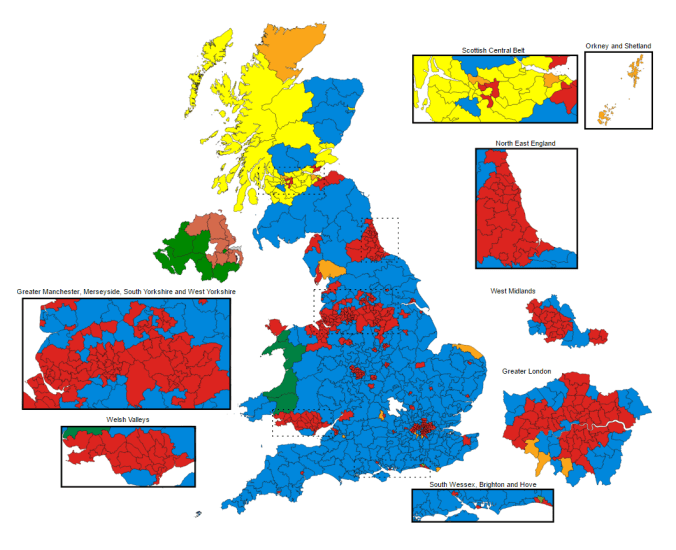
There is a gaping flaw in the UK election system which desperately needs addressed. The First Past the Post (FPTP) system through which Westminster politicians are elected is deeply unrepresentative and encourages apathetic MPs.
At first glance, it is a simple and straightforward system. Every citizen gets one vote; each votes for a party within their constituency; whichever party gets the most votes (not a majority, just more than any other) sends one MP to Westminster; the party with the most MPs forms the government.
Underneath this simplicity lurks a flaw in our democracy. FPTP does not fairly represent the opinions of the people. In the 2010 General Election, the Conservatives became the largest party in parliament, winning 47% of the 650 parliamentary seats with only 36.4% of the electoral vote. Labour became the second largest party, with 40% of the seats and just 29% of the vote. While larger parties gained, smaller parties suffered: had the election been run under a representative voting system, the Green parties of the UK would hold five or six seats in Westminster, rather than only one.
The problem gets worse the closer the race becomes. Imagine a constituency election with three roughly equally parties, each receiving roughly 25% of the vote: if one managed to squeeze ahead and win with 26%, they would win the entire seat, and 74% of voters would have an MP who did not share their beliefs. Repeat this across the nation, and it would be possible for a party supported by 25% of the population to have no representatives in parliament.
First Past the Post routinely denies representation for supporters of all but the largest two or three parties.
On the scale of the whole country there is another issue, equally unfair. Either by accident or by design (through gerrymandering) it is possible for some constituencies to have perpetually large majorities for one single party. These are the so-called “Safe Seats.” Since the winner takes all, it becomes pointless for other parties to sincerely contest these seats, and so the quality of opposition eventually drops to the point that the party with the majority can stand almost any candidate and be sure they will win.
This has a corrosive effect on democracy. On average, just 9% of seats change hands during a UK General Election: whomever wins them, wins the election. These “Swing Seats” becomes the only constituencies that matter, and so political parties target their policies to appeal to the voters within them and neglect the rest.
For example, Somerset contains nine of the two hundred seats in the UK most likely to change hands next year. Resources focused there may win more seats, so policy has more impact if made to suit the people living there. Voters in Clydesdale matter little in comparison, and their wants, needs and complaints can be safely ignored.
Even within “Swing Seats,” the threat that the seat and so the nation might be lost to an unwelcome political party causes many people to vote tactically, passing over the smaller parties they prefer to back the least odious party that can win. Little wonder that voter turnout has been declining for decades.
The Scottish Green Party supports a more representative, proportional voting system that allows people to vote for the parties whose policies they prefer without “wasting” their vote. With a proportional vote, the tired old line of “Vote for Us to Keep Out Them,” becomes redundant, and people are free to vote for the party whose policies they approve.
For now, FPTP ensures voters in “Safe Seats” are ignored and taken for granted, while voters in “Swing Seats” are cynically exploited, often frightened into voting for the big parties. The established parties do as they please, and anyone who supports change is disenfranchised.
First Past the Post delivers governments that serve no one. Under it, we all come second.
——-
This article was first published at the Lanarkshire Green Party website: http://www.lanarkshiregreens.org.uk/content/under-first-past-post-we-all-come-second





 The Common Green