It’s Scotland’s Economy – Or Is It?

“It is not inequality which is the real misfortune, it is dependence.” – Voltaire

This blog post previously appeared in The National as part of Common Weal’s In Common newsletter.
If you’d like to support my work for Common Weal or support me and this blog directly, see my donation policy page here.

Chivas Regal Scotch Whisky

Deliberate Government policy has resulted in Scotland’s economy being outsourced to foreign-owned companies to the point that we scarcely have a home-grown economy left any more. In a world of threats to global trade, this is a major problem.

Continue reading

Tariffs for Penguins

“Well, whiles I am a beggar I will rail,
And say there is no sin but to be rich,
And being rich, my virtue then shall be
To say there is no vice but beggary.
Since kings break faith upon commodity,
Gain, be my lord, for I will worship thee.”
― William Shakespeare, King John

This blog post previously appeared in Common Weal’s weekly newsletter. Sign up for the newsletter here.

If you’d like to support my work for Common Weal or support me and this blog directly, see my donation policy page here.

white and black penguin on snow covered ground during daytime

Note: This article was published on April 4th and the situation has developed substantially since then with the tariffs on most countries (with the notable exception of China) being reduced to 10% for the next few weeks or until Trump burps out some other policy after breakfast.

Trump’s tariffs are the product of a person who doesn’t understand the levers they are pulling, but the UK responding as if we achieved a victory is a flat out lie.

Donald Trump cannot conceive of a “positive sum game”, that is a deal where both parties end up coming away better off than they were before the deal was made. Collaborative community action is a positive sum game when the whole of the community is greater than the sum of its parts (watch once of those “Alone”-style survival programmes to get a glimpse into what true “individualism” actually means).

Trump believes that the only deal possible is a zero-sum game. If there is a “winner”, then there must be an equal and opposite “loser”.

Trump is also deeply narcissistic and believes that if he can perceive you “winning”, then HE must be the “loser” and that cannot be allowed to stand. In his “Art of the Deal”, a “fair” deal is one that he wins.

Now that the world is “fair” again, any attempt by any nation to apply a retaliatory tariff or other sanction will be met with fire, fury and injustice.

Don’t worry if you disagree with his logic or his assumptions here. The key to understanding the trade tariff announcements this week is not whether or not you think he’s right but whether or not HE thinks he is.

Sir Keir Starmer thinks he has won a diplomatic coup. That the “Special Relationship” has saved the UK from the wrath of Trump’s tariffs – at least compared to the EU. The UK got hit with a 10% tariff, the EU got 20%. This, if you watch the UK Government aligned media or commentators, is a sign that all of the begging and grovelling for concessions and special privileges helped take the edge off of a bad situation. Keir Starmer believes that his strategy is a vindication and that we must all “trust the process”.

Sir Keir Starmer is wrong. His actions played absolutely no role in how the tariff was applied to the UK. He could have begged harder and utterly prostrated himself in front of the golden throne. Or he could have stood straight and pushed back. It wouldn’t have mattered. Sir Keir Starmer is an irrelevance to Trump.

With a few exceptions like Trump’s hatred of foreign cars and the fact that these latest tariffs appear to be additional to the tariffs put on countries like China and Canada previously, the calculation of the rate for each country was disturbingly simplistic. For countries where the US has a trade surplus in goods (but not services – this will be important. Trump doesn’t believe that exports like Holywood movies, Microsoft Office subscriptions or licensing deals to produce goods outwith the USA under the Coca-Cola or McDonalds name are worth anything to the US), the rate is 10%. For countries where the goods trade balance is a deficit (i.e. a higher value of goods from country X enter the US that American goods leave for country X), then they took the value of the trade deficit (import value minus export value) and divided it by the value of imports. If a country sells $100 of goods to the US but only buys $60 worth back, then $100-$60 / $100 = 0.4, so they get an 40% tariff. Except Trump then halved the values above the 10% floor because he’s “being nice” (which, of course, undermines his stated purpose of the tariffs being the minimum amount required to restore a trade balance – once again, it doesn’t matter if you see why he’s wrong, only that he doesn’t).

This is why countries like Madagascar and some of the world’s poorest countries are high on the list. The largest single item that Madagascar exports to the USA is vanilla – one of the most valuable spices in the world at around $83 million per year. Goods experts from the USA to Madagascar are comparatively sparse. There isn’t much that the US can send that they can’t get from somewhere closer and, more crucially, high value goods are of limited value to a populace who can’t afford them. Madagascar isn’t “ripping the USA off”. They’re just selling spices that the USA is about to realise they used to really enjoy.

Other anomalies abound like the mention of sub-national states like the Falkland Islands and France’s “we don’t call them colonies any more” territory of St Pierre and Miquelon that sits off of Newfoundland in Canada. There are two main theories why these substates are included. One being that some Musk-ish techbro made the list by asking Grok or another chatbot for a “list of countries” and it returned a list of countries that have a country code top level internet domain like .uk or .eu (though if they did, I’m surprised that they had the awareness to remove .su so they didn’t try to apply a tariff on the Soviet Union despite America being somehow completely unable to export ANYTHING to them for going on 35 years now). The other is that they just copy/pasted the CIA Factbook list of notable polities which includes several sub-state territories of various kinds. (Fun Fact: I had to do this precise kind of filtering while writing our Profit Extraction paper because the World Bank’s database I used also includes various substates, suprastate regions like “West Africa” and multiple nations that no longer exist but did exist when the Bank started tracking their data).

The omissions are interesting too. Russia and Belarus were omitted “because we already have sanctions on them” but Iran – which is also under US sanctions – was not. There’s a very telling thing going on when you look at the nations that Trump is willing to break the sharpie out and deviate from the formula for.

There are two most “fun” additions to the tariff list. The British Indian Ocean Territory which is essentially exclusively inhabited by a US military base (the people who used to live there before the UK and USA ethnically cleansed them call them the Chagos Islands). The other, being widely reported, is the Australian external territory of the Heard and McDonald Islands. They got a 10% tariff as well (remember, 10% is the floor rate for countries where the US is already “winning” on trade). Major exports from these islands are…nothing. There is no trade. There are no people there. It’s mostly just penguins. Penguins aren’t widely known for their genius at negotiating international trade deals, but still somehow they managed to achieve the same level of success against Trump as Sir Keir Starmer.

And this is the core point. The Trump Trade War of 2025 has no logic to it (see Robin’s briefing this week on how nations SHOULD be applying tariffs as a means of correcting for pollution and other “externalities” that capitalism fails to pay for), it’s going to spiral worse for the countries that fight back, worse still for American consumers, and only marginally better for the countries that lick the boot to try to pick off country-specific, sector-specific or even just personal exemptions – at the cost of their own surrendering their own sovereignty to the Great Orange One.

But don’t be fooled by any of Starmer’s claims that he has steered the UK through the choppy waters better than, say, the EU. The numbers are there and plain to see. The UK got 10% not because of “winning”, or “losing”, or diplomatic ability, but because the UK simply doesn’t matter to Trump.

But still. “Trust the process”, Starmer asked us to believe, while failing to negotiate any better than a penguin.

Continue reading

Scotland: We Have Rockets Too

“Sometimes I wanted to peel away all of my skin and find a different me underneath.” – Francesca Lia Block

This blog post previously appeared in Common Weal’s weekly newsletter. Sign up for the newsletter here.

If you’d like to support my work for Common Weal or support me and this blog directly, see my donate page here.

Imagine the pitch. You’ve been instructed by Angus Robertson’s office to cut together a bunch of stock footage for a video showcasing Scotland and [don’t look at the fascism] the USA. Quite artistically, the images are juxtaposed to show the common interests between our two [ignore the ethnic cleansing] nations. For the scene to illustrate the line “we share beautiful places”, what images do you think would show Scotland and the US at their best [Hail King Musk and Viceroy Trump]?
The Scottish Government chose the two above.

Continue reading

We Need a Ban, So Where’s the Plan?

“A good traveller has no fixed plans and is not intent on arriving.” – Lao Tzu

This blog post previously appeared in The National as part of Common Weal’s In Common newsletter.
If you’d like to throw me a wee tip to support this blog, you can here.

19036219

It has been unsettling to watch Scottish politicians line up behind Unite the Union’s “No ban without a plan” campaign to keep Scottish oil fields flowing. I understand Unite’s position on this. They don’t want to see their workers harmed during the largest economic transition Scotland needs to undertake since the oil fields opened. They’ve been promised a “Just Transition” for those workers. And it hasn’t been delivered. The politicians signing up to the “no ban” pledge are the very people who should have come up with “the plan”. They not only didn’t, many have spent their time actively pushing against those who have tried to instead even as news breaks that many of those workers at Grangemouth will be losing their jobs anyway – casualties of being pointed at for headlines but never being heard.

Continue reading

Undermining Our Principles

“The more expeditiously we can end this plague on earth caused by the landmine, the more readily can we set about the constructive tasks to which so many give their hand in the cause of humanity.” – Diana, Princess of Wales

This blog post previously appeared in The National as part of Common Weal’s In Common newsletter.
If you’d like to throw me a wee tip to support this blog, you can here.

image_2024-12-07_131858185

In a year of countless and boundless horrors, where war crimes and crimes against humanity are now so routinely fed to us in real time on social media that we are seemingly utterly numb to those suffering them and indifferent to or even cheering on those who commit them, who had “Scottish First Minister apparently breaches international land mine ban treaty” on their list of things to watch out for?

As reported by LBC’s Gina Davidson, last week, outside a primary school where he was launching a new literacy programme, FM John Swinney was asked about the then breaking news that the USA was changing its policies and giving Ukraine anti-personnel land mines to deploy during its war against Russia. Swinney stated that territorial integrity must be defended and that he “supported the actions taken”.

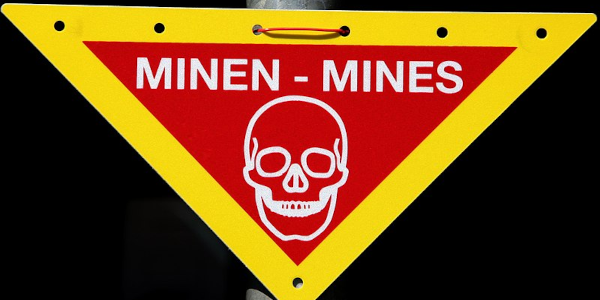
There’s a problem with this – that statement looks very much like a breach of Article 1(c) of the 1997 Ottawa Treaty that banned the use of AP mines – and in particular banned any state signed up to the treaty from taking any action to “assist, encourage or induce” any other state (whether signed up to the treaty or not) from using such weapons. The UK – and thus Scotland – is a state party to the treaty and all aspects of government, including the devolved governments, are bound by it.

Continue reading

Scotland’s Population

“Look again at that dot. That’s here. That’s home. That’s us. On it everyone you love, everyone you know, everyone you ever heard of, every human being who ever was, lived out their lives.” – Carl Sagan

This blog post previously appeared in Common Weal’s weekly newsletter. Sign up for the newsletter here.
If you’d like to support my work for Common Weal or support me and this blog directly, see my donate page here.

image_2024-10-16_123901215

Every year the National Records of Scotland produces an annual population estimate for the nation. While not quite as comprehensive as the once-per-decade census (at least, when the census isn’t marred by the problems of the 2022 Scottish census), it provides a good rolling picture of Scotland’s population both at a national level and at a more local level both on the scale of Local Authorities and per NHS Health Boards (the latter being important for the allocation of healthcare budgets and is gathered because one of the tools used to estimate population change is the number of people who present to the NHS with an illness or injury in a given year). Indeed, a report was published in March comparing the rolling mid-year estimate to the 2022 census and found that the estimate was within around 1% of the census value (which is a fair bit more precise than, say, the 3.4% margin of uncertainty in the revenue estimates in GERS).

The headline figure you’ll have gathered from the news is that Scotland’s population is growing faster than it has since the end of the Second World War (itself a statistical glitch as many thousands of soldiers returning all at once tended to bump the numbers) and that the growth rate is being driven by immigration to Scotland.
I fully expect that line to get more negative attention than it should given the rabidly anti-migrant stance that the UK is rapidly slipping down, driven by increasingly extreme social media cesspits – certainly a view backed up by the fight going on in the comments section of the BBC article reporting on the new figures – so it’s worth doing the thing I often do with reports like this and taking a dip beneath the headlines for a more detailed and nuanced view of Scotland’s changing demographics.

Continue reading

Actions for Peace

“Just war theory has been converted into a form of apologetics for whatever atrocities your favored state is carrying out.” – Noam Chomsky

This blog post previously appeared as an article in Secure Scotland‘s Whit Noo? magazine, for which I received a commission.

Peace

People sometimes mistake pacifism for inaction when it is the very opposite. To choose and to strive for peace is just as affirmative an action as to choose and to strive for violence. It is not something that happens due to the absence of violence or because we are protected by violence from some threat outwith or within. I write these words on the 14th of July 2024. The day after an attempted act of horrific violence against Donald Trump – a person with whom I share little in terms of worldview or aspirations and yet he is a person who, as with all people, I do not wish the harm he received nor the harm he very narrowly avoided and which some others that day sadly did not.

This essay is not about those events nor the events that led to them nor those that shall follow from them other than to say that my mantra that we should all strive always for peace is very much at the top of my mind as I write.

Continue reading

Unburdening Myself

“Sometimes, sitting here in the dark, slowly slowly creating strategy, she wondered if she was only fooling herself to think her plans were clever.” – Vernor Vinge

This blog post previously appeared in Common Weal’s weekly newsletter. Sign up for the newsletter here.
If you’d like to throw me a wee tip to support this blog, you can here.

Virus

I spent last Thursday reading the first of the UK Covid inquiry reports and I really can’t tell you how unburdened it made me feel. A stain on my soul that I’ve carried for years may well be healing.

As someone in the world of think (and do) tanks and in lobbying I don’t expect to have everything I say adopted before the ink is even dry on the page. That’s not how it works. Our greatest policy successes have been long, hard struggles and because much of the hardest work happens in the background, when the success does come folk can wonder why we felt we had to fight so hard because, in hindsight, how could it have gone any other way? It led me to coining the phrase that everything in politics seems impossible until the moment it becomes inevitable.

Continue reading

Glue Traps And Globalisation

“Defining who is to be protected is in effect defining who is not to be protected” – Stephen D. King

(This blog post previously appeared in Common Weal’s weekly newsletter. Sign up for the newsletter here.)

The UK Government has announced that they are invoking the Internal Market Act to prevent the Scottish Government from banning the sale of glue traps in Scotland. These horrific devices are have been banned as part of broader concerns around protecting animals from cruel deaths and on the responsible management of land. It’s entirely right that the Scottish Government has acted to ban – rather than merely restrict or licence – these traps.

Continue reading

Rolling Over Scotland

“As the tail on our back disappeared as we no longer had any use for it, nuclear weapons will also disappear once we realize, we no longer have any need for them. But no matter how much we daydream, it will never happen as some sort of grand geopolitical gesture of international collaboration – somebody has to take the first step – one nuclear-capable state has to take that first leap of bold faith and naive trust! The question is, who will it be? The first nuclear nation to abandon its nuclear weapons, will be the First Peacemaking Nation of Earth – and their head of state, the First Peacemaker.” – Abhijit Naskar

(This blog post previously appeared in Common Weal’s weekly newsletter. Sign up for the newsletter here.)

This week saw the publication of the 11th paper in the series of the Building A New Scotland Independence White Papers by the Scottish Government, this time looking at the defence and foreign affairs and the policies that the current SNP/Green Scottish Government would advocate should they form the Government of that independence Scotland.

The paper was recently described by Alyn Smith as a sign that the Government had “done its homework when it comes to foreign policy and security”. Unfortunately, he is very far from the mark on that. The paper instead shows a profound ignorance about the process of becoming an independent state and a serious contempt for the internal party democracies of the parties involved.

Continue reading