How Not To Dispose Of Disposable Cups

If it can’t be reduced –
If it can’t be reduced
Reused, repaired – REUSED REPAIRED
Rebuilt, refurbished, refinished, resold
Recycled or composted – OR COMPOSTED
Then it should be – THEN IT SHOULD BE
Restricted, redesigned – RESTRICTED
REDESIGNED or removed – REMOVED!
From production – FROM PRODUCTION
Pete Seeger

This blog post previously appeared in Common Weal’s weekly newsletter. Sign up for the newsletter here.
If you’d like to throw me a wee tip to support this blog, you can here.

image_2024-08-29_130259512-1

The Scottish Government still doesn’t understand what a Circular Economy is or how to bring the public with them as they implement it. This has been made clear by their latest ad hoc and misjudged approach to dealing with disposable cups. Their consultation on the levy has been launched here and Common Weal will get our response in in due course, please make sure your voice is heard too.

The proposal shouldn’t be as contentious as this and I should shouldn’t be on the side of fighting it – especially as I both agree with and support the goal behind the policy; to reduce resource use and waste produced by our single-use consumerism.

The policy as it stands, a 25p levy on disposable cups purchased as part of a takeaway drinks order, though risks seeing people as consumers to be punished into doing the “right thing” even as producers are allowed to make it impossible to make the right choice.

Continue reading

Time For Some Tech Optimism

 “I’m an optimist because I know what technology can accomplish and I know what people can accomplish.” – Bill Gates

(This blog post previously appeared in Common Weal’s weekly newsletter. Sign up for the newsletter here.)

Despite my scientific training and engineering background (or perhaps because of them) when talking about the climate emergency, I’ve generally been wary about going down the route of tech-optimism, of believing that there’s a technological solution to the problem just around the corner. There are three broad reasons for this. The first is that risk that the tech fails and leaves us in a worse place than we currently are. Continuing to emit carbon until the day that a tech-priest grants us the blessing of effective carbon capture only works if the blessing actually arrives. If it doesn’t, then we’re left with a larger problem and even less time to fix it. And a strategy like “Net Zero” that fixes part of the problem (like EV cars fixing carbon emissions) but doesn’t address the rest of the problem (overall air quality) isn’t even a solution.

Continue reading

Submerged In Leith

“And so castles made of sand slips into the sea, eventually.” – Jimi Hendrix

(This blog post previously appeared in Common Weal’s weekly newsletter. Sign up for the newsletter here.)

Why is Edinburgh considering building housing on land that may be underwater before their mortgages are paid off?

In the Herald this week, a plan was announced to build 300-odd houses in a currently brownfield site at Edinburgh Harbour in Leith. This comes just over a year after approval was granted for a 600 home development at the other end of the harbour. Scotland has a housing crisis and the only way out of it is to build up housing stock so that it exceeds demand and begins to bring house prices down to actually affordable levels again and we build them in a way that doesn’t subject the residents to fuel poverty or, as may be the case here, assets stranded as a result of poor construction or the climate emergency. Scotland may have been one of the first countries in the world to declare a climate emergency but we’re still far from acting like it when it comes to policy.

In 2019, Edinburgh Council followed Holyrood in accepting that climate emergency and soon after they published a climate readiness plan on what they planned to do about it. It’s actually pretty good in terms of the policies it lays out and from what I’ve seen of Edinburgh lately, they seem to be making a decent shout of making progress towards the goals as stated, however there is one glaring omission to the plan and it pains this resident of a land-locked Local Authority to point it out – the plan only mentions the threat of sea level rise once, only does so in passing and does not recommend any policies or actions to address it. I’ve discussed this issue before with respect to Scotland’s airports, but it’s obviously time to look at it again.

Continue reading

A Hollow Frame

“Spare your words, your actions will speak for you.” – Akiroq Brost

(This blog post previously appeared in Common Weal’s weekly newsletter. Sign up for the newsletter here.)

Imagine you’re applying for planning permission to build a house. Normally, the process would involve drawing up fairly detailed plans about what the house would look like. No plan goes perfectly to plan though and some changes are inevitable as the building process occurs but if the final building does deviate substantially from the initial plan there can be consequences up to and including being ordered to tear the whole thing down and start again. What you can’t do is gain permission to build “a house” without answering the basic questions like “What size is it?”, “How many bedrooms will it have?” or “Will it be made entirely of asbestos?”.

Over the past few months Common Weal have been incredibly busy replying to just a few of the public consultations that the Scottish Government and Scottish Parliament have been publishing. I’ve written before about the sheer volume of them, how much effort goes into each response and how little they often achieve despite the rare moments of serious influence or the fact that if folk don’t respond to them then vested interests end up dominating the responses and thus what the Government can point to as justification for their plans.

Continue reading

Solarpunk: Growing the Hope We Deserve

(This blog post previously appeared in Common Weal’s weekly newsletter. Sign up for the newsletter here.)

The sky above the port was the color of television, tuned to a dead channel. – William Gibson

So began William Gibson’s 1984 novel Neuromancer and so began what is now known as the Cyberpunk genre. So began countless other generation-defining books, films, works of art, technology inspired by the ideas the genre explored. So began me – 1984 was the year I was born. Cyberpunk is my generation.

Cyberpunk is a world of crushing dystopia. Tortured air and acid rains bleach the life and soul out of polluted cities. There is no society or community here. An individual is one against millions, toiling thanklessly to meet a quota set by an uncaring human if you’re lucky; an equally uncaring AI if you’re not. This is a world where Megacorporations rule to the point that even Governments can do little to prevent them sucking the last dregs of the world’s resources into their ever growing, ever insatiable maws. Technology can provide you with the kinds of miracles that once founded religions but only at a terrible cost. And yet there are those who still work at the edges of this world, or beneath it, or hidden within it, who still fight for what hope remains in the world. Cyberpunk is often about celebrating the rebels fighting against crushing authority. Those who refuse to accept that which others tell them is “inevitable”. Victories are sometimes fleeting, sometimes they are indeed entirely futile, but victories are still possible. Hope can still be found in the “desert of the real”, even if it is a grimy, flawed and compromised kind of hope.

But in Gibson’s opening it is a curiously analogue metaphor that defines the digital frontier of cyberpunk. A sky as grey as analogue static. You don’t have to be much younger than me to be someone who doesn’t understand that metaphor in the same way that I can. The UK – by far not the frontrunner in this particular technological race – completed its television digital switchover a decade ago. For generations now and those to come the dead channel of television will be a brilliant sky blue.

wp8457204-solarpunk-wallpapers (1)

(Source: Wallpaper Cave)

Continue reading

Why I’m Voting Against The SNP/Green Deal

‘We must take advantage of the “tide of fortune”’.
‘I know about tides, sir. They leave little fish gaspin’.’ – Terry Pratchett


Edit 28/08/21 – The Scottish Green members voted overwhelmingly in favour of the deal and it was subsequently also voted through overwhelmingly by Council. The SNP members similarly voted overwhelmingly in favour in their consultative ballot. The deal shall now go ahead as written.


Tomorrow is going to be one of those turning point days in Scottish politics. The SNP and Greens have agreed to a cooperation deal that would see the closest relationship between the two parties in Holyrood, the closest that Greens anywhere in the UK have got to being in Government and the closest arrangement between any two parties in Scottish politics since the Labour/Lib Dem coalitions that ran the country between 1999 and 2007.

Tomorrow, the Green membership will decide whether or not to endorse that deal in a binding vote at an EGM.

In this blog, I’m going to lay out why I plan to vote against that endorsement.

image_2021-08-27_141315

Continue reading

Mission Expendable

“Be sure you know the conditions of your flocks, give careful attention to your herds; for riches do not endure forever, and a crown is not secure for all generations.” – The Bible, Proverbs 27: 34-35

The Guardian reports today that an adviser to the UK Chancellor of the Exchequer – remember that he’s in the job now because the previous incumbent resigned because of a political fight involving who controls his advisers – is claiming that the UK’s fishing and farming sectors should be seen as expendable because they only constitute 1% of the UK’s GDP thus only make up something like a rounding error in the national scheme of things. Instead, he claims, the UK should become more like Singapore and just buy in the food we need. While the UK Government is distancing itself from the comments, it’s not the first time that those in those offices have promoted such views.

Let’s have dive into the data to pull out some of the implications of this potential policy.

D842DB05-5599-486F-BD1C-9B474E860F7E

As an aside, meet one of my neighbours

Continue reading

The Ever Molding Mandate

“To discover strategy is to fulfill mandate” – Sunday Adelaja

On Sunday Politics Scotland this morning, the new Secretary of State for Scotland, Alister Jack shifted the goalposts again. The 2014 independence referendum has now been declared a “once in a lifetime” event and that even a pro-independence majority in the 2021 Scottish elections or even an outright SNP majority in those elections would be insufficient grounds for him to grant Scotland his permission to self-determine our form of government.

He went even further than this extremist position by stating categorically that he believed that it would be “absolutely unacceptable” for Scotland to hold any such referendum at a time of its choosing and under our own terms – effectively attempting to apply a veto to the Referendums Bill passed by the Scottish Parliament recently.

I think we should have a look at this Tory attempt to stifle Scottish Democracy.

Continue reading

Nowhere Left To Grow

“Perhaps the answer is that it is necessary to slow down, finally giving up on economistic fanaticism and collectively rethink the true meaning of the word “wealth.” Wealth does not mean a person who owns a lot, but refers to someone who has enough time to enjoy what nature and human collaboration place within everyone’s reach.” – Franco Bifo Berardi

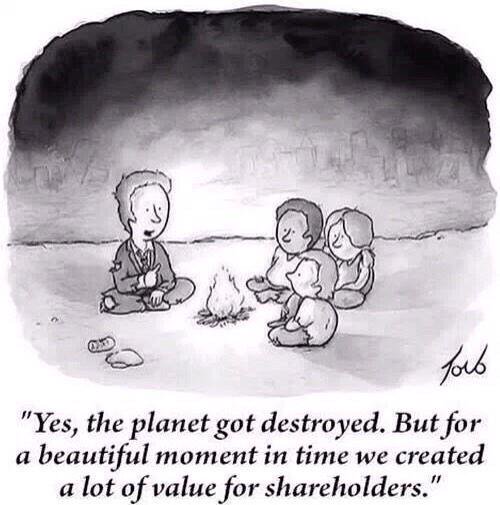
This weekend will see the SNP conference and the long awaited vote on whether or not to adopt the Sustainable Growth Commission’s report as the party’s main economic strategy for an independent Scotland. After almost a year of discussing this document, the party will have their final say on whether or not to adopt it as party policy.

I have written tens of thousands of words of critique, commentary and policy work on this topic. There will be more to come between the time that this blog is published and the vote on Saturday afternoon. Much of it has been centred around currency and the macroeconomic policies. Here, I’d like to look at things from a slightly different lens. How does the Growth Commission reflect upon Nicola Sturgeon’s plan to introduce a Scottish Green New Deal?

value

Continue reading