The Cairngorms Climate Backlash

“The only purely popular government is local, and founded on local knowledge. The citizens can rule the city because they know the city; but it will always be an exceptional sort of citizen who has or claims the right to rule over ten cities” – G.K. Chesterton

(This blog post previously appeared in Common Weal’s weekly newsletter. Sign up for the newsletter here.)

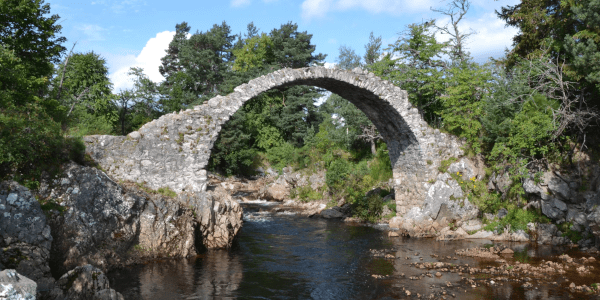
image_2024-01-28_131515340

Continue reading

Tourist Tax Scotland

“Ah remember walkin along Princes Street wi Spud, we both hate walkin along that hideous street, deadened by tourists and shoppers, the twin curse ay modern capitalism.” – Irvine Welsh

(This blog post previously appeared in The National.)

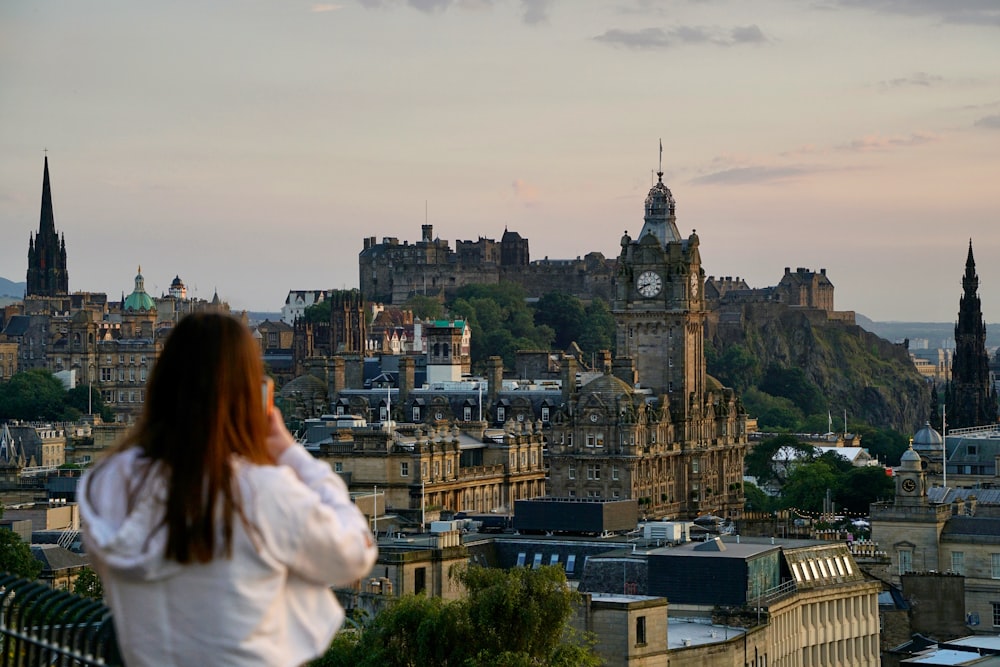
woman in white shirt looking at the city during daytime

Whenever you hear a politician talking about introducing “tax bands” then I want you to hear the phrase “tax cuts for the rich”. Every time.

Continue reading

Answering Lochgilphead

“Albert grunted. “Do you know what happens to lads who ask too many questions?”
Mort thought for a moment.
“No,” he said eventually, “what?”
There was silence.
Then Albert straightened up and said, “Damned if I know. Probably they get answers, and serve ’em right.”
― Terry Pratchett, Mort

This is a companion piece to my article on a talk I gave to AyeFyne in Lochgilphead in May 2023. Read that article here for context.

Continue reading

Appealing To The Centre

“I’m a true centrist: my beliefs put me in the middle… You know what happens to people who drive in the middle of the road? They get run over.” – Rob Lowe

(This blog post previously appeared in Common Weal’s weekly newsletter. Sign up for the newsletter here.)

image_2023-03-09_195807063

You’ve probably heard the line at some point from someone in the upper echelons of the independence campaign. That we need to “appeal to the centre” of Scottish politics and that your radical ideas like publicly owned energy, local democracy or even just the idea of actively campaigning for independence are, at best, an inconvenience to the Movement or, at worst, are a liability and that you’re actively driving undecided voters away with your antics.

What we must do instead, we are told, is to “appeal to the centre”. We must compromise on our values, our policies and the very narrative upon which we ourselves were drawn to support independence in favour of one that is unassailable in its blandness and .
“The Centre”, you see, is a group of sensible voters who only vote for sensible policies. They’re also absolutely terrified of change so anything that “spooks” the poor, timid creatures will have them pelting away from you as fast as you can pull out your canvassing clipboard.

What we need to do is to make independence as absolutely bland as possible. A “soft indy”, if you will. One that actually won’t change much at all. Just one fewer election every few years. It’ll be fine, those in power say. Just let us take care of everything. Centrism offers balance from extremes and a firm hand at a wheel that would otherwise spin out of control. Not that they’ll be able to articulate where they’re taking you…but that’s not important. Don’t worry about that. You’ll get there safely.
Has anyone ever asked “The Centre” what they think of this? I’m not sure those who want to do the appealing have, though some of the answers are out there.

Who are The Centre?

There’s a useful way of thinking about the spectrum of voters when it comes to independence sentiment. At either extreme, there are hardcore, ideological voters – often nationalists in their own way. They will almost certainly vote. Will almost certainly vote Yes or No depending on their lean. Will almost certainly never, under any circumstances, change their mind. You probably know folk like this. Let’s be honest, if you’re reading this column chances are pretty decent that you are one (though I doubt there will be very many hardcore No voters here. Say hi if you are one. I’d love to hear your side of things). These two extremes are about as far apart from each other in terms of polices and shared goals – which, of course, makes it all the harder for respective campaigners in each camp to talk to each other.

Closer to the middle of the spectrum there are the less convinced or those more open to change or to be convinced. On the Yes side, you’ll find people who have perhaps come to that camp based on discussions about opportunities for change, or the chance to correct injustices. Perhaps convinced of the merits of nationalism even if they don’t define themselves as nationalists per se (or didn’t before they were convinced). Despite my position in the indy movement and my years of campaigning, I put myself somewhere in this camp. My views are, as befitting my background in science, always provisional and subject to testing and change. I’m convinced of the case for indy…but I never take my position for granted.

Then there are the camps who sit in “The Centre. The “undecided” and “soft No” voters who are often one and the same in same way that “not proven” and “not guilty” are shades with the same acquittal. Whether they are convinceable but not yet convinced, or tempted but not willing to take the chance on the day, their vote – if they cast one – is the same.

Indy in the Middle

As some will be aware, I’ve been tracking indy sentiment in Scotland not just at the surface headline level – which if that’s the only thing you look at, you’d believe that the indy landscape is basically unchanged since 2014 – 50% plus or minus a few points here or there. Underneath, the story is far more interesting, with large shifts within various demographics. The “age gap” has widened, with younger voters now much more pro-indy than older voters…but only because older voters are shifting to Yes more slowly than younger voters (there’s also little evidence of that extremely ageist trope that we just need to wait for old No voters to “die off”). More voters of “pro-union” parties are themselves pro-indy than you think (there are more pro-indy Tory voters in Scotland than paid up members of the party). “New Scots” have completely flipped from some of the strongest No voters in 2014 to some of the strongest Yes voters – more so than Scots born in Scotland at this point.

But there’s another pattern that comes out of many of these polls. If you look at a question that is particularly divisive down indy lines then you see that truly undecided voters look a lot more like Yes voters than they do No voters (Have a close look at the data tables here for some examples of this).

This is backed up by research that was conducted a few years ago that found that the main difference between a “soft-Yes” voter and a “soft-No” voter (or the undecided in the middle) wasn’t a shift in attitudes (of the kind that separates Yes voters from extreme No voters) but simply a difference in perceived Risk vs Reward. Someone like myself likely sees the rewards of indy and considers them worth the risks while also seeing a lack of reward in the No campaign’s offer and keenly feeling the risks of remaining in the UK. Someone just over the centre line from me likely feels the risks of Indy a bit more keenly than I do, or perhaps the rewards are just a bit less visible.

The politics of a bland, beige, managerial “Don’t worry about it” Centrism doesn’t improve the reward as it very intentionally doesn’t give anyone anything to vote for. It doesn’t even reduce the perceived risk. “Wait…are you saying that I should be worried about something? Well, I wasn’t before but…”

The Radical Centre

And the real kicker about this bland plan of Centrism is that when you actually ask people what they want…they can get very radical indeed. They might not believe you if you say you can deliver it – but that’s not the same as not believing your vision.
I know this through my experience with the Scottish Climate Assembly in 2021. This was a group of randomly selected residents of Scotland, balanced by age, gender, income, geography and a host of other factors. They were a balanced and representative sample of Scotland and thus could, as closely as possible, speak for “what Scotland wants” on any given issue. Experts (including myself) were brought in to explain various aspects of the climate emergency and give advice on solutions, policies and ideas. The Assembly discussed them in various groups and seminars and then produced a report of their recommendations to the Scottish Government. To give an idea of the scope, let me tell you about just one of them.

In 2019 when we published our Common Home Plan, we had a quite strong discussion in the team about whether or not to include the idea of an “Externality Tax” – trade border tariff on imported goods to account for the pollution created by their manufacture and transport and to deliberately de-incentivise imports in favour of domestic production. It would do Scotland no good to decarbonise all of our industries and agriculture, only to be undercut by goods brought in by a country that slashed and burned its rainforest and used child labour and coal power to make goods we bought from them. It’s a climate-sensible policy but it flies in the face of decades of “global free-markets” and we thought if any policy would get pushback from the public, it’d be that one.

The 2021 Scottish Climate Assembly not only agreed that this policy was a good idea, 94% of this representative sample of Scotland voted for it. The most radical policy we almost didn’t include in our radical vision for a Green New Deal hit support levels that I doubt we’d see in a poll if the question was “Are puppies cute?”

Please read their recommendations for action and compare what the people of Scotland are calling for on climate compared to what politicians are offering or what they tell us is the best they can do without spooking their not-yet-voters.

The Story of Indy

The story of indy is, I believe, what will make the indy campaign the winning force it should be. Many voters already believe that our vision for an independent Scotland is one that is appealing, one that they agree with at heart and one that is fundamentally at odds with any proactive story offered by the No campaign (that is, the actual vision for Britain being offered to voters, not just the campaign of “Fear, Uncertainty and Doubt” that is designed to increase the perceived risk of our vision) but it’s one that we haven’t quite convinced some that we can competently deliver or deliver without exceeding their maximum tolerance for risk.
What they will not be convinced by is the kind of valueless “Don’t Worry About It” Centrism that simply tries to make nothing sound as safe as possible.

Especially not when what “The Centre” is actually telling us is that they want what we want, they just want us to tell them it’s worth voting for and that we’re capable of delivering on those promises of a better, independent Scotland.
TCG Logo 2019

Getting Energy Right

Lucretius Corvo: What will happen when [the power gauges] reach the maximum?
Corellus: As my tutors on Mars would say, Captain, the Omnissiah acts mysteriously. The ways of the Motive Force may be understood, from positive to negative and on through the circuit. That which guides it may not.
Lucretius Corvo: You do not know.
Corellus: No. That is what they generally meant when they said that.
Dialogue between Lucretius Corvo and Techmarine Correlus of the Ultramarines. – Guy Haley, Pharos

(This blog post previously appeared in Common Weal’s weekly newsletter. Sign up for the newsletter here.)

The other week, I had the pleasure of delivering the keynote speech to the Just Transition Partnership’s Reclaiming Our Energy conference where I gave a (not completely impartial, but at least honest) appraisal of the Scottish Government’s draft energy statement. As of the time of writing, the recording of the full conference isn’t yet online (I’ll link to it here when it is) however I included the audio of my presentation in this week’s Policy Podcast.

Continue reading

Scotland Deserves Local Democracy

“Nationalism can be a destructive force when it promotes intolerance and division. But it can also be a force for good, when it seeks to defend local autonomy against the homogenizing forces of larger entities.” – Maxime Bernier

(This blog post previously appeared in Common Weal’s weekly newsletter. Sign up for the newsletter here.)

image_2023-02-19_103755469

At the last UK General Election, the party that would go on to form the Government made a manifesto promise to increase police numbers across the whole of the UK. It was a popular policy and probably won a few votes, but there was a problem with meeting that policy. Policing is a devolved matter. The UK Government only has control over the police in England. They could, of course, invest heavily in police numbers and that investment would increase the Block Grant sent to devolved nations but there’s absolutely no guarantee that the money would be used to increase the number of cops in Scotland. There would be a certain amount of political pressure to “pass the money on” as intended and that pressure has certainly been sufficient in the past, but the structure of devolution means that the Scottish Government has the absolute right to spend the money on anything it sees fit. This makes perfect sense as the needs and demands of policing in Scotland might well be very different from that in England as might the style of policing – Scotland simply may not want or need a highly militarised, American style force designed to suppress any thought of democratic protest. Anyway, the people of Scotland didn’t vote for the policy at the last Scottish election so there was no mandate to act at all.

Westminster’s defence was that it simply didn’t trust the calibre of politicians in Holyrood to act responsibly and it didn’t really matter what they thought given that they were either safely compliant or could be written off as merely the opposition complaining for the sake of complaining (damned if you do; damned if you don’t). The UK Government really wanted to meet that manifesto pledge however and decided it wouldn’t look good if the devolved nations resist their will so it took steps. Three options were available. They could, with ease, simply pull the powers over policing away from the Scottish Government and place them in the hands of the UK Justice Minister. All that would take is a simple majority vote in the Commons, which they could easily whip through. The second option was to ring-fence the funding – to simply tell the Scottish Government that they weren’t getting it unless they promised to use it as the UK Government wanted. Finally, they could outright threaten Holyrood with “financial penalties” if they tried to divert the money elsewhere.

If this happened, I’m sure that Holyrood’s response would be similar to yours – one of democratic outrage and calls for Westminster to back off and stop stepping on the toes of devolution. How dare they even make a manifesto promise that lay outwith their powers?

Do we all share the same outrage when the Scottish Government does something similar to Scottish Local Authorities?

Scotland is one of the most centralised states in Europe (especially as we don’t have an actually-local tier of municipal government – our “Local” Authorities would be called Regional Government almost everywhere else in Europe). In fact, if Scottish independence resulted merely in all reserved powers at Westminster transferring to Holyrood then a single national Government would directly control more than 85% of all public spending in Scotland. This figure is even worse when we consider the amount of money that is ring-fenced by Holyrood and merely administered by Councils. Holyrood has in recent years directly threatened Councils with withheld funds unless Councils used their powers over one of the few taxes that they actually control to maintain the Council Tax freeze and, just last week, has actively threatened to fine Councils unless they use money as directed to boost teacher numbers. Meanwhile, John Swinney’s recent budget stated that he was using Holyrood’s powers “to the maximum extent that is responsible” which carries the implication that using Holyrood’s powers to pass reforms to Local Authority tax raising powers would be “irresponsible”.

This week, Scottish Local Authorities having been negotiating their budgets for the year. It’s a grim process. Folk I’ve spoken to in several councils and across multiple parties have been essentially saying that they’re being put in the position of either breaking the law by not passing a budget or breaking the law by passing a budget that causes active harm to people because of the inevitable cuts to social services. After years of “trimming the fat”, then “cutting to the bone”, Councils are at the point of outright amputations – simply closing down leisure centres or stopping care services for folk who need them. If you’ve seen more potholes in your local roads due to the last rounds of cuts then we might expect them to not get repaired or to get worse in coming years.

The strictures of Devolution are tight but they are not nearly as tight as the Scottish Government have implied. Whenever groups like ourselves have campaigned for the broadening of the Scottish tax base via tools like Council Tax reform, land taxes, wealth taxes or pollution taxes, we’re told that the Scottish Government doesn’t have the power to do so. This is only a half-truth. These taxes cannot be implemented as national taxes controlled by Holyrood and where the revenue flows to Holyrood, but many of them can be implemented if they are done so as local taxes where the revenue flows to the relevant Local Authority.

In 2013, the Scottish Government made its pledge towards treatment of Local Government, including promises of maintaining subsidiarity and local decision-making. More recently, they have pledged a reform of local government finances, guided by a Citizens’ Assembly, by the end of this Parliament though they’ve also made it clear that the reforms themselves would only be implemented beyond the next electoral horizon (should they be in power to do so). It is likely far too late now to give Local Authorities the powers to avert a budget crisis this year and I’ve yet to see willingness from Government to spend their way out of this hole – we’ll see soon what the implications of that will be – but this only heightens the urgent need for reform of Scotland’s finances and democratic frameworks to make them more sustainable and to avoid this kind of crisis in the future. Enabling legislation should be passed as soon as possible to give Councils more control over their own finances and to set local taxes as they deem appropriate, including in areas such as wealth, land and pollution.

With the resignation of Nicola Sturgeon this week and the SNP now likely to fight a leadership contest that hasn’t been seen in the party essentially for decades, it would be worth all candidates considering their pitch not just as one where they believe that they are the best personality to lead the party and, likely, the country but also one where they consider their policy pitch and agenda for their tenure. I will be watching closely to see if any of the candidates promise to uphold and accelerate those pledges. Who knows, we might even end up with something really radical – like the kind of truly local democracy that almost all of our peer nations in Europe simply call “normal”.

TCG Logo 2019

Oil Be Back

“Oil creates the illusion of a completely changed life, life without work, life for free. Oil is a resource that anaesthetises thought, blurs vision, corrupts.” – Ryszard Kapuściński

(This blog post previously appeared in Common Weal’s weekly newsletter. Sign up for the newsletter here.)

image_2023-02-19_101453884

Who won the energy crisis? The obvious answer is “not us”. The bank accounts of the oil barons are absolutely glowing right now with all of the major corporations publishing their 2022 profit figures this week. Many of them are showing record levels of profit while folk are freezing in their houses despite this being one of the mildest winters in UK history. Shell announced profits of $40 billion, BP made $28 billion, Norwegian state-owned Equinor made $79 billion and Exxon – who infamously predicted with “shocking accuracy” the climate change impact of their operations almost 50 years ago but covered up the data and kept on going – made $56 billion.

A large chunk of these profits will go towards share buybacks – where the company reduces the amount of shares in the company out there in the wild and therefore increases the value and the voting power of remaining holders – but much of it will go out in dividends. You paid more than you ever have to keep your house colder than it’s ever been but all that did was make someone else richer.

Continue reading

The News Where You Are Not

“So much for Objective Journalism. Don’t bother to look for it here–not under any byline of mine; or anyone else I can think of. With the possible exception of things like box scores, race results, and stock market tabulations, there is no such thing as Objective Journalism. The phrase itself is a pompous contradiction in terms.” – Hunter S. Thompson

(This blog post previously appeared in Common Weal’s weekly newsletter. Sign up for the newsletter here.)

I had a fascinating discussion on the Policy Podcast the other week. I spoke to a couple of our comrades at Melin Drafod, a Welsh pro-indy think tank who recently published a report on the fiscal position of an independent Wales (while they don’t directly reference any of our similar work for an independent Scotland, it’s very interesting to see how the same structural weaknesses in devolution rear their head and how the same international principles and precedents also apply to Wales in similar ways to Scotland).  They also organised a strategy seminar at the weekend attended by Robin on behalf of Common Weal and also by many members of the Welsh independence movement such as Plaid Cymru leader Adam Price. It’s a fascinating discussion and I encourage you all to listen to it.

During the discussion a very interesting question was raised that has been burrowing into my head since. I asked a question about the state of the UK’s media and how it plays its role in the unity of the British State. I reflected that from where I am it looks largely like Scotland has its own local media – much of it fragmented, underfunded or taking its orders from elsewhere, but some of it doing at least as best it can to tell us about what’s happening in Scotland – and then there is the UK media that gives a view of and from London. Never mind that we suffer from a limited outlook on and of the rest of the world, what we often lack is a view of the rest of the UK. I’d hazard that unless you have a specific interest in looking for information about it, you probably don’t really know all that much about what’s going on in Northern Ireland, or Wales, or Cornwall or even right across the border in the North of England (unless you live in the South of Scotland and get ITV Border from Cumbria rather than STV). Not unless whatever is happening is “big enough” to affect London in some way…then it gets noticed. I asked if the view from Wales was similar and my guests more or less confirmed it with the caveat that Scottish local news media is probably stronger than in Wales, especially after the sad demise of their iteration of The National newspaper.

Now here’s the question that has been niggling at me. I can see why things would be set up this way. Paymasters for a highly centralised state with a highly centralised economy probably want to know what is happing around them and around them is London. When cuts come, it’s easier to cut away at the periphery (i.e. everywhere else) and so local media erodes away. It’s also possibly true that the UK’s centralising political agenda is reinforcing itself through that media. What used to be a “Precious Union” of voluntarily associating states is being rapidly reframed as a unitary state of “Britain” and a unitary state requires a unitary message over and above any rustic notions of regional distinctiveness. So by broadcasting the same “London-First” message out to the provinces, you can ensure that they all hear the same message, sing the same song and believe in the same vision for the country. This whole state of affairs was hilariously and wonderfully illustrated in James Robertson’s poem “The News Where You Are”.

But is that strategy working? In one sense, keeping England relatively ignorant about Scotland (except insofar as the “national” message that Scotland is heavily subsidised by the UK is starting to stick in the “wrong” places), or Scotland relatively ignorant about Wales or vice versa has its role in dividing us from those who we would otherwise be standing in solidarity with. If we can’t see them, we can’t see our differences, sure, but we also can’t see our common strengths either.

This is something I see done much, much better in countries around – and even across – Europe. Organisations like Arte do a fantastic job of showcasing the best of Europe in a way that really does foster a common sense of “Europeness” because of all of its cultural corners, not in spite of them.
(And if you want a view of Scotland from the continent right now, then I can’t recommend enough their recent documentary on the current bedraggled state of the independence movement and compare it to one by dbate from a couple of years before. The light might be on for Scotland in Europe, but we have to understand what is being illuminated by it)

However the strategy of only broadcasting “the news where we are” might also be reaching its limit. Not only because access to information is generally easier these days (“generally” because access to MISinformation has never been easier and the search engines that act as our primary gatekeeper on the internet are straining under the weight of that misinformation combined with information-free “SEO” techniques and AI-driven confident-but-mindless drivel) but because there might well be another narrative forming in the minds of those who receive that news from where we are not. Namely, that if all of us around the periphery of the UK are seeing only the London-eye view of the “Precious Union” then that becomes our only point of contact with that Union. Then we who, as James Robertson said, can each see who we are end up comparing ourselves to that single point of contact. Of course, none of us really do. And so we start to question why we might want to stay in a union that doesn’t represent us, who we are or who we want to be. Ironically, if the Union celebrated the commonalities of all of us, it might have done more to bring us all together. It might even learn a little about itself and about us in the process and be all the stronger for it.

I’d really like to chew on this idea a bit more. Especially why the centre of the Union appears unable now to do precisely that and instead has resorted simply to trying to deny independence through sheer force of will. If you are involved in media circles and would like to discuss this and other aspects of the media in Britain on the Podcast then please do get in touch. Till then, let’s all try and do a bit more to look out into the world, to find out about our kindred spirits elsewhere and to see the news where we are not.

TCG Logo 2019