GDP Growth Is The Problem, Not The Solution

“No society can surely be flourishing and happy of which by far the greater part of the numbers are poor and miserable. ” – Adam Smith

This blog post previously appeared in The National, for which I received a commission.
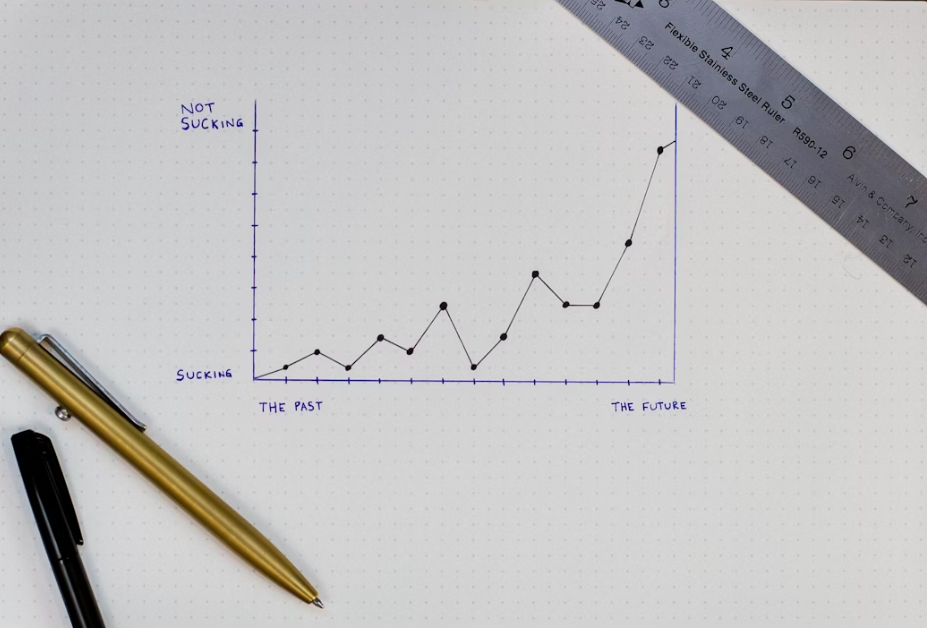
image_2024-08-29_102618230

(Image Source: Unsplash)

Ahead of the reopening of the UK Parliament next week, Prime Minister Keir Starmer painted a bleak picture of a broken Britain that he plans to break further so that he can mend it in the service of his “number one priority”, GDP growth and “wealth creation”. He’s going to ask us to accept “short term pain, for long term good”.

If that sounds like a promise you’ve heard before then you are, like me, old enough to remember George Osborne making a very similar promise in 2010 when he kicked off the decade and a half of Conservative Austerity that we’ve endured ever since.

The big difference between then and now, of course, is that more Labour pain is coming on top of that previous Conservative pain so it’s little wonder that many are asking how much more we need to bear.
There were very few actual policies – and fewer new ones – in Starmer’s speech and those that were there are doing a lot more heavy lifting than he’s likely to let on. GB Energy, which he mentioned several times, is going to be miniscule. With only £8 billion worth of funding, it wouldn’t be big enough to renationalise the energy sector enough to make a difference. It might be one of the best public energy schemes the UK has seen since the Scottish Government dropped their plans for a public energy company, but it’s almost being deliberately designed to NOT disrupt the energy market that has been largely responsible for the inflation and cost of living crises of the past few years.

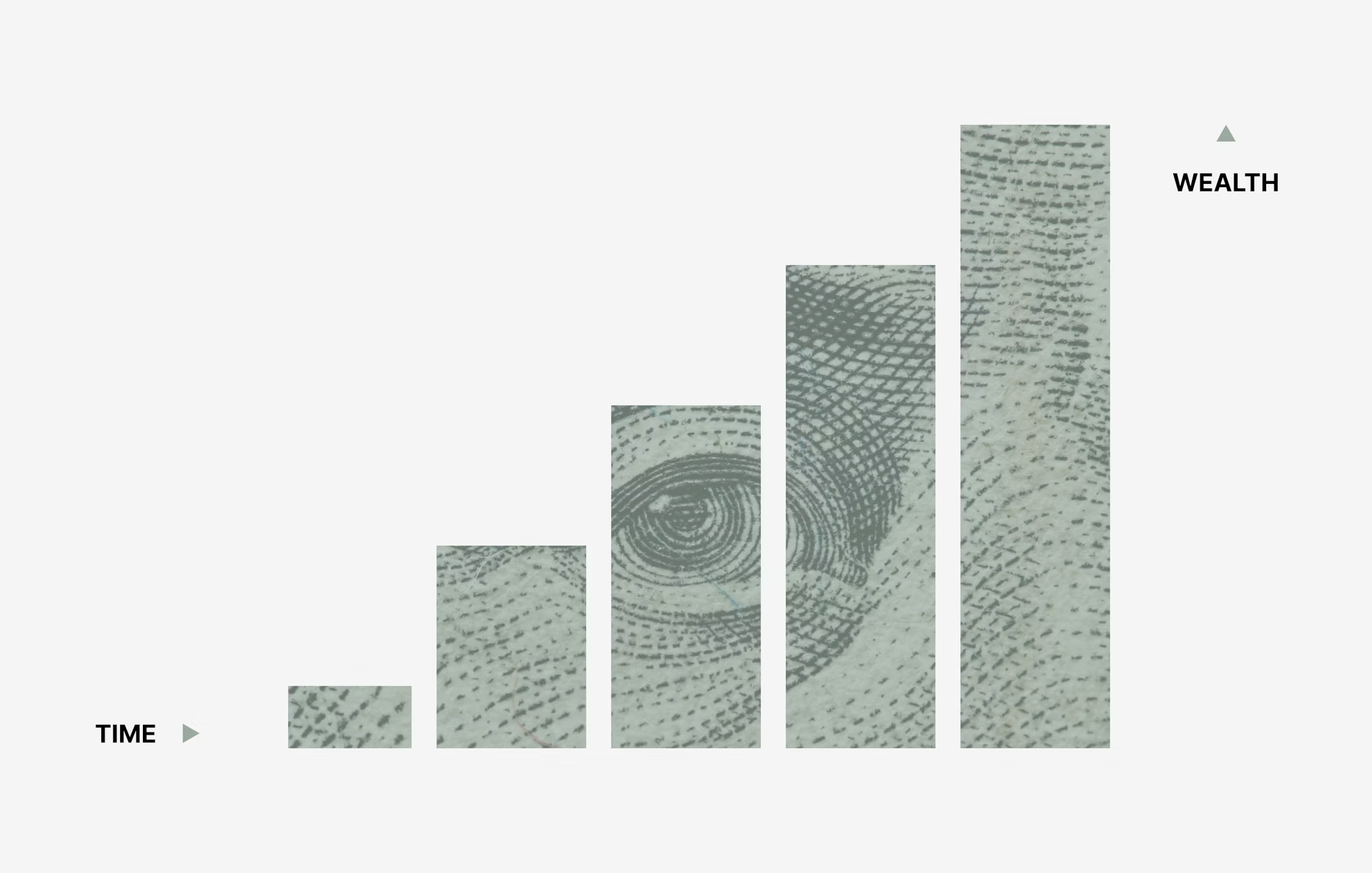
If Starmer wants to actually get to the root of the problem, to actually plan long term for the benefit of the UK and everyone who lives here then he needs to understand that a good chunk of that root is, in fact, his number one priority – chasing after GDP growth and “wealth creation”. GDP has been growing for decades without solving our economic problems so we need to ask if it is the solution, how much more does it need to grow before it starts working?

It’s not the solution because whenever GDP growth has occurred, the benefits of its have almost always gone mostly to the already wealthy. It has also almost always resulted in more damage to the environment. A long-term beneficial economy is one that focuses on sustainability and wellbeing instead and regardless of growth. Britain needs fewer prisoners, not more prisons. Fewer shops and more libraries (a policy that would improve wellbeing while actively shrinking GDP). And we need fewer of us working to barely meet our needs while we enrich others, and more from the already rich using their ability to do more to make it all happen. A smarter man than myself said something similar once. I don’t think he’d be too welcome in Starmer’s Labour party these days. That, too, is probably part of the problem.
TCG Logo 2019

Can An Economy Be ‘Big Enough’?

“Anyone who believes that exponential growth can go on forever in a finite world is either a madman or an economist.” – Kenneth E. Boulding

(This blog post previously appeared in The Morning Star. You can throw me a tip to support this blog here.)

image_2024-06-16_094808259

Those of us on the left have rarely been truly excited by the prospect of the Establishment crowning their next temporary placeholder, though I don’t know about you but this upcoming general election seems to offer even less in the way of actual choice or a chance for change than usual.

The Conservatives are in freefall, ejecting ballast as fast as they can (personnel as well as policies), Keir Starmer’s “changed Labour Party” seems to be trying to do as little as it can to uphold the traditions of the middle word in that catchphrase and even in Scotland, where for the last several elections, the SNP provided some sense of counterpoint (either as a credible voting option or at least as an anchor against rightwards triangulation), that party seems to have hit the end of its road in terms of ideas.

This time around, all of those parties (and several others) have congregated on a single line when it comes to how to manage the economy. Growth at all costs, no matter who profits from it or how much damage is done to the planet in the process.

Continue reading

The In Tray

[The purpose of] clarification is not to clarify things. It is to put one’s self in the clear” – Jonathan Lynn & Anthony Jay, Yes Minister 

(This blog post previously appeared in Common Weal’s weekly newsletter. Sign up for the newsletter here.)

I was hoping for a bit more of a shakeup in John Swinney’s Ministerial reshuffle. As it was, it’s barely a wobble. Some space was carved out to give Kate Forbes a Cabinet Secretary position without much in the way of actual power. The changes are most notable in their absences. Just a day before the reshuffle I was in a Committee hearing that discussed, in part, the “signal” sent when the issue of, say, “Older People” is moved from the title of a Cabinet Secretary to the title of a more junior Minister, and then dropped from titles altogether and moved into the middle of the list of responsibilities of a Minister or dropped completely. As Dr Hannah Graham has pointed out on Twitter, the list of terms that no longer exist as Ministerial titles include:- Migration & Refugees, Europe and International Development, Planning, Fair Work, Community Wealth, Just Transition, Biodiversity, NHS Recovery, Active Travel, Innovation and Trade, and Independence. Journalists take note, when those lists are published – the Wayback Machine is your friend. Compare the new list of responsibilities to the old one to see what has been promoted and what has been demoted entirely as an issue of importance for the Swinney Government.

Nevertheless. Even though most of the faces haven’t changed and most of them haven’t even moved office, we do have a new Government and that is always an opportunity for new and returning Ministers to review their goals and objectives. I’d like to place into each of their In Trays at least one Common Weal policy paper relevant to their brief that we’d like them to take on in the coming months.

Continue reading

Profit Extraction Makes Scotland Poorer

“A system is corrupt when it is strictly profit-driven, not driven to serve the best interests of its people.”
– Suzy Kassem

(This blog post previously appeared in ROSE Magazine.)

image_2024-01-28_130144225

Scotland is one of the most foreign-owned countries in the developed world and the consequence of this is the loss of more than £10 billion pounds every year mostly as a result of shareholder dividends and other forms of profit extraction.

This is the conclusion of my latest policy paper for Common Weal titled Profit Extraction: How foreign ownership drains Scotland’s wealth and is based on recently updated data from the Scottish Government as well as data from the World Bank.

Continue reading

Glue Traps And Globalisation

“Defining who is to be protected is in effect defining who is not to be protected” – Stephen D. King

(This blog post previously appeared in Common Weal’s weekly newsletter. Sign up for the newsletter here.)

The UK Government has announced that they are invoking the Internal Market Act to prevent the Scottish Government from banning the sale of glue traps in Scotland. These horrific devices are have been banned as part of broader concerns around protecting animals from cruel deaths and on the responsible management of land. It’s entirely right that the Scottish Government has acted to ban – rather than merely restrict or licence – these traps.

Continue reading