When banks own housebuilders, house prices go up

“A banker is a fellow who lends you his umbrella when the sun is shining, but wants it back the minute it begins to rain.” – Mark Twain

This blog post previously appeared in The National as part of Common Weal’s In Common newsletter.
If you’d like to support my work for Common Weal or support me and this blog directly, see my donation policy page here.
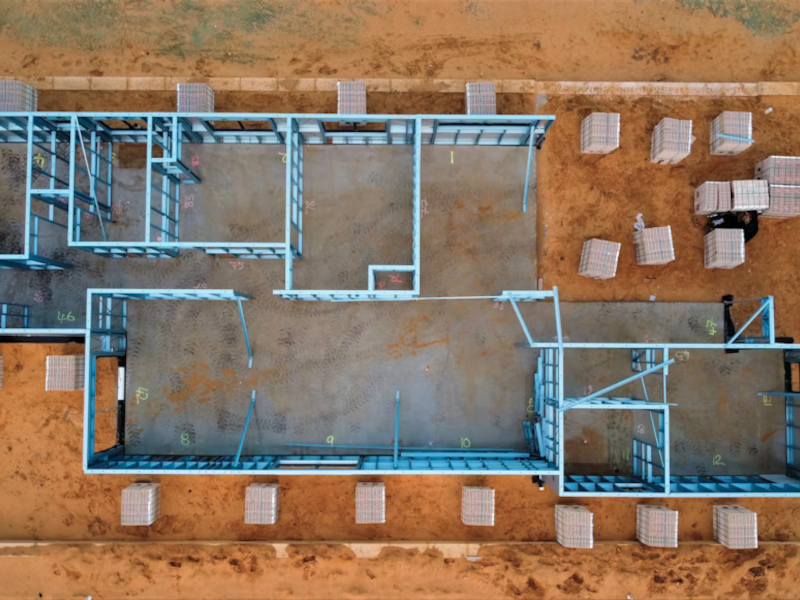
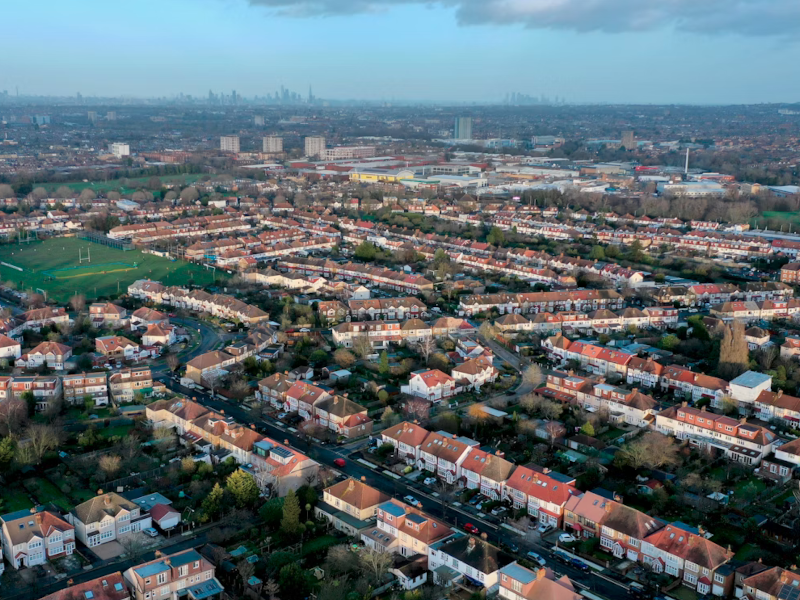
The way we build houses in the UK could be costing you an average of almost £67,000. This could be fixed by making housebuilding a public infrastructure project rather than a means for very rich shareholders to transfer your wealth to themselves.

Volume housebuilder Taylor Wimpy released its annual report for 2024 yesterday and the details in it, which look excellent from the viewpoint of a corporate shareholder, reveal much that is broken with the UK’s housing sector.

The first important number in their report is the number of houses completed. Taylor Wimpy is one of the UK’s largest volume housebuilders – likely to be in the top three this year in terms of completed projects – yet built only 10,593 houses in 2024 – a substantial reduction over the previous three years (though they claim to be on track for about 14,000 this year).

The second is their claimed operating pre-tax profit of £416 million. The word “profit” is a very fluid term in the world of corporate accountancy as it’s relatively easy for companies to move money around via “one time charges”, inflated director bonuses or “loans” to subsidiaries or parent companies, so a better number to judge a company like this is the money it granted to its shareholders as a dividend as this represents money extracted from the company and not reinvested in any way (not even in the form of the labour of those hypothetical overpaid directors). The dividend for shareholders in 2024 was £339 million.

This means that the houses built by Taylor Wimpy in 2024 generated a dividend to shareholders of an average of almost exactly £32,000 per house. This is how much lower house prices could have been had the company not been in the business of extracting profits via dividends. Had the company been a not-for-profit business entirely, then its houses could each have been almost £40,000 cheaper.

It gets worse for you, the house-buyer, because it’s very likely that you’d be taking out a mortgage to buy that house and you’ll be required to pay interest to the bank on that loan. £40,000 added to a 25 year mortgage at 4.5% interest will result in you paying back £66,700 over that time. To say again, this isn’t the cost to you for paying for anything to do with the construction of the house itself. This is the cost to you for paying interest on the additional loan you took out to pay for the profits of the company, most of which were paid out as dividends to the company’s shareholders.

And who are those shareholders? Our old friends, US based asset managers BlackRock and Vanguard Group are near the top of the heap, owning about 15% of the company between them. Several of the other owners are banks like HSBC and Barclays. This means that if you have a Barclays mortgage, then part of the interest you are paying on your mortgage is being used to service the loan you took out to pay the dividend they gave to themselves to inflate the price of your house.

If Scotland had a National Housebuilding Company as we’ve advocated for the best part of the last decade, then we could be building houses at as close to not-for-profit as possible and could reinvest any surpluses into other public infrastructure to make the places around our houses and the services we need in our community more resilient.

If we built the houses to the plan proposed in Good Houses for All, then they would be constructed at a far higher quality than the conventional timber frame “diddy boxes” (our Board Director and premier architect Malcolm Fraser’s not-so-affectionate name for them) favoured by the volume development sector and would force remaining private developers to drastically improve the quality of their constructions (doing so wouldn’t even reduce their profits because such buildings are now cost-competitive with the diddy-boxes and then create further savings in terms of energy costs).

“If the whole of the UK brought in a Land Tax equivalent to our suggested baseline value of 0.63%, then Taylor Wimpy would owe an additional £2.14 million per year on its banked land”

A final point to note in their report is the amount of landbanking they do. Landbanks are when a company buys up land but then does not build on it for an extended period of time (or sometimes never, or the land itself becomes a commodity to be traded between companies). The report states that the company currently owns £3.4 billion worth of land spread across 79,000 “short term plots” and 139,000 plots in their “strategic pipeline”. They also purchased more plots last year than their number of completions so the total size of their landbank has increased. Given their completion rate over the past few years, they could stop buying land for around 20 years without risking running out.

Decreasing the supply of land without putting it to the intended use of housebuilding is a major factor not just in inflating the price of land but also actively preventing land from being used for building either by other volume developers, by Local Authorities or even by enterprising self-builders. Scotland should consider bringing in a Land Tax to charge companies for the land they own and should consider an additional surcharge on the land tax to account for vacant or landbanked land (which would encourage developers to build so that they can get the land off their books). If the whole of the UK brought in a Land Tax equivalent to our suggested baseline value of 0.63%, then Taylor Wimpy would owe an additional £21.4 million per year on its banked land – still a small fraction of its overall profits.

The way we build houses in this country is badly broken and has resulted in volume developers constructing cheap, cold, damp houses that are not fit for the purpose of living because the purpose of the houses is to extract wealth and deliver it to shareholders. Until we move to fix that and to end the financialisation of housing, we’ll all keep paying a very real and very substantial price for the roof over our head.

If You Want To End Homelessness, Give People A Home

“Homelessness is illegal. In my city no one is homeless although there are an increasing number of criminals living on the street. It was smart to turn an abandoned class into a criminal class, sometimes people feel sorry for the down and outs, they never feel sorry for criminals, it has been a great stabilizer.”
–  Jeanette Winterson

This blog post previously appeared in Common Weal’s weekly newsletter. Sign up for the newsletter here.

If you’d like to support my work for Common Weal or support me and this blog directly, see my donation policy page here.

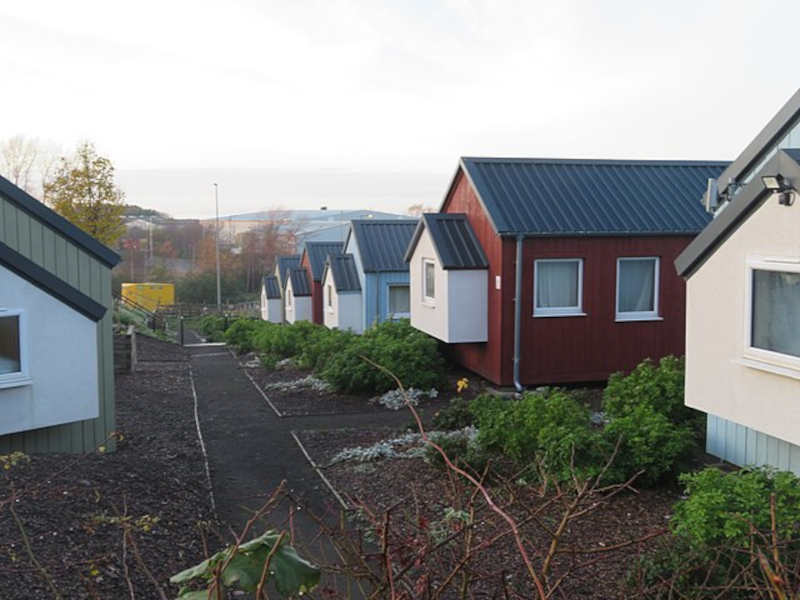
Image Source: M J Richardson, CC-BY-SA. The Social Bite Village in Granton, Edinburgh

I’ve been thinking a lot lately about the difference between ‘good’ policies and ‘easy’ policies. There are some ideas out there that politicians find very easy to do, regardless of whether they are good or bad. And some that politicians find very hard to do no matter how much good they’d do.

Universal Basic Income (UBI) is an excellent example of this. As a paper exercise, it looks fairly straightforward. Just find out where everyone is, identify a means of paying everyone and then just pay everyone a certain amount of money regardless of whether they ‘need’ it or not.

It has been shown dozens of times now that these kinds of unconditional cash payments work. They reduce all of the negative markers of poverty, they do it more effectively than ‘means tested’ alternatives, and they do so so effectively that several recent pilots have found that the money granted in the UBI was less than the cost of ‘fixing’ the poverty caused by not having a UBI.

This is a massively ‘good’ policy but it’s not an ‘easy’ one. The challenges of unwinding the existing welfare system – and all of its deliberately punitive negatives – is extremely difficult in the sense that if you happen to miss a month between someone’s last Universal Credit payment and their first UBI payment, then that person could suffer extreme hardship.

It’s hard in the sense of identifying everyone who should be paid and how to pay them – including people who don’t have bank accounts or stable addresses or who may have their finances constrained for any number of reasons. It’s also hard in the political sense that the first reaction from too many who would reach to oppose a UBI is “Why should they get something for nothing?”.

There’s another policy that is pretty much objectively proven now to result in overwhelming positive outcomes, has been shown to be cheaper than not doing it, and will almost certainly get that same final question in response to it – Housing First.

The principle of Housing First is that everyone, regardless of means or circumstance, should have a roof over their head. If someone finds themselves homeless, then this principle means that you don’t wait until support services have deemed whether or not they are worthy of support.

You don’t have the person jump through all kinds of paperwork to prove they need that support. You don’t make judgements on whether or not their lifestyle meets some kind of moral minimum before granting them support. Instead, the first thing you do is provide that person with a house that they can live in for as long as they want at no cost.

You can see the objection immediately. “I pay my rent/mortgage! I didn’t get my house for free!”. Well, I didn’t either, and nor have I had the misfortune of having to sleep rough but I know people who have and I’m well aware that any of us are only one bad day away from having it happen to us.

An excellent paper was published last week by the English think tank the Social Market Foundation that reviews Housing First pilot schemes in Scotland, England, Finland and Canada as part of a campaign to roll Housing First out to all rough sleepers in England and to, in effect, end homelessness.

“In Scotland, it was found that giving someone a ‘free’ house was about £10,000 per person, per year cheaper than just leaving them to sleep on the streets.”

The details of the schemes differ slightly – mostly in whether the house granted to the person is part of a ‘homeless village’ or whether the houses are embedded within communities, but all share the principle that a house is not a reward for taking part in the scheme nor are moral judgements around sobriety or substance use either a barrier to entering the scheme or a cause for eviction. In the words of the Finnish study “dwelling is the foundation on which the rest of life is put back together”.

The Scottish examples orbit around the Pathfinder programme that ran from 2019-2022 and found that while the average cost per participant in the programme was around £13,350 per year, the average cost of homelessness was estimated to be about £23,000 per person, per year. In other words, giving someone a ‘free’ house was about £10,000 per person, per year cheaper than just leaving them to sleep on the streets.

Similar levels of savings were found in the Finnish example (€15,000/£12,770 per person per year) and in the Canadian example ($CAD 4,850/£2,611 per person, per year). The SMF estimate that if Housing First was rolled out to as many rough sleepers as is currently possible (i.e. all those who aren’t barred from accessing public funds) then around 9,300 people would avoid sleeping rough and the public purse would save around £178 million.

On that subject of people who have no recourse to public funding, they do advocate that this should change. In all the current rancour about migration right now, you might have failed to spot a very obvious flaw in the current system for supporting asylum seekers. In the UK, asylum seekers – those who have claimed asylum from political repression or other forms of discrimination – are barred from working, are barred from many forms of housing and often don’t have their own funds to fall back on.

They are provided meagre housing by the state (getting a room, basic food and a £10 a week is not the High Living that those stoking xenophobia in Britain right now claim it is. If anyone wishes to dispute this point, I challenge them to live for six months on only the means provided to an asylum seeker and write a report of their experiences.)

But they are often turned out of that housing the moment their asylum claim is deemed legitimate and they become political refugees. Without work up till that point, with few support networks around them and without any other fall back plan – it’s no wonder that so many new refugees in Britain end up spending that first night of freedom – or an extended period afterwards – sleeping rough.

Outcomes for those passing through Housing First programmes have almost without exception delivered better outcomes for participants than the services available to them before they entered the programme. In the Scottish programme, more than 80% of participants were still in housing after two years. Not a single participant was evicted from the programme.

In the English pilot schemes, not one participant who left the programme ended up sleeping rough again within the first year. In all of the studies, the mental and physical health of participants improved, they were less likely to commit a crime and less likely to be the victims of a crime.

There appears to be almost no downside of a policy like Housing First and yet I still describe it as politically hard to do largely because of the political cost rather than the financial, moral and social cost of homelessness. This needs to be tackled head on. If it produces better outcomes than existing policies and is cheaper than those policies then it becomes a moral imperative to do that hard thing.

Scotland can end homelessness, end the negative stigma around people who lose the roof over their head, can increase social cohesion and heal some of the divides between us and can do it while saving money. All we need to do to make this happen is to give a homeless person a free house.

Demolishing Our Future Again

“As you will no doubt be aware, the plans for development of the outlying regions of the Galaxy require the building of a hyperspatial express route through your star system, and regrettably your planet is one of those scheduled for demolition. The process will take slightly less than two of your Earth minutes. Thank you.” – Douglas Adams (The Hitchhiker’s Guide to the Galaxy )

This blog post previously appeared in Common Weal’s weekly newsletter. Sign up for the newsletter here.

If you’d like to support my work for Common Weal or support me and this blog directly, see my donation policy page here.

The demolition of the Wyndford towers in Glasgow marks a sad end for the residents and campaigners who fought for years to prevent their loss. The fall of those towers represents a lot about failings in Scotland – and particularly in Glasgow – around approaches to construction, approaches to place-making and our approach to what we think residential housing is for.

The destruction of the towers was done almost entirely on short term financial grounds and because the owners of the towers were able to pass the costs of the demolition onto others rather than paying it themselves.

There were two chief arguments used. The first was a design argument that said that the buildings couldn’t be adequately retrofitted but this case was expertly dismantled by architect (and Common Weal Director) Malcolm Fraser. The second was a financial one that said that it was cheaper to demolish and rebuild than to retrofit.

This, again, was refuted on the grounds that the demolition plan didn’t take into account of the environmental impact of the resources used to rebuild.

Many of our building materials are carbon intensive – particularly concrete and steel (alternatives to both are coming online but aren’t quite there yet) – thus whenever we have a building in place, we have to consider the “embodied carbon” involved. Once a block of concrete is cast and all of the carbon it emits during its manufacture, transport and curing has been emitted then it doesn’t emit any more. However, grinding it into dust, throwing it into landfill and replacing it with a new block of concrete will result in more carbon emissions. Wood is kind of the opposite but still worth mentioning. Wood absorbs carbon when it grows but emits it when it rots or is burned as waste. Either way, when a building material is replaced with a new one, the “embodied carbon” price has to be paid. Obviously, therefore, to avoid more emissions than necessary, building materials should be used for as long as possible, should be RE-used when possible and replaced as infrequently as possible.

The problem is that we don’t have an effective carbon or externality tax in the UK that would price in such an effect. If it’s cheaper to tear down and building and let the planet pay the cost in emissions, that’s what Capitalism doesn’t just suggest should happen but actively demands must happen.

There is another aspect to the financial case though that has nothing to do with the carbon aspect and that is VAT. Right now in the UK if you want to buy materials for a new building, you’ll pay a reduced VAT rate of 5% but if you want to buy the same materials to retrofit that building you’ll pay 20% VAT. So there is a strong incentive for buildings to be torn down and replaced if that means qualifying for what amounts to a very large tax cut.

There are solutions to this. The obvious one would be to change VAT. In an era of climate emergency and in the absence of a full externality tax, the obvious solution would be a reversal of that situation to actively encourage retrofit over rebuild but most campaigners (like Fraser) would be content with at least an equal playing field.

Unfortunately, the UK Government isn’t moving very quickly in this field (though the previous Conservative government did temporarily cut VAT on some energy efficiency products) and while the Scottish Government is just as corralled by the volume developers who represent the companies who build many of the overpriced, cold and damp blocks of appreciating capital assets that some of us call “homes” but they do have the advantage of not having to worry much about VAT given that it’s a reserved tax. There are devolved options out there though.

Back in 2022, I was working with Malcolm on an idea to write up a proposal for a devolved tax that could try to level the VAT distinction between repair and rebuild. The Scottish Government couldn’t (or couldn’t cheaply) offer a tax rebate to subsidise the VAT on retrofits and couldn’t adjust the reserved tax directly and, as with the problems they have with bringing in a national land tax, they’d find it difficult to bring in a national construction tax. But the Scottish Government DOES have the power to bring in a local levy controlled by Local Authorities. Our idea then was that Scotland could bring in a Demolition Tax to intentionally raise the price of incidents like Wyndford tower to the point that repair and retrofit would be cheaper than the alternative.

But then, we were beaten to the punch by the Chartered Institute of Building who published essentially an identical proposal and did it likely better than I would have so I’ve been more than happy to endorse their work. I’m also pleased to note that the Scottish Greens have done likewise though I think they are currently the only party in Parliament to have done so. I’d like to know the reasoning behind why the other parties haven’t, if they’d like to tell me.

The devil in such a tax is in the detail though. If it’s set too low then it won’t discourage demolitions. If it’s set based on tax arguments like the infamous “Laffer Curve” so beloved by politicians who want to use it as a misguided excuse to cut taxes then it it’ll end up being “optimised” to maximise tax revenue. A properly set Demolition Tax should, in theory, eliminate all but the most essential of demolitions (demolitions on safety and disaster grounds should probably be exempt) and thus shouldn’t actually raise any tax revenue at all. Of course, this also raises the prospect of an owner letting their property simply decay rather either repair OR replace it – something that can be fixed by enforcing already extant regulations around maintaining buildings in good order along with early use of Local Authority powers to compulsory purchase property from landlords who fail in their responsibilities.

There’s an important point in this story that goes beyond the material and the engineering and that’s the lack of social planning and protection of communities. The Wyndford tower has taken 600 homes and will turn them into just 400 homes. Even if every former resident was offered a guaranteed place in one of the new homes (they weren’t) at a price they could afford there wouldn’t be enough houses for all of them. This demolition represents yet another dispersal of a community in a city that has basically defined itself by dispersal of communities for several generations now. Each one, even when they’ve created objectively better living conditions than what was there before (the New Towns project was a decidedly mixed bag in that regard – a subject for another time), that loss of community, of dislocation from friends and family, was often profound and itself generational in its impact. This is why one of our Big Ideas isn’t “Housing” but “Place”, because while four walls and a roof are a necessary component of living well in the modern world, it’s not a sufficient one and where it is and what it is connected to is important. Decidedly unmodern gendered language aside, John Donne was correct to say:

“No man is an Iland, intire of it selfe; every man is a peece of the Continent, a part of the maine; if a Clod bee washed away by the Sea, Europe is the lesse…”

— John Donne, Devotions upon Emergent Occasions, 1624

But if the continent of community is diminished when but a single part is torn away, what happens when every part is blown down and scattered to the winds?

Every decision that led to those towers coming down last week was made either uncaring of the community who called them home or despite those cares. Where the people were considered, it was done on an individualistic basis, as if each island would be fine if it was picked up and placed anywhere else.

I fear that lesson will be missed again. I see little evidence that the replacement buildings will endure for centuries longer than the less than four score and ten that their predecessor will. They’re certainly not being built with the kind of resource-preserving Circular Economy principles that we MUST be using in our constructions during a climate emergency. Otherwise, likely within the lifetime of some of those new residents, I fear that someone will be writing another eulogy similar to this one.

Image Credit: Ian Dick

The Only Way To Fix Council Tax

“When it comes to decreasing inequalities of wealth for good or reducing unusually high levels of public debt, a progressive tax on capital is generally a better tool than inflation.” – Thomas Piketty

This blog post previously appeared in Common Weal’s weekly newsletter. Sign up for the newsletter here.

If you’d like to support my work for Common Weal or support me and this blog directly, see my donate page here.

In the run up to the 2021 Scottish Parliamentary Election, the SNP – like most other political parties, published their manifesto of the things they promised to do if returned to power after the election. They’ve since deleted it from their website but it has been archived here. In that, one of their promises to the voters who put them back into office stated that they would run annual Citizens’ Assemblies during this Parliamentary term “to help find consensus on issues where people have sharply divided opinions…such as such as reform of Council Tax.” Making that issue in particular more than a mere suggestion, a few pages later they stated clearly that “We are committed to reforming the Council Tax to make it fairer…We will ask a Citizens’ Assembly to consider the way forward alongside the question of wider powers for local government.”

After the election and their return to Government, they held one Citizens’ Assembly on Climate Change (the process of which showed an outstanding example of the future of democratic governance but the outcome of which was a single new policy promise, later broken) but didn’t hold any others. The Citizens’ Assembly on Council Tax Reform was never formally cancelled, but no effort or resource was ever put in to organising it. There is now no time to hold such an assembly before the end of the Parliamentary Term and no ability to even throw one together at the last minute given that neither the Programme for Government nor the final budget covering a full year of the remaining term mentioned such an Assembly.

This week, the Government published their proposal for a replacement to this manifesto promise. A series of “public engagements” this Autumn consisting of three key elements:
• A formal public consultation process.
• A number of public events or ‘town hall’ meetings held over the autumn months, ensuring a reasonable geographical spread and diversity.
• A set of focused discussions with key stakeholders and experts.

This strikes me as remarkably similar to their “engagement” series on land reform in 2022 where the “town hall meetings” included gathering a dozen or so members of the public into a hall named for one of Scotland’s largest landowners to tell them that they were going to try to limit the scope of the land reform bill to only cover the management of the very largest estates in Scotland so that they could keep the costs of the reform to a minimum. They’ve since reduced the threshold of that management in the proposals for the current Bill but it is still far too high, far too limited and far too easy to evade.

This is a column about that Council Tax reform though – I’ll happily come back to Land Reform in a future column.

To say I have little faith in the SNP (or any other political party in Scotland right now) actually making meaningful steps towards reforming this badly outdated tax would be an understatement but we are an impartial think-tank and we are very much one of the “key stakeholders and experts” who should be at the table later this year (I’ll let you know if we get an invite) so fine – I’ll once again lay out the options for reform and explain why the only possible rational option is to adopt our policy paper on replacing Council Tax with a Property Tax based on the present value of a home.

Continue reading

To Build Houses, First Buy The Land

“I think we’ve been through a period where too many people have been given to understand that if they have a problem, it’s the government’s job to cope with it. ‘I have a problem, I’ll get a grant.’ ‘I’m homeless, the government must house me.’ They’re casting their problem on society. And, you know, there is no such thing as society. There are individual men and women, and there are families.” – Margaret Thatcher

This blog post previously appeared in Common Weal’s weekly newsletter. Sign up for the newsletter here.

If you’d like to support my work for Common Weal or support me and this blog directly, see my donate page here.

image_2025-01-29_150318951

Why are houses so expensive?

There are many reasons. To take just a few, Developers only build private housing at a rate just high enough to keep prices up and subsidies flowing, certain areas are being particularly pressured by those rich enough to own multiple homes at the expense of the local community, and – as we pointed out in our book All of Our Futures – the UK’s decision to push the burden of pensions away from the state and onto individuals has created a culture of “climbing the housing ladder” with “victory” meaning extracting the wealth you’ve accumulated through ever increasing house prices so that you can pay for retirement or, increasingly, so that you can give it to a private care firm owned by a tax-dodging hedge fund. That is, if you’re allowed to buy a house at all and aren’t destined to be one of the increasing number of private renting pensioners who face destitution due to rents and the lack of means to pay for care (something we warned about in All of our Futures but only recently being picked up as a problem by places like the FT).

Continue reading

A Year In Common Weal – 2024 Policy Review

“Success is not how high you have climbed, but how you make a positive difference to the world.” – Roy T. Bennett

This blog post previously appeared in Common Weal’s weekly newsletter. Sign up for the newsletter here.

If you’d like to support my work for Common Weal or support me and this blog directly, see my donate page here.

image_2024-12-14_224511435

Intro

Welcome to the end of 2024. I can feel the Dùbhlachd tightening around me these days. I’ve always been a rather solar powered person (with a longtime ritual of greeting midsummer by reading outdoors under the midnight glow) and while I’m not afflicted – as some of my friends are – with full blown Seasonal Affective Disorder, I do feel the urge to crawl under a duvet and hibernate until the sun returns. Humans weren’t made to run a summer schedule in the middle of winter – we should be huddled around the hearth telling stories and hoping that the pickled fruits last till Spring.

Nonetheless, I’m looking forward to my winter break and some time to switch off, chill, and break into the aforementioned pickles – possibly with some home smoked cheese!
Until then, I want to leave you this year with a round up of what we got up to at Common Weal – especially as this year marked our tenth anniversary! We remain very possibly the most productive think tank in Scotland (supporting all of our staff members while the whole think tank earns less that the First Minister does – if you’d like help us correct that, then please sign up as a regular donor). We published 12 substantial policy papers, policy briefings or consultation responses this year plus we submitted several more less substantial consultation responses to the Scottish or UK Governments (many really are barely worth the time to submit but if we don’t then it gets held against us when it comes time to lobby properly for the outcome we want). This is all in addition to the whole staff writing in our weekly newsletter and our regular In Common Column in The National, plus all of the other media appearances we make with our work. Not a bad return for an average donation of £10/month! Regular newsletter readers will, no doubt, remember many of the stories and policy papers but newer subscribers or folk who have been a bit overwhelmed with the news of the year (i.e. all of us) may have missed a few things.

Continue reading

Why We Tax Houses

“Money, says the proverb, makes money. When you have got a little, it is often easy to get more. The great difficulty is to get that little.” – Adam Smith

This blog post previously appeared in Common Weal’s weekly newsletter. Sign up for the newsletter here.
If you’d like to throw me a wee tip to support this blog, you can here.

image_2024-09-20_100336300

The past couple of weeks have been incredibly busy with some unprecedented levels of media attention pointing at Common Weal now. As much as I loathe to blow my own trumpet, I ended up appearing in The National five days in a row on various topics like local democracy, ScotWind and our local Property and Land Tax proposals (You can read all of those articles here: 12345).

By far the most feedback came from the latter articles on reforming Council Tax (Have you seen our new short video explainers popping up on social media about this and other topics? If so, what do you think of them?) and extending it into land to create a comprehensive Property Tax that would cut taxes for the vast majority of households and bring in over £1 billion a year in new revenue for Scottish Local Authorities.

Of course, not all of the feedback has been entirely positive but much of the rest has been around asking genuine questions about the policy so I thought I’d take the time in my column this week to answer some of them.

Continue reading