Burning Down The House of Cards

“What are the odds that people will make smart decisions about money if they don’t need to make smart decisions—if they can get rich making dumb decisions?” – Michael Lewis, The Big Short

This blog post previously appeared in Common Weal’s weekly newsletter. Sign up for the newsletter here.

If you’d like to support my work for Common Weal or support me and this blog directly, see my donation policy page here.
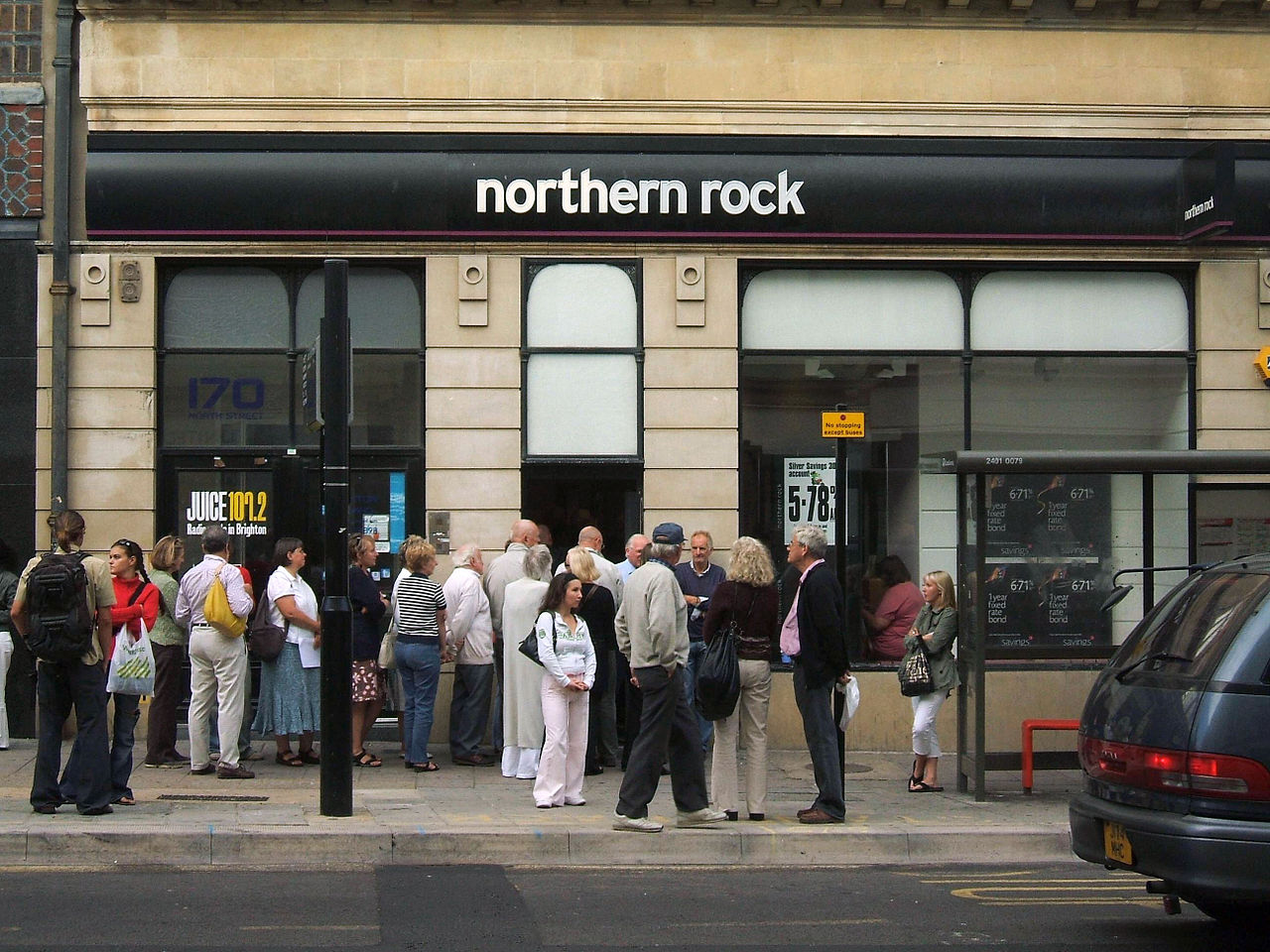
Image Credit: Dominic Alves

Rachel Reeves has signalled that she is “open minded” about the banks lobbying her to repeal regulations that came in after the 2008 Financial Crash. If she does, she will be accepting responsibility for the next one the banks inevitably cause.

One of the most important films dealing with the financial sector since the 2008 Financial Crash was 2015’s The Big Short. Comedic, irreverent and outright scathing of those involved, yet it remains one of the most incisive explanations of the 2008 Financial Crash and it managed to make the intentionally obscure world of financial alchemy accessible to the lay person. I’d go as far to say that it did for the idea of ‘sustainable investment banking’ as the films Threads and The Day After did for the idea of a “survivable nuclear war”.

If you haven’t seen it, please do so and pay particular attention to the scene explaining the concept of “synthetic CDOs” – where investors could effectively gamble on the possibility of you defaulting on your mortgage, and other investors could gamble on whether or not those investors will win their bet, and more investors could gamble on the outcome of those bets…all without knowing anything at all about your finances and the state of your mortgage.

One of the things that made these ‘financial instruments’ so destructive was that the ‘investment’ side of the banking sector – the bit that involves people effectively gambling amongst themselves with money that maybe was theirs and maybe wasn’t – was entirely leveraged on the ‘retail’ side of the banking sector – that’s the bit where you put money in your savings account and ask the bank for a mortgage to buy a house – but was completely divorced from it to the point that one side didn’t understand what the other side was doing.

When the housing boom of the early 2000s came to an end in late 2007 and people started defaulting on mortgages, this would have normally been tragic for those losing their homes and a sign of a substantial economic recession but would have ultimately resulted in a bounce back. But all of those ‘investment firms’ sitting on top of the sector were gambling with money that they ‘knew’ was ‘safe’ (because ‘safe as houses’) despite the houses not being nearly as safe as people assumed.

Not just assumed. The way the CDOs were structured made it functionally impossible for anyone to actually assess the risk of their failure. Because it was impossible to work how and if they might fail, the credit agencies declared them to be safe (yes, really) which encouraged banks to pile money into them.

It got so bad that the investment sector was gambling with something like $20 for every $1 actually involved in the mortgages. The investment gambling sector was many times larger than the value of thing they were gambling on. The liabilities on the banks ‘if’ their sure bet failed reached the point of being larger than the GDP of the countries they were based in.

It would only take a small increase in the percentage of mortgage defaults to utterly bankrupt the banks. An increase that might be caused by investment bankers encouraging retails bankers to take on ever riskier mortgages (with ever higher profit margins), paying exorbitant bonuses to bankers who could sell larger and larger mortgages to people who couldn’t afford to pay them.

Which is what happened. And the backlash threatened to pull down other sectors of the economy because the bankers weren’t just gambling on mortgages but on everything just about up to and including whether or not the sky was blue and the fact that the investment wings were entwined with their retails wings meant that if their investment bank failed, the ATMs on the high streets could be shut down too (runs on banks like Northern Rock showed the visceral reality of people faced with losing their savings because of someone else’s mistakes).

Continue reading

It’s Scotland’s Economy – Or Is It?

“It is not inequality which is the real misfortune, it is dependence.” – Voltaire

This blog post previously appeared in The National as part of Common Weal’s In Common newsletter.
If you’d like to support my work for Common Weal or support me and this blog directly, see my donation policy page here.

Chivas Regal Scotch Whisky

Deliberate Government policy has resulted in Scotland’s economy being outsourced to foreign-owned companies to the point that we scarcely have a home-grown economy left any more. In a world of threats to global trade, this is a major problem.

Continue reading

Scotland: We Have Rockets Too

“Sometimes I wanted to peel away all of my skin and find a different me underneath.” – Francesca Lia Block

This blog post previously appeared in Common Weal’s weekly newsletter. Sign up for the newsletter here.

If you’d like to support my work for Common Weal or support me and this blog directly, see my donate page here.

Imagine the pitch. You’ve been instructed by Angus Robertson’s office to cut together a bunch of stock footage for a video showcasing Scotland and [don’t look at the fascism] the USA. Quite artistically, the images are juxtaposed to show the common interests between our two [ignore the ethnic cleansing] nations. For the scene to illustrate the line “we share beautiful places”, what images do you think would show Scotland and the US at their best [Hail King Musk and Viceroy Trump]?
The Scottish Government chose the two above.

Continue reading

Why We Tax Houses

“Money, says the proverb, makes money. When you have got a little, it is often easy to get more. The great difficulty is to get that little.” – Adam Smith

This blog post previously appeared in Common Weal’s weekly newsletter. Sign up for the newsletter here.
If you’d like to throw me a wee tip to support this blog, you can here.

image_2024-09-20_100336300

The past couple of weeks have been incredibly busy with some unprecedented levels of media attention pointing at Common Weal now. As much as I loathe to blow my own trumpet, I ended up appearing in The National five days in a row on various topics like local democracy, ScotWind and our local Property and Land Tax proposals (You can read all of those articles here: 12345).

By far the most feedback came from the latter articles on reforming Council Tax (Have you seen our new short video explainers popping up on social media about this and other topics? If so, what do you think of them?) and extending it into land to create a comprehensive Property Tax that would cut taxes for the vast majority of households and bring in over £1 billion a year in new revenue for Scottish Local Authorities.

Of course, not all of the feedback has been entirely positive but much of the rest has been around asking genuine questions about the policy so I thought I’d take the time in my column this week to answer some of them.

Continue reading

Extracting Oil and Profits

“No idea is above scrutiny and no people are beneath dignity.” – Maajid Nawaz

The following are two short articles I had published last week. The first, on Foreign Direct Investment, appeared in The Herald and the second, on Ed Milliband ending oil licences, appeared in The National.

If you’d like to throw me a wee tip to support this blog, you can here.

image_2024-07-15_125309614

Scotland must drop its addiction to foreign investment

Ian McConnell’s highlighting of Scotland’s continued dependency on “foreign direct investment” offers a welcome opportunity to once again explain why the policy – supported by multiple Scottish Governments – is acting to the detriment of the Scottish economy.

All investment demands an expectation of a return on that investment and the fact that the investment is coming from outwith Scotland obviously means that those returns must leave via the same route. Scottish Government figures show that since the start of devolution, more than a quarter of a trillion pounds has been net extracted from Scotland and that around £10 billion was extracted from Scotland in the most recent year we have data for. Further analysis by Common Weal shows that as a proportion of our economy, this is the highest rate of profit extraction of any of our peer nations with the exception of a handful of micro-states and tax havens as well as higher than any of the World Bank’s income groups, including the poorest and most indebted nations. Scotland, in that sense, runs an economy with European levels of economic development but with West African levels of foreign exploitation and profit extraction.

This isn’t just an issue of money. Companies that are mobile enough to invest in Scotland are mobile enough to remove that investment unless they get the political kickbacks they want (see the discussions around Scotland’s Green Freeports, for example. Or Grangemouth.) and thus present a direct intervention against our democracy. They also tend to more weakly embed jobs and skills in the economy and are more willing to leave workers on the scrapheap if some other nation decides to attract their “investments” instead of us.

The Scottish Government should drop its addition to FDI and should concentrate on building up domestic sources of investment (starting with reforms to the Scottish National Investment Bank) and should focus not on quick “GDP Growth” and accelerations of shareholder profits but on sustainable development not just of companies but of their workforces and the wellbeing of the communities in which they live.

Ed Miliband’s stance is welcome but it does not go far enough

The news that Ed Milliband has halted new oil and gas licences is a very welcome change of direction for UK politics and effectively brings the UK Government into line with what was the Scottish Government’s policy on new oil and gas in January last year. As it stands now though, the Scottish Government has backtracked on their opposition to new oil and has been extremely vague about the conditions under which it would support a ban. To be clear, it is one thing to state that you’d only support a licence if environmental checkpoints are met but if you don’t state what those checkpoints are or what a properly compliant oil licence would look like, then all you are doing is deferring responsibility for the decision either way.

The Supreme Court’s ruling last month that oil extraction must fully account for all oil emissions is significant here. Until then, a case was being built that a “Net Zero” oil rig would be one that transported workers to and from it without burning fossil fuels (Scope 1 emissions) and was powered by renewable energy instead of a fossil fuel power plant (Scope 2 emissions) but that basically washed its hands of whatever happened to the oil it extracted (Scope 3 emissions). If you bought some of their oil and burned it, that wasn’t their problem. This can no longer be the case and so brings into question the very possibility of a compliant oil rig. The Scottish Government should outright admit that either their support for oil must be ditched, or their remaining climate policies must.

As welcome as Milliband’s decision is, it likely doesn’t go far enough. He’s equally stated that he won’t revoke licences already granted but not yet being exploited nor will he shut down oil wells that are still economically producing oil. Half a decade ago in 2019, Friends of the Earth’s “Sea Change” report found that if the world is to meet its collective climate targets then not only must new licences be blocked and unexploited licences revoked, at least 20% of the economic oil in wells that are currently open must stay in the ground.

A Just Transition for workers is vital and I sympathise with Unite’s “no ban without a plan” slogan, but I fear that the politicians will stick to the easy option of “no ban” rather than what they should do, which is to bring those workers into the room immediately and help them design the plan that grants them the Just Transition they want and deserve before another political deferral forces a chaotic collapse of the oil industry and sees oil workers dumped just like their predecessors in the coal industry were.

TCG Logo 2019

Can An Economy Be ‘Big Enough’?

“Anyone who believes that exponential growth can go on forever in a finite world is either a madman or an economist.” – Kenneth E. Boulding

(This blog post previously appeared in The Morning Star. You can throw me a tip to support this blog here.)

image_2024-06-16_094808259

Those of us on the left have rarely been truly excited by the prospect of the Establishment crowning their next temporary placeholder, though I don’t know about you but this upcoming general election seems to offer even less in the way of actual choice or a chance for change than usual.

The Conservatives are in freefall, ejecting ballast as fast as they can (personnel as well as policies), Keir Starmer’s “changed Labour Party” seems to be trying to do as little as it can to uphold the traditions of the middle word in that catchphrase and even in Scotland, where for the last several elections, the SNP provided some sense of counterpoint (either as a credible voting option or at least as an anchor against rightwards triangulation), that party seems to have hit the end of its road in terms of ideas.

This time around, all of those parties (and several others) have congregated on a single line when it comes to how to manage the economy. Growth at all costs, no matter who profits from it or how much damage is done to the planet in the process.

Continue reading

Glue Traps And Globalisation

“Defining who is to be protected is in effect defining who is not to be protected” – Stephen D. King

(This blog post previously appeared in Common Weal’s weekly newsletter. Sign up for the newsletter here.)

The UK Government has announced that they are invoking the Internal Market Act to prevent the Scottish Government from banning the sale of glue traps in Scotland. These horrific devices are have been banned as part of broader concerns around protecting animals from cruel deaths and on the responsible management of land. It’s entirely right that the Scottish Government has acted to ban – rather than merely restrict or licence – these traps.

Continue reading

Wealth Taxes and Land Reform

“It takes a strong leader to collaborate with others in an effort to bring about real change.” – Germany Kent

(My speech at the 2024 Scottish Labour Spring Conference fringe event on land reform, hosted by REVIVE)

gray concrete building near lake under white sky during daytime

Devolution has meant that Scotland has more responsibility than power. Tax powers as they are have limited scope to effect meaningful change to an unequal society.

Our most powerful devolved tax – income tax – has proven extremely hard to use and eats a lot of political capital – chiefly as it’s too easy for the very rich to avoid and everyone else doesn’t get paid nearly enough.

But income inequality is far outstripped by wealth inequality both in Scotland and in the UK and in a capitalist economy where those with wealth can use it to rent-seek off the backs of the folk who worked to earn it, we have a problem where it matters less who gets paid how much, it’s who hoards it after that.
We need a system of wealth taxes to rebalance our economy, cut down on the dragon’s hordes of the multi-billionaires who could never hope to spend it usefully in a lifetime and to ensure that assets are more efficiently used for the benefit of all of us.

Scotland has a lot of power to do good here if we choose to and while this isn’t the time or the place to discuss what we could do if the Scottish Parliament had more powers, it most certainly is the place to discuss what we can do now.

Continue reading