UK General Election 2024:- The Manifestos

“Democracy cannot succeed unless those who express their choice are prepared to choose wisely. The real safeguard of democracy, therefore, is education.” – Franklin D. Roosevelt

(This post and the research underpinning it is undertaken in my own time and outwith other political work that I do. It is presented here free to access as a public service but if you’d like to throw me a wee tip to support this work, you can here.)

Vote

The campaign for the 2024 UK General Election is underway and parties are now laying out their positions and are courting your votes. As I have with every other election since I started this blog, I’ll continue keeping a place here for party neutral information, including a post aimed at first time voters on how to vote in the elections and how that vote is translated into seats. I have written a guide on how to vote in the upcoming election and how your vote is translated into MSPs’ seats. You can read that guide here.

As a voter, it can be difficult to find information on what each of the parties are promising you – their websites can be confusing and there may be a lot of them. In this post I intend to gather as many of the political party manifestos as I can as they are published so that you can find them in one place. Unfortunately, I can’t cover independent candidates fairly and whilst I would like to be as inclusive as possible I may miss a few of the smaller parties or they may not be publishing a full manifesto (particularly if they are a single issue party). As this is a Scotland-focused blog my general rule is that for inclusion the manifesto must from from a registered political party that is standing at least two candidates across at least two constituencies in Scotland. However, I shall try to include manifestos from parties campaigning outwith Scotland but elsewhere in the UK. If parties release a distinctly Scottish version of their manifesto in addition to their UK version, I shall link to both. If you spot the publication of a manifesto before I do, please let me know and I’ll add it. I shall also welcome advance notice from party representatives themselves of when they plan to publish their manifesto.

All of the manifestos below are presented for your information and the presence or absence of any of them should not be taken as an endorsement or otherwise of any of the parties or of any of the policies that they may be promoting.

Note:- Parties marked in square brackets are placeholders for now and the prospective list may change as manifestos are published, parties emerge or, indeed, parties drop out of the electoral race.

Continue reading

How Scotland Votes: A Guide to the 2024 UK General Election

“Ankh-Morpork had dallied with many forms of government and had ended up with that form of democracy known as One Man, One Vote. The Patrician was the Man; he had the Vote.” – Terry Pratchett

(This post and the research underpinning it was undertaken in my own time and outwith other political work that I do. It is presented here free to access as a public service but if you’d like to throw me a wee tip to support that work, you can here.)

Vote

Disclosure and Disclaimer: Although I am politically active – albeit not a member of any political party – this guide is intended to be objective and politically neutral. This is a guide on how to vote and is written with a first time voter in mind. It is not a blog to try to convince you to vote for or against any particular person or party but to help you cast your vote and to understand how that vote translates and contributes to the final result.

For the first time since 2015, the UK has managed to complete a relatively normal length of time between General Elections, though since the repeal of the Fixed Term Parliament Act, a “normal” period of time is no longer the fixed period of five years but may be called at any time by the incumbent Prime Minister so long as not more than five years has passed. The absolute deadline for the current term was January 2025 but Prime Minister Rishi Sunak has pulled the trigger a little earlier than that (and a little earlier than most commentators expected as many thought we’d see an election around September or October). Whatever his reasons – and he doesn’t strictly need any – Parliament has been dissolved, all of our MPs have lost their jobs and many of them – as well as a slew of other potential candidates – are now courting your vote to try to win a seat in the House of Commons. This vote will take place on Thursday 4th July 2024.

If you want to take part in this election, and particularly if it’s your first time ever doing so or if it’s not but you’d like to know how your vote translates into seats and MPs, then this guide is for you. If you’re looking for someone to tell you who to vote for, then I won’t do that here but please do check out my list of all of the published party manifestos which may help guide your vote.

Continue reading

“Ankh-Morpork had dallied with many forms of government and had ended up with that form of democracy known as One Man, One Vote. The Patrician was the Man; he had the Vote.” – Terry Pratchett

(This post and the research underpinning it was undertaken in my own time and outwith other political work that I do. It is presented here free to access as a public service but if you’d like to throw me a wee tip to support that work, you can here.)

Vote

Disclosure and Disclaimer: Although I am politically active – albeit not a member of any political party – this guide is intended to be objective and politically neutral. This is a guide on how to vote and is written with a first time voter in mind. It is not a blog to try to convince you to vote for or against any particular person or party but to help you cast your vote and to understand how that vote translates and contributes to the final result.

For the first time since 2015, the UK has managed to complete a relatively normal length of time between General Elections, though since the repeal of the Fixed Term Parliament Act, a “normal” period of time is no longer the fixed period of five years but may be called at any time by the incumbent Prime Minister so long as not more than five years has passed. The absolute deadline for the current term was January 2025 but Prime Minister Rishi Sunak has pulled the trigger a little earlier than that (and a little earlier than most commentators expected as many thought we’d see an election around September or October). Whatever his reasons – and he doesn’t strictly need any – Parliament has been dissolved, all of our MPs have lost their jobs and many of them – as well as a slew of other potential candidates – are now courting your vote to try to win a seat in the House of Commons. This vote will take place on Thursday 4th July 2024.

If you want to take part in this election, and particularly if it’s your first time ever doing so or if it’s not but you’d like to know how your vote translates into seats and MPs, then this guide is for you. If you’re looking for someone to tell you who to vote for, then I won’t do that here but please do check out my list of all of the published party manifestos which may help guide your vote.

Continue reading

Extremism Bingo

“Face your political opponents according to legitimacy, democracy, and the constitution, not hypocrisy, autocracy, and transgression.” – Ehsan Sehgal

(This blog post previously appeared in Common Weal’s weekly newsletter. Sign up for the newsletter here.)

Bingo

Rishi Sunak’s recent speech on the dangers and risks facing the UK said much more about his perceptions of the risks to his premiership than about the risks facing the people of the country itself.

This week Rishi Sunak gave a speech hosted by the Policy Exchange – a think tank that scores the lowest possible rating for financial transparency and which doesn’t appear on either the UK or Scottish Lobbying Registers. In it he unofficially but totally officially used his position as head of government to launch a party political campaign aimed to try to save his career ahead of a general election that he will have to announce within the next few months (Note: Since the initial publication of this article, Sunak has indeed called that General Election) – knowing that had he given that speech during that campaign, he almost certainly would have been forced to rewrite much of it to stay within election campaign rules. As it is, the “official” transcript of the speech is loaded with redactions where he crossed the line between Prime Minister of the Government and Leader of the Conservatives. Not that anyone who watched the speech on the TV would have been exposed to those redactions. It’s certainly an innovative approach to political transparency – to say things on the record knowing that they’ll be safely redacted from the record.

Continue reading

The In Tray

[The purpose of] clarification is not to clarify things. It is to put one’s self in the clear” – Jonathan Lynn & Anthony Jay, Yes Minister 

(This blog post previously appeared in Common Weal’s weekly newsletter. Sign up for the newsletter here.)

I was hoping for a bit more of a shakeup in John Swinney’s Ministerial reshuffle. As it was, it’s barely a wobble. Some space was carved out to give Kate Forbes a Cabinet Secretary position without much in the way of actual power. The changes are most notable in their absences. Just a day before the reshuffle I was in a Committee hearing that discussed, in part, the “signal” sent when the issue of, say, “Older People” is moved from the title of a Cabinet Secretary to the title of a more junior Minister, and then dropped from titles altogether and moved into the middle of the list of responsibilities of a Minister or dropped completely. As Dr Hannah Graham has pointed out on Twitter, the list of terms that no longer exist as Ministerial titles include:- Migration & Refugees, Europe and International Development, Planning, Fair Work, Community Wealth, Just Transition, Biodiversity, NHS Recovery, Active Travel, Innovation and Trade, and Independence. Journalists take note, when those lists are published – the Wayback Machine is your friend. Compare the new list of responsibilities to the old one to see what has been promoted and what has been demoted entirely as an issue of importance for the Swinney Government.

Nevertheless. Even though most of the faces haven’t changed and most of them haven’t even moved office, we do have a new Government and that is always an opportunity for new and returning Ministers to review their goals and objectives. I’d like to place into each of their In Trays at least one Common Weal policy paper relevant to their brief that we’d like them to take on in the coming months.

Continue reading

How John Swinney Can Eradicate Child Poverty

Is that trembling cry a song?
Can it be a song of joy?
And so many children poor?
It is a land of poverty!
– William Blake

(This blog post previously appeared in The National.)

a truck driving down a street next to tall buildings

John Swinney is now Scotland’s seventh First Minister. He is also the sixth First Minister to have been, at the time of his swearing in, one of the tranche of “99’ers” – the first generation of MSPs who have held unbroken service in Holyrood since the start of Devolution and the recommencement of the Scottish Parliament. This speaks to the relative youth of that Parliament as does the fact that, at present, we still do not have an elected MSP who is younger than the Devolution era (though we came close in 2021 with the election of then 23 year old Emma Roddick who was born just shortly before the devolution referendum in 1997).

We’re still living in fast-moving times and the period between me writing this column on Wednesday morning and you reading it on Thursday evening is a gaping chasm that none can see across clearly but I did want to take a moment to pick up a point made by Swinney during his speech on Monday when he accepted the mantle of leader of the SNP. It’s a point that I’m slightly surprised that no-one else picked up on because it was his sole tangible policy pledge that couldn’t be discounted as the mere background level of filler (No-one expects a politician to promise to build fewer houses, so a comment about building “more houses” without a tangible target or policy strategy isn’t much more solid).

John Swinney pledged to “eradicate child poverty in Scotland”. So I’d like to take a moment to ask him the hardest question anyone can ask any politician who has made a pledge of any kind.

How?

Continue reading

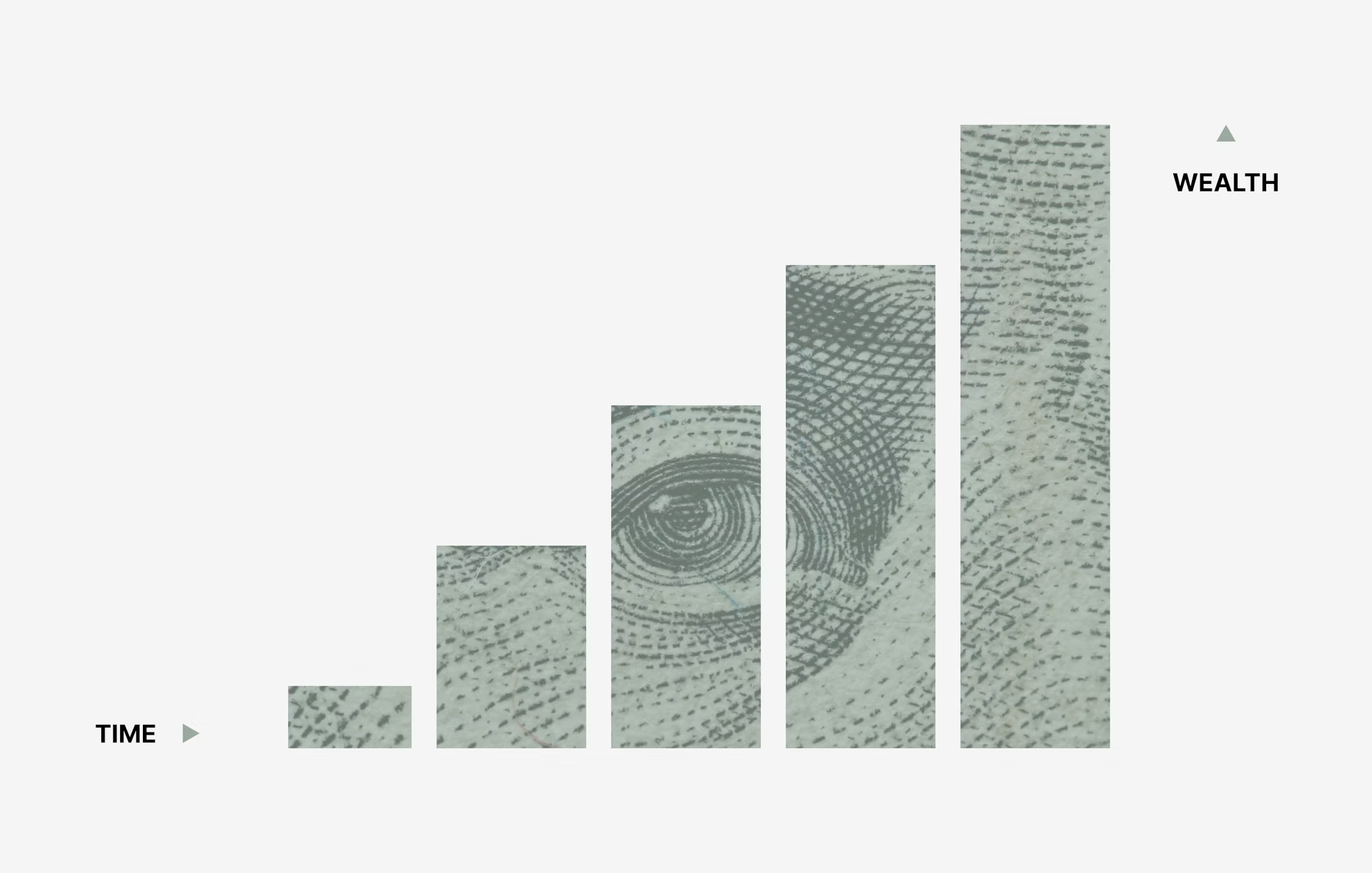
Profit Extraction Makes Scotland Poorer

“A system is corrupt when it is strictly profit-driven, not driven to serve the best interests of its people.”
– Suzy Kassem

(This blog post previously appeared in ROSE Magazine.)

image_2024-01-28_130144225

Scotland is one of the most foreign-owned countries in the developed world and the consequence of this is the loss of more than £10 billion pounds every year mostly as a result of shareholder dividends and other forms of profit extraction.

This is the conclusion of my latest policy paper for Common Weal titled Profit Extraction: How foreign ownership drains Scotland’s wealth and is based on recently updated data from the Scottish Government as well as data from the World Bank.

Continue reading

A Deal With The Devolved – Part Three

“It is a capital mistake to theorize before one has data. Insensibly one begins to twist facts to suit theories, instead of theories to suit facts.” – Sir Arthur Conan Doyle, Sherlock Holmes

(This blog post previously appeared in Common Weal’s weekly newsletter. Sign up for the newsletter here.)

Thanks to an FOI request, I now have evidence that the Scottish Government has applied its devolved Freeport tax cuts without any data saying that they will benefit the Scottish public purse or be offset by other taxes.

Continue reading

A Bute House Divided

“It’s only hubris if I fail”, Julius Caesar, HBO/BBC TV series Rome (2005)

(This blog post previously appeared in Common Weal’s weekly newsletter. Sign up for the newsletter here.)

The Bute House Agreement has ended. Earlier this month, the Greens notified members that there would be a vote on whether or not to continue the cooperation deal with the Scottish Government within the next few weeks. This morning, stealing the march and despite saying just 24 hours earlier that SNP members didn’t need a vote because they’d certainly back the agreement, Humza Yousaf unilaterally terminated the deal. The Greens have been booted out of government and Patrick Harvie and Lorna Slater are no longer ministers.

Continue reading

Workers With Purpose

“Oh, working man! Oh, starved, outraged, and robbed laborer, how long will you lend attentive ear to the authors of your misery?” – Lucy Parsons

(This blog post previously appeared in The National.)

Workers

I was pleased to visit the STUC Annual Congress in Dundee this year, representing Common Weal as an observer and speaking at the SNP Trade Union Group’s fringe meeting on Scotland’s Future. The panel of speakers (Seamus Logan from SNP PPC, Stephen Smellie from Unison, Gordon Martin from RMT, and myself) were each asked to present a progressive policy idea as well as to shape that idea around a broader vision of Scotland as we each saw it.

Continue reading

Shedding Light on Rural Heat

“One afternoon, when I was four years old, my father came home, and he found me in the living room in front of a roaring fire, which made him very angry. Because we didn’t have a fireplace.” – Victor Borge

(This blog post previously appeared in Common Weal’s weekly newsletter. Sign up for the newsletter here.)

If the Scottish Government knew they were going to abandon its climate targets (see Robin’s column for more on that) then they could have probably saved themselves a lot of strife last week over their botched policies and communications around rural heating. If they had listened to us almost five years ago when we submitted a comprehensive policy paper and two extensive policy briefings to them on decarbonising heat in off-grid and rural areas, they might have avoided both weeks of bad headlines now.

Continue reading