A Year In Common Weal – 2024 Policy Review

“Success is not how high you have climbed, but how you make a positive difference to the world.” – Roy T. Bennett

This blog post previously appeared in Common Weal’s weekly newsletter. Sign up for the newsletter here.

If you’d like to support my work for Common Weal or support me and this blog directly, see my donate page here.

image_2024-12-14_224511435

Intro

Welcome to the end of 2024. I can feel the Dùbhlachd tightening around me these days. I’ve always been a rather solar powered person (with a longtime ritual of greeting midsummer by reading outdoors under the midnight glow) and while I’m not afflicted – as some of my friends are – with full blown Seasonal Affective Disorder, I do feel the urge to crawl under a duvet and hibernate until the sun returns. Humans weren’t made to run a summer schedule in the middle of winter – we should be huddled around the hearth telling stories and hoping that the pickled fruits last till Spring.

Nonetheless, I’m looking forward to my winter break and some time to switch off, chill, and break into the aforementioned pickles – possibly with some home smoked cheese!
Until then, I want to leave you this year with a round up of what we got up to at Common Weal – especially as this year marked our tenth anniversary! We remain very possibly the most productive think tank in Scotland (supporting all of our staff members while the whole think tank earns less that the First Minister does – if you’d like help us correct that, then please sign up as a regular donor). We published 12 substantial policy papers, policy briefings or consultation responses this year plus we submitted several more less substantial consultation responses to the Scottish or UK Governments (many really are barely worth the time to submit but if we don’t then it gets held against us when it comes time to lobby properly for the outcome we want). This is all in addition to the whole staff writing in our weekly newsletter and our regular In Common Column in The National, plus all of the other media appearances we make with our work. Not a bad return for an average donation of £10/month! Regular newsletter readers will, no doubt, remember many of the stories and policy papers but newer subscribers or folk who have been a bit overwhelmed with the news of the year (i.e. all of us) may have missed a few things.

Continue reading

Scottish Budget 2024 – Still Spinning Plates

“Our economic models are projections and arrows when they should be circles.” – Wade Davis

This blog post previously appeared in Common Weal’s weekly newsletter. Sign up for the newsletter here.

If you’d like to support my work for Common Weal or support me and this blog directly, see my donate page here.

image_2024-12-12_094119113

Finance Secretary Shona Robison must have breathed a sigh of relief at the UK budget the other month (covered by me here) but if she did, it was the shallowest one she could get away with. The extra money from the UK that has gone into this year’s Scottish Budget has largely been accounted for in terms of public sector pay deals and reserved tax rises applied to those wages (not that I’m complaining about those pay deals – quite the contrary, even with them many public sector works are still lagging behind fair pay after over a decade and a half of austerity) or has gone into replacing cuts from last year’s budget so it’s clear that despite the relative expansion to Scottish finances there still wasn’t going to be a huge amount of play in the figures to do much more than work a little less hard to keep all of the plates spinning in the air.

Continue reading

Undermining Our Principles

“The more expeditiously we can end this plague on earth caused by the landmine, the more readily can we set about the constructive tasks to which so many give their hand in the cause of humanity.” – Diana, Princess of Wales

This blog post previously appeared in The National as part of Common Weal’s In Common newsletter.
If you’d like to throw me a wee tip to support this blog, you can here.
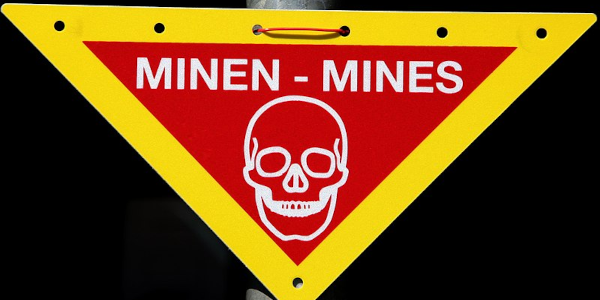
image_2024-12-07_131858185

In a year of countless and boundless horrors, where war crimes and crimes against humanity are now so routinely fed to us in real time on social media that we are seemingly utterly numb to those suffering them and indifferent to or even cheering on those who commit them, who had “Scottish First Minister apparently breaches international land mine ban treaty” on their list of things to watch out for?

As reported by LBC’s Gina Davidson, last week, outside a primary school where he was launching a new literacy programme, FM John Swinney was asked about the then breaking news that the USA was changing its policies and giving Ukraine anti-personnel land mines to deploy during its war against Russia. Swinney stated that territorial integrity must be defended and that he “supported the actions taken”.

There’s a problem with this – that statement looks very much like a breach of Article 1(c) of the 1997 Ottawa Treaty that banned the use of AP mines – and in particular banned any state signed up to the treaty from taking any action to “assist, encourage or induce” any other state (whether signed up to the treaty or not) from using such weapons. The UK – and thus Scotland – is a state party to the treaty and all aspects of government, including the devolved governments, are bound by it.

Continue reading

The NCS Bill Still Isn’t Dead

“We are reluctant to quit things because we want to avoid the resulting heartbreak. The pain of failure is magnified by the sunk costs: all the time and effort and emotion you have already invested.” – John A. List

This blog post previously appeared in Common Weal’s weekly newsletter. Sign up for the newsletter here.

If you’d like to support my work for Common Weal or support me and this blog directly, see my donate page here.

image_2024-11-24_145821798

The Scottish Government has announced that the National Care Service Bill shall remain in limbo for an unknown period of time.

While Common Weal and many other stakeholders pulled their support for the Bill as written (though we have not pulled our support for a National Care Service – just the one this Bill would have created) the death knell for the proposed legislation was the Scottish Green conference the other week where members voted to pull their support for the Bill. This should have been a point of change. Indeed, there had already been enough pressure placed on them to force that change long before now but I have a nagging feeling that this announcement came now not because they recognise the flaws in their legislation or even that they’ve acceded to demands from care stakeholders – including the people who NEED the care that the NCS will deliver – but that they’ve merely looked at the Parliamentary maths faced by a now-minority Government and are doing what they need to do to not lose a vote. It might yet be a step along the way of getting what we want but it’s not exactly a shining example of priorities and principles rising above party politics.

Nevertheless, after fighting against (rather than, as we’d prefer, for) the NCS Bill we’re now at a point where we should be focussing on actually improving care rather than fixing care legislation.

Continue reading

The Climate Climbdown

“If a pandemic can induce governments to take emergency actions, why can’t a climate breakdown that threatens to kill off the very life-support systems of the planet do the same? After this, there can be no more excuses for passivity.” – Andreas Malm

This blog post previously appeared in The National as part of Common Weal’s In Common newsletter.
If you’d like to throw me a wee tip to support this blog, you can here.

image_2024-11-13_090439965

Scotland – once a nation that held itself up as a world leader in climate ambitions – has formally repealed important carbon emission targets in a vote that would have had unanimous support but for the abstention of the Greens.

The Scottish Government still holds that Scotland will be a “Net Zero” nation by 2045 but has yet to demonstrate how we will actually reach that goal, especially as interim targets like the 2030 target just repealed continue to be missed.

To be clear on why this vote took place, the Scottish Government put the target into actual legislation as a show of force on its climate ambitions. A “mere” government policy target could have simply been broken and forgotten about as is all too common amongst governments of all colours but once placed in law, the government would have been acting unlawfully if the target was missed.

Continue reading

The Shape Of Solar Scotland – Part II

“In a time in which Communist regimes have been rightfully discredited and yet alternatives to neoliberal capitalist societies are unwisely dismissed, I defend the fundamental claim of Marxist theory: there must be countervailing forces that defend people’s needs against the brutality of profit driven capitalism.” – Cornel West

This blog post previously appeared in Common Weal’s weekly newsletter. Sign up for the newsletter here.

If you’d like to support my work for Common Weal or support me and this blog directly, see my donate page here.
image_2024-11-19_131314546

A year ago this month I told the story of a new renewables development that had been planned for next to my village and how it put me in the very unexpected position of actively opposing something that most would expect me to have been wildly in favour of. A 100MW solar farm, plus another 100MW worth of battery capacity, worth around £150 million that would produce more power than this village could use ten times over. At the time of its initial proposal it would have been the largest solar farm not just in Scotland but in the entire UK (though since then, several larger projects have been proposed – I’ll come back to that in a bit).

My objection has never been about the renewables themselves – we need more in general and we really need more solar power in particular to balance a grid that is a little too tilted towards wind power – but it has been about control and who benefits from a project that would, in effect, turn a semi-rural Clydesdale village into an industrial estate power station with some houses on the edge. We do now have a few updates, courtesy of a meeting facilitated between the company and the local residents association (the unelected body we have representing the village because we don’t even have an elected Community Council here, never mind proper European-style municipal government) and held in the office of our constituency MSP and Cabinet Secretary for Energy and Net Zero Màiri McAllan. I should say that I, personally, wasn’t at this meeting (and neither was Màiri herself as she’s on parental leave) and only found out that it happened at all when the association published the minutes of the meeting on the village Facebook page almost a month after the fact.

My main objection to the project has never been about the renewables themselves but about place, ownership and benefit.

Continue reading

UK Budget Review – 2024

“Death, taxes and childbirth! There’s never any convenient time for any of them.” – Margaret Mitchell

This blog post previously appeared in The National, for which I received a commission.
You can read my donations and support policy here and if you’d like to throw me a wee tip to support this blog, you can here.

image_2024-11-06_110201644

The first budget of the new Labour Government and the first in 14 years is one that would have been more hotly anticipated if it wasn’t for the fact that the Government leaked so much of it to the media ahead of time – in direct contravention of Parliamentary procedure and in a way that would have seen Ministers resign not many years ago – and would have seen Labour complain about had they still been in Opposition. The Speaker rebuked them thoroughly, but – of course – lacks the power to actually sanction anyone involved (in Holyrood, the Presiding Officer could have technically cancelled the budget speech but even when the Scottish Government has leaked material like this, they’ve managed to stay on the side of a mere threat).

Nevertheless, the budget was delivered and it’s worth us taking a look at just a few of the things that happened that will affect Scotland.

Continue reading

Strangled By The Purse Strings

“It’s clearly a budget. It’s got lots of numbers in it.” – George W. Bush

This blog post previously appeared in Common Weal’s weekly newsletter. Sign up for the newsletter here.
If you’d like to support my work for Common Weal or support me and this blog directly, see my donate page here.

image_2024-10-27_085107495

Eyes are on the UK Budget at the moment, and for good reason, but shortly after that we’re going to see what the Scottish Government lays out in its own budget and, given the scope of devolution, that is likely to have much more of an impact on Scottish public services – especially at a local level.

This means that recent news from Shona Robison telling Local Authorities that there’s “no money left” for public sector pay deals should be taken as a threat to local democratic autonomy.

Usually when I write an article like this I start by saying “imagine if Westminster treated Holyrood like this” but in this case I don’t really need to as we have the example of the UK Government’s cut to Winter Fuel Payments in England having a knock-on effect on the Block Grant which put Holyrood in the position of making the choice on whether to cut the equivalent Scottish allowance too. They didn’t have to – the Block Grant is calculated based on how Westminster spends money in England but Scotland is free to spend that Grant as it likes, not just on equivalent policies. In this case though, they did indeed choose to cut the payments.

Continue reading

Scotland’s Population

“Look again at that dot. That’s here. That’s home. That’s us. On it everyone you love, everyone you know, everyone you ever heard of, every human being who ever was, lived out their lives.” – Carl Sagan

This blog post previously appeared in Common Weal’s weekly newsletter. Sign up for the newsletter here.
If you’d like to support my work for Common Weal or support me and this blog directly, see my donate page here.

image_2024-10-16_123901215

Every year the National Records of Scotland produces an annual population estimate for the nation. While not quite as comprehensive as the once-per-decade census (at least, when the census isn’t marred by the problems of the 2022 Scottish census), it provides a good rolling picture of Scotland’s population both at a national level and at a more local level both on the scale of Local Authorities and per NHS Health Boards (the latter being important for the allocation of healthcare budgets and is gathered because one of the tools used to estimate population change is the number of people who present to the NHS with an illness or injury in a given year). Indeed, a report was published in March comparing the rolling mid-year estimate to the 2022 census and found that the estimate was within around 1% of the census value (which is a fair bit more precise than, say, the 3.4% margin of uncertainty in the revenue estimates in GERS).

The headline figure you’ll have gathered from the news is that Scotland’s population is growing faster than it has since the end of the Second World War (itself a statistical glitch as many thousands of soldiers returning all at once tended to bump the numbers) and that the growth rate is being driven by immigration to Scotland.
I fully expect that line to get more negative attention than it should given the rabidly anti-migrant stance that the UK is rapidly slipping down, driven by increasingly extreme social media cesspits – certainly a view backed up by the fight going on in the comments section of the BBC article reporting on the new figures – so it’s worth doing the thing I often do with reports like this and taking a dip beneath the headlines for a more detailed and nuanced view of Scotland’s changing demographics.

Continue reading

We Support An NCS – But Not Like This

“It’s easy for common people to say what they think about the government. No one listens to them.” – Ljupka Cvetanova

This blog post previously appeared in The National as part of Common Weal’s In Common newsletter.
If you’d like to throw me a wee tip to support this blog, you can here.

image_2024-10-07_151459173

So NOW the Scottish Government wants to talk?

In the wake of Cosla withdrawing their support for the National Care Service Bill, the Scottish Government has called for talks to resolve the dispute and to help get their flawed Bill across the line.

The problem is that there’s very little trust left among stakeholders in the care bill – including campaigners like Common Weal. We sympathise with Cosla who were placed in a very difficult position right from the start. Common Weal cannot support the Bill in its current form, or even if the Scottish Government’s proposed Stage 2 amendments pass as they currently are. We, too, are forced to say now that the Bill needs to be massively overhauled or killed and started again.

Continue reading