DeepSunk Costs

A computer can never be held accountable. Therefore a computer must never make a management decision. – From an IBM staff presentation, circa 1979

This blog post previously appeared in Common Weal’s weekly newsletter. Sign up for the newsletter here.

If you’d like to support my work for Common Weal or support me and this blog directly, see my donate page here.

I don’t know how closely you’ve been following the developments in Generative Artificial Intelligence (GAI) lately but it’s been The Next Big Thing in the tech sector for the past few years. Even if you’ve gone out of your way to try to avoid it, it’s being crammed down your apps just as soon as the companies behind them can update them. You’ll have noticed your internet search engines adding “AI summaries” instead of giving you links to the website you want. The call centres you’re trying to navigate through have replaced overworked and underpaid scut-workers with AI chat bots that on a good day eventually pass you through to one of the remaining scut-workers and on a bad day it’ll break in ways that would be hilarious if not for the fact that these bots are being pushed into mission-critical roles too. You might even have noticed the news that Meta wanted to introduce GAI bots that would set up fake profile pages, post fake posts and then be responded to by fake comments from other bots – all in the name of harvesting ad revenue. That plan lasted less than a week, but will be back as soon as we’re distracted by something else.

Continue reading

The Scottish and UK Governments are both wrong on DRS

“This book was written using 100% recycled words.” – Terry Pratchett

This blog post previously appeared in The National as part of Common Weal’s In Common newsletter.
If you’d like to throw me a wee tip to support this blog, you can here.

a green traffic light sitting next to a store

Both the Scottish and UK Governments are wrong on Deposit Return Schemes.
The DRS is back in the news now that Keir Starmer – in yet another show of policy innovation – has decided to copy/paste the previous Conservative Government’s plan for a deposit return scheme – the proposal where you pay a small deposit when you buy things like drinks and receive the money back when you return the packaging to a deposit return machine (sometimes known as a “reverse vending machine”). His plan includes the previous plan to exclude glass from the scheme and he has refused to allow an exemption to the Internal Markets Act that would allow Scotland to both include glass and to introduce the scheme at all without having to wait for the UK to do it.

It really is impressive to me how the UK can be so backwards that it is utterly unable to bring in a circular economy scheme that is already near-ubiquitous across central Europe (and used to be common in Scotland if you’re old enough to remember Barr’s ‘gless cheques’ before they ended their scheme in 2015) and utterly baffling how vulnerable we are to lobbying by companies who want to keep dumping the costs of their pollution onto consumers and the environment. I’ve told this story many times but I remember being in an informal roundtable in Holyrood in the early days of the planning for the Scottish scheme and a representative from a major supermarket and a representative from a major multinational drinks company both argued against the concept of DRS. Both went a bit more silent when I mentioned that in my previous holiday to Prague I had personally deposited a drinks bottle made by the latter into the DRS machine hosted by the former. If they can do it in one country, why not another? As I say – it was never about “could”, but about “why should we, when we profit more by not doing it?”

Continue reading

The Dragons Ate Your Lunch

“The wealth creators of neoliberal mythology are some of the most effective wealth destroyers the world has ever seen.” – George Monbiot

This blog post previously appeared in Common Weal’s weekly newsletter. Sign up for the newsletter here.

If you’d like to support my work for Common Weal or support me and this blog directly, see my donate page here.

Dragon

One of the arguments in favour of billionaires is that while they are wealthy beyond any possible realistic need, they in turn generate even more wealth by creating and supporting jobs. They might take a share of the production generated by you, their workers, but you wouldn’t be able to generate that production without the risk they took in employing you and providing you with the tools, the capital, that you need to do that job.

What if it wasn’t true?

Continue reading

Just Work It Off

“Work as if you were to live a thousand years, play as if you were to die tomorrow.” – Ben Franklin

This blog post previously appeared in Common Weal’s weekly newsletter. Sign up for the newsletter here.

If you’d like to support my work for Common Weal or support me and this blog directly, see my donate page here.

image_2024-12-11_084622371

Sir Keir Starmer, Knight of the Realm and Man of the Working People, has declared again that thou shalt work or thou shalt starve.

It’s becoming an increasingly common political line in the UK that the economic woes are all caused by people not working hard enough and there is particular ire being levelled at those who are neither employed nor unemployed (a quite narrow measure of people who are not in but who are actively looking for work) but who are “economically inactive” – who are neither working nor who are looking for work. The other line is that work is the only thing that gives someone’s life purpose and that if you’re not working then you’re a lesser kind of person than someone who is – a failure, or an immoral shirker.

Continue reading

Power For People, Not Parties

“We in the House of Lords are never in touch with public opinion. That makes us a civilised body.” – Oscar Wilde

This blog post previously appeared in Common Weal’s weekly newsletter. Sign up for the newsletter here.

If you’d like to support my work for Common Weal or support me and this blog directly, see my donate page here.

image_2024-11-18_101303424

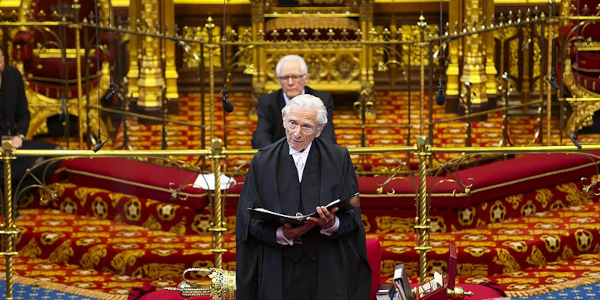
Done badly, the only thing worse than an unelected House of Lords might well be an elected one.

Don’t worry, this isn’t a defence of the current system whereby the laws of the UK are made, in part, by people who got the job by dint of patronage to the right party, correct worship of the right deity, or descent from the right person but the proposals to reform the Lords that passed in the House of Commons this week threaten to take the closest mechanism we have of holding absolute power to account and making it even more beholden TO that power.

Continue reading

UK Budget Review – 2024

“Death, taxes and childbirth! There’s never any convenient time for any of them.” – Margaret Mitchell

This blog post previously appeared in The National, for which I received a commission.
You can read my donations and support policy here and if you’d like to throw me a wee tip to support this blog, you can here.

image_2024-11-06_110201644

The first budget of the new Labour Government and the first in 14 years is one that would have been more hotly anticipated if it wasn’t for the fact that the Government leaked so much of it to the media ahead of time – in direct contravention of Parliamentary procedure and in a way that would have seen Ministers resign not many years ago – and would have seen Labour complain about had they still been in Opposition. The Speaker rebuked them thoroughly, but – of course – lacks the power to actually sanction anyone involved (in Holyrood, the Presiding Officer could have technically cancelled the budget speech but even when the Scottish Government has leaked material like this, they’ve managed to stay on the side of a mere threat).

Nevertheless, the budget was delivered and it’s worth us taking a look at just a few of the things that happened that will affect Scotland.

Continue reading

The Sun Still Has Not Set

“You can’t have occupation and human rights.” – Christopher Hitchens

This blog post previously appeared in Common Weal’s weekly newsletter. Sign up for the newsletter here.
If you’d like to support my work for Common Weal, see my donate page here.

image_2024-10-11_120457719

I threw out this week’s planned newsletter (a defence of the Tourist Levy) in response to some breaking news on Thursday morning that concerns a story that I’ve been following for some years (albeit very much from the farthest fringes of the outside).

The UK, after many years of arguing against an international consensus that campaigned against their illegal occupation and ethnic cleansing of the Chagos Islands, has agreed to hand sovereignty of the islands back to Mauritius who were stripped of the territories when they won their independence from the UK in 1968.

Continue reading

September in Common Weal

“This is what ultimately matters: where you end up, not the speed at which you get there, or the number of people you impress with your jittery busyness along the way.” – Cal Newport

This blog post previously appeared in Common Weal’s weekly newsletter. Sign up for the newsletter here.

image_2024-10-03_164920733

Common Weal is one of Scotland’s most prolific think tanks, especially given our size and shoestring budget (you can help us by throwing us a few more shoestrings here). Since I’ve been a part of the team here we’ve had a target of releasing around one publication per month but every year we completely blow past that target. This year is looking like it’ll be no different, especially given that this month we’re publishing FOUR papers for your reading pleasure. This is a testament to our expert working groups – our stalwart teams of some of the best minds in Scotland who volunteer far more of their time than we have any right to ask for to help produce this work. They really have been the model to follow and one that I hope to spend next year developing in a replicable way.

Of course, both of the groups who did the work I want to talk about this week themselves work in very different ways – our Care Reform Group have met via Zoom almost every week for almost four years now whereas our Energy Group function more as an email forum who form ad hoc cells of specialists when they want to talk about a specific topic (such as National Grid transmission or heating Scottish homes). In both cases, they’ve acted as ambassadors to other stakeholders in their respective fields and the result is that it’s becoming increasingly difficult for the Scottish Government to talk to anyone without encountering our ideas whether they want to or not. I’m immensely grateful for everything our Groups do for us and for the way that they’ve helped make Scotland a better place for All of Us.

As to the papers themselves, since there are so many of them this week, I thought I’d use my newsletter column to give you a quick summary of them and point you to them if you want to read more.

Continue reading

PfG 2024 – Serving Scotland

“When the dispute over the Means Test was in progress there was a disgusting public wrangle about the minimum weekly sum on which a human being could keep alive.” – George Orwell

This blog post previously appeared in Common Weal’s weekly newsletter. Sign up for the newsletter here.

image_2024-09-10_091756759

Serving Scotland, what exactly?

The Scottish Government’s latest Programme for Government, titled “Serving Scotland”, is little more than a list of platitudes covering some of the most brutal public service cuts in years coupled with a paring back of all sense of ambition in what should be a critical year of laying groundwork for the next election (if you take a short-termist political party view of things) or the rapid ramping up of actions to halt and mitigate climate change (if you’d prefer there to be a liveable biosphere in the next couple of generations).

The PfG is divided into four of the Government’s overarching strategies so it’s worth picking them apart one by one.

Continue reading

GDP Growth Is The Problem, Not The Solution

“No society can surely be flourishing and happy of which by far the greater part of the numbers are poor and miserable. ” – Adam Smith

This blog post previously appeared in The National, for which I received a commission.

image_2024-08-29_102618230

(Image Source: Unsplash)

Ahead of the reopening of the UK Parliament next week, Prime Minister Keir Starmer painted a bleak picture of a broken Britain that he plans to break further so that he can mend it in the service of his “number one priority”, GDP growth and “wealth creation”. He’s going to ask us to accept “short term pain, for long term good”.

If that sounds like a promise you’ve heard before then you are, like me, old enough to remember George Osborne making a very similar promise in 2010 when he kicked off the decade and a half of Conservative Austerity that we’ve endured ever since.

The big difference between then and now, of course, is that more Labour pain is coming on top of that previous Conservative pain so it’s little wonder that many are asking how much more we need to bear.
There were very few actual policies – and fewer new ones – in Starmer’s speech and those that were there are doing a lot more heavy lifting than he’s likely to let on. GB Energy, which he mentioned several times, is going to be miniscule. With only £8 billion worth of funding, it wouldn’t be big enough to renationalise the energy sector enough to make a difference. It might be one of the best public energy schemes the UK has seen since the Scottish Government dropped their plans for a public energy company, but it’s almost being deliberately designed to NOT disrupt the energy market that has been largely responsible for the inflation and cost of living crises of the past few years.

If Starmer wants to actually get to the root of the problem, to actually plan long term for the benefit of the UK and everyone who lives here then he needs to understand that a good chunk of that root is, in fact, his number one priority – chasing after GDP growth and “wealth creation”. GDP has been growing for decades without solving our economic problems so we need to ask if it is the solution, how much more does it need to grow before it starts working?

It’s not the solution because whenever GDP growth has occurred, the benefits of its have almost always gone mostly to the already wealthy. It has also almost always resulted in more damage to the environment. A long-term beneficial economy is one that focuses on sustainability and wellbeing instead and regardless of growth. Britain needs fewer prisoners, not more prisons. Fewer shops and more libraries (a policy that would improve wellbeing while actively shrinking GDP). And we need fewer of us working to barely meet our needs while we enrich others, and more from the already rich using their ability to do more to make it all happen. A smarter man than myself said something similar once. I don’t think he’d be too welcome in Starmer’s Labour party these days. That, too, is probably part of the problem.

TCG Logo 2019