The (Economic) Madness of George

Giddy

Last night George Osborne’s Fiscal Charter was voted on and rammed through Parliament on the back of the Tory’s majority. Today, the media focusing more on the shambles that is the current Labour party and their confused approach to supposed Opposition combined with the rumbling rebellion in the ranks as the party tries in vain to come to terms with what their members actually want the party to stand for.

Consequently, as usual, much less has been said about the actual contents of the Bill and its effects on our economy.

Continue reading

A Greener Europe

eu greens

Greens all across Europe.

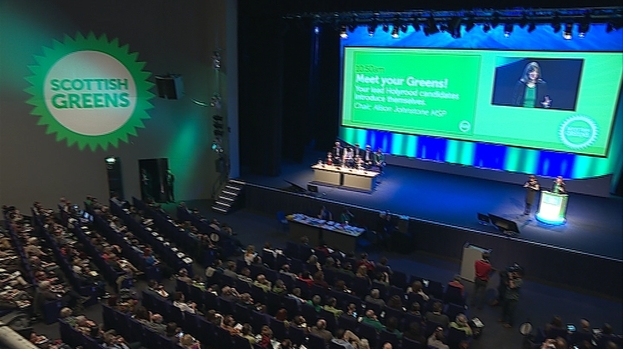
As I write, the Scottish Greens are mid-way through our 2015 Conference. The largest one in the party’s history with around 700 members turning out to the SECC in Glasgow.

Source: STV

Source: STV

Amongst the policies discussed today, the party was asked on the position it should take in the upcoming EU referendum.

Continue reading

20,000 Visits to The Common Green

20,000 Views

The blog hit a bit of a milestone today. 20,000 pageviews and over 16,500 visits!

All I can say is thank you for all of the support, especially in the last few days when things have went a bit viral. Here’s to the next few thousand visitors and to continuing efforts to shine just a little bit of light and opinion on the topics to come.

I’m still here to talk about all things Common and Green but if there’s anything else you think I can provide some insight on just give me a shout and I’ll see what I can do.

TCG logo

We Need To Talk About: Budget Underspends

Victoria Quay

Q. When is a surplus not a surplus?
A. When someone is talking down the Scottish Government.

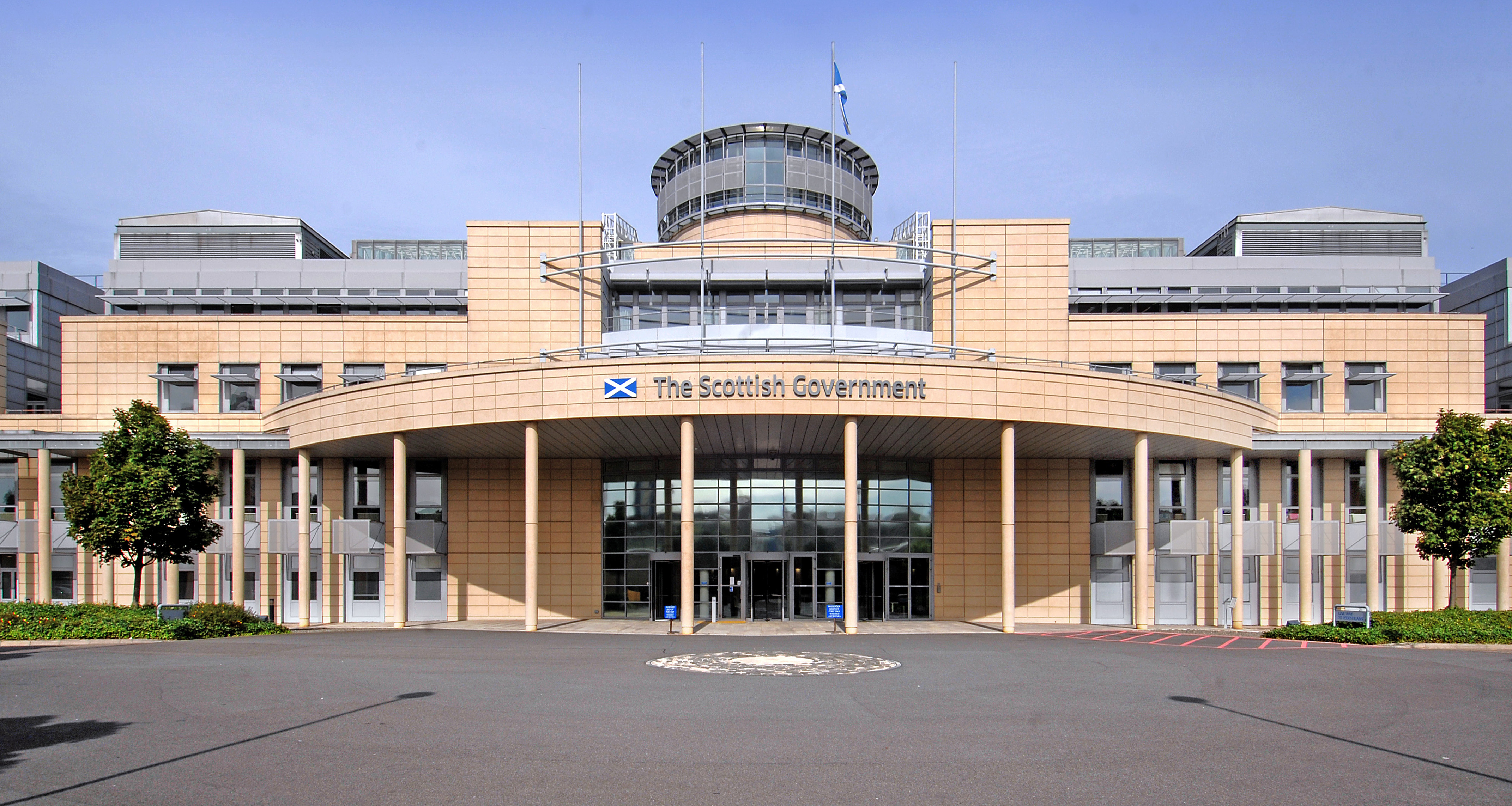
Today the Auditor General published its annual report detailing an independent opinion on how well the Scottish Government is managing its finances (or how badly it is failing to do so).

This year, as last, there have been howls of anguish from those opposed to the Scottish Government at the fact highlighted by the Auditor General that the Government spent £350 million less last year than it was given in the Block Grant.

As the opening question suggests in most normal countries when your government spends less than it has available to spend then it is running what is known as a budget surplus. This is, especially in today’s economic climate, generally considered to be a “good thing“. Not so in Scotland, apparently, where the phrase to be used instead is “budget underspend”.

How this has occurred, is due to the peculiar way by which the Scottish Government is funded and is constrained to spend its money.

Continue reading

Lying Track

Ian Murray, Scotland’s sole Labour MP, lied to the people of Scotland today.

This morning, 14th September 2015, he was interviewed on BBC Radio Scotland’s Good Morning Scotland primarily on the extent of his agreement with his party’s political realignment in the wake of their most recent leadership changeover.

In one segment he makes the statement that the Scottish Government appeared to favour awarding the Scotrail contract to the Dutch Government owned Abelio rather than renationalising Scotland’s railways.

The relevant comment beings at 5.50.

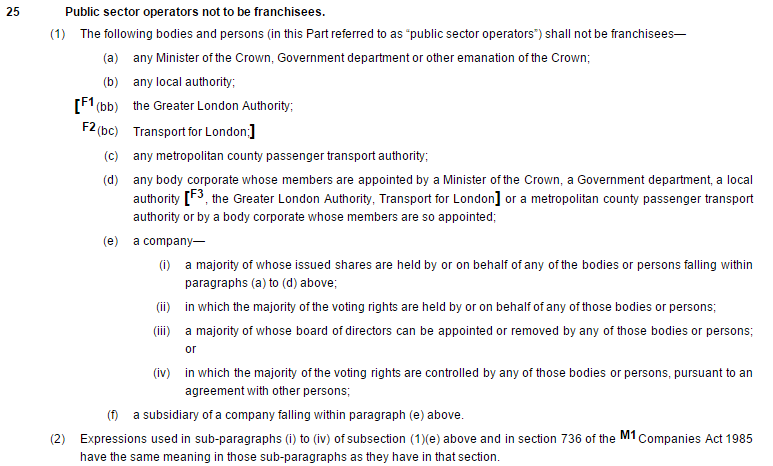
He appears to forget that under the Railways Act 1993 enacted by the Tories and never repealed under Labour, the Scottish Government is currently barred from either renationalising the railways or forming a company in which they own a controlling stake to bid for contracts and tenders.

Indeed, under this bill any government on the planet could potentially own and operate our railways except our own.

I’m sure that rather than this being a lie, personal or political, today’s comment was merely a slip of the mind and that Mr Murray will be submitting a bill to repeal this clause in the near future.

TCG logo

Unweaving Tangled Skeins

The Old Clock Square in Hom, Syria. Left - Before the war. Right - The ruins of the war.

The Old Clock Square in Homs, Syria. Left – Before the war. Right – The ruins of the war.

 It seems certain now that within the next few days or weeks the House of Commons will, for the second time in as many years, be asked to vote to go to war in Syria. I have no doubt that the picture painted will be one of us plucky Brits bravely defending ourselves against an utterly inhuman, utterly irredeemable, utterly evil and, most importantly, completely monolithic force and that after a short, sharp military action peace will be restored and reign supreme. The difference between this time and last is that last time the evil monolith was the Assad Regime. This time, it’s ISIS.

 We always seem to be sold war on such simple terms. Often, we seem to buy it because of them. But the world out there beyond the red-top tabloids is rarely so black-and-white. The conflict in Syria is less so than most.

Continue reading

How To Start a Currency From (Almost) Scratch

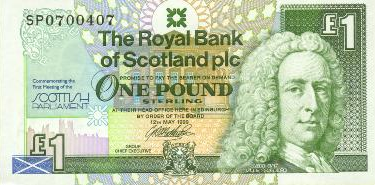
An RBS £1 Note – Scottish Parliament Commemorative Issue

It’s fairly widely acknowledged that one of the weaker aspects of the 2014 Scottish Independence debate was that surrounding currency. I still hold to my long-standing view that all options open to us were and are equally viable. All come with unique benefits, all carry characteristic risks. All that was required was the will to manage those risks. Scottish Independence should never have even been about the question “Which currency should we use?”. I believe that instead, the real question was “Should we, in Scotland, have the right to ask that question?”

Recently though, the catastrophic circumstances facing Greece have focused minds back to this first question and many are now convinced that before we go into another debate on independence we must be able to answer the questions we failed to answer last year. So let us take a scenario where Scotland is faced with setting up its own currency. Just what would that involve?

Continue reading

Greening Your Vote

Note: This article assumes that readers are fully familiar with the AMS voting system used in Scotland. If you are not or would like a refresher please read this article first:- How Scotland Votes: A Guide to the Scottish Elections

Greening Your Vote in the Scottish Elections

SGPlogoI’ve mentioned in a previous post that we in the Greens general regard the First Past the Post voting system as an unfair and unrepresentative system. It punishes all of those parties which poll less than about 35% of the electorate with fewer seats than they deserve whilst rewarding those parties which can achieve just slightly more than that with almost all of the power. For a smaller party like the Greens this means that looking for seats within the constituency vote is a particularly difficult enterprise and, in all likelyhood, would result in a waste of resources more effectively spent elsewhere.

For this reason it is very likely that you, as a voter, will not see a Green candidate on your constituency ballot paper next year (although exceptions like party co-convenor Patrick Harvie’s campaign in Kelvin will be one to seriously watch).

The great advantage within Scottish politics, however, lies in the Regional ballot. I’ve detailed in my How Scotland Votes article how this ballot is used to ensure proportionality within the parliament as a whole but this article intends to deal with another of its great strengths. The regional ballot allows voters who may describe themselves as “traditional” voters of one party to compliment or nuance their voting intentions by voting for another party as well.

I will here argue that in the Holyrood elections next year there is great scope for many voters to consider seeing a regional vote for the Greens not as a “splitting” of their vote but as a strengthening of it. Even when your “traditional” Constituency affiliation has been with the Labour party or the Liberal Democrats or with the SNP there is much that you may also find appealing within Green politics and much which may lead to you to giving us your Regional vote.

Continue reading

We Need To Talk About: The Green Investment Bank

gib-logo-green-background

Another day. Another broken promise from Westminster. I had been expecting news like this since the referendum last September but I’ve been frankly shocked by the rate at which they’ve been coming and where the hammer-blows have been falling.

Today it was announced that the Government will sell off the Green Investment Bank. The bank, capitalised with some £3 billion of taxpayers money, was set up in 2012 with the mandate for providing investment and incentive for renewable schemes across the UK. Its headquarters were located in Edinburgh in a bid, as it was reported at the time, to attempt to head off the push for Scottish Independence. Indeed, even just the week before the referendum dire warnings were uttered about the potential of Scotland “losing” the bank if we voted Yes (The news that the bank hadn’t actually been investing more than a token amount within Scotland in its first year or so was, of course, conveniently placed to the side).

Instead, now that we’ve “safely” voted No, the bank is to have up to 70% of its shares sold off to private interests for somewhere around £1.4 billion, under half of its initial capitalisation, at a time when it has just announced that it has become profitable.

Of course it’s not all just about the outright betrayal of Scottish voters. In this move, as well as last week’s scrapping of onshore wind incentives, David Cameron and his new Tory majority government are flexing their ideological muscles. Gone utterly is their “Greenest Government Ever“. To quote Scottish Greens co-convener Patrick Harvie on the topic today:

“The sell-off of the Green Investment Bank proves that David Cameron’s comment about wanting to ‘cut the green crap’ has now become a full-blown mantra for a right-wing Government determined to wreck our renewable energy opportunities. The bank was a half-hearted effort by the Tory-Libdem Coalition, with limited powers and funding. Rather than taking another backward step we need governments to go further and faster on developing new energy sources and cleaner industries as the need to leave fossil fuels in the ground becomes ever more urgent.”

Added to this is the call from Green Party of England and Wales MP Caroline Lucas:

“The Government’s rash and irresponsible plan to sell off a large chunk of the Green Investment Bank calls into question their commitment to investing in a low carbon economy.

“At precisely the time when we should be leading the world in the fight against climate change our Government appears to be in retreat. The Government should keep at least a majority stake in the Green Investment Bank to ensure investor confidence is upheld and the commitment to low-carbon lending remains.”

This is just another string of sell-offs by the Government of profitable parts of public service at a substantial loss to the taxpayer (joining such company as the East Coast Mail Line, The Channel Tunnel, The Royal Mail and many of the banks bailed out in 2008). It is purely an ideological move by the Tories to get the Government out of the business of owning any kind of body capable of serving the public.

I have to wonder what they think the endgame is. Just what do they want Tory Britain to look like?

And is there a place in it for us on the ground?
TCG logo

How Scotland Votes: A Guide to the Scottish Elections

A Guide to the Holyrood Election System

The Debating Chamber of the Scottish Parliament Building. Source: Wikipedia

The Debating Chamber of the Scottish Parliament Building. Source: Wikipedia

I know that it feels like we’ve just finished a rush of politics and campaigning and that the next step will be a while away but believe me, a year is not a long time and the 2016 Scottish Parliament General Election will be upon us before we know it. The various parties and actors are already starting to formulate their plans and draw their lines and the speculation over what could result from the vote and how those results could be achieved are being debated over the various Internet and social media channels.

In much of this speculation and amongst my conversations with some of my peers I’ve realised that more than 15 years after the first Scottish elections there remains much to be said about our level of knowledge about how our votes are cast and how the seats are calculated. Here, therefore, is a guide to how it all works.

Continue reading