Selling The Earth

“Privatize everything, privatize the sea and the sky, privatize the sea and the sky, privatize justice and the law, privatize the passing cloud, privatize the dream, especially if it’s during the day and open eyed. And finally, for the embellishment of so many privatizations, privatize the States, surrender once and for all their exploitation to private companies through international share offering. There lies the salvation of the world…” – José de Sousa Saramago

(This blog post previously appeared in The National. You can throw me a tip to support this blog here.)

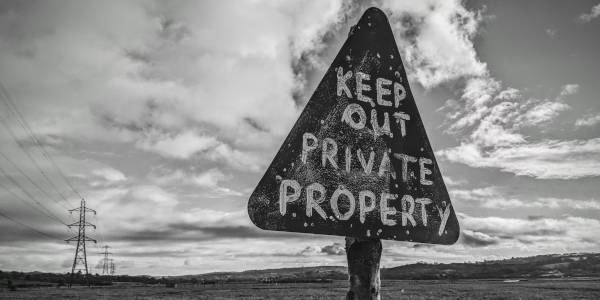
Private

“Natural capital is our geology, soil, air, water, plants and animals.”

Remember that definition, for it is the one the Scottish Government uses to introduce their “Market Framework for Natural Capital”, which they are consulting on at the moment.

Not content with their previous attempts to privatise nature in Scotland (see their “PFI For Trees” scandal last year and their “Green Investment Portfolio” a few years before that), the Government now wants to expand the remit of potential privatisation to all aspects of Natural Capital:- our geology, soil, air, water, plants and animals.

Continue reading

Shedding Light on Rural Heat

“One afternoon, when I was four years old, my father came home, and he found me in the living room in front of a roaring fire, which made him very angry. Because we didn’t have a fireplace.” – Victor Borge

(This blog post previously appeared in Common Weal’s weekly newsletter. Sign up for the newsletter here.)

If the Scottish Government knew they were going to abandon its climate targets (see Robin’s column for more on that) then they could have probably saved themselves a lot of strife last week over their botched policies and communications around rural heating. If they had listened to us almost five years ago when we submitted a comprehensive policy paper and two extensive policy briefings to them on decarbonising heat in off-grid and rural areas, they might have avoided both weeks of bad headlines now.

Continue reading

Submerged In Leith

“And so castles made of sand slips into the sea, eventually.” – Jimi Hendrix

(This blog post previously appeared in Common Weal’s weekly newsletter. Sign up for the newsletter here.)

Why is Edinburgh considering building housing on land that may be underwater before their mortgages are paid off?

In the Herald this week, a plan was announced to build 300-odd houses in a currently brownfield site at Edinburgh Harbour in Leith. This comes just over a year after approval was granted for a 600 home development at the other end of the harbour. Scotland has a housing crisis and the only way out of it is to build up housing stock so that it exceeds demand and begins to bring house prices down to actually affordable levels again and we build them in a way that doesn’t subject the residents to fuel poverty or, as may be the case here, assets stranded as a result of poor construction or the climate emergency. Scotland may have been one of the first countries in the world to declare a climate emergency but we’re still far from acting like it when it comes to policy.

In 2019, Edinburgh Council followed Holyrood in accepting that climate emergency and soon after they published a climate readiness plan on what they planned to do about it. It’s actually pretty good in terms of the policies it lays out and from what I’ve seen of Edinburgh lately, they seem to be making a decent shout of making progress towards the goals as stated, however there is one glaring omission to the plan and it pains this resident of a land-locked Local Authority to point it out – the plan only mentions the threat of sea level rise once, only does so in passing and does not recommend any policies or actions to address it. I’ve discussed this issue before with respect to Scotland’s airports, but it’s obviously time to look at it again.

Continue reading

Paying the Price of Climate Delay

“How is it that we already have so many solutions to the climate crisis that don’t compromise human rights or justice, but the only solutions being seriously considered are the ones that do?” – Mikaela Loach

(This blog post previously appeared in The National.)

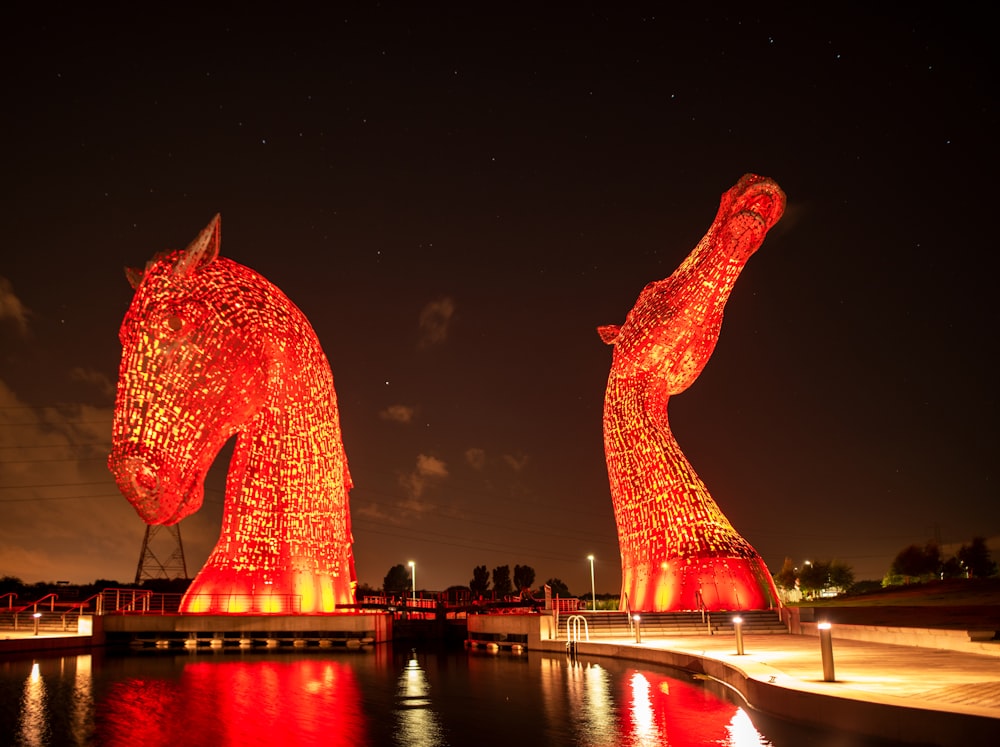
red dragon statue near body of water during night time

The Climate Change Committee has declared that it no longer finds the Scottish Government’s Net Zero plan to be credible. That the Government will breach its statutory duty to reduce carbon emissions by 2030 by 75% (with no catch up plan in place to reach Net Zero by 2045) and that instead of there being a comprehensive strategy to reach Net Zero, the best we have is a serious of ad hoc, disconnected announcements. This comes off the back of the Scottish Government being found to be acting unlawfully by not publishing the expected carbon impact of its policies, in line with those statutory targets. Not to mention that “Net Zero” is itself insufficient as it merely promises that Scotland will continue to pollute until 2045 before stopping but makes no promise to fix the damage we’ve already caused (particularly on the Global South both in the present and during our colonialist exploitation of those nations).

Continue reading

Land Reform, Or Another Power Grab?

“The free society is characterized by the radical decentralization of all kinds of power. Confederal structures do not rule over communities; they are the means by which communities cooperate.” – Roy San Filippo

(This blog post previously appeared on Bella Caledonia.)

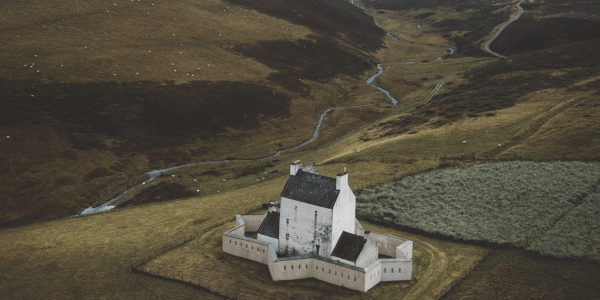
Corgarff

The Scottish government has introduced land reform legislation to encourage community ownership by granting ministers powers to intervene in the sale of estates of more than 1,000 hectares. The ruling Scottish National party said the bill, the biggest package of reforms in years, aimed to “revolutionise land ownership in Scotland” by empowering rural and island communities and increasing transparency in large land transactions.

In 2016 the last round of Land Reform made it easier for communities to buy out parcels of land, however the rampant rise in land prices – often now driven by so-called “Green Lairds” looking to cash in on carbon credits – have locked those same communities out of being able to afford to buy that land. With a few exceptions – such as in Langholm – the parcels of land being bought by communities have been getting smaller.  A report published in 2022 found that despite a steady rate of successful community buyout projects continuing much as it had since the start of devolution, the actual hectarage of land transferred had all but stalled with around 97% of all community owned land in Scotland being transferred before the passing of the 2016 Act.

Continue reading

A Hollow Frame

“Spare your words, your actions will speak for you.” – Akiroq Brost

(This blog post previously appeared in Common Weal’s weekly newsletter. Sign up for the newsletter here.)

Imagine you’re applying for planning permission to build a house. Normally, the process would involve drawing up fairly detailed plans about what the house would look like. No plan goes perfectly to plan though and some changes are inevitable as the building process occurs but if the final building does deviate substantially from the initial plan there can be consequences up to and including being ordered to tear the whole thing down and start again. What you can’t do is gain permission to build “a house” without answering the basic questions like “What size is it?”, “How many bedrooms will it have?” or “Will it be made entirely of asbestos?”.

Over the past few months Common Weal have been incredibly busy replying to just a few of the public consultations that the Scottish Government and Scottish Parliament have been publishing. I’ve written before about the sheer volume of them, how much effort goes into each response and how little they often achieve despite the rare moments of serious influence or the fact that if folk don’t respond to them then vested interests end up dominating the responses and thus what the Government can point to as justification for their plans.

Continue reading

Carbon Capture Is The Last Thing We Should Do

“Note to the wise: whenever someone insists that he wants to buy something from you, but tells you there’s no real value in it yet, two things are happening: he’s lying, and you’re being taken.” – Michael A. Stackpole

(This blog post previously appeared in The National.)

Scotland is in the midst of a grand selloff of our land – again. Folk in the sector are openly saying that instead of valuing land based on grouse and deer, Scottish uplands are now being valued based on its ability to be harvested for carbon capture credits. Andy Wightman recently announced that the US-owned, London-based hedge fund Gresham House is now the third largest private landowner in Scotland based on this market.

But this isn’t a column about land reform but instead about the push for carbon capture and sequestration itself which is increasingly being relied upon by politicians to greenwash their pro-fossil fuel policies.

Continue reading

The Cairngorms Climate Backlash

“The only purely popular government is local, and founded on local knowledge. The citizens can rule the city because they know the city; but it will always be an exceptional sort of citizen who has or claims the right to rule over ten cities” – G.K. Chesterton

(This blog post previously appeared in Common Weal’s weekly newsletter. Sign up for the newsletter here.)

image_2024-01-28_131515340

Continue reading

Levelling Glasgow

“It is not the beauty of a building you should look at; its the construction of the foundation that will stand the test of time.” – David Allan Coe

(This blog post previously appeared in Common Weal’s weekly newsletter. Sign up for the newsletter here.)

In May 2019, Glasgow City Council declared a climate emergency. In November 2021, the city hosted COP26 and made a substantial effort in front of an international audience to show off its climate credentials. Over the next couple of years, it will be betraying all of that by continuing its long and apparently proud tradition of levelling and replacing every building it can get away with regardless of the financial, social or climate cost.

image_2023-02-03_105613545

Continue reading

Drowning, Not Flying

“Predicting rain doesn’t count. Building arks does.” –  Warren Buffett

(This blog post previously appeared in Common Weal’s weekly newsletter. Sign up for the newsletter here.)

image_2023-01-27_113739938

I have a small confession to make. I may have inadvertently misled readers into presuming a level of resilience from an organisation that I clearly overestimated. Last year, I wrote about the climate threat to Scotland’s airports from sea level rise. In that study I marked Edinburgh airport as “probably one of the least vulnerable” airports in the country. I did caveat the entire article by saying that I was looking only at sea level rise and not at other weather and climate events that could affect the place. However…I got a taste of those latter impacts at the tail end of last year.

My wife and I decided to spend Hogmanay in Germany with her father. He lives a fair bit away from the city so travelling does take a bit of planning. For a start, the nearest airport – Cologne – is quite expensive to fly to. Driving or taking the train is, for the near future at least, out of the question and that essentially leaves us with flying to a small, former UK military airbase turned into a commercial airport – Niederrhein – approximately two hours drive from our destination. Given the appalling imbalances in the global travel economy (and the equally appalling lack of solar-power airships!) we pretty much have to take the latter option and arrange for family to drive to the airport and pick us up. That’s fine, and we made all of the arrangements.

The saga started with booking our parking at Edinburgh – you’d be amazed how profitable it can be to allow someone’s car to sit on a half dozen or so square metres of tarmac for a week. I’m starting to wonder what happens to the business model for airports (even if we climate-proof flying at its current rate…which we probably won’t) if we replace all of our private cars with decent public transport and car-sharing/robot taxis.

The business model for Edinburgh is essentially that you pay more to park closer to the terminal. A LOT more. When we booked, the terminal car park and a five minute walk would have cost around £180 whereas the Long Stay park further away was only £35. It used to be that you’d get a bus from the Long Stay to the terminal but the airport cancelled that service at the onset of Covid and haven’t brought it back – it turns out that it’s far cheaper to have passengers walk (or pay more to park closer) than it is to pay a team of drivers to run shuttle buses. But fine, we thought, it’s only about a kilometre which – while possibly onerous for some – was within our own capabilities.

I don’t know if you remember the night of the 30th of December. “Blawin a hoolie” would be an understatement as the fallout from the collapse of the jet stream over North America manifested itself in Europe as a heatwave and in the Atlantic between the two as a major storm. By a miracle, it had actually briefly stopped raining by the time we arrived at the car park but the walk to the terminal turned out to be…interesting. The car park is badly lit, very badly signposted and extremely poorly maintained (it’s amazing how cheaply you can maintain a bit of tarmac if you just…don’t). Since the cancellation of the shuttle bus didn’t actually coincide with any upgrades to the route to the buildings, they’re not particularly walkable – even for us. This was compounded by poor drainage, flooded roads and running waters that, assuming they didn’t contain actual sewage, at least smelled…disturbingly organic. Farewell to my wife’s shoes. They went straight in the bin. I’ve since been told that the airport is in the process of “upgrading its wayfinding strategy” which sounds a lot like they’re blaming us for not being able to find our way through their dark, flooded potholes.

Once we got to inside – total chaos. I’m no stranger to flight delays, especially during bad weather, but there was something particular about this instance. Flights were seeing their gates change at random, sometimes multiple times. Ours changed four times – requiring us to walk from one end of the airport to the other and back again. As usual, very little information came out of the airport’s information services (though – to be absolutely clear – every staffer we spoke to was great and told us exactly what they knew…it just happened to be “nothing”). At one stage, the airport’s info board told us we were leaving from Gate 12 in ten minutes, the official website app told us we were leaving from Gate 4 at an undefined time and another third party app told us that our flight was already in the air and heading to Germany.

Almost two and a half hours late, we finally boarded the plane and heard the full story from the pilot. He had been waiting outside our (original) gate since the normal arrival time with his previous flight’s passengers still on board till about 30 minutes before we got on. It turned out that as bad as our walk from the car park was, the entire section of the port where Edinburgh had stored their gate-to-plane shuttles was underwater and they didn’t have enough to service all of the flights. This explained why flights were changing gates so much. They were trying to shuffle buses around and get planes into gates that were walkable.

The fun didn’t stop there though. We finally got into the sky (just shortly before we’d been delayed long enough to claim compensation – I don’t think this was a coincidence) only to be told the next problem. Both Ellen and I were starting to fall asleep so we almost missed it when the pilot said “unfortunately, we don’t currently have anywhere to land. Niederrhein has closed for the night. They often stay open late to let us land when this happens but not tonight. I’ll update you when we know more.”
Not long after, it was confirmed that we were being diverted to Cologne. Which left us in the position of being ironically closer to our final destination than we would have been but with our driver – who arrived at Niederrhein before we left Edinburgh – completely out of touch with us and an hour’s drive away from where we’d be. Luckily, and unbeknownst to us, she had been chatting to someone else who was there picking up someone on the same flight and who got an alert on his phone about the diversion coincidently just as we were passing overhead.

The rest of the flight was unremarkable. I did take about four times longer going through border control than Ellen did thanks to Brexit and my shiny new “Global Britain” passport that needed to be questioned, inspected and stamped while she sailed through as an EU and German citizen – and I was viscerally confronted with the systemic racism of border controls where even that delay was as nothing compared to folk in the same queue who were more than a couple of shades darker than my pasty Celtic thòin and whose passports had to be triple-checked by multiple people before they were allowed through. But that all passed and we got, finally, to our destination and enjoyed a wonderful week of doing nothing but chatting and playing board games.

All of that trouble would have been avoidable if Edinburgh was thinking seriously about climate change and the impact both it is having on the climate and the impact that change is having on their operations. Storms like December 30th are becoming more severe and more frequent as a result of our carbon emissions. “Once in a generation” events are rapidly becoming “once in a decade” or even “annual” events. Infrastructure that was designed for a pre-climate change world will have to radically restructure itself to survive and adapt to a post-climate change world and almost nowhere is immune from that. Not even the airports that, on a passenger.km basis, have done more to cause the problem than almost any other form of transport. Not even the ones that sit above what will soon be the high tide line. Edinburgh Airport’s climate strategy makes a big deal about them being “net-zero” for their direct emissions (Scope 1) and energy use emissions (Scope 2) but they get a bit more vague in their language about “Scope 3” emissions (that’s the emissions from the flights themselves) that make up 95% of their pollution. They have a target for that becoming net-zero by 2040 but I’ve yet to meet anyone who has a serious plan to decarbonise air travel without drastically reducing the volume and speed of that travel (airships are wonderful…but they’re also slow). Neither option is particularly positive from the point of view of a business model based on infinite and ever faster growth.

And until then, the damage humanity is causing to the planet will keep mounting. As will the bill for mitigating that damage, which should be encouragement in itself to do the work now instead of waiting till it hits profits more to continue delaying. I can only hope that businesses like Edinburgh Airport will start to take their responsibilities as seriously as the science tells us they need to on both the mitigation and adaptation front and don’t just run the place like they can extract more profit from customers by having us wade through things best left undiscovered in the murky depths of what should be their customer car park.


Update, 24th January, 2023 – I received a message from Edinburgh Airport’s Customer Support Team shortly after this article went live. I have reproduced it below, with identifying information removed:

Our long stay shuttle bus was suspended in 2020. The car park is an approximate 12 minute walk to the terminal and we find it to be a manageable distance for most customers. Those who find the distance unmanageable can contact us directly to discuss how we can support them. The long stay car park is marketed as a facility that does not have a shuttle bus and this is confirmed on our website and booking confirmations. Our team are aware that during adverse weather puddles can form within the walking route. We are currently looking into the most suitable solution to rectify the issue. Please accept our apologises for any inconvenience caused.

TCG Logo 2019