Are EU In or Out? – Part 2: A Brief History of Brexit

Are EU In or Out? – Part 1: What is The EU? can be read here.

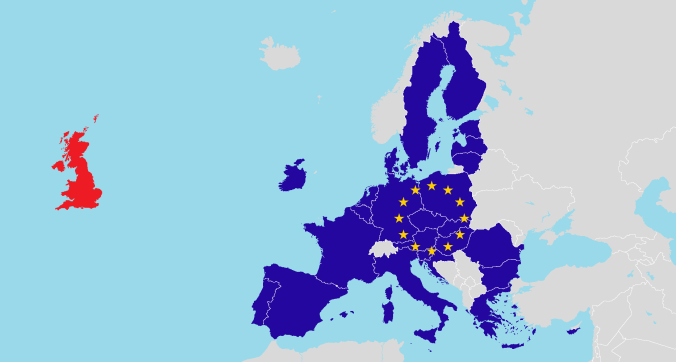
Brexit.png

A Brief History of Brexit

It’s fair to say that the UK has never been as fully engaged with the European project as, say, our neighbours in France and Germany. The country wasn’t an initial signatory of the 1957 Treaty of Rome which formed the European Economic Community (EEC). The UK hadn’t initially wanted to engage, citing reasons such as the economic turmoil of WWII, the transition of the UK from Global Empire to secondary power to the USA and the transition of the Commonwealth from a network of colonies and dependencies to a family of fully independent nations in their own right which had led to the UK being rather distracted from affairs on the continent.

The aftermath of the Suez Crisis, though, convinced many that the UK could no longer act as a unilateral power and views began to shift towards co-operation. Entry as a founding member was twice blocked by the veto of French President Charles de Gaulle (whose post-war relationship with the UK was infamously frosty).

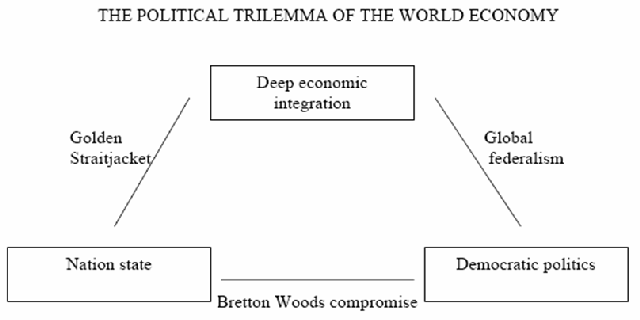
It’s worth noting that through this period, the comparatively high per capita spend in post-war UK from the European Recovery Program (the “Marshall Plan”) compared to the countries of the continent linked into the UK’s pivotal position within the Bretton Woods currency management program (which together mandated freer trade between the European nations and the US) probably also served to shift the UK’s cultural focus rather away from the continent and rather more towards the USA.

As a kind of compromise, in 1960 the UK led efforts along with  Austria, Denmark, Norway, Portugal, Sweden and Switzerland to form an alternative, though complementary, network to the “Inner Six” (France, West Germany, Italy, Belgium, Luxembourg, and the Netherlands) of the EEC known as the European Free Trade Association (EFTA).

Come the early 1970’s, de Gaulle had departed and the objections from outside to the UK’s integration with Europe had departed with him allowing the UK to began again to petition the EEC ultimately joining in 1973. The decision was a fractious one, especially within the Labour party, and the February 1974 General election returned the minority Labour government under Harold Wilson based, in part, on the promise of a consultative referendum on the continued membership of the EEC. This promise was later strengthened to a promise of a binding referendum during the October 1974 General Election campaign which returned Labour with a narrow majority. The bill to hold such a referendum (the first in the modern era of UK politics and the only one to be held in the 20th century) was passed only with Tory support and the vote itself held on the 5th June 1975. With a turnout of 65% and a vote of 67% in favour of remaining within the EEC the course was set and the matter settled…for two years until the talks on the formation of the European Parliament and the formulation of the political integration which would become the EU…

The 1980’s brought in a change in UK political ideology, in the form of Thatcher’s Conservatives. Whilst the party of this era had supported the continuing membership of the EEC whilst in opposition and, indeed, was considered far less Eurosceptic than it is nowadays, the political direction with regard to Europe remained mixed. On one hand, the program of privatisation, the push towards indirect consumption taxes rather than indirect wealth and income tax greatly mirrored the movements in America under Reagan. On the other, the macroeconomic shocks of the mid 1980’s through the 1985 Plaza Accord and the 1987 Louvre Accord saw the UK switch the peg on the Pound’s exchange rate from the US Dollar to the West German Deutsche Mark which served to greatly stabilise the UK’s balance of trade with Europe (at the cost of increased volatility with regard to the US) at a time when European industry was increasing rapidly. The increasing employment opportunities in West Germany coupled with the catastrophic deindustrialisation of the UK was highlighted and typified at the time by the now classic comedy-drama Auf Wiedersehen, Pet which saw a group of British construction workers from various parts of England take advantage of the rapidly freeing of movement of labour throughout the EEC to find work in Germany.

Other satire of the time, such as Yes Minister, lampooned both the perception of increasing “meddling” of the EEC in the trade market as well as the UK’s own attempts to meddle back.

Thatcher’s era also saw a series of renegotiations of the UK’s terms of membership with the EU beginning with a topic at the front of the lips of many within euro circles to this day. The Rebate.

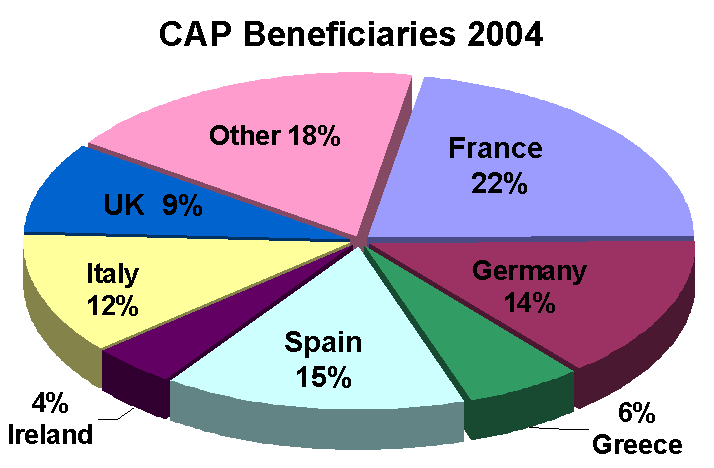
The Thatcher government felt that the UK had gotten a raw deal out of the Common Agricultural Policy negotiations. The UK was one of the richer members of the EEC and therefore one of the larger contributors to it but, unlike other nations, particularly France and Portugal, we had a disproportionately small agricultural sector meaning that, as a percentage of EEC expenditure, the UK got back in grants and development funds a fair bit less than it put in even as a proportional share. Thatcher (with a cry of “I want my money back”) therefore negotiated a cash rebate on our membership fee paid directly to Westminster coffers.

EU FarmlandEU CAPben.png

This rebate was not without cost though. The rebate is paid for by an increase in the membership costs of the other EU nations (and we can imagine how we would feel about that if the situation were to be reversed) and has increased feeling among continental EU citizens (particularly in France and Germany although I have noted similar sentiment during my travels in Italy and Austria and even in Switzerland too) of Britain either getting “special treatment” or simply that Britain is insufficiently invested in the EU project.

Financially, the rebate has been rather less beneficial to some parts of the UK than to others. Whilst the UK as a whole is less agricultural than the EU average, Scotland is particularly devoted to agriculture (71% of Scotland’s land area is agricultural and we produce substantially above our 8% population “share” of UK agricultural produce (even despite the severe depopulation and underuse of the Highlands). Between the rebate and deliberate mismanagement of EU development funding by Westminster (including the diversion of funds specifically designated for Scottish farmers) Scotland receives some of the lowest levels of CAP payments per hectare in Europe. The rebate was also bought by the concession that Britain drop objections to the entry of Spain and Portugal into the Common Fisheries Policy, in line with the UK Government’s view that Scottish fisheries were “expendable“.

Come 1990 and the transition to the Major government and the UK got involved in the next struggle with European integration. Shifting macroeconomic focus further back towards Europe brought the agenda of formally joining the Exchange Rate Mechanism, a formal currency peg with, chiefly, the Deutsche Mark came back to the fore. This proved to be a disaster for the UK whose economy struggled to convergence to stability with the currency arrangements especially once the new tranche of financial speculators, born from and encouraged by a decade of Thatcher’s monetarist policies and infamously led by George Soros, saw an opening and began widely speculating on the pound. Despite throwing large amounts of public money into the stability mechanisms, the UK Government was unable to keep up with the speculators and the pound crashed out of the ERM on Black Wednesday in 1992. This cost the public purse some £2.4 billion and signaled the end of the ability for governments to exercise true control over the finances of an economy against the will of “The Market”.

(See especially from 40 min)

Whether or not this represented a fundamental failure of the structures of the ERM (or the Euro) itself (no other country has been crashed out of it in quite the same way although Greece appears to have only Pyrrhicly avoided it) it certainly poisoned the UK’s view of it although, almost perversely, our government’s view of the financial industry has continued rather more positively and both the official Remain and Leave campaigns have argued that their position would best help protect the City.

This would be best displayed five years later when Gordon Brown devised the “Five Economic Tests” which would need to be fulfilled before the UK considered joining the Euro. Joining criteria are important (again, looking at Greece there) and the euro itself has its own convergence criteria (which the UK currently fails to meet) but the Brown tests were set up less as a target to meet before joining the Euro and more as a barrier to excuse not even trying. Nevertheless, even if it could be shown that the UK would benefit as part of the euro, I rather doubt there would be the political and popular will to actually go forward with it.

The 2004 and 2007 enlargements of the EU provided the latest point of contention between the Union and the UK. These enlargements brought in many Eastern European nations and with them gave freedom of movement for many nations that were significantly poorer than the western nations. Immediately, whilst not vetoing the entry of these nations directly, the UK slapped many of them with temporary restrictions on those new member nations.

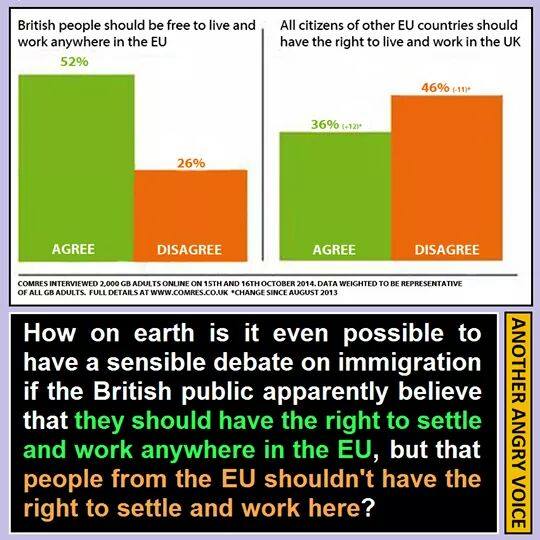
Anti-immigration sentiment, fueled by certain factions in the print media, is fairly on the rise even at the possible expense of a certain amount of cognitive dissonance among those who are quite proud of their own freedom to move around the EU.

AAV.jpg

The run up to 2010 UK General Elections saw Nick Griffin and the BNP rise as the media’s pet anti-immigrant, anti-establishment, right-wing “alternative” though it was sharply checked by Griffin’s humiliation on the BBC’s Question Time. Casting for an alternative, alternative the media turned to Nigel Farage and UKIP and their disproportionate appearances in the media since then has undoubtedly played a part in their current rising tide.
(I would note, even as an objector to almost everything that they stand for, that UKIP as a party are far from the irrational xenophobia of all things unBritish as portrayed by the BNP. Indeed, until fairly recently they were full proponents of the idea of free movement of people. Just that it is to be free movement within the Commonwealth, not the EU).

UKIP-fact-8.png

The rise of UKIP and the strain within the Conservative party as many of their members and backbenchers were tempted to convert to them forced David Cameron to act. His 2015 Manifesto promised the referendum on EU membership that UKIP had long been demanding in exchange for his majority victory in the elections and, seeing the obvious mathematics, UKIP supporters voted for Cameron (or tactically voted UKIP instead of Labour) in numbers significant enough to swing the election against the predictions of many of the pundits at the time. Cameron saved his party and won his government but has now been placed in a very difficult position as the referendum looms and his party threatens to tear itself asunder in the process. This is why the actual campaign has been so dismal compared to the 2014 Scottish independence referendum. It’s playing so much more as a Conservative internal party meeting and leadership contest than it is a debate on the future of Europe and the UK within or outwith it. Which way voters see things, whether we embrace the EU, reject it entirely or simply continue on with the one-foot-in approach that we’ve had more or less since inception remains very much to be seen.

Finally. After all that seriousness. A short educational video about EU stereotypes.

tcg-logo6c

Are EU In or Out? – Part 1: What Is The EU?

20151202_092014_HDR

The EU flag flying beside the French national flag over the Hôtel de Ville in Paris.

The referendum on the UK’s membership of the EU is fast approaching and, now that the Scottish parliamentary elections are out of the way, we are now shifting our focus upon it. I know that, especially amongst the activists, election fatigue is high but we really must not let this event pass us by.

For my own part, I am decided. I shall be voting to Remain within the EU and will be doing so out of rejection of both the official Remain and Leave campaigns. Whilst I have written about some of the issues important to me previously, it’s time to expand upon them whilst commenting on the issues important to both of the official campaigns. I shall attempt to outline these as objectively as I can whilst also laying out my own hopes and opinions on those issues.

In this article, I shall first outline the structures of the EU and some of what it actually does before moving on in a subsequent article to look at the issues being discussed in the referendum itself.

What is the EU and how does it work?

First, before the issues themselves, it’s best to understand just what the EU is, how it came about and what it does now. To help with this, the Green/EFA group in the European Parliament produced the following guide. Whilst some points are highlighted with the Green viewpoint on things, the document is largely objective and highly readable. I suggest that all voters who have any doubts or vagueries give it a good look through certainly before the vote and preferably before continuing here. Click the image or here to read.

GEF EU.png

To attempt a brief(-ish) overview, the EU is an ongoing project which rose from the ruins of WWII initially as an attempt to arrange the politics of Europe such that war between the European nations, particularly between France and Germany, would never again be possible. This process began with the gradual interlinking of the French and German economies via the Coal and Steel Community in 1953 and gradually expanded into other economic areas and into the political sphere beginning with the 1957 Treaty of Rome (the preamble of which includes the first use of the now widespread adage and long term goal of the EU towards “ever closer union”) and the founding of the European Economic Community. In 1993, the Maastricht Treaty created the European Union and the single European currency, the euro, and laid out the powers it would have in areas both intergovernmental (i.e. by agreement of all members but without strictly superceding their national sovereignty) and supranational (i.e. powers directly administered by the Parliament). These became known as the “Three Pillars of the European Union”. This structure was then further amended by the 2009 Treaty of Lisbon which formally created the European Union as we know it today as a distinct legal personality and which laid out exactly where the EU takes exclusive competence preceding national member governments, where competence is shared and where the EU merely “supports” national governments achieve their own distinct policy.

EUComp.png

Today, the European Union consists of 28 national members which each take roles of varying degrees of embeddedness with the Union.

The Legislative Branch of the Union is primarily represented by the European Parliament and Council of Ministers. This Parliament, with 751 members, is the second largest democratically elected legislative body on the planet after the national Parliament of India (the UK’s House of Lords with 803 members and the Chinese National People’s Assembly with 2987 are the only two larger lawmaking bodies but these are not democratically elected) and is elected every five years (the last vote being in 2014) by a system known as “degressive proportionality”. Essentially, each member nation gets an allocation of not less than 6 MEPs and not more than 96 Members to the Parliament, roughly in line with their population as a fraction of the whole EU but arranged so that a few large nations (Especially, Germany, France, Italy and the UK) cannot dominate proceedings.

MEPS

Within each member nation the MEPs are elected via the proportional d’Hondt system similar to that used in the Scottish parliamentary election regional ballot. which ensures that many more views from within a nation can be heard than would be the case under, say, the First Past the Post system used in the UK General Elections.

In common with many parliaments throughout the world, the MEPs are also arranged by party affiliation with national political parties banding together with groups of similar ideology such as the Green/European Free Alliance (which includes Green and Regional/Autonomist parties such as the Scottish Green Party, the SNP and Plaid Cymru); The Progressive Alliance of Socialists and Democrats (which includes the Labour party); The Alliance of Liberals and Democrats for Europe (of which the Lib Dems are members); the European Conservatives and Reformists (where the Conservatives, unsurprisingly, find their ideological partners). A study by VoteWatch.eu has found that the group to which a particular MEP belongs is a far greater predictor of voting preference than national identity. MEPs tend to vote on party lines rather than national lines. Though an informal and likely unintentional inclination this, in practice, further serves to dilute the inclination for any particular member nation taking the reigns over the whole continent.

EUParl

The other major legislative body in the EU is the Council of the European Union (sometimes known as the Council of Ministers) which acts more-or-less as the bicameral segment of the Legislative body and consists of one appointed seat per member state. Unlike the Parliament, however, the person sitting on that seat is decided on a more ad hoc basis depending on the issue being discussed. For example, if a bill on agricultural policy is scheduled then the members may send their national government minister for agriculture. Within the UK this has, on occasion, caused some implication with regard to the structure of devolution whereby an issue which overwhelmingly affects an area either within or controlled by Scotland (for example, fishing) may end up being negotiated by a UK Minister who doesn’t actually have responsibility over that area due to its devolution to the Scottish Government whilst the Scottish government minister who DOES have responsibility may not attend as they are not a member of the national government.

One interesting dynamic within the EU is that whilst the European Parliament and the Council of the European Union votes on whether or not EU laws come into force they don’t themselves generally have the power to initiate legislation (except under very limited circumstances). They cannot themselves propose those laws. Whilst this serves as another check against unbridled power (The President of the Parliament cannot declare themselves Dictator of Europe then have Parliament approve the motion and give them ALL the power) the body which balances this leads us into one of the more maligned and less understood aspects of the governance of the Union.

The Executive Branch of the EU and the area with the power to propose new legislation is the European Commission. Also known as “The unelected, faceless bureaucrats from Brussels”. Yes, it is true that they are unelected by the public (once again, UK citizens should be well used to unelected folk making laws for us. We call them Lords.) but are instead appointed by the national member states, each state taking one chair on the (as of 2016) 28 member council. The UK’s current representative is Baron Hill of Oareford (Yup. Our own unelected, faceless bureaucrat is ALSO an unelected member of the House of Lords. You don’t get much more “British” than that).

The Commission is backed by some 23,000 employed civil servants who do all that background paper shuffling and departmental stuff involved in running a continent spanning government with over 500 million citizens. This said, if that sounds like a lot of people, the UK Government’s civil service (not including devolved administrations) employs some 423,000 people.

The European Commission is also backed by the European Council (not to be confused with the Council of Europe which is a non-legislative body more similar to the United Nations and which helped codify democratic ideals such as the European Convention on Human Rights nor should it be confused with the Council of the European Union). The European Council is, again, a body of 28 members, one each per member state, and is comprised of either the heads of state or heads of government of each of those members. The UK’s representative here is the Prime Minister, currently David Cameron. This body formally exists to “provide the Union with the necessary impetus for its development” and essentially guides the strategic overview and crisis management of the Union as well as allowing an outlet for the overall view and attitudes of the governments of the member countries (although, as previously noted, at the Parliament level political party remains a greater predictor of overall voting intention of individual MEPs).

The Court of Justice of the European Union functions as the Judicial Branch of the European Union and acts to ensure that member states apply agreed treaties and rules within the EU equally, ensure that member states do not pass laws which run contrary to the rules of EU membership and protect the rights of EU citizens under those rules. A good recent example of the functioning of this body occurred when the Court issued guidelines to Scottish and UK courts over the implementation of alcohol minimum unit pricing in Scotland.

Number six in the list of institutions within the EU is the European Central Bank which administers the monetary policy of the Eurozone, the 19 member countries of the EU which are in formal currency union with each other and use the euro as their currency. The euro has been one of the major creative exercises of the European Union in that it is a response to the stated goal of attempting to create financial stability within the Union and to allow as few internal barriers to trade as possible.

There exists a macroeconomic principle known as the “Impossible Trinity” which states that a country cannot completely have free control over internal interest rates and monetary policy, completely fix exchange rates and have free capital flow all at the same time. Historically, many countries kept a stable exchange rate and have kept control of the interest rates but had to tightly control capital flow to do so (Some readers may remember the tourist travel allowances in use up until the early 1970’s).

Many countries, the UK included, now allow capital to flow freely and keep the right to control money printing and interest rates but accept that exchange rates between currencies will now be volatile which will impact the prices of imports and exports to and from that country.

GBPEUR All.png

The exchange rate between the £ and € since the latter’s launch.

The Eurozone is an example of an attempt by countries to lock their mutual exchange rates (A euro in France is worth exactly the same as a euro in Germany), whilst allowing capital to flow freely around the continent but at the price of individual countries no longer being able to set their own interest rates or freely increase or reduce their internal money supply.

The system is not without its flaws, of course, (no monetary system can be) and the comparative advantages and disadvantages of monetary union as well as the specific structures of the Eurozone are topics of extremely heated debate (and likely always will be).

Whilst the eventual joining of the Eurozone is expected (although not, strictly, actually enforcably required) of EU members, some members, the UK and Denmark, enjoy a formal opt-out from membership of the Eurozone whilst others, like Sweden, have simply no intention of joining until their citizens demand a referendum on joining. Still others, like newest member Croatia, have stated a desire to join the Eurozone but do not currently meet the strict criteria for entry. (For comparison, even without the opt-out, the UK would also fail to meet the euro convergence criteria unless it could reduce both budget deficit and total debt to GDP ratios by more than a third).

The final institution of the European Union is probably the least sung of all. The European Court of Auditors is a final check and balance within the governance of the union and continuously reviews the spending of the EU’s budget. Once again, its membership is appointed based on one member per member state.

EUInst

EU Schematic

A summary of the Institutions of the European Union and how they interact.

I’m an EU Citizen. What’s in it for me?

From the passing of the Maastricht Treaty in 1992, the concept of EU Citizenship was born and granted to (almost) every citizen of a member nation (for exceptions, see the Youtube video near the top of this article). This citizenship is stated to be supplementary to national citizenship and grants a citizen several rights to do with the EU. These include:

The right to vote in and stand for positions in the European Parliament in any EU state depending on your residence.

The right to vote in and stand for positions in local elections (In Scotland, this means Community Council, Regional Authority and Scottish Parliamentary elections) under the same conditions as nationals of this state. Note that this does not guarantee (but also does not forbid) the right to vote or stand in national elections or referendums which is why EU citizens were permitted to vote in the 2014 Scottish independence referendum (which was a “regional” referendum) but have been blocked by the UK Government from voting in the upcoming EU referendum.

Access to EU Government documents and to petition the EU Parliament, including the right to request information in any of the official languages of the EU and to receive a reply in that same language.

The right to free movement and residence. You may move to and within any EU member nation as freely as one of their nationals and may claim residence there just as freely. You have the right to move anywhere within the EU for the purposes of bettering you standards of living and are not tied to reasons of employment to do so. This right also forms the basis of the Schengen Agreement which removes border controls between participating countries.

Austria Germany

Somewhere almost exactly on the Austria-Germany border.

The right to consular protection. One of the lesser known perks of EU membership. If you happen to be in a country which does not host an embassy belonging to your home nation and you are in need of their assistance then you may visit the embassy of any other EU member nation and they will be required to give you the same treatment as they would one of their own citizens. This right is perhaps under-appreciated by British citizens due to the size of the UK’s diplomatic network but there are still countries around the world in which the UK is not represented but in which your EU citizenship would grant you this protection. Examples include the Central African Republic (which has a French embassy), Liberia (In which you would visit the German embassy) and Lesotho (in which Ireland maintains an embassy).

Of all of these personal rights, perhaps the one most under scrutiny and debate within the context of the upcoming referendum is the right to free movement. For some, this is a freedom to move labour to where it is needed and to move and potentially retire and countries with rather more sun than the UK enjoys. For others, it is a gateway for rich nations to be flooded by economic migrants from poorer nations or, worse, for the economically inactive to take advantage of comparatively generous welfare systems and to mooch off the labour of others.

In Part 2: – A Brief History of Brexit, I shall outline the UK’s personal history with Europe and how we got to point of holding the referendum on our membership.

tcg-logo6c

Are EU In or Out? – Contents Page

Part 1:- What is the EU?

In which I explain the function of the European Parliament, Commission, Councils and other bodies of the European Union.

EU Schematic

Part 2:- A Brief History of Brexit

A brief summary of the UK’s not-quite-embracing relationship with Continental Europe and how we got to the point of this referendum.

Brexit

Part 3:- Immigration

The big hot-button issue of the debate. Immigration. The implications for the UK both in and out of the EU and the positions of the Official Remain and Leave campaigns as well as my own thoughts.

immigraph1

Part 4:- Trade, Economy and Finance

What will Brexit mean for the UK economy? Are we actually better off in? Can anyone really predict the economy?

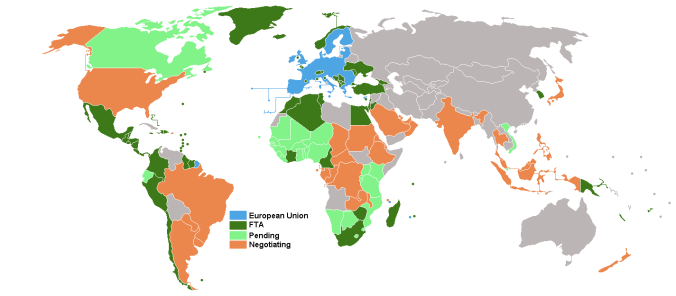
EU_free_trade_agreements

Part 5:- Brexit Negotiations

So what happens next if Leave wins? What are our options for future UK-EU relations and which of them come closest to what you want compared to what the Official Leave campaign wants?

Brexit Club2

Side Note:- The Leaving Framework

A side note on Vote Leave’s Leaving Framework White Paper. In my opinion, it is seriously lacking in several factual areas and deserves widespread media scrutiny.

unpick

Part 6:- Sovereignty

“Sovereignty” – A word of many meanings. Which one you apply will likely significantly influence whether you will vote Remain or Leave.

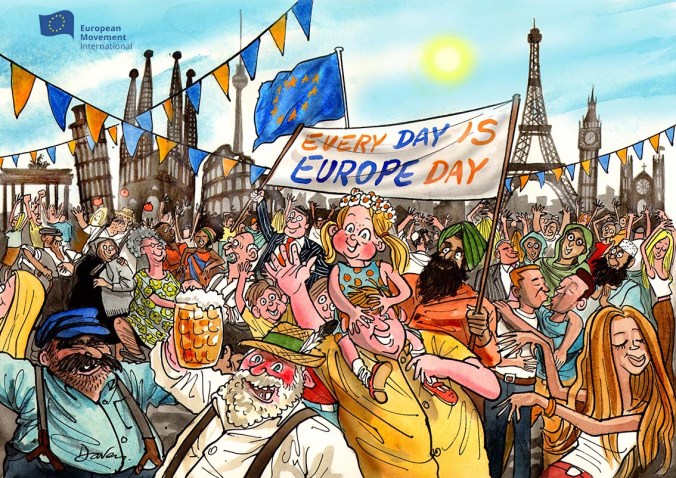
Europe Day

Part 7:- Final Thoughts

My final thoughts on the whole campaign and some results predictions.

Flags_outside_Parliament

The Results:- EU’re Out, Apparently

A dissection of the results and what comes next.

SaltireEU2

tcg-logo6c


APD Cut: A Flighty Economic Case

My second analysis report on behalf of Common Weal was published today. You can download it here or by clicking the image below:

APD Cover.png

The case presented by the Scottish Government for a 50% cut in Air Passenger Duty (and an eventual scrapping of the tax) has been predicated on the additional business and tourism it would bring to Scotland. However, the key pieces of evidence used to come to this conclusion appear to severely downplay the role of outgoing tourism as well as the spending patterns of those tourists. In short, business flights will remain largely unaffected whilst leisure flights may, somewhat counter-intuitively, lead to a drop in tourism within Scotland. The only area which will definitively benefit will be the airlines and airports themselves who will happily serve customers both coming and going (Although even this growth will be limited largely to the Central Belt airports and will be subject to capacity limits).

Instead of clumsily slashing a single tax, we should be taking a holistic approach to policy-making which analyses tourism in the round, takes a realistic attitude towards business travel and considers Scotland and its respective transport needs as a totality.

Key Points:-

• The case for business growth due to an APD cut appears particularly weak as business flights are driven by need and time pressures rather than price.

• The case for an APD cut encouraging more visits to Scotland for the purposes of international trade and business deals is particularly weak as long haul business flights between the UK and the US and Asia is almost entirely price insensitive.

• If an APD cut results in a transfer of revenue from APD to corporation tax there may be deeper implications for the robustness of the Scottish budget under the devolved tax structure. This will be exacerbated in the case of corporate profits transferred outside of the UK entirely.

• The case for increases in tourist traffic is substantially undermined by the impact of cheaper tickets inducing more domestic tourists taking foreign trips instead.

• The spending power of the outbound tourists most likely to take more trips outside of Scotland is greater than the typical spending power of the inbound tourists most likely to take more trips to Scotland.

• The inbound tourists which have a greater spending power than typical domestic tourists are the least likely to be sensitive to airline ticket prices.

• Inbound tourists are generally more weakly linked to the economy than consumers more likely to be induced to leave which may lead to negative economic impacts even in the face of increased tourist numbers.

• Whilst the economy most directly linked to airport traffic will see an increase in activity, this increase will ultimately be capped by the capacity of the airports in question. The seasonal nature of tourist traffic will exacerbate this impact.

• The greater impact on the transport network due to increased traffic needs to be considered in light of this proposal as do the economic imbalances created by the APD cut inducing greater traffic in the Central Belt but little growth elsewhere.

• If the reduction in revenue due to the APD cut is not at least recouped in full then additional cuts in public spending may be required. The negative impacts on the economy of this additional Austerity would then be dependent on precisely where those cuts occurred.

tcg-logo5

SP16: The Morning After

I’ll confess to being a lightweight. I snuck off for a few hours sleep right after the Clydesdale results were called and woke up right after the Lothian list so unlike virtually every other political pundit in Scotland right now, I’m able to type only marginally less coherently than normal.

So. How about those results?

The Green contingent has expanded three-fold and whilst I’m more than a little upset that neither of the two candidates covered by my branch, Kirsten Robb and Sarah Beattie-Smith, made it in I’m heartened by the success of the others notably Andy Wightman in Lothians. Who Owns Scotland? We’re about to find out!

My hypothesis that the SNP would come back with another majority appear to have been disproven although a clear pro-independence majority remains. Arguably, the Greens could call this a result significantly in our favour as we move to the wrangling over Parliamentary positioning begins.

I’m willing to be wrong again but I can’t see much appetite for an offer of a formal coalition. It doesn’t seem like good game theory for the SNP to offer up a Ministerial position (almost certainly something like Energy or Environment) just to avoid a two seat minority. Especially when they already have form for running a minority government with a fair degree of success.

I could see a discussion over some kind of Supply and Confidence arrangement based on some concessions that the Greens have campaigned on and over which there’s already a substantial level of support within the SNP membership.

I’ll make one prediction on this point. Unless the SNP are willing to rely on Tory support, Fracking will not happen in Scotland. Good.

I’d be hoping that there might be some more movement over local taxation and, perhaps, the Scottish Government will let Andy formally get his teeth and claws into the Land Reform Bill. That’ll be a joy to watch. The Greens campaigned on giving the Scottish Government the courage to be bolder on a range of issues. Here’s hoping it can.

So, on the vote itself. We saw hints of the total flight of the Right and Unionist vote within Labour as early as November last year but even as the last polls came in they appear to have underestimated the depth of that flight. Ruth Davidson’s campaign to get people to vote Unionist, rather than Conservative, appear to have been successful. What shall be interesting to watch now is what she does with that support. How far can they be pushed on Austerity (or how far can blame for it be deflected) before the Union-at-any-cost vote starts to tally up just that?

Where it leaves Labour is another great unknown. They’ve been utterly wiped from their birthplace in Glasgow and Lanarkshire and have retreated to the Morningside Reds of Edinburgh. They appear to have three choices ahead of them. Either ossify as an increasingly marginal voice in Scottish politics; Abandon the Unionist vote and try to out-left the SNP (I don’t think at this stage that even a drastic Home Rule or Federal position would draw back those now set on independence) or try to out-right the Tories (which would mean claiming, adopting and accelerating Austerity). I cannot honestly see a route back to the forefront of Scottish politics for Labour barring some singularity event such as actual independence or some act of self-destruction within the SNP greater even than the one that UK Labour appear bent on.

The proportionality of AMS was stretched rather to its limits last night. Despite narrowly missing out on a majority the SNP, as the largest party, were the largest beneficiaries of the system gaining approximately 9 seats more than their regional vote percentage would have suggested. The Tories though also benefited gaining about two more seats than their regional vote share whilst Labour broke about even, the Greens losing one seat and the Lib Dems being rather drubbed by the system, losing three seats to the maths. This calculation would have been mitigated by the addition of 6 “Other” seats which, on these results, would have more likely have been distributed amongst the sitting parties rather than going to smaller ones. In most proportional voting systems around the world a minimum threshold of 5% is often applied and, in our case last night, no small party achieved more than 2% nationally or more than 4% in any single region.

Seat Allocation

It’ll be interesting to see if there are any calls for electoral reform based on these results the way even the SNP made a mild complaint about their overwhelming success under FPTP last year.

Another topic which will now need to be thrashed out is the position of Presiding Officer. I reckon that this year the wrangling over whether the party/ies of government or of opposition give up an MSP for the post will be particularly intense this year given the slim margins and the tactical situations faced by each of the parties. The SNP won’t want to dilute their minority any further, Labour won’t want to shrink further either, the Tories and Greens will want to capitalise on their gains to maximum effect and if the Lib Dems lose one more MSP they cease to be an official parliamentary group.

Personally, I’m rather disturbed by the concept of choosing the PO from the MSPs in the first place. Why should the electorate who have only just chosen their representatives have to give one up as the PO must remain neutral, must resign from the political party and whip and have severe restrictions on where and how they vote (Only in the event of a tie and only to maintain the status quo or further the debate). To me, this isn’t a job for a Member of the Scottish Parliament. I’d look towards inspiration from the “checks and balances” of the US. Perhaps the PO should be appointed from a pool of senior judges or similar judicial positions? They are already used to applying impartially the rule of law so should trivially be able to manage Parliament in a neutral manner.

Of course, an alternative to a Presiding Officer could be an elected President, but that is likely to be a discussion for a post-independence situation…

Where do we go from here? I honestly have no idea. Going from bracing for a substantial majority and “the most boring Parliament” of the devolution period (as one pundit put it) to back to the days of actual discussion about policy I think the next five years could be one filled with potential…if we choose to allow it. For a last word:

Grey.png

tcg-logo5

How To Vote in SP16: A Quick Guide

The Scottish elections for the fifth session since the Restoration of Parliament are almost upon us. Fun Fact: Due to the voting age being lowered to 16, this will be the first election to include voters born AFTER the start of the first session in 1999.

The following is a quick guide on how to cast your vote (especially if it’s your first time):

You will receive two ballot papers somewhat like these fictional examples:

ballot.jpg

On the PURPLE Constituency paper, you will see a list of PEOPLE who are competing to represent your constituency. They may or may not be a member of a party and will indicate thus under their name. Place an X in the box next to the person you think will best represent your constituency. (If they are a member of a party, this may or may not inform your choice)

On the PEACH Regional paper, you will see a list of PARTIES competing to gain the most seats in Parliament. The Parties may have a final advertising pitch or by-line such as “Nicola Sturgeon for First Minister” or somesuch under their name.
Place an X in the box next to the party whose policies most appeal to you and that you would like to see have more seats in Parliament.

Do not place any other markings, writing etc on either ballot as this may void that vote.

Then follow instructions in your polling place telling you in which box to place each paper.

More details on how your votes are counted as well as some myths and common misconceptions can be read here:

https://thecommongreen.wordpress.com/2015/06/06/how-scotland-votes-a-guide-to-the-scottish-elections/

tcg-logo5

The Economics of Fracking

“It can be concluded that both shale oil and shale gas are unlikely to be economically viable in this current low hydrocarbon price environment and even if there is a return to recent higher prices; it is likely that the industry would require significant subsidy or significant efficiency progression before it could be used at any kind of scale.”

“Even if the extraction can be proven to be environmentally ‘safe’ the experience of the United States shows that it risks bringing boom-and-bust to our communities as waves of temporary jobs move rapidly through without rooting themselves in local economies.”

CWFrack

My first paper written for the Common Weal has been published today. The Economics of Shale Gas Extraction is the first major paper to be published in Scotland focusing on the economic, rather than environmental, impacts of the industry particularly on the local communities which will be hosting the wells.

Key Findings:-

  • The SGE market in the US and, so far, in the UK is dominated by larger companies occupying the most profitable licences. There is little scope for community owned or small company development to occupy a significant market share.
  • Individual wells become largely non-productive within a few years of development which, due to market demand for constant production, forces companies to continue drilling new wells in new locations at a rapid pace.
  • The low recoverable volumes and high capital and running costs of wells may render profit margins comparatively small and extremely sensitive to oil and gas pricing. There appears to be little scope for economic development of SGE in the UK until and unless wholesale prices return to historic highs and even then significant subsidy may be required.
  • Communities are likely to be significantly adversely impacted by nearby SGE fields. The concentrated pattern of land ownership and comparatively weak situation of local government renders communities vulnerable to being unable to capture wealth generated by nearby wells whereas the burden of environmental degradation or even simply the threat of such degradation can lead to community stress and negative economic effects.
  • The jobs created by SGE appear to be short-lived and highly mobile. The job demographic of the planning, drilling and production phases are each relatively exclusive meaning that they will move to the next site more rapidly than the wells themselves do. This creates the risk of a “Boom-Bust” effect in communities.
  • Shale oil and gas is considered a relatively poor source of fuel due to high extraction costs. The UK’s reserves are also likely to have an insignificant impact on global markets and hence a negligible impact on end-user prices.
  • Significant externalities have been identified in the form of environmental degradation due to methane leaks. The costs to mitigate these may exceed the lifetime revenues generated by the well which produced them. Further, the UK has a poor record in terms of ensuring adequate decommissioning and restoration bonds which may lead to further public funding being required after the SGE companies have left an area.

Whilst much of the attention on the shale oil/gas and fracking industry has been focused on the environmental impact, less attention has been paid to the economic effects. Even if the extraction can be proven to be environmentally “safe” the experience of the United States shows that it risks bringing boom-and-bust to our communities as waves of temporary jobs move rapidly through without rooting themselves in local economies. Scotland’s history of concentrated land ownership and comparatively poor local government also risks creating a vast transfer of wealth benefiting the already wealthy whilst potentially leaving communities to foot the bill for cleaning up. All for a fuel which the government has been told will not even benefit us in the form of lower energy bills.

There should be no place for fracking in Scotland or the UK.

tcg-logo5

Paying For It

“I would say is that every public-private partnership in Scotland has delivered new hospitals or new schools in Scotland on time and within budget and that’s the sort of success I want to see in every building.” – Jack McConnell, 2002

wall

Oxgangs Primary School, 2016. Built by PFI in 2005

The dramatic news from Edinburgh in the past couple of weeks has put into sharp focus the failures of some of the finance models used by our regional councils to build schools, hospitals and other public buildings in recent years. Public/Private Partnerships (PPP), Private Finance Initiatives (PFI) and, less well known, Lender Option, Buyer Option (LOBO) Loans have burdened our councils with near-crippling financial obligations and, as we now know, have too often failed to deliver on even the basic standards of results required. Just what these deals are and why they have been used is a topic which requires a bit of discussion.

PPP/PFI

Public Private Partnerships, of which Private Finance Initiatives are a specific type, are a form of capital investment introduced to the UK in the early 1990’s by Major’s Conservative government as an alternative to tradition procurement methods of the time. In traditional public investment models a local authority might decide to build an asset such as a school itself in a purely publicly funded model or it might contract a private source to build the school and then take over the full running costs of the project afterwards. The Tories were driven by an ideological pledge to reduce the budget deficit (then known by the catchy title of “public sector borrowing requirement“) and identified the use of PFI as a means to do this.

Instead of paying for a project out of the capital budget either up-front or over the span of the construction phase, PFI would spread the costs over a medium or long term contract, often more than 20 years. This reduced the single year outlay and hence massaged the budget figures.

It was under the Labour government though that PFI really took off as it had the advantage of taking capital debts “off-book” and allowed Gordon Brown to simply stop counting them towards the deficit entirely. This gave the illusion of the fiscal prudence on which he banked much of his reputation. This was doubled down in Scotland by Jack McConnell’s Labour/Lib Dem government which led to Scotland, with 8.5% of the UK population, ending up with some 40% of the UK’s PFI funded schools.

The lie to the illusion can be found in the realisation that the private sector doesn’t work for free. These contracts almost certainly mean that the total cost to the council over the lifetime of the council is significantly larger than the up-front capital costs.

PFI

To take a recent example concerning some of the schools in Edinburgh, the private company involved will be paid £12 million per year for 30 years for a project valued at £68 million in up-front costs and an additional £84 million in management costs. Subtracting the running costs, this represents an annualised return on capital investment for the company of 10% per year. For contrast, David Cameron’s offshore tax haven shares “only” earned him about 6.75% per year.

And this doesn’t even represent the worst example of increased costs due to PFI. Contracts worth three or four times the capital investment are common. Some have been found to be worth a staggering ten or even twelve times the total outlay.

It is these ongoing payments which are particularly affecting our own regional councils and the problem is only going to get worse with the peak of the outgoing payments not expected to hit till the mid 2020’s.

PFI

Whilst one of the advantages of PPP’s often touted is the obligation for the private company to maintain the asset over the lifetime of the contract this can be a double-edged sword. One of the other “advantages”, mentioned in the UN ESCAP video above, is the “realisation of private sector efficiency savings”. That can mean “cutting-corners” to you and me. If the company is required to maintain a school for only 30 years but is then free from that obligation on year 31 then the inducement to build to the minimum possible standards to see out that contract is strong. Indeed, there is some anecdotal eyewitness evidence that exactly this has taken place. Schools which, by today’s standards are insufficient but which nonetheless stood for more than 100 years are being replaced with buildings designed to last less than a quarter of that and, has been seen, sometimes don’t even make it that far. This is not “long term planning”. It is certainly not helped by the generally low standards of our building regulations. A private company will rarely build at anything other than barely above the minimum legal standards so if we’re going to continue involving “the market” in our infrastructure projects then we’re going to need to have a discussion about increasing those standards to something more suitable for the 21st century. Whilst PFI specifically may have been abandoned in Scotland, this discussion over standards remains.

LOBO Loans

Lender Option, Buyer Option loans make up a far smaller proportion of council borrowing than PPP/PFI and have hit fewer headlines but they are still a symptom of the chronic dysfunction of our public borrowing system.

These loans were launched in 2000 as an alternative to the National Loans Fund which, whilst cheap and stable due to being funded by UK gilts, are sometimes quite limited in scope and therefore not always avaliable when required. Instead, the public body can approach a commercial bank for a long term, often more than 40 years, loan which is offered at an initially low “teaser rate” but which includes a clause which allows the lender to change the interest rate, usually upwards, are regular, often annual, intervals.

Sometimes these rate adjustments carry with them a contract exit clause but one can imagine the conversation in that case.

Bank: “So, we’re planning on increasing your interest rate from 2% to 5%. Under Section 4 of our contract, you can exit the loan by paying back the outstanding primary plus our exit fee.”
Council: “If we had that kind of money, we wouldn’t have needed the loan.”
Bank: “Ok. 5% it is. See you next year!”

These loans were often offered to and accepted by councils without the council quite appreciating the potential volatility and uncertainty that these changes would represent, which is quite understandable as these contracts have been criticised as being some of the most complex in the financial world and as our locally elected representatives aren’t necessarily chartered accountants it’s perhaps understandable that some would have simply been sucked in by those teaser rates which, at the time, undercut even those bonds offered by the NLF.

What Next?

I’m not going to pretend I have a magic solution to all of this. Some have discussed simply canceling and renationalising PFI funded assets but whilst I have some sympathy for this I have concerns also. Right now, we simply don’t know how far the record of substandard workmanship within the works built runs and, in fairness to the companies behind this disaster, they are upholding their obligation to pay the costs of repair and, if required, rebuild of these schools. If the contracts were canceled before we know the extend of the repair bill then we might simply be bailing out a huge debt. I can see some kind of scope for some kind of renegotiation over the annual payments or contract terms, perhaps with some kind of profit cap. Perhaps the companies could be offered an exit but made to put up a bond in case future issues arise although as we’ve seen from the coal and, more recently, the steel industry those bonds themselves need to be planned carefully lest they prove insufficient or evadable.

In future, a more sustainable method of public borrowing and investment needs to be examined. The Common Weal has a proposal to use a mutual limited company to leverage funds backed by Scottish issued bonds to invest in our public infrastructure which is perhaps one of the better ways to go about this issue although it is acknowledged that Scotland’s very limited borrowing powers even under the “new powers” of the Scotland Act 2015 will likely cap the viability of such a scheme. Obviously, an independent Scotland wouldn’t have that problem but until that’s sorted, we may need to think of something else.

tcg-logo5

Greening Tax

“Unless Scotland has the boldness and the courage of its convictions to use the abilities that the Scottish Parliament is going to have in the next session to have a fairer, more progressive approach to taxation…many more communities are going to find that the public services they rely on will continue to be under threat.” – Patrick Harvie

Yesterday, the Scottish Greens published our proposals for reform of both the national income tax and a replacement for the local council tax. The proposals themselves can be read by clicking on the image below but I’ll spend a bit of time here explaining how they work and what might have been missed in some of the media coverage about them.

Green Tax


First though we need to remember just what the purpose of tax is for. It’s so easy to get caught up in the arguments over how much more or less a particular tax or tax change would raise without considering the deeper impacts of what a particular tax is supposed to do.

The Principles of Taxation

Why do we tax people in the first place? It’s a substantial chunk out of your paycheck every month and there’s not one of us who has, at some point, wondered what they could have done with that money instead.

The reasons for taxation are broadly covered by three principles:

Revenue Generation:- There are many services, such as roads, emergency services, healthcare, education etc, which we, as a society, have decided are best funded collectively. We may argue over just how much is paid for in this way and how much is funded ad hoc or privately but there are vanishingly few full blown anarcho-libertarians, especially in Scotland, who believe that absolutely everything should be in private hands and that Government shouldn’t exist at any level. For everything else, taxes are collected to fund the State and its operations.

Redistribution:- Societies are rarely entirely equal at every level. Some people end up earning or accumulating more than others, some people end up not earning enough money to meet their basic needs. Some regions end up with a greater concentration of wealth than others. Some, due to size or geographical constraints (such as the Highlands and Islands) simply require more funds to deliver the same level of services than others. It is well known that more equal societies experience greater levels of wellbeing and lower levels of ill health and other negative effects. Most societies, therefore, employ tax, alongside policies such as social security and welfare, in a progressive manner such that the richer pay more according to their abilities and the poorer gain more according to their needs.

inequality

Reshaping:- This is the carrot-and-stick approach of taxation. Governments often develop policies designed to encourage their citizens towards certain activities or discourage them from others. One prominent example at the national level would be the levies on tobacco and alcohol which are, at least partly, there to try to encourage us to smoke and drink less (obviously, taxes can fall into multiple categories and the Revenue Generation aspects of these taxes cannot be discounted, especially when used improperly).

In addition to these principles on the purpose of a tax, we must consider how it is structured so that it works in an effective manner. In 2013, local council body COSLA published a report into the effectiveness of current local taxes and in it laid out six principles outlined below.

LT Prin

Essentially, these principles boil down to taxes being fair, easy to manage and employing a sense of subsidiarity whereby local powers should, wherever possible, be used to effect local solutions. Whenever discussing a potential tax, local or national, all of these principles must be upheld or accounted for.

Income Tax

SGP Tax Bands.png

The Green proposal for the use of the income tax powers due to come with the implementation of the Scotland Act 2015 includes not just a tweaking of the rates nor the use of clumsy rebates as Labour (briefly) seem to have  considered but the full use of what powers we shall have to create new bands appropriate to Scottish income distribution.

The headlining feature of these proposals, as one may have suspected, was the inclusion of a 60% rate on earnings over £150,000.

This certainly did grab the headlines coming so soon after the SNP announced that they would not be raising the top rate past it’s current 45%. Their decision was based on this document which suggests that the “tax induced elasticity” (TIE) of the richest 1% in Scotland may be substantially higher than in the UK as a whole. Simply put, they fear that Scottish millionaires may flee elsewhere if we tax them at a higher rate than their southron counterparts. Their claim is that in the worst case scenario, enough high earners would leave that the actual revenue collected could be up to £30 million less than would be if tax rate remained as it is (one has to remember that if a top rate tax payer leaves, you also lose what they’ve paid in lower bands too).

Now, I have a couple of reasons to doubt this will impact as badly as they fear. In particular, having had a read through the book on which the UK TIE figures are based and having back-calculated their suggested maximum top-rate income tax for those UK figures, the implication appears that if the high end TIE rate the SNP suggests (0.75 compared to 0.46 for the UK) were to come to pass the maximum allowable income tax rate would be something on the order of just 30%. I would suggest therefore that the conviction attached to that worst case scenario is somewhat low as not even the Scottish Tories have went into this election on a platform of cutting the top rate of income tax.

My other reason for skepticism over this fear of tax flight in relation to internal tax boundaries is the case actually seen in the United States (In particular, as found by this paper by Young et al in their study of tax migration and border effects) where each state has far more control over many taxes than Scotland has and consequently sees quite sharp tax boundaries between states. Now this is not to say that that tax induced migration does not occur but in the words of the paper linked to above it seems to occur “only at the margins of statistical and socio-economic significance”. This appears to be true even at easily commutable borders so don’t be readily expecting a cluster of Scottish millionaires moving to Carlisle or Newcastle.
[Edit: Alternate link to the Young paper here.]

The reason for this is quite profound. As it turns out we can broadly place the richest echelons of society into to one of two groups. The “transitory millionaires” who really are just seeking somewhere to park as much of their wealth as possible without contributing much to society in general and the “embedded elites” who more closely fit that classic-to-the-point-of-cliché term of “job-creator”. These folk are the ones who have built a business in their locale and, as it turns out, it is not a simple case to uproot it and move it wholesale elsewhere (especially when higher property prices may make the operation of that business significantly more expensive). Perhaps, we in politics have been too quick to conflate these two distinct attitudes among the most well off in society. Perhaps we should instead be asking which of the two groups we would prefer to have influence our policy decisions?

On the Greens’ part, we are not making any prediction of revenue based on our 60% rate. We’re operating on the basis that our changes to the top rate of income tax will not attract any additional revenue (although the changes overall could bring in some £331 million per year) and this managed to attract some attention during the recent STV Leader’s Debate with the Tories asking what the point was if revenue didn’t change and asking how that would improve the economy. Well, we’ve seen the answer to that in the principles section above. The Green tax plan would significantly reduce inequality within Scotland. From a social standpoint, this should significantly improve general wellbeing within Scottish society and from an economic standpoint there will be benefits due to what’s known as the Marginal Propensity to Consume. Essentially, if you increase a multi-billionaire’s income by £100 then it means next to nothing to them or their lifestyle but if you increase the income or decrease the tax burden of a minimum wage worker by £100 then it will give them the ability to pay down debts or spend more on goods and services on which they would not otherwise have been able to do so. By this means, a revenue neutral tax change which decreases inequality most certainly can have a positive economic benefit. It reflects poorly on Ruth Davidson that during that debate she either didn’t know or didn’t want others to understand that fairly fundamental point.

Property Tax

Incidentally, the Young paper linked to in the previous section points out that a far more significant cause of high-earner migration than income tax is a draw towards expensive housing which is a famously immobile asset and which leads us neatly on to the second half of the Greens’ proposals.

Given how limited the set of devolved national taxes actually are and given how long overdue we have been for doing something, anything, about the Council Tax, it’s perhaps no surprise that a large proportion of the campaigning has been dedicated to those taxes over which Holyrood does have near unfettered control.

Faced with the increasingly loud rhetoric over the need for change from many parties and the cross-party consensus on the need for radical change laid down by the Commission on Local Tax Reform’s final report it’s therefore been a deep disappointment that it has been left to the Greens to be the only party to lay down a system of local residential property tax which is meaningfully different from the Council Tax. The Lib Dems have dropped their long standing aspiration towards a local income tax. RISE have stuck to the plan for an income based service tax inherited from the SSP but have appear to have opted to set rates nationally thus remove the advantages of local control. The SNP have decided to keep the present system, including the quarter century old, out of date valuations, but will increase the rate multiplier, nationally, on the top couple of bands. Labour have come up with a system of a per household flat rate poll tax with the addition of value based percentile tax (In my previous article I mischaracterised this as a banded tax due to a misunderstanding of their press statements on the topic. I was in error.) which, on the face of it, is an interesting change but their actual calculations will leave us again with a tax which is deeply regressive with respect to house value.

The Greens, however, have opted to levy a local property tax based entirely as a percentage of the property’s value. This Residential Property Tax would be nominally set to 1% of the property’s value but it will be entirely within the local council’s power to set that rate at whichever value they wish and will be coupled with a scheme of reliefs for low earners similar to the system currently in place.

Of course, such a large step change in the tax system requires careful management and people will need time to adjust their financial affairs to reflect the change so we also propose phasing in the new RPT over the course of the next five year Parliament by stepping over to the new system in 20% increments until Council Tax is fully abolished.

The graph below shows this transition as well as a comparison of the tax regimes proposed by the SNP and Labour as a percentage of a house’s value (RISE’s SST, being income rather than property based, isn’t directly comparable in this way).

Green RPT Both

The contrast is quite profound. Incidentally, the large change in nominally band “C” and above properties may look alarming but one must remember that the lack of revaluations since 1992 has led to many houses, some 57% of the total stock, sit now in the wrong council tax band. The house I’m currently in is a fairly graphic example of this being a band “D” house with a present market valuation of approximately £100,000. Converting from the present Council Tax to a 1% RPT would actually cut the bill here by some 10%.

Also of specific note within these plans is a system of redistribution across councils. Essentially, there are some council areas containing a lot of very expensive houses (Edinburgh, say) and some where property prices are comparatively cheap. It couldn’t be fair that one of the higher priced areas takes the decision that they could cut property taxes to a bare minimum and still fund local services, as happens in places like Westminster, whereas lower priced areas must pull those tax levers harder. Therefore, the block grant given to councils will be calculated on the assumption that they will charge the 1% RPT which will remove much of the temptation from those councils with higher property values from perpetuating the cycle of inequality. They still would have the power to reduce those rates, but they’d have to be accountable to their voters for doing so.

But what of land? Isn’t that a core tenant of Green policy? Well, herein lies an aspect of property tax which has been almost entirely missed by the media and yet lays the path towards possibly the greatest change within them. The RPT includes a slider which will allow a council to weight the RPT between taxing property and taxing land. If a council decided to, say, weight 100% towards property and 0% on land then the system would look most like the present council tax (albeit, as said, greatly more progressive) whereas if another council weighted 0% on property and 100% on land then the system would be functionally equivalent to a Land Value Tax and those who owned not just a large house but also a large estate would have to account for those holdings. In practice, many councils will seek some compromise between the two and the Green proposal lays out an example as currently used in Denmark where a typical weighting is something like 70% on property and 30% on land. Once again, localism is the key here. Council regions which are largely urban will likely wish to weight towards property whereas more rural areas, particularly those with patterns of unequal land ownership, may wish to weight towards land. Simply setting a national rate is unlikely to be sufficient or effective in every region of the country.

Conclusion

I  hope this then lays out our proposals for income and property taxation. I know. It’s a complicated issue which doesn’t soundbite very easily but we’re entering an interesting phase of Scottish politics whereby our Parliament will be getting more power than ever before and the need to use those powers effectively will become more important than ever before. Scotland Can be bolder if we want it to be.

tcg-logo5

My thanks to Andy Wightman for technical advice provided for this post. His blog Land Matters can be read here.

Scotland’s Song

Today in March with grey dawn’s break,
A nation slumbers, not yet awake.
Our dreams on hold

In Alba.

Strange is the day we await to rise,
As strange Vows fail before our eyes.
But stranger still is

This Alba.

But songs of hope we still shall sing,
By our hands that hope we shall bring,
And the sun shall shine on

Our Alba.

Song of this land, we feel your call,
Your touch gently shall yet reach all,
Soon shall we live in

Saor Alba.

tcg-logo5

Poem after “Cassilda’s Song” by Robert W. Chambers

Custom whisky glass from Glencairn