Use energy to win independence, rather than independence to win energy

“The problem with the idea of cause and effect is that what is deemed the cause is an effect.” –  Mokokoma Mokhonoana

This blog post previously appeared in The National as part of Common Weal’s In Common newsletter.
If you’d like to support my work for Common Weal or support me and this blog directly, see my donation policy page here.

Scotland doesn’t need independence to start owning our own energy.

It feels like 2025 has come full circle for us at Common Weal. January started for us with an announcement from the Scottish Government that it was “not possible” to bring Scottish renewable energy into public ownership – an announcement made after the publication of a poll showing that more than 80% of people in Scotland favoured them doing so. We responded with a briefing paper called “How to own Scottish energy” which laid out the logic behind their announcement, why that logic was flawed and how they could bring energy into public ownership despite their own objections.

In short, the Government’s stance is based on an extremely narrow reading of the Scotland Act which actively prohibits the Scottish Government or Scottish Ministers from owning electricity generating, storage or transmission assets. Under this reading, there cannot be a “National Electricity Company” designed and owned in the same way as some public corporations in Scotland like CalMac or ScotRail.

However, we showed in our paper that various options were not blocked by this prohibition. For example, a Minister-owned “National Heat Company” could be designed to build and own district heat networks to keep us all warm (the prohibition is specifically about electricity, not other forms of energy). The Government could also build a National Energy Company and hand ownership over to a consortium of Scotland’s 32 Local Authorities. Or each Council could own their own energy companies. Or the Government could back the creation of a private energy company that is mutually owned by every adult resident of Scotland. Or, instead of complaining about the limits of devolution, they could be applying pressure on the UK Government to amend what is very clearly a completely obsolete prohibition in the Scotland Act (especially as a narrow reading of it also prohibits the Scottish Government from erecting solar panels on its own buildings).

Come forward now to December and the SNP have kicked off their 2026 election campaign with a new paper essentially saying the same thing as they did earlier this year except framing it around “we’ll do it, but only after independence”. On public ownership in particular, they aren’t advocating for the full-scale nationalisation of energy but their ambition appears to extend only to communities owning up to 20% of local renewable projects.

20% is far better than the current level of a rounding error above 0%, but it’s clear that even within devolution, the Scottish Government could do far more than it’s currently doing to support communities by giving them grants and loans to purchase stakes in developments, to pressure developers to sell or grant those stakes to communities as a condition of planning permission or the renewal of licences and to actively use opportunities like the “repowering” of developments, the end of their licence periods and break-clauses in contracts that would allow poorly performing developers to have their licences withdrawn and transferred to public bodies (in much the same way as the Government took ScotRail back from Abelio in 2022)

This doesn’t get the UK Government off the hook though.

Their recent announcement that some £28 billion will be added to consumer energy bills to pay for vital energy grid upgrades is going to stick in the craw of people whose energy bills are already too high. Worse will be that most of the profits of that investment will flow into multinational companies – including foreign public energy companies – with none returning to the consumers themselves. These investments, too, should be made on a staked ownership basis so that the people paying for them – us – should become shareholders in the investments and see a return on our investment. To make things perfectly clear, if the UK Government had announced that it was going to fully publicly own the assets built via this spending, then the added costs on your bill would be the same. In other words, the choice to publicly own the UK’s new energy assets will cost you the same as the choice to leave them in private hands.

“Can’t we use our public owned energy to help win back our independence, rather than claiming more weakly that we can use independence to win back our energy?”

The same will be true of assets in an independent Scotland – but given the Scottish Government’s “all in” approach to “inward investment” (something their plan published this week mentions more often than public ownership), I can completely see them making the same mistake and forcing us to pay for assets that someone else will profit from.

I freely admit that there are aspects of Scotland’s energy transition that are not in Scotland’s hands and which are not likely to be easily negotiated away as part of an adjustment to devolution such as Scottish consumers being forced to pay for extremely expensive and risky nuclear projects that even NESO (formerly, the National Grid) now says are not needed to meet Green energy targets but this does not let the Scottish Government off from making the changes it can make now rather than using the dangling carrot of independence as a means of delaying action. If anything, independence will come less from making a promise that might be fulfilled afterwards but by taking tangible actions now that push devolution to the limit and then saying to voters “if you want more, you know what to do”.

If it truly is, as the Scottish Government says, Scotland’s Energy – then shouldn’t we take back as much as we can now as use that as leverage to win the rest? Can’t we use our public owned energy to help win back our independence, rather than claiming more weakly that we can use independence to win back our energy?

Communities have been priced out of owning Scotland

“My people are few. They resemble the scattering trees of a storm-swept plain…There was a time when our people covered the land as the waves of a wind-ruffled sea cover its shell-paved floor, but that time long since passed away with the greatness of tribes that are now but a mournful memory.” – Chief Seattle, Chief Seattle’s Speech (1854)

This blog post previously appeared in Common Weal’s weekly newsletter. Sign up for the newsletter here.

If you’d like to support my work for Common Weal or support me and this blog directly, see my donation policy page here.

Two new reports show that the rate of land transfers to community ownership in Scotland has dropped to the lowest level since the start of devolution and that a poll of the Scottish public shows near-unanimous support for more land reform over and above that which may be delivered by the recent Land Reform Bill.

The recently passed Land Reform Bill is simultaneously “the most radical land reform legislation in the history of devolution” (the Government’s characterisation of it) and so weak that even before it has achieved Royal Assent, 96% of people polled say it doesn’t go far enough and that they want more. Who the other 4% are is not known but they’re probably the kind of person who would answer in the negative to a question like “Are puppies cute?”

How these two statement can both be true and accurate is a reflection not of the strength of the 2025 Land Reform Bill but a reflection of the weakness of the previous round of land reform in 2016.

This Bill was designed to strengthen community right to buy rules laid down in yet still previous land reform attempts in 2015 and 2003, specifically granting Ministers the power to force a compulsory sale of sale to communities for the purposes of sustainable development even if the land owner wasn’t willing to sell or couldn’t be identified.

A few years ago, I wrote an analysis of a report published looking at the rate of transfers of land to Scottish communities since the start of devolution. The results were stark. It found that despite the 2016 round of reforms being specifically aimed at making community land transfers easier, there were serious other barriers looming. In particular, the assets being transferred were getting smaller and smaller even though the overall number of transfers were still proceeding steadily. What this meant is that where before a community might have been able to enact a community buyout of the entire estate on which they lived or their local wind farm, communities were instead only buying out perhaps their village hall or even just the old phone box to turn into a medical station or pop-up craft store.

I’m not berating some of these initiatives as they are undoubtedly a good thing. I’m not even trying to suggest that communities lack ambition in their purchases. I’m saying that they are being blocked from realising their ambition by land prices surges that are making it impossible to purchase land.

One of the aspects of the latest Bill is that communities must be notified ahead of a large land sale and must be given time to put together a purchase bid. But if the price is still so high that they cannot put together the cash regardless of time, then the notice is merely an insult added to the injury.

Move forwards three years to now and that community land report has been refreshed and brought up to date. Unfortunately, the results are even worse now. In the years between 2000 and 2023, an average of 7,023 hectares of land were transferred to community ownership each year. In 2024, just 8.46 hectares were transferred to community ownership. This is the lowest rate of transfer in a single year since 2000.

Worse, the total number of transfers has fallen off a cliff too. From a peak of 80 transfers in 2021, Scotland only transferred 23 parcels of land to communities in 2024.

Now, that peak of 80 in 2021 does show some evidence of delays caused by Covid in 2020 but even then, while the country was in total lockdown for much of that year, 43 transfers were made covering 423 hectares. In 2020, during the worst global pandemic of a lifetime, Scotland managed to transfer to community ownership 50 times as much land as it was able to do in 2024.

The drop in 2024 represents a total reversal of the progress made from 2014 which saw a substantial and sustained rise in communities being able to buy the land under their feet. These results show that far from the 2016 Act accelerating land transfers, they have almost halted since then. 95% of all of the land in community ownership in Scotland was transferred to communities before the 2016 Act took effect.

“The latest round of Land Reform clearly won’t be enough to fix this problem and it’s clearly not enough to satisfy what is as close to a unanimous poll of the Scottish public as it is practically possible to find.”

I believe that the reason for this stagnation is the same as the one I noted in 2022. Scottish land prices are being inflated beyond any reasonable expectation by speculators going all in on buying up land for carbon offsetting, encouraged by a Scottish Government that is similarly all in on encouraging “foreign direct investment” as the sole tool of boosting Scottish GDP, regardless of the cost to our future economy or our present communities.

The thing is though, I wonder if the votes on the Land Reform Bill might have been different had this latest report been public knowledge before it passed. It would have been valuable leverage for those campaigning for strong powers of community buyouts in that Bill. It might well have led to amendments designed to counter this trend of people being priced off the land.

I wonder why the Government didn’t publish this report then or even allude to its findings via its own amendments. I’m fairly sure that they would have had advance knowledge of the findings of the report to some degree (I know this because I recently had a Freedom of Information request on another issue knocked back on the excuse that while the Government had the data, it was due to be published anyway within a couple of months – which it duly was). Yet little was said during the various debates around this Bill.

The latest round of Land Reform clearly won’t be enough to fix this problem and it’s clearly not enough to satisfy what is as close to a unanimous poll of the Scottish public as it is practically possible to find. This is clearly an issue that must be revisited in the next Parliament. We’ll be keeping a close eye on manifestos as they are published and, of course, we’ll continue to campaign (with your support) for real land reform so that Scotland can start working for All of Us, rather than just the very few who can afford to buy the land under our feet.

Covid lessons should have been learned in real time

“A man may plant a tree for a number of reasons. Perhaps he likes trees. Perhaps he wants shelter. Or perhaps he knows that someday he may need the firewood.” – Joanne Harris

This blog post previously appeared in Common Weal’s Daily Briefing newsletter. Sign up for the newsletter here.

If you’d like to support my work for Common Weal or support me and this blog directly, see my donation policy page here.

A stock photo of vials of Covid-19 vaccines

Common Weal looks at the second report of the UK Covid Inquiry with some frustration. It’s not that we don’t agree with the findings, its that we were reporting on these issues in real time. There is no finding in this report that Common Weal did not raise at the time.

We believe there is a conclusion to be drawn from this; society needs more than a small political class talking to a small community of corporate and public sector leaders in private and a small media class in public. We need national debate to include many more voices and perspectives and for those to be taken seriously.

Let’s look at three of the key findings. First, that we were lax to begin the lockdown and poorly prepared for it when we did. This is something Common Weal identified early. We were warning that we should have moved to lock-down early in March 2020 and had already been raising fears the previous month.

By 16 March 2020 we were utterly bemused at the decision to allow 9,400 people to attend a Lewis Capaldi concert in Aberdeen less than a week before we were in full lockdown. We were issuing almost daily warnings in the week running up to lockdown. And then, when lockdown started, Common Weal warned that the UK Government was making a mess of it and that Scotland’s determination to stick to a ‘four nations’ approach was a mistake.

So when Scotland gradually started to diverge, we warned that it was too little too late. Again, as we approached the end of the first lockdown we warned that nothing like sufficient preparation had been made to suppress the virus once we were (partially) reopened.

But it is perhaps the second main conclusion that is most important here – the failure of testing. The difference between needing one lockdown and needing multiple lockdowns was the extent to which we could suppress the virus in the interim period via a testing regime. The entire first lockdown should have been focussed on developing a comprehensive approach. We warned this at the time.

Yet against all the global public health advice, the official Scottish Government position was that “testing is a distraction”. This was inexplicable and we were so concerned that Common Weal strayed out of our comfort zone to produce a public health policy paper in which we set out a testing regime we thought had the best chance of successfully suppressing Covid.

We published it as Ending Lockdown. The Scottish Government ignored it and so as the second lockdown approached we produced a more detailed version. Eventually a watered-down version of our proposals was belatedly put in place. We continue to believe that there remains a chance that the second lockdown could have been avoided altogether if a more rigorous approach was taken.

It is also worth noting that while Common Weal suggested that an elimination strategy was the only one that had actually worked (in New Zealand), it would take steps the Scottish Government would see as too radical to achieve that – closing roads outside airports, ports and the border and putting ‘testing borders’ in place.

For some reason the then First Minister thought it was possible to start talking about a strategy of elimination without taking any of these measures. That she did anyway certainly justifies the criticism of this stance in the report. It was vainglorious rather than credible.

And that leads to the third main conclusion – that there was a narrow and closed-off leadership approach which harmed policy creation, and that the First Minister spent too much time doing television briefings which should have been shared among other senior figures.

Again, this problem was quite clear at the time and something that we commented on a number of times but was not picked up in wider media debate. This resulted in a failure to scrutinise what was actually happening.

There are other issues we expect the Scottish inquiry to cover, including the cover-up of the first outbreak of Covid which took place in a large corporate hotel and policy of sending Covid-positive patients into care homes. Certainly there is no doubt that in Scotland we did not see the utter chaos and rampant corruption that we saw at Westminster, but this is a low bar.

While this report is welcome, we believe that there remains insufficient scrutiny of the extent to which civic Scotland stopped asking questions and stopped challenging decisions for months on end. Common Weal managed to derive policy positions which are now being vindicated from publicly available source material and we did it at the time. Nothing in the inquiry report published yesterday cannot be found from the content in the links above.

The problem is that the sense of national emergency, the political culture of the Sturgeon court, the legitimate universal fear and uncertainty that the lockdown induced and unhelpful and uninformed social media commentary combined to suspend politics and reduce scrutiny at a point where it was never more needed.

What is the lesson we should really learn from the pandemic? Don’t wait for lessons to be learned, pay attention at the time and ask difficult questions. It leads to better decisions. Then again, we did warn about this in the first week of lockdown…

Covid lessons should have been learned in real time

SNP Members back Common Weal’s public energy strategy (again)

“All the mega corporations on the planet make their obscene profits off the labor and suffering of others, with complete disregard for the effects on the workers, environment, and future generations. As with the banking sector, they play games with the lives of millions, hysterically reject any kind of government intervention when the profits are rolling in, but are quick to pass the bill for the cleanup and the far-reaching consequences of these avoidable tragedies to the public when things go wrong. We have a straightforward proposal: if they want public money, we want public control. It’s that simple.” – Michael Hureaux-Perez

This blog post previously appeared in Common Weal’s weekly newsletter. Sign up for the newsletter here.

If you’d like to support my work for Common Weal or support me and this blog directly, see my donation policy page here.

The SNP members at their conference this month backed a major energy motion supported by the SNP Trade Union Group (TUG). This motion was developed in consultation with the STUC and with energy experts including myself and deeply integrates several aspects of Common Weal’s proposals for reform of the Scottish energy sector – including by moving forwards plans to bring energy into Scottish public ownership.

The motion was passed by acclaim and without objection meaning that this is now the fourth time that the SNP members have voted for an energy motion including public ownership at their national conference – each time achieving overwhelming or unanimous support. You can watch the presentation of the motion starting from the 1 hour 10 minute mark here.

The motion itself (pictured above) focusses on six key areas which are worth explaining in some detail.

1. Achieving Equity Stakes

Something that Common Weal has long advocated for is for the Government to stop just handing money to very large, often already very rich, companies in the form of tax breaks, loans or outright grants is no longer appropriate for a renewable energy sector that has for many years now demonstrated the ability to make a profit without public subsidy. At the same time, we’ve been shouting for some time about the obscenely high level of foreign ownership in the Scottish economy – particularly within the fundamental economy like energy.

Instead of just throwing money at the sector, the Scottish Government should demand equity – ownership shares – in return for public money and should even demand a public equity share as a precondition for planning permission or the granting of option rights in projects like the successors to ScotWind. Denmark recently did precisely this, calling for a minimum 20% public stake in offshore renewable projects.

This is, of course, a bit easier for Denmark as they have several publicly owned energy companies who, by definition, meet that stake simply by doing their job. Scotland – starting from the position of not having a public energy company – may have to take a position similar to that of GB Energy, being a kind of silent investment partner who merely provide the money and take the profits rather than taking an active role in developing the project.

However this should be merely a first step where small stakes are used as a training ground to build up the experience needed for the Scottish energy company to start joining projects as a co-developer, start to bid for projects on their own and then to move to a “no bid” process whereby the Scottish energy company simply start running all new Scottish energy projects by default.

The second part of the proposal is important for the initial “silent investor” stages. It would not do for the Scottish Government to be effectively investing in and buying ownership stakes in companies who treat their workers unfairly, so this provision would be an additional incentive for companies that if they want the support of Government then they have to meet a minimum standard of workers’ rights.

This is the approach the Scottish Government took to distinguish themselves from the UK with their “Green Freeports” which does show that the Fair Work principles are themselves not strong enough and might be of limited actual impact, but they do still represent a floor below which Government-supported jobs should not fall.

2. Appropriate ownership limits and break clauses

One of the things we discovered when researching for our second ScotWind paper was the discovery that the lease terms for offshore wind projects can stretch into multiple decades despite the turbines themselves reaching “breakeven” and starting to make a profit sometimes after only five or seven years or so. The “NR4” round of offshore wind in England promised a 60 year lease period for wind turbines.

With a normal lifespan of 20 to 30 years, this means that the lease would cover the operational lifespan of two or three generations of such turbines and if the five year payback period is achieved, then the lease could generate up to 50 years worth of energy profits.

Our default position is that until Scotland has the capacity to manufacture and install turbines ourselves then it’s fine to hire a developer to do it for us and perfectly acceptable for them to expect to recoup their investment and make a reasonable profit but that after a lease period that is as short as practical (say, ten years), ownership of the turbine should then be transferred to Scottish public ownership.

There is a caveat here. If the turbines have a 20 year lifespan, then nationalising them on year 19 would effectively just mean letting the corporations take all the profits and then socialising the decommissioning costs (much like what has happened with the Scottish oil sector).

In addition to a short lease there should also be strict break clauses whereby if the developer does not meet minimum standards such as on workers’ rights or if they break promises to invest in local supply chains or otherwise no longer meet reasonable standards as an operator in Scotland then the Government should activate a break clause in the contract, pull the lease in and give it to a Scottish public operator – this is precisely what the Government did in 2021 to nationalise ScotRail.

This is also how Scotland effectively nationalises all of our renewable energy for no cost to the electricity consumer. All we need to do is ensure that the current generation of generators are brought into public hands soon enough that they can pay for their replacements. This doesn’t just need to happen at a national scale with large developments like ScotWind. This can scale down to the community level where communities should be able to take over small onshore wind and solar farms.

That a community in Scotland recently failed to take over their local wind farm because a Scottish public body didn’t even consider the possibility of this shows how badly out of step Scottish policy is with the will of the people right now (I’m told that the community in question is now in the process of trying to buy out the land under the turbines so that they’ll get the rent from that and will control the next round of leases in the future – good luck to them).

3. Local supply and retrofitting

There is a massive mismatch between the Scottish Government’s energy supply policy and their energy demand policy (such that the latter exists). We all recognise that the climate emergency means that we need to use resources more efficiently. We also recognise that the vast majority of fuel poverty is caused by the fact that we need so much fuel to heat our homes. New buildings could be (but aren’t being) built so that they use an absolute minimum of energy (a properly built Passive House can use less energy to heat in a year than yours does in a winter month).

Transport policy could also be built to minimise energy use via much greater use of public transport for the vast majority of people. That traffic jam your stuck in where every car has an average of 1.1 people inside it is just about the least efficient way of moving people that could possibly be devised. Turning that traffic jam from a queue of fossil fuel burning cars into one of electric cars might be cleaner, but it’ll still double Scotland’s current electricity demand (inefficient heating would double it again).

So this part of the motion aims to double down on efforts to retrofit buildings and to boost local supply of materials to do so (for instance, the vast majority of sustainable insulation made from things like cellulose is imported into Scotland despite so much of our land being covered by monoculture sitka spruce plantations)

This week in one of our daily briefings (sign up here to get a short article on a news story that caught our eye every weekday) was on the story that one of the UK’s insulation projects had failed so badly that 98% of homes covered by it need to get it ripped out and redone. We outlined how to do this kind of work better not by relying on throwing money at companies and then not checking their work but by establishing the task as a public works infrastructure project to properly coordinate it and make it cheaper and more efficient to do. This plan has won favour at previous SNP conferences but, as with so many of our plans for public infrastructure, has been ignored by the leadership.

4. Establish an energy company

The SNP membership has supported a Scottish public energy company since we started lobbying for it in 2017. The SNP leadership has had to be dragged kicking and screaming towards that support too. The first Scottish Government plan for a Scottish electricity retail company fell afoul of a UK energy market that overwhelmingly favours large cartels over small providers and, as we warned at the time, an energy company that lacked its own generators and other assets would be entirely at the mercy of global energy price spikes. That proposal was dragged along without the reforms we warned would be needed until it was scrapped in 2021.

Earlier this year, another push from members to get the policy back on the books was blocked by the Government under the excuse that it couldn’t be enacted under the limits of devolution. We responded with a paper laying out six ways that Scotland could own Scottish energy assets under devolution – including via a network of municipal energy companies or via a National Mutual model where Scottish residents are shareholders in the company instead of Scottish Ministers (which is the actual thing that the Scotland Act blocks).

“The excuse that Scotland simply has to let “Foreign Direct Investment” suck our country dry, again, isn’t washing any more.”

This paper forms the heart of this part of the motion and we’re very happy that the SNP conference unanimously supported it. It is now clear SNP policy that Scotland should publicly own Scottish energy assets via whichever means that Devolution allows. I would favour either the Mutual model where the company is collectively owned by all of the people of Scotland or, failing that, by a National Energy Company collectively owned by the 32 Local Authorities.

Either way, the NEC should be combined with a mandate for the NEC to actively support municipal and community energy companies – co-investing with them in Public/Public Partnerships to help them bootstrap each other up to the point where the larger scale proposals outlined above like taking over existing developments at end-of-lease or outright developing ScotWind-scale projects becomes viable.

What is clear now is that the Scottish Government has run out of excuses. Their refusal to adopt a policy of publicly owning Scottish energy has not more legislative barriers left and now flies directly in the face of the will of their own party. I would expect to see their upcoming election manifesto reflect this will and, should the SNP be part of the Government after the elections, I expect to see proposals to bring about the NEC laid down and developed with all possible speed.

5. Invest in training and a Just Transition Jobs Register

The Just Transition is not going well. Despite the best efforts of polluting megacorporations to try to ride their climate emergency through just a few more quarterly shareholder targets, people are leaving the sector in Scotland either through choice or – as the closure of Grangemouth has highlighted – through the choice of others. However, we’re not seeing these skilled workers move into the renewables sectors at anywhere near the rate we need.

A policy passed at SNP conference a few years ago was the idea of a Just Transition Jobs Register. This would track how many people where being employed in the fossil fuel sectors and in the renewables sectors, would measure how many people were moving from the former to the latter each year and would actively seek to improve pathways to increase that flow. When the policy initially passed it was, again, completely ignored by the party leadership so its inclusion here in another motion must serve to highlight its importance.

6. Putting Communities and Workers First

Where the Just Transition is happening it’s too often being seen as a thing to do to workers, not as a thing for and by workers. I’ve seen corporate “Just Transition” plans that were entirely designed to transition the /company/ to a more sustainable footing but did so by replacing older workers with new apprentices rather than retraining existing staff. Meanwhile, studies like the one done by Platform in 2020 show that workers in the affected sectors already have very good ideas about how they’d like to see a transition happen while highlighting their concerns that they lack the power to do it.

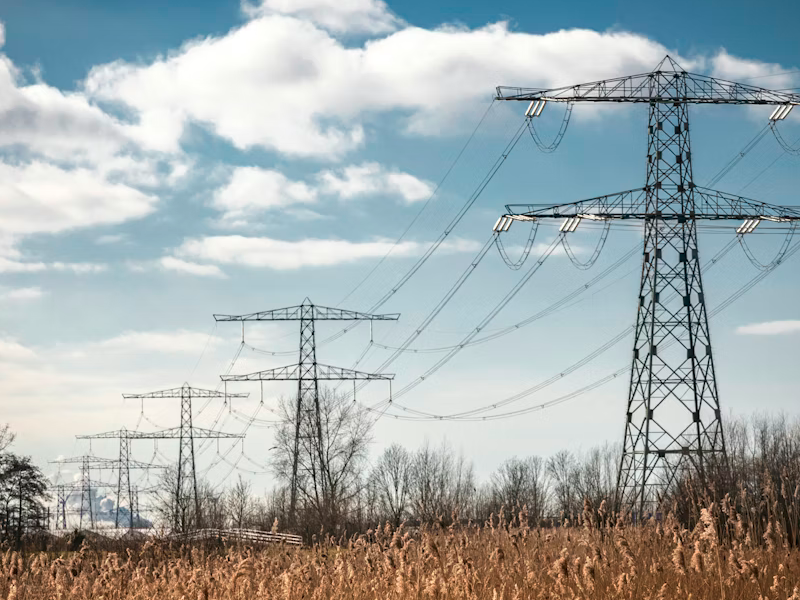
Communities have similar ideas but also lack power. There are growing concerns about the flood of renewable developments in and around communities or the rise of electrical pylons designed to shunt energy past communities who are suffering from fuel poverty while not receiving any of the benefits of hosting the infrastructure. Even a plan such as ensuring that solar panels are built on houses and brownfield sites before taking away amenity space or Common Grazing land from locals would go a long way to helping people buy into the transition rather than turning against it because they see their environment transformed only to benefit companies and landowners.Conclusion

This motion represents a major victor for Common Weal’s influence within Scotland’s political circles but it’s an even bigger one for SNP members who have voted, again, for policies like this despite the party leadership trying to tell them that it couldn’t be done. The excuse that Scotland simply has to let “Foreign Direct Investment” suck our country dry, again, isn’t washing any more.

This isn’t merely an issue confined to the SNP, however. The other progressive parties in Scotland are all overwhelmingly in favour of policies like this too. It would be a Courageous Decision (in the Yes Minister sense) for leadership to continue to ignore not just the will of a majority of Scottish voters on this issue but the unanimous decision of their own party’s membership at their own conference.

Which hasn’t stopped them up till now – and therein lies the issue even with motions like this. There is still a vast gulf between “what members instruct their party to do” and “what the party actually does” with very little in the way of accountability or oversight to bridge that gap.

This is a problem in all political parties and may be a fundamental problem with political parties that limit their ability to manage a democratic government. The solutions to that are probably a topic for another time, but until then I encourage the members who supported this motion to make their voices heard. Do what you can to ensure that its principles make it into the upcoming manifesto. Do what you can to ensure that your local candidates support those principles. And make sure that they understand that your support of their election is dependent on them listening to their members.

And the message to other parties: If the SNP won’t do this despite that election, who will? Perhaps you?

If You Want To End Homelessness, Give People A Home

“Homelessness is illegal. In my city no one is homeless although there are an increasing number of criminals living on the street. It was smart to turn an abandoned class into a criminal class, sometimes people feel sorry for the down and outs, they never feel sorry for criminals, it has been a great stabilizer.”
–  Jeanette Winterson

This blog post previously appeared in Common Weal’s weekly newsletter. Sign up for the newsletter here.

If you’d like to support my work for Common Weal or support me and this blog directly, see my donation policy page here.

Image Source: M J Richardson, CC-BY-SA. The Social Bite Village in Granton, Edinburgh

I’ve been thinking a lot lately about the difference between ‘good’ policies and ‘easy’ policies. There are some ideas out there that politicians find very easy to do, regardless of whether they are good or bad. And some that politicians find very hard to do no matter how much good they’d do.

Universal Basic Income (UBI) is an excellent example of this. As a paper exercise, it looks fairly straightforward. Just find out where everyone is, identify a means of paying everyone and then just pay everyone a certain amount of money regardless of whether they ‘need’ it or not.

It has been shown dozens of times now that these kinds of unconditional cash payments work. They reduce all of the negative markers of poverty, they do it more effectively than ‘means tested’ alternatives, and they do so so effectively that several recent pilots have found that the money granted in the UBI was less than the cost of ‘fixing’ the poverty caused by not having a UBI.

This is a massively ‘good’ policy but it’s not an ‘easy’ one. The challenges of unwinding the existing welfare system – and all of its deliberately punitive negatives – is extremely difficult in the sense that if you happen to miss a month between someone’s last Universal Credit payment and their first UBI payment, then that person could suffer extreme hardship.

It’s hard in the sense of identifying everyone who should be paid and how to pay them – including people who don’t have bank accounts or stable addresses or who may have their finances constrained for any number of reasons. It’s also hard in the political sense that the first reaction from too many who would reach to oppose a UBI is “Why should they get something for nothing?”.

There’s another policy that is pretty much objectively proven now to result in overwhelming positive outcomes, has been shown to be cheaper than not doing it, and will almost certainly get that same final question in response to it – Housing First.

The principle of Housing First is that everyone, regardless of means or circumstance, should have a roof over their head. If someone finds themselves homeless, then this principle means that you don’t wait until support services have deemed whether or not they are worthy of support.

You don’t have the person jump through all kinds of paperwork to prove they need that support. You don’t make judgements on whether or not their lifestyle meets some kind of moral minimum before granting them support. Instead, the first thing you do is provide that person with a house that they can live in for as long as they want at no cost.

You can see the objection immediately. “I pay my rent/mortgage! I didn’t get my house for free!”. Well, I didn’t either, and nor have I had the misfortune of having to sleep rough but I know people who have and I’m well aware that any of us are only one bad day away from having it happen to us.

An excellent paper was published last week by the English think tank the Social Market Foundation that reviews Housing First pilot schemes in Scotland, England, Finland and Canada as part of a campaign to roll Housing First out to all rough sleepers in England and to, in effect, end homelessness.

“In Scotland, it was found that giving someone a ‘free’ house was about £10,000 per person, per year cheaper than just leaving them to sleep on the streets.”

The details of the schemes differ slightly – mostly in whether the house granted to the person is part of a ‘homeless village’ or whether the houses are embedded within communities, but all share the principle that a house is not a reward for taking part in the scheme nor are moral judgements around sobriety or substance use either a barrier to entering the scheme or a cause for eviction. In the words of the Finnish study “dwelling is the foundation on which the rest of life is put back together”.

The Scottish examples orbit around the Pathfinder programme that ran from 2019-2022 and found that while the average cost per participant in the programme was around £13,350 per year, the average cost of homelessness was estimated to be about £23,000 per person, per year. In other words, giving someone a ‘free’ house was about £10,000 per person, per year cheaper than just leaving them to sleep on the streets.

Similar levels of savings were found in the Finnish example (€15,000/£12,770 per person per year) and in the Canadian example ($CAD 4,850/£2,611 per person, per year). The SMF estimate that if Housing First was rolled out to as many rough sleepers as is currently possible (i.e. all those who aren’t barred from accessing public funds) then around 9,300 people would avoid sleeping rough and the public purse would save around £178 million.

On that subject of people who have no recourse to public funding, they do advocate that this should change. In all the current rancour about migration right now, you might have failed to spot a very obvious flaw in the current system for supporting asylum seekers. In the UK, asylum seekers – those who have claimed asylum from political repression or other forms of discrimination – are barred from working, are barred from many forms of housing and often don’t have their own funds to fall back on.

They are provided meagre housing by the state (getting a room, basic food and a £10 a week is not the High Living that those stoking xenophobia in Britain right now claim it is. If anyone wishes to dispute this point, I challenge them to live for six months on only the means provided to an asylum seeker and write a report of their experiences.)

But they are often turned out of that housing the moment their asylum claim is deemed legitimate and they become political refugees. Without work up till that point, with few support networks around them and without any other fall back plan – it’s no wonder that so many new refugees in Britain end up spending that first night of freedom – or an extended period afterwards – sleeping rough.

Outcomes for those passing through Housing First programmes have almost without exception delivered better outcomes for participants than the services available to them before they entered the programme. In the Scottish programme, more than 80% of participants were still in housing after two years. Not a single participant was evicted from the programme.

In the English pilot schemes, not one participant who left the programme ended up sleeping rough again within the first year. In all of the studies, the mental and physical health of participants improved, they were less likely to commit a crime and less likely to be the victims of a crime.

There appears to be almost no downside of a policy like Housing First and yet I still describe it as politically hard to do largely because of the political cost rather than the financial, moral and social cost of homelessness. This needs to be tackled head on. If it produces better outcomes than existing policies and is cheaper than those policies then it becomes a moral imperative to do that hard thing.

Scotland can end homelessness, end the negative stigma around people who lose the roof over their head, can increase social cohesion and heal some of the divides between us and can do it while saving money. All we need to do to make this happen is to give a homeless person a free house.

Same Spin Everywhere

“You’re radically collaborative, profoundly empathetic, and deeply communal. Everyone who tells you anything different is selling the fear that is the only thing that can break that nature.” – Hank Green

This blog post previously appeared in The National as part of Common Weal’s In Common newsletter.
If you’d like to support my work for Common Weal or support me and this blog directly, see my donation policy page here.

(The wind farm site discussed in this article will interpose between this ridge and the mountains in the background)

I was up in Skye this week to give one of my regular talks to activists and campaign groups around Scotland. It’s one of the aspects of my role at Common Weal that I enjoy the most and get the most out of even though it often means a lot of travelling. I’m very grateful to my hosts for not just organising the meeting but also putting me up for the night.

The evening was organised by the Breakish Windfarm Action Group who are currently concerned by plans to build a large windfarm development on a visually prominent part of the island. The estate owner, Lady Lucilla Noble, stands to profit massively from the site as will the Swedish developers Arise while tenant farmers are likely to see their livelihoods disrupted and restricted on what has been up till now land held as Common Grazings. They asked me to give a broader overview of how and why this is happening in Scotland and I duly prepared a presentation based around our proposals for how Scotland can publicly own our energy generation despite the Scottish Government’s excuse that “it’s reserved”. Shortest possible version: It’s only reserved if we want Government Ministers to own the energy. If we allow Local Authorities or communities to own it, it’s perfectly possible. It could even be funded in the same way. The only “downside” is that the Scottish Government wouldn’t get to control it. See Common Weal’s policy paper “How to own Scottish energy” for more details.

What I heard during the night though had both myself and my partner shaking our heads in disbelief. The story in Skye is that a landowner has contracted with a foreign company to extract vast profit from the resources of Scotland over the objections of the local community, without adequately compensating or benefiting said community, while obfuscating the planning process and making it is difficult as possible for the community to “properly” object as processes such as environmental studies and public inquiries cost tens to hundreds of thousands of pounds to complete – trivial amounts for the corporations but far beyond the reach of ordinary people to compete with. Everyone involved fully expects that even if the community is able to punch above its weight in terms of negotiating and bargaining power, Scottish Ministers will just override any objections because the Government’s primary goals are to make the Scottish GDP line go up by means of encouraging “inwards investment” – if doing that pushes climate goals too, then they suppose that’s fine too.

This is precisely the same story that is happening in my village at the moment where a French company is negotiating with a local land owner to build a massive solar farm and battery park. Just about the only thing that differs are the names of some of the people (and even then only some of them because it turns out that Ross Lambie, one of the local councillors for the ward I live in and who sits on our local Planning Committee is an absentee landlord bidding to use some land he owns in Skye to host a temporary housing for the construction workers being shipped in to install the turbines).

We’re not the only two communities facing this. Scotland is awash with largely foreign capital flooding places with applications for developments that even at their best won’t benefit communities nearly as much as they should (the £5,000 per Megawatt of community benefit funding that some of these developments offer is a shadow of the 30 to 100 times as much local revenue retained by full community ownership). Local planning offices report being completely overwhelmed trying to properly scrutinise applications and that goes double for areas with active community councils where volunteer councillors are expected to scrutinise highly technical documents without the resources to do so. Scottish Ministers are far too prone to allow projects to move up to the Energy Consents Unit to ensure that they can make the decisions – overriding local democracy as they do so – but this just concentrates the problem further. The ECU is similarly overwhelmed with more than 4,500 projects having been passed to them since December 2018. An average of almost two new applications per day. Ministers cannot not be expected to properly scrutinise these projects even if this was their only full time job.

And what happens if a dodgy developer does, by chance or fortune, get their application denied or made conditional to the point that they decide the profit margins aren’t high enough? Well, they just resubmit the application and try again or move on to the next community and hope they can’t pay as much attention. Communities need to be lucky every time. Corporations only need to get lucky once.
I’m not against renewable energy as a rule. We need more of it. What I’m asking for is for the Scottish Government to start abiding by its own party-approved policies. We need a Scottish Energy Development Agency (SEDA) to start producing a proper strategic map of Scotland. A map not just of where Scotland’s renewable resources are but where our actual demand is too. The overflow of development without coordination (compounded by frankly idiotic policies from Westminster such as blocking policies like Zonal Pricing) is leading to millions of pounds of consumer’s money being paid to energy generators in constraint payments. Wind turbines already generate profit almost for free once they’re built – the only way to make them more profitable for the multinationals and foreign public energy companies who own them is for them to make the profit without even generating the energy.

In addition to the SEDA we urgently need the Scottish Government to stop its opposition to public ownership of energy and to start allowing Scottish communities to be the owners of these developments.
Communities have been left alone to fight each application individually when it turns out that they are all facing the same spin everywhere. I am very happy to see that communities are increasingly banding together such as the 9CC group in Ayrshire or the recent conference of Community Councils in Inverness, but it’s clear that these groups themselves need support to start talking together, across Local Authority lines. Maybe that’s what it’ll take for Ministers to start paying proper attention. Maybe the next conference has to happen outside Holyrood itself.

The injustice of situations like where I live or in Skye or in hundreds of other communities is going to seriously harm public support for the renewable transition that we need. I’m not against renewable energy. I am against being screwed over by the people who own them. I’m against the injustice of communities not being given a stake in that transition and being told that their voice is irrelevant or a nuisance. But if my experience this week in Skye tells me anything, it’s that communities are ready to make that voice exactly as loud as it needs to be, especially as the elections approach. I hope Ministers will be listening. Or that their replacements might be.

So You’ve Won Capitalism: An Open Letter To The Billionaires

“Democracy is supposed to be ‘of the people, by the people and for the people’. Capitalism is ‘of the capitalist, for the capitalist’. Period.” – Jerry Ash

This blog post previously appeared in The National.
If you’d like to support my work for Common Weal or support me and this blog directly, see my donation policy page here.

a bird's eye view of a beachfront home

Dear Billionaires,

I think we can all agree that you’ve won Capitalism. If the goal of Capitalism is to accumulate wealth via the canny deployment of capital (yours or someone else’s) for the purpose of spending that wealth on goods and services to improve your own lifestyle then you have been successful beyond measure. As a billionaire, you now possess more wealth than can be reasonably spent by any individual in a lifetime. In fact, you passed that measure a long, long time ago.

Continue reading

You Have Options Too: An Open Letter to John Swinney

“Squeezing the lives of people is now being proposed as the saviour of the planet. Through the green economy an attempt is being made to technologise, financialise, privatise and commodify all of the earth’s resources and living processes.” – Vandana Shiva

This blog post previously appeared in The National.
If you’d like to support my work for Common Weal or support me and this blog directly, see my donation policy page here.

wind turbines on snowy mountain under clear blue sky during daytime

DEAR First Minister John Swinney,

The UK is running away from the hard choices on energy. Its dismissal of ideas like zonal pricing – ­currently the only scheme yet presented that would allow the UK to maximise renewable energy generation, minimise infrastructure costs like ­pylons and to reduce fuel poverty while giving communities more incentive to take control of their own local energy generation – has been rightly criticised by you last week in a statement where you called out the UK for not doing enough on energy policy.

It was concerning to note, though, that your critique wasn’t backed up by much on what you want the UK to actually do instead. Even as you complained about the UK “ruling out all options to bring down ­energy bills” by abandoning zonal pricing, I’m not clear if you support it or would bring it in if you had the power to do so.

We all know that Scotland’s devolved powers in energy are limited and that, right now, you couldn’t do something like this, but also missing from your critique was what you plan to do with the powers you do have.

Scotland’s own devolved energy ­strategy has been woefully lacking in recent years – from the sell-off of ScotWind at ­bargain basement prices, through ­dropping ­climate targets that were designed to push ­action ever forwards, to flogging off (sorry, “­encouraging foreign direct investment in”) every piece of our renewable energy sector to multinational companies and ­foreign public energy companies to ensure that everyone in the world can profit from Scotland’s energy except us.

We can take another path, though. ­Scotland must ensure that we own our own renewable energy future and the way to do that is by bringing it into public ownership. Here are several ways that you could do it.

1) A National Energy Company

This is what most of us think of when we think about “Scottish public energy”, and it’s the model that the Welsh Government adopted under the name Ynni Cymru. This is a single national company, owned by the Scottish Government or by Scottish ministers (similar to Scottish Water), that would own, generate and sell energy to consumers.

There is a snag to this plan in that the Scotland Act currently prohibits the ­Scottish Government from “owning, ­generating, transmitting or storing” electricity, so if we want the National Energy Company to be based around supplying ­electricity, then the first thing that the Scottish ­Government could be doing is mounting a pressure campaign to amend the Act – it puts Scotland in the ridiculous position that it’s legal for the Welsh Government to own a wind turbine in Scotland but not the Scottish Government.

Until that campaign is successful, there is something you can do.

The Act quite specifically bans your Government from owning electricity ­generators. It does not ban other forms of energy. A National Heat Company based around deploying district heat networks could supply all but the most remote of Scottish households.

While this would be a large infrastructure project, it wouldn’t be larger than the one required to build the electricity pylons we need if we’re going to electrify heat instead and the pipes would have the advantage of being underground and out of sight while ultimately providing heat to homes in a cheap, more efficient and ultimately more future-proof way that the current setup of asking people to buy heat pumps and just hoping that the grid can cope with the demand.

2) Local Electricity Companies

So, First Minister, let’s say that you’re not a fan of campaigning for the devolution of more powers and really want Scotland to be generating electricity. You can’t create a National Electricity Company but you can encourage local authorities to set up their own Local Electricity Company.

Conceivably, the 32 councils could even jointly own one National Electricity Company – the Scotland Act merely bans the Scottish Government from owning the company.

In many ways, this would be an even better idea than the Scottish Government doing it. Government borrowing ­powers are far too limited and you’d need to ­campaign for more borrowing powers to get the scale of action required to build the infrastructure we need – but councils have a trick up their sleeves.

They are allowed to borrow basically as much money as they like so long as the ­investment the borrowing allows brings in enough of a return to pay back the loan. This is very likely how Shetland Council will finance its plan to connect the islands via tunnels – the construction would be paid for via tolls on traffic.

Energy, as we know, is very profitable indeed so there should be absolutely no issue with councils being able to pay back their loans and then to use the revenue from their energy generation to subsidise local households against fuel poverty and to support public services.

If we want to go even more local than this, then councils and perhaps the Scottish National Investment Bank could support communities to own their own energy.

We’ve seen multiple times that community ownership generates many times as much local wealth building – as well as skills and jobs – than the current model of private ownership plus paltry “community benefit funds”.

3) A National Mutual Energy Company

This is another national-scale energy company that the Scottish Government could launch but in this case wouldn’t own or control. Instead, the “National Mutual” would be owned by the people of Scotland.

In this model, every adult resident of ­Scotland would be issued one share in the company. They wouldn’t be able to sell it and they’d have to surrender it if they ever stop living in Scotland, but ­other than this, it would be much like owning a share in companies like Co-op.

The company would be run as any other commercial company and would be beholden not to the Government but to its shareholders – us. We’d jointly ­decide ­future energy strategy and even potentially have a say in how much of the company’s operating surpluses are invested in future developments or distributed to shareholders (again, us) as a dividend.

This model would be particularly suited to very large energy developments that cut across local authority or even national borders or to help develop offshore assets. Imagine ScotWind had been owned by the people of Scotland, instead of being flogged off to multinational companies in an auction that had a maximum bidding price attached.

Conclusion

First Minister, I applaud you for keeping up some sense of pressure on the UK Government on energy.

As we make the necessary ­transitions ­required of us under our obligations to end the climate emergency, this is one of the sectors of Scotland that will change the most. It’s vital that we get this ­transition right, or not only will ­Scotland see yet another generation of energy ­potential squandered in the same way that the coal and oil eras were, we’ll see Scottish ­households bear the weight of others ­profiting from that transition while we still experience crushing levels of poverty and economic vulnerability.

The UK Government may be ruling out all of their options on energy but that doesn’t mean that you need to do the same. We don’t need to wait until independence – as vital as it is – or to wait until Westminster gets its act together – which may or may not happen. We – you – have options too. It’s time to take them.

Yours, expectantly …

How to Launch a Scottish Wealth Tax

“I am opposing a social order in which it is possible for one man who does absolutely nothing that is useful to amass a fortune of hundreds of millions of dollars, while millions of men and women who work all the days of their lives secure barely enough for a wretched existence.” – Eugene V. Debs

This blog post previously appeared in The National.
If you’d like to support my work for Common Weal or support me and this blog directly, see my donation policy page here.

person holding fan of us dollar bill

(Image Source: Unsplash)

“From each according to their ability, to each according to their need”. This used to be the core credo of parties of the Left – particularly the Labour Party in Britain – but it appears to have been eroded to the point of meaninglessness. Wealth inequality is increasing at an unimaginable rate and is currently substantially higher than income inequality. The rich are taking from all of us far more than they need and are giving back far less than what they are able to. This is a self-reinforcing problem such as where people who were able to buy houses when they were cheap (perhaps during Thatcher’s Right to Buy demolition of the social housing sector) became able to rent them out at ever increasing rates to people who can’t now afford to save the deposit to buy a house because house prices are rising faster than they can save due to the amount they have to spend on rent. Even the Office of Budget Responsibility is now warning (as I did several years ago in my book All of Our Futures) of the fiscal risks looming due to the number of people still privately renting when they retire and who will simultaneously be unable to afford to keep paying those rents and won’t have any capital saved in their house to subsidise their inadequate state pensions.

It’s not for no reason that the British public are increasingly demanding that the UK Government brings in a wealth tax to rebalance our increasingly unstable economy. I will say that there are good reasons for the UK to not bring in “a wealth tax” – by which I mean a single annual payment calculated as a certain percentage of the value of all of the assets and possessions that you own. Prof. Richard Murphy has articulated many of them well. It’s hard to value those possessions. Easy to hide them. And there are other taxes that the UK could use – such as reforms to taxes on stocks, shares, pensions and capital gains – that would achieve much of the same result. Not that the UK Government is going to do any of that either unless the pressure escalates to the point that the impossible becomes inevitable.

Let’s say, however, that the Scottish Government wants to take the first step. Could we do it here instead of waiting for the UK?

The patterns of wealth ownership in Scotland are substantially different than in the UK (particularly in London and the South East). We don’t have quite as many financial billionaires floating about the place. We don’t have as much wealth in stocks and shares – mostly because we don’t have a stock exchange in Scotland any more. Our generally lower rates of pay mean comparatively lower rates of wealth stored in pensions. There are, however, two sectors in Scotland where wealth is substantially stored and which could be taxed using devolved tax powers – Land and buildings.

Scotland already has its Land and Buildings Transaction Tax but despite the Scottish Greens seeking to apply what they called a “mansion tax” to it this would remain merely a surcharge on the transfer of assets, not a wealth tax applied to the holding of them. If you never bought another mansion, you’d never pay the mansion tax.

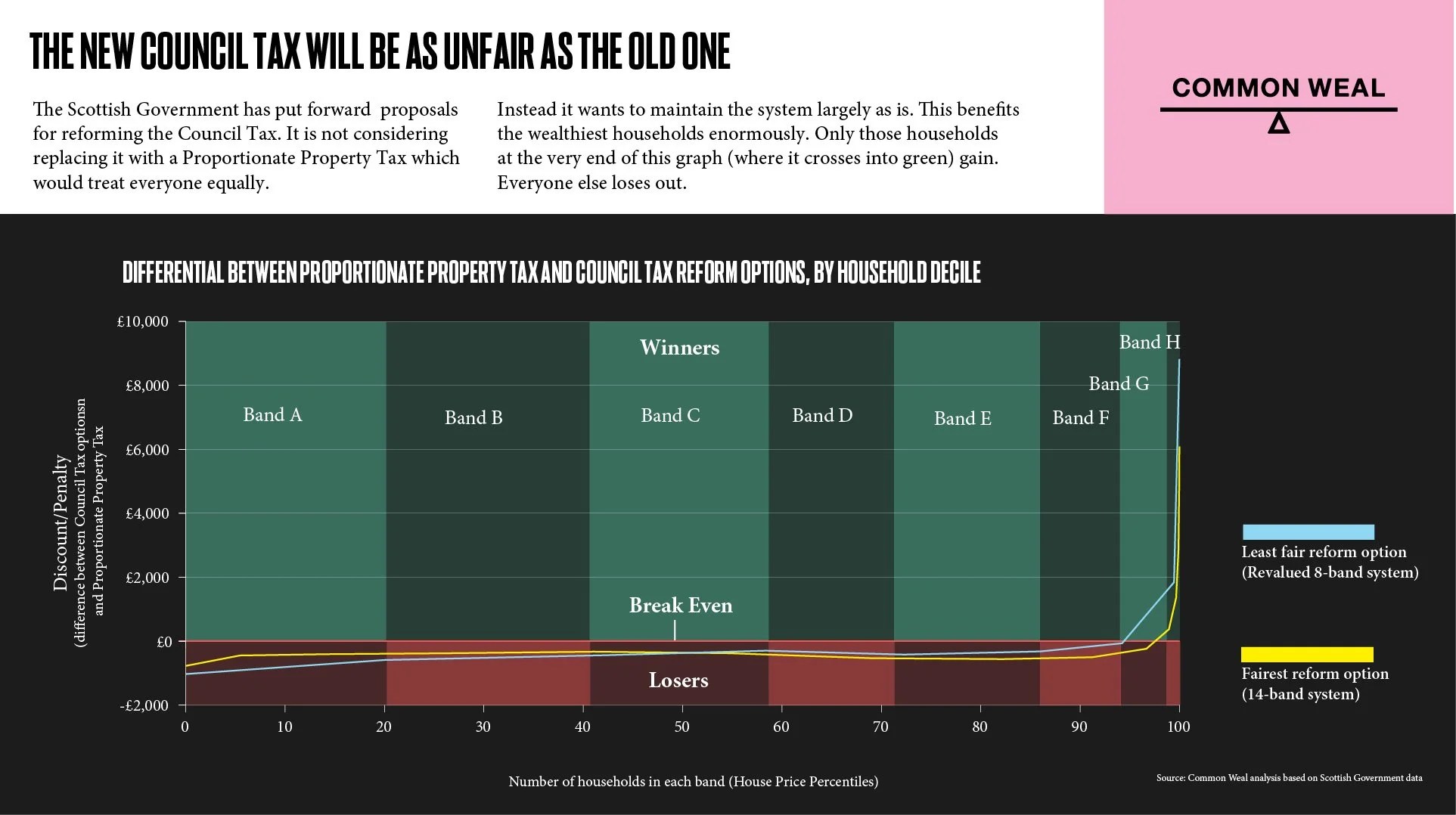
Council Tax is the most outdated and badly broken tax Scotland still insists on inflicting on the poor. The Scottish Government has stated that they’re not even going to think about reforming it until the end of this decade. This is completely unacceptable, especially as the solution is obvious. We need to scrap Council Tax and replace it with a tax based on a percentage of the present market value of the property. Common Weal argued that a rate of 0.63% would have been revenue neutral compared to Council Tax at the time we published the paper. That number could be recalculated now but we estimated then that a “revenue neutral” rate would actually mean a tax cut for eight out of 10 households as the burden of paying the tax would be placed more fairly on those who lived in the most expensive houses. We calculated that the “break even” point then would have been a house worth something like £400,000. This is based one a flat rate of tax too. We would argue that Councils should have the power to add progressive rates on extremely valuable properties like £1mn+ mansions or, as is the case with the current Council Tax, additional multipliers for multiple home ownership.

This would immediately act as a wealth tax both on the most expensive properties but also on multiple property ownership. Unlike Council Tax that is paid by occupants, our Property Tax would be paid by property owners and they could only pass on to their tenants the basic rate of tax. Landlords would have to pay any multiple ownership surcharges themselves.

The second wealth store in Scotland – land – is probably the greatest store of almost untaxed wealth in the country. Many countries tax the ownership of land as a distinct tax from properties built on it (sometimes because of local democracy, for example you might pay the land tax to your municipal government and your property tax to your regional government) but in Scotland there may be good reason to not do that but to simply extend the Property Tax to cover not just the land under and around your mansion but also the broader estate you own with it. Given that the two are often sold together, this will be much easier to put a price on than trying to calculate a separate Land Value Tax. We’ve estimated that doing this at the same flat rate as the Property Tax would bring in around £450 million a year in revenue – though this could be adjusted down to account for subsidies for small farms or up to better tax the 422 people who own half of Scotland.

One of the major advantages of both of these taxes – one that negates objections from both the UK and Scottish Government whenever taxes on the wealth have been suggested – is that it completely bypasses the idea that the rich will simply leave the country. Recent studies have shown that the idea of “millionaire flight” basically isn’t a thing (it’s not just a huge logistical hassle for comparatively little financial gain to pack everything up to go and live in a tax haven, even millionaires have friends and family as do their kids and tearing up those social bonds to save a bit of money just isn’t worth it) but this hasn’t stopped the media pushing that line anyway. Even if it was true, the wealth they have locked up in Scottish land and housing can’t move with them. The tax still needs to be paid by whomever owns them regardless of where they live (and many of the largest landowners in Scotland already don’t live here so the point is particularly moot there).

One of the biggest sources of instability in our current society and economy is wealth inequality. It urgently needs to be reigned in and reversed. If the UK Government persists in refusing to do it then there is at least something that the Scottish Government can do without having to wait for them. And if the current Scottish Government doesn’t want to do it either well, there are elections next year. Maybe politicians could suggest who we should vote for who will?

What Scottish Independence Could Deliver For The Welfare State

“How much time he gains who does not look to see what his neighbour says or does or thinks, but only at what he does himself, to make it just and holy.” – Marcus Aurelius

This blog post previously appeared in The National as part of Common Weal’s In Common newsletter.
If you’d like to support my work for Common Weal or support me and this blog directly, see my donation policy page here.

Back in the early days of Common Weal, while we were still finding our feet and building our reputation, we had an informal rule when it came to policy-making. We had to be able to show the policy working somewhere else.

This was because we felt that Scotland simply wasn’t ready for some of the radical ideas that we wanted to implement so being able to show it already working was a good way of building confidence in a nation too often told “we cannae dae it” (by which our opponents often mean “we shouldnae dae it” which is a different thing entirely).

We’ve since dispensed with that rule and we sometimes broke it even then (one of Common Weal’s very first policy papers, “In Place Of Anxiety”, was an advocacy for Universal Basic Income (UBI) long before it became one of the “cool” policies) but this isn’t to say that we can’t learn lessons from elsewhere.

Just this week, I was asked by a researcher which of our neighbour nations I’d like Scotland to copy if I could. My answer was that we shouldn’t copy any one but that I take a lot of inspiration from Germany on local democracy, from Denmark on energy strategy and from Norway for public ownership. Somewhere else we could do with taking inspiration from our neighbours is on social security.

The scenes this week from the UK’s attempts to hammer the poor and disabled and only backing down after shambolic chaos in the Parliament should be a lesson not just in humanity but in policy-making as well. Never fight a battle you haven’t won in advance. Never assume a large on-paper majority means certain absolute power.

With many of our neighbours basing their politics on proportional representation and coalition politics, this kind of legislation would have undergone a lot of negotiation and compromise long before arriving at the voting chamber.

The way that many of our neighbours deal with the issue of social security is markedly different from the UK in several ways. The first is that the systems are a lot more generous in general. Norway, Denmark and Sweden rank in the top three OECD nations for spending on disability protections at above 3% of GDP while the UK is well below the OECD average at less than 2%.

Many more social securities like unemployment protections follow a different model from the UK when they are calculated. In particular, instead of the flat rate paid under the UK’s Universal Credit, many countries follow a model where the protection you receive is based on a percentage of your previous income.

There are consequences to each of these models. A flat rate tends to be more redistributive if it is generous enough (which Universal Credit isn’t) whereas a proportional rate tends to be less disruptive to an individual who is already going through the shock of losing their job while still having bills to pay.

We’ve seen these impacts in the UK too. During the pandemic, the Covid furlough scheme was paid at a proportional rate to people who were employed but was often paid at a flat Universal Credit rate to self-employed people. This exposed a lot of people who were previously on the side of denigrating poor and vulnerable people as lazy slackers to just how meagre and cruel the UK “benefits” system is.

We had an opportunity then to get some serious change off the back of that and maybe we still see echoes of it in this week’s chaos but largely the Powers That Be wanted to make us forget that moment of reflection as quickly as possible.

On the other side and as tempting as it might be to copy a European-style unemployment insurance based on previous income, and as beneficial that would be to people in well-paid but otherwise insecure jobs, we have to remember that many people are not in well-paid jobs and that wage suppression has been rife in the UK for decades. Receiving 60% of your previous income when you were being paid poverty wages won’t protect you from poverty in unemployment.

So maybe rather than Scotland – particularly an independent Scotland – copying existing social security policies from our neighbours, we need to look to them for inspiration in another way and look back at that paper I mentioned at the start of this column.

Last year, the EU think tank the Coppieters Foundation published a paper called “A European Universal Basic Income” which found that a UBI sufficient to eradicate poverty across the entire union could be entirely paid for by relatively modest changes to income tax and the savings found from the reduction of poverty itself.

Its model called for a UBI of €6,857 per year for adults and half that for children under 14. This is the equivalent of £113 per week for adults and £57 per week for children. The paper claimed that the increase in income taxes to pay for this level of UBI would themselves be relatively modest and the “breakeven” point for people who’d pay more income tax than they’d receive in UBI would be at around the 80th percentile.

In other words, eight out of 10 people would be directly better off with the UBI. And, to repeat, while this is still a relatively small sum per person if you have no other income, it would be enough to eradicate poverty across the entire EU and would be cheaper overall – after the health, crime and social inequality costs of poverty are factored in – than the current systems.

When this paper came out I argued that this meant a UBI was now a moral imperative because it was cheaper than the cost of poverty, but there’s clearly a financial imperative too. Whether we’re discussing an independent Scotland seeking to create a better country for all of us or even just a cynical UK trying to save money in the face of a humiliating attempt to crush the poor, here is a solution we should all support. Eradicate poverty, save money, implement a Universal Basic Income.