“Dictators are not in the business of allowing elections that could remove them from their thrones.” – Gene Sharp
This blog post is an extended edition of an article that previously appeared in The National as part of Common Weal’s In Common newsletter.
If you’d like to throw me a wee tip to support this blog, you can here.
How would you feel if I, personally, had total control over the strategic direction of several key areas of public services that affect you? The odds of me being able to make a successful bid to win election as a Scottish “metro mayor” if they are introduced up here are not zero. I’ve been in politics long enough to have become well known at least in political circles, I have a few friends and hopefully not many more enemies. And though I’m not a member of a political party, I do get asked by several of them if I’d be willing to join and even if I didn’t, a run as an independent candidate wouldn’t be impossible. It’s even possible that you’d like some of my policies.
And if I win, I get to decide whether or not houses are built in your community. I would have the final say over planning issues of “strategic importance”. I would have powers over justice and what happens to former convicts and how prisons are run. And it would be me who decides if mass transit should be privately owned, publicly owned or even if it should exist at all.
And if I don’t win, it’d be someone else who gets to do all of that. Maybe you’d like them more…or perhaps less.
Don’t worry. This isn’t the launch of my campaign into elected politics but is a warning against bringing the “metro mayors” to Scotland.
This isn’t to say that we need more local powers. The UK as a whole and Scotland in particular are incredibly centralised countries – the worst in Europe with only Ireland (which largely patterned its local government model from the UK) coming anywhere close. While Scotland, Wales and Northern Ireland managed to partially address their lack of local power via devolution and the creation of their Parliaments, England remains the only nation of the UK that doesn’t have a Parliament to call its own (brief dalliance in the Commons with “English Votes for English Laws” aside). Additionally, the feeling that some areas – especially the urban sprawls – weren’t adequately governed by their multiple interlocking local authorities that the concept of the “metro mayor” arose to govern a council of mayors as a kind of quasi-regional intermediate layer of government between the local and the national.
This has resulted in those metro mayors (especially the likes of Andy Burnham) to become well known personalities even outwith their regions and therein lies the danger of directly electing singular positions. By definition, one cannot use proportional representation to elect a single seat – the victory can only ever be all or nothing. This results in the elections very rapidly becoming more of a personality contest than any idea of collegiate governance based on consensus. I take this position for all such elections and it’s why I believe that the President of the independent Republic of Scotland should be as largely ceremonial as the President of Ireland rather than having actual executive power as has the President of the United States of America.
There remains a question of how the metro mayor proposal would even work in Scotland. A metro area with the same population as Greater Manchester’s 2.8 million would cover both Glasgow AND Edinburgh and would take in over half of the entire population of Scotland. Limiting the metro areas to the urban chunks of our cities would merely cover the areas already covered by our Local Authorities and would, in effect, merely act to directly elect our (largely ceremonial) Provosts and hand them powers largely already held by those Councils. I also worry for the chunks of Scotland that, like vast swathes of England at the moment, would not be covered by their own metro mayor and therefore could lose out as political focus and prestige (as well as leverage) cause more funding to flow to those regions with mayors than those without.
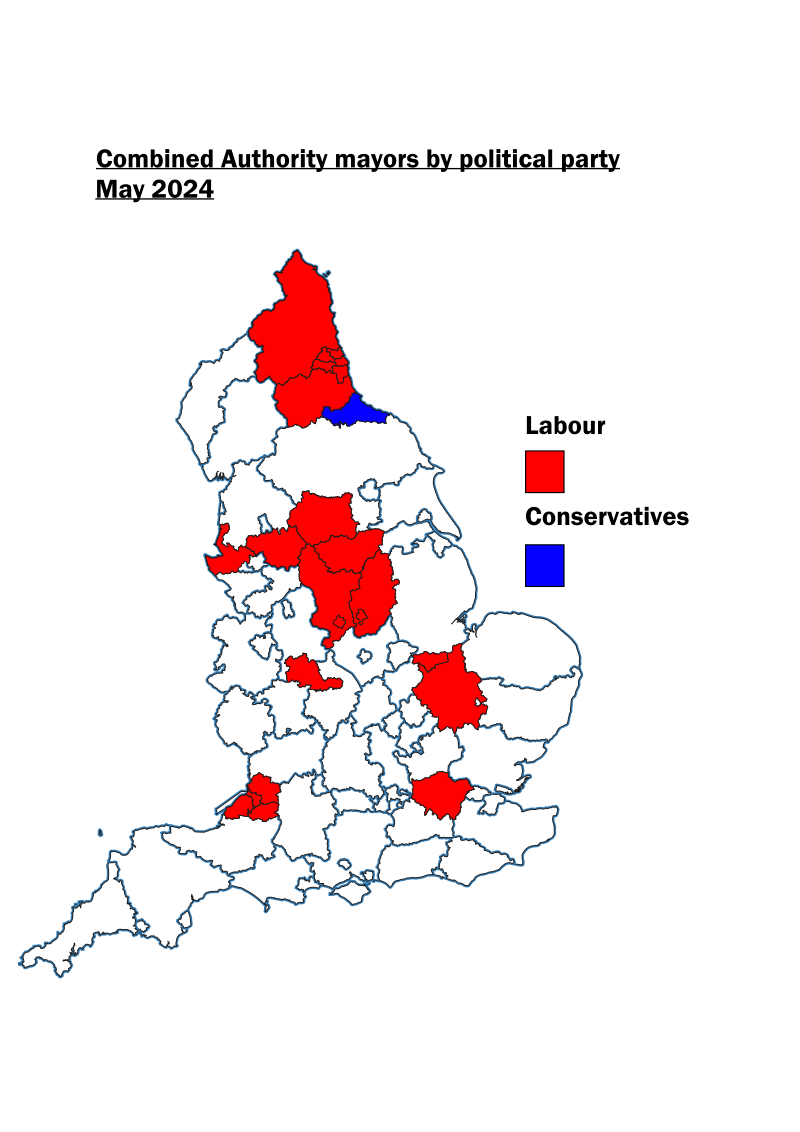 (Image source: Wikipedia)
More likely, there would be some kind of middle way which, applied to Scotland, could look something akin to the restoration of the pre-1996 districts and regions but would centralise the power of those councils into the office of one person. Powers might come down from Holyrood (or maybe even Westminster) into the metro mayor but would more likely move up from the existing Local Authorities. Again, this is a centralisation plan more than a decentralisation one.
What should actually happen is more akin to our Development Councils proposal which would restore government in Scotland to something that the rest of Europe outside Britain and Ireland call “normal”. Our own “local” authorities are already too large and should not be made larger. While my former district of Strathclyde is still well regarded by those who remember it, it made governance of my own area of rural Clydesdale even more remote than the existing Local Authority of South Lanarkshire – albeit mitigated somewhat by the existence of Clydesdale District Council headquartered in Lanark.
A European style municipal government structure would push power down below even that district level. As I’ve said several times when discussing this topic, my German father-in-law lives in a village demographically very similar to mine and his municipal council covers the local town and satellite villages and a total population of just 30,000 – and it’s considered one of the larger municipal councils in Germany. Under our plan, there would be an appointed (not elected) Town Manager tasked with looking after some of the same tasks as a metro mayor but they’d be firmly subordinate to the Development Council which itself would be governed by a Citizens Assembly comprised of the residents of the municipality. That way we’d have truly local control of the public services we all rely on.
So why is there even a push for metro mayors in Scotland? It’s largely a policy of the Labour party but more than that I believe it’s largely a policy of UK Labour (now the UK Government) and is being imposed on Scottish Labour rather than being developed by them. The hint is in the name. The historic and traditional name for the leader of a town council in Scotland has never been “mayor” (from Latin via French maior, “superior”) but “Provost” (from the Latin praepositus, “commander”). One might not think there’s much in a name (and I have received vocal kickback from Labour allies over this point) but but I do see the linguistic significance of leading by example rather than by authority. More importantly, I see it as another one of those signs where the parties in the South see Scotland as a part of North Britain without its own distinctiveness, culture, history or traditions (or if such distinctiveness exists, then it’s certainly inferior to that coming from the south). If they can’t even get the name right, then I have even less hope of them designing a system of governance that can be appropriately imposed on Scotland.
The second aspect is one, of course, of power. The UK Labour Party won massive power based on a minority of votes in the General Election and would struggle to replicate that in our more proportional voting systems in Holyrood and Local Authorities – but in a winner takes everything contest for metro mayor? That equation changes dramatically.
Scotland needs much more power held much more locally and this applies to all of the levels of government that currently rule us but the solution is not to centralise that power into a single office but to spread that power out amongst many hands at all levels. Even if you’d like what I, personally, might do with those powers – would you be equally welcoming of my successor from the other side?
Discover more from The Common Green
Subscribe to get the latest posts sent to your email.
 The Common Green
