“In the end that was the choice you made, and it doesn’t matter how hard it was to make it. It matters that you did.” – Cassandra Clare
This is an original post, not previously published elsewhere. If you would like to support me or this blog, please see my donate page here.
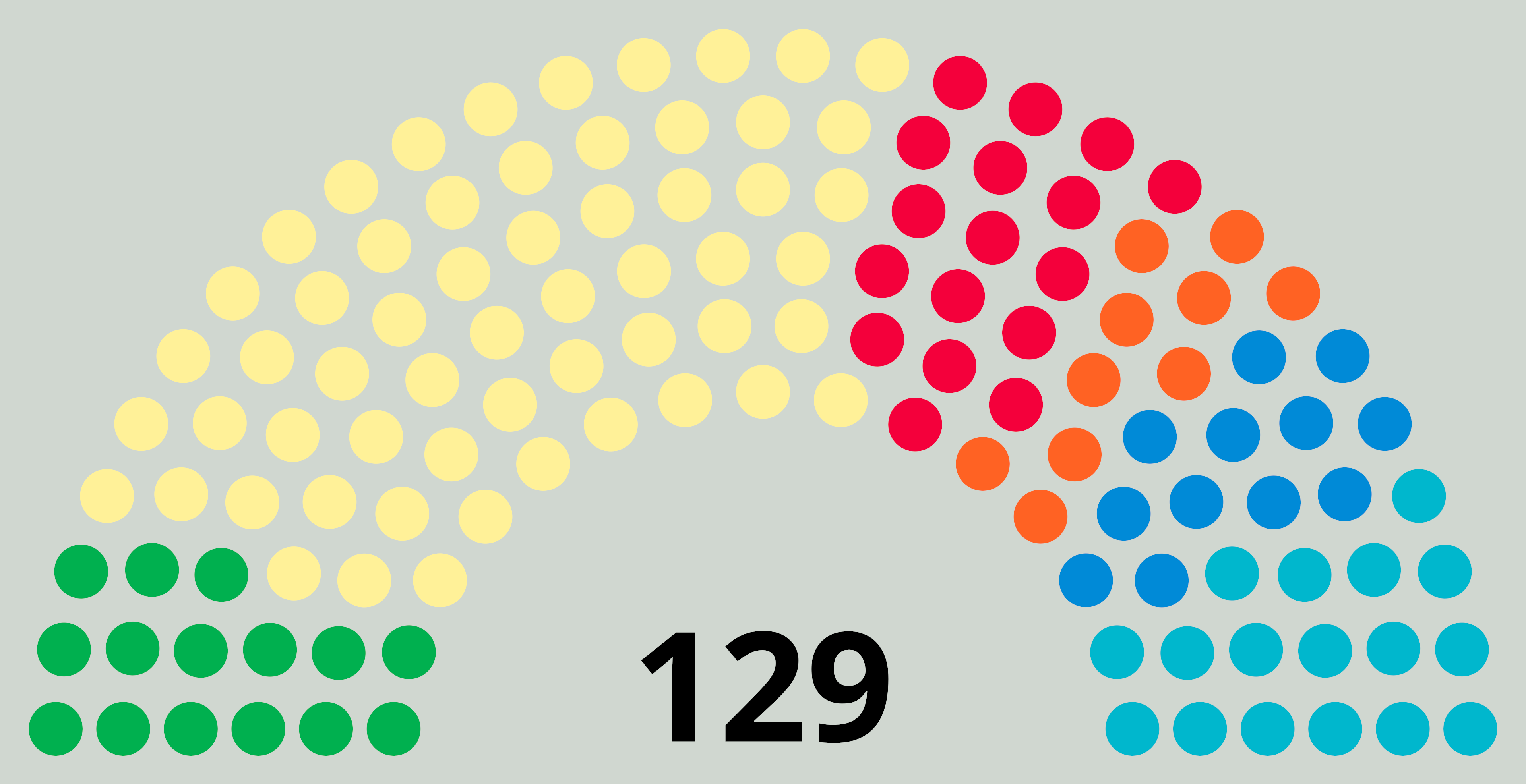
(Image Source: Wikipedia)
The results are in and we now know the shape of the Scottish Parliament. 58 SNP, 17 Labour, 17 Reform, 15 Green, 12 Conservative and 10 Liberal Democrats.
We don’t yet know the shape of the Scottish Government but the result is pretty certain so long as there are no major U-turns from the political party promises beforehand. The SNP will form a minority government and try to get their budgets and bills passed on an ad hoc basis.
I do not believe we’ll see a formal coalition agreement or even a looser cooperation agreement of confidence and supply (where a smaller party promises to support the annual budget and other votes where failure would result in the automatic fall of the government). The SNP still feel rather burned by the failure of their cooperation agreement with the Greens and while I think the Greens would consider a second shot, they are rather wary of being used and discarded again like they were last time.
The other probable source of a kingmaker is the Liberal Democrats who have outright refused to join a formal coalition with the nationalists but have signalled willingness to support budgets etc. Indeed, I believe courting Lib Dem votes for the last budget before the election was the SNP’s way of testing whether such an agreement would be acceptable to their own members (who skew rather more left and green than the leadership does).
It is notable that the same is true for the other parties as well. Any combination of SNP plus one other party would allow a Bill to pass and that technically should mean a fair bit of power-brokering or at least the SNP playing parties against each other. In practice, the Conservatives and Reform are so ideologically opposed to the SNP to support anything and La
For me as a political lobbyist, this was a good result all-in. A majority government tends to be one that closes ranks and pushes outside voices completely outside (or brings them in so close that everyone else can’t see them…but that’s a transparency talk for another time)
For the third time in a row since 2011, we have a pro-independence Parliament with 73 MSPs being representatives of pro-independence parties (if any MSPs on the other side would like to raise their personal convictions despite their party position, do let me know) though this was gained on just 41% of the proportional vote (the discrepancy is because while the Scottish Parliament is more proportional than the UK Parliament, it’s still got a built in advantage for the largest party). This is a drop from 48.4% of the proportional vote for the SNP + Greens in 2021. There have been increasing signs that while sentiment towards independence has been rising, there is a growing dissatisfaction with political parties in their delivery. This could prove important in the coming months especially now that there are openly pro-nationalist governments in place in all three of the devolved nations of the UK. This is probably the most important point to note out of the elections generally. While this doesn’t mean that independence is now inevitable in any or all of those nations, had this happened, say, to a Soviet or colonial bloc in the 20th century, pundits would indeed be predicting the bloc’s imminent demise and they would probably have been right.
Back to the parties though, there is going to be a lot more relief and disappointment than glee in the first week of the Parliament.
SNP
The SNP lost seats and lost vote share. Even though they remain the largest party, remain in government, held most of their “big hitter” politicians (with the notable departure of Angus Robertson who came third in his constituency seat, now taken by Green Lorna Slater) they did not make advances and fell back significantly from latter-day polling that suggested they might be in the running for an outright majority. They remain in a commanding position in Parliament – not least because of the fragmentation of their opponents – but being seven seats short of winning a vote means that they will be extremely reliant on other parties to get anything done. They may try to just do things boldly and challenge others to stop them but John Swinney isn’t Alex Salmond. I’ve never known him to start a fight that he didn’t know he’d already won and I’ve rarely known him to be sure that he’s won until he has.
Labour
This was a disaster of a campaign for Labour. Overshadowed by the scandals hitting their parent party and Keir Starmer down south, they decided not to campaign on policy but on a popularity contest. They pumped massive amounts of money into an advertising campaign for Anas Sarwar specifically and it didn’t work. He lost his constituency seat (though he remains an MSP due to his position on the Regional List) and oversaw a substantial loss of seats. It was, however, not as bad as some polls suggested and even though they are (joint) 2nd place in terms of seats, they were hard done by by the electoral system. In a truly proportionate system, they should have won 20-21 seats, rather than the 17 they have now.
Still, this leaves Labour largely frozen out of the Scottish politics as a party. Their best hope of influence is to do what they accidentally did last Parliament. Back then Sarwar lacked control over his MSPs and basically let them put forward Members’ Bills in areas of interest. This led to the PassivHaus Bill, substantial movements in Freedom of Information, a Land Reform policy that the Government voted down but which has since been adopted by the Greens and others. The party’s fortunes are going to remain closely tied to that of Starmer and Sarwar…but their MSPs may have fight in them yet.
Reform
This is objectively another disappointing result for Reform. Their polls have peaked in recent months and global setbacks to the Far-Right Movement may have ripples here too. The party that was almost certain to go from near-zero to the 2nd party in Parliament only managed joint-second and with far fewer than the up-to 30 seats they were aiming for. I believe their leader’s performance in the debates played a role here. Malcolm Offord’s blithe comment about his multitude of houses and yachts did not endear him to a public for whom the cost-of-living crisis is growing and is plainly being exacerbated by Reform’s allies rather than the immigrants that the party rose to power by demonising.
Greens
One of the winners of the elections, the Greens pulled off some noteworthy victories including their first set of constituency wins (it wasn’t that long ago that they were told by opponents that they weren’t even a “real” party if they couldn’t win in the constituencies. While that slur hasn’t been deployed in a while, it’s certainly no longer applicable anyway). The planet is in greater need of climate action than ever and between the SNP’s continued attempts to backslide on climate policy and Reform’s outright climate denial policies, there is a risk to Scotland here that the Greens will have to work hard resist.
Conservatives
Another of the election’s losers. Devoured by Reform even as they tried to radicalise to save themselves, only to find that the radicals devouring them could do it better. Nevertheless, the Conservatives held up rather better than I expected. Their strongholds in the South remain. My experience of farmers is that where they skew Conservative and Localist, it’s mostly because they want to be left alone rather than out of ideological rightward skew. For reasons mentioned above, the Tories will be largely frozen out of the Parliament this session. When the Right speak, Reform will be louder and first in the pecking order so the Conservatives will have to find a way of distinguishing themselves. There is merit to the idea of them pulling back to a centre-right “Ruth Davidson” position as that is now a clear gap in Scottish politics, but we’ll have to see if there’s anyone left in the party to pull that off.
Liberal Democrats
Probably the biggest winners of the election given the power they might soon have, the Lib Dems should be celebrating this weekend. I’ll admit that there’s plenty in their manifesto that should appeal broadly even to the Left should they want to push it so they may well get a lot done this session. Their vulnerability is that they can’t push too hard or the SNP will just pick another partner to get a vote passed but this is true for everyone else too. We’ll have to see which tail wags which dog going forward.
And everyone else
No other party got elected to Parliament nor did any independents. This is despite the Extremely Online set of supporters who were absolutely convinced that with the power of a tweet, they could get 125% of SNP voters to vote for them on the List and thus win an absolute super-majority. The high profile failures of Alba and Your Party are also a lesson to be learned. Building political parties is not easy. It takes years and maybe even decades of work to build success (seriously…both the SNP and Nigel Farage’s various parties are a lesson here in how long it takes) and even then it’s not a given and everything can blow away like smoke with a single bad headline.
No, it’s not fair that Scotland has such a high effective electoral threshold before votes become seats but we’re not looking at a German system here where a party was locked out because it got 4.9% of the vote but missed the 5.0% threshold. None of the parties who didn’t get a seat managed to clear 1% of the vote. The “best performing” one, with 0.88% of the vote, wasn’t even a real party but is a front group designed to try to confuse and steal votes from Green voters. I’m not saying there isn’t a place for smaller parties – I genuinely wish we had a more diverse Parliament – but it won’t happen without hard graft in the communities to build votes and to win people with your policies. There are five years until the next election. That isn’t as long as one might think.