On a reality-based security strategy

“Every gun that is made, every warship launched, every rocket fired signifies in the final sense, a theft from those who hunger and are not fed, those who are cold and are not clothed. This world in arms is not spending money alone. It is spending the sweat of its laborers, the genius of its scientists, the hopes of its children. This is not a way of life at all in any true sense. Under the clouds of war, it is humanity hanging on a cross of iron.” – Dwight D. Eisenhower

This blog post previously appeared in Common Weal’s weekly magazine. Sign up to our Daily Briefing and Weekly Magazine newsletters here.

If you’d like to support my work for Common Weal or support me and this blog directly, see my donation page here.
There is an observation amongst peace-campaigners that politicians claim that there is never enough money to spend on social welfare but those same politicians are always quick to find that same money when they need to spend it on war.

That trend appears to have been broken in the UK, but in the worst possible way. Now we’re being told that there isn’t enough money for the war either, and so the social welfare has to go to pay for it. The UK is aiming to spend £10 on war for every £1 it will spend on foreign aid and Keir Starmer’s likely last major policy decision has been to announce an increase in the military budget by an extra £15 billion a year, funded by cuts to long term investments in transport and energy infrastructure as well as broader cuts across the board.

This will have multiple impacts on public spending. The first is the impact of the direct cuts, as mentioned. The second will be the knock-on effects on devolved government spending – investment in roads and to a lesser extent energy generates “Barnett Consequentials” which feed through to the Scottish budget but spending on defence does not. Every £1bn out of the transport budget and putting it into the military means an effective cut of £80mn to the Scottish budget. The third is that as a “job creation tool”, the military is a terrible means of economic stimulus. Yes, the military spending will create jobs, but spending £1bn on just about anything else – particularly things like energy infrastructure – would create even more jobs. It is likely that this defence plan will be net-negative for job growth. And that’s before we consider the final point – money spent on a bomb that isn’t used is a waste of money (even more so when we consider the wastefulness of military procurement). Money spent on a bomb that IS used, destroys the bomb and whatever (or whomever) it is dropped on. War as a negative sum game. Even the “winners” lose.

And this is all assuming that this is what the UK actually needs or should be doing right now. The problem with the discussions about what the UK defence sector is actually defending us from is woefully inadequate. Rare is the military chief who actually lays out the threats to the country and allows their spending to be democratically scrutinised. This is despite Lord George Robertson rather ironically saying in a Parliamentary evidence session this week that “if people become aware of the dangers and the risks to this country then they will make the demands that will allow us to do it.”

But if the military folk won’t tell us what they think those dangers and risks are then we’ll need to work it out for ourselves. Instead of building nukes to “defend” ourselves from shadows and the enemies they’d like to have, we need a reality-based security strategy.

The single most serious threat to the UK and our way of life is climate change. This is a self-inflicted problem and it is now too late to prevent but not too late to limit or to adapt to. But doing so will require investments in the kind of things that Starmer’s defence strategy will pull money away from at a critical time. It’s not just the climate itself, but Trump’s illegal war with Iran and Putin’s with Ukraine has shown the folly of relying on fossil fuels when we now have renewable alternatives that cannot be disrupted in the way those wars did to our fuel supplies. Opting out of being forced to fight oil wars is a much more sensible strategy than merely hoping we can win one.

Substantial domestic threats exist in the form of smuggling, criminal gangs, radicalised terrorists or fascists like the ones recently spotted outside Holyrood last week. These are all policing matters rather than military though. Cutting police budgets, social welfare and other community-based initiatives to funnel into war will make these problems worse, not better.

The same goes for non-climate environmental threats. If we wanted a reality-based security strategy to consider the number of British people killed each year then we’d be waging war against pollution. Recent data has shown that the London Ultra-Low Emission Zone (which was opposed by the political right, including Starmer) has started to save around 3,000 lives per year (I haven’t been able to find comparable data for Glasgow or Edinburgh’s LEZ impacts yet). If a terrorist or hostile state killed 3,000 British civilians in a year, we know what the response would be. If a politician tried to win an election on the promise of murdering 3,000 people, I doubt they’d win a vote. And yet, there are politicians and political parties still claiming to want to roll back on urban LEZ legislation. A reality-based security strategy would treat that appropriately.

Next on the threat scale is probably something like Hybrid War – unconventional attacks on our infrastructure via things like hacking attempts and drone warfare. The UK has, in fact, experienced attacks like this from state actors – we now know that Russia was likely behind the shutdown of Jaguar Land Rover last year. We also know that Trump’s USA has been actively spying on European Governments, digitally sanctioning human rights lawyers, and is quite capable of ordering Microsoft to lock down Scotland’s ability to pass legislation should he choose to. The threat from this kind of hybrid war isn’t therefore coming only from our “enemies” and cannot be defended against by building more bombs to aim at them. A reality-based security strategy would be following the EU’s lead and developing a digital sovereignty strategy to remove the threat of such hacks from the table. Common Weal are actively working on what a Scottish digital strategy could look like.

“If we prepare for war, we will get war. If we want peace, we must prepare for peace instead.”

On the far side of the threat spectrum in terms of probability is actual territorial invasion which is vanishingly low for somewhere like Britain. The country being held up as a threat in this regard, Russia, has already shown the limits of its capabilities in Ukraine. It may well still be a threat on the borders of NATO, but that’s a very different prospect to the idea of seeing T-90 tank in Tottenham. Once again, when considering territorial invasion, we cannot ignore our supposed “ally” the USA, which is still threatening to annex Greenland. However, the thought does bring up the thing that has been absolutely missing from discourse on defence spending till now – time.

The new Starmer plan has a long time horizon. It will be years before the actual money starts to ramp up weapons production and development and decades before the results of that spending results in deployable equipment (this is particularly the case with things like nuclear weapons and new submarines to launch them). If we take as given that Putin’s Russia is the massive overbearing threat that the establishment would have us fear, then we have to remember that Putin himself is mortal and already past UK state retirement age. He will quite likely be dead or otherwise no longer in power before any of Starmer’s new weapons can be aimed at him. Who will replace him? What can the UK and Europe do now to normalise relations with his successor so that post-Putin Russia is not a threat? Would doing that be cheaper than us threatening to nuke Moscow, murdering 5 million civilians in the process? Might it work better?

Pacifists like myself are never listened to in times of peace. In times of war, we are openly scorned as not having the solutions to the conflict that could have been avoided had we been listened to in times of peace. Warmongers need war and the threat of war to justify their own existence and to bloat their already unjustifiable budgets and they must be called out on this fact. If we prepare for war, we will get war. If we want peace, we must prepare for peace instead. If we want a strategy that results in actual security, we must deal with the reality we have, not the one the warmongers would prefer we were afraid of instead.

Performative Cruelty over asylum hurts all of us

“Evil begins when you begin to treat people as things.” – Terry Pratchett

This blog post previously appeared in Common Weal’s weekly magazine. Sign up to our Daily Briefing and Weekly Magazine newsletters here.

If you’d like to support my work for Common Weal or support me and this blog directly, see my donation page here.

Buried under the higher profile news that the UK is embarking on a new push of ever-greater militarism – aiming to spend more than twice as much than it used to on the military and aiming to spend more than £10 on war for every £1 it will spend on foreign aid – is a new goal of further discriminating against asylum seekers and refugees, including those driven to flee their countries to the UK due to the UK’s own policies of spending more on war and less on aid.

The new plan is that there will be an additional tax placed on refugees who have had their asylum claim accepted that will see them bear a completely arbitrary debt of £10,000 to be paid back after they start working and earning and with any future application for indefinite leave to remain or citizenship blocked until the debt is paid.

Let’s start with the language used in the reporting around this. The policy is said to target “people granted asylum”. We have a word for people who have claimed asylum, found to have a valid claim and then asylum granted on that basis. They are refugees. This is important. Such is the dismal state of the public discussion around migration that far too many people hear the word “asylum seeker” in a manner that rhymes with “illegal migrant” and this is starting to bleed into the rhetoric on legal migrants too. There are politicians in Parliament right now who have made statements that would, if they became policies, would make it difficult or even impossible for my family to remain in this country safely.

Rather than resist the extremes of the right in the UK, the current Labour Government seems to be chasing them instead.

The full announcement of the proposed changes to asylum are here and do go beyond just that additional and arbitrary tax on migrants. Other punitive policies include significantly narrowing the definition of “family” for the purposes of human rights protections (did you flee a country with an uncle who is your only surviving relative after the war? You’re no longer “family” in the eyes of the UK Government), making it easier to subject people to slavery if they’ve found themselves with even a short custodial sentence in the UK (perhaps even due to a crime commit at the compulsion of their enslaver?) and by introducing a “legal route” to asylum that can only take place via individuals or organisations “sponsoring” a claimant which will almost certainly mean that those without the power to win a sponsor will be least able to claim asylum that they need.

There have also been proposals for annual caps on the number of admissions meaning that if you seek asylum then your ability to reach safety might depend on your arriving in June rather than in August. Welcome to Refugee Hunger Games, currently accepting applications from Districts Three through Six exclusively. Applicants from all other Districts, better luck next year!

Separately from this announcement, the UK is now also planning to bring in “age-verification technology” that they already know, from testing it, will result in children being falsely classified as adults and being stripped of their asylum rights. They also know that the tech is worse at distinguishing children from adults when the subject is Sub-Sarahan African compared to Eastern European and if they are female rather than male so this means that they are planning to bring in this tool despite knowing that it contains inbuilt, systemic racial and gender biases.

“Asylum is a right for all of us. You are not much more than one bad day away from becoming a refugee.”

Back on the £10k “success” fee for asylum seekers who become refugees. The fee itself appears to be arbitrary and only tangentially linked to the costs of supporting someone during their asylum process. That process itself can be entirely variable depending on whether someone is housed in a social house within a community, in a military barracks or in a privately run hotel that is squeezing the government and its residents for maximum profit extraction. It also entirely depends on the length of time it takes to process an application. The cuts to the Home Office over many years (likely to get worse now that Starmer is asking for even more cuts to public services to fund his expansion to the military) mean that the rising number of asylum seekers in the UK right now has as much to do with the failure to promptly process their cases and convert them to refugee status as it does with the number of people arriving. It would be entirely unfair to put the burden of “paying” for the extra costs of a service if the delays that increase those costs are due to the government, not the person.

If the £10k figure has been arrived at as a kind of average cost per applicant across all applicants though then it serves as a tacit admission from the Government that the actual cost of the asylum process is relatively small. The reporting says that the total cost of the asylum system is about £4bn per year (and this sum is likely to rapidly decline in coming years as we come off the peak of the last spike in claimants). Starmer casually announced this week that he wants to add almost four times that to the military budget. If the entire burden of these costs were placed on income tax payers alone (they aren’t. Income tax isn’t the sole tax in the UK) then this would mean that, on average, an income tax payer would see about £120 a year of their income tax go towards supporting asylum seekers and about £450 go towards Starmer’s military budget increase (on top of what is already being spent on war).

Not that the £10k repayment will actually save the Government or taxpayers any money. The Home Office’s own policy and financial assessment says as much – and their assessment of the stripping of slavery protections are likely to cost more money than they save due to the inevitably successful lawsuits.

If the problem of asylum seeking is that it costs too much money per seeker (and assuming that the problem isn’t actually that Centrist politicians are afraid of right-wing competitors courting racism and dividing society against marginalised groups) then there is a much, much better way to allow asylum seekers to support themselves while waiting on the Home Office to get its act together and that is to remove the prohibition that prevent asylum seekers from working. If people can support themselves and their own accommodation then the Government doesn’t need to spend so much money housing people in barracks or hotels.

Asylum is a right for all of us. You are not much more than one bad day away from becoming a refugee. It’s not just being married to an immigrant that brings this fact close to home for me. If you are a donor to Common Weal (if you are not and would like to, you can sign up here) then you pay me to agitate against the state. Our support for Scottish Independence is not just a political position. In some countries, doing what I do for Common Weal would be illegally promoting sedition and would be punishable with anything up to lengthy prison sentences or even capital punishment. I am literally only a bad government away from having to seek political asylum too.

This is why I’m so strident on human rights more generally. You cannot limit rights for one human without limiting them for every human. The UK is travelling a very dark path by playing the game set by right wing extremists. It only ever leads to an end where some people are declared to be less human than other humans, or to not really be human at all.

2026 Scottish Parliamentary Elections: The Day After

“In the end that was the choice you made, and it doesn’t matter how hard it was to make it. It matters that you did.” – Cassandra Clare

This is an original post, not previously published elsewhere. If you would like to support me or this blog, please see my donate page here.

(Image Source: Wikipedia)

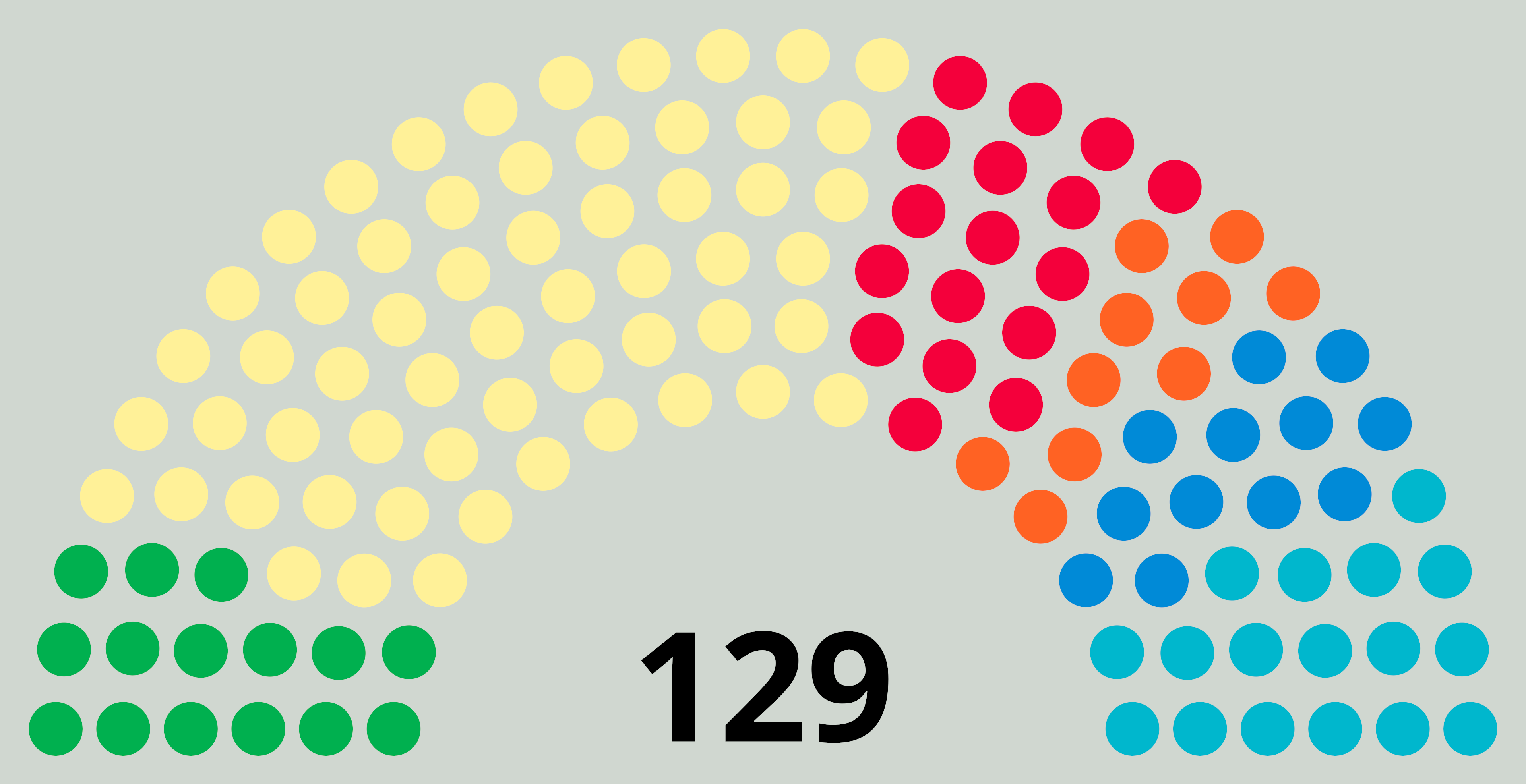
The results are in and we now know the shape of the Scottish Parliament. 58 SNP, 17 Labour, 17 Reform, 15 Green, 12 Conservative and 10 Liberal Democrats.

We don’t yet know the shape of the Scottish Government but the result is pretty certain so long as there are no major U-turns from the political party promises beforehand. The SNP will form a minority government and try to get their budgets and bills passed on an ad hoc basis.

I do not believe we’ll see a formal coalition agreement or even a looser cooperation agreement of confidence and supply (where a smaller party promises to support the annual budget and other votes where failure would result in the automatic fall of the government). The SNP still feel rather burned by the failure of their cooperation agreement with the Greens and while I think the Greens would consider a second shot, they are rather wary of being used and discarded again like they were last time.

The other probable source of a kingmaker is the Liberal Democrats who have outright refused to join a formal coalition with the nationalists but have signalled willingness to support budgets etc. Indeed, I believe courting Lib Dem votes for the last budget before the election was the SNP’s way of testing whether such an agreement would be acceptable to their own members (who skew rather more left and green than the leadership does).

It is notable that the same is true for the other parties as well. Any combination of SNP plus one other party would allow a Bill to pass and that technically should mean a fair bit of power-brokering or at least the SNP playing parties against each other. In practice, the Conservatives and Reform are so ideologically opposed to the SNP to support anything and La

For me as a political lobbyist, this was a good result all-in. A majority government tends to be one that closes ranks and pushes outside voices completely outside (or brings them in so close that everyone else can’t see them…but that’s a transparency talk for another time)

For the third time in a row since 2011, we have a pro-independence Parliament with 73 MSPs being representatives of pro-independence parties (if any MSPs on the other side would like to raise their personal convictions despite their party position, do let me know) though this was gained on just 41% of the proportional vote (the discrepancy is because while the Scottish Parliament is more proportional than the UK Parliament, it’s still got a built in advantage for the largest party). This is a drop from 48.4% of the proportional vote for the SNP + Greens in 2021. There have been increasing signs that while sentiment towards independence has been rising, there is a growing dissatisfaction with political parties in their delivery. This could prove important in the coming months especially now that there are openly pro-nationalist governments in place in all three of the devolved nations of the UK. This is probably the most important point to note out of the elections generally. While this doesn’t mean that independence is now inevitable in any or all of those nations, had this happened, say, to a Soviet or colonial bloc in the 20th century, pundits would indeed be predicting the bloc’s imminent demise and they would probably have been right.

Back to the parties though, there is going to be a lot more relief and disappointment than glee in the first week of the Parliament.

SNP

The SNP lost seats and lost vote share. Even though they remain the largest party, remain in government, held most of their “big hitter” politicians (with the notable departure of Angus Robertson who came third in his constituency seat, now taken by Green Lorna Slater) they did not make advances and fell back significantly from latter-day polling that suggested they might be in the running for an outright majority. They remain in a commanding position in Parliament – not least because of the fragmentation of their opponents – but being seven seats short of winning a vote means that they will be extremely reliant on other parties to get anything done. They may try to just do things boldly and challenge others to stop them but John Swinney isn’t Alex Salmond. I’ve never known him to start a fight that he didn’t know he’d already won and I’ve rarely known him to be sure that he’s won until he has.

Labour

This was a disaster of a campaign for Labour. Overshadowed by the scandals hitting their parent party and Keir Starmer down south, they decided not to campaign on policy but on a popularity contest. They pumped massive amounts of money into an advertising campaign for Anas Sarwar specifically and it didn’t work. He lost his constituency seat (though he remains an MSP due to his position on the Regional List) and oversaw a substantial loss of seats. It was, however, not as bad as some polls suggested and even though they are (joint) 2nd place in terms of seats, they were hard done by by the electoral system. In a truly proportionate system, they should have won 20-21 seats, rather than the 17 they have now.

Still, this leaves Labour largely frozen out of the Scottish politics as a party. Their best hope of influence is to do what they accidentally did last Parliament. Back then Sarwar lacked control over his MSPs and basically let them put forward Members’ Bills in areas of interest. This led to the PassivHaus Bill, substantial movements in Freedom of Information, a Land Reform policy that the Government voted down but which has since been adopted by the Greens and others. The party’s fortunes are going to remain closely tied to that of Starmer and Sarwar…but their MSPs may have fight in them yet.

Reform

This is objectively another disappointing result for Reform. Their polls have peaked in recent months and global setbacks to the Far-Right Movement may have ripples here too. The party that was almost certain to go from near-zero to the 2nd party in Parliament only managed joint-second and with far fewer than the up-to 30 seats they were aiming for. I believe their leader’s performance in the debates played a role here. Malcolm Offord’s blithe comment about his multitude of houses and yachts did not endear him to a public for whom the cost-of-living crisis is growing and is plainly being exacerbated by Reform’s allies rather than the immigrants that the party rose to power by demonising.

Greens

One of the winners of the elections, the Greens pulled off some noteworthy victories including their first set of constituency wins (it wasn’t that long ago that they were told by opponents that they weren’t even a “real” party if they couldn’t win in the constituencies. While that slur hasn’t been deployed in a while, it’s certainly no longer applicable anyway). The planet is in greater need of climate action than ever and between the SNP’s continued attempts to backslide on climate policy and Reform’s outright climate denial policies, there is a risk to Scotland here that the Greens will have to work hard resist.

Conservatives

Another of the election’s losers. Devoured by Reform even as they tried to radicalise to save themselves, only to find that the radicals devouring them could do it better. Nevertheless, the Conservatives held up rather better than I expected. Their strongholds in the South remain. My experience of farmers is that where they skew Conservative and Localist, it’s mostly because they want to be left alone rather than out of ideological rightward skew. For reasons mentioned above, the Tories will be largely frozen out of the Parliament this session. When the Right speak, Reform will be louder and first in the pecking order so the Conservatives will have to find a way of distinguishing themselves. There is merit to the idea of them pulling back to a centre-right “Ruth Davidson” position as that is now a clear gap in Scottish politics, but we’ll have to see if there’s anyone left in the party to pull that off.

Liberal Democrats

Probably the biggest winners of the election given the power they might soon have, the Lib Dems should be celebrating this weekend. I’ll admit that there’s plenty in their manifesto that should appeal broadly even to the Left should they want to push it so they may well get a lot done this session. Their vulnerability is that they can’t push too hard or the SNP will just pick another partner to get a vote passed but this is true for everyone else too. We’ll have to see which tail wags which dog going forward.

And everyone else

No other party got elected to Parliament nor did any independents. This is despite the Extremely Online set of supporters who were absolutely convinced that with the power of a tweet, they could get 125% of SNP voters to vote for them on the List and thus win an absolute super-majority. The high profile failures of Alba and Your Party are also a lesson to be learned. Building political parties is not easy. It takes years and maybe even decades of work to build success (seriously…both the SNP and Nigel Farage’s various parties are a lesson here in how long it takes) and even then it’s not a given and everything can blow away like smoke with a single bad headline.

No, it’s not fair that Scotland has such a high effective electoral threshold before votes become seats but we’re not looking at a German system here where a party was locked out because it got 4.9% of the vote but missed the 5.0% threshold. None of the parties who didn’t get a seat managed to clear 1% of the vote. The “best performing” one, with 0.88% of the vote, wasn’t even a real party but is a front group designed to try to confuse and steal votes from Green voters. I’m not saying there isn’t a place for smaller parties – I genuinely wish we had a more diverse Parliament – but it won’t happen without hard graft in the communities to build votes and to win people with your policies. There are five years until the next election. That isn’t as long as one might think.

Threats of genocide must be prosecuted

“Genocide is the responsibility of the entire world.” – Ann Clwyd

This blog post previously appeared in The National as part of Common Weal’s In Common newsletter.
If you’d like to support my work for Common Weal or support me and this blog directly, see my donation policy page here.

Donald Trump appears to have finally found his exit ramp to his illegal war with Iran. If early reports are to be believed and if those reports lead to a peace that holds, it leaves the US militarily depleted, the world economy reeling, Iran substantially devastated, thousands of civilians dead and the Strait of Hormuz has become a toll road with the introduction of a transit fee of $2 million per ship, split between Iran and Oman. If (and this may be a large if) shipping traffic numbers recover to pre-war levels, that means Iran receiving approximately $150 million per day – almost $55 billion a year – in fees from a shipping route that used to be open and free to transit. This is comparable to and may even exceed the revenue they received from their own oil exports pre-war.

This represents nothing less than a comprehensive strategic defeat for Trump and the US even if the two week ceasefire turns into something more permanent. Trump started this illegal war, failed to change the regime and is now walking away leaving Iran in a stronger position than it was prior to the war.

But it does mean that the world wakes up this week to some kind of peace rather than a mushroom cloud over Tehran and with millions dead (though we still do not know what the long term effects will be of this conflict – especially around the impact of food production in years to come due to the disruption of fertiliser supplies).

Trump achieved this using his trademark “Art of the Deal” in which he applies brinksmanship pressure until the other side backs down and he “wins” (Trump appears to reject or be unaware of the concept of a ‘positive sum game’ where both parties can gain out of a deal – either he wins and you lose, or you’re somehow screwing him over even if he can’t see how yet).

This might work in the world of New York real estate where he learned his trade (though there’s evidence that it didn’t particularly work there either) but it doesn’t work in politics and especially not in diplomacy. On the eve of this peace deal, Trump had to escalate beyond the moral and legal maximum leaving himself with almost no way for him to back down. His words on Tuesday that “a whole civilisation will die” horrified the civilised world and even horrified some of his more loyal allies.

There’s good reason for that. That threat promised nothing less than genocide – defined by the Genocide Convention as the “intent to destroy, in whole or in part, a national, ethnical (sic), racial or religious group”. It is codified as one of the most, possibly the most, severe crimes that a human can inflict upon the world.

It is so severe that it is one of the few international laws that explicitly apply to “constitutionally responsible rules” – who are often considered to be immune to prosecution while they serve their terms – as well as to other public officials and to private individuals.

It is also so severe that the Convention doesn’t just apply to people who commit actual genocide but also those who ‘merely’ threaten to commit genocide. It’s not even considered a ‘lesser’ crime. The Convention treats actual and attempted genocide as well as conspiracy to commit genocide and the threat to commit genocide as equally punishable.

Trump must therefore be impeached, arrested and charged for his threat on Tuesday with the same vigour as he should have been had he carried out that threat on Wednesday.

John Swinney made the right call on Tuesday when he responded to Trump’s threat of genocide by calling it out for what it was. In doing so though, he has given himself an obligation on which he must now follow through. He must now take concrete steps to do what he can to bring about Trump’s prosecution under the Convention. It certainly means stating that Trump and other responsible members of his Government will be arrested if they set foot on Scottish soil.

Make no mistake. This isn’t merely some lefty trying to be petty. Failing to prevent genocide is another crime just as punishable as actively attempting it and so Scotland has an obligation – not an option – to deal with crimes of this magnitude when perpetrators come to Scotland and arrive within our jurisdiction.

This is a good thing for for the world. The Trump Doctrine of “Peace through Strength” has been shown up as a complete and total failure. All it does is encourage ‘Might as Right’ while simultaneously showing how weak and fragile the ‘Mighty’ actually are. The only thing that will create peace in the world is not a deranged hegemonic imperial power bombing people into submission with the most horrific weapons our species has yet invented but instead the only thing that has created peace of any kind in the world so far. Rule of Law and the submission of even the ‘Mighty’ under it for the good of all.

The breakdown of that system will take years to rebuild. We need all countries to step up and we need the collective United Nations to start functioning again and to actually hold those countries to account.

That task is much larger than I can express in this remaining article but it starts here. We cannot allow countries to threaten genocide without consequence. We cannot allow leaders to act as though they are beyond the law. We cannot allow unstable leaders to destabilise the world because of their personal failings. Scotland can yet be a beacon for peace and resilience in the world. All we need to do is follow our own rules.

The new National Housing Agency must serve people, not profit

“The Master said, “If your conduct is determined solely by considerations of profit you will arouse great resentment.” – Confucius

This blog post previously appeared in The National as part of Common Weal’s In Common newsletter.
If you’d like to support my work for Common Weal or support me and this blog directly, see my donation policy page here.

Common Weal has been campaigning for the best part of a decade on overhauling and improving the Scottish housing sector. While we haven’t been named in the announcements, the SNP’s new proposal to launch a National Housing Agency should they return to Government after the elections is a policy taken straight out of our strategic roadmap which called for what we termed a Scottish National Housing Company.

It is far too easy for Governments to talk big about housing but to do little. Even in previous election campaigns, it has been considered sufficient for a political party to just look at the raw number of houses being built in Scotland and to either say that they would build X thousand homes (where X is a larger number than their rival party is promising to build, or that the previous government actually built) without paying much attention to other vital factors such as where the houses are built, what standards they are built to, how much they’ll cost, what kind of tenure will be offered to residents or who will profit from the construction of the buildings (particularly if policies come with significant amounts of public money attached). This number goes up and down with the political winds but rarely is it based on anything other than that kind of political party promise. It’s almost certainly never based on whether or not that number of houses is ‘enough’ to satisfy immediate and long term demand.

In these respects, the Government has been taking some welcome steps particularly with policies around rent controls and energy efficiency standards (though we still have significant disagreements around how far those proposals should go – the current rent control plan all-but guarantees above inflation rent increases and the energy efficiency standards appear to be being significantly watered down from the “PassivHaus equivalent for all new homes” originally promised).

But a more strategic approach to housing is still needed beyond piecemeal interventions and broad frameworks so in this respect, that the Government has adopted our Housing Agency is something to be celebrated.

The devil is in the details however and Common Weal is now gearing up to develop our proposals and to try to ensure that the Government adopts them in full.

In our original plan, the Housing Agency would be a direct construction body – public owned and employing the people who actually build our houses.

Direct construction bypasses the biggest limitation of every housing policy that has come before. Private housing developers aren’t in the business of building ‘enough’ houses. A basic rule of economics is that price is determined by supply vs demand. Scarcity results in higher prices. This means that developers can charge higher prices by not building homes as quickly as they could or by “banking” land they own to prevent another developer from buying it and building (see my article in In Common last November which breaks down why this and other factors increases the price of an average UK home by around £67,000).

We also can’t keep building houses purely to chase the highest possible price when it comes to tenures. We’ve heard a lot about “affordable homes” in recent years despite no real definition of what that actually means beyond developers being forced to sell a few homes in each block of houses a little bit cheaper than they otherwise would (even when “a little bit cheaper” is still very much unaffordable for many).

A strategic plan led by a National Housing Agency would not be concerned about quick profits and so could build houses with a longer term view. Housing for social rent especially should be built to a standard that minimises ongoing costs like heating and maintenance thus makes living in the houses cheaper for social tenants. (See my 2020 policy paper Good Houses for All for more details on how that would work).

This would benefit Local Authorities in the long term as once the construction costs of the houses are paid off in 25 or even 50 years time, the ongoing rents will still provide a safe and steady income for decades to come. By contrast, the cheap and flimsy houses being built today are being put up by developers who don’t particularly care if the house outlives its mortgage – if it doesn’t, they’ll happily sell you another one.

This is the important point about the role of a National Housing Agency. It cannot be a mechanism for laundering public money into private developers. It absolutely must be a force that outcompetes or plays a different game from the private developers. It must disrupt the market to the point that people would actively seek out a high quality, efficient and cheap to live in Agency house rather than a private developer “Diddy Box”, especially one being offered at exorbitant private rents because the only people able to actually buy them are private equity funded landlords.

Houses should not be an inflatable capital asset designed to enrich the already wealthy and to suck wealth out of the pockets of everyone else. Houses should, first and foremost, be a home. This is the measure of the ambition that the National Housing Agency should be aiming to achieve. Common Weal is very happy to see this policy enter the politician discussion space. We stand ready to help whichever Government comes out of the elections this year to build the Agency we need so that it can build the homes that all of us deserve.

We Are All Human, Or None Of Us Are.

“The rights of every man are diminished when the rights of one man are threatened.” – John F. Kennedy

This blog post previously appeared in Common Weal’s weekly newsletter. Sign up for the newsletter here.

If you’d like to support my work for Common Weal or support me and this blog directly, see my donation policy page here.

The UK is slipping even further into a dark, dark place. Let’s just be clear from the outset: once you declare someone, anyone, as not worthy of human rights you are declaring them to not be worthy as humans. And once you declare someone, anyone, as not being a worthy human, you might be next. Human rights apply to all of us, or to none of us.

Watching Nigel Farage spend a day of unrelenting media coverage this week to show off his latest idea of stripping migrants of their human rights and putting them in concentration camps was sicking. Worse, was seeing Keir Starmer’s response which was basically “we’ll do it too, but better”.

Then we got treated to a second day of it as former Conservative MSP Graham Simpson defected and attracted all of the airwaves to Farage again, followed for a third day by another defection in the form of former Labour Councillor Audrey Dempsey. Make no mistake. If you thought that was merely a coincidence, then you missed the deliberate strategy there.

Farage’s proposal is to follow a decade-long Conservative shibboleth of declaring that those “foreign courts” in Europe who safeguard our human rights via the European Convention on Human Rights are the worst kind of evil and the UK needs to withdraw from it. He’ll put in its place a “British Bill of Rights” that will apply only to British citizens and instead of “the state” telling you what you can do, you’ll have the freedom to do anything unless the state says you can’t do it.

One of the things he wants to do is to round up Afghan nationals who collaborated with the British armed forces during the invasion and occupation of that country. Many of these people now live under the threat of torture and execution by the Taliban since the latter reconquered the country and took back control. Many of these people had their personal details of their involvement with British forces leaked due to the UK’s appalling data security. Some received emergency evacuation. Some, it seems, did not.

Not surprisingly, the Taliban themselves appear to be quite happy to “receive” these people if Farage gets to implement his plans. When asked about whether he’d do it too Keir Starmer, a former human rights lawyer, said, effectively, ‘we’re not taking that option off the table’.

Removing the UK from the ECHR is not going to be as easy as waving a legislative wand. The rights bill is baked into the Belfast/Good Friday Agreement and can only be amended with the agreement of Ireland. Farage’s entire plan can be vetoed with a single memo containing the word “No”.

Or Northern Ireland could leave the UK, which would considerably smooth the passage of his plan. There’s still a complication in that ECHR is also baked into the Scotland Act and thus any attempt to disapply it to devolved areas in Scotland would require a legislative consent motion. But as Brexit has shown, this can simply be overridden by a Farage (or Starmer) Government. Or they could unilaterally amend the Scotland Act directly. Devolution will be no protection for Scotland in the way that it is for Northern Ireland.

“My partner is a migrant and is not a UK citizen nor likely to become one. Whenever someone says “prioritising British citizens”, they mean deprioritising and delegitimising my family.”

Even if the “British Bill of Rights” contains a carbon copy of the ECHR and it remains applying to everyone in general (i.e. Farage isn’t allowed to disapply it to Irish, Commonwealth, EU or non-EU citizens as he’s hinted) then we still have to remember that the actual purpose of doing this is to disapply it to specific people in specific instances whenever they become a nuisance to The State.

We’ve long been fed lines of the “bad person” who is “abusing human rights law” to avoid deportation for flimsy reasons like their cat is sick or they’d miss chicken nuggets (the actual stories behind those propaganda lines are far more nuanced). The point is that if such a person existed, these radicalised factions within the UK want to declare them less-than-human and to punish them for it.

This all matters because, sooner or later, it may well affect you. It’s certainly already affecting me. My partner is a migrant and is not a UK citizen nor likely to become one. Whenever someone says “prioritising British citizens”, they mean deprioritising and delegitimising my family. We also have to remember that I don’t just support Scottish independence, I work for an activist organisation that advocates for it. I am paid to agitate against the State in support of secession. In some countries, that’s not a job – it’s a death penalty offence. It might be me they strip citizenship from and declare to be unworthy of human rights.

Which, of course, means it might be you too. Or it might be Nigel Farage. Because even he is only a lost election and a charge of “collaboration with the previous regime” away from seeing his human rights abused too. As the famous line from the play A Man for All Seasons goes: “If you cut down the laws, and you’re just the man to do it, do you really think you could stand upright in the winds that would blow then?”

Human rights must apply to all of us or they apply to none of us. So I would ask Farage (and Starmer, and any other MP tempted to support this idea) a question: Please look through the rights guaranteed by the ECHR. Which rights do you wish would no longer apply to you, personally?

Because if he gets his way, one day they might not.

Scotland: We Have Rockets Too

“Sometimes I wanted to peel away all of my skin and find a different me underneath.” – Francesca Lia Block

This blog post previously appeared in Common Weal’s weekly newsletter. Sign up for the newsletter here.

If you’d like to support my work for Common Weal or support me and this blog directly, see my donate page here.

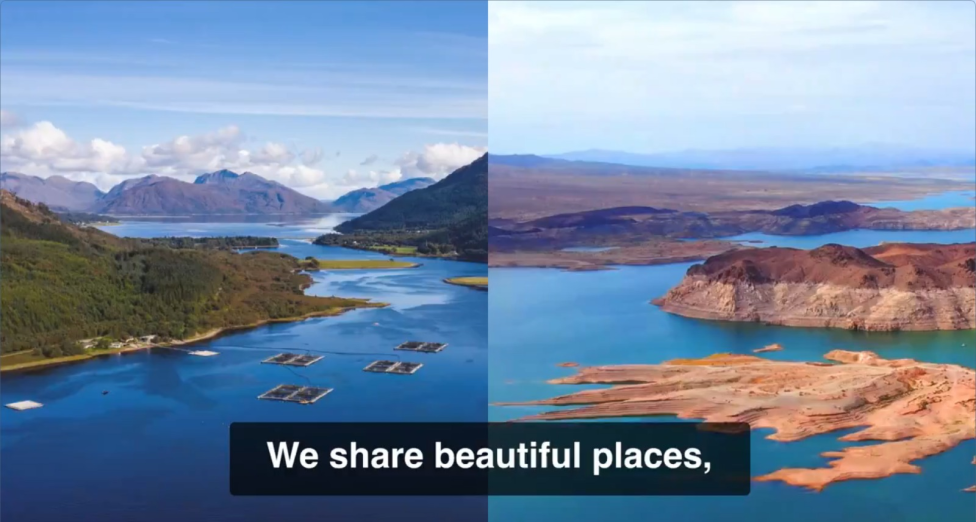
Imagine the pitch. You’ve been instructed by Angus Robertson’s office to cut together a bunch of stock footage for a video showcasing Scotland and [don’t look at the fascism] the USA. Quite artistically, the images are juxtaposed to show the common interests between our two [ignore the ethnic cleansing] nations. For the scene to illustrate the line “we share beautiful places”, what images do you think would show Scotland and the US at their best [Hail King Musk and Viceroy Trump]?
The Scottish Government chose the two above.

Continue reading

Strangled By The Purse Strings

“It’s clearly a budget. It’s got lots of numbers in it.” – George W. Bush

This blog post previously appeared in Common Weal’s weekly newsletter. Sign up for the newsletter here.
If you’d like to support my work for Common Weal or support me and this blog directly, see my donate page here.

image_2024-10-27_085107495

Eyes are on the UK Budget at the moment, and for good reason, but shortly after that we’re going to see what the Scottish Government lays out in its own budget and, given the scope of devolution, that is likely to have much more of an impact on Scottish public services – especially at a local level.

This means that recent news from Shona Robison telling Local Authorities that there’s “no money left” for public sector pay deals should be taken as a threat to local democratic autonomy.

Usually when I write an article like this I start by saying “imagine if Westminster treated Holyrood like this” but in this case I don’t really need to as we have the example of the UK Government’s cut to Winter Fuel Payments in England having a knock-on effect on the Block Grant which put Holyrood in the position of making the choice on whether to cut the equivalent Scottish allowance too. They didn’t have to – the Block Grant is calculated based on how Westminster spends money in England but Scotland is free to spend that Grant as it likes, not just on equivalent policies. In this case though, they did indeed choose to cut the payments.

Continue reading

Vote Dalȝell for Lord Provost! (Please Don’t!)

“Dictators are not in the business of allowing elections that could remove them from their thrones.” – Gene Sharp

This blog post is an extended edition of an article that previously appeared in The National as part of Common Weal’s In Common newsletter.
If you’d like to throw me a wee tip to support this blog, you can here.

image_2024-07-17_140638770-1

How would you feel if I, personally, had total control over the strategic direction of several key areas of public services that affect you? The odds of me being able to make a successful bid to win election as a Scottish “metro mayor” if they are introduced up here are not zero. I’ve been in politics long enough to have become well known at least in political circles, I have a few friends and hopefully not many more enemies. And though I’m not a member of a political party, I do get asked by several of them if I’d be willing to join and even if I didn’t, a run as an independent candidate wouldn’t be impossible. It’s even possible that you’d like some of my policies.

Continue reading

What Happened To GB Energy?

“In a world where vows are worthless.Where making a pledge means nothing. Where promises are made to be broken, it would be nice to see words come back into power.” – Chuck Palahniuk

(This blog post previously appeared in Common Weal’s weekly newsletter. Sign up for the newsletter here.)

voltage

One of Common Weal’s most important policy successes has been how we’ve pushed the debate in Scotland and beyond on the issue of publicly owned energy. Energy is absolutely vital to our entire economy regardless of which side of the left-right spectrum you believe that economy should serve (as Prof Steve Keen puts it: “Capital without energy is a sculpture; Labour without energy is a corpse.”) and in the UK we, unlike many other states, have decided to sell off our energy sector to the point that more of our energy is owned by the public sectors of other nations than is owned by our own, never mind the vast swathes owned by private multinationals that are the size of countries.

Continue reading