Burning Down The House of Cards

“What are the odds that people will make smart decisions about money if they don’t need to make smart decisions—if they can get rich making dumb decisions?” – Michael Lewis, The Big Short

This blog post previously appeared in Common Weal’s weekly newsletter. Sign up for the newsletter here.

If you’d like to support my work for Common Weal or support me and this blog directly, see my donation policy page here.
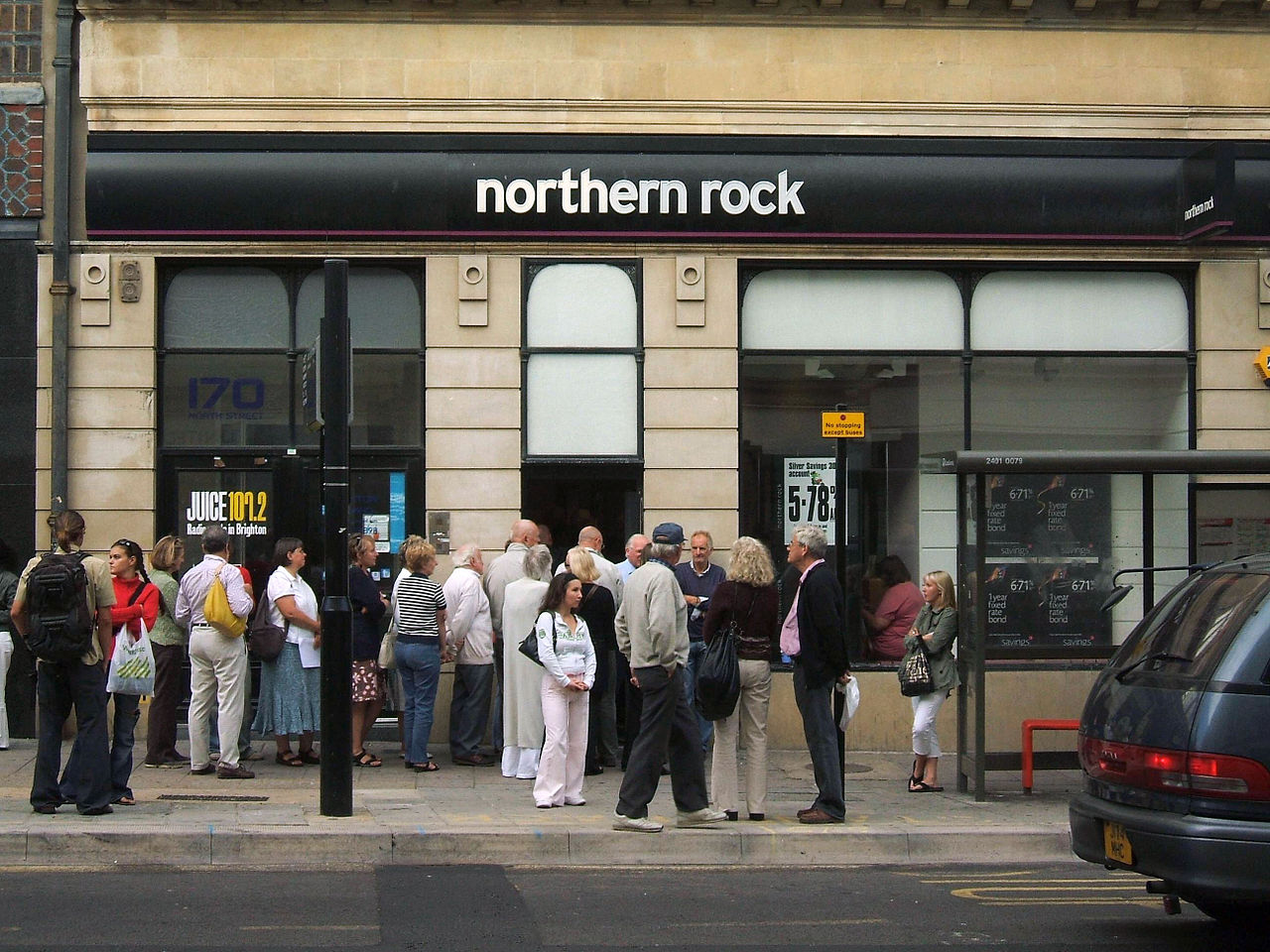
Image Credit: Dominic Alves

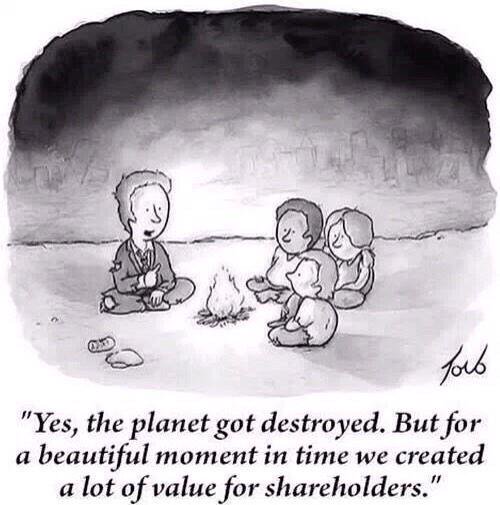
Rachel Reeves has signalled that she is “open minded” about the banks lobbying her to repeal regulations that came in after the 2008 Financial Crash. If she does, she will be accepting responsibility for the next one the banks inevitably cause.

One of the most important films dealing with the financial sector since the 2008 Financial Crash was 2015’s The Big Short. Comedic, irreverent and outright scathing of those involved, yet it remains one of the most incisive explanations of the 2008 Financial Crash and it managed to make the intentionally obscure world of financial alchemy accessible to the lay person. I’d go as far to say that it did for the idea of ‘sustainable investment banking’ as the films Threads and The Day After did for the idea of a “survivable nuclear war”.

If you haven’t seen it, please do so and pay particular attention to the scene explaining the concept of “synthetic CDOs” – where investors could effectively gamble on the possibility of you defaulting on your mortgage, and other investors could gamble on whether or not those investors will win their bet, and more investors could gamble on the outcome of those bets…all without knowing anything at all about your finances and the state of your mortgage.

One of the things that made these ‘financial instruments’ so destructive was that the ‘investment’ side of the banking sector – the bit that involves people effectively gambling amongst themselves with money that maybe was theirs and maybe wasn’t – was entirely leveraged on the ‘retail’ side of the banking sector – that’s the bit where you put money in your savings account and ask the bank for a mortgage to buy a house – but was completely divorced from it to the point that one side didn’t understand what the other side was doing.

When the housing boom of the early 2000s came to an end in late 2007 and people started defaulting on mortgages, this would have normally been tragic for those losing their homes and a sign of a substantial economic recession but would have ultimately resulted in a bounce back. But all of those ‘investment firms’ sitting on top of the sector were gambling with money that they ‘knew’ was ‘safe’ (because ‘safe as houses’) despite the houses not being nearly as safe as people assumed.

Not just assumed. The way the CDOs were structured made it functionally impossible for anyone to actually assess the risk of their failure. Because it was impossible to work how and if they might fail, the credit agencies declared them to be safe (yes, really) which encouraged banks to pile money into them.

It got so bad that the investment sector was gambling with something like $20 for every $1 actually involved in the mortgages. The investment gambling sector was many times larger than the value of thing they were gambling on. The liabilities on the banks ‘if’ their sure bet failed reached the point of being larger than the GDP of the countries they were based in.

It would only take a small increase in the percentage of mortgage defaults to utterly bankrupt the banks. An increase that might be caused by investment bankers encouraging retails bankers to take on ever riskier mortgages (with ever higher profit margins), paying exorbitant bonuses to bankers who could sell larger and larger mortgages to people who couldn’t afford to pay them.

Which is what happened. And the backlash threatened to pull down other sectors of the economy because the bankers weren’t just gambling on mortgages but on everything just about up to and including whether or not the sky was blue and the fact that the investment wings were entwined with their retails wings meant that if their investment bank failed, the ATMs on the high streets could be shut down too (runs on banks like Northern Rock showed the visceral reality of people faced with losing their savings because of someone else’s mistakes).

Continue reading

Mission Expendable

“Be sure you know the conditions of your flocks, give careful attention to your herds; for riches do not endure forever, and a crown is not secure for all generations.” – The Bible, Proverbs 27: 34-35

The Guardian reports today that an adviser to the UK Chancellor of the Exchequer – remember that he’s in the job now because the previous incumbent resigned because of a political fight involving who controls his advisers – is claiming that the UK’s fishing and farming sectors should be seen as expendable because they only constitute 1% of the UK’s GDP thus only make up something like a rounding error in the national scheme of things. Instead, he claims, the UK should become more like Singapore and just buy in the food we need. While the UK Government is distancing itself from the comments, it’s not the first time that those in those offices have promoted such views.

Let’s have dive into the data to pull out some of the implications of this potential policy.

D842DB05-5599-486F-BD1C-9B474E860F7E

As an aside, meet one of my neighbours

Continue reading

Nowhere Left To Grow

“Perhaps the answer is that it is necessary to slow down, finally giving up on economistic fanaticism and collectively rethink the true meaning of the word “wealth.” Wealth does not mean a person who owns a lot, but refers to someone who has enough time to enjoy what nature and human collaboration place within everyone’s reach.” – Franco Bifo Berardi

This weekend will see the SNP conference and the long awaited vote on whether or not to adopt the Sustainable Growth Commission’s report as the party’s main economic strategy for an independent Scotland. After almost a year of discussing this document, the party will have their final say on whether or not to adopt it as party policy.

I have written tens of thousands of words of critique, commentary and policy work on this topic. There will be more to come between the time that this blog is published and the vote on Saturday afternoon. Much of it has been centred around currency and the macroeconomic policies. Here, I’d like to look at things from a slightly different lens. How does the Growth Commission reflect upon Nicola Sturgeon’s plan to introduce a Scottish Green New Deal?

value

Continue reading

Transition Timelines

“Expect the best, plan for the worst, and prepare to be surprised.” – Denis Waitley

Robin McAlpine wrote an interesting article for his CommonSpace column this week. In it, he congratulates the response to the SNP’s National Assemblies especially the response of the attendees to our own campaign for an independent Scotland to establish a currency by day one of independence. Having spoken to the Common Weal activists who were there for us, and from my own experiences talking to groups around the country, I know how overwhelming the feeling is in favour of our position.

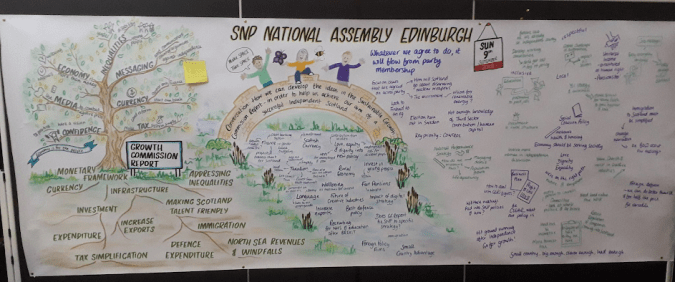
The Ideas Board from the Edinburgh National Assembly.

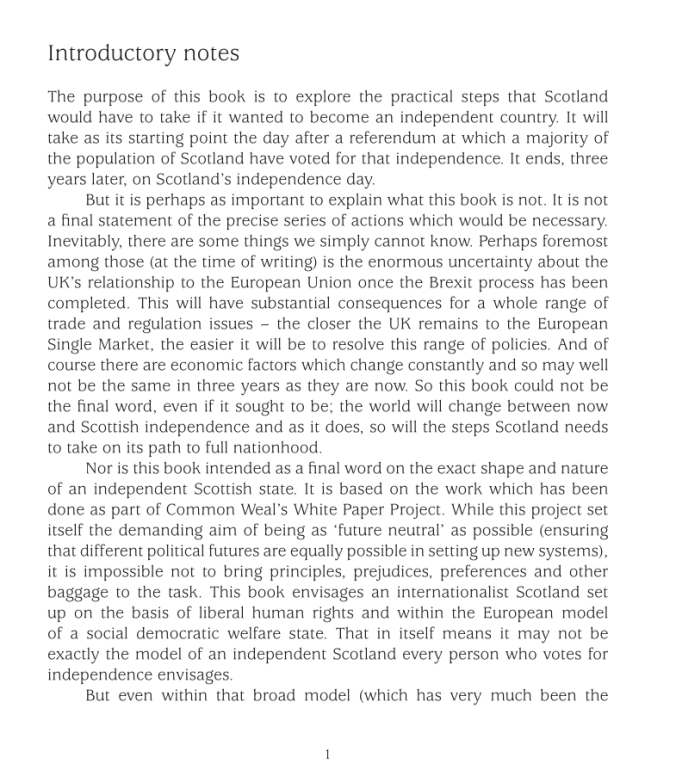
This is not to say that the feeling is unanimous though and a significant line of questioning is arising around Common Weal’s policy around the area of what this means for the transition period between a successful independence referendum and the formal date of independence. Some have voiced concern about our plan to take a full three years from the referendum to build the institutions that we need before becoming independent. So I want to lay out precisely why we have proposed this by contrasting it with other proposals on the table. I certainly wish to refute any claim that we’ve been somehow misleading in our campaign by trying to hide or downplay our three year timetable. After all, it’s right there on paragraph one of page one of our book How to Start a New Country (which you can buy or download for free here).

Pg1.png

Continue reading

Demanding Supplies – Supplying Demand

“There will be no downside to Brexit, only a considerable upside” – David Davis, October 2016

“Qu’ils mangent de la brioche” – Apocrypha, commonly attributed to Marie Antoinette

I hesitated to write this article. Why, shall become clear in the reading but the short version of it is that this is not just a sensitive topic but the mere act of talking or writing about it may provoke the negative effects discussed.

The artifact warehouse from Raiders of the Lost Ark.

I am talking about the recent stories that as we enter the “kinetic phase” of Brexit, beyond which any meaningful control of the course can be made, it is looking increasingly likely that the negotiations will conclude without a deal. The UK’s own red lines are insurmountable and are themselves incompatible with the EU’s red lines.

Continue reading

We Need To Talk About: The Growth Commission Report

If this is a discussion document – It’s time to start discussing it.

The Growth Commission’s long-awaited report is finally out and will surely take some time to fully digest. It has been described as a discussion document and a starting point for the revitalised case for independence; not the final word on SNP policy or national trajectory.

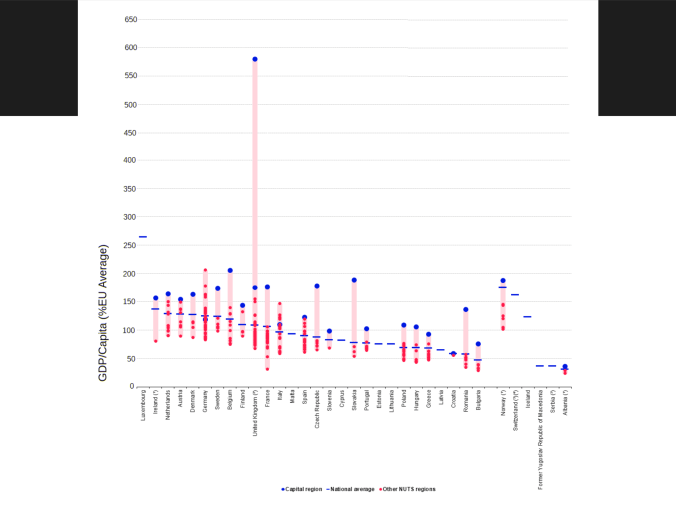
In many ways, the report covers ground now very familiar to campaigners in the independence debate. We’re all now quite familiar with the deep and systemic flaws of the UK’s economic system especially its regional inequality which, quite frankly, is embarrassing when compared to neighbouring countries in Europe.

14

(Source: Eurostat)

Continue reading

We Need To Talk About: The Deficit

Cutting the deficit by gutting our investments in innovation and education is like lightening an overloaded airplane by removing its engine. It may make you feel like you’re flying high at first, but it won’t take long before you feel the impact. – Barack Obama

Whenever we talk about national budgets, it doesn’t take long before someone mentions the “national deficit” and the “national debt”. Indeed, as I’ve noted in some of my commentary on GERS, sometimes it can seem like this is the only thing that makes it to the headlines at all. The almost unchallenged “wisdom” is that a government spending more than it raises in taxes is a terribly bad thing. It’ll leave future generations burdened with debt and, anyway, you wouldn’t run a household’s finances that way, would you?

This is a wisdom that has led us to Austerity and there is barely a politician out there who speaks for any other ideology. It’s not just the Tories. Corbyn’s team is at it, at least  by degrees and even Nicola Sturgeon often speaks the same language when defending Scotland’s finances. (And, yes, I’ve used that same language in the past too. Life is about learning.)

Of course, the root of the obsession lies with the fact that the “national deficit” is something that seems quite close to the politicians and therefore it’s something that they should be “sorting out”. But maybe the economy is a bit less simple than this. Maybe, like the fable of the blind men appraising the elephant, one can get a false impression of the whole by getting too close to one detail.

Brooklyn_Museum_-_Blind_Men_Appraising_an_Elephant_-_Ohara_Donshu.jpg

Continue reading

Banking for the Common Good

“Though the principles of the banking trade may appear somewhat abstruse, the practice is capable of being reduced to strict rules. To depart upon any occasion from these rules, in consequence of some flattering speculation of extraordinary gain, is almost always extremely dangerous, and frequently fatal to the banking company which attempts it.” – Adam Smith, The Wealth of Nations

Do we expect our schools to be run as profit-making enterprises? How about our police services? Fire services? Hospitals? Roads? Rail? How about our utilities like electricity and water?

How you answer those questions will very likely correlate with the political party you most affiliate with and may even depend on where in the UK you live. Some of these may be precious, lifeline public services. Some used to be but were sold off. Some have always been privately run.

Some may work best as purely private institutions – where the market can use efficient competition to create choice and maintain low prices.
Some may work best as entirely public institutions – it can be difficult to “choose” another rail operator if the only trains at your station are run by one company. or if your house is burning to the ground because you had the “wrong” fire mark on the wall or because you can’t pay them to put out the blaze.
Some others may work in a “mixed” system – Perhaps you genuinely can choose to get your healthcare from an NHS hospital or pay for private treatment elsewhere.

How about banks?

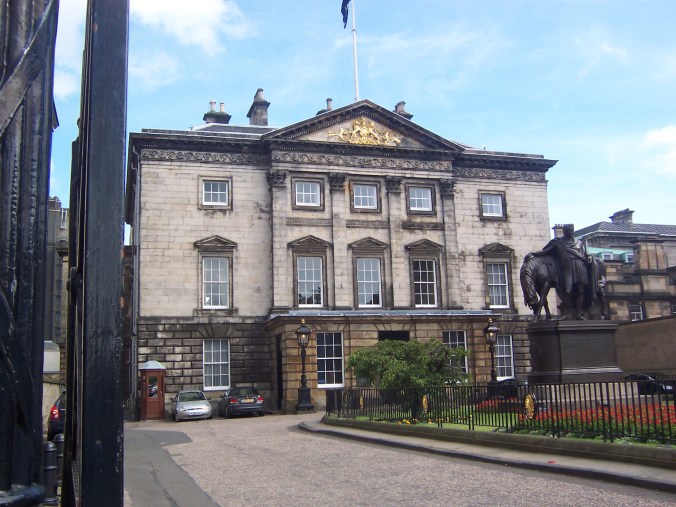
Royal_Bank_of_Scotland_Headquarters.jpg

Dundas House, Edinburgh. HQ of RBS.

Continue reading

Affording It

“Britain is not Great. Britain is Weird”

IMG_20171104_144549

The Usher Hall voting >90% in favour of Scotland adopting its own independent currency.

On the 4th of November I spoke at the Scottish Independence Convention’s Building Bridges to Independence conference. As with my SIC talk in January, it fell to me to be the one with the graphs and statistics – this time on the topic of public finances and the impact of independence on Scotland’s budget.

The livestream of my talk can be viewed thanks to Independence Live and is the first talk in this segment.

Below the fold are copies of my slides with comments drawn from my talk and references to the points made. The slides can also be downloaded here.

Continue reading