Scotland is already losing out on green energy. Here’s what we can do

“It’s called socialism. Or, for those who freak out at that word, like Americans or international capitalist success stories reacting allergically to that word, call it public utility districts. They are almost the same thing. Public ownership of the necessities, so that these are provided as human rights and as public goods, in a not-for-profit way. The necessities are food, water, shelter, clothing, electricity, health care, and education. All these are human rights, all are public goods, all are never to be subjected to appropriation, exploitation, and profit. It’s as simple as that.” – Kim Stanley Robinson

This blog post previously appeared in The National, for which I received a commission.
If you’d like to support my work for Common Weal or support me and this blog directly, see my donation policy page here.
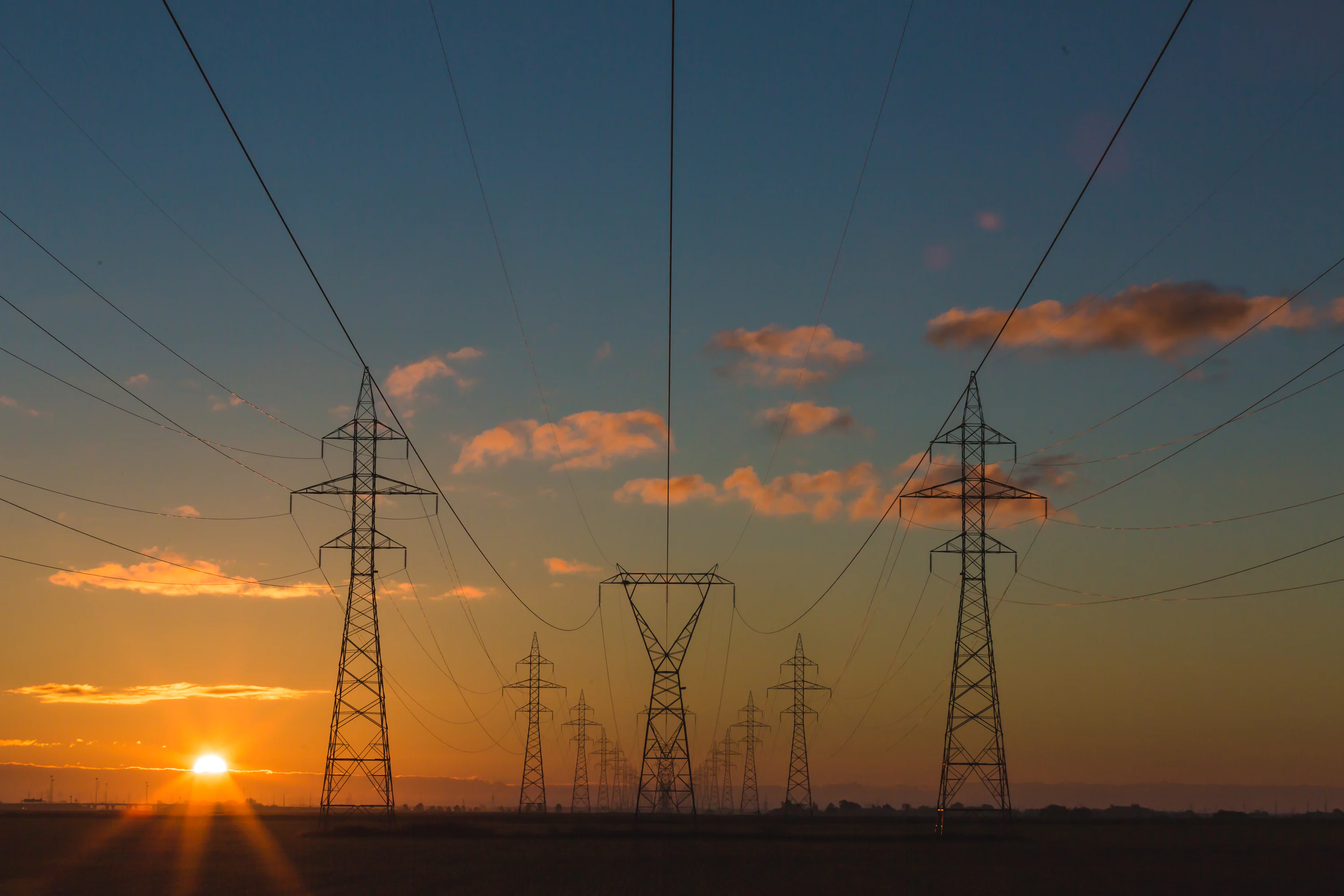
photo of truss towers

Scotland has an extremely poor track record of benefiting from our own energy resources. The decline of the First Age of energy wealth – based on coal – can still be seen in the scars of deprivation it left behind especially in the Central Belt towns and villages around where I live and where mining was most intensive.

In the Second Age, our oil wealth was – as Gavin McCrone warned – downplayed and then squandered under successive UK Governments while leaving Scotland vulnerable to oil shocks and we’re now seeing how we’re being held liable for the costs (economic and social) of drawing down the sector as it absolutely must be drawn down as the world wrestles with the challenges of the climate emergency caused largely by that oil even as the rich owners of the assets reap the profits and continue to lobby to delay or prevent change.

The problem is that unlike almost every other country that found itself with large reserves of energy wealth, we collectively decided that Scotland shouldn’t own any of it.

Rather than building up a robust public-owned oil sector, the UK Government flogged off the rights to exploit the resources to the lowest bidder, even offering generous subsidies rather than taxing their profits. The downstream infrastructure was privatised too not just sucked vast amounts of wealth into the pockets of billionaires like Jim Radcliffe but also granting them vast political power and the ability to make hypocritical statements about immigration while living the high life in their own offshore tax haven.

The Third Age of Scottish energy is our Green Transition – built initially around our vast onshore and offshore wind resources but now increasingly diversifying into other areas like solar and battery storage.

We see here that Scotland is in the process of losing out once again when it comes to energy resources that, if anything, vastly outstrip anything the oil sector could have ever promised because, unlike oil, the sun and the wind will continue to deliver that energy long after the last barrel of oil is extracted from the ground.

It promised to finally bring some ongoing benefit to communities that would be hosting the generators but even that failed. Neither Scotland nor the UK showed interest in developing public ownership of the assets and the “community benefit” funds were set at the lowest possible level of £5,000 per MW of capacity for wind (not uprated for inflation) and zero for other forms of renewables. It is estimated that a community owned wind turbine generates around 34 times as much revenue for the local community as does a privately owned one that pays its £5,000/MW community benefit. There is some evidence emerging that even this paltry sum is not being met in many cases with The Ferret reporting a shortfall of about £50 million across Scotland’s community benefit funds.

Offshore is arguable worse with the debacle of the ScotWind auction selling off the options to develop one of the largest offshore wind projects in the world in an auction that, for reasons still not adequately explained, set a maximum price cap on bids and potentially cost Scotland anywhere between billions and tens of billions of pounds in upfront capital.

Most crucially of all, we don’t even make the renewable generators and batteries that we don’t own. Decades of climate-denying politicians telling people that we shouldn’t bother trying to avert climate change because China wasn’t doing anything conveniently ignored that China was, in fact, rapidly building up its industrial base and was starting to sell the generators to the world.

So Scotland now imports the materials to build wind turbines that are owned by multinational companies and foreign public energy companies that export their profits elsewhere and pay communities sometimes less than the bare minimum. We don’t even get cheaper energy for it because the UK’s grid and pricing structures are still based on assumptions laid down in the Coal Age.

So what of the Fourth Age of Scottish energy? The thing about the current generation of privately owned energy assets is that they will eventually need to be replaced, and fairly soon – perhaps in 25 years time. This gives us an opportunity to start planning now.

Scotland needs to start building up its domestic wind and solar manufacturing base. We need to use our excellent universities to develop the materials to ensure that those generators are built to Circular Economy standards (current generation fibreglass wind turbine blades are disposable and are sent to landfill after use). We also need to start aggressively bringing assets into Scottish public ownership. Every time a renewable energy lease is up for renewal, it should be transferred to a Scottish public energy company (nationally or locally owned). This can also happen when a site is up for “repowering” – when old, smaller turbines are replaced with larger, more powerful ones but which exceed the previous lease’s maximum capacity terms.

New renewable sites should have their leases signed aggressively in favour of public ownership too. Rather than 60 or 99 year leases that cover the lifespan of multiple generations of turbines, they should be set to as low as 10 years. Enough time for the private developer to recoup their investment but also enough time for the Scottish public sector to take over the site and also make a profit without merely being saddled with the liability of decommissioning as we’re doing with the oil sector.

If any of this is not possible within devolution (some of it certainly is) and the UK is not willing to allow it, then while we are doing what we can, the case must be made for independence so that we can finish the job.

All of this will take time to set up which is why we need to start preparing the ground now. I don’t want to be here in 25 years talking being asked to comment on why we’re importing the next generation of technology and exporting the profits again. If we want to sit under a tree in 2050, maybe the best time to plant it is today.
What Happened To GB Energy?

“In a world where vows are worthless.Where making a pledge means nothing. Where promises are made to be broken, it would be nice to see words come back into power.” – Chuck Palahniuk

(This blog post previously appeared in Common Weal’s weekly newsletter. Sign up for the newsletter here.)

voltage

One of Common Weal’s most important policy successes has been how we’ve pushed the debate in Scotland and beyond on the issue of publicly owned energy. Energy is absolutely vital to our entire economy regardless of which side of the left-right spectrum you believe that economy should serve (as Prof Steve Keen puts it: “Capital without energy is a sculpture; Labour without energy is a corpse.”) and in the UK we, unlike many other states, have decided to sell off our energy sector to the point that more of our energy is owned by the public sectors of other nations than is owned by our own, never mind the vast swathes owned by private multinationals that are the size of countries.

Continue reading

The Welsh Way Forward – Part 2

The conversion of an industry to public ownership is only the first step towards Socialism. It is an all-important step, for without it the conditions of further progress are not established. One important consequence is a shift of power that resolves the conflict between public and private claims. The danger of the State machine being manipulated by private vested interests is thus reduced. – Aneurin Bevan

(This blog post previously appeared in Common Weal’s weekly newsletter. Sign up for the newsletter here.)

Wales risks creeping ahead of Scotland in progressive policy again, if the Welsh Government adopts proposals put forward by the Institute for Welsh Affairs to radically increase the amount of community owned energy in Wales.

Their new paper, Sharing Power, Spreading Wealth, is a comprehensive map of the state of public energy in Wales and identifies just about every angle that we’ve been campaigning for in Scotland (including mention of the role of Ynni Cymru – the new public energy company set up by the Welsh Government based on our Powering Our Ambitions model of a National Energy Company).

The paper, like much of our energy campaigning, identifies profit extraction from energy resources as a major driver of the current cost of living crisis as well as a major barrier against the development of renewable energy around communities (it’s a bit of a hard sell to see your landscape covered in wind and solar generators knowing that your own energy bills keep going up and none of the profits stay similarly within eyeshot) but also identifies that Wales along, with even more limited devolved funding than Scotland has, is unlikely to be able to nationalise the entire sector.

Continue reading

Parting Ways

“When two people decide to get a divorce, it isn’t a sign that they ‘don’t understand’ one another, but a sign that they have, at last, begun to.” – Helen Rowland

This article is an expanded version of a paper I wrote for the Scottish Independence Convention in 2021. You can read the original here but this version runs to almost twice the length and includes historical case studies of separations between countries.

Parting Ways – How Scotland and the remaining UK could negotiate the separation of debts and assets.

Introduction

The negotiations around Brexit – and whether they are deemed to be a success or a failure – will no doubt raise once again arguments around how Scotland and the remaining United Kingdom (henceforth “the rUK”) will negotiate their mutual separation should Scotland choose to become an independent country in the near future. Opponents of independence already raise concerns about the potential for those negotiations to be fraught, bitter or too complex to deal with in a timely manner. Unlike the Treaty on European Union, the UK Constitution does not have an equivalent of the “Article 50” within its Treaty of Union and therefore does not have a codified mechanism to provide for Scotland to unilaterally withdraw from the Union (although it does not prohibit such an action either) and nor does it provide a structure for separation negotiations to take place such as giving an explicit trigger to begin negotiations or an explicit time limit within which to conclude them. In some ways, this is to Scotland’s advantage as the Brexit process’s two year time period for negotiations inevitably resulted in higher pressure to conclude the negotiations rapidly rather than well. However, the UK also enjoyed the ability – largely foregone – to simply not trigger Article 50 and start that countdown until a time of its choosing which, had it taken advantage of this, would have allowed the UK to prepare its own negotiating positions ahead of time rather than finding itself at the negotiating table without a clear idea of what Brexit meant.

After an independence referendum or similar democratic event, Scotland will be under immense pressure to begin negotiations almost immediately – the 2014 Scotland’s Future White Paper envisaged those negotiations beginning the week following the referendum – and so it is imperative that Scotland is fully aware of its own rights, responsibilities and asks before these negotiations begin. Scotland must also take the time now, well before a decision to become independent takes place, to plan and prepare so that it does not find itself repeating the mistakes of Brexit and being forced into a disadvantageous deal due to a lack of understanding of what it wanted and what it already had.

This paper is largely an update of my 2016 paper for Common Weal, Claiming Scotland’s Assets, and shall explain the principles of one aspect of those negotiations – the division of debts and assets between separating states – along with a choice of strategies that Scotland could hypothetically deploy as it negotiates its independence.

Continue reading

Banking For Scotland

“We need a banking system that is built on trust from customers which comes from banks which care about their customers.” – Common Weal Key Ideas

Cover.jpg.gallery

Image: The National. Of course, Central Banks are a bit different from the topic of this article.

The news the closure of 1 in 4 RBS branches across Scotland is coupled with the now grimly ironic relaunch of their “Royal Bank for Scotland” advert. Once again, this bank, like others before it, is withdrawing its physical presence from many areas of the country and, as before, it cites the rise of online banking as the principal reason.

1 in 4 branches might not sound too bad to some. It might sound largely bearable. But this figure doesn’t account for regional disparities. For example, of the ten RBS branches within 25km of where I live, eight of them are now scheduled to close.

There will be places, particularly in rural Scotland, where the loss of their branch will result in the total loss of all physical banks in their community.

It is true that many people now do their day-to-day banking online but for those who don’t, this may be devastating news.

Perhaps more importantly than personal banking will be the loss of business banking services. Many small businesses require access to banks on a daily basis, particularly if they handle cash. This move, compounded with others like it past and future, may cause significant harm to the Scottish SME ecology.

Once again, the losses incurred during RBS’s casino banking glut have infected the real economy and, once again, we cannot hope to see the kind of bail-out that they were given.

Which brings up a point. RBS is more than 70% owned by the UK Government. What part have they played in these closures? Probably very little. As far as I can see, the strategy of the UK Government towards the nationalised banks has been to do absolutely nothing with them – to just let them keep doing what they would have done had they never been nationalised – and then to sell them off again.

A sensible and forward thinking government would have taken a far more proactive role in actually using its majority stake in the company. I’m not saying it would have been easy given the underlying structural issues within RBS – this is a bank which used to deliberately bankrupt small companies so that it could make a profit on seized assets – but if the UK Government had had the will to do so, it could have transformed the company into a network of local and regional banks which just solely focused on the business of providing deposits, credit and cash handling services. It could have dispensed entirely with the arcane financial shenanigans which have nearly crippled the country’s economy and could have become a very stable, very successful (if not quite so overtly profitable), “boring bank“.

Many folk will still remember how banking used to be. How you knew your bank manager and they knew better than almost anyone save yourself your business and your financial circumstances. They knew when a loan would be good for you or when it would be a burden. These things cannot be replicated via an automated helpline on a website or by an ever more complex next of “financial products” which are often more about extracting profits from you rather than supporting your business. The idea that you could become the product – to be sold and traded at the banks whim – would be utterly alien to such a system.

Of course, the UK Government isn’t going to do this. Financial gambling is just about the only thing that they have left in their economic strategy so they’re not going to say anything against it. I’m not sure if the Scottish Government has the powers to do so but it should certainly look into the possibility of setting up or encouraging the founding of a “boring bank” network – separate from but working mutually alongside the local development wings of a Scottish National Investment Bank.

Do this we’ll have a bank for Scotland. Till then, I fear that we’ll just be days or weeks or months away from another round of closures and “efficiency measures” which will be about pleasing shareholders or preparing for the next round of “investment opportunities” than it will be about actually supporting local economies and local customers.

TCG Logo 7

Lying Track

Ian Murray, Scotland’s sole Labour MP, lied to the people of Scotland today.

This morning, 14th September 2015, he was interviewed on BBC Radio Scotland’s Good Morning Scotland primarily on the extent of his agreement with his party’s political realignment in the wake of their most recent leadership changeover.

In one segment he makes the statement that the Scottish Government appeared to favour awarding the Scotrail contract to the Dutch Government owned Abelio rather than renationalising Scotland’s railways.

The relevant comment beings at 5.50.

He appears to forget that under the Railways Act 1993 enacted by the Tories and never repealed under Labour, the Scottish Government is currently barred from either renationalising the railways or forming a company in which they own a controlling stake to bid for contracts and tenders.

Indeed, under this bill any government on the planet could potentially own and operate our railways except our own.

I’m sure that rather than this being a lie, personal or political, today’s comment was merely a slip of the mind and that Mr Murray will be submitting a bill to repeal this clause in the near future.

TCG logo