Shifting Sands

“It is fear that reinforces the walls we build, people are afraid to be swayed from their convictions, afraid to question their moral instincts and expose themselves to ideas that may challenge the fabric of their entire existence, but what are we if we are not seeking to better ourselves?” ― Aysha Taryam

We are entering a new phase of the independence campaign. One in which “mandates” are traded against each other – propping each other up more than they are trying to topple the other.

One in which the bounds of the constitution must be challenged rather than worked within.

One in which the “status quo” is no longer the answer to “change” nor is it even on offer.

One in which the nature of the debate becomes ever more existential rather than aspirational.

The idea of a 2020 independence referendum is all but dead with even the First Minster now looking more towards a post-2021 election victory to bolster her own mandate even where the UK Government has already committed to ignoring it.

This isn’t going to be a fight won by legal battles (though a clarification on the UK’s constitution would be welcome) nor by wagging votes at each other.

Meanwhile, Scottish politics itself is suffering as the two major cleaves running through it (Yes vs No and Remain vs Leave) have dealt a crippling blow to the designed “collegiate” atmosphere that the Scottish Parliament was supposed to be founded upon.

Some might hope that a more gradualist approach to independence will get us there, even if it really does take waiting a lifetime. But between the impending climate emergency and the sheer unlikelihood of the other parties changing their minds on their own, I don’t think this is a wise approach.

Common Weal recently published a strategy document aimed at using the sheer power of the Yes Movement as well as the substantial bloc of SNP MPs in Westminster to start to apply pressure on the UK Government – to first mock and embarrass them then to ramp up and slowly bring their ability to govern Scotland to a halt until and unless they accept the inevitability of Scottish independence.

How about we add another tool to that box and start to bring pressure on the Unionist parties themselves? Could we even do this from within? Could we give them the nudge that we need?
Continue reading

Leave a Light On For EU

“The mistakes that have been committed in foreign policy are not, as a rule, apparent to the public until a generation afterwards.” – Otto von Bismark

At 2300 GMT on Friday 31st January, I will no longer be an EU citizen.

My citizenship, and all of the rights, privileges, protections and responsibilities that it entails, have been stripped from me as a result of a narrow vote three and a half years ago followed by three and a half years of pissing about, general incompetence and an unwillingness to listen to any but the most hardline radicals who practically wallowed in their ignorance of the EU and how it worked.

I accept the “will of the people” in their instruction to the government to leave the EU but this is a very different proposition from accepting how that will was discharged.

Had the Brexit process been conducted competently, then that would have been easier to bear. Instead, we have a litany of self-inflicted disasters piling up with no shame and even no sense of self-awareness on the part of those doing the piling. It’s enough to make one smash their face against their desk.

Continue reading

The Ever Molding Mandate

“To discover strategy is to fulfill mandate” – Sunday Adelaja

On Sunday Politics Scotland this morning, the new Secretary of State for Scotland, Alister Jack shifted the goalposts again. The 2014 independence referendum has now been declared a “once in a lifetime” event and that even a pro-independence majority in the 2021 Scottish elections or even an outright SNP majority in those elections would be insufficient grounds for him to grant Scotland his permission to self-determine our form of government.

He went even further than this extremist position by stating categorically that he believed that it would be “absolutely unacceptable” for Scotland to hold any such referendum at a time of its choosing and under our own terms – effectively attempting to apply a veto to the Referendums Bill passed by the Scottish Parliament recently.

I think we should have a look at this Tory attempt to stifle Scottish Democracy.

Continue reading

We Need To Talk About: GERS (2018-19 Edition)

“Fact be virtuous, or vicious, as Fortune pleaseth” – Thomas Hobbes

It’s that time again! The annual GERS report has been released and interested parties continue to analyse, pick apart and spin the numbers as required. And my now annual tradition of diving into the numbers continues with another installment.

GERS 2018-19.png

You can read my coverage of GERS 2013-14, 2014-15, 2015-16, 2016-17 and 2017-18 behind those links.

You can read the report and download all of the data tables for this year’s report here.

Continue reading

A Lease Around Scotland’s Future

“Don’t bargain yourself down before you get to the table.” – Carol Frohlinger

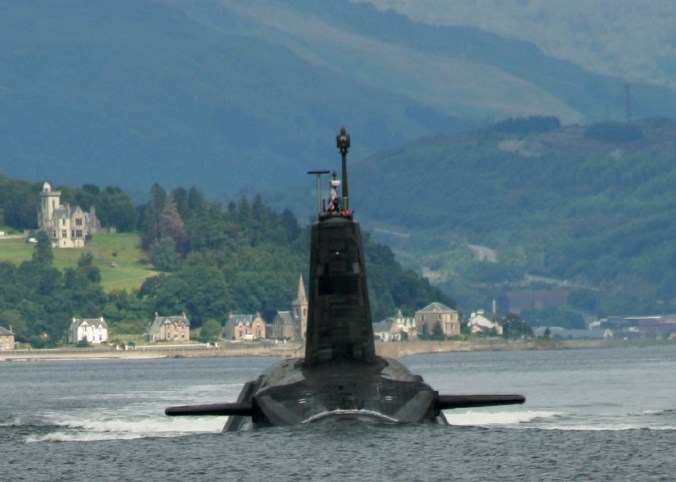
At the weekend I gave a talk to Yes Edinburgh North & Leith on the subject of splitting the UK’s debts and assets in the event of Scottish independence. It was based on my 2016 paper Claiming Scotland’s Assets and my recent episode of the Common Weal Policy Podcast but during it someone asked a very interesting question that I’d like to explore here. What happens to Faslane and the UK’s nuclear weapons when Scotland becomes independent and what is the prospect for Scotland “renting” the base until things can be moved elsewhere?

Trident_boat.jpg

Source: Wikipedia

Continue reading

The Devolving Union

“Power does not corrupt. Fear corrupts… perhaps the fear of a loss of power.”  – John Steinbeck

Theresa May, in one of her last acts of power before abdicating as PM and turning over to either Boris Johnson or (perhaps) Jeremy Hunt has made a surprise announcement of a trip to Scotland to launch a “review of devolution” in the UK by Lord Dunlop – who was Head of Research within the Conservative Party during the Thatcher era and worked with David Cameron to formulate the UK Government’s strategy against the 2014 independence campaign.

Details of the review will be published on Friday but the early press release doing the rounds today has said that it will not “review” powers already devolved to the Scottish parliament and other administrations but will instead look at reserved areas to determine if they are still functioning optimally in the face of the changing politics of the UK and the last few rounds of devolution since the 2014 independence referendum.

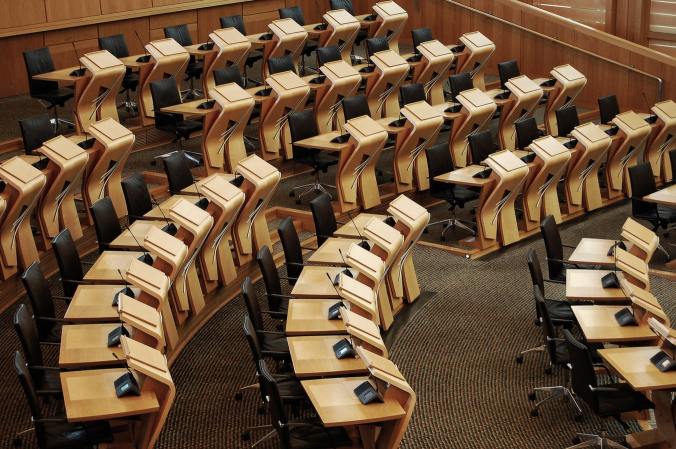
This story comes in the same week that the Scottish Conservatives and Scottish Lib Dems are having an almighty temper tantrum at the thought of the Scottish Government running a round of Citizens’ Assemblies on various issues including the topic of independence. Elected MSPs have even been encouraging a boycott of these Assemblies by Unionist supporters, seemingly not quite understanding that those who abstain from democracy lose the right to complain about the results of it when it happens without their input.

photo-1531426318161-42892d753c7f

Source: Unsplash

I won’t “empty chair” democracy. I won’t be disengaging from this devolution review but will instead offer some thoughts on it and speculate about what it might discover if it chooses to look. Continue reading

And Then There Were Two

“It is likely that such a replacement will be from the Brexiteer wing. Rees-Mogg has ruled out a run for the job but I think he’d be happier as Chancellor of the Exchequer under his able deputy PM Boris Johnson” – The Common Green, November 2018

“Why PM Boris Johnson should appoint Jacob Rees-Mogg as Chancellor” – Bernard Ingram, June 2019

The Conservative and Unionist Party’s leadership contest has completed its first phase and has whittled the number of candidates down to two. These two will now make their case to some 120,000 Tory party members across the UK who will vote for their preference.

Once they have done so, Boris Johnson will become the leader of the party and, unless there is a general election, will become Prime Minister of the UK.

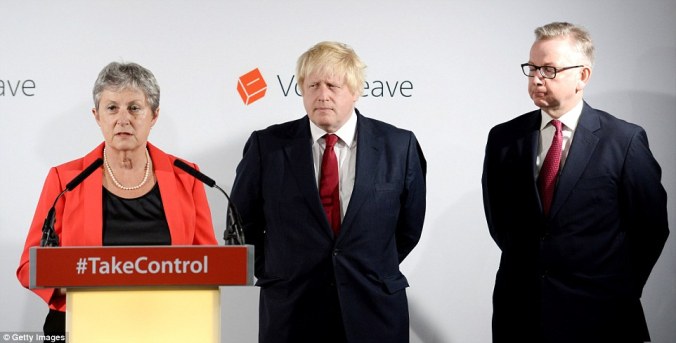
After the last three years of dismal Brexit jockeying the only thing that could have made this any more Brexit-y would be if the other person in the race had been Michael Gove. Then we could have relived that picture of the two of them standing at their “victory” press conference with that “What do we do now?” look plastered over their faces.

359EAD6800000578-3657802-image-a-222_1466766694596

But alas, Gove was knocked out by two votes and the other contender is Jeremy Hunt. And that look may have gone but believe me, the question hasn’t been answered.

So, with the caveat that my last attempt at a Brexit prediction failed badly because of my assumption of rationality and basic competence, let’s try and answer it. What will PM Johnson have to do once he takes the helm?

Continue reading

The Centre Could Not Hold

Turning and turning in the widening gyre
The falcon cannot hear the falconer;
Things fall apart; the centre cannot hold;
Mere anarchy is loosed upon the world,
– From “The Second Coming”, W. B. Yeats

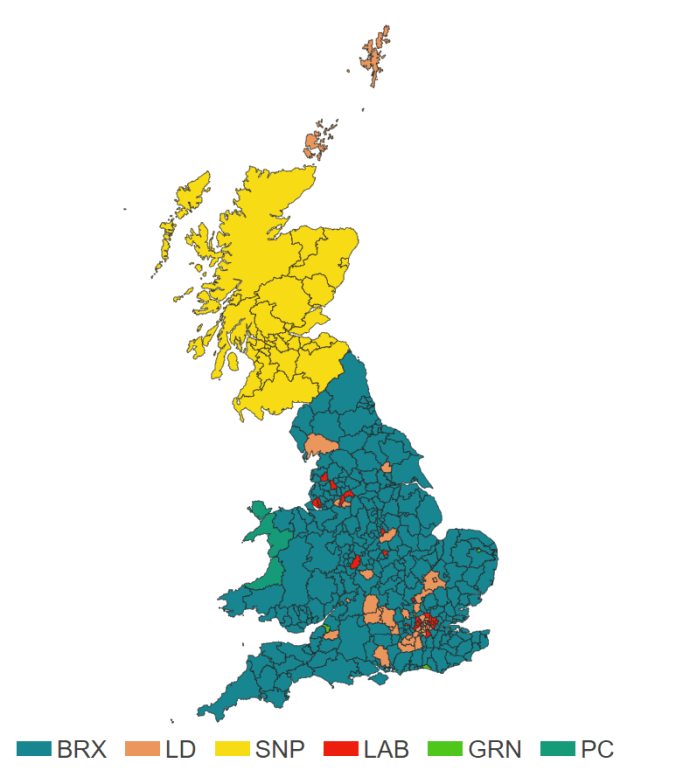
The UK has completed the exercise in democracy that it wasn’t supposed to have. After almost three years of choosing to spectacularly screw up the attempt to leave the EU, the UK Government took a rightfully earned kicking. The principle “Opposition” party, Labour, also could not come to terms with its own ambiguous position on Brexit and was also pummelled. The UK has joined the ranks of many countries around the world where the balance of power has shifted from the comparative centre of the Establishment to the more radical fringes. We’re living now in interesting times.

EU Map

Source: BBC

Continue reading

Nowhere Left To Grow

“Perhaps the answer is that it is necessary to slow down, finally giving up on economistic fanaticism and collectively rethink the true meaning of the word “wealth.” Wealth does not mean a person who owns a lot, but refers to someone who has enough time to enjoy what nature and human collaboration place within everyone’s reach.” – Franco Bifo Berardi

This weekend will see the SNP conference and the long awaited vote on whether or not to adopt the Sustainable Growth Commission’s report as the party’s main economic strategy for an independent Scotland. After almost a year of discussing this document, the party will have their final say on whether or not to adopt it as party policy.

I have written tens of thousands of words of critique, commentary and policy work on this topic. There will be more to come between the time that this blog is published and the vote on Saturday afternoon. Much of it has been centred around currency and the macroeconomic policies. Here, I’d like to look at things from a slightly different lens. How does the Growth Commission reflect upon Nicola Sturgeon’s plan to introduce a Scottish Green New Deal?

value

Continue reading