
Photo by freestocks.org on Unsplash
“Don’t bargain yourself down before you get to the table.” – Carol Frohlinger
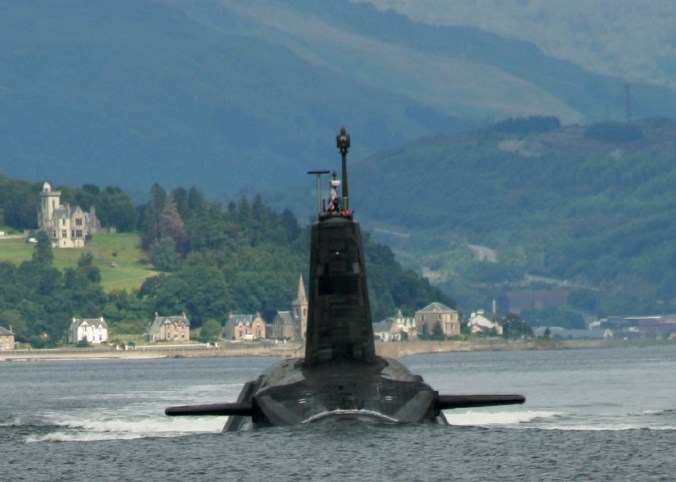
At the weekend I gave a talk to Yes Edinburgh North & Leith on the subject of splitting the UK’s debts and assets in the event of Scottish independence. It was based on my 2016 paper Claiming Scotland’s Assets and my recent episode of the Common Weal Policy Podcast but during it someone asked a very interesting question that I’d like to explore here. What happens to Faslane and the UK’s nuclear weapons when Scotland becomes independent and what is the prospect for Scotland “renting” the base until things can be moved elsewhere?
Source: Wikipedia
“Power does not corrupt. Fear corrupts… perhaps the fear of a loss of power.” –
Theresa May, in one of her last acts of power before abdicating as PM and turning over to either Boris Johnson or (perhaps) Jeremy Hunt has made a surprise announcement of a trip to Scotland to launch a “review of devolution” in the UK by Lord Dunlop – who was Head of Research within the Conservative Party during the Thatcher era and worked with David Cameron to formulate the UK Government’s strategy against the 2014 independence campaign.
Details of the review will be published on Friday but the early press release doing the rounds today has said that it will not “review” powers already devolved to the Scottish parliament and other administrations but will instead look at reserved areas to determine if they are still functioning optimally in the face of the changing politics of the UK and the last few rounds of devolution since the 2014 independence referendum.
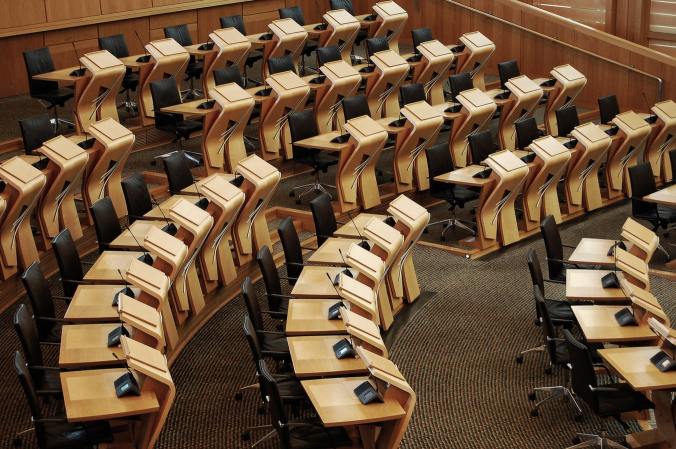
This story comes in the same week that the Scottish Conservatives and Scottish Lib Dems are having an almighty temper tantrum at the thought of the Scottish Government running a round of Citizens’ Assemblies on various issues including the topic of independence. Elected MSPs have even been encouraging a boycott of these Assemblies by Unionist supporters, seemingly not quite understanding that those who abstain from democracy lose the right to complain about the results of it when it happens without their input.
Source: Unsplash
I won’t “empty chair” democracy. I won’t be disengaging from this devolution review but will instead offer some thoughts on it and speculate about what it might discover if it chooses to look. Continue reading
“It is likely that such a replacement will be from the Brexiteer wing. Rees-Mogg has ruled out a run for the job but I think he’d be happier as Chancellor of the Exchequer under his able deputy PM Boris Johnson” – The Common Green, November 2018
“Why PM Boris Johnson should appoint Jacob Rees-Mogg as Chancellor” – Bernard Ingram, June 2019
The Conservative and Unionist Party’s leadership contest has completed its first phase and has whittled the number of candidates down to two. These two will now make their case to some 120,000 Tory party members across the UK who will vote for their preference.
Once they have done so, Boris Johnson will become the leader of the party and, unless there is a general election, will become Prime Minister of the UK.
After the last three years of dismal Brexit jockeying the only thing that could have made this any more Brexit-y would be if the other person in the race had been Michael Gove. Then we could have relived that picture of the two of them standing at their “victory” press conference with that “What do we do now?” look plastered over their faces.
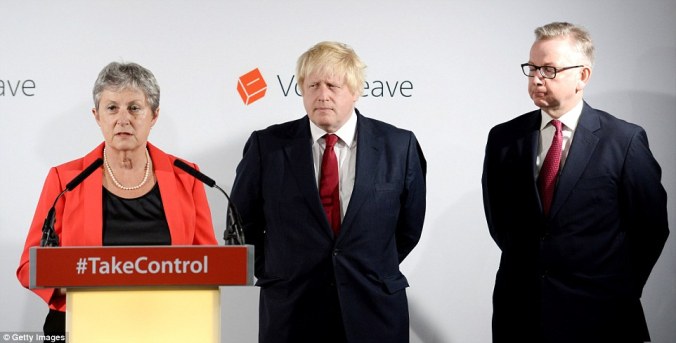
But alas, Gove was knocked out by two votes and the other contender is Jeremy Hunt. And that look may have gone but believe me, the question hasn’t been answered.
So, with the caveat that my last attempt at a Brexit prediction failed badly because of my assumption of rationality and basic competence, let’s try and answer it. What will PM Johnson have to do once he takes the helm?
“Six mistakes mankind keeps making century after century: Believing that personal gain is made by crushing others; Worrying about things that cannot be changed or corrected; Insisting that a thing is impossible because we cannot accomplish it; Refusing to set aside trivial preferences; Neglecting development and refinement of the mind; Attempting to compel others to believe and live as we do.” – Cicero
I write this on the eve of what would have been the UK’s departure from the UK. As it stands, there is still no actual plan on how to do so – though a recently negotiated extension has pushed the cliff edge out to April 12th. I didn’t realise just how prescient my “dystopian Brexit” mini-fiction was going to be when I wrote it last year. The UK Government still doesn’t have a clue how it wants to cut through its own red lines.
Incidentally, CGP Grey recently posted a good video illustrating the same paradox as I did but with shinier illustrations.
One interesting thing has happened though. Parliament, as exasperated as everyone else is, decided to “Take Back Control” from the Government and yesterday held a series of “Indicative Votes” in which the Parliament came up with a list of 15 possible options for Brexit (of which, the Speaker chose 8), and then they held “free”* votes on each of them.
*”Free” in the sense that some of the parties only whipped for or against some motions and the Cabinet were whipped to abstain on everything.
And the results of the Indicative Voters to check to see if Parliament, rather than Government, could come with an option that could command majority support? Well, in true Brexit style…they couldn’t.
“Trade negotiations are exercises in mutual self-interest. They are not power plays, or coercions” – David Davis. Former Brexit Secretary.
The annual ESS report came out last week and – as is traditional in Scottish politics – it was pounced on by those eager to make a quick headline out of the numbers. When statistical reports like this come out it’s always better to take a bit of time to dive a little deeper into them and to discuss the details that can often be far more interesting than those initial headlines.
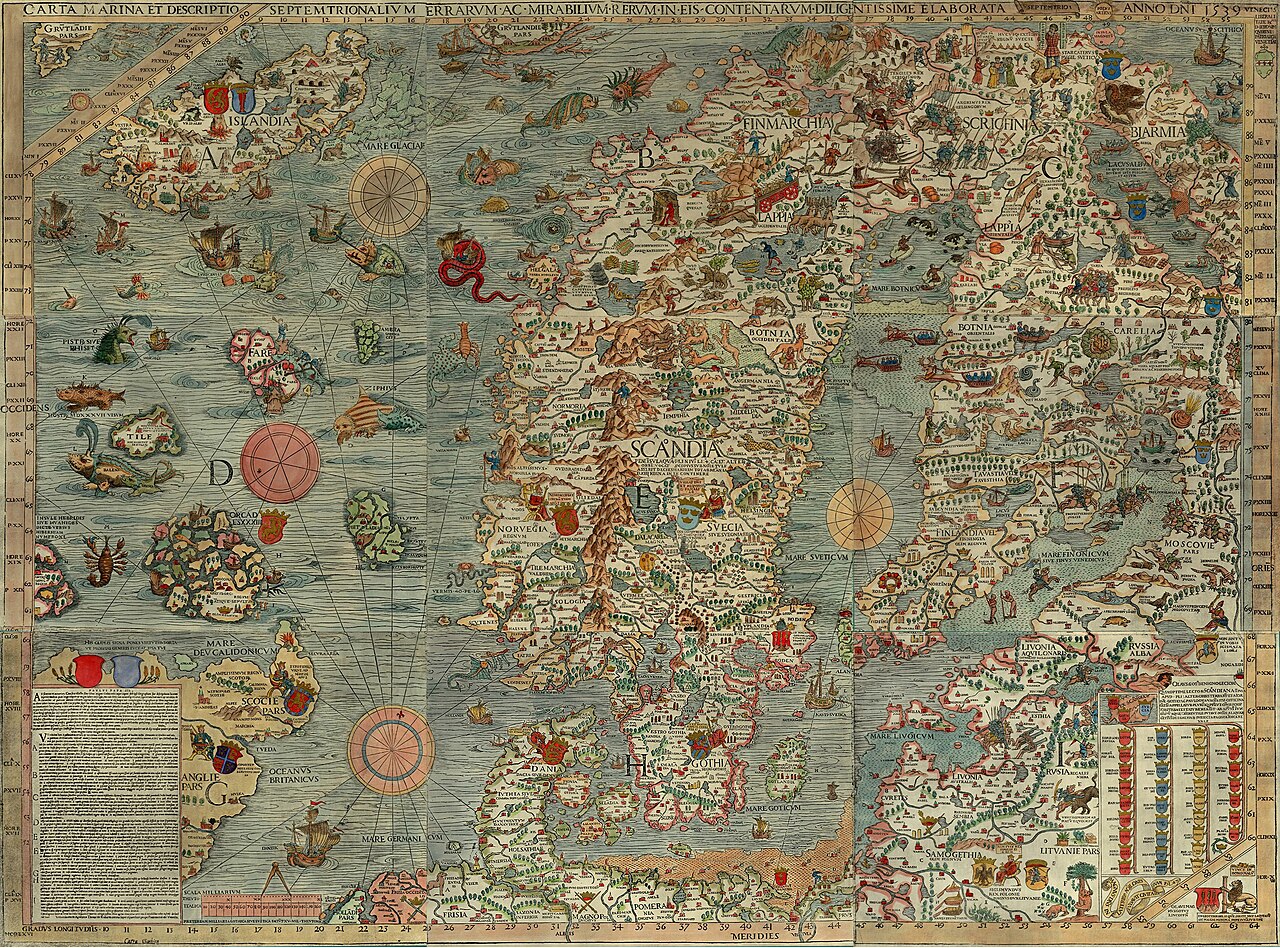
The Carta Marina showing some of Scotland’s important trading partners in the 1500s.
First though, we should talk a little about what ESS is and what it measures (as well as what it doesn’t measure). Continue reading
“We’re leaving together,
But still it’s farewell
And maybe we’ll come back
To earth, who can tell?” – Europe
We’re finally there, after delay and shambles, at the day of the “Meaningful Vote” on May’s Brexit deal. I’m about to commit that cardinal sin of political commentary and analysis and actually try to make a prediction about what happens next. May my desk soon suffer not as it has.
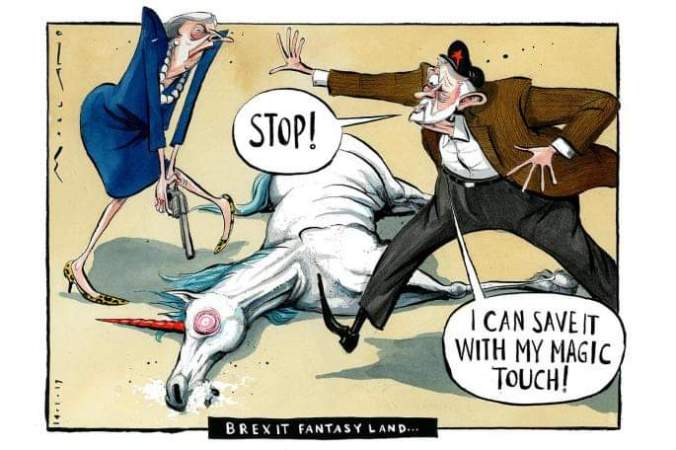
Source here.
“Diplomacy is the art of letting someone else have your way.” – Sir David Frost
I was preparing this week to talk about the “Meaningful Vote” in the House of Commons which would have ratified or rejected Theresa May’s woefully inadequate Brexit deal.
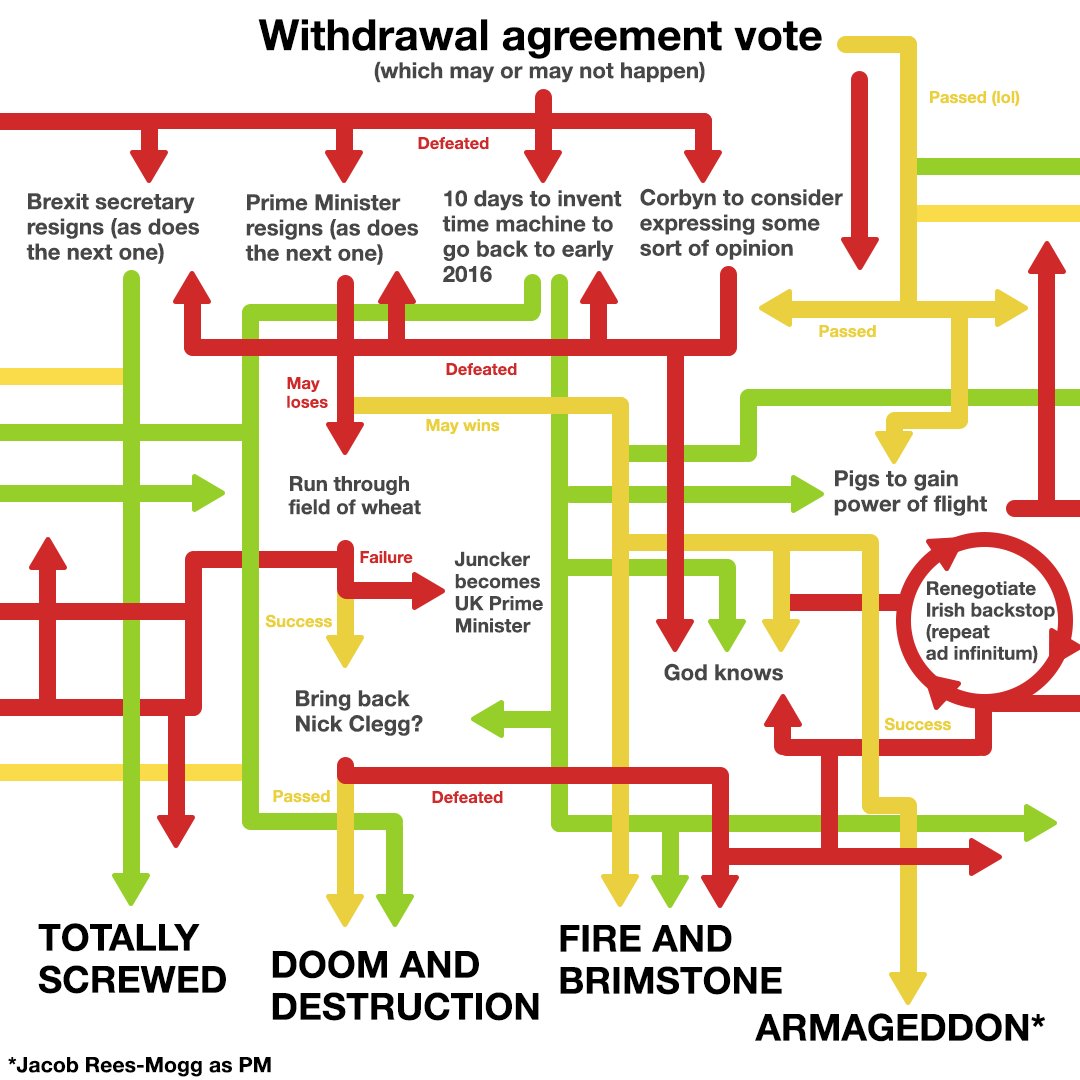
But things have progressed somewhat since I started planning that post. In a direction not necessarily to the advantage of the UK government. Theresa May, Strong and Stable, took her deal from the table. She started into the face of the humiliation of losing a vote possibly by a triple digit majority and ran away to try to renegotiate with the EU – who have already said that renegotiation is not possible. If it turns out that they were not entirely solid on that principle, then they’ll surely exact a high price for any changes.
“Teach all men to fish, but first teach all men to be fair. Take less, give more. Give more of yourself, take less from the world. Nobody owes you anything, you owe the world everything.” – Suzy Kassem
A political declaration has been published jointly by the UK Government and EU which aims to take the first small steps along the very long road between where we are right now with the Brexit Withdrawal Agreement out to the final trade deal and future relationship between the UK and EU beyond the expected transition period post March 2019.
Others will go through the whole thing in detail with far more competence than I can manage. I particularly recommend Ian Dunt’s Twitter thread here.
I do want to comment on one are in particular because it has already caused more than a bit of a fight up here in Scotland and as it does a good job of highlighting the political divisions involved in Brexit in certain interesting ways. Let’s discuss fishing.
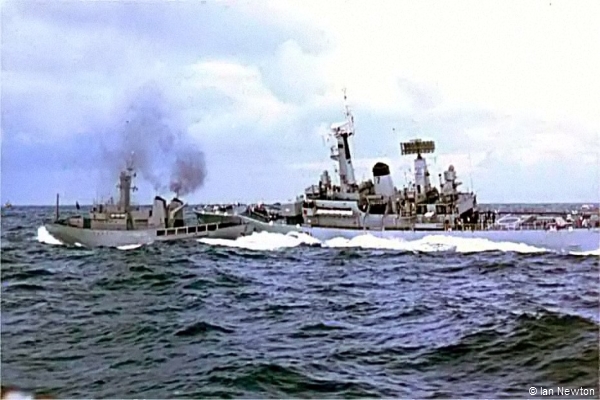
The UK/Iceland “Cod Wars”: The UK is no stranger to getting into a fight over fish
“No democratic nation has ever signed up to be bound by such an extensive regime, imposed externally without any democratic control over the laws applied, nor the ability to decide to exit the arrangement.” – Dominic Raab in his resignation letter as Brexit Secretary.
I pity the journalists who have to do this kind of thing for a living. Especially the ones who have to wait several hours before seeing their article in print. A week is a lifetime in politics. Today, an hour merely felt like one.
The Brexit Withdrawal Agreement has finally been agreed between the EU and UK negotiating teams. It has also been agreed by the Cabinet of the government – albeit only “collectively” (read: not unanimously – merely by majority. Rumours speak of an 18-11 vote). It now needs to be passed by the UK and EU Parliaments and then it’s done. So…what could go wrong?
So, what’s in it and what has happened
 The Common Green
