Democracy By All Of Us

“Politics should be the part-time profession of every citizen who would protect the rights and privileges of free people and who would preserve what is good and fruitful in our national heritage.” –  Lucille Ball

This blog post previously appeared in The National as part of Common Weal’s In Common newsletter.
If you’d like to throw me a wee tip to support this blog, you can here.

Chamber

With a single act, the Scottish Parliament could radically overhaul our devolved democracy and put people at the heart of holding our legislators to account.

I’m grateful for the coverage The National gave to the the Independence Forum Scotland National Convention last weekend. It was wonderful to see the building activism in the room and delegates certainly kept me on my toes during the Energy World Cafe. The desire to see Scotland bring more of its energy resources into public hands is strong and I was glad to lay out how it could be done despite the limited powers of devolution.

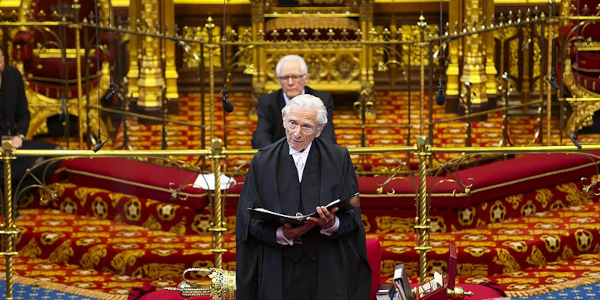
Another question came out of the day about navigating similar limits in another area. One of Common Weal’s calls for the strengthening of our democracy is the creation of a second chamber in the Scottish Parliament that could take some of the weight off of the scrutiny committees, could make sure our laws are fit for purpose and – perhaps most crucially – could oversee the Parliamentarians themselves and hold them to account if and when they fall short of the standards expected of them. In this way it would act very much like the House of Lords down south or the elected or appointed upper chambers in many other countries (Scotland is one of the very few national-scale polities that don’t have an upper chamber – even most of the US states have one) but we want to improve on the highly corruptible model of appointing Lords for life based on their loyalty or political donations (still waiting on Labour delivering on the manifesto promise they made over a century ago to fix that one down south) or even the counter productive model of electing party-loyal people to that chamber (and thus replicating the US model where there is zero accountability when one party controls both houses and zero progress when they don’t). Instead, we want a Citizens’ Assembly where all registered voters in Scotland are entered into a lottery similar to jury duty and are called to serve in the Parliament. Appointments would be by random selection initially but the long list would be adjusted to ensure that the actual Assembly is balanced demographically across age, income, geographic representation and other factors (this model was used to great success in the 2021 Scottish Climate Assembly). Appointments would be generously paid (on par with MSP salaries) and would last a fixed time – we suggest a one year appointment with a third or a half of the chamber rotating out periodically – and there would be the same protections on returning to your job as there are for jury duty or paternal leave. The comparison to juries is a strong one. If we trust our peers to determine if it has been proven or not proven that someone has broken the law, then we are more than capable of determining whether or not the laws themselves are broken.

Sounds great, but the question we were asked at the Convention was whether or not Scotland has the power to set up such a Chamber.

If we were independence, it would be a relatively trivial matter to write the structure of the Chamber into our constitution but until then, the constitutional document we have to follow is the Scotland Act. Yes, the UK does have a constitution – it’s just not written down in one place and unlike the constitution of most nations, Westminster has sovereignty over it rather than being subordinate to it and so can change it whenever it likes.

As the Scotland Act doesn’t mention an Upper Chamber in its framework and as Westminster is extremely unlikely to exercise its power to write one into the Act, how could we set one up pre-independence?

Essentially we act as if we can.

The Scottish Parliament can set up advisory bodies or Commissioners to oversee the work of Parliament and even though we couldn’t mandate that they must follow the advice of those bodies (this was ultimately the source of the failure of the Climate Assembly – the Government decided they didn’t like the advice they were given so largely ignored it), Parliament and Government could collectively agree to follow those instructions – there’s nothing in the Scotland Act that actively prevents them from doing this just as nothing prevents parties whipping their members into voting along certain lines despite that not being an “official” part of our democracy.

Such an “unofficial” upper chamber wouldn’t be nearly as powerful as a constitutionally mandated one but that’s not to say that it would be powerless. Yes, something created by an Act of Parliament alone could be scrapped by one (a constitutional amendment would require a referendum). Yes, the Government could simply stop listening to its advice. This would place it on par with the other Commissioner bodies that exist around the Scottish Parliament. Yes, Westminster could overrule the Scottish Parliament and write a specific prohibition into the Scotland Act or elsewhere. This would place it on par with any other piece of legislation the Scottish Parliament has ever passed. If either of these barriers are enough to stop us, we might as well just give up on devolution entirely.

Scenes playing out across the world right now only serve to highlight how precious and vulnerable the very concept of democracy is and how no single person or even multi-person office can be trusted with more power than it needs. Scotland’s highly centralised form of government needs to be spread out a lot more locally but we also need more scrutiny and accountability at all levels from the top down. The best people to do that are All of Us appointed not to a House of Lords, but to a House of Citizens.
TCG Logo 2019

Continue reading

Power For People, Not Parties

“We in the House of Lords are never in touch with public opinion. That makes us a civilised body.” – Oscar Wilde

This blog post previously appeared in Common Weal’s weekly newsletter. Sign up for the newsletter here.

If you’d like to support my work for Common Weal or support me and this blog directly, see my donate page here.

image_2024-11-18_101303424

Done badly, the only thing worse than an unelected House of Lords might well be an elected one.

Don’t worry, this isn’t a defence of the current system whereby the laws of the UK are made, in part, by people who got the job by dint of patronage to the right party, correct worship of the right deity, or descent from the right person but the proposals to reform the Lords that passed in the House of Commons this week threaten to take the closest mechanism we have of holding absolute power to account and making it even more beholden TO that power.

Continue reading

The UK’s Democracy Is Broken – Why Does No-One Want To Fix It?

“The most common way people give up their power is by thinking they don’t have any.” – Alice Walker

(This is an extended version of an article that previously appeared in The National. You can throw me a tip to support this blog here.)

image_2024-06-29_095223677

Given the audience likely to read this column, the statement “UK democracy is broken” isn’t going to feel uncontroversial or even particularly objectionable, but it is one that is being forced into sharp relief by the ongoing UK General Election campaign. We’re are all, regardless of our political leanings, being ill served by it.

This column started with a thought around the claims that the UK Labour Party are eyeing the potential of winning a “supermajority” after next Thursday with the loudest complainants of such a result being those in conservative circles. Understandably so as it would mean Labour winning a majority so large that they can’t possibly be challenged by the Opposition and so large that they don’t even need to worry about a rebellion on the back benches or the inevitable trickle of by-elections triggered by scandal, illness and the march of time threatening to flip the balance of power.

Continue reading

A Bute House Divided

“It’s only hubris if I fail”, Julius Caesar, HBO/BBC TV series Rome (2005)

(This blog post previously appeared in Common Weal’s weekly newsletter. Sign up for the newsletter here.)

The Bute House Agreement has ended. Earlier this month, the Greens notified members that there would be a vote on whether or not to continue the cooperation deal with the Scottish Government within the next few weeks. This morning, stealing the march and despite saying just 24 hours earlier that SNP members didn’t need a vote because they’d certainly back the agreement, Humza Yousaf unilaterally terminated the deal. The Greens have been booted out of government and Patrick Harvie and Lorna Slater are no longer ministers.

Continue reading

Democrat, Renew Thyself!

“And he said unto them, Ye will surely say unto me this proverb, Physician, heal thyself: whatsoever we have heard done in Capernaum, do also here in thy country.” – The Bible, Luke 4:23

(This blog post previously appeared in Common Weal’s weekly newsletter. Sign up for the newsletter here.)

The second in the series of the Scottish Government’s Independence White Papers has been published. Renewing Democracy through Independence presents the Government’s view on the state of democracy in the UK, the limits of Scottish voters’ democratic voices within the UK and how Scottish independence could improve the situation.

The paper outlines the various democratic deficits of the UK. From the unelected House of Lords, through the unproportional voting system of the UK General Elections, the lack of accountability that comes with majority governments in that UK, the fact that devolution is granted essentially at the pleasure of the UK Government and can be withdrawn or overridden at any time and, most importantly for a document promoting Scottish independence, the fact that despite pro-independence parties winning several elections in the years since the last independence referendum it essentially comes down to the whim of the UK Prime Minister to “allow” another one. The central claim is that the UK is insufficiently prepared to correct these democratic deficits from within and only an independent Scotland would free itself from them.

There’s little on the pages of this paper that is outright objectionable, indeed I and others at Common Weal have made some of the very same points in our work over the years, but this paper stands in a strange place without, apparently, a clear idea of its target audience. It’s too long and detailed to be read by anyone who doesn’t have an interest in politics but it’s simultaneously too shallow and, frankly, bland for anyone who does. As Chapter 2 of a unified Independence White Paper it would read as an introductory preamble to later chapters but as Paper 2 in a series of individual papers it doesn’t really stand alone in its own right. It certainly does little to say precisely what an independent Scotland would do to fill the gaps left in Scottish democratic structures after the undemocratic sections of UK governance are excised by independence. To that end, what follows is a brief attempt to fill that gap with what I would like to see every level of Scottish politics look like.

Continue reading

How Scotland Votes: A Guide to the 2019 UK General Election

Disclosure and Disclaimer: Although I am politically active and an active member of the Scottish Green party, this post is intended to be objective and politically neutral. This is a guide on how to vote, not a blog to try to convince you to vote for or against any particular person or party.

For the third time in four years, the UK is preparing to go to the polls to elect a Parliament to the House of Commons. The UK would not normally have been expected to be in this position as for the last several years there has been a law in place called the Fixed Term Parliaments Act (FTPA) which was supposed to have fixed parliamentary terms at five years rather than the older system of leaving election timing to the whim of the Prime Minister of the day who could call or delay elections (within some limits) according to when they felt particularly advantaged or disadvantaged in the polls.

But Brexit, as with so much in British politics, has changed everything and the current logjam caused by the minority government inherited by Boris Johnson has meant that even his reforms to the Brexit Deal could not be passed through Parliament (and nor could any other permutation of result).

And so, just two years after the 2017 election that resulted in that minority Government, the UK is going back to the polls to see what happens this time.

GE2017

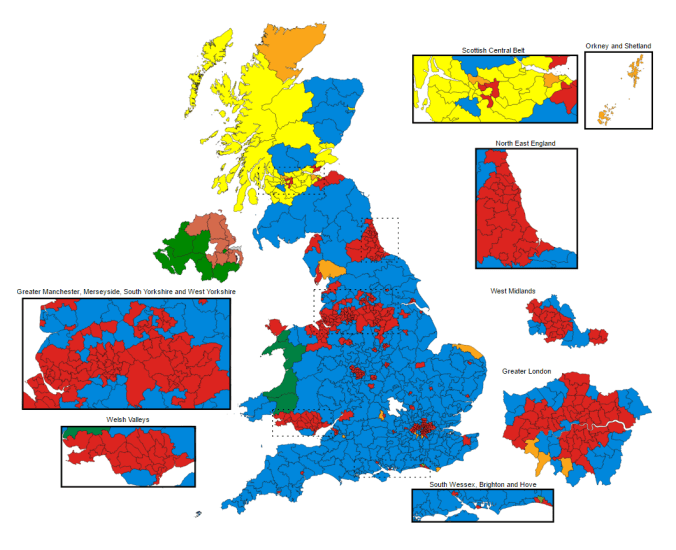
The 2017 UK General Election Results

As stated in the disclaimer above, the purpose of this blog post isn’t to convince you to vote in a particular way – that will be for another time and is already being done by others. This is instead a post which acknowledges that a great many people have never voted in a UK General Election before and this may be their first vote of any kind. If you are aged 20 or under, you will likely have been too young to vote in the previous election and there will be some who were eligible to vote but haven’t ever done so before and maybe there’s an issue in this election which has proved to be particularly important to you. It may also be the case that you were not eligible to vote in previous elections but have just taken on British citizenship or suchlike and nor are eligible to vote. If any of these things are the case and you’d like to learn more about the voting process then this blog is for you and is a continuation of my long running series which has also covered the 2015 UK General Elections, the 2016 Scottish Parliamentary Elections and the 2017 Scottish Local Authority Elections. and the 2019 EU Parliamentary Elections.

This guide is also unashamedly Scotland focused because that’s where I am and where the centre of my sphere of political interest lies but the basic principles of this guide will apply elsewhere in the UK (although the balance of candidates and thus voting considerations may vary)

Continue reading

How To Break A Democracy

“Elections remind us not only of the rights but the responsibilities of citizenship in a democracy.” – Robert Kennedy

There’s a tweet being shared around Scottish political Twitter advertising an event on October 23rd. Australian company Clearpoll going to be holding an opinion poll on Scottish independence but are doing so in an intriguing way. They are offering a blockchain-based mobile phone app that, they claim, could be the first step in a revolution in how we approach voting. Instead of having to go to a ballot booth, one could simply press a button on your smartphone, secure in the knowledge that your vote will be transfered and counted without the vulnerabilities to hacking and spoofing that occur in other forms of electronic voting.

An advert by Clearpoll for a "blockchain powered mobile vote on Scottish independence" on October 23rd.

First of all. I’m not going to tell people to not take part in this poll. If that’s your thing, go for it. If you want to help test an upcoming piece of technology, by all means.

But I do want to voice my concern about this kind of technology making its way into our democracies. They are vulnerable enough without adding something that, if done badly, could break our voting system entirely.

Continue reading

unDemocracy

“I think it would be a good idea” – Apocrypha attributed to M. Gandhi on his being asked what he thought of Western civilisation.

The UK Government’s handling of Brexit continues to be veer somewhere between being a shambles and a criminally negligent disaster.

From its position on customs which remains something like “We have no idea what we want and we’re damn sure we’re not going to lift a finger to plan for it.”

Through its tearing away from anything even remotely connected to the EU – including Euratom (which means good luck running a nuclear power plant or obtaining a medical radiological), the Gallileo satellite system (to which the British response was a petulant “We’ll build our own…somehow”) and fundamental human rights which protect us all from the whims of governments that act a bit like the current UK one does.

Continue reading

An Unequal Kingdom

“A system of government as close to federalism as you can have in a nation where one part forms 85% of the population” – Gordon Brown, 2014

The “F-word” is rearing its head again in Scottish politics. Federalism. An idea sometimes presented as a “credible” alternative to Scottish independence and a way of granting Scotland greater autonomy over its own affairs whilst maintaining the unity of the United Kingdom. Unfortunately, it’s also an idea that is rarely presented in any greater detail than that previous sentence.

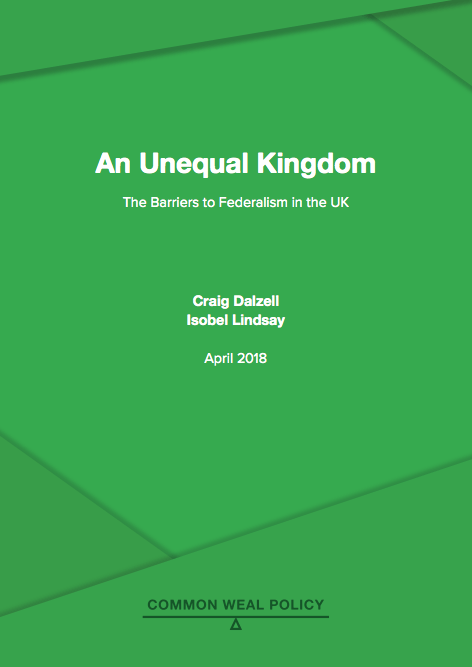
Both Scottish Labour and the Scottish Liberal Democrats have flirted with this idea throughout their history and have been doing so again recently. In an attempt to raise the level of debate about this subject, I have just co-authored my latest policy paper for Common Weal with long-time constitutional activist Isobel Lindsay which you can read here or by clicking the image below. Isobel also has an article in the Sunday Herald which you can read here.

Unequal Kingdom Cover

Continue reading

Senatus Populusque Caledoniae

(Apologies if my scant Latin has mangled that translation. If someone corrects it, I’ll see about writing it out 100 times on the walls of the Palace.)

It seems that all news is canceled this week. All of it. There’s nothing happening. Our state broadcaster (which is totally unlike other state broadcasters in that when it promotes its state’s national interests, this is a good thing and not the most hideous evil to ever despoil the airwaves) has told us that the only thing of note happening anywhere is that someone is marrying someone with Magic Blood.

it-e1511864823786.png

This is to be a ceremony that we’ll all proudly take part in, by which they mean that we are to pay for it, despite not even being invited to the party. We’re not even getting a day off work because that would apparently cost too much.

Those in power are definitely not going to use this event to sneak out the devastating news that benefits are to be frozen again this year – that’s effectively a 3% cut after adjusting for inflation. I’m certain that they’ll be bending all effects towards sorting the gaping holes in the UK VAT system which allows more than £1 billion to be evaded every year.

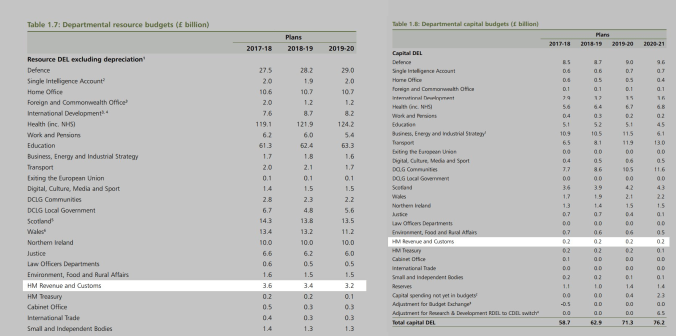
They absolutely wouldn’t be cutting HMRC’s budget by £400 million per year RIGHT before the UK is going to leave the largest Customs Union in the world, would they?. They certainly would be breaking ground on all the new checkpoints and infrastructure that are going to be needed. The department should be awash with capital spending in preparation, shouldn’t it?

HMRC.png

They certainly wouldn’t big up their having done some furiously detailed groundwork on the impact of Brexit when they hadn’t actually done any such thing and were just hoping that no-one would ask to read them…till they did.

The UK has some seriously skewed priorities and it goes from the bottom right to the top of the structure of governance. Scotland needs to have a good, hard discussion about what role it plays in all of this.

The Scottish Parliament already has a far fairer voting system than the one used for UK elections (despite the comparative complexity of the former) but should we take the step of becoming an independent country then we’ll have to have a think about some other levels of government too.

I’ve already said a fair amount about the state of Scotland’s local government so today I’d like to look at what we’d want to do ABOVE the level of the present Scottish Parliament.

For instance, we may well decide to create an Upper House to scrutinise legislation but what we absolutely shouldn’t do is copy the UK method of stuffing it full of Lords and paying them to sleep off their hard day of…doing what ever they do for £300 a day.

Image result for house of lords sleeping foulkes

Far better would be a Citizen’s Assembly. Think of it as Jury Duty writ large. We’ve already decided that the best way to determine if someone has transgressed our laws is by a jury of randomly selected citizens so we could easily set up a method by which randomly selected citizens can determine if the laws themselves are just, fair and easily understood.

And for above that? How do we represent the nation of Scotland to the world?

If you had asked me in 2014, I would have said that I didn’t really mind too much and was pretty content with the Scotland’s Future plan of keeping the monarchy in the same way that Canada and Australia have.

But I’ve shifted somewhat since then. I’m not sure I’d really welcome the appointment of a Governor General as Scotland’s nominal Head of State nor am I completely clear on what duties they would actually have in practice. The First Minister already does most of the Head-of-State meet-and-greet stuff when folk come to Scotland and it seems a little strange for that to stop.

Nor do I want a restored and separate Scottish monarchy. Again, I’ve no time for someone to tell me what to do by dint of their divine appointment or Magic Blood even if Scotland does maintain a tradition of the Scottish Monarch being subordinate to the people of Scotland. Nor should a country professing to be a democracy pride itself on  its locking citizens out from ever obtaining any governmental office even in theory.

So, if we choose to have an official Head of State separate to the First Minister then it’ll have to be an elected President and that seems straightforward enough to arrange.

Though we still need to have that discussion about what we want them to DO. As said, the First Minister already does most of the Head of State meet-and-greet stuff when folk come to Scotland so we’re faced with the choice of either actually empowering our Head of State and giving them executive controls like the power to veto laws, sign their own legislative orders or other such powers (i.e. similar to the President of the USA) or we continue to have a head of state with a ceremonial role but little actual power.

And as I think on it…whilst I think it would be an upheaval too far to actually empower a Head of State, I don’t think I feel so enthused about swapping an unelected but powerless leader with an elected but still powerless leader. It just doesn’t feel as if it’s a decision rooted in the practical. On the other hand, I’m somewhat nudged by the argument that a Head of State separate from the government may be able to say and do some things without constraint by that government (though it’s noted that our current monarch maintains a “strict” rule against saying anything at all unless they think they can get away with it).

But maybe I’m wrong.

So help me out here. What would you want from a Head of State of an independent Scotland? How would someone gain that position? And what kind of person would you expect to see in the role?

TCG Logo 7