If Brexiteers Did Indy

“For now we see through a glass, darkly” – The Bible, 1 Corr 13:12
818880

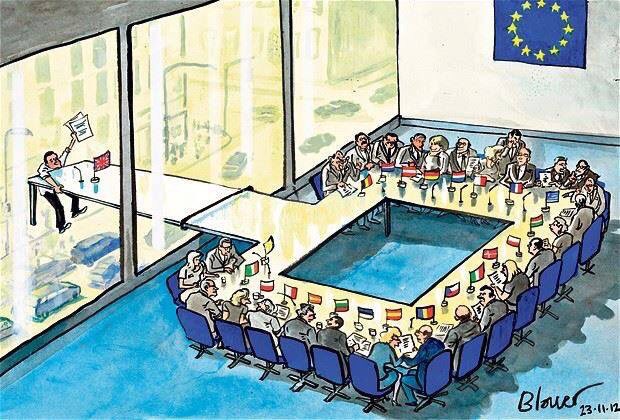
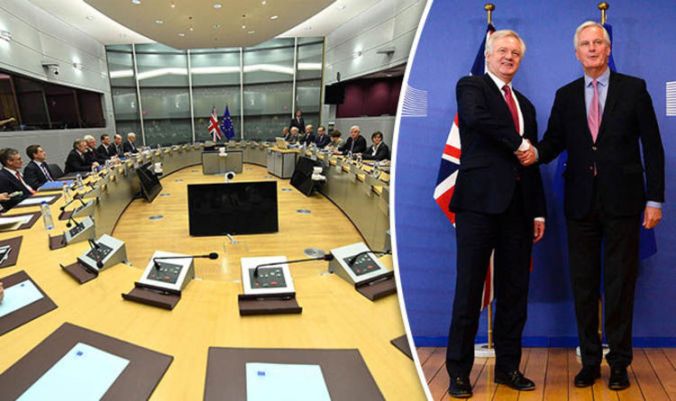
Yesterday was the first meeting between the UK Brexit delegation and the EU delegation and, by many accounts, it has fallen far short of the UK’s expectations. David Davis spent months drumming up the “Strong and Stable” approach which would see both the divorce deal and the subsequent post-Brexit trade deal negotiated simultaneously. He was told on every front that this wouldn’t happen and simply brushed off the warnings. And then, when push came to shove…he finally accepted that he’s have to negotiate the divorce deal first. This is just the latest in a long string of failures and ineptitudes over the course of the UK’s handling of the whole farcical process and it got me thinking. If Scotland had voted Yes in 2014, what would it have looked like if the Scottish Government had handled that vote the way the UK has managed Brexit.

What if the hardcore Brexiteers did Indy?

Somewhere. In Another Scotland.

Spring 2013

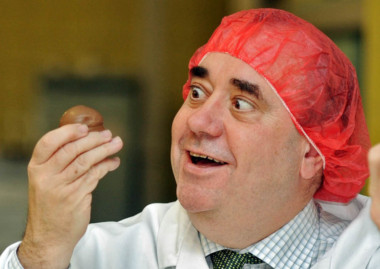
The SNP have been ascendant. Under First Minister Alex Salmond, the party is now in the second year of its majority government. Salmond, who had always been known as a gradualist, had been reluctant to offer something as drastic as an independence referendum. He was far more interested in focusing on domestic policy such as his infamous Tunnocks Tax but after a couple of defections of MSPs to the fringe party Siol na h-Alba in 2010 it was inevitable that independence would have to be an option on the table.
TUNNOCK'S ALEX SALMOND

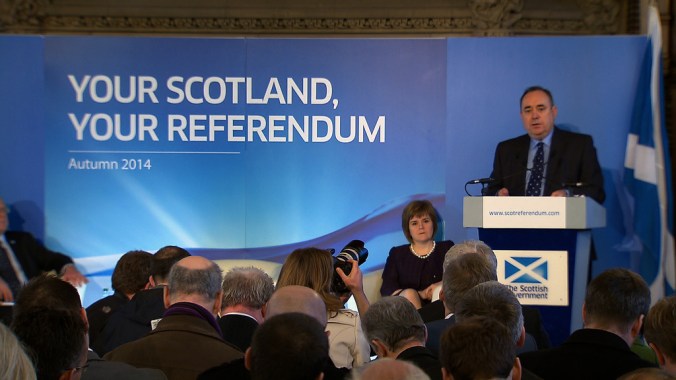
Salmond tried to soften the blow by concocting a plan by which he would take a package of offers to the UK Government and ask for a series of “more powers”. Only then would he present the case to Scotland to either accept his deal or to demand independence. The date of the referendum was set. 18th of September 2014.
6762166885_4ea71fe9bf_b.jpg

Winter 2013

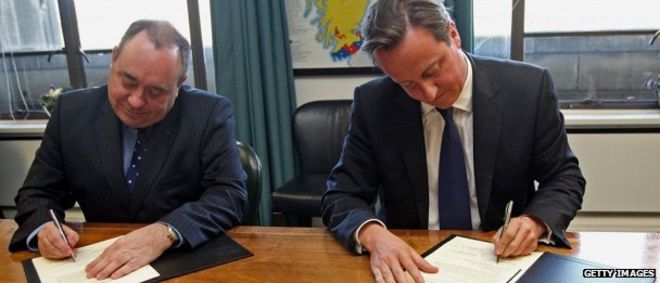
The talks with the UK Government has not gone as well as hoped. The general impression in Westminster is, at best, one of “this again?” and whilst they eventually agreed to hand over a few concessions – Scotland would gain the ability to adjust income tax by a couple of pence in the pound and some obscure regulatory powers that no-one could really describe well would be shifted – but the overall impact was clearly going to be negligible. Salmond, of course, plays the whole thing as a glorious success. The Scottish Conservatives are no friends of independence but welcome the successful deal with Westminster and pledge to endorse and support it.
_63504981_salmondcameron_getty608

Spring 2014

The Independence Campaign is taking shape. Salmond would head up the Scottish Government’s “official” Remain campaign under the banner “Not Yet”. He’d play up the economic benefits of the close ties with the rest of the UK whilst emphasising the autonomy that Scotland had and would get in the future. In Salmond’s vision Scotland would take the path of Australia. A slow, decades long decoupling from the rest of the UK by which independence would eventually be achieved but…“not yet”.

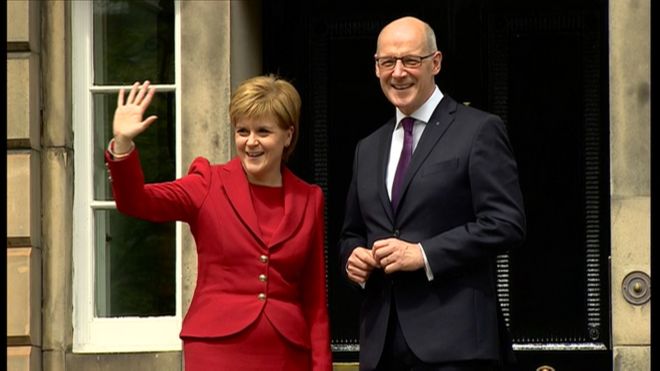
This, of course, wasn’t going to be soon enough for some. In a shocking move, senior Scottish Government cabinet members Nicola Sturgeon and John Swinney break with the “official” position and declare themselves for Leave. They take with them a substantial enough bloc of the SNP to form a rival campaign under the banner “Scotland Now”. The majority of activists from opposition parties such as the Greens, Socialists as well as a minority of members from Labour and the Lib Dems flock to their call for an independent Scotland within Europe.
_89728692_sturgeon_swinney

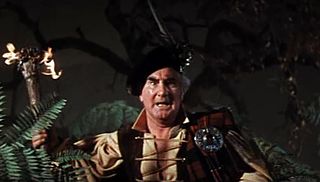
Meanwhile, Siol na h-Alba launches their Leave campaign from their constituencies of Brigadoon and Dunroamin pledging “Scotland for the Scots” and the complete severing of all ties with the rest of the UK as soon as possible. Harking back to Scotland’s past as a trading nation and playing up sentiments of traditional “warrior spirit” they are determined to court the most fringe elements of Scottish society to their cause. Though careful to avoid any direct accusations of racism, SnA leaders busily work with their pliant media contacts to insert dog-whistle phrases into their puff pieces. Media attention on the group has never been higher despite them still only having two MSPs (neither of whom were elected under the Siol na h-Alba ticket).
Tudor_Owen_in_Brigadoon_trailer

Both Leave campaigns declare themselves to be the “official” voice of independence and register their interest as such to the Electoral Commission. There is a lot at stake as the official campaign would gain an increased campaign spending limit as well as direct government funding and representation on political broadcasts. After weeks of debate, the Commission eventually rules in favour of Sturgeon and Swinney’s Scotland Now.

Summer 2014

The campaigning is now fierce but cracks are beginning to show. Much of the debate has centred around things like the economy and immigration but the arguments are beginning to sound increasingly vacuous. Few debaters are willing to lay down solid plans or proposals of their own, preferring instead to attack the opposition whenever they mention something, anything. The same soundbites are repeated on the evening pundit shows. Shows like Question Time become dominated by debates about domestic policy and rarely do any clear answers emerge.

Scotland Now comes under increased scrutiny as it emerges that they have little idea about what, precisely, they wish to do with independence. Calls for an Independence White Paper begin to gain traction and the few media interviewers with the nuance to do so begin to ask about procedural questions such as how the Scottish Government would begin negotiations to disengage from the UK. The UK’s constitution, being an “unwritten” document is particularly vague on the subject and the previous examples of disengagement – Ireland and decolonisation – are not altogether helpful in the modern age. Questions, too, about the border, currency and other issues are answered only with platitudes and soundbites.

Not that the other Leave campaign is any better. Asked on what currency Scotland would use, Siol na h-Alba’s leader Niall McFergus simply said “No the Inglis yin!” and refused further questions.

With the date of the referendum fast approaching, public opinion begins to crystalise into two camps. Folk who are leaning towards Remain tend to say that they are concerned about the economy and are either supportive of more immigration to Scotland or are, at least, not bothered either way about it. Folk who are leaning towards Leave tend to say that they are worried about the levels of immigration to Scotland but are either less concerned about the economy or are convinced that it will thrive once the “shackles of Westminster regulation” are cut. The solid majority for Remain has begun to ebb slightly in the polls but little momentum is gained in either direction.

Autumn 2014

Scotland Now finally releases its Independence White Paper. A dismally short piece containing no real information whatsoever, it is ignored entirely by the now rabidly pro-Leave media and is noticed at all only by a few bloggers on social media.

The Not Yet campaign still appears to be on track for a solid victory, albeit not quite as large as once they hoped. Salmond remains as confident as ever behind the podium but, privately, whispers have emerged of apathy within his campaign. Activists are thin on the ground even in potentially target areas. There is little enthusiasm even among political wonks for his message of “the same but a little better”.

Siol na h-Alba releases an extremely divisive political attack advert showing expies of Sturgeon and Salmond personally welcoming crowds of people coming across the border at Gretna. Police Scotland warns of increased tension in communities but McFergus denies any racial connotations in the advert saying that no particular group was represented. They withdraw the ad later that day under the intense negative pressure but the message is sent and lands home with its intended target.

September 2014 – The Week of the Referendum

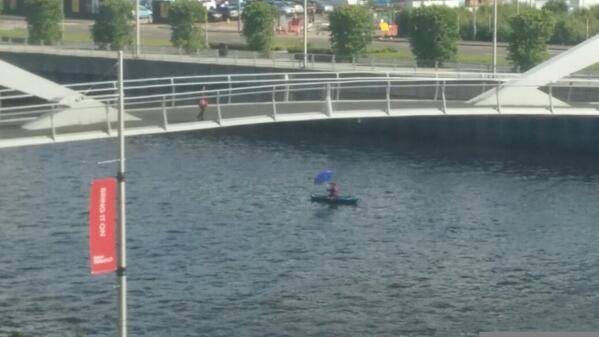
Siol na h-Alba kick the referendum off with a week of political stunts by organising a “Fête of Scottish Naval Might” by inviting “all patriotic trading vessels” to journey up the Clyde. The reception is…rather less than anticipated.
Umbrella Boat

McFergus blames media bias for only running photos of “empty stretches of river between gaps in the flotilla”. No photos of more crowded sections are forthcoming officially or otherwise.

Salmond is near invisible on the political scene although his press corps still doggedly assures a solid victory for Remain. The polls have been a statistical tie for weeks and Leave is still nudging upwards…
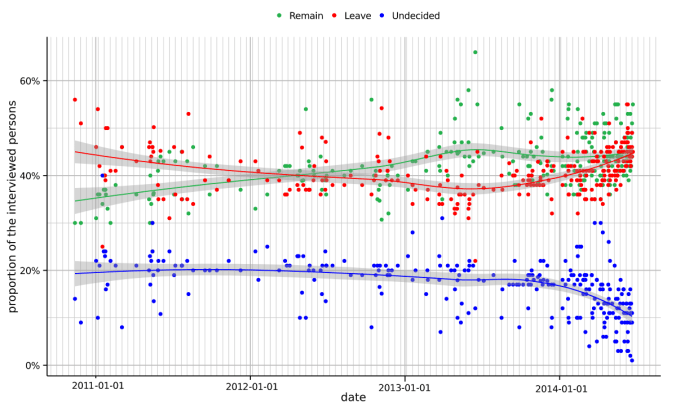
Brexiteer Indy Poll

Sturgeon and Swinney are seemingly never off the television at this point but a disastrous interview by Swinney on the final Sunday before the polls in which he struggles to outline any solid numbers about immigration figures is widely ridiculed although he does promise that in the event of a victory for Leave, his team will be ready to start negotiations “the following Monday”.

The Results

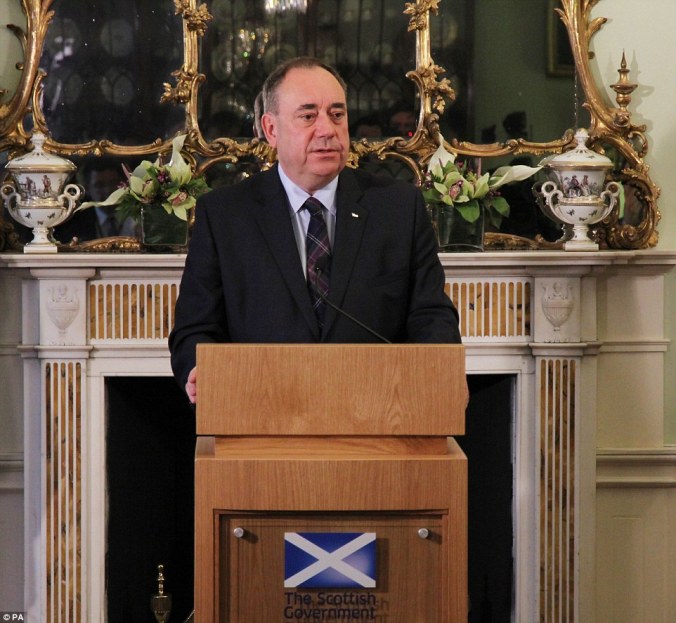
With a 65% turnout and margin of 51.89% for Leave versus a 48.11% for Remain, Scotland votes to Leave the United Kingdom. It is a result which sends shockwaves throughout the islands. Early in the morning of the 19th of September Alex Salmond resigns with immediate effect saying “The Scottish people have voted and their will must be respected“.
1411144411341_wps_3_Handout_photo_issued_by_t.jpg

It is widely expected that the victorious Scotland Now team will take control of the Scottish Government and begin to implement their (still unpublished) plan to remove Scotland from the United Kingdom. In a shock move, however, the press conference which follows the First Minister’s shows the downcast figures of Sturgeon and Swinney apologising, equivocating and, ultimately, also both resigning their positions in the cabinet. The Scottish Government is now in turmoil with fragmented factions of Not Yet and Scotland Now both accusing each other of failing to come up with a proper plan for leaving. The SNP  hastily organise a leadership contest to replace Salmond whilst assuring that they still have the confidence of the Parliament thus can remain in government.

To cap an already historic day, Niall McFergus also resigns as leader of Siol na h-Alba saying “The job’s done. I’m away tae Nova Scotia”.

Obviously, the Scottish Government is in no condition to start talks on Monday 22nd September. The UK Government says that it will wait till everyone is ready…but that its patience is not unlimited.

October 2014

The SNP leadership contest is marked more by who rules themselves out than by who rules themselves in. All of the prominent pro-Leave faces either beat a hasty retreat for the back door out spend their time outright poisoning the attempts of their colleagues to push themselves forward. In the end, the only person left standing is former Justice minister Kenny MacAskill, who had been a prominent activist for Not Yet. Immediately, his tenure is under question both for his role in the former campaign, the fact that he was “not elected” to the position and also due to questions raised during his time as minister. Nonetheless, a government is formed and the SNP’s majority sees it pass its first vote of confidence. The new government vows to take charge of the “mandate given to the by the people” to leave the UK but says that time will be required to formulate a plan. A deal is struck with the UK Government. Once the Scottish Government is ready to begin negotiations it will notify Westminster via the Scotland Office which will then trigger a process by which Scotland will leave the Union two years later.

March 2015

There is still no plan. The Article SO trigger (as it has become known in the press) has still not been pulled. Patience is wearing thin on all sides. The economy is starting to feel the strain of the uncertainty and many are starting to wonder if independence will happen at all. PM MacAskill announces that he has put together his negotiating team but is immediately criticised for it consisting solely of SNP members from the Central Belt. Parties which supported Leave feel betrayed and locked out. Parties which voted Remain demand that the negotiations take into account the whole of the country and not just the SNP’s fiefdoms. Places like Orkney and Shetland, which voted strongly Remain, demand a distinct “place at the table” to ensure their specific interests. They even produce a detailed and extensive White Paper (at least, extensive in comparison to the still non-existent paper from the Scottish Government) detailing their concerns and offering various compromise solutions. The demand for a place at the table is denied and the White Paper is simply dismissed by MacAskill and the Scottish Government. Even a bill demanding such representation which passed jointly by the councils of the islands goes without formal response.

By the middle of the month there is, at last, some movement. MacAskill announces the publication of a Leave White Paper and announces that Article SO will be triggered by the end of the month. Scotland will leave the UK by the 29th of March 2017.

April 2015

MacAskill sends further shockwaves through an already the Scottish political world by announcing a snap election. Claiming that he had an epiphany whilst hillwalking, he claims that it would increase the Government’s mandate to carry through independence and, he hopes, would neutralise the still lingering claims about the means by which he became First Minister. The election is widely regarded as a rubber-stamp exercise given the still-vast lead the SNP enjoy in the polls. The election is set for June 8th but some warn that the Article SO timer is still ticking…


June 2015

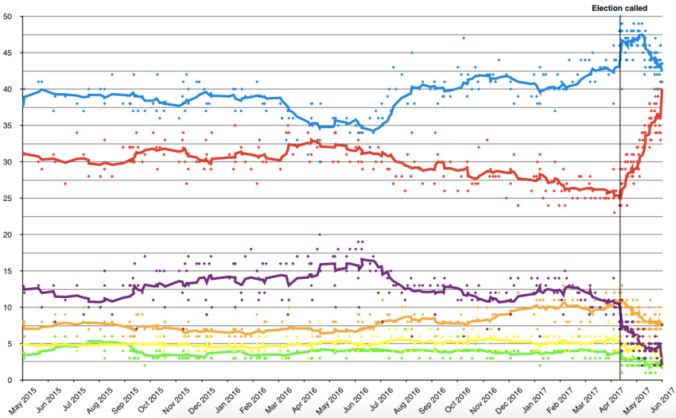
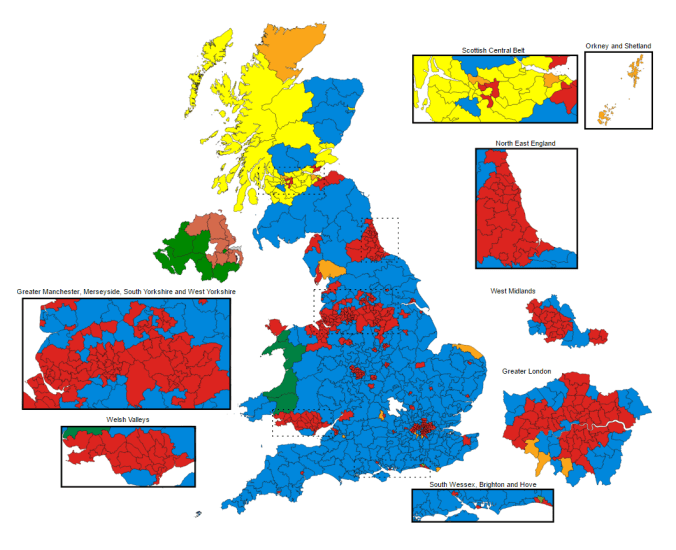
The results of the general election come in and it is not to the Scottish Government’s liking. An unexpectedly blistering campaign by Labour’s Jim Murphy – who had been widely derided as “completely unelectable” even by members of his own party – utterly smashed through all that was placed before it. From the day of the announcement of the snap election to the day of the poll there was a rapid rise in support for Labour right across the country.
Opinion_polling_UK_2020_election_short_axis

From hopes of a crushing majority, the SNP fell to one seat short of being able to form a government at all. Scotland was, by now, the laughing stock of the British Isles but MacAskill vows to cling on and see independence through. He turns to Siol na h-Alba – who lost their new leader Tam McGlashan in Dunroamin but scraped a victory (by two votes) in Brigadoon – to prop up his administration. Soon, the media is full of tales of the worst of Siol na h-Alba’s misdeeds. McGlashan resigns and a new leadership contest is run but by this point, no-one particularly cares about the party which started this whole sorry story.

MacAskill remains determined to progress with Independence talks with the UK Government and sets the date of 19th June to hold the first talk. However, coalition talks with Siol na h-Alba are not going well and the first vote of confidence on the new government is delayed amid bizarre excuses such as “the ink needs time to dry on the paper“. A new date for the vote of confidence is set for June 21st – two days after the first of those discussions with Westminster. The Scottish Government seems as if it will progress without a mandate and without even having a secure and stable government.

The First Meeting

Team Scotland arrives in London to meet the UK delegation. The six man (and it is six men, the lack of other genders is noted) team consists solely of SNP members with all other parties locked out completely. It will be the test by which the rest of the negotiations are measured. MacAskill steps into the room. Full of bluster. Empty of any actual documents. Across the table, David Cameron is waiting…

Back to (our) Reality

From the outset, the UK’s handling of Brexit has been one of the most appalling adventures in modern UK politics. It cannot be ignored that for all the weaknesses of the last independence campaign and for all we can argue about where it could have done better, the old accusation that Scotland would have been walked over by Westminster in negotiations simply no longer stands. The UK really has become a joke in the world and this should not be forgotten when the time comes to plan our own negotiations. Although, at the same time, we should not assume that they won’t learn the lessons of the Brexit disaster. I’m just saying that we should learn them first and make sure that our case is absolutely the best it possibly can be.

I hope you’ve enjoyed this little bit of allegorical fiction. Maybe, if the UK continues as it has been, there’ll be another chapter someday.

tcg-logo-7


The State of This (Union)

It’s only hubris if I fail. – Julius Caesar

GE2017.png

On the 18th of April, Theresa May called an election which was not required, so she could increase a majority she already had, so that she’d have a mandate she didn’t need to negotiate with an EU delegation which doesn’t care about such mandates.

Continue reading

The Drake Equation

When was the moment you became afraid, genuinely afraid, for the outcome of Brexit?

Maybe it happened a while ago. Maybe it hasn’t happened yet. I hit that point today.

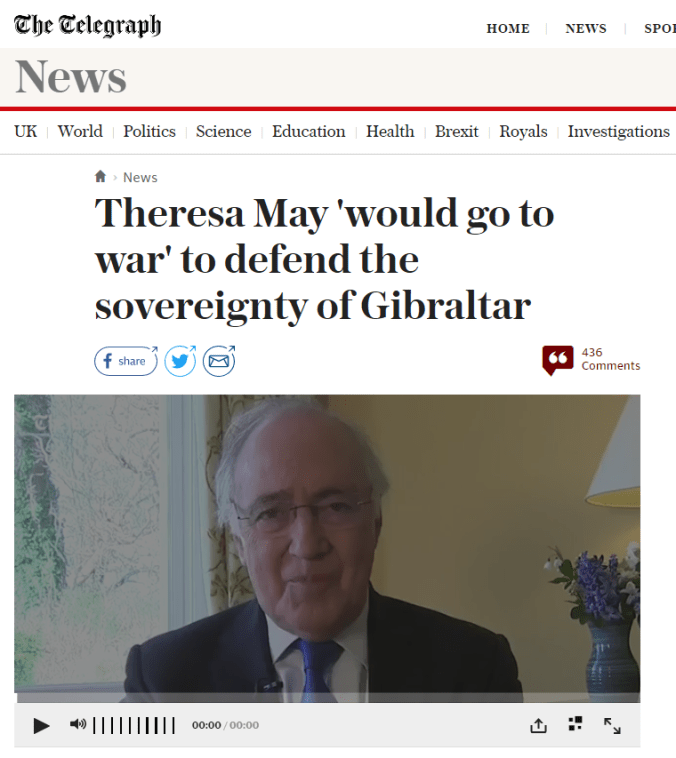
Gib

We’re less than a week into the Brexit process and the UK has already told the EU that there may be security concerns…nudge nudge…if it doesn’t get what it wants (although that was just a misunderstanding, don’t you know?).

Then the Government was utterly blindsided by Spain gaining a veto over any deal which involves Gibraltar – despite those in the actual know talking about it for literally months prior to the vote.

In response, senior politicians in the UK – a NATO member – are threatening another NATO member with the prospect of actual war.

And the negotiations haven’t even started yet.

As part of my EU Referendum series, back right before the Brexit vote I stated that I didn’t believe the hype that a Leave vote would be the utter ruination of everything.

I even felt that J. J. Patrick’s three part series on the road to a Dystopian Brexit was, if plausible, at least well out on the edge of the probable. At best a warning rather than a prediction.

What I hadn’t, obviously, fully appreciated was the utter incompetence of the UK Government’s Brexit team. I’m not just talking about the bumbling excuse for a clown that is Boris Johnson – such a Titanic Success he’s been – but also David Davis, who nine months after the vote and just days before the triggering of Article 50 couldn’t answer even basic questions about the “plan”.

But even all that is just incompetence. Even that would just lead to the UK being out-negotiated on every major issue by the EU until it either accepts the deal offered or stomps off into the sunset without one.

And this latter option is what looks increasingly likely. It really does look like the “plan” is to walk out of talks and to find some way of blaming the EU for it happening.

But back to that headline. The sight of the UK threatening another European nation with war as a negotiating tactic – for that is what it is, make no mistake there – is deeply disturbing. At heart, I’m a pacifist. War should never be considered an “option” in the diplomatic process, not even the final option. It should be considered to be the consequence of the failure of the last option. Even the threat of a war is one which can rapidly spiral out of control, if one ever presumed for a moment that it could have been controlled.

What’s the strategy here anyway? By launching an attack on another NATO member, the UK would pull in other NATO members, most of them also European. Does the UK want to pull the USA into this to pick an ally? Or hang one side (or both) out to dry?

Is the UK relying on Donald Trump being a rational and impartial mediator in all of this?

As has been noted elsewhere, this shouldn’t even have been any kind of issue at all. Most of the deals of any competence within the EU divorce settlement, including the Gibraltar/Spain border issue, need to be ratified by the entire EU27, including Spain, anyway. At this point it looks as though the inclusion of the explicit Spanish veto was added to the EU’s strategy document for one (or both) of two purposes. a) As a sweetener to keep Spain “on-side” and acting within the whole of the EU27 “as one” and/or b) to test the UK’s plan to see what they’d do and to test the robustness of its strategy ahead of the negotiations.

The UK didn’t just blink in the face of this test. It has shut its eyes, screamed loudly and ran right off the cliff. The EU now knows that the UK has buttons which can be pressed. Westminster needs to ramp down the rhetoric immediately and get a serious grip of itself before it reaches the negotiation table proper if it wants to be taken seriously. From the lack of planning, through the deliberate exclusion of the devolved nations (and Gibraltar) from any kind of involvement in negotiations out to frankly stupid statements like this the UK has done a great deal of harm to its own reputation and the chances of making Brexit bearable, never mind making it a “success”.

And we’re less than a week into the Brexit process. Two years to go.

tcg-logo-7

Scotland’s New Deal

“Remember, the EU isn’t as keen on “Special Deals” as it once was”, The Common Green, 11th February, 2017.

I’m always more than happy to be proven wrong especially when it’s in a pleasantly surprising manner.

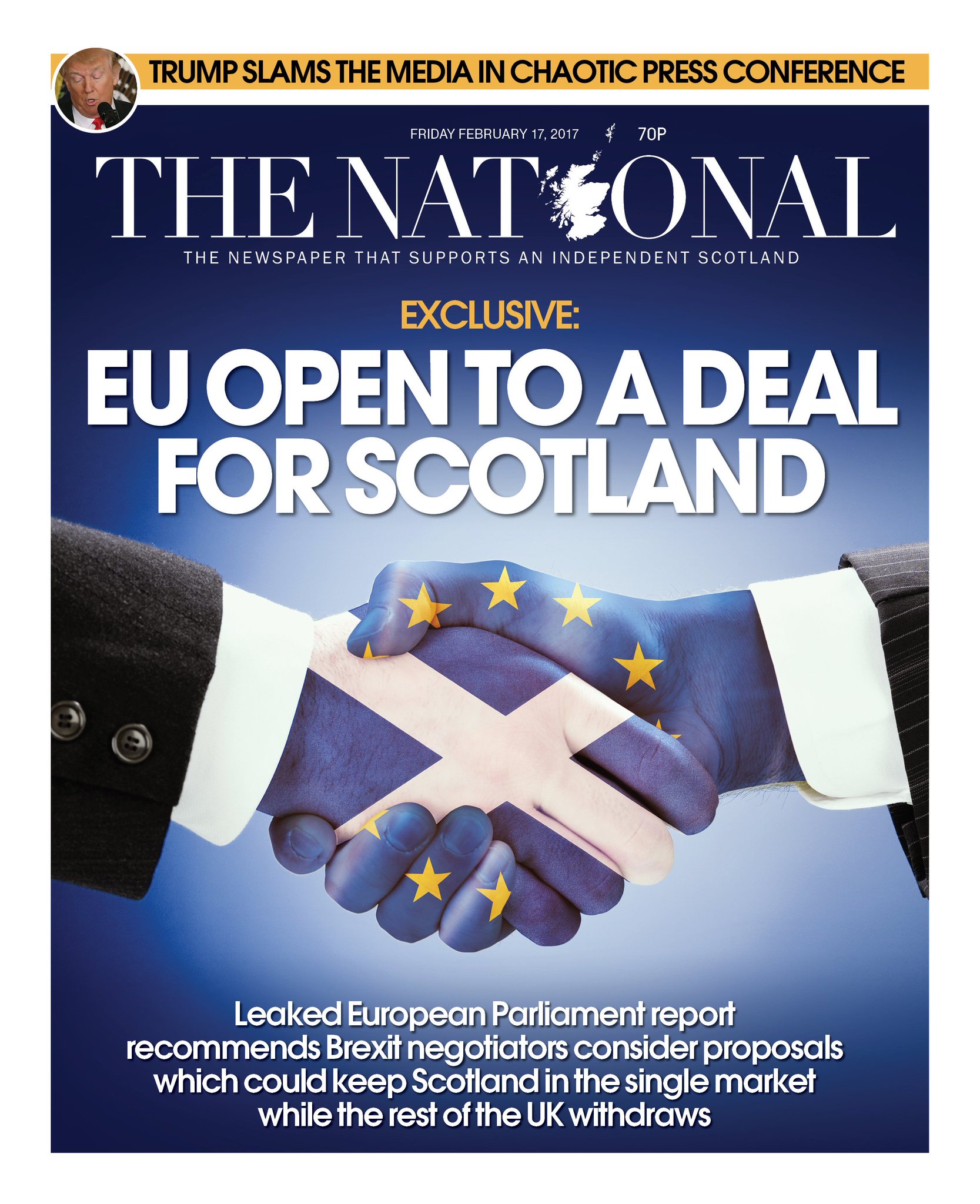
This week saw the news story in The National that, contrary to my impressions up till now, that a report had been written by the European Parliament’s Committee on Constitutional Affairs recommending that the EU should  indeed be considering some kind of “Special Deal” for Scotland which would allow it stay within the Single Market even if we remain within the UK after Brexit.

Continue reading

QuEUing up for Membership

Don’t want to read 2600 words? Twitter version: None of the things people say will be hard are. Few are talking about things which will be.

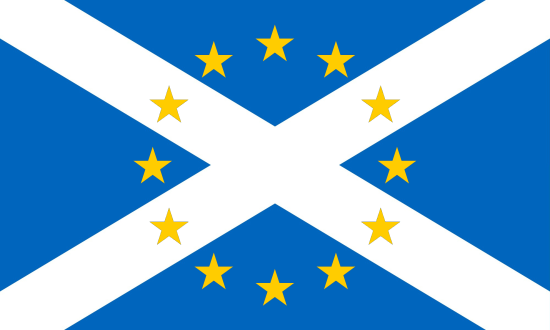
SaltireEU2

Only in the madhouse world of UK politics that a government which is actually embarking on the process of taking Scotland out of the EU against its will while claiming that this would be a wonderful thing could somehow contrive to simultaneously try to sell us that line that an independent Scotland would be out of the EU against its will and that would be terrible.

Whilst this is going on, the same several year old phony war surrounding Scotland’s membership of the EU continues with a great many people still claiming that we would a) be forced to join the euro and b) Scotland would be punted to the back of the accession “queue” doomed to wait till all other potential members (including, possibly, Turkey) have joined before we’ll get a look in.

This week has seen the publication of a couple of commentators on Scotland’s precise position regarding our EU membership, independence and the interaction with Brexit which has sent every man and their dug howling at the moon and trying to spin themselves into position to get another shot in.

So lets take the opportunity here to take a slightly more sober, honest and open look at how things work in the EU and plot out a couple of likely (that is, actually possible) pathways from which Scotland goes from here, through Brexit and independence and to an independent Scotland within the EU.

Continue reading

You’ll Have Had Your Devolution?

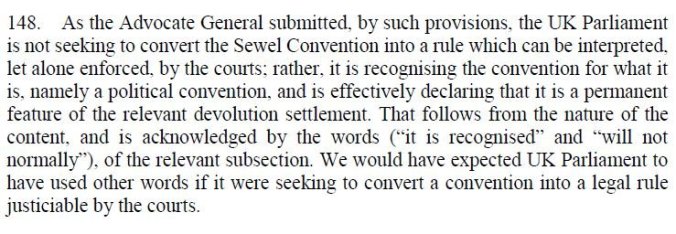
The Supreme Court has rendered its judgement on Article 50 and Brexit. In an 8-3 ruling they have decided, as reasonably expected, that Parliament must vote on the triggering of Article 50 and the beginning of the Brexit process.

On the second point of the case, that the devolved Parliaments should also be consulted, the Court ruled 11-0 that:

SCJudge.jpeg

In essence saying that whilst Westminster could consult the devolved Parliaments and could even state that their formal recognition was required it doesn’t have to and the Supreme Court will not force it to do so. In practice, we all know that this means it won’t. Scotland’s will can be overruled at Westminster’s. Power devolved is power retained.

Wallonia will now have more power than Scotland to negotiate, influence and – eventually – veto or approve the Brexit deal. So much for that “most powerful devolved government in the world“.

The idea of a Federal UK is now dead. Westminster is sovereign. As a former UK Federalist, this is a painful and depressing idea to admit. I cannot see any possible pathway to reach that destination. Those still in favour of it may have to have some very hard thinking to do now. (Mind you, if Wallonia DOES end up writing up more of the Brexit deal than Scotland does, this may be a good argument in favour of EU Federalism. That’s possibly a discussion for the future)

This also means that the SNP’s “Scotland’s Place in Europe” paper has only one pathway forward now and that’s through amendments to the Article 50 trigger bill when it comes through (something they’ve already pledged to do). If Scotland will not have its say from its own Parliament then it will have a voice at Westminster. And if we’re told that we’re to have no influence there either…?

tcg-logo-7

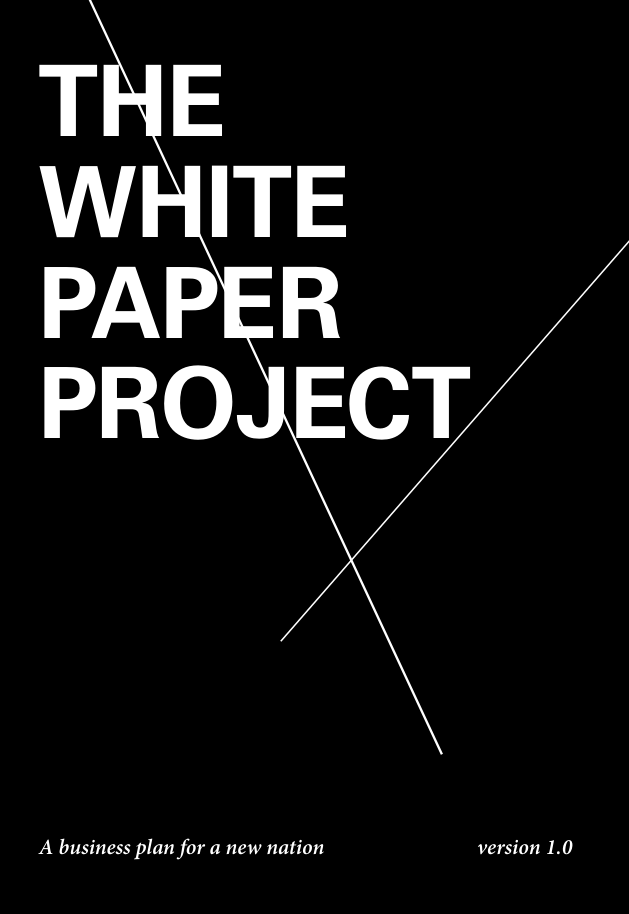
The White Paper Project

“Work as if you live in the early days of a better nation.” – Alasdair Gray

wpp-v1-cover

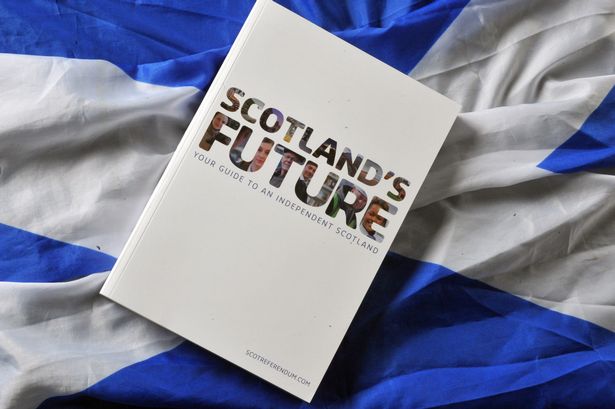
Today I get to announce the launch of a very long awaited project I and the rest of Common Weal have been working on for quite some time now. We announced back in September that we have been working on renewing the case for Scottish independence by publishing a successor to the Scottish Government’s “Scotland’s Future” document.

Version 1.0 of the Common Weal White Paper can be download here or by clicking the image above.

This is a leaner document than Scotland’s Future was. That document was as much a party political campaign device as it was a blueprint for independence. It not only sought to describe the powers which would come to Scotland independence but also sought to convince voters of the SNP’s own vision for independence. There was nothing inherently wrong with this latter task per se and other parties too sought to promote their own distinct visions as well – as they will all do so again throughout the next independence campaign but this is not the task of an independence White Paper. This paper shall, as far as possible, not seek to propose a list of policy ideas which an independent Scotland could do nor shall it attempt to convince you of the merits of those policies. It merely lays out the technical and structural requirements which must be in place for Scotland to become an independent country once we, the voters, decide that it should become so.

It is a “consolidated business plan for the establishment of a new nation state”.

To this end, the White Paper is split into several broad sections. Part 1, Process and Structures, covers the foundation of a National Commission – a cross party and cross administration body which will be tasked with designing and implementing the institutions and systems which need to be set up in the time between the independence referendum and the formal independence day. It is one thing to state, for instance, “There shall be a Scottish Central Bank”. It is quite another to decide how large it needs to be, where it needs to be based and who needs to be hired to run it. The National Commission shall also be given interim borrowing powers so that it is able to issue bonds, raise capital and fund the construction of the vital infrastructure Scotland would need to either move from rUK or build from fresh.

Part 2, Key Institutions of an Independent Scotland, covers all those things we kept being asked questions about during the last referendum. Would we have a constitution? A currency? What would we do about borders? Defence? All these and more. Of course it’s not yet possible to answer every question in this regard. Some of it will be up for negotiation with rUK, some of it will be dependent on the shape of the Brexit deal between the UK and the EU and Scotland’s relationship with both in the run up to independence but we’re making a stab at as much as we can and this is the section which will perhaps be most expanded upon as the Project is iterated in future versions.

Speaking of negotiations, Part 3 covers the prospective shape of some of these – chiefly the allocation of debt and assets and what rUK’s response to our leaving shall mean for our claim on them. Also covered to some degree is how Scotland will interact with various international and supranational organisations although it should be stated once again that no case shall be strongly made for Scotland’s joining or refusal to join any of these organisations. That shall be left to the party or parties which seek to form the first independent Scottish parliament.

Finally, Part 4 outlines the position of Scotland as far as finance and borrowing goes as well as outlining as best we can the default fiscal budget for year one of independence. It is, of course, almost impossible to place any kind of actual certainty or promise on such a budget as it is based on several key assumptions such as the desire to keep both public spending and the various tax revenue streams broadly similar to their position at present. If a party decided to scrap the entire tax system and replace it with one of their own devising then it would have to be up to them to explain how that worked and project the revenue to be gained from it and how it would be spent. Other assumptions include Scotland spending the money assigned to it in GERS for various “UK projects” on projects of similar value and in similar accounting lines (so that, to pick an arbitrary example, our “share” of UK economic development funding spent outside Scotland but from which Scotland “benefits” would instead be spent on economic development within Scotland). Again, whether or not this happens will be a case for the individual parties to make and will depend entirely on accurately and precisely how the current fiscal projections for a devolved Scotland within the UK map onto the fiscal situation of an independent Scotland.

Once again, this is not the completion of the White Paper. This is the beginning. You will see that there are several sections which need to be expanded and built upon and items like costs and figures will be updated as time goes on (the default budget, for instance, is based on 2015-16 figures but – as we’ve probably noticed by now – Scotland didn’t become independent in 2015-16 so these precise figures will be revised as and when they should be). Some areas require the attention of people with specific experience and expertise in them to be able to complete so we are openly calling for those experts who are able and willing to contribute. Please contact us if you want to be involved. Let’s work to build the early days of our better nation.

TCG Logo 7.png

Brexit Means…?

Brexit Club2

Today sees the news that the High Court has ruled that the Prime Minister cannot declare the triggering of Article 50 of the Treaty of the European Union ex cathedra and must seek the approval of Parliament before doing so.

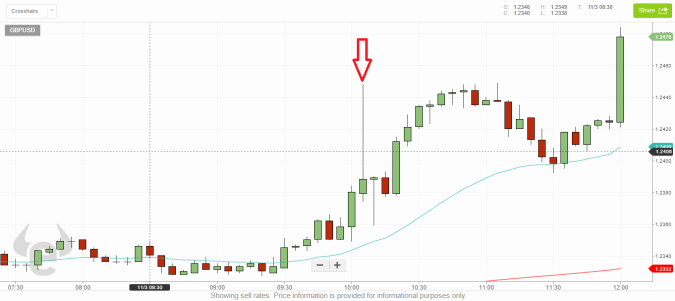
This news triggered a spike in the value of the beleaguered pound…for all of six minutes before it fell back to a baseline rise in preparation of the Bank of England’s inflation and interest rate report 90 minutes later.

GBP.png

Of course, the UK Government will protest this ruling and likely appeal it to the Supreme Court which may overturn the ruling but assuming it does not, what can Parliament do to Article 50?

Already there are murmurs of the possibility to the House of Commons voting against the possibility of triggering Article 50 at all and effectively canceling Brexit altogether. Whilst this could be legal – the EU Referendum was entirely a consultation and conferred no obligation on the government one way or the other – I can’t possibly fathom a situation of this happening without there being actual riots in the pro-Leave streets of England and Wales.

Whilst Scottish and Northern Irish MPs may well have a mandate to back such a move on the grounds that those nations voted to Remain there is perhaps a wiser mode of opposition, one which could be adopted by pro-Remain or at least pro-NotADugsBrexit MPs.

Instead of opposition to Article 50 entirely, there should be a principle of opposition to an Article 50 trigger which takes us into negotiations without the foggiest clue of what we want to negotiate.

scottish-independence-6348782
Imagine we tried to pull that trick in indyref1

Four months on from the referendum it’s clear that “No Running Commentary” has been code for “We Have No Plans”. That’s completely unacceptable now. It is time to see the Brexit White Paper. Both Government and Opposition should bring to Parliament a list of their goals, objections and red lines and fashion them into an initial statement of will to take to the EU negotiating table. Sure, there will be compromise and change after that and yes, there may be “no running commentary” throughout the process but the people of the UK must be able to judge what we come out with against what we went in with so that we may decide if the negotiations are successful enough to accept the deal offered.

There may well be a Parliamentary vote – or perhaps even another referendum – on that said deal in due course although it should be noted that once Article 50 is triggered there’s no very clear way back in – although the door is being held open by the EU. Any such vote will not be based on the “deal” versus “Stay in the EU, no harm, no foul”. It’ll be between the ‘deal’ and ‘the hardest of all Brexits’.

So that’s my challenge to the various UK parties – both Leave and Remain. What does Brexit mean to you?


Regular readers will know now that Common Weal has been very hard at work looking at the issues surrounding the independence debate, especially those arguments which just simply didn’t convince a certain segment of voters. I think we were all hoping that ‘someone else’ would come along and do this right after the last referendum but, for various reasons, it hasn’t happened. So Common Weal has decided to just roll up our collective sleeves and do it.

We’ve already published a paper reopening the currency debate, debt and assets, a proposal for a National Investment Bank and others We want to produce further papers on pensions, defence, customs and excise, a detailed paper on the role of the Central Bank of Scotland, and others. All working up to a paper not just showing the limitations of accounting exercises like GERS but doing away with it entirely and building a case for an independent Scottish budget built from the ground up to suit our needs, rather than just being a tweaked version of what the UK does.

We are incredibly under resourced for this work but we think it’s work worth doing.

If you do too, perhaps you’d like to consider a donation to Common Weal to help us on our way: www.allofusfirst.org/donate
tcg-logo6c

Poll: Scottish Independence and the EU

SaltireEU2

I’d like to run another informal poll. This time looking at attitudes towards independence in the light of the EU situation. Whilst all views are welcome I’m particularly interested in hearing from the segment of the voting population who are for Scotland’s independence from the UK but are skeptical of or outright against Scotland’s membership of the EU.

If, as appears highly likely, we are presented with an independence referendum predicated on EU membership, which way would you vote?

Please feel more than free to use the comments to expand on your thoughts. Incidentally, if you are someone who previously voted or were minded to vote No in 2014 but have since changed your mind to Yes, I’d also love to hear your views.

As previously, if this is your first time commenting on this blog or if you include more than a couple of external links in your comment it is likely that you’ll land in the moderation queue. I’ll try and approve things as quickly as I can.

tcg-logo6c