Senatus Populusque Caledoniae

(Apologies if my scant Latin has mangled that translation. If someone corrects it, I’ll see about writing it out 100 times on the walls of the Palace.)

It seems that all news is canceled this week. All of it. There’s nothing happening. Our state broadcaster (which is totally unlike other state broadcasters in that when it promotes its state’s national interests, this is a good thing and not the most hideous evil to ever despoil the airwaves) has told us that the only thing of note happening anywhere is that someone is marrying someone with Magic Blood.

it-e1511864823786.png

This is to be a ceremony that we’ll all proudly take part in, by which they mean that we are to pay for it, despite not even being invited to the party. We’re not even getting a day off work because that would apparently cost too much.

Those in power are definitely not going to use this event to sneak out the devastating news that benefits are to be frozen again this year – that’s effectively a 3% cut after adjusting for inflation. I’m certain that they’ll be bending all effects towards sorting the gaping holes in the UK VAT system which allows more than £1 billion to be evaded every year.

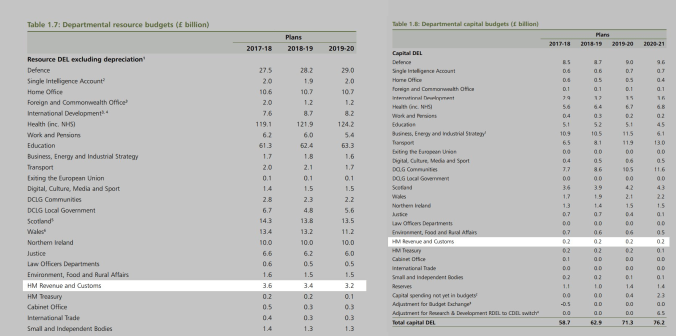
They absolutely wouldn’t be cutting HMRC’s budget by £400 million per year RIGHT before the UK is going to leave the largest Customs Union in the world, would they?. They certainly would be breaking ground on all the new checkpoints and infrastructure that are going to be needed. The department should be awash with capital spending in preparation, shouldn’t it?
HMRC.png

They certainly wouldn’t big up their having done some furiously detailed groundwork on the impact of Brexit when they hadn’t actually done any such thing and were just hoping that no-one would ask to read them…till they did.

The UK has some seriously skewed priorities and it goes from the bottom right to the top of the structure of governance. Scotland needs to have a good, hard discussion about what role it plays in all of this.

The Scottish Parliament already has a far fairer voting system than the one used for UK elections (despite the comparative complexity of the former) but should we take the step of becoming an independent country then we’ll have to have a think about some other levels of government too.

I’ve already said a fair amount about the state of Scotland’s local government so today I’d like to look at what we’d want to do ABOVE the level of the present Scottish Parliament.

For instance, we may well decide to create an Upper House to scrutinise legislation but what we absolutely shouldn’t do is copy the UK method of stuffing it full of Lords and paying them to sleep off their hard day of…doing what ever they do for £300 a day.

Image result for house of lords sleeping foulkes

Far better would be a Citizen’s Assembly. Think of it as Jury Duty writ large. We’ve already decided that the best way to determine if someone has transgressed our laws is by a jury of randomly selected citizens so we could easily set up a method by which randomly selected citizens can determine if the laws themselves are just, fair and easily understood.

And for above that? How do we represent the nation of Scotland to the world?

If you had asked me in 2014, I would have said that I didn’t really mind too much and was pretty content with the Scotland’s Future plan of keeping the monarchy in the same way that Canada and Australia have.

But I’ve shifted somewhat since then. I’m not sure I’d really welcome the appointment of a Governor General as Scotland’s nominal Head of State nor am I completely clear on what duties they would actually have in practice. The First Minister already does most of the Head-of-State meet-and-greet stuff when folk come to Scotland and it seems a little strange for that to stop.

Nor do I want a restored and separate Scottish monarchy. Again, I’ve no time for someone to tell me what to do by dint of their divine appointment or Magic Blood even if Scotland does maintain a tradition of the Scottish Monarch being subordinate to the people of Scotland. Nor should a country professing to be a democracy pride itself on  its locking citizens out from ever obtaining any governmental office even in theory.

So, if we choose to have an official Head of State separate to the First Minister then it’ll have to be an elected President and that seems straightforward enough to arrange.

Though we still need to have that discussion about what we want them to DO. As said, the First Minister already does most of the Head of State meet-and-greet stuff when folk come to Scotland so we’re faced with the choice of either actually empowering our Head of State and giving them executive controls like the power to veto laws, sign their own legislative orders or other such powers (i.e. similar to the President of the USA) or we continue to have a head of state with a ceremonial role but little actual power.

And as I think on it…whilst I think it would be an upheaval too far to actually empower a Head of State, I don’t think I feel so enthused about swapping an unelected but powerless leader with an elected but still powerless leader. It just doesn’t feel as if it’s a decision rooted in the practical. On the other hand, I’m somewhat nudged by the argument that a Head of State separate from the government may be able to say and do some things without constraint by that government (though it’s noted that our current monarch maintains a “strict” rule against saying anything at all unless they think they can get away with it).

But maybe I’m wrong.

So help me out here. What would you want from a Head of State of an independent Scotland? How would someone gain that position? And what kind of person would you expect to see in the role?

TCG Logo 7


Affording It

“Britain is not Great. Britain is Weird”

IMG_20171104_144549

The Usher Hall voting >90% in favour of Scotland adopting its own independent currency.

On the 4th of November I spoke at the Scottish Independence Convention’s Building Bridges to Independence conference. As with my SIC talk in January, it fell to me to be the one with the graphs and statistics – this time on the topic of public finances and the impact of independence on Scotland’s budget.

The livestream of my talk can be viewed thanks to Independence Live and is the first talk in this segment.

Below the fold are copies of my slides with comments drawn from my talk and references to the points made. The slides can also be downloaded here.

Continue reading

SIC Build Conference Slides

Edit: This blog post has been expanded with commentary and references in addtion to the slides. You can read that version here.

build

This post is for folk attending the SIC Build 2 Conference.

If you want a closer look at the slides which go with my talk, you can download them here.

I also make extensive reference to my Beyond GERS paper which can be downloaded here.

All of the slides are also reprinted in sequence below the fold

Continue reading

Scotland’s National Bank

The Croatian National Bank shall be the central bank of the Republic of Croatia.
The Croatian National Bank shall be autonomous and independent, and shall report on its work to the Croatian Parliament.
The Croatian National Bank shall be managed and its operations shall be conducted by the Governor of the Croatian National Bank.
The organisation, purpose, tasks and remit of the Croatian National Bank shall be governed by law.
Article 53, The Constitution of the Republic of Croatia.

Today sees the launch of my latest contribution to the Common Weal White Paper Project on the very important topic of Central Banking in an independent Scotland.

It has received a front page splash in The National which can be read here alongside a summary by me here.

And the paper itself can be downloaded here or by clicking the image below.

wppcentralbank

If, as I hope we should, Scotland uses the opportunity of independence to launch our own sovereign currency then one of the departments of government that we’ll need to set up is our own Central Bank. This paper outlines the principles that we’ll need to examine and follow as we design that bank.

Continue reading

We Need To Talk About: GERS (2016-17 Edition)

“The GERS figures are not meant to be anything other than a way of showing the current position under the present arrangements.” – The BBC 

The annual Government Expenditure and Revenue report is out and, as with previous years, I’ve written an analysis of the report and what it means for Scotland. The GERS report itself can be downloaded here.

GERS banner

A more detailed analysis I have prepared for Common Weal can also be read here.

GERS CW Banner

The UK is a deeply unequal union and London continues to capture a greater and greater proportion of the wealth of the state to the detriment of everywhere else. This single fact has to frame everything we think and say about the finances of Scotland.

Continue reading

Twas the Night Before GERSmas

‘Twas the night before GERSmas, and all through Scotland
The bloggers were screiving; their time near at hand.
The headlines were crafted with doom and despair
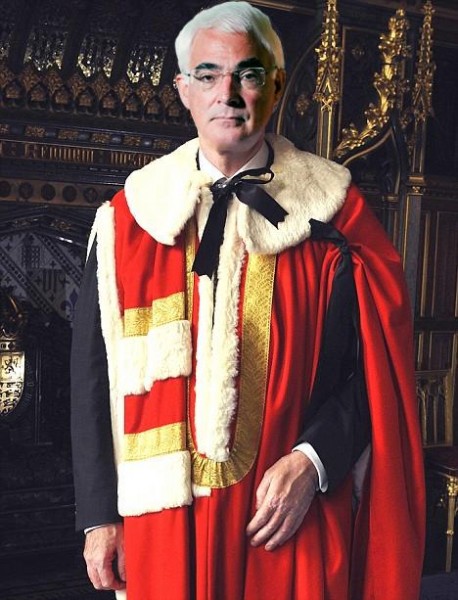
In hopes that Lord Darling soon would be there.
The MPs were nestled all snug in their beds,
While visions of oil money gushed through their heads.

santadarling

And Brown with his spreadsheet, and Mackay (who’ll fudge it),
had just settled accounts and balanced the budget –
When outside the office there came such a racket,
They wondered if Ewing had started to frack it.

Continue reading

Social Security For All Of Us

“Scotland can, if it chooses to be bold, creative and ambitious, use the opportunity  presented by independence to build a social security system for all of us.”

I’m proud to present my latest report for the Common Weal White Paper Project, Social Security For All Of Us – An Independent Scotland as a Modern Welfare State.

The report can be downloaded here or by clicking the images below. There has also been coverage in The National here and here.

Report CoverExec Summary Cover

Continue reading

Trading Places

“GDP is increasingly a poor measure of prosperity. It is not even a reliable gauge of production” – The Economist

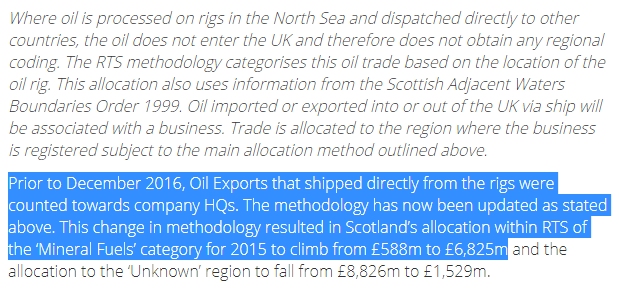
There’s a bit of a story happening around Scotland’s oil trade since Wings Over Scotland highlighted an otherwise completely unreported change in the way the UK measures how much oil it trades with the world and where in the UK it comes from.

rtsur

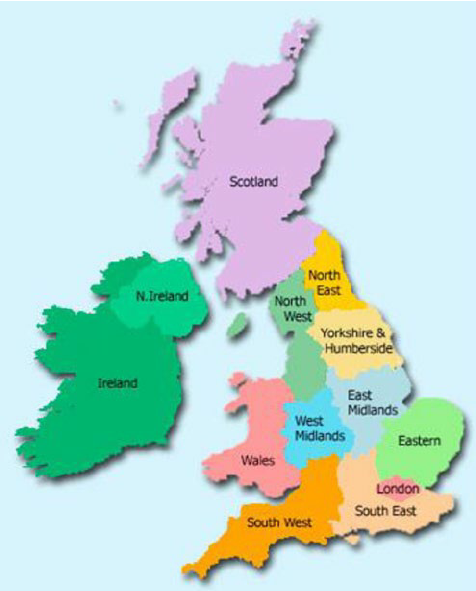
The story stems from the way that the UK calculates its balance of trade with the rest of the world and specifically how it then decides which region of the UK is responsible for that trade. To do this, the UK is split into 12 regions based on the Government Office Regions of England plus Scotland, Wales and Northern Ireland. (These boundaries are also used by Eurostat for their NUTS 1 statistics)

Fig-4-NUTS-1-regions-of-the-UK

There’s another “region” of the UK not displayed on the map. Not all trade can be firmly allocated to a single region and not all trade can be allocated to a region at all. This is the “Unknown Regions” of the UK. Most prominent amongst this kind of trade, at least within Scottish political circles, is trade generated by offshore activities.

There are many different ways one could approach this allocation – the methodology – and the way you do it can result in very different results. Now, if you’re the UK and are looking at UK stats these figures don’t really matter so much but they do become very relevant if you’re looking at one part of the UK and what its economy might look like if it decided to, say, discuss holding a vote for independence. Suddenly, even UK government departments start getting very interested in Scottish trade.

The particular story here concerns a change in the trade methodology around offshore oil in Scotland waters. Particularly, oil which is exported out of the UK directly from the rigs without it ever touching the UK land boundaries. Previously, much of this oil has been allocated to the Unknown Region but the change now meant that it would be allocated to Scotland. This has led to an increase in the recorded value of Scottish minerals exports for 2015 from £588 million to £6,825 million. Quite a substantial jump and one which has spread around social media. Time for a wee breakdown of what it means and take the chance to clear up a few misunderstandings I’ve seen along the way.
(This is a complex topic, after all)

Continue reading

Passing Go

 “Let the children once see clearly the gross injustice of our present land system and when they grow up, if they are allowed to develop naturally, the evil will soon be remedied.” – Elizabeth Magie, inventor of “The Landlord’s Game”, the precursor to Monopoly.

For a game about rampant, exploitative capitalism and a race to deliberately bankrupt your mates, in some ways Monopoly looks remarkably egalitarian compared to modern Britain

Monopoly

Continue reading

Personalising Pension Politics

“I am deeply concerned that if we do not fund healthcare and social care adequately people will lead much worse lives” – Sir Michael Marmot, commenting on his latest life expectancy report.

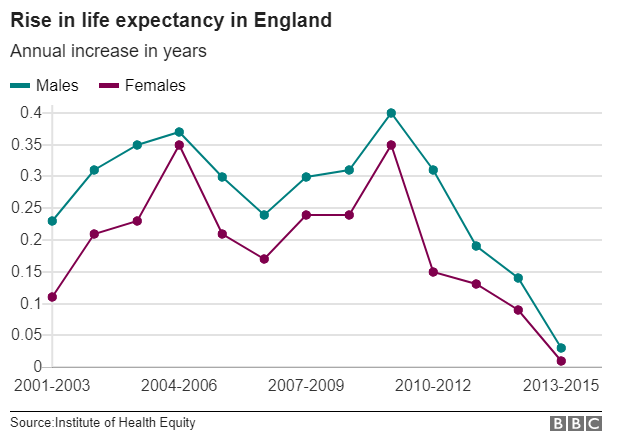
Yesterday, the Marmot Life Indicators report was published which showed that there has been a dramatic fall in the rate of increase of life expectancy in England. In fact, it has stalled completely.

For most of the last decade and a half, a baby born in one year could expect to live about 4 months longer than a child born the previous year. This rate had also been increasing through that period though the trend was broken in 2010.

lifex

2010 was also the year that the Tories came to power and started implementing their Austerity program. Now, yes, correlation isn’t causation but this isn’t the first time that a health or wellbeing indicator has been linked to Tory policy. Just a few months ago, a report was published which blamed Austerity for the premature deaths of 30,000 people in England and Wales in 2015 alone.

And whilst these studies are limited to England or England and Wales the causes of the so-called “Glasgow Effect” are now well known and have been linked to similar policies of deprivation and deliberate political attack.

But what was the UK Government’s response to yesterday’s report? Today they accelerated the rate of increase in the state pension age such that if you are currently aged 39-47 you will now need to work till you are 68.

This means that if you live in the most deprived areas of the UK, such as Blackpool or Glasgow you can expect your retirement to last just 6 years, whereas someone from a rich borough of Kensington – where average life expectancy is 84 – could expect almost a decade longer than that.

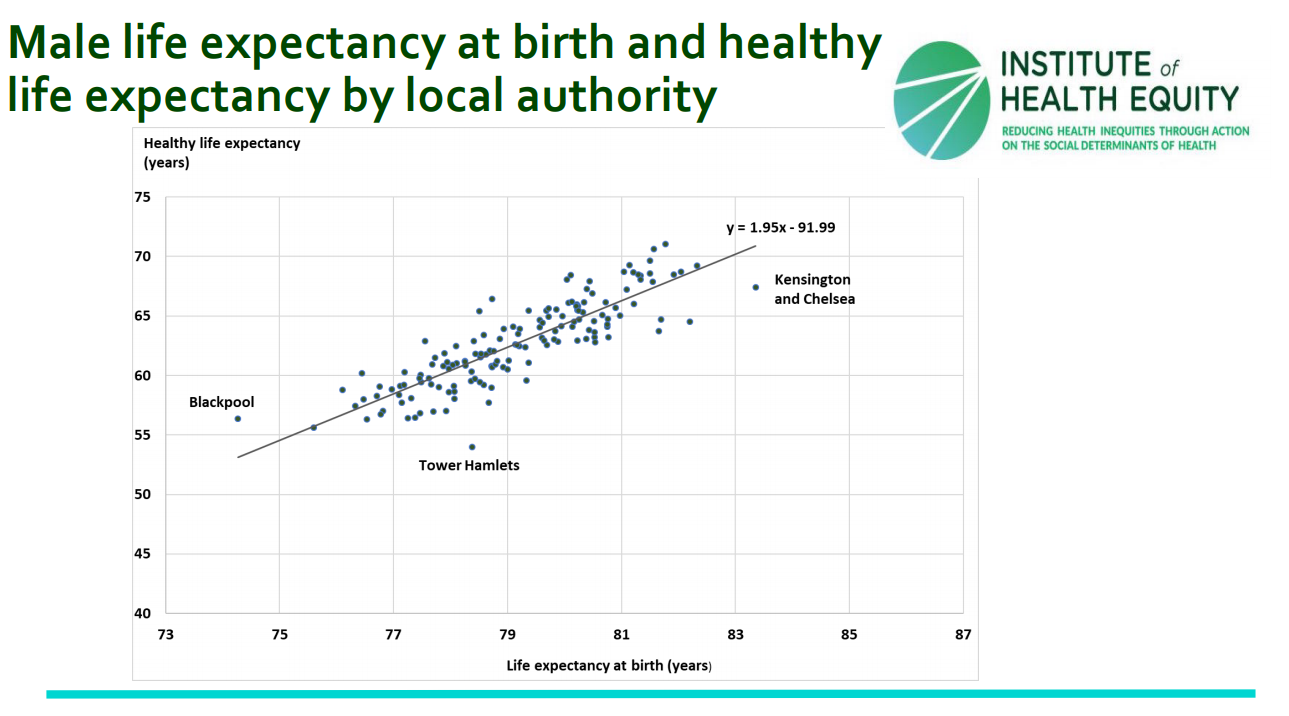
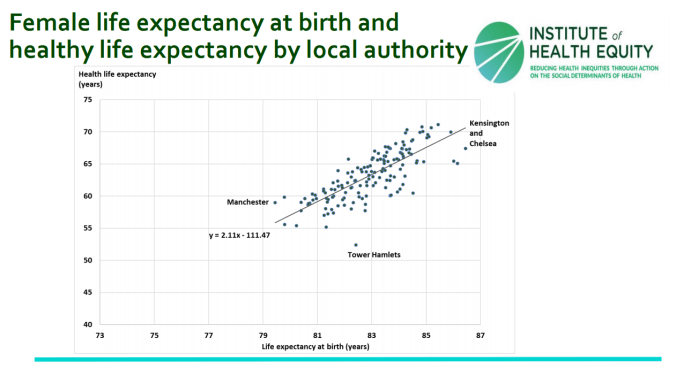
The Marmot report also highlighted something which isn’t talked about enough within this topic. The issue of healthy life expectancy. Our average person in Blackpool might live to 74 but they can only expect to reach 57 with a fair degree of health.

healthylifeex.png

healthylifeexf.png

(Click either chart to embiggen in a new tab)

Welcome to Tory Britain in the 21st Century. Where you’re not just expected to work till you drop. You’re expected to pick yourself up again and continue working for another decade beyond that. And don’t you dare try to claim disability or we’ll put you through so many hoops and tests and stress and pain that it stands a good chance of actually killing you.

There’s no wonder that the UK has now been called out by the United Nations for its appalling treatment of the most vulnerable amongst us.

Now I’m not amongst the particular cohort of folk affected by this pension change but it’s starting to become very personal to me. It’s very much starting to feel like my parent’s generation will be the last in the UK who will be allowed to meaningfully retire – and given that my mother is a WASPI woman, this is a particularly depressing point.

I no longer expect to receive a state pension from the UK. Even if I do manage to age fast enough to catch up to the state pension I fully expect that by the time I get there the next phase of cuts will have meant that the formerly universal pension will be means-tested. If I happen to own more than £X in savings and assets…tough. No pension for me.

So I’m going to need a new plan to ensure that what retirement I eventually get is endurable. If the current work climate continues, it’s unlikely that I’ll be able to build up anything like the private pension that previous generations were able to claim so I can’t even rely on the private sector to bail me out.

The way things are going I’m going to have to do something a little more drastic. It looks like I need to win myself an independent Scotland, rebuild the entire welfare system from scratch and replace the byzantine labyrinth of means-tested “benefits” with a Universal Basic Income.

So..no pressure then…

This is where the independence campaign is becoming more personal. It’s rapidly getting to the point that folk may support independence not just because it’s desirable nor even just because it would be personally beneficial. It is approaching the stage where independence is becoming essential just to maintain a decent standard of living.

I’ve already heard from people in the campaign who now must win independence for various reasons. One so that they can escape the UK’s appalling immigration system and bring their fiancé to Scotland. Another so that they can ensure that they won’t be treated as a second class settled resident due to them being a non-UK EU citizen.

I think this could be the seed of a hundred stories waiting to be told. If you’re someone who is in a similar situation who now not just wants but actually needs independence for some reason, I’d like you to get in touch. Just email me through my contact page here. I’d like to offer some space to get these stories out there.

(Anonymity will, of course, be maintained unless you specifically tell me to publish your name)

TCG Logo 7