“Democracy is the recurrent suspicion that more than half of the people are right more than half of the time.” – E.B. White
This post and the research underpinning it is undertaken in my own time and outwith other political work that I do. It is presented here free to access as a public service but if you’d like to throw me a wee tip to support this work, you can here.
It’s time to do a democracy.
Between 7am and 10pm on the 4th of July 2024, the people of the UK (well, those who are allowed to vote) will choose the next government of the UK. If polls are to believed, this could be the most significant election in almost a decade and a half though whether that is a good or a bad thing will be a subject best answered between you and the pencil in the Polling Station.
Even if no-one in your constituency has won your vote, I would still ask you to turn out and spoil your ballot if that is the best option you can think of. As someone said to me recently, not voting says that you are happy with the result regardless of what it is while spoiling the ballot tells the politicians that you’re not happy with any of the choices given to you.
If, however, you have made up your mind, remember that your chosen candidate won’t get your vote if you don’t cast it so please make every effort to do so.
If you’re still not sure how your vote translates into seats and power, read my guide here.
And if you’re still not sure who to vote for, then check out my manifesto library which might help you come to a decision.
I’ll be back after the results come out to let you know what I think and where Scotland may be going from there.
And to all of the candidates brave enough to subject themselves to this contest, Be true to the reasons you’re standing, and good luck!
“Privatize everything, privatize the sea and the sky, privatize the sea and the sky, privatize justice and the law, privatize the passing cloud, privatize the dream, especially if it’s during the day and open eyed. And finally, for the embellishment of so many privatizations, privatize the States, surrender once and for all their exploitation to private companies through international share offering. There lies the salvation of the world…” – José de Sousa Saramago
(This blog post previously appeared in The National. You can throw me a tip to support this blog here.)
“Natural capital is our geology, soil, air, water, plants and animals.”
Remember that definition, for it is the one the Scottish Government uses to introduce their “Market Framework for Natural Capital”, which they are consulting on at the moment.
Not content with their previous attempts to privatise nature in Scotland (see their “PFI For Trees” scandal last year and their “Green Investment Portfolio” a few years before that), the Government now wants to expand the remit of potential privatisation to all aspects of Natural Capital:- our geology, soil, air, water, plants and animals.
“Democracy cannot succeed unless those who express their choice are prepared to choose wisely. The real safeguard of democracy, therefore, is education.” – Franklin D. Roosevelt
(This post and the research underpinning it is undertaken in my own time and outwith other political work that I do. It is presented here free to access as a public service but if you’d like to throw me a wee tip to support this work, you can here.)
The campaign for the 2024 UK General Election is underway and parties are now laying out their positions and are courting your votes. As I have with every other election since I started this blog, I’ll continue keeping a place here for party neutral information, including a post aimed at first time voters on how to vote in the elections and how that vote is translated into seats. I have written a guide on how to vote in the upcoming election and how your vote is translated into MSPs’ seats. You can read that guide here.
As a voter, it can be difficult to find information on what each of the parties are promising you – their websites can be confusing and there may be a lot of them. In this post I intend to gather as many of the political party manifestos as I can as they are published so that you can find them in one place. Unfortunately, I can’t cover independent candidates fairly and whilst I would like to be as inclusive as possible I may miss a few of the smaller parties or they may not be publishing a full manifesto (particularly if they are a single issue party). As this is a Scotland-focused blog my general rule is that for inclusion the manifesto must from from a registered political party that is standing at least two candidates across at least two constituencies in Scotland. However, I shall try to include manifestos from parties campaigning outwith Scotland but elsewhere in the UK. If parties release a distinctly Scottish version of their manifesto in addition to their UK version, I shall link to both. If you spot the publication of a manifesto before I do, please let me know and I’ll add it. I shall also welcome advance notice from party representatives themselves of when they plan to publish their manifesto.
All of the manifestos below are presented for your information and the presence or absence of any of them should not be taken as an endorsement or otherwise of any of the parties or of any of the policies that they may be promoting.
Note:- Parties marked in square brackets are placeholders for now and the prospective list may change as manifestos are published, parties emerge or, indeed, parties drop out of the electoral race.
“Ankh-Morpork had dallied with many forms of government and had ended up with that form of democracy known as One Man, One Vote. The Patrician was the Man; he had the Vote.” – Terry Pratchett
(This post and the research underpinning it was undertaken in my own time and outwith other political work that I do. It is presented here free to access as a public service but if you’d like to throw me a wee tip to support that work, you can here.)
Disclosure and Disclaimer: Although I am politically active – albeit not a member of any political party – this guide is intended to be objective and politically neutral. This is a guide on how to vote and is written with a first time voter in mind. It is not a blog to try to convince you to vote for or against any particular person or party but to help you cast your vote and to understand how that vote translates and contributes to the final result.
For the first time since 2015, the UK has managed to complete a relatively normal length of time between General Elections, though since the repeal of the Fixed Term Parliament Act, a “normal” period of time is no longer the fixed period of five years but may be called at any time by the incumbent Prime Minister so long as not more than five years has passed. The absolute deadline for the current term was January 2025 but Prime Minister Rishi Sunak has pulled the trigger a little earlier than that (and a little earlier than most commentators expected as many thought we’d see an election around September or October). Whatever his reasons – and he doesn’t strictly need any – Parliament has been dissolved, all of our MPs have lost their jobs and many of them – as well as a slew of other potential candidates – are now courting your vote to try to win a seat in the House of Commons. This vote will take place on Thursday 4th July 2024.
If you want to take part in this election, and particularly if it’s your first time ever doing so or if it’s not but you’d like to know how your vote translates into seats and MPs, then this guide is for you. If you’re looking for someone to tell you who to vote for, then I won’t do that here but please do check out my list of all of the published party manifestos which may help guide your vote.
“Ankh-Morpork had dallied with many forms of government and had ended up with that form of democracy known as One Man, One Vote. The Patrician was the Man; he had the Vote.” – Terry Pratchett
(This post and the research underpinning it was undertaken in my own time and outwith other political work that I do. It is presented here free to access as a public service but if you’d like to throw me a wee tip to support that work, you can here.)
Disclosure and Disclaimer: Although I am politically active – albeit not a member of any political party – this guide is intended to be objective and politically neutral. This is a guide on how to vote and is written with a first time voter in mind. It is not a blog to try to convince you to vote for or against any particular person or party but to help you cast your vote and to understand how that vote translates and contributes to the final result.
For the first time since 2015, the UK has managed to complete a relatively normal length of time between General Elections, though since the repeal of the Fixed Term Parliament Act, a “normal” period of time is no longer the fixed period of five years but may be called at any time by the incumbent Prime Minister so long as not more than five years has passed. The absolute deadline for the current term was January 2025 but Prime Minister Rishi Sunak has pulled the trigger a little earlier than that (and a little earlier than most commentators expected as many thought we’d see an election around September or October). Whatever his reasons – and he doesn’t strictly need any – Parliament has been dissolved, all of our MPs have lost their jobs and many of them – as well as a slew of other potential candidates – are now courting your vote to try to win a seat in the House of Commons. This vote will take place on Thursday 4th July 2024.
If you want to take part in this election, and particularly if it’s your first time ever doing so or if it’s not but you’d like to know how your vote translates into seats and MPs, then this guide is for you. If you’re looking for someone to tell you who to vote for, then I won’t do that here but please do check out my list of all of the published party manifestos which may help guide your vote.
“When you want to know how things really work, study them when they’re coming apart.” – William Gibson
(This blog post previously appeared in Common Weal’s weekly newsletter. Sign up for the newsletter here.)
Britain is heading into one of the worst winters of a generation. The rising cost of living combined with multiple crises from energy, food supplies and general government incompetence mean that we’re facing price rises, empty shelves and potentially the highest rents and mortgage burdens ever seen in this country (headline interest rates /might/ not quite reach the peaks of the early 90s but house prices are so much higher now than then and wages haven’t increased by nearly as much so a greater proportion of our wage will end up being devoured by our bank and/or landlord). Folk trying to buy a house over the winter, who are trying to renew a mortgage reaching the end of its fixed rate or who are renting from a landlord trying to do one of the above are particularly vulnerable to price shocks that could equal or exceed the energy crisis.
“A president cannot defend a nation if he is not held accountable to its laws.” – DaShanne Stokes
(This blog post previously appeared in Common Weal’s weekly newsletter. Sign up for the newsletter here.)
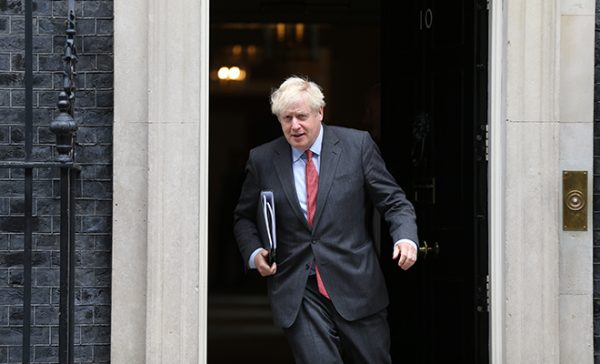
Look. I’m not in any way going to defend Boris Johnson. The disastrous policies – from his disorganised Brexit to his Rwanda human trafficking scheme – are causing real harm, his Covid policies have killed over 200,000 people while enriching his cronies and his constant power grabbing have pulled power into the UK Executive (read: the PM) and have disrupted our ability to vote freely, destabilised the autonomy of the devolved Parliaments, the primacy of the UK Parliament and he has torn up the last tattered shreds of what passes for the UK Constitution. He should not go down in the annals of history as one of the UK’s “great” politicians.
And yet…who comes next is looking very likely to be even worse.
“When two people decide to get a divorce, it isn’t a sign that they ‘don’t understand’ one another, but a sign that they have, at last, begun to.” – Helen Rowland
This article is an expanded version of a paper I wrote for the Scottish Independence Convention in 2021. You can read the original here but this version runs to almost twice the length and includes historical case studies of separations between countries.
Parting Ways – How Scotland and the remaining UK could negotiate the separation of debts and assets.
Introduction
The negotiations around Brexit – and whether they are deemed to be a success or a failure – will no doubt raise once again arguments around how Scotland and the remaining United Kingdom (henceforth “the rUK”) will negotiate their mutual separation should Scotland choose to become an independent country in the near future. Opponents of independence already raise concerns about the potential for those negotiations to be fraught, bitter or too complex to deal with in a timely manner. Unlike the Treaty on European Union, the UK Constitution does not have an equivalent of the “Article 50” within its Treaty of Union and therefore does not have a codified mechanism to provide for Scotland to unilaterally withdraw from the Union (although it does not prohibit such an action either) and nor does it provide a structure for separation negotiations to take place such as giving an explicit trigger to begin negotiations or an explicit time limit within which to conclude them. In some ways, this is to Scotland’s advantage as the Brexit process’s two year time period for negotiations inevitably resulted in higher pressure to conclude the negotiations rapidly rather than well. However, the UK also enjoyed the ability – largely foregone – to simply not trigger Article 50 and start that countdown until a time of its choosing which, had it taken advantage of this, would have allowed the UK to prepare its own negotiating positions ahead of time rather than finding itself at the negotiating table without a clear idea of what Brexit meant.
After an independence referendum or similar democratic event, Scotland will be under immense pressure to begin negotiations almost immediately – the 2014 Scotland’s Future White Paper envisaged those negotiations beginning the week following the referendum – and so it is imperative that Scotland is fully aware of its own rights, responsibilities and asks before these negotiations begin. Scotland must also take the time now, well before a decision to become independent takes place, to plan and prepare so that it does not find itself repeating the mistakes of Brexit and being forced into a disadvantageous deal due to a lack of understanding of what it wanted and what it already had.
This paper is largely an update of my 2016 paper for Common Weal, Claiming Scotland’s Assets, and shall explain the principles of one aspect of those negotiations – the division of debts and assets between separating states – along with a choice of strategies that Scotland could hypothetically deploy as it negotiates its independence.
While big business gain subsidies and political access, small businesses drown in red tape, and individuals now risk being classified as terrorists for complaining about it. – Zac Goldsmith
(This blog post previously appeared in Common Weal’s weekly newsletter. Sign up for the newsletter here.)
Did you hear about the latest story in Scottish land reform policy and the Scottish Government’s programme to restore peatlands as part of our Net Zero transition? You’d be forgiven if you didn’t. There hasn’t been much said about it in the Scottish or even in the UK media (at least until the last day or two). The American press, however, has been different. This week, the New York Times published a long-form study of what has been happening in Scotland’s peatlands lately and while I must encourage all of you to look it I must also warn that it doesn’t make for the happiest read.
“Never doubt that a small group of thoughtful, committed, citizens can change the world. Indeed, it is the only thing that ever has.” ― Margaret Mead
(This blog post previously appeared in Common Weal’s weekly newsletter. Sign up for the newsletter here.)
I’ve talked before about how proud I am of our Care Reform Working Group. Two years ago when the impact of the pandemic on Scottish care homes highlighted previous systemic failings in the care sector, it became clear across Scotland that the recovery from the pandemic should include as radical a reform of care as WWII and the Beveridge Report ended up being for health. We need a National Care Service. To that end, a group of some of the best minds and practitioners in the sector came together into our group and began to work on what that should look like.
(Image above: Left to Right: Des, Carmen, Colin, Marion, Craig, Nick, Mark, Kathy and Neil)
“When you are in local government, you are on the ground, and you are looking into the eyes and hearts of the people you are there to serve. It teaches you to listen; it teaches you to be expansive in the people with whom you talk to, and I think that that engagement gives you political judgment.” – Valerie Jarrett
(This blog post previously appeared in Common Weal’s weekly newsletter. Sign up for the newsletter here.)
Scotland is now in full campaign mode for our Local Authority elections. There will be leaflets stuffed through letterboxes. There will be photos of smiling campaigners with their Great Responses At The Doors. There will be enticements and blame games, celebrations of political records and promises of what will absolutely, definitely come your way if you only vote for one candidate or another.
For a first time or an inexperienced voter, this can be a confusing time – especially when various parties are all telling you to vote in a particular way. If you do happen to be a first time voter and would like to know how the voting system works in this election and how your vote translates into seats then I have written a political party neutral guide over on my personal blog here. I’m also in the process of collecting as many party manifestos as I can here – not as an endorsement of any them but to make it easier to compare and contrast all of them.
I’m proud of my own push for elected office five years ago and I really think it’s a thing that as many people as possible should do and should be able to do at least once. Even if you don’t win (as I didn’t), there’s a certain rite of passage to it and it can act as a window into a world that would otherwise be even more closed off and opaque that it currently is. The more people who are directly involved in politics, the less the sector is able to close itself off into a clique who act only for themselves.
There’s another barrier in Scotland that acts to prevent people getting involved in the politics of the country and that’s Scotland’s abnormally centralised democracy. What we’re right now calling our “Local” elections are anything but. That lack of democracy is not just a barrier to politics getting done but also a barrier to people (especially people with young families or accessibility needs) from getting involved in politics – if folk are barred from making decisions that affect them, they will always come off the worst for it.
In most countries in Europe there are up to four tiers of Government. The largest you could call “National” or “Federal”, below that you’ll find some kind of “State” level government, then a “Regional” government and finally, the most local of all, a “local” or “municipal” government. These lowest tiers of government are often extremely small. Rarely larger than a whole town or a collection of villages but sometimes as small as a single hamlet – the smallest municipality in Germany is the island of Gröde in Germany with a population of just seven people.
In Scotland, there are effectively three tiers of government that exercise power over our lives and communities. Being a unitary state, the “National” government is the UK Parliament in Westminster. The devolved Scottish Parliament is the closest we have to a “State” Government – for the important differences in parity, power and esteem between a devolved government and a true state government, see my paper on UK Federalism here. Below this, we have our “Local” Authorities – many of which are larger in geography and/or population than some small European countries. Below this, we have effectively nothing. Even many English parish councils are more powerful. We do have a statutory right to Community Councils and don’t get me wrong, the places that do have functioning and effective Community Councils do see good work come out of them but they are not a substitute for municipal government. For a start, these councils have next to no actual power and effectively no budget. This lack of power has led to an ossification in many places where the council has become dysfunctional and a place where small fish exercise their control over even smaller ponds. Worse, across about half of Scotland, these community councils don’t exist at all. This includes my own village where a suggestion a few years ago to the local community group that we should form one was met with a horrified, despairing reaction of “but that means we might have to have elections”.
My wife and her family are German so their example is the one closest to me in terms of comparative experience. My Schwiegervater lives, geopolitically, in a very similar place to us in Scotland. We both live in a village (ours with about 2,000 people; his about 700), near a slightly larger town (ours with about 15,000 people; his about 30,000) and within a reasonable commute of a major city of about a million-ish people (Glasgow for us, Cologne for him). Above that, our “State” populations diverge somewhat – North Rhine-Westphalia has a population of about 17 million compared to Scotland’s 5.4-ish million. Then, of course, Germany is a little larger than the UK with populations of 83 million and 67 million respectively.
Now, comparing the respective power of each of these government tiers is inevitably tricky. Absolute or even per-capita spends don’t always tell the full story – for example, German public spending per capita is significantly lower than UK public spend per capita and a good chunk of the difference appears to lie in the fact that German healthcare is largely privatised. What may be a slightly better way of looking at things is to examine where public spending is controlled as a percentage of overall budgets. This line of reasoning led me down a rabbit hole of trying to track down, translate and then read piles of German municipal budget records. It’s about as fun as you can imagine (for a stats geek…quite a lot!). It also led me to speaking about that journey in the keynote speech to the Scottish Community Development Network at the tail end of last year and which you can watch below:
Scottish Community Development Network
What we find in Scotland is that spending is incredibly centralised. About 84% of public spending in (or on behalf of) Scotland for “me” in my area is controlled by either the UK or Scottish Government. The remaining 14% is controlled by my “local” authority in South Lanarkshire – a region that stretches from the outskirts of Glasgow, through the urban Central Belt of Hamilton and East Kilbride down through rural Clydesdale till it meets the Borders.
As I mentioned above, I don’t have a Community Council in my village but even if I did, they wouldn’t control any public budgets to speak of.
Public Spending in ScotlandPublic Spending in Germany
Contrast this with Germany where the Federal Government isn’t even the “most powerful” tier of government in terms of spending on my father-in-law’s public services and between them and the state government in North Rhine-Westphalia only account for only about 70% of total public spending. Cologne’s regional government is significantly less powerful than South Lanarkshire at about 10% of total spending but look at the difference in spending from a local level. Almost one public euro in every five is spent directly by the local municipal council that, in his area, covers the local town and its surrounding villages. As an interesting aside, I also discovered that our two regions have a public Participatory Budgeting scheme and Cologne’s has been praised as an example to look at in European democratic circles. However, on a per capita basis it is only a fraction of the size of South Lanarkshire’s own PB scheme. This could be a subject for another time but I wonder if the comparative strength of German local government means that it simply doesn’t need such ad hoc funding streams to fill in the gaps.
Common Weal has already published a blueprint for local government reform in Scotland that would restore some form of localism – our Development Councils take the best of what our Community Councils have to offer but expand, improve and empower them and the citizens of the community who would control them. They would, yes, be based on a model of drawing powers down from Local Authorities but that should preclude a wider discussion about devolving powers from elsewhere. The example of Germany shows that if Scotland does decide to restore a form of truly local government then it cannot be a case solely of devolving powers from regional government to local but should involve a wholesale view of where powers should lie across the board. I am a big believer in subsidiarity which means that powers shouldn’t be devolved down from above at all. Instead, all power should be presumed to lie with the municipal government and only devolved upwards to a higher level when a compelling case is made to do so.
And, of course, while I’ve discussed powers of public spending here I haven’t touched at all powers of tax and revenue raising. The same principles should apply here too and local councils should be granted much more in the way of ability to fund its own programmes (balanced, of course, by some kind of levelling mechanism between richer and poorer regions). The irony of the Scottish Government right now is that it is quick (though correct) to complain that its own powers and own funding avenues are too limited and too tightly controlled by the government above it but then treats the government below it in almost exactly the same way with even the one major tax power in the hands of Local Authorities – Council Tax – tied up just as tightly and too often used as leverage against our councils.
As we go and vote in our “local” elections this year we have to remember that the way Scotland is run is very far from what our neighbours in Europe would call normal. Campaigns for this kind of democratic reform in Scotland are not coming from a place of “radical transformation”. We’re already the outlier in a continent where democracy starts at your doorstep. It’s the country we deserve too. Creating it merely requires those who currently grip tightly to their reigns of power – at all levels above the local – let go a little and trust us to run ourselves. For those of us in the independence movement, this is already one of the most compelling arguments in favour of our national cause. Scotland deserves to be a normal country and that starts with allowing us to make decisions right here, on our doorsteps.




 The Common Green