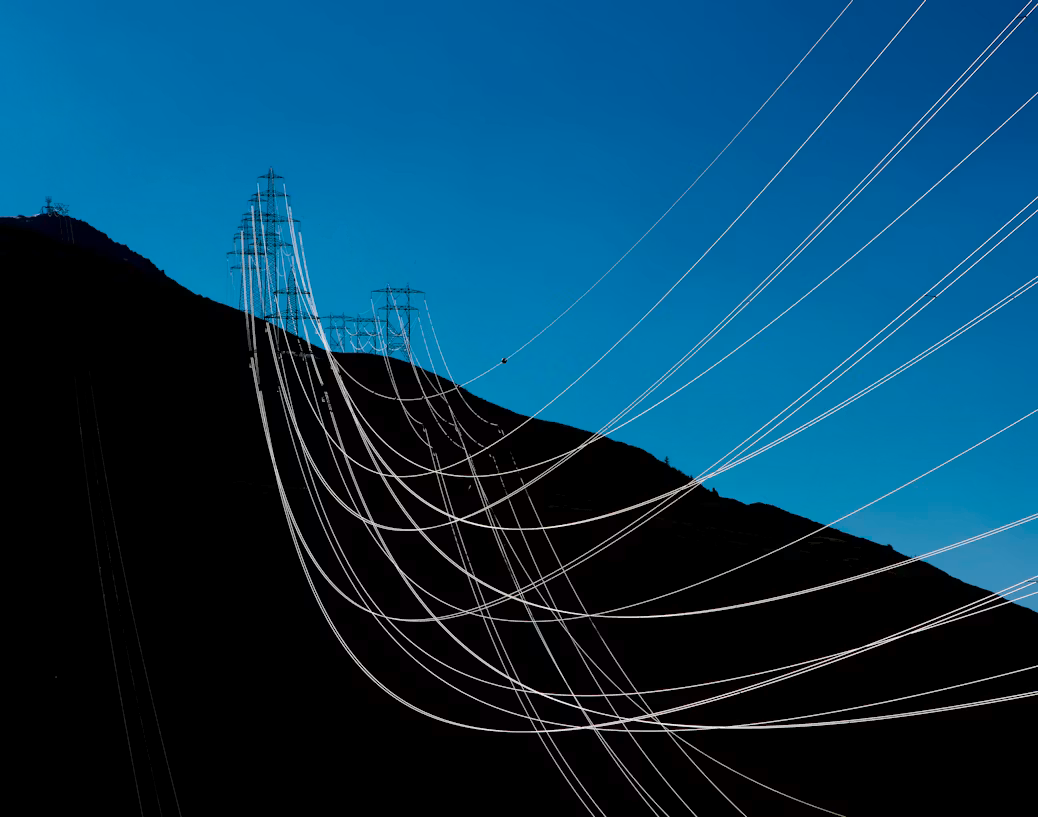
The Climate Emergency is Uninsurable

“What happened to fun?”
“Our insurance doesn’t cover it!”
– Charles M. Schulz

This blog post previously appeared in Common Weal’s weekly magazine. Sign up to our Daily Briefing and Weekly Magazine newsletters here.

If you’d like to support my work for Common Weal or support me and this blog directly, see my donation page here.

In an uncertain and unpredictable world, insurance is mostly a good thing (I’ll write an article sometime about when it’s not – it’ll mostly be about the US healthcare system). Climate change is proving to be a challenge for it, though – one that might actually be the thing that forces global adaptation and policy change when other things like activist campaigning or actual scientific data have not.

Consider your house. You live on a flood plain, which means that your house is in a zone covered by a “100 year flood”, meaning that you could expect a flood severe enough to damage your house once every century. Such a flood would cause £100,000 worth of damage. You could fairly expect the insurance value of your house to be about £1,000 per year. An insurance company that charged less than that would eventually find itself paying out more than it brought in.

There’s a problem with the assumption that your house will only get flooded once per century. The climate is shifting rapidly. I’m writing this piece on the day that the UK once again breaks high temperature records. I also read a piece this week about the danger of romanticising the 1976 UK summer heatwave, while reflecting that the UK hasn’t seen average annual temperatures as low as that of the average temperature in that heatwave year since 2012 – the dangerously extraordinary has become dangerously normalised. (1976 was before my time. The first heatwave I have strong memories of is the 1998 one. It’s unlikely I’ll live to see a world as relatively cold as that year was either.

But this (overly) simple calculation doesn’t tell the whole story. If you made an insurance claim after your house was damaged, you’d rarely expect to get the full £100,000 paid out to you. Insurance policies often have an ‘excess’, an amount you have to pay yourself before damage in excess of that amount is paid by the company (in the US, they call it a ‘deductable’, an amount the company deducts from their payment to you).

This linguistic choice tells us a lot about whether the sector is focused on the company first or on the person making the claim. Further, there are often reasons that a company would not pay out. For instance, many people whose flights were cancelled or disrupted due to Trump’s attack on Iran found that their insurance didn’t cover losses due to acts of war. We’re also assuming that your policy would actually cover £100,000 worth of damage – many people are ‘underinsured’ for the true cost of their losses, particularly if they haven’t updated their policies recently to account for inflation and increases in building costs.

Looking to the future and accelerating climate damage, if a ‘100-year flood’ starts happening every 50 years, your insurance costs would have to double. If you start getting flooded out every decade, you’d probably be cheaper moving elsewhere – but good luck finding someone who’ll buy your house from you. You can run the same kind of calculation about your risk due to sea level rise, wildfires, droughts, heatwaves, storm damage, and every other impact being made worse by the climate emergency.

And that’s if the insurance companies get their estimates right in the first place. If they cost your insurance based on a 100 year flood in a world of 10 year floods, they will very quickly go bankrupt. This is the problem facing global insurance companies, as per a new report from Moody’s.

Between excesses, exclusions, people not buying insurance, and the trouble with estimating insurance values, they estimate that the changing climate could result in $41.4 trillion per year worth of uninsured climate damage globally by 2040. They’ve even created a global map of where and how those losses may manifest. For instance, the rising frequency and intensity of Californian wildfires mean that it’s increasingly difficult now to cover fire damage – 30 per cent of losses are likely to be uninsured.

“It might well be that the threat of losing money proves to be the thing that pulls over those who weren’t convinced by inconvenient things like actual data.”

By this measure, the UK comes off actually quite lightly. The near ubiquity of home and property insurance (usually a basic requirement if one has a mortgage) means that basic cover is quite broad. But still, there is a rising threat of things like flood and storm damage, which means that Moody’s estimates that 25% of the cost of damage and loss from either would be uninsured by 2040.

Part of the problem is that climate damage has been creeping up on us quite slowly, and insurance companies have tended to be reactive rather than proactive – they increase rates after they see their claims start to rise, rather than modelling ahead of time what they could become.

The costs of climate losses are becoming significant, though. They almost certainly outpace the annual profits of the oil companies that have produced the climate damage – yes, this means that the price of oil (high as it is) would be selling at a loss if the oil companies had to pay to clean up their own mess. Instead, we all have to pay even more because they don’t.

Climate activists have been campaigning to try to prevent the climate emergency for decades. Scientists have known it would happen for well over a century. Oil lobbyists have spent lavishly on our politicians to ensure even greater profits can be reaped without having to pay for the consequences. And wars have and are still being fought to keep the pipes flowing.

It didn’t have to be that way, but where scientists and activists could be ignored, it might well be that the insurance agents are the ones that can’t be. It might well be that the threat of losing money proves to be the thing that pulls over those who weren’t convinced by inconvenient things like actual data.

The problem is that this is a reactive force. Only once people see the damage happening will they respond. But the climate effects are so gradual that even if we collectively stopped emitting CO2 globally today, the climate will continue to get worse for perhaps decades still before things begin to repair.

This isn’t a reason not to do that. Every tonne of pollution makes the problem worse. Every day of delay makes the problem worse. Every politician calling for more oil extraction despite all of the evidence to the contrary makes their own contribution to global ecocide worse. But also, every tonne of pollution avoided by switching to renewables or reducing unnecessary demand makes the problem less worse by the same degree.

The solution is in front of us. We know how to fix the climate emergency. It won’t require magic technology, mass poverty, or a collapse in wellbeing – quite the opposite. The solution is a world that, once we live in it, we’ll wonder why we didn’t demand it sooner.


Who Watches the Watchdogs?

“That just goes to show that you never know, although what it is we never know I suspect we’ll never know.” – Terry Pratchett

This blog post previously appeared in Common Weal’s weekly magazine. Sign up to our Daily Briefing and Weekly Magazine newsletters here.

If you’d like to support my work for Common Weal or support me and this blog directly, see my donation page here.

Almost buried under other political scandals afflicting the Scottish Government and the SNP right now was the news that the Government was found in contempt of court in a case involving the Scottish Information Commission.

The details of the case aren’t particularly relevant to this article though they are part of one of those other scandals. It involved an FOI request to release the legal advice given to the Scottish Government relating to an ethics inquiry into Nicola Sturgeon after an accusation that she breached rules during the investigation into Alex Salmond. While Sturgeon was cleared of wrongdoing following that investigation, a Freedom of Information request to reveal the advice was upheld as valid and the Government was ordered in November 2025 to release the files by January 15th 2026.

The Government failed to do so and the Information Commissioner began legal proceedings over the matter while extending a further deadline of January 22nd. The Government did release the files more than a month after the extended deadline but this month the court found that the delay was deliberate (rather than merely a symptom of the size and complexity of the files as the Government claimed) and disregarding both the Commissioner and the courts amounted to contempt.

And so the Scottish Government now has a criminal record for contempt of court. Not that it particular matters in any real sense as the punishment levied was merely an admonishment (the lightest sentence in Scots Law and really just a formal and legal version of a stern talking to) and an order to pay the Information Commission’s legal costs (given that the Commission is entirely funded by the Scottish Government this just means the same public money going to lawyers, just via a different accounting line).

This is the first time that any Scottish Government has been found in contempt like this and it’s certainly the most serious breach of information regulations that I can find but it’s hardly the first. Both the current Information Commissioner David Hamilton and his immediate predecessor Daren Fitzhenry have been scathing about the Government’s approach to Freedom of Information.

It’s not even the first time John Swinney has transgressed the lines – in 2018, Fitzhenry published an “intervention report” warning about Ministers, including Swinney, deliberately obstructing the FOI process by treating requests from journalists in a different manner from those submitted by the general public, resulting in more rejections and delays to responses if a journalist was identified as making the request. By 2023 as Fitzhenry was passing over to his successor, the final progress report into the Government’s reforms to this behaviour were noted as inadequate with the report saying:

“The Commissioner anticipated that this report would announce the successful conclusion of this intervention, but, unfortunately, the Scottish Government’s improvement activity has not reached a point where this work can be appropriately concluded.”

I have nothing but admiration for Hamilton and Fitzhenry. It’s a difficult job holding Government to account. It’s harder still within the context of the “Commissioner Landscape” that Scotland is in. Previous Governments have been farming out a lot of roles to Commissioners over the years and the varying statuses of each of them has made things extremely messy.

Some positions, like the Information Commissioner, have extremely well defined roles and significant powers – as evidenced by the contempt verdict – but others appear to be little more than purely advisory and have little recourse when the Government decides to ignore the advice.

=Others still chafe under the pressure of making sure that the advice they give to Government is the advice that they already want to hear (in 2023, the then Children’s Commissioner Bruce Adamson only gave a furious rebuke towards the failings of Nicola Sturgeon’s Government to properly embed human rights legislation a week before he left the office, though it’s noteworthy that his successor Nicola Killean is publicly warning this week of the Swinney Government’s failure to ensure that homeless children are placed in safe temporary accommodation).

There was also an identified risk of Commissioners being set up in response to political events such as the downgrading or removal of Ministerial responsibilities – hence the calls for roles such as a Commissioner for Older People, which we supported on the merits of the case for the role even though it added to the broader landscape problem.

In 2024, Common Weal responded to a Scottish Government consultation on reforming this landscape essentially by calling for a standardisation of the role of Commissioners and to make it far more clear who they report to within the Scottish governance structure. Commissioners shouldn’t be seen as merely advisors to Ministers or as a second-best alternative to them but should be seen as the right arm of Parliament (not Government) in holding Government to account.

This principle is, of course, complicated by the realities of politics. For a start, while it is indeed Parliament (not Government) who approves of appointments to the top jobs in a Commission (technically they are appointed by the King, on the nomination by Parliament but with the understanding that the King could appoint anyone they like but promise not to, because monarchies remain a ridiculous way to run a country), it is Government who decides the budget for the Commission. And herein lies the risk in a time where Governments keep being told what to do by people they control the purse strings of.

A few years ago, Audit Scotland started producing more and more critical reports of Government spending only to find that their budget was slashed in 2022. It’s not hard to see how a Government that is constantly being reminded that its projects are late and over budget might prefer for those reports to go away and if the problem can’t be solved, they could simply defund the messenger.

There’s no evidence of this happening at the Information Commission at the moment – their latest accounts show an increase in their operations over the previous year – though it’s worth noting that the Commissioner has already warned that the time spent forcing the Government to comply with the law is eating too much of their resources. I worry that between this new contempt judgement and a stated objective of the current Government to cut the public sector it might be that this office is one that is ordered to accept its (not so) “fair share” of those cuts.

This would obviously be deleterious for both Parliament, the public and our very democracy. Voters cannot hold Government to account if we can’t see what they are doing and so Freedom of Information is, in a very real sense, the foundation stone of our democracy.

All parties in Parliament have a vested interest in ensuring that all Governments are maximally transparent (they can’t hold the Government to account if they can’t see what’s happening either) but I’m going to single out just one. Fresh from their victory (tinged by party tribalism as it was) in securing an independent inquiry of political party finances, I’m going to lay the job of protecting the Information Commission at the door of the Scottish Greens in particular. It’s well within their remit of party policy but more than that, as a party with a history of supporting Government budgets I would say that failing to protect the functions of vital watchdogs from potential cuts would mean complicity in those cuts.

Even this is only a temporary patch on the problem though. Scotland would only be one hostile majority government away from being able push through cuts even despite a united opposition. This is why Common Weal advocates for a Citizens’ Assembly to oversee our elected chamber and we suggest that Commissions and Commissioners should be tasked with submitting their desired budgets to the Assembly to be approved before they are passed to Government to include in the national budget. This would apply a level of safeguarding and scrutiny to the whole process to make sure both that demands are not excessive and that any changes in funding from the Government are driven by need and not by political advantage.

This isn’t the first time I’ve written about the need for transparent government. It won’t be the last. The moment we stop being able to see what Government is doing is the moment they stop caring about being seen when doing things. This goes for when the regulations aren’t good enough. This goes for when the regulations aren’t followed and no-one holds them to account. We’re lucky that this time both worked. We need to be lucky every time though. A Government that decides it wants to pull down the curtain of secrecy only needs to be lucky once.

How to solve renewable constraint payments

“We must be willing to let go of the life we planned so as to have the life that is waiting for us.” – Joseph Campbell

This blog post previously appeared in Common Weal’s weekly magazine. Sign up to our Daily Briefing and Weekly Magazine newsletters here.

If you’d like to support my work for Common Weal or support me and this blog directly, see my donation page here.

I would like you to try an experiment with me. Talk about renewables with someone you know who isn’t in the political bubble. It doesn’t really matter if they are for or against renewable energy, but I want you to keep track of how long it takes before they mention a particularly pointed claim against especially wind turbines.

“When it’s too windy, they pay the owners to turn them off!”

What they’re talking about is called “constraint payments”. And the people saying this have a good point. These payments are a major issue at this stage in the now inevitable transition away from fossil fuels and it’s a consequence of how renewable generators produce energy in a ‘non-dispatchable’ manner.

With many fossil fuel generators, the generators can be turned on or off to suit demand (it’s actually not as simple as that – many generators can’t really be ramped up and down or doing so is neither cheap nor efficient and things like nuclear plants are even more limited in how they can respond to demand) but wind turbines only produce energy when the wind blows. This is a problem if there’s no wind but there’s high demand, but it’s also a problem if there’s high wind but low demand – an overnight storm when everyone is sleeping could well overload the grid.

The problem is further compounded by the fact that the UK has an extremely privatised energy generation sector. If everything was owned by the State under, for example, GB Energy (not my preferred solution, but we’ll get back to that), then turbines could be strategically turned off so that supply matched demand. Under a state monopoly, the revenue from the generation would go down, but as revenue isn’t as important as service (I would hope that a single state energy company would run as a not-for-profit anyway) then it all balances out in the end anyway.

The problem comes when various different private companies own some but not all of the turbines. If the energy regulator issues an instruction to a private company to stop generating, then they lose revenue but their competitor who has been chosen today to keep their turbines turning might not.

The solution, to stop the private companies complaining, is constraint payments. Simply paying the generators to shut up and turn their turbines off for the greater good. It’s hardly an optimal solution and it rightly earns the ire of people who live near the turbines but are still paying through their teeth for energy because of all of the other problems we have in the system.

A possible solution came to me this week while reviewing some of the work coming out of our Energy Working Group. The UK is pumping out an overwhelming number of public consultations on energy transformation just now. Common Weal doesn’t usually respond to UK consultations but energy is such an important issue that we feel that we must. However, some of them are ‘public’ in name only as they are long, technical and extremely pedantic in a way that means that only those with specific expertise in the energy sector have a hope of responding to them meaningfully. They certainly don’t adhere to the UK’s own principles of good public consultation.

But our unsung heroes in the Energy Group are doing an amazing job – especially Gordon Morgan who has been taking the lead on many of the responses. I hope to share the latest of them with you all soon.

It was in one of his most recent responses that he mentions something that caught my eye. Common Weal is still arguing for the UK energy sector to be rearranged along the lines of Zonal Pricing. Rather than the current system that prices electricity essentially based on the distance between the generator and London and then from London to you house (there were good reasons for this in the age of coal, not so much now), Great Britain would be split into multiple zones and if your zone happened to be a net exporter of energy, then you could get a discount on your bills – as Scotland is a massive resource for renewables, this would almost certainly mean Scotland would get deeper discounts than, say, London.

There are complications with this plan that Sweden – which has implemented a form of zonal pricing – has to contend with. What happens if the energy exporting zone hits the limits of what it can export? If an Island is generating more energy than it can physically export to the mainland, or if the interconnectors between Scotland and England are maxxed out? If the bottleneck in the system isn’t the generators or the users, but the infrastructure in between?

In Sweden’s case, they have their own form of constraint payment – a congestion revenue – that kicks in and starts arising when generators need to move energy out of their zone. The system isn’t quite the same as the constraint payments issue but here is the key difference between here and there.

In Britain, the constraint payments can be stuffed into the pockets of the owner of the generator. In Sweden, the congestion revenue payments must either be returned to consumers as a discount or must be invested into means of reducing the need for future constraint payments. The payments pay to try to remove the need for themselves.

“If Sweden can do it, why can’t the UK?”

What this means in practice is that there are more investments into interconnectors between the Zones. It could also mean more investment into things like energy storage so that instead of shutting down capacity when limits are reached, then the batteries can be charged instead and then used when demand within the Zone exceeds supply.

Like Sweden does, I could even see a case for discounts or negative pricing for consumers to try to encourage more energy use within the Zone during these times (though in line with Circular Economy principles, we don’t want to encourage too much outright wasteful usage).

So my proposal is this: If Sweden can do it, why can’t the UK (or Scotland, if we ever become independent or energy gets more substantially devolved)?

We don’t have the inter-Zone issue because we don’t (yet) have Zonal Pricing, but the same principle could apply to constraint payments more generally. Companies could continue to collect payments in exchange for turning their turbines off during high winds, but they must not book the money as a profit for themselves. Instead, the payments must be invested into reducing the need for future constraints. They could invest the money into interconnectors (or into driving up more demand within high resource Zones to minimise the need for more interconnector cables), or into energy storage, or pass it down as a discount to customers. But they can’t just keep the cash.

As I say, none of this is my preferred solution. The private sector led, market model of energy doesn’t work (a view recently presented by a coalition of African trade unions, showing that commentators in the UK really need to start looking beyond our borders for better ideas) and we really should be bringing our energy sector back into public ownership. But until that happens, we could be regulating and running the private sector a lot more tightly than we currently do. This one idea – using constraint payments to drive the transition rather than pad the pockets of shareholders – could be a useful step in that direction.

Scotland’s houses are crumbling around us

“We had a kettle; we let it leak:
Our not repairing made it worse.
We haven’t had any tea for a week…
The bottom is out of the Universe.”
– Rudyard Kipling

This blog post previously appeared in Common Weal’s weekly magazine. Sign up to our Daily Briefing and Weekly Magazine newsletters here.

If you’d like to support my work for Common Weal or support me and this blog directly, see my donation page here.

A photo of a dilapidated house in the Scottish Highlands
Image Credit: Trevor Littlewood, CC BY-SA.

This week I had planned to write an article about the recent publication by the Climate Change Committee focusing on its recommendations around adapting buildings for climate change. The way we used to design houses for a colder, dryer climate with fewer hot and cold extremes is simply no longer sufficient but there is also a challenge with applying a one-size-fits-all approach to policy across the UK.

As we’ve seen just this week, the south of England is sooner going to be regularly seeing 40C summers while Scotland is likely to still only see absolute maximums in the low 30s. While the latter is still too hot (I basically cease to function above about 25C), the engineering challenges of keeping houses cool in an occasional 30C heatwave is very different from keeping them cool in a regular summer high of 40C.

Scotland’s houses need to be adapted, and they need to be retrofitted to limit the damage they continue to do to the environment (Common Weal is still engaging with the Scottish Government to shape policies such as the PassivHaus-equivalent energy efficiency regulations and the National Housing Agency).

But on Tuesday, the Scottish Government published some data that changed my focus entirely. It’s not that we don’t need to have that conversation about appropriate adaptations or that adaptations are no longer needed, but that a lot of these adaptations may need to happen at the same time as or after critical repairs are done to the houses just to bring them up to current standards.

The headline figure is stark. More than half of Scotland’s houses, 55 per cent of them, fail the Scottish Government’s basic housing quality standards. Twenty-eight per cent of them fail the legal “Tolerable Minimum” standard and could therefore be deemed not fit for human habitation.

The Scottish Housing Quality Standard was designed in 2004 with a view to applying it to social rented houses. The idea being that this should be the minimum standard of repair and of the provision of amenities delivered to social housing tenants. This standard could be set at a level higher than the minimum legal limit as a means of trying to drive up standards as a whole across the housing sector but also in recognition that because Scotland and the UK sold off and deprioritised social housing as a means of providing houses, those who remain in social houses now are often more vulnerable to poor housing provision than owner-occupiers.

This dataset does not apply the SHQS only to social housing though, but to all houses in the survey. It shows though that if the goal really was to drive up standards across the sector, then it has failed. As said, the average failure rate across all houses in Scotland is 55 per cent. Amongst social houses alone, it’s only(!) 41 per cent, but for houses that are owner-occupied, 60 per cent of them fail this quality standard. For private rented houses, it’s even worse at 62 per cent.

The minimum Tolerable Standard (TS) is even more stringent. Where the SHQS demands provision of services including a decent standard of kitchen and bathroom, the minimum Tolerable Standard can be met with services like a basically functioning indoor toilet and a working sink in the kitchen delivering potable water.

Nevertheless, 28 per cent of Scotland’s houses fail to meet this standard. Just 10 per cent of social houses fail the MTS (reflecting the regulated legal duty of local authorities to provide decent housing), while 24 per cent – almost one-in-four – private rented houses fail the TS (reflecting perhaps that the legal duty placed on private landlords is not being enforced nearly as strongly as it is on social houses). Meanwhile, 36 per cent of owner-occupied houses appear to fall below the legal minimum standard for habitation. Local Authorities technically have the power to mandate owners to undertake repairs, to repair them on behalf of owners or to condemn the house entirely but, in practice, these powers are rarely invoked.

There is a caveat in the private rented figures though. For many local authorities in Scotland, the data on the SHQS and TS failure rates for private rented houses are not available due to lack of responses to the survey. This perhaps makes sense. If you were a private landlord and you owned a house that was in bad need of repairs that you, the owner, weren’t carrying out, would you tell the Government that you were still renting it out despite that?

The local authority with the best(!) housing on the list is West Lothian where only 42 per cent of houses fail to meet the SHQS. The worst is neighbouring East Lothian where 66 per cent – two houses in every three – fail the standard. This is almost a paradoxical result given that East Lothian scores substantially higher than the West on deprivation metrics but again this perhaps makes sense in light of local authorities being better regulated than private landlords or owner-occupiers.

“It’s not enough to fit loft insulation and bolt solar panels onto a house with a leaking roof and call it a day”

There are still huge data gaps in this study. The total survey only covers around 2,500 houses across Scotland meaning that if the survey contacted a completely different set of houses each year, it would take over a thousand years to survey every house. This isn’t normally a problem for statistical surveys when considering the nation as a whole but it does run into problems when breaking the data down by Local Authority (only 299 houses were surveyed in Glasgow, only 11 in Orkney) and it becomes statistically useless when breaking things down even further within those local authorities (the two social rented houses and the single private rented house survey in Na h-Eileanan Siar are possibly not representative samples of rented housing on those islands).

Scotland needs far better data on subjects like this if we are going to form decent public policy – especially when so much of that policy is likely to be delivered by local authorities. They need to know what houses are like in their patch and so a limited national-scale survey simply isn’t good enough. Perhaps the Scottish Government will finally get around to adopting its own policy of launching a Scottish Statistics Agency to help fill data gaps like this.

But this is a bigger problem than data gaps. There are obviously serious failings in Scottish private rented regulations if so many landlords are renting out badly repaired homes that we can see it in the stats even just from the landlords brave enough to admit it. And there are even deeper problems – perhaps linked to inequality and deprivation, perhaps linked to the poor build quality of British houses built by profiteering developers – that mean that owner-occupiers are struggling to maintain their houses, never mind upgrade them to meet climate and energy efficiency standards.

A lot of this isn’t the fault of owners. They mostly weren’t the ones who built the houses either long before the climate emergency became as urgent as it now is or who built them to such shoddy standards that they are now barely surviving beyond the lifetime of their first mortgage. Therefore, owners cannot simply be dumped with the upfront costs of repairing and then upgrading their homes. If they could, they would have done so already. It’s not always about the money. Working out what you need is a specialist skill. Finding the traders who can do the work is another one. Inspecting and auditing their work so they don’t just leave you with even more problems is another one again.

Common Weal has advocated that the fastest, cheapest and most effective way to get Scotland’s houses climate-ready is not to just to ramp up standards and hope that owners will spend their own money to keep up, but to enact that national-scale public works programme to get everyone’s houses up to where they need to be. The issue that these statistics bring into focus is that it’s simply not enough to fit loft insulation and bolt solar panels onto a house with a leaking roof and call it a day.

Every house in Scotland needs to be surveyed prior to this public works upgrade and where repairs are needed, these need to be included in the package. And yes, this needs to be a public works project even for owners who can ‘afford’ to pay for the repairs and upgrades – we can take the money back in taxes later.

But this kind of strategic thinking on housing does not appear to be something that the Government is doing. The two housing policies announced since the election have been the folding of the role of a dedicated Cabinet Secretary for Housing into a broader remit within Social Justice (which could be played to advantage if housing policy is itself dedicated towards the goals of social justice rather than merely inflating house prices for the purposes of boosting corporate profits and capital accumulation) and to announce an equity loan fund which will almost certainly inflate house prices to boost corporate profits and capital accumulation. As we briefed last year, there is very little evidence that First Homes Fund will help the kind of people who couldn’t afford to buy a home without the loan.

This is not the first time that Swinney has announced a policy without evidence. Last year, we revealed that he had absolutely no evidence to back up his claim that increasing the Scottish Child Payment would incentivise mothers to stop working. That attitude cannot be allowed to carry through to housing policy too.

Housing is foundational to the entire economy and our entire society. With Scotland’s climate rapidly changing, the very buildings we live in need to change with it. But before we can even do that, or at least as we embark on that job, we need to fix the houses we have. Everyone deserves a decent roof over their head. According to these statistics on the state of repair of Scottish homes, far too many people in Scotland don’t have one.