The Iran War sounds a warning for all of Scotland’s Critical Minerals

“Sooner or later every war of trade becomes a war of blood.” – Eugene V. Debs

This blog post previously appeared in The National as part of Common Weal’s In Common newsletter.
If you’d like to support my work for Common Weal or support me and this blog directly, see my donation policy page here.

In the gap between me writing this and you reading it, a lot of things will have changed. If you read this online on Friday morning, the Scottish election polls were closed, but we didn’t know the results yet. If you read it in print in The National on Sunday, we’ll knew by then who would and would not be members of the next Scottish Parliament. By the time I’ve posted it here on this blog we might know who the actual Government would be.

And by then, maybe the Iran War would still be going on. Or maybe Trump would have pledged another ceasefire. Or maybe he’d reneged on it again.

Either way, the world price of oil is likely to still be high and volatile, and we’re all going to continue suffering problems because of it. People in rich countries will get poorer because everything will cost more. People in poor countries will likely lose access to critical materials completely. I am extremely concerned about the dual effects of the loss of fertilisers and fuel for agriculture, combined with a projected very strong El Niño climate event this year.

Politics in the UK appears to be scrabbling around how to deal with fuel disruptions, and more than a few political parties appear to be willing to set the world just a little more on fire by trying to boost production from the North Sea as a replacement for oil being diverted and disrupted due to the war.

Here’s the thing, though. If we replace one barrel of oil we’ve lost in imports with one barrel of domestic oil, we won’t reduce the price of oil (it being a globally priced commodity), and tomorrow, we need to find another barrel of oil. If, instead, we replace the demand for that barrel of oil with heat insulation and a wind turbine or a set of solar panels and batteries, we never need to buy that barrel of oil again.

Even if post-war trade returns to ‘normal’, the countries that have responded by weaning themselves further off of oil will never be threatened by that kind of oil war again, either in Iran or anywhere else that Trump or his successors or allies wish to invade next. The bonus is that right now, the solar panels and batteries are even cheaper than the oil they’d replace.

But there is a complication there, too. Building solar panels and batteries also requires critical minerals, and right now, that means often not just importing those minerals from vulnerable countries, but probably importing the finished products from countries like China with all of the problems that entails, too. Switching one insecurity for another doesn’t make us more secure.

This week, a paper I contributed to was launched by Friends of the Earth Scotland and various other coalition partners, calling for the UK and devolved governments to develop a better strategy around critical minerals of all kinds. The report Aligning UK critical mineral policies with the human rights and environmental priorities of devolved nations considers where critical minerals are, well, most critical to various aspects of our economy, from energy to industry to the military and advocates for a more strategic approach to their use via the implementation of Circular Economy principles.

“While I’ve come to believe that Scotland has largely lost control over the current renewable energy transition, we could and should be building up our manufacturing industries around repairing, recycling and rebuilding the next generation of renewables”

This is the insurmountable advantage that renewables have over oil. Oil is disposable because you have to burn it to make it useful. Renewable energy generators are reusable. They just keep generating energy after they are built. They are also recyclable. If designed properly, the materials in a solar panel or a battery can be used to make another solar panel or battery once the first one eventually breaks (the lithium in a battery can be recovered with something like 90% efficiency, meaning that lithium mined today could still be being used in a battery centuries from now).

I mentioned in a recent article in The National (26th Feb 2026) that while I’ve come to believe that Scotland has largely lost control over the current renewable energy transition, we could and should be building up our manufacturing industries around repairing, recycling and rebuilding the next generation of renewables so that when the current set of imported generators starts to wear out we can replace them with Scottish made (and owned!) versions. At the same time, we should be actively exploring alternatives to critical minerals so that we’re not so vulnerable to supplies being disrupted. Scotland doesn’t have a lot of lithium to mine, but we do have plenty of seawater and sodium batteries are becoming a very interesting alternative to lithium for many purposes.

Ultimately, the lesson of this new paper is that the whims of the “free market” do not hold up in environments where trade is not free and where autocrats can cause chaos for any real or imagined reason. This means that we need deliberate, strategic government policy in place to keep us safe, our economies resilient and our politicians listening only to profiteering megacorporations or lurching from crisis to crisis but actually building a country and ultimately a planet that puts All of Us First.

2026 Scottish Parliamentary Elections: The Day After

“In the end that was the choice you made, and it doesn’t matter how hard it was to make it. It matters that you did.” – Cassandra Clare

This is an original post, not previously published elsewhere. If you would like to support me or this blog, please see my donate page here.

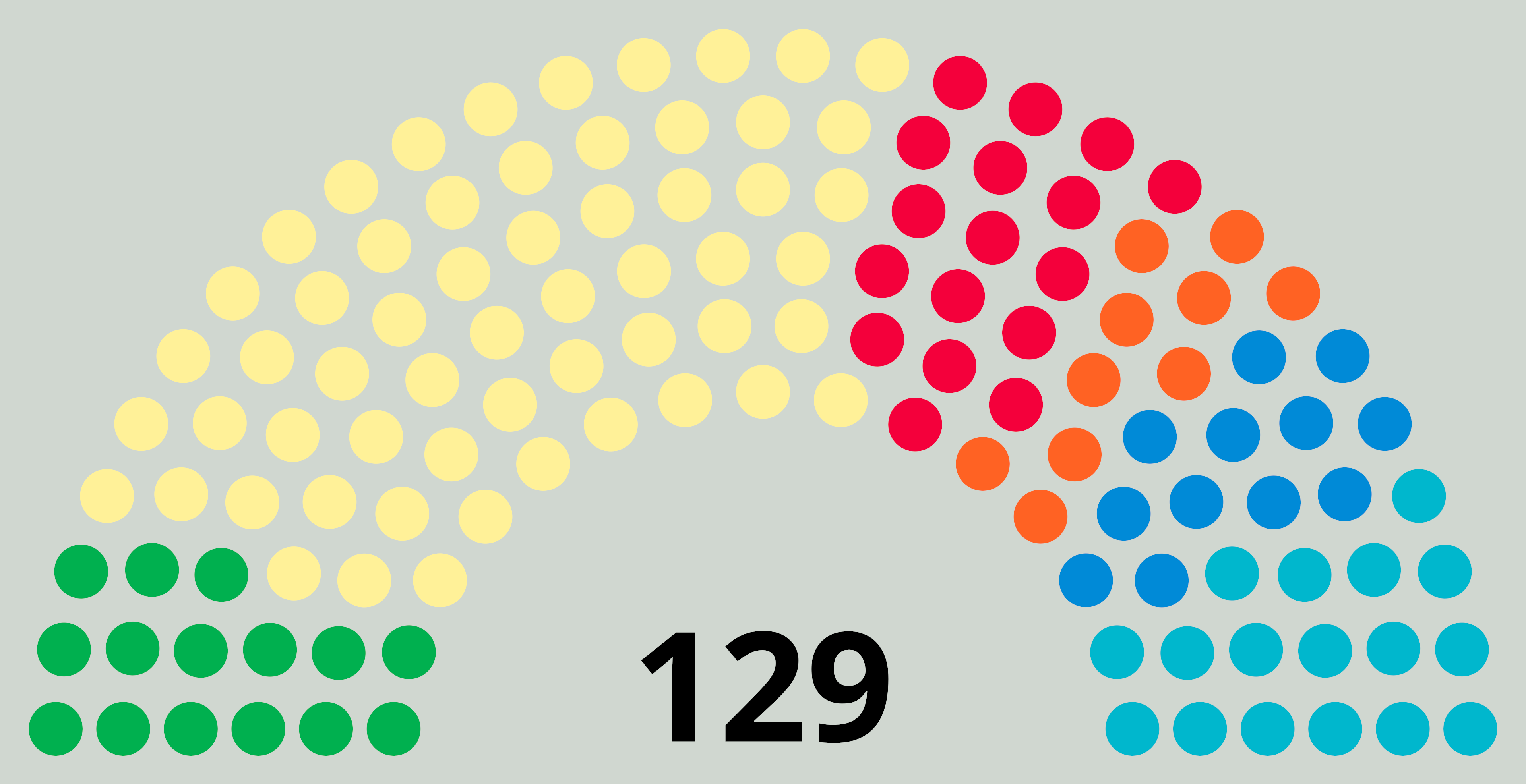
(Image Source: Wikipedia)

The results are in and we now know the shape of the Scottish Parliament. 58 SNP, 17 Labour, 17 Reform, 15 Green, 12 Conservative and 10 Liberal Democrats.

We don’t yet know the shape of the Scottish Government but the result is pretty certain so long as there are no major U-turns from the political party promises beforehand. The SNP will form a minority government and try to get their budgets and bills passed on an ad hoc basis.

I do not believe we’ll see a formal coalition agreement or even a looser cooperation agreement of confidence and supply (where a smaller party promises to support the annual budget and other votes where failure would result in the automatic fall of the government). The SNP still feel rather burned by the failure of their cooperation agreement with the Greens and while I think the Greens would consider a second shot, they are rather wary of being used and discarded again like they were last time.

The other probable source of a kingmaker is the Liberal Democrats who have outright refused to join a formal coalition with the nationalists but have signalled willingness to support budgets etc. Indeed, I believe courting Lib Dem votes for the last budget before the election was the SNP’s way of testing whether such an agreement would be acceptable to their own members (who skew rather more left and green than the leadership does).

It is notable that the same is true for the other parties as well. Any combination of SNP plus one other party would allow a Bill to pass and that technically should mean a fair bit of power-brokering or at least the SNP playing parties against each other. In practice, the Conservatives and Reform are so ideologically opposed to the SNP to support anything and La

For me as a political lobbyist, this was a good result all-in. A majority government tends to be one that closes ranks and pushes outside voices completely outside (or brings them in so close that everyone else can’t see them…but that’s a transparency talk for another time)

For the third time in a row since 2011, we have a pro-independence Parliament with 73 MSPs being representatives of pro-independence parties (if any MSPs on the other side would like to raise their personal convictions despite their party position, do let me know) though this was gained on just 41% of the proportional vote (the discrepancy is because while the Scottish Parliament is more proportional than the UK Parliament, it’s still got a built in advantage for the largest party). This is a drop from 48.4% of the proportional vote for the SNP + Greens in 2021. There have been increasing signs that while sentiment towards independence has been rising, there is a growing dissatisfaction with political parties in their delivery. This could prove important in the coming months especially now that there are openly pro-nationalist governments in place in all three of the devolved nations of the UK. This is probably the most important point to note out of the elections generally. While this doesn’t mean that independence is now inevitable in any or all of those nations, had this happened, say, to a Soviet or colonial bloc in the 20th century, pundits would indeed be predicting the bloc’s imminent demise and they would probably have been right.

Back to the parties though, there is going to be a lot more relief and disappointment than glee in the first week of the Parliament.

SNP

The SNP lost seats and lost vote share. Even though they remain the largest party, remain in government, held most of their “big hitter” politicians (with the notable departure of Angus Robertson who came third in his constituency seat, now taken by Green Lorna Slater) they did not make advances and fell back significantly from latter-day polling that suggested they might be in the running for an outright majority. They remain in a commanding position in Parliament – not least because of the fragmentation of their opponents – but being seven seats short of winning a vote means that they will be extremely reliant on other parties to get anything done. They may try to just do things boldly and challenge others to stop them but John Swinney isn’t Alex Salmond. I’ve never known him to start a fight that he didn’t know he’d already won and I’ve rarely known him to be sure that he’s won until he has.

Labour

This was a disaster of a campaign for Labour. Overshadowed by the scandals hitting their parent party and Keir Starmer down south, they decided not to campaign on policy but on a popularity contest. They pumped massive amounts of money into an advertising campaign for Anas Sarwar specifically and it didn’t work. He lost his constituency seat (though he remains an MSP due to his position on the Regional List) and oversaw a substantial loss of seats. It was, however, not as bad as some polls suggested and even though they are (joint) 2nd place in terms of seats, they were hard done by by the electoral system. In a truly proportionate system, they should have won 20-21 seats, rather than the 17 they have now.

Still, this leaves Labour largely frozen out of the Scottish politics as a party. Their best hope of influence is to do what they accidentally did last Parliament. Back then Sarwar lacked control over his MSPs and basically let them put forward Members’ Bills in areas of interest. This led to the PassivHaus Bill, substantial movements in Freedom of Information, a Land Reform policy that the Government voted down but which has since been adopted by the Greens and others. The party’s fortunes are going to remain closely tied to that of Starmer and Sarwar…but their MSPs may have fight in them yet.

Reform

This is objectively another disappointing result for Reform. Their polls have peaked in recent months and global setbacks to the Far-Right Movement may have ripples here too. The party that was almost certain to go from near-zero to the 2nd party in Parliament only managed joint-second and with far fewer than the up-to 30 seats they were aiming for. I believe their leader’s performance in the debates played a role here. Malcolm Offord’s blithe comment about his multitude of houses and yachts did not endear him to a public for whom the cost-of-living crisis is growing and is plainly being exacerbated by Reform’s allies rather than the immigrants that the party rose to power by demonising.

Greens

One of the winners of the elections, the Greens pulled off some noteworthy victories including their first set of constituency wins (it wasn’t that long ago that they were told by opponents that they weren’t even a “real” party if they couldn’t win in the constituencies. While that slur hasn’t been deployed in a while, it’s certainly no longer applicable anyway). The planet is in greater need of climate action than ever and between the SNP’s continued attempts to backslide on climate policy and Reform’s outright climate denial policies, there is a risk to Scotland here that the Greens will have to work hard resist.

Conservatives

Another of the election’s losers. Devoured by Reform even as they tried to radicalise to save themselves, only to find that the radicals devouring them could do it better. Nevertheless, the Conservatives held up rather better than I expected. Their strongholds in the South remain. My experience of farmers is that where they skew Conservative and Localist, it’s mostly because they want to be left alone rather than out of ideological rightward skew. For reasons mentioned above, the Tories will be largely frozen out of the Parliament this session. When the Right speak, Reform will be louder and first in the pecking order so the Conservatives will have to find a way of distinguishing themselves. There is merit to the idea of them pulling back to a centre-right “Ruth Davidson” position as that is now a clear gap in Scottish politics, but we’ll have to see if there’s anyone left in the party to pull that off.

Liberal Democrats

Probably the biggest winners of the election given the power they might soon have, the Lib Dems should be celebrating this weekend. I’ll admit that there’s plenty in their manifesto that should appeal broadly even to the Left should they want to push it so they may well get a lot done this session. Their vulnerability is that they can’t push too hard or the SNP will just pick another partner to get a vote passed but this is true for everyone else too. We’ll have to see which tail wags which dog going forward.

And everyone else

No other party got elected to Parliament nor did any independents. This is despite the Extremely Online set of supporters who were absolutely convinced that with the power of a tweet, they could get 125% of SNP voters to vote for them on the List and thus win an absolute super-majority. The high profile failures of Alba and Your Party are also a lesson to be learned. Building political parties is not easy. It takes years and maybe even decades of work to build success (seriously…both the SNP and Nigel Farage’s various parties are a lesson here in how long it takes) and even then it’s not a given and everything can blow away like smoke with a single bad headline.

No, it’s not fair that Scotland has such a high effective electoral threshold before votes become seats but we’re not looking at a German system here where a party was locked out because it got 4.9% of the vote but missed the 5.0% threshold. None of the parties who didn’t get a seat managed to clear 1% of the vote. The “best performing” one, with 0.88% of the vote, wasn’t even a real party but is a front group designed to try to confuse and steal votes from Green voters. I’m not saying there isn’t a place for smaller parties – I genuinely wish we had a more diverse Parliament – but it won’t happen without hard graft in the communities to build votes and to win people with your policies. There are five years until the next election. That isn’t as long as one might think.

How Common is your manifesto?

“Every election is determined by the people who show up.” – Larry J. Sabato

This blog post previously appeared in Common Weal’s weekly magazine. Sign up to our Daily Briefing and Weekly Magazine newsletters here.

If you’d like to support my work for Common Weal or support me and this blog directly, see my donation policy page here.

The elections are now just hours away and pretty soon we’ll all be scrambling into action to hold the parties in Parliament (particularly those who end up in Government) to get them to fulfil the promises they’ve made to you.

In this, my last post before the vote, I want to have a very brief look through some of the main manifestos to pull out the most and least ‘Common Weal’ policy in each them. Parties – even those constantly at loggerheads over the slightest ideological deviation and even those who appear to have almost no ideological overlap at all often agree with each other on a surprising number of policies (even if they get to them from wildly different positions and motivations – for example, a party might want a Universal Basic Income because it would allow them to eradicate poverty while another might want it because it would allow them to privatise public services and hand out vouchers for you to spend to buy those services instead).

None of this should be in any way construed as an endorsement of any of the parties mentioned though. Common Weal is party neutral and we lobby all parties to adopt our ideals (obviously this is an easier task with some than with others though).

I also can’t cover every party standing in this election. I’m sticking to the largest ones which, according to current polling, have a reasonable chance of winning seats after the election. I have a library of many of the manifestos for this election which includes some of the smaller parties, though even this is non-exhaustive. Apologies if the party you personally support isn’t covered here due to those caveats (though if your party’s manifesto isn’t yet in my library, please let me know and I’ll get it added!).

As a final caveat, do please go and read Nick Kempe’s article looking at mentions of care and care reform in the manifestos as this is also an area that Common Weal are heavily involved in. To avoid doubling our work, I’m steering a little away from care here and looking at Common Weal policies in other areas instead.

SNP

The SNP are almost certainly going to be the largest party in Parliament after next week and will have a good chance of being returned as the principle party of Government. The question in this election really seems to be more whether they’ll have an outright majority, will form another minority government and try to pass budgets etc with ad hoc alliances (likely with the Lib Dems and/or Greens) or whether they’ll form a more formal coalition or cooperation agreement with one or more other parties.

The difference from a lobbying standpoint for us is that minority governments may need to negotiate with other partners to get votes passed and therefore are more open to compromise or outside ideas whereas majority governments can just whip things through on party loyalty.

Most Common Policy

It’s only a single half-sentence in the manifesto but the announcement of a National Housing Agency isn’t just in alignment with Common Weal ideals but is an idea that comes directly from us. We’ve been campaigning for a decade now for such an agency to coordinate housebuilding in Scotland, strategically plan it, ensure adequate building standards and to help to train builders in the latest techniques (something that will be essential if we want to build houses to PassivHaus equivalent standards). None of that is in the half-sentence of course but we have been in contact with the Government and one of our projects for this year is to design the Agency that we think Scotland deserves.

Least Common Policy

The least Common Weal idea in the SNP manifesto as far as I can see is the continuation, and in fact doubling down, of adherence to conventional economic orthodoxy around the only measure of economic “success” being GDP growth and the only means by which Scotland could and should achieve that growth is by “foreign direct investment”. Gone from this manifesto compared to 2021 is any mention of Circular Economy, 15 minute neighbourhoods, Repair hubs (other than a fund for repairing bicycles) or other policies that promote sustainability through deconsumerism.

Reform UK

It goes without saying that Reform are almost entirely ideologically unaligned with Common Weal. Our very mantra “All of Us First” runs directly against their core belief that only some people matter and some matter more than others.

Most Common Policy

Reform are fighting this election based on flipping over the table of governance and pulling power away from the nationalists in Edinburgh and one of the results of that is that they are surprisingly supportive of plans for local government that wouldn’t look too far out of place coming from us with a demand to devolve more power to local authorities. They don’t end up in quite the same place though, as they also support merging Scotland’s already too-large Local Authorities and concentrating power into the hands of “city mayors”.

Least Common Policy

Pretty much everything they have to say about immigration, immigrants and people reliant on social security.

Labour

Labour are the pro-union party that Common Weal has the closest relationship with. We find a lot of common ground on many issues even where we quite happily and openly disagree on others. In the previous Parliament, for example, we collaborated constructively on substantial aspects of care reform (again, see Nick’s article) as well as Members’ Bills on Freedom of Information, Land Reform, what became the PassivHaus Bill and others.

Most Common Policy

Labour are the only party in this list to explicitly mention the National Care Service as an endeavour that they want to bring back in the next Parliament and have explicitly adopted our phrasing that the NCS must be an institution “worthy of the name”. There aren’t a lot of details about what they want to do or what they’ll be able to do if they aren’t in Government, but this is an area that is high on our priority list for the next Parliament and so one that we will be pushing on for more information.

Least Common Policy

Labour’s energy policy doesn’t mention public ownership of energy (at community, Local Authority or Scotland level) beyond a bare mention of the existence of UK controlled GB Energy – which still doesn’t appear to have a clearly defined purpose or stated ambition of how much of Scotland’s energy it would bring into public ownership.

Scottish Greens

The Greens are another party that we’ve worked closely with over the course of the previous Parliament (My own political inclination leans environmentalist, and I was a member of the party for several years though I think my skills and services are much better applied in a cross-party sense these days) and they are in an interesting position in the upcoming election. A potential substantial increase in votes and seats beckons, though the shadow of the uncomfortable coalition with the SNP and its acrimonious collapse looms overhead too which may well limit their influence more than their number of seats suggests.

Most Common Policy

The Scottish Greens have campaigned for a replacement to Council Tax for almost as long as they’ve existed as a party so this isn’t exactly a policy they’ve taken from us in general, but the details of how to implement a proportional Property Tax are now pretty well defined as a result of our work and their policy here closely aligns with our own vision including in terms of its allocation of discounts and surcharges (particularly on ensuring that landlords can’t keep profiting from rent hikes).

Least Common Policy

While the Greens have included a carbon emission tax on land in their manifesto, they have dropped mention of an outright property tax on land. This is an error. Taxing the pollution created by the use of land is important but so is taxing the concept of ownership of excessive land ownership in principle – even managed appropriately, the accumulation of wealth via land ownership must have its limits. This said, the Greens have formally adopted the former Labour position (now missing from the latter’s manifesto) to place a cap on the maximum amount of Scotland that any person can own.

Conservatives

Like Reform, there is little cross-over between Conservative policy and Common Weal’s, though it has happened. We’ve worked constructively particularly at a local level on local democracy reform and it was Conservative voices that proved critical to campaigns we’ve supported in areas like rent controls and Covid policies. With that party looking like it’ll be largely devoured by Reform though, their influence in the next Parliament may be limited. On the other hand, that may force a reevaluation of their political positions and possibly lead to hands reaching out to unlikely allies.

Most Common Policy

If anything, there’s even less in the Conservative manifesto for Common Weal fans than in Reform’s. One of the few policies I’ve found where we’d be pointing in the same direction is in our opposition to the Building Safety Levy but we do so on very different grounds. We oppose it because it has effectively dumped the cost of cleaning up the mess of companies installing unsafe cladding onto house buyers where we believe that more should be done to recover the costs from the companies and their former owners if those companies have been wound up to avoid paying compensation, whereas the Conservatives merely want to make houses a fraction cheaper (they also want to scrap the PassivHaus legislation on up front cost grounds despite the fact that passive houses are cheaper to run and would eliminate fuel poverty).

Least Common Policy

Tax cuts. The Conservatives are quite simply mathematically wrong on their assertions that every devolved tax is on the far side of the peak of the Laffer Curve and that everything will get better if we just cut taxes in ways that benefit the already rich more than those too poor to pay tax as it is. If 40 years of trickle-down economics was going to work, we would have seen it by now.

Liberal Democrats

Along with the Greens, the Lib Dems may be the ones to watch in this election as they will also be vying to become Kingmakers if the SNP don’t win a majority. Indeed, wariness of the former from the SNP after the coalition collapsed along with a less environment and more business leaning FM Swinney may mean they’d prefer a partner wearing orange rather than green. For their own part, the Lib Dems have ruled out any formal coalition but would consider voting for SNP budgets – as they have done the last two times – if the price is right.

Most Common Policy

Although the Lib Dems are still ideologically against independence, they have quite a lot to say about other aspects of constitutional reform that Common Weal has advocated for. They are one of the few parties in Scotland still advocating for a fully Federal United Kingdom (though we caution that this must be framed as true democratic reform, not merely an alternative to independence or a barrier against it) and they have adopted our policies that Citizens Assemblies should be embedded at all levels of government from local to national and that Freedom of Information should apply to private companies that provide government services.

Least Common Policy

Energy policy again. While the Lib Dems are anti-fracking, they are solidly pro-nuclear (despite it being the most expensive form of low-carbon energy generation) and they are pro-carbon capture (despite the inconvenient fact that it doesn’t work). This said, while the Lib Dems aren’t generally the first choice party when it comes to supporting public ownership of things like energy, their manifesto this year does discuss the government taking equity stakes, reforming ScotWind (adopting our own recommendations) and given Local Authorities the power to bring energy into public ownership if they choose.

Conclusion

As I say, none of this is an endorsement of any party nor are we going to state which part is the most Common Weal of them all – all of them have taken on policies that we could support but all of them have also made promises that we’re going to have to fight against. This is fine. It gives us plenty of scope to stay busy in the next Parliament. We’re certainly going to be stuck right in there to try and get as much as we can done and we’ll work with alliances where we can make and join them. If you’d like to support us as we try to pull all of the parties in a more Common Weal direction then please do so here. And I’ll be back on the topic in the next couple of weeks to break down what the results mean once we see what they actually are.