Scottish Child Payment policy must always follow the evidence

“Extraordinary claims require extraordinary evidence.” – Carl Sagan

This blog post previously appeared in Common Weal’s weekly magazine. Sign up to our Daily Briefing and Weekly Magazine newsletters here.

If you’d like to support my work for Common Weal or support me and this blog directly, see my donation page here.

A pinboard containing various notes connected by red threads. The focus in the centre is a new note being pinned to the board. It is blank and not connected to the surrounding notes.

Scotland appears to have a real problem with the way that it does policy development that we need to talk about with increasing urgency. You may already have a sense of this from my recent articles on Burnham’s approach to developing a National Care Service or even our recent briefing on John Swinney’s approach to pensions in an independent Scotland, but there’s another story from last year that appears to have returned with a crescendo.

Back in April 2025, Swinney made a statement to the press stating that he was opposed to proposals from childrens’ charities to increase the rate of the Scottish Child Payment – one of Scotland’s recently devolved social security payments made to poorer families with young children – because he believed that an increased rate would discourage parents from entering or re-entering the workforce.

When this news came out we immediately submitted a Freedom of Information request to ask what evidence they had to back this statement up. Specifically, we asked what proportion of households receiving the SCP were households that contained no working adults. If we have that data point, then we can track it with time. If the SCP increases and then so does the number of workless recipient households, then we can correlate the two effects and see how increasing benefits decreases the incentive to work.

The Government responded saying that they weren’t even tracking this data. They had no evidence to suggest that a small or substantial rise in SCP would lead to people not working nor that the SCP was “at the limit” of what it could be before such an effect occurred.

This is an unacceptable way to announce polices. It should not be that the First Minister can just arbitrarily decide whether or not something is true.

It may well have been that a rise in SCP would incentivise parents to not work. It may well be that adding £10 per week would start to cause this effect. It may well not show up until parents are given £10,000 per week.

But this is a testable hypothesis. Data on this can be gathered. In this case, it wasn’t.

Until now.

“In short, there was no evidence of negative impact on the labour market when taken as a whole.”

This week, the Scottish Government quietly published the results of a study into the increase in SCP that did happen in April 2025 and then again in April 2026. I say quietly published because while it appeared on the Government’s webpage of new publications, it did not appear in their daily 4pm bulletin of the stories they think are important to push and nor have I seen any news reporting on the topic (literally the only other person I could find who appeared to have spotted this report between publication and me writing this was Prof. John Robertson who runs the Talking Up Scotland blog).

As with a story I did on a report into the potential for a Scottish Minimum Income Standard in May 2025 which was similarly published without fanfare and then almost completely ignored (though we may soon get some kind of Minimum Income for Artists out of it). This is once again a time when a fairly substantial story has been noticed not because the Government actively wanted it to be noticed or because the mainstream media were employing enough people that they could dedicate some of them to make sure that the stories were noticed but because a handful of activists happened to be paying attention to the front page of a website that receives dozens of new reports each day, and they just happened to be doing so at the hour or so when the story was visible before it got pushed off the front page and buried forever. This is not good for Government scrutiny.

But back to the report and the results of the study. In short, it found precisely the opposite of the First Minister’s evidence-free claim and found a result much more in line with virtually every other similar study into the work impacts of out-of-work social security.

In short, there was no evidence of negative impact on the labour market when taken as a whole. The vast majority of recipients (around 70%) felt that receiving the SCP had no impact positive or negative on their life (which is not to say that it didn’t, merely that they didn’t feel like they had to change their behaviour as a result of getting the payment. It may well be that they would have had to cut back on spending if the payment was stopped so even where they felt it didn’t have a positive impact, it may have been preventing a negative one).

Only around 4% of respondents said that they or their partner had stopped work or reduced their work as a result of the payment. Once again, and in challenge to the FM’s claim, this is not necessarily a negative impact. A parent reducing their overtime to spend more time with their child is not necessarily a bad thing for the child even if it is for John Swinney’s GDP spreadsheet.

On the other hand, 3% did unambiguously spend more time with their child during a longer parental leave (which still counts as being “in work”), 4% found that the payment let them start work where they previously weren’t working, 7% were enabled to work longer hours (perhaps the SCP helped with childcare costs) and 14% used the SCP to help with costs associated with their work (e.g. travel or clothing). The report also notes gender differences where women were more likely to decrease their work hours (even when they were the main earner) while men were more likely to increase their work hours and that the way this plays out in single-parent households may indicate that lone mothers face “unmeasured barriers not faced by lone fathers”.

In aggregate though, it does appear that an increase to the SCP has no overall impact on the labour market. Judged by these figures, it appears that the payment may help support some people to work more than they otherwise would have (again, it is possible that the payment helps with childcare costs and other additional costs that come with juggling work and raising a child).

Any moment where there is a risk that the payment could reduce work appears to be limited to very specific circumstances such as when taking on more work pushes someone above the threshold for earning Universal Credit and thus causing them to be ineligible for the SCP as well. This means that it is means-testing of social security that is having a negative impact rather than the amount of benefit being received and should be another case in point for more universalism such as via a Universal Basic Income that supports parents regardless of their other or changing circumstances.

Most importantly though is the lesson that this report should send to the Government not just in this policy but in policy-making as a whole. Evidence matters. It should not be acceptable to make statements that affect the lives of people who are, on the whole, already financially vulnerable without having evidenced cause to do so. Certainly, scapegoating poor parents as being lazy and prone to shirking work the moment they are no longer compelled by the threat of destitution to do so (the fundamental implication beneath Swinney’s comment) is not compatible with the stated goal from the same politician to eliminate child poverty.

Public policy must always follow the evidence. Politicians must stop making claims that they cannot back up with evidence. It is beyond me that this is a lesson that still needs to be learned.

The Common Green logo Green text on a dark green background, above a version of the Common Weal "balance" logo.

How taxing land can help us find out who owns land

“Nothing is yours. It is to use. It is to share. If you will not share it, you cannot use it.” – Ursula K. Le Guin

This blog post previously appeared in Common Weal’s weekly magazine. Sign up to our Daily Briefing and Weekly Magazine newsletters here.

If you’d like to support my work for Common Weal or support me and this blog directly, see my donation page here.

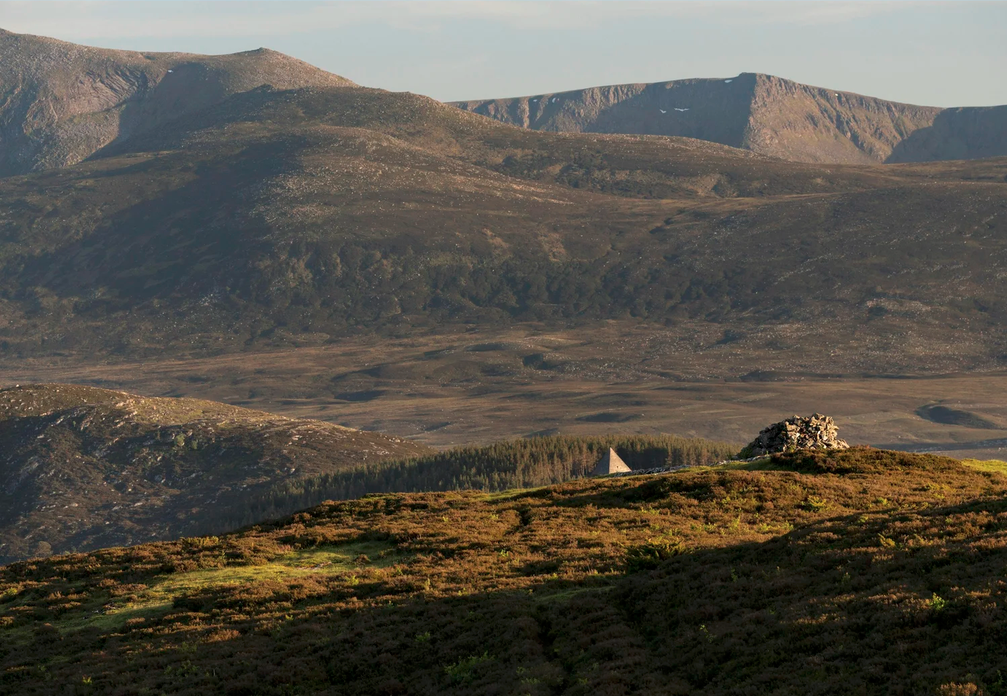
A stock photo of the Scottish Highlands, largely devoid of people or wildlife apart from some sitka spruce plantations, a cairn and what may be the top of the roof of a house.

The UK as a whole but Scotland in particular appears to be creeping ever closer to the inevitable realisation that a few people hoarding stores of wealth is inherently bad for society and that wealth should be taxed.

The debate at the moment is largely focused on how to do it. The simplest version is probably also the worst. That would be to have everyone whose net worth is above a certain threshold tally up the value of all of their possessions (from housing to company ownership to cars to artworks) and then pay a tax based on a percentage of that value.

It’s often hard enough to do this for someone’s estate when they die – it’s even harder when they are still alive enough to move their mobile assets around to hide them from the Revenuers or to move themselves to somewhere that’s quite happy to host the ultra rich trying to avoid their responsibilities. Richard Murphy makes this point though he also offers suggestions that would work at a UK level such as reforming capital gains tax and corporation tax and removing tax subsidies from high value pensions. His 2024 Taxing Wealth Report can be read here.

In Scotland in particular though, there is a very large store of wealth currently being relatively untaxed that could be directly addressed without fear of the billionaires fleeing – our land and the ownership of it.

No matter where someone resides in the world, they can’t take their owned land in Scotland with them and therefore the land itself can be taxed regardless of who owns it and where.

“Who Owns Scotland?” is a key question, however, and one that is strangely unanswered for a country like ours. Andy Wightman is the go-to source for detailed information of land ownership, especially where that ownership is obfuscated through corporate or financial structures, but even his database currently covers less than 80% of rural land. The Scottish Land Register is, after many years of missed deadlines, still incomplete.

We also know that the land reform legislation passed in the previous Parliament is unlikely to enact meaningful reform of ownership. It may well have positive impacts in the management of land but the regulations only cover the largest estates and there are ways to avoid its strictures (such as by breaking a single estate up and setting up trusts or companies to own each chunk separately, even if a single individual owns all of those companies thus still controls all of the land). Even the rules around forcing some sales to offer lots to communities are unlikely to be meaningful if the communities don’t have the resources to buy the lots.

This is where tax may have to play a role.

One of the barriers currently facing bringing in a land tax is the lack of data not just on ownership but on valuation. The latter isn’t insurmountable and there are ways to do it. The Scottish Land Commission is investigating various approaches to valuation, and these basically boil down to a few key approaches.

The first is an algorithmic approach similar to the way Zoopla values your house and is based on similar nearby sales. This is more complicated for land than housing because land sells less often and has more variation even field-to-field but it can give a rough idea (my own paper on taxing land took a not-dissimilar proxy approach by combining national sales data with agricultural soil grade information).

Another is obviously to update valuations when land is sold or transferred but could also include valuation data captured during events like the owner taking out a loan secured on the land, reinsuring it against damage or when applying for planning permission to build on it. There may also be bespoke site surveys which could happen either as the result of any of the above, randomly to help benchmark the algorithmic approach or if the landowner is unhappy with their algorithmic valuation and wants a manual correction (this last one could be subject to a fee and on the understanding that valuations could go up as well as down – this would deter people disputing their valuation without good reason).

“The good news for land reform campaigners is that there seems to be a lot of things about to happen quite quickly in Scotland.”

Another slightly more radical version – but one not without precedent – is to allow owners to self-value their land but to give local government or communities the right to enact a compulsory purchase at the taxable rate regardless of any potential market rate. If you state that your Highland estate is worth £1 for the purposes of tax, then the local community can purchase your estate for £1. This would naturally incentivise owners to value their land accurately (or, at least, higher than the price the community is able to pay – the land speculation bubble has already priced many of them off the land).

Bringing in a land tax will therefore help to value land. It’s less of a barrier before a tax can be brought in but more like a problem of the land being difficult to value because there’s no tax to compel it to be valued.

I’m increasingly coming to believe that the same might be true for the problem of ownership too. That the barrier isn’t that we can’t introduce a land tax because we don’t know who we’re taxing but instead we’ll very quickly be able to find out who we’re taxing once we start introducing a land tax.

What would happen here is that the owners of land would be responsible for paying their land tax at the end of the year and would connect their payment to their entry or entries on the Land Register. These records could be checked for land that is on the register but which doesn’t have a tax payment linked to it. If tax is not paid on a portion of land and the owner is known, notices to owners could be sent out (along with late fees etc).

If ownership is not known or if the land is not on the register at all, then a public notice could be made calling for the owner to come forward with proof of ownership and an application to register their land. If none present themselves within a reasonable time (say, three or five years) then procedures dealing with ownerless land can be initiated with the land itself being ultimately transferred to a public body (the traditional recipient in Scotland would be the Crown, but I would argue in this post-feudal age that ownerless land should be converted into Common Good ownership).

This is a win-win for Scotland. Either land that is not declared on the Land Register gets registered quick to avoid being chased for tax evasion, or it comes back into public ownership and from there can be better used by an identifiable owner.

The good news for land reform campaigners is that there seems to be a lot of things about to happen quite quickly in Scotland. There was a fear for a while that the passing of the Land Reform Act last year would take the wind of out the sails of reform while doing little in itself to create much change but while the latter may yet be true, the former does not.

I can’t say too much at this stage other than to suggest that eyes are turned to the party conferences this year as there may be some interesting things happening. The Revive Coalition, of which Common Weal is a member, will be at both the SNP and Green conferences this month talking about land reform and where policies like a land tax can help to push things forward.

The important thing to remember in this campaign and in all others is to look at challenges not as barriers to prevent change but merely as obstacles to overcome or bypass. If we think we can’t do something, just check to make sure that we’re actually right about that and if we can’t do it in the way we want to, maybe we can do it another way instead. Being focussed on the solutions rather than being stopped by the problems is what will create change.

Taxing wealth is important and popular. Taxing land is one way to do that in Scotland. How to get there, is up to us.

The Common Green logo Green text on a dark green background, above a version of the Common Weal "balance" logo.

The pension triple lock became a problem that a double lock won’t solve

“You’re mugging old ladies every bit as much if you pinch their pension fund” – Ben Elton

This blog post previously appeared in Common Weal’s weekly magazine. Sign up to our Daily Briefing and Weekly Magazine newsletters here.

If you’d like to support my work for Common Weal or support me and this blog directly, see my donation page here.

A pink piggy-bank wearing glasses and staring at a calculator

Andy Burnham has injected a case for optimism into the UK political sphere and has genuinely proposed some interesting ideas for the future. More crucially, as I point out in In Common in The National this week, his approach to making policy – by taking a step back and doing the detail work before trying to launch the idea – is the complete opposite of the Scottish Government’s approach of announcing an empty “Framework” then trying to backfill the detail on the fly. The Scottish Government could learn a lot from his approach to building a National Care Service just as Burnham should learn the lessons on why the Scottish attempt failed.

This attitude doesn’t necessarily extend too all aspects of the plans announced at the Labour conference this week and I think the one that is likely to have the longest term impact is the dropping of the state pension triple lock.

The triple lock is the mechanism by which the UK state pension was automatically uprated each year by the highest of the previous year’s rate of inflation, average rate of wage increases, or 2.5%.

It was brought in in 2010 by the Conservative/Lib Dem Coalition Government and it did have noble reasons behind it. It has often and for many years been pointed out that the UK’s rate of state pension income is amongst the lowest in the developed world. Pensioner poverty for those reliant only on the state pension was becoming a major political scandal and it was urgent that the state pension be increased.

The doesn’t tell the whole picture because it doesn’t include private pensions and other income but we’ll come back to that. It’s also important to note that the increase in the state pension came around the same time as rapid rises to state pension age and increasing protests from groups like the WASPI women and so an increase to the rate of pension was somewhat of a sweetener to offset the fact that people would have to work longer before receiving their pension.

And finally, it cannot be ignored that there was a very deliberate political element to this. The reason why the Conservatives were for increasing social security for older people and were and still are against increasing it for younger people comes right down to the voting patterns of those two groups. Political parties of all colours play to their respective bases when they can or must.

With that preamble being necessary to start to grapple with this very complex issue, we can now look at Burnham’s reform. To replace the triple lock with a double lock of only uprating pensions by the highest of inflation or 2.5%, without automatic reference to wages.

This means that if wages are consistently higher than inflation and if inflation remains above 2.5% (despite the Bank of England’s target to keep it around that level) then pensioners will not get any poorer with relation to prices but they also won’t get any richer in relation to workers.

There are a lot of “ifs” in that aspiration. For a start, I believe that the fear that pensioners were getting drastically wealthier as a result of the triple-lock is based on a faulty reasoning. This did happen in the past few years because of the very particular circumstances of the Covid pandemic. When we went into lockdown, wages dropped quite drastically for a lot of people while supply chains took a massive hit. This meant that in the lockdown year, even though inflation outstripped wage growth (wage decline at its worst) both were below the 2.5% triple lock floor and pensioners became relatively wealthier compared to both prices and workers.

“It’s a bit like your landlord saying that instead of them increasing your rent by £200 next year, they’ll only increase it by £100 so now you have £100 to spend on dinner tomorrow night.”

After lockdown, shifts in the economy caused a massive spike in wage growth not (mainly) because people wanted paid more to come back to work but because “returning to normal” suddenly was a big proportional spike up compared to the layoffs and furlough funding of the previous year. Pensioners benefited from wage growth going to 7% and rapidly outstripping prices. Then, in 2022, the invasion of Ukraine plus other geopolitical factors (and outright corporate profiteering) have seen inflation blow past the steady post-Covid wage increases and have again seen pensioners do well out of the whole process.

All this is to say that the last few years broke the triple lock model in a way that wasn’t envisaged when it was created (you can read more about this in our 2021 book All of Our Futures). I’m not convinced that moving from a triple lock to the double lock is a solution to the problem nor am I convinced that the problem they are trying to solve is one that is likely to happen again as it did in 2020.

Burnham is essentially gambling that wage increases will stay both higher than inflation and higher than 2.5% per year. This is the only way that the state pension will increase slower than it would under the triple lock but that scenario has also been a rarity in the years since the 2008 Financial Crisis. He also undermines this objective by stating that pensions won’t lose value in relation to wages in the long term. This makes sense if the objective is indeed to avoid model-breaking short term shocks, but it doesn’t make sense if the long term goal is to have pensions grow at a slower rate than wages.

His claim that he can use the “saved” money to fund a National Care Service is obviously a political sweetener itself – people are often happier with a bit of policy pain if they think something good will come from it – but I don’t see how that can add up either.

It’s trying to predict both inflation and wage growth decades into the future. This is perfectly valid as a modelling exercise and to do things like try to work out the potential impact on pensioner income and to the Barnett Formula as funding shifts from a reserved policy to a devolved one (or vice versa), but it’s harder to say for sure that you can “use” money that isn’t even a real saving but merely a slower-than-otherwise increase in future costs. It’s a bit like your landlord saying that instead of them increasing your rent by £200 next year, they’ll only increase it by £100 so now you have £100 to spend on dinner tomorrow night.

The triple lock served a purpose of reducing pensioner poverty but I’m also not convinced that either it or the double lock are fit for that purpose without making changes to the other side of pensions – the private sector.

When I said that the UK’s state pension is among the lowest in the developed world and that this doesn’t tell the full story, it’s because a large amount of total retirement income in the UK is derived from private pensions and from the “housing ladder” (wealth built up in housing that can be released by “downsizing” upon retirement). In All of Our Futures, we found that the UK’s total pensioner income was closer to the average of developed countries (so, still not great) but that around half of it comes from private pensions or housing wealth.

There is a very good argument to be made that the Thatcher era that created the marketisation of housing as a capital growth asset and which unleashed the previously restrained pension financial sector and turned them into GDP-boosting risk-machines allowed the UK to deliberately keep its state pension low for only the cost of turning housing and the financial sector into economic bombs that have gone off repeatedly and are likely to do so again.

So continuing the job of reducing pensioner poverty while maintaining fairness across generations and between pensioners and workers is not going to be possible without reining in the financial sector and private pensions while also decapitalising housing.

There are solutions. We should re-socialise the housing sector by aggressively replacing private rented housing with social housing (which will reduce the problem of pensioner poverty for those who retire without owning a house to downsize from, while reducing the wealth inequality caused by landlords who bought their houses when they were cheap). We should better regulate and seek to replaced the private pension sector with a public-owned workplace pension scheme (see Jim Osborne’s work on this which is closely in accord with but much more developed than the work we could do in our book).

And we should replace the state pension with a Universal Basic Income at not less than the same rate as this would help to deal with issues such as regions of the UK where high deprivation means people working during ill health or dying before state pension age (creating a tax transfer from poor areas to richer areas with higher life expectancy). A UBI would also help end the discrimination of “retirement age” where people who are able and do want to work past an arbitrary timeline are more than welcome to do so.

The most vital thing is that any attempt at social security reform – be it pensions or anything else – must not be used to divide society either young against old or workers against retired people. All this does is distract from more serious divisions such as the reasons why the super-wealthy have left us all poorer or how tech oligarchs are literally stealing the future of this planet out from under us.

I have a great deal of hope right now thanks to Burnham’s new optimism. I hope it rubs off elsewhere too and we start to see more exciting and better thought through policies from all governments. Early signs are good, though we must make sure that areas like pensions are treated with the respect due to the sheer complexity of the task of making sure that wherever we live, within the UK, within an independent Scotland or anywhere else, we build a country that all of us can be proud to grow older in.

The Common Green logo Green text on a dark green background, above a version of the Common Weal "balance" logo.

Finally, Local Government Reform – But it must be done right!

“Localisation stands, at best, at the limits of practical possibility, but it has the decisive argument in its favour that there will be no alternative.” – David Fleming

This blog post previously appeared in Common Weal’s weekly magazine. Sign up to our Daily Briefing and Weekly Magazine newsletters here.

If you’d like to support my work for Common Weal or support me and this blog directly, see my donation page here.

Note:- Since this article was first published, Common Weal’s work on local government reform has been featured in The Herald.

Recently, First Minister John Swinney said that the current way we run Local Government in Scotland means that Local Authorities are “too big to be local and too small to be regional”. Except he didn’t really. He took that line, without credit, from Common Weal and our campaign for local democracy reform.

It’s a pity that he didn’t take more from us or even ask us for a briefing on our own work on the topic before yesterday’s surprise announcement of what could end up being the largest reorganisation of Scottish local government in more than 30 years.

The proposals are, at this stage, just a first stab at this plan and as of the time of writing it’s too early even for a public consultation (which we shall be engaged in) but even at this there are messages worth picking up and informing you about.

The first is that, contrary to previous hints at the Government’s thinking in the Programme for Government, there is actually a local tier of democratic governance in this proposal (the PfG stated only that local communities would be able to “influence local decisions”, not control them). New districts (formally called “Community Authorities”) will be formed by splitting the current Local Authorities into 3-5 sections forming between 120-160 local government bodies across Scotland which will elect Councillors using the same multi-member ward, STV system of voting that Local Authority Councillors are currently elected on.

Simultaneously, the current Local Authority boundaries will be merged so that 32 Councils will become between six and ten Regional Authorities. These will not have elected members or a separate vote but instead each District Councillor will double-job as a Regional Councillor too.

And this leads to a major problem. The dash to prevent the need for “more politicians” (both on cost grounds and likely to avoid political backlash) puts the plan in a double-bind.

As Allan Faulds of Ballot Box Scotland has pointed out, if Scotland maintains the current number of Councillors at 1,227 then District Councils become very small with between 7 and 10 members each. For comparison, an average municipal council in Germany consists of about 20 members but also represents a much smaller population (average 9,000 residents). A German municipality covering a population of the size proposed by these districts (around 35,000 to 45,000 people) would have 30-40 Councillors and only the smallest of municipalities with populations fewer than 1,000 residents would be represented by fewer than 10 Councillors.

The other side of double-jobbing the District Councils means that each Regional Council becomes extremely large, with as many as 200 members sitting on it. Given that Local Authorities have largely sold off the buildings they haven’t used since the 1993 reforms (and we don’t know where the boundaries of the Regions will be yet) there’s a serious issue of where to host the Regional Councils if they are to be this size.

One workaround would be to cap the Regional Councils at, say, 100 members but this means either that Districts have to decide who to nominate to sit at Regional level and means that some of your Councillors will have power over some things that others do not – a much more blatant “two-tier” system than the List MSPs in Holyrood are (falsely) accused of being. Worse, Communities that used to be served collectively by around 30 Local Authority Councillors could find themselves electing as few as four members to run their District. It would be almost trivial for a political party clique (or even a married couple) to take complete control of their District. This is not democratic.

At a Regional level, either the approach of doubling every District Councillor or even nominating just some of them is a better approach than the proposal to directly elect Regional Provosts who would have direct and unilateral control over strategic decisions. This plan – apparently being expanded in England by former Regional Mayor Andy Burnham – would be even less democratic and even more centralised than the plan being proposed by the Scottish Government here (I wonder if this is intentional and that the sudden push for the regionalisation of Scotland has more to do with countering the plan for Provosts than it represents a genuine desire for local democracy, especially given Swinney’s poor track record when it comes to respecting local authorities).

On that note, what happens to Cosla is very much an open question here. Cosla currently represents the collective will of the 32 Local Authorities. Reducing its mandate to representing the Regions risks again making it easier for a small party clique to take control of the whole body – which might be the point. Cosla was one of the major factors in reigning in the worst of the Scottish Government during the National Care Service debate to the point that when Government found that it couldn’t sustain the plan to pull sole control of care away from Councils and give it to Ministers they instead set up a “tripartite” control board consisting of Government, Cosla and the NHS – the latter almost certainly being included as a means of providing a whipped vote in favour of Holyrood.

The proposals for which powers to sit where are not yet well developed though on the face of it, and if we use planning permission as an example, Regional Councils would be responsible for “strategic” decisions like whether or not a developer gets planning permission to build a new housing estate while District Councils would be responsible for “local” decisions like whether you, as a household, get planning permission for an extension on your house. While Swinney did mention ideas like devolving powers from Holyrood “or even from Westminster” to a more local level, it’s hard to find examples of powers at that level that might come to District level, and so this plan does appear to be one of centralising Local Authority powers to Regional levels more than moving powers to District level.

Also not developed is the cost of the whole endeavour. The 1993 reforms cost around £400 million at the time which in today’s money is closer to £1.2 billion. This isn’t an absolutely outrageous sum in national government terms but it’s a substantial one and may not factor in costs such as the need for the construction or purchase of new Regional Parliaments given that we don’t know how many we need or how large they’ll be.

The Common Green logo Green text on a dark green background, above a version of the Common Weal "balance" logo.