Scottish Child Payment policy must always follow the evidence

“Extraordinary claims require extraordinary evidence.” – Carl Sagan

This blog post previously appeared in Common Weal’s weekly magazine. Sign up to our Daily Briefing and Weekly Magazine newsletters here.

If you’d like to support my work for Common Weal or support me and this blog directly, see my donation page here.

A pinboard containing various notes connected by red threads. The focus in the centre is a new note being pinned to the board. It is blank and not connected to the surrounding notes.

Scotland appears to have a real problem with the way that it does policy development that we need to talk about with increasing urgency. You may already have a sense of this from my recent articles on Burnham’s approach to developing a National Care Service or even our recent briefing on John Swinney’s approach to pensions in an independent Scotland, but there’s another story from last year that appears to have returned with a crescendo.

Back in April 2025, Swinney made a statement to the press stating that he was opposed to proposals from childrens’ charities to increase the rate of the Scottish Child Payment – one of Scotland’s recently devolved social security payments made to poorer families with young children – because he believed that an increased rate would discourage parents from entering or re-entering the workforce.

When this news came out we immediately submitted a Freedom of Information request to ask what evidence they had to back this statement up. Specifically, we asked what proportion of households receiving the SCP were households that contained no working adults. If we have that data point, then we can track it with time. If the SCP increases and then so does the number of workless recipient households, then we can correlate the two effects and see how increasing benefits decreases the incentive to work.

The Government responded saying that they weren’t even tracking this data. They had no evidence to suggest that a small or substantial rise in SCP would lead to people not working nor that the SCP was “at the limit” of what it could be before such an effect occurred.

This is an unacceptable way to announce polices. It should not be that the First Minister can just arbitrarily decide whether or not something is true.

It may well have been that a rise in SCP would incentivise parents to not work. It may well be that adding £10 per week would start to cause this effect. It may well not show up until parents are given £10,000 per week.

But this is a testable hypothesis. Data on this can be gathered. In this case, it wasn’t.

Until now.

“In short, there was no evidence of negative impact on the labour market when taken as a whole.”

This week, the Scottish Government quietly published the results of a study into the increase in SCP that did happen in April 2025 and then again in April 2026. I say quietly published because while it appeared on the Government’s webpage of new publications, it did not appear in their daily 4pm bulletin of the stories they think are important to push and nor have I seen any news reporting on the topic (literally the only other person I could find who appeared to have spotted this report between publication and me writing this was Prof. John Robertson who runs the Talking Up Scotland blog).

As with a story I did on a report into the potential for a Scottish Minimum Income Standard in May 2025 which was similarly published without fanfare and then almost completely ignored (though we may soon get some kind of Minimum Income for Artists out of it). This is once again a time when a fairly substantial story has been noticed not because the Government actively wanted it to be noticed or because the mainstream media were employing enough people that they could dedicate some of them to make sure that the stories were noticed but because a handful of activists happened to be paying attention to the front page of a website that receives dozens of new reports each day, and they just happened to be doing so at the hour or so when the story was visible before it got pushed off the front page and buried forever. This is not good for Government scrutiny.

But back to the report and the results of the study. In short, it found precisely the opposite of the First Minister’s evidence-free claim and found a result much more in line with virtually every other similar study into the work impacts of out-of-work social security.

In short, there was no evidence of negative impact on the labour market when taken as a whole. The vast majority of recipients (around 70%) felt that receiving the SCP had no impact positive or negative on their life (which is not to say that it didn’t, merely that they didn’t feel like they had to change their behaviour as a result of getting the payment. It may well be that they would have had to cut back on spending if the payment was stopped so even where they felt it didn’t have a positive impact, it may have been preventing a negative one).

Only around 4% of respondents said that they or their partner had stopped work or reduced their work as a result of the payment. Once again, and in challenge to the FM’s claim, this is not necessarily a negative impact. A parent reducing their overtime to spend more time with their child is not necessarily a bad thing for the child even if it is for John Swinney’s GDP spreadsheet.

On the other hand, 3% did unambiguously spend more time with their child during a longer parental leave (which still counts as being “in work”), 4% found that the payment let them start work where they previously weren’t working, 7% were enabled to work longer hours (perhaps the SCP helped with childcare costs) and 14% used the SCP to help with costs associated with their work (e.g. travel or clothing). The report also notes gender differences where women were more likely to decrease their work hours (even when they were the main earner) while men were more likely to increase their work hours and that the way this plays out in single-parent households may indicate that lone mothers face “unmeasured barriers not faced by lone fathers”.

In aggregate though, it does appear that an increase to the SCP has no overall impact on the labour market. Judged by these figures, it appears that the payment may help support some people to work more than they otherwise would have (again, it is possible that the payment helps with childcare costs and other additional costs that come with juggling work and raising a child).

Any moment where there is a risk that the payment could reduce work appears to be limited to very specific circumstances such as when taking on more work pushes someone above the threshold for earning Universal Credit and thus causing them to be ineligible for the SCP as well. This means that it is means-testing of social security that is having a negative impact rather than the amount of benefit being received and should be another case in point for more universalism such as via a Universal Basic Income that supports parents regardless of their other or changing circumstances.

Most importantly though is the lesson that this report should send to the Government not just in this policy but in policy-making as a whole. Evidence matters. It should not be acceptable to make statements that affect the lives of people who are, on the whole, already financially vulnerable without having evidenced cause to do so. Certainly, scapegoating poor parents as being lazy and prone to shirking work the moment they are no longer compelled by the threat of destitution to do so (the fundamental implication beneath Swinney’s comment) is not compatible with the stated goal from the same politician to eliminate child poverty.

Public policy must always follow the evidence. Politicians must stop making claims that they cannot back up with evidence. It is beyond me that this is a lesson that still needs to be learned.

The Common Green logo Green text on a dark green background, above a version of the Common Weal "balance" logo.

How taxing land can help us find out who owns land

“Nothing is yours. It is to use. It is to share. If you will not share it, you cannot use it.” – Ursula K. Le Guin

This blog post previously appeared in Common Weal’s weekly magazine. Sign up to our Daily Briefing and Weekly Magazine newsletters here.

If you’d like to support my work for Common Weal or support me and this blog directly, see my donation page here.

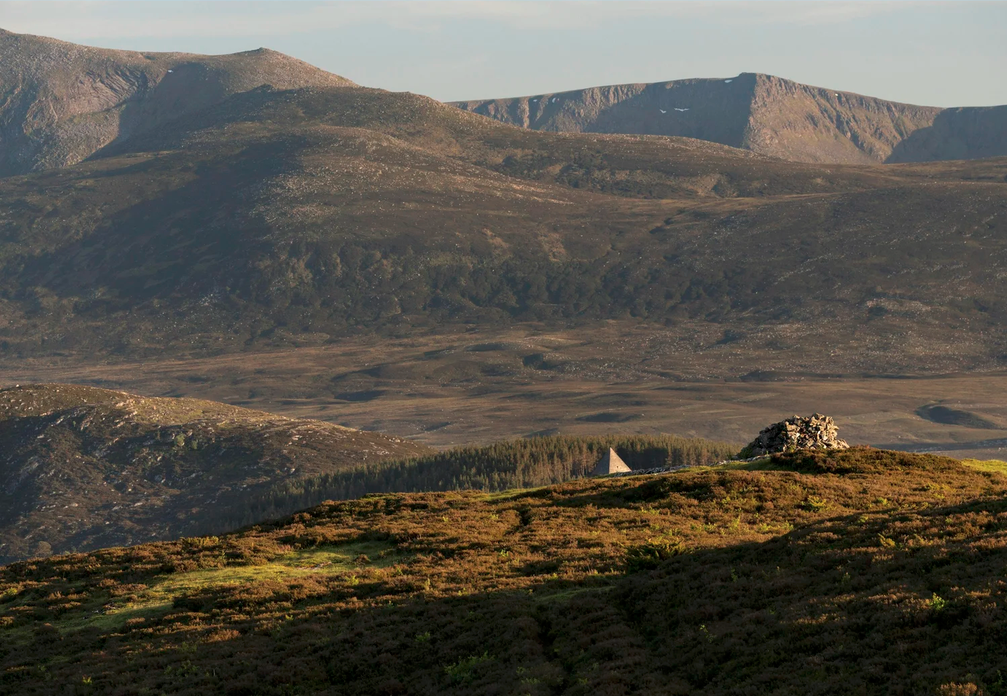
A stock photo of the Scottish Highlands, largely devoid of people or wildlife apart from some sitka spruce plantations, a cairn and what may be the top of the roof of a house.

The UK as a whole but Scotland in particular appears to be creeping ever closer to the inevitable realisation that a few people hoarding stores of wealth is inherently bad for society and that wealth should be taxed.

The debate at the moment is largely focused on how to do it. The simplest version is probably also the worst. That would be to have everyone whose net worth is above a certain threshold tally up the value of all of their possessions (from housing to company ownership to cars to artworks) and then pay a tax based on a percentage of that value.

It’s often hard enough to do this for someone’s estate when they die – it’s even harder when they are still alive enough to move their mobile assets around to hide them from the Revenuers or to move themselves to somewhere that’s quite happy to host the ultra rich trying to avoid their responsibilities. Richard Murphy makes this point though he also offers suggestions that would work at a UK level such as reforming capital gains tax and corporation tax and removing tax subsidies from high value pensions. His 2024 Taxing Wealth Report can be read here.

In Scotland in particular though, there is a very large store of wealth currently being relatively untaxed that could be directly addressed without fear of the billionaires fleeing – our land and the ownership of it.

No matter where someone resides in the world, they can’t take their owned land in Scotland with them and therefore the land itself can be taxed regardless of who owns it and where.

“Who Owns Scotland?” is a key question, however, and one that is strangely unanswered for a country like ours. Andy Wightman is the go-to source for detailed information of land ownership, especially where that ownership is obfuscated through corporate or financial structures, but even his database currently covers less than 80% of rural land. The Scottish Land Register is, after many years of missed deadlines, still incomplete.

We also know that the land reform legislation passed in the previous Parliament is unlikely to enact meaningful reform of ownership. It may well have positive impacts in the management of land but the regulations only cover the largest estates and there are ways to avoid its strictures (such as by breaking a single estate up and setting up trusts or companies to own each chunk separately, even if a single individual owns all of those companies thus still controls all of the land). Even the rules around forcing some sales to offer lots to communities are unlikely to be meaningful if the communities don’t have the resources to buy the lots.

This is where tax may have to play a role.

One of the barriers currently facing bringing in a land tax is the lack of data not just on ownership but on valuation. The latter isn’t insurmountable and there are ways to do it. The Scottish Land Commission is investigating various approaches to valuation, and these basically boil down to a few key approaches.

The first is an algorithmic approach similar to the way Zoopla values your house and is based on similar nearby sales. This is more complicated for land than housing because land sells less often and has more variation even field-to-field but it can give a rough idea (my own paper on taxing land took a not-dissimilar proxy approach by combining national sales data with agricultural soil grade information).

Another is obviously to update valuations when land is sold or transferred but could also include valuation data captured during events like the owner taking out a loan secured on the land, reinsuring it against damage or when applying for planning permission to build on it. There may also be bespoke site surveys which could happen either as the result of any of the above, randomly to help benchmark the algorithmic approach or if the landowner is unhappy with their algorithmic valuation and wants a manual correction (this last one could be subject to a fee and on the understanding that valuations could go up as well as down – this would deter people disputing their valuation without good reason).

“The good news for land reform campaigners is that there seems to be a lot of things about to happen quite quickly in Scotland.”

Another slightly more radical version – but one not without precedent – is to allow owners to self-value their land but to give local government or communities the right to enact a compulsory purchase at the taxable rate regardless of any potential market rate. If you state that your Highland estate is worth £1 for the purposes of tax, then the local community can purchase your estate for £1. This would naturally incentivise owners to value their land accurately (or, at least, higher than the price the community is able to pay – the land speculation bubble has already priced many of them off the land).

Bringing in a land tax will therefore help to value land. It’s less of a barrier before a tax can be brought in but more like a problem of the land being difficult to value because there’s no tax to compel it to be valued.

I’m increasingly coming to believe that the same might be true for the problem of ownership too. That the barrier isn’t that we can’t introduce a land tax because we don’t know who we’re taxing but instead we’ll very quickly be able to find out who we’re taxing once we start introducing a land tax.

What would happen here is that the owners of land would be responsible for paying their land tax at the end of the year and would connect their payment to their entry or entries on the Land Register. These records could be checked for land that is on the register but which doesn’t have a tax payment linked to it. If tax is not paid on a portion of land and the owner is known, notices to owners could be sent out (along with late fees etc).

If ownership is not known or if the land is not on the register at all, then a public notice could be made calling for the owner to come forward with proof of ownership and an application to register their land. If none present themselves within a reasonable time (say, three or five years) then procedures dealing with ownerless land can be initiated with the land itself being ultimately transferred to a public body (the traditional recipient in Scotland would be the Crown, but I would argue in this post-feudal age that ownerless land should be converted into Common Good ownership).

This is a win-win for Scotland. Either land that is not declared on the Land Register gets registered quick to avoid being chased for tax evasion, or it comes back into public ownership and from there can be better used by an identifiable owner.

The good news for land reform campaigners is that there seems to be a lot of things about to happen quite quickly in Scotland. There was a fear for a while that the passing of the Land Reform Act last year would take the wind of out the sails of reform while doing little in itself to create much change but while the latter may yet be true, the former does not.

I can’t say too much at this stage other than to suggest that eyes are turned to the party conferences this year as there may be some interesting things happening. The Revive Coalition, of which Common Weal is a member, will be at both the SNP and Green conferences this month talking about land reform and where policies like a land tax can help to push things forward.

The important thing to remember in this campaign and in all others is to look at challenges not as barriers to prevent change but merely as obstacles to overcome or bypass. If we think we can’t do something, just check to make sure that we’re actually right about that and if we can’t do it in the way we want to, maybe we can do it another way instead. Being focussed on the solutions rather than being stopped by the problems is what will create change.

Taxing wealth is important and popular. Taxing land is one way to do that in Scotland. How to get there, is up to us.

The Common Green logo Green text on a dark green background, above a version of the Common Weal "balance" logo.

The pension triple lock became a problem that a double lock won’t solve

“You’re mugging old ladies every bit as much if you pinch their pension fund” – Ben Elton

This blog post previously appeared in Common Weal’s weekly magazine. Sign up to our Daily Briefing and Weekly Magazine newsletters here.

If you’d like to support my work for Common Weal or support me and this blog directly, see my donation page here.

A pink piggy-bank wearing glasses and staring at a calculator

Andy Burnham has injected a case for optimism into the UK political sphere and has genuinely proposed some interesting ideas for the future. More crucially, as I point out in In Common in The National this week, his approach to making policy – by taking a step back and doing the detail work before trying to launch the idea – is the complete opposite of the Scottish Government’s approach of announcing an empty “Framework” then trying to backfill the detail on the fly. The Scottish Government could learn a lot from his approach to building a National Care Service just as Burnham should learn the lessons on why the Scottish attempt failed.

This attitude doesn’t necessarily extend too all aspects of the plans announced at the Labour conference this week and I think the one that is likely to have the longest term impact is the dropping of the state pension triple lock.

The triple lock is the mechanism by which the UK state pension was automatically uprated each year by the highest of the previous year’s rate of inflation, average rate of wage increases, or 2.5%.

It was brought in in 2010 by the Conservative/Lib Dem Coalition Government and it did have noble reasons behind it. It has often and for many years been pointed out that the UK’s rate of state pension income is amongst the lowest in the developed world. Pensioner poverty for those reliant only on the state pension was becoming a major political scandal and it was urgent that the state pension be increased.

The doesn’t tell the whole picture because it doesn’t include private pensions and other income but we’ll come back to that. It’s also important to note that the increase in the state pension came around the same time as rapid rises to state pension age and increasing protests from groups like the WASPI women and so an increase to the rate of pension was somewhat of a sweetener to offset the fact that people would have to work longer before receiving their pension.

And finally, it cannot be ignored that there was a very deliberate political element to this. The reason why the Conservatives were for increasing social security for older people and were and still are against increasing it for younger people comes right down to the voting patterns of those two groups. Political parties of all colours play to their respective bases when they can or must.

With that preamble being necessary to start to grapple with this very complex issue, we can now look at Burnham’s reform. To replace the triple lock with a double lock of only uprating pensions by the highest of inflation or 2.5%, without automatic reference to wages.

This means that if wages are consistently higher than inflation and if inflation remains above 2.5% (despite the Bank of England’s target to keep it around that level) then pensioners will not get any poorer with relation to prices but they also won’t get any richer in relation to workers.

There are a lot of “ifs” in that aspiration. For a start, I believe that the fear that pensioners were getting drastically wealthier as a result of the triple-lock is based on a faulty reasoning. This did happen in the past few years because of the very particular circumstances of the Covid pandemic. When we went into lockdown, wages dropped quite drastically for a lot of people while supply chains took a massive hit. This meant that in the lockdown year, even though inflation outstripped wage growth (wage decline at its worst) both were below the 2.5% triple lock floor and pensioners became relatively wealthier compared to both prices and workers.

“It’s a bit like your landlord saying that instead of them increasing your rent by £200 next year, they’ll only increase it by £100 so now you have £100 to spend on dinner tomorrow night.”

After lockdown, shifts in the economy caused a massive spike in wage growth not (mainly) because people wanted paid more to come back to work but because “returning to normal” suddenly was a big proportional spike up compared to the layoffs and furlough funding of the previous year. Pensioners benefited from wage growth going to 7% and rapidly outstripping prices. Then, in 2022, the invasion of Ukraine plus other geopolitical factors (and outright corporate profiteering) have seen inflation blow past the steady post-Covid wage increases and have again seen pensioners do well out of the whole process.

All this is to say that the last few years broke the triple lock model in a way that wasn’t envisaged when it was created (you can read more about this in our 2021 book All of Our Futures). I’m not convinced that moving from a triple lock to the double lock is a solution to the problem nor am I convinced that the problem they are trying to solve is one that is likely to happen again as it did in 2020.

Burnham is essentially gambling that wage increases will stay both higher than inflation and higher than 2.5% per year. This is the only way that the state pension will increase slower than it would under the triple lock but that scenario has also been a rarity in the years since the 2008 Financial Crisis. He also undermines this objective by stating that pensions won’t lose value in relation to wages in the long term. This makes sense if the objective is indeed to avoid model-breaking short term shocks, but it doesn’t make sense if the long term goal is to have pensions grow at a slower rate than wages.

His claim that he can use the “saved” money to fund a National Care Service is obviously a political sweetener itself – people are often happier with a bit of policy pain if they think something good will come from it – but I don’t see how that can add up either.

It’s trying to predict both inflation and wage growth decades into the future. This is perfectly valid as a modelling exercise and to do things like try to work out the potential impact on pensioner income and to the Barnett Formula as funding shifts from a reserved policy to a devolved one (or vice versa), but it’s harder to say for sure that you can “use” money that isn’t even a real saving but merely a slower-than-otherwise increase in future costs. It’s a bit like your landlord saying that instead of them increasing your rent by £200 next year, they’ll only increase it by £100 so now you have £100 to spend on dinner tomorrow night.

The triple lock served a purpose of reducing pensioner poverty but I’m also not convinced that either it or the double lock are fit for that purpose without making changes to the other side of pensions – the private sector.

When I said that the UK’s state pension is among the lowest in the developed world and that this doesn’t tell the full story, it’s because a large amount of total retirement income in the UK is derived from private pensions and from the “housing ladder” (wealth built up in housing that can be released by “downsizing” upon retirement). In All of Our Futures, we found that the UK’s total pensioner income was closer to the average of developed countries (so, still not great) but that around half of it comes from private pensions or housing wealth.

There is a very good argument to be made that the Thatcher era that created the marketisation of housing as a capital growth asset and which unleashed the previously restrained pension financial sector and turned them into GDP-boosting risk-machines allowed the UK to deliberately keep its state pension low for only the cost of turning housing and the financial sector into economic bombs that have gone off repeatedly and are likely to do so again.

So continuing the job of reducing pensioner poverty while maintaining fairness across generations and between pensioners and workers is not going to be possible without reining in the financial sector and private pensions while also decapitalising housing.

There are solutions. We should re-socialise the housing sector by aggressively replacing private rented housing with social housing (which will reduce the problem of pensioner poverty for those who retire without owning a house to downsize from, while reducing the wealth inequality caused by landlords who bought their houses when they were cheap). We should better regulate and seek to replaced the private pension sector with a public-owned workplace pension scheme (see Jim Osborne’s work on this which is closely in accord with but much more developed than the work we could do in our book).

And we should replace the state pension with a Universal Basic Income at not less than the same rate as this would help to deal with issues such as regions of the UK where high deprivation means people working during ill health or dying before state pension age (creating a tax transfer from poor areas to richer areas with higher life expectancy). A UBI would also help end the discrimination of “retirement age” where people who are able and do want to work past an arbitrary timeline are more than welcome to do so.

The most vital thing is that any attempt at social security reform – be it pensions or anything else – must not be used to divide society either young against old or workers against retired people. All this does is distract from more serious divisions such as the reasons why the super-wealthy have left us all poorer or how tech oligarchs are literally stealing the future of this planet out from under us.

I have a great deal of hope right now thanks to Burnham’s new optimism. I hope it rubs off elsewhere too and we start to see more exciting and better thought through policies from all governments. Early signs are good, though we must make sure that areas like pensions are treated with the respect due to the sheer complexity of the task of making sure that wherever we live, within the UK, within an independent Scotland or anywhere else, we build a country that all of us can be proud to grow older in.

The Common Green logo Green text on a dark green background, above a version of the Common Weal "balance" logo.

How to break an investment bank

“You may well ask: when the bubble finally burst, why did we not let the bankers crash and burn? Why weren’t they held accountable for their absurd debts? – Yanis Varoufakis

This blog post previously appeared in Common Weal’s weekly magazine. Sign up to our Daily Briefing and Weekly Magazine newsletters here.

If you’d like to support my work for Common Weal or support me and this blog directly, see my donation page here.

A broken piggy bank spilling coins onto a white surface.

The Scottish National Investment Bank is back in the news this week with its annual accounts showing that annual losses have been mounting again. A series of high profile failures of companies that it was exposed to (such EV charging infrastructure company Trojan, the laser company I used to work at M Squared Lasers, and satellite company Orbex) have contributed to an annual loss of £138 million and the fifth consecutive year of losses for the state-owned company. There are serious questions looming over the survival of the bank if many more of these losses undermine its financial foundations.

This is really bitter news for us at Common Weal as SNIB is very much our baby. We were the ones who first made the case for patient investment financing in Scotland and we were the ones who wrote the first comprehensive blueprint for how the bank could operate. We were also the ones who led the campaign for the bank against opposition from the Scottish Government that was so firm that we redesigned the way we fight political campaigns to get it pushed through.

We were, of course, cut out of a lot of the development work after that point. We responded the consultations and we attended the parliamentary evidence sessions but the SNIB that came out the other end of the whole process did so with substantial deviations from our original blueprint. We believe that those deviations are at the heart of why the bank is in trouble today.

One of the first big changes was to the governance structure of the bank. We envisaged a tripartite structure. The first would be the actual governors of the bank who would manage the day-to-day operations. The second would be Scottish Government Ministers who would own the bank, would be the people the governors reported to for reasons of democratic accountability and who would set the Missions that the bank would have to meet with its investments.

The third would be an Advisory Council made up of trade unionists, industry specialists, staff representatives, members of non-government political parties and other civic representatives who would monitor progress towards the Missions and would recommend changes to them if required. The stakeholders would also be able to make recommendations about the level of funding the SNIB was receiving from Government and about how much the SNIB could loan out at any one time.

The change came with the third part, the Advisory Council. Essentially, the Government didn’t want anyone other than themselves to be able to tell the bank what to do so when the SNIB was founded, the Council was dropped entirely as a part of the governance model. After several years of our campaigning, Government eventually relented and set up a Ministerial Advisory Group but ensured that it couldn’t talk to the bank directly – it would report only to Ministers.

It took years again for the Board to be formally launched at the tail end of 2024. It has met together only five times since, the last time being in February of this year. It’s also worth noting that Common Weal was not invited to join the Advisory Board.

The second change came in the Missions. The Missions of the Bank, as developed by Ministers without the guidance of an Advisory Council, are brief, vague and don’t have specific targets associated with them and some seem to run contrary to the bank’s core purpose of patient, long-term finance. This is particularly true with their Innovation mission that drives so much of their funding.

The problem with the bank’s focus on start-ups is that they are hugely risky. You can’t pick winners without also picking losers and so losses have to be expected. The bank shouldn’t be getting attention for seeing some of its investments not pay off but because those failures are risking the integrity of the bank. This is the most important change that the government made to the bank that deviated from our blueprint and it’s the one that may well cause it to fail.

We recognised the risks of this kind of lending and so our plan was to ensure that the bank could afford to fail. We said that there should be three tiers of lending in the bank.

The first should be in social housing. This is extremely long term funding, not expected to make a profit for the bank for decades, but it would do much for the fundamentals of the Scottish economy and for the bank itself. In our paper Good Houses For All, we called for the SNIB to fund essentially unlimited social housing on a demand-led basis and in a way that would disrupt and outcompete the rest of the housing sector on both quality on price (meaning that developers of private rented and private owned houses would have to up their game to keep sales).

There are other ways to fund this kind of housing – like Local Authorities borrowing from the Public Works Loan Board – and these can and should be used too, but a Mission for the bank should have been to receive enough rental income from its share of social housing investments that it could cover all of its day-to-day running costs. The bank would never be able to go bankrupt so long as people in Scotland needed a roof over their heads.

“As it stands, the bank is just about “all-in” on tech and has invested little in energy and essentially nothing in social housing.”

The second tier of funding would be into public energy. This is more capital intensive than housing and it’s a bit riskier, but investing in public-owned or community-owned energy would also bring in larger returns than housing. The goal of this tier would be to bring in enough relatively stable revenue to expand the bank as well as to reshape the Scottish economy to bring down energy costs and free up our own money to be used elsewhere (not only has growth in our wages stagnated in recent decades, the share of our household income that is being absorbed by housing and energy costs is rising, meaning we have less to spend elsewhere even if our wages are keeping up with inflation).

Only at the third tier of funding should we be looking at investing in the innovative tech sector. This is important for the future of the Scottish economy but the bank must be resilient if some or even all of these investments fail. It wouldn’t be so bad if the “investment” mission was linked to the Scottish Government’s industrial and economic strategy but because we don’t even have one of those, the bank is effectively just taking random punts based on potential short term gains or which ever company can charm them with the juiciest story about their cut of the “next big” tech IP (this is probably how my former laser company got their money, their pitch at the time would have involved words like “laser”, “space-based”, “quantum” and “nanotechnology”).

As it stands, the bank is just about “all-in” on tech and has invested little in energy and essentially nothing in social housing. It doesn’t look like a patient finance investment bank. It looks like a business accelerator fund with less of an idea of what it wants to be than, say, Scottish Enterprise which is essentially being forced to compete with a SNIB that appears to be actively working against them. Without the energy and housing tiers supporting the fundamentals of the bank’s portfolio, it might only take a few more high profile tech sector collapses (perhaps due to the AI data centre bubble popping) to bring it down entirely.

The truth is that the Scottish Government never believed in the potential of the Scottish National Investment Bank. They formed it because they were pushed into a corner by our successful campaign but that didn’t mean that they were forced to make the bank become a success. So instead of following the vision given to them, they designed the bank to be captured by the same banking elite that caused the problems in our investment landscape that the bank was supposed to solve.

This could be fixed before the next big crash. It’ll involve redeveloping the Advisory Board to let it do its job, revamping the missions along the lines we’ve suggested here and probably replacing a good chunk of the governance board of the bank where those currently in can’t or won’t adapt to the changes demanded. The bank has to re-focus its investments to secure its own foundations through housing and give itself a stable expansion platform through energy. Once and only once this has happened can it start aligning itself to Ministerial investment strategy and resume investing in the industries that would take us towards those objectives.

We’ve never complained that the bank is investing in things that might fail. Failure is inevitable in investments. The bank should be resilient in the face of those failures. It should be a bank not chasing headlines due to its annual statements but focused on what it will help Scotland become in the next decade or even in the next century. Failure in investments is inevitable. The failure of the Scottish National Investment Bank should not be.

The Common Green logo Green text on a dark green background, above a version of the Common Weal "balance" logo.

Scotland’s houses are crumbling around us

“We had a kettle; we let it leak:
Our not repairing made it worse.
We haven’t had any tea for a week…
The bottom is out of the Universe.”
– Rudyard Kipling

This blog post previously appeared in Common Weal’s weekly magazine. Sign up to our Daily Briefing and Weekly Magazine newsletters here.

If you’d like to support my work for Common Weal or support me and this blog directly, see my donation page here.

A photo of a dilapidated house in the Scottish Highlands
Image Credit: Trevor Littlewood, CC BY-SA.

This week I had planned to write an article about the recent publication by the Climate Change Committee focusing on its recommendations around adapting buildings for climate change. The way we used to design houses for a colder, dryer climate with fewer hot and cold extremes is simply no longer sufficient but there is also a challenge with applying a one-size-fits-all approach to policy across the UK.

As we’ve seen just this week, the south of England is sooner going to be regularly seeing 40C summers while Scotland is likely to still only see absolute maximums in the low 30s. While the latter is still too hot (I basically cease to function above about 25C), the engineering challenges of keeping houses cool in an occasional 30C heatwave is very different from keeping them cool in a regular summer high of 40C.

Scotland’s houses need to be adapted, and they need to be retrofitted to limit the damage they continue to do to the environment (Common Weal is still engaging with the Scottish Government to shape policies such as the PassivHaus-equivalent energy efficiency regulations and the National Housing Agency).

But on Tuesday, the Scottish Government published some data that changed my focus entirely. It’s not that we don’t need to have that conversation about appropriate adaptations or that adaptations are no longer needed, but that a lot of these adaptations may need to happen at the same time as or after critical repairs are done to the houses just to bring them up to current standards.

The headline figure is stark. More than half of Scotland’s houses, 55 per cent of them, fail the Scottish Government’s basic housing quality standards. Twenty-eight per cent of them fail the legal “Tolerable Minimum” standard and could therefore be deemed not fit for human habitation.

The Scottish Housing Quality Standard was designed in 2004 with a view to applying it to social rented houses. The idea being that this should be the minimum standard of repair and of the provision of amenities delivered to social housing tenants. This standard could be set at a level higher than the minimum legal limit as a means of trying to drive up standards as a whole across the housing sector but also in recognition that because Scotland and the UK sold off and deprioritised social housing as a means of providing houses, those who remain in social houses now are often more vulnerable to poor housing provision than owner-occupiers.

This dataset does not apply the SHQS only to social housing though, but to all houses in the survey. It shows though that if the goal really was to drive up standards across the sector, then it has failed. As said, the average failure rate across all houses in Scotland is 55 per cent. Amongst social houses alone, it’s only(!) 41 per cent, but for houses that are owner-occupied, 60 per cent of them fail this quality standard. For private rented houses, it’s even worse at 62 per cent.

The minimum Tolerable Standard (TS) is even more stringent. Where the SHQS demands provision of services including a decent standard of kitchen and bathroom, the minimum Tolerable Standard can be met with services like a basically functioning indoor toilet and a working sink in the kitchen delivering potable water.

Nevertheless, 28 per cent of Scotland’s houses fail to meet this standard. Just 10 per cent of social houses fail the MTS (reflecting the regulated legal duty of local authorities to provide decent housing), while 24 per cent – almost one-in-four – private rented houses fail the TS (reflecting perhaps that the legal duty placed on private landlords is not being enforced nearly as strongly as it is on social houses). Meanwhile, 36 per cent of owner-occupied houses appear to fall below the legal minimum standard for habitation. Local Authorities technically have the power to mandate owners to undertake repairs, to repair them on behalf of owners or to condemn the house entirely but, in practice, these powers are rarely invoked.

There is a caveat in the private rented figures though. For many local authorities in Scotland, the data on the SHQS and TS failure rates for private rented houses are not available due to lack of responses to the survey. This perhaps makes sense. If you were a private landlord and you owned a house that was in bad need of repairs that you, the owner, weren’t carrying out, would you tell the Government that you were still renting it out despite that?

The local authority with the best(!) housing on the list is West Lothian where only 42 per cent of houses fail to meet the SHQS. The worst is neighbouring East Lothian where 66 per cent – two houses in every three – fail the standard. This is almost a paradoxical result given that East Lothian scores substantially higher than the West on deprivation metrics but again this perhaps makes sense in light of local authorities being better regulated than private landlords or owner-occupiers.

“It’s not enough to fit loft insulation and bolt solar panels onto a house with a leaking roof and call it a day”

There are still huge data gaps in this study. The total survey only covers around 2,500 houses across Scotland meaning that if the survey contacted a completely different set of houses each year, it would take over a thousand years to survey every house. This isn’t normally a problem for statistical surveys when considering the nation as a whole but it does run into problems when breaking the data down by Local Authority (only 299 houses were surveyed in Glasgow, only 11 in Orkney) and it becomes statistically useless when breaking things down even further within those local authorities (the two social rented houses and the single private rented house survey in Na h-Eileanan Siar are possibly not representative samples of rented housing on those islands).

Scotland needs far better data on subjects like this if we are going to form decent public policy – especially when so much of that policy is likely to be delivered by local authorities. They need to know what houses are like in their patch and so a limited national-scale survey simply isn’t good enough. Perhaps the Scottish Government will finally get around to adopting its own policy of launching a Scottish Statistics Agency to help fill data gaps like this.

But this is a bigger problem than data gaps. There are obviously serious failings in Scottish private rented regulations if so many landlords are renting out badly repaired homes that we can see it in the stats even just from the landlords brave enough to admit it. And there are even deeper problems – perhaps linked to inequality and deprivation, perhaps linked to the poor build quality of British houses built by profiteering developers – that mean that owner-occupiers are struggling to maintain their houses, never mind upgrade them to meet climate and energy efficiency standards.

A lot of this isn’t the fault of owners. They mostly weren’t the ones who built the houses either long before the climate emergency became as urgent as it now is or who built them to such shoddy standards that they are now barely surviving beyond the lifetime of their first mortgage. Therefore, owners cannot simply be dumped with the upfront costs of repairing and then upgrading their homes. If they could, they would have done so already. It’s not always about the money. Working out what you need is a specialist skill. Finding the traders who can do the work is another one. Inspecting and auditing their work so they don’t just leave you with even more problems is another one again.

Common Weal has advocated that the fastest, cheapest and most effective way to get Scotland’s houses climate-ready is not to just to ramp up standards and hope that owners will spend their own money to keep up, but to enact that national-scale public works programme to get everyone’s houses up to where they need to be. The issue that these statistics bring into focus is that it’s simply not enough to fit loft insulation and bolt solar panels onto a house with a leaking roof and call it a day.

Every house in Scotland needs to be surveyed prior to this public works upgrade and where repairs are needed, these need to be included in the package. And yes, this needs to be a public works project even for owners who can ‘afford’ to pay for the repairs and upgrades – we can take the money back in taxes later.

But this kind of strategic thinking on housing does not appear to be something that the Government is doing. The two housing policies announced since the election have been the folding of the role of a dedicated Cabinet Secretary for Housing into a broader remit within Social Justice (which could be played to advantage if housing policy is itself dedicated towards the goals of social justice rather than merely inflating house prices for the purposes of boosting corporate profits and capital accumulation) and to announce an equity loan fund which will almost certainly inflate house prices to boost corporate profits and capital accumulation. As we briefed last year, there is very little evidence that First Homes Fund will help the kind of people who couldn’t afford to buy a home without the loan.

This is not the first time that Swinney has announced a policy without evidence. Last year, we revealed that he had absolutely no evidence to back up his claim that increasing the Scottish Child Payment would incentivise mothers to stop working. That attitude cannot be allowed to carry through to housing policy too.

Housing is foundational to the entire economy and our entire society. With Scotland’s climate rapidly changing, the very buildings we live in need to change with it. But before we can even do that, or at least as we embark on that job, we need to fix the houses we have. Everyone deserves a decent roof over their head. According to these statistics on the state of repair of Scottish homes, far too many people in Scotland don’t have one.

The Iran War sounds a warning for all of Scotland’s Critical Minerals

“Sooner or later every war of trade becomes a war of blood.” – Eugene V. Debs

This blog post previously appeared in The National as part of Common Weal’s In Common newsletter.
If you’d like to support my work for Common Weal or support me and this blog directly, see my donation policy page here.

In the gap between me writing this and you reading it, a lot of things will have changed. If you read this online on Friday morning, the Scottish election polls were closed, but we didn’t know the results yet. If you read it in print in The National on Sunday, we’ll knew by then who would and would not be members of the next Scottish Parliament. By the time I’ve posted it here on this blog we might know who the actual Government would be.

And by then, maybe the Iran War would still be going on. Or maybe Trump would have pledged another ceasefire. Or maybe he’d reneged on it again.

Either way, the world price of oil is likely to still be high and volatile, and we’re all going to continue suffering problems because of it. People in rich countries will get poorer because everything will cost more. People in poor countries will likely lose access to critical materials completely. I am extremely concerned about the dual effects of the loss of fertilisers and fuel for agriculture, combined with a projected very strong El Niño climate event this year.

Politics in the UK appears to be scrabbling around how to deal with fuel disruptions, and more than a few political parties appear to be willing to set the world just a little more on fire by trying to boost production from the North Sea as a replacement for oil being diverted and disrupted due to the war.

Here’s the thing, though. If we replace one barrel of oil we’ve lost in imports with one barrel of domestic oil, we won’t reduce the price of oil (it being a globally priced commodity), and tomorrow, we need to find another barrel of oil. If, instead, we replace the demand for that barrel of oil with heat insulation and a wind turbine or a set of solar panels and batteries, we never need to buy that barrel of oil again.

Even if post-war trade returns to ‘normal’, the countries that have responded by weaning themselves further off of oil will never be threatened by that kind of oil war again, either in Iran or anywhere else that Trump or his successors or allies wish to invade next. The bonus is that right now, the solar panels and batteries are even cheaper than the oil they’d replace.

But there is a complication there, too. Building solar panels and batteries also requires critical minerals, and right now, that means often not just importing those minerals from vulnerable countries, but probably importing the finished products from countries like China with all of the problems that entails, too. Switching one insecurity for another doesn’t make us more secure.

This week, a paper I contributed to was launched by Friends of the Earth Scotland and various other coalition partners, calling for the UK and devolved governments to develop a better strategy around critical minerals of all kinds. The report Aligning UK critical mineral policies with the human rights and environmental priorities of devolved nations considers where critical minerals are, well, most critical to various aspects of our economy, from energy to industry to the military and advocates for a more strategic approach to their use via the implementation of Circular Economy principles.

“While I’ve come to believe that Scotland has largely lost control over the current renewable energy transition, we could and should be building up our manufacturing industries around repairing, recycling and rebuilding the next generation of renewables”

This is the insurmountable advantage that renewables have over oil. Oil is disposable because you have to burn it to make it useful. Renewable energy generators are reusable. They just keep generating energy after they are built. They are also recyclable. If designed properly, the materials in a solar panel or a battery can be used to make another solar panel or battery once the first one eventually breaks (the lithium in a battery can be recovered with something like 90% efficiency, meaning that lithium mined today could still be being used in a battery centuries from now).

I mentioned in a recent article in The National (26th Feb 2026) that while I’ve come to believe that Scotland has largely lost control over the current renewable energy transition, we could and should be building up our manufacturing industries around repairing, recycling and rebuilding the next generation of renewables so that when the current set of imported generators starts to wear out we can replace them with Scottish made (and owned!) versions. At the same time, we should be actively exploring alternatives to critical minerals so that we’re not so vulnerable to supplies being disrupted. Scotland doesn’t have a lot of lithium to mine, but we do have plenty of seawater and sodium batteries are becoming a very interesting alternative to lithium for many purposes.

Ultimately, the lesson of this new paper is that the whims of the “free market” do not hold up in environments where trade is not free and where autocrats can cause chaos for any real or imagined reason. This means that we need deliberate, strategic government policy in place to keep us safe, our economies resilient and our politicians listening only to profiteering megacorporations or lurching from crisis to crisis but actually building a country and ultimately a planet that puts All of Us First.

Marking my ten years at Common Weal

“Everything in politics seems impossible until the moment it becomes inevitable” – Craig Dalȝell

This blog post previously appeared in Common Weal’s weekly magazine. Sign up to our Daily Briefing and Weekly Magazine newsletters here.

If you’d like to support my work for Common Weal or support me and this blog directly, see my donation policy page here.


(I think this is the first photo of me at a Common Weal event – IdeaSpace, October 2016)

Time certainly does fly. Last week marked ten years since I published my first policy paper through Common Weal. By 2016, I had gone through a bit of a journey from my political radicalisation during the independence referendum, to losing my job and, as it turned out, my career as a laser engineer at the tail end of 2015.

In that intervening time I had kept up my political writing through my personal blog and it was an article there about GERS that caught the eye of Robin (who already knew me via previous campaigning together) and led him to asking me if I could help on a project about Fracking.

At that time, the political winds (including within the Scottish Government) were pushing very much in favour of fracking the hell out of Scotland and while the anti-fracking campaign had (and still has) a very strong case in terms of climate change, local environmental impact and in terms of long term energy security, the pro-fracking side were talking mostly about economics and when it comes to a campaign based on environmental principles vs a campaign based on making the GDP line go up, politicians are often much more easily swayed by the latter than by the former.

Hence the need for something different. I was asked to investigate the Economics of Shale Gas Extraction with a critical eye to see just how they actually held up. The result: They didn’t. Fracking does well to boost the profits of the owner of the well but the industry would create few jobs (especially in comparison to renewables or even the legacy oil industry), would produce even fewer local jobs and would do absolutely nothing in terms of energy security or the price of energy bills.

Even the profits made would only be made if gas prices are pushed anomalously high (thus, as we’ve most recently seen, the industry is sensitive to geopolitics) and if the companies involved are allowed to not pay the costs created by the pollution of the extraction and the burning of the gas.

I’m proud to say that that paper had a significant impact. It was widely read and adopted throughout the anti-fracking campaign in Scotland and that campaign would go on to win a moratorium against extraction that persists to this day (although there are still those seeking power who would reverse that ban).

Not bad for a first attempt at a policy paper!

Ten years later, I’ve published probably more than twenty more, plus co-authored half a dozen books, produced hundreds of hours of audio and video interviews and more. And don’t worry, this isn’t a retirement message quite yet – I still have at least a few more in me (you’ll very much want to keep an eye on the one I’m just finishing up at the moment!).

I’m always a bit embarrassed to self-promote but this seems like a moment that I shouldn’t pass up. I’d like to present the five policy papers written by myself that I look back on most fondly, either because of their sheer impact in the political scene or because they meant a lot to me in terms of subject matter.

Beyond GERS – 2016

If my fracking paper was the one that kicked off my time at Common Weal, Beyond GERS was the one that made my mark on the Scottish political scene. Beyond GERS sought to recontextualise the way we, as a nation, talked about the annual Government Expenditure and Revenue Scotland report as it was increasingly being used as a stick to beat the independence movement when it was, in fact, showing something rather different – that Scotland’s accounts were being grossly distorted by the fact that we were not independent in ways that made it very difficult to even talk about the finances of what lay beyond that horizon.

For example, just the fact of independence would cause a lot of civil servant jobs in London who are doing work ‘for’ Scotland to move to Scotland – along with the economic impact they would have when they live their lives in and around Edinburgh instead of in London.

The negotiations around debt and asset splits would cause significant changes which could very well lead to Scotland paying much less in debt interest each year (and almost certainly not more in interest even in a ‘worst case’ scenario). And then actual policy changes like choices to be made over how and where military budgets are spent or where and how large Scotland’s embassies would be could have significant impacts on our annual budgets.

The actual numbers in that paper are now out of date as is much of the methodology that went into calculating them. This was because, in additional to changes to devolution in 2017, one of the impacts this paper had was to change (and in my view improve) how GERS itself was presented. Other impacts were an increased focus on GERS in the context of independence which led to similar papers being produced looking at Wales and at Northern Ireland, which both reached similar conclusions to my own paper. It also led to multiple Scottish Government Ministers promising to produce their own version of a set of “post-indy accounts” for Scotland, though none have actually materialised yet.

Social Security for All of Us – 2017

It was Common Weal’s paper in 2013, In Place of Anxiety that was a major early developer of my political viewpoints, particularly its case for a Universal Basic Income. The concept had been around before then, of course, but that was my own introduction to it. In 2017, I had the opportunity to revisit the topic as part of a broader work on how an independent Scotland could redesign its welfare state.

As part of this I produced one of Scotland’s first fully costed Universal Basic Income schemes. It is meagre by today’s standards (equivalent to Universal Credit, but truly Universal) and I would now advocate for a UBI that meets some kind of adequacy standard of being able to actually prevent poverty rather than merely allow someone to live in poverty.

This paper had multiple impacts on the Scottish political world – not least, it played a role in pushing the major parties to make pledges around the idea of a UBI in the 2021 Scottish elections. The SNP, Greens and Lib Dems all came out in favour of a UBI and Scottish Labour presented a counter-plan around a Minimum Income Guarantee.

Sadly, none came to pass. The UBI pilot scheme proposed by the Scottish Government was blocked by the UK Government and their report into Minimum Income was all-but buried by the Government who had by then changed First Minister twice and were evidently no longer interested.

Ambitions for the next Parliament have also been scaled back with Labour and the Lib Dems dropping their pledges entirely, the SNP promising only pilot study of a Minimum Income study for artists and the Greens proposing a similar pilot for a UBI for care leavers. Both pilots are welcome, of course, but it’s still a step back from the loftier promises of 2021.

However, that journey from 2017 to now has been a remarkable one. Back then UBI was still a radically utopian idea in Scotland, fit only for academics and weird policy wonks. By 2021, Scotland had a Parliamentary majority in favour of UBI even if it lacked the power to implement one and that majority went across the constitutional divide – a rare thing these days.

It also led me to being picked up this year by Basic Income Network Scotland and joining them as a Trustee, so you can believe that I’ll be keeping the issue live as we go into the next Parliament to make sure those pilot schemes happen and then we eventually get a Basic Income rolled out to All of Us.

A Silver Chain – 2018

The Sustainable Growth Commission was the first major push by the SNP to produce a body of work on Scottish independence since the publication of its Scotland’s Future White Paper in 2014. It was widely anticipated but at Common Weal we had heard whispers and rumours that we weren’t going to like what was in it. Sure enough, when it was published we were, quite frankly, appalled. I received an ‘advance’ copy of the report just two hours before its midnight embargo and stayed up till 3am reading it – I was then on the radio at 8am the following morning being interviewed about it which made the late night rather worth it.

Over the course of that publication day, I hammered out this policy paper which was published a few days later. The biggest difficulty we had with the report was the ‘six tests’ it laid out that were put in place to block the launch of an independent Scottish currency in the event of independence. Tests that we still maintain would have been impossible to meet and that the act of adhering to the tests would have made it harder, not easier, to launch a new currency.

This wasn’t the only objection we had but it was the one that gained the most traction. The party had to put substantial effort into railroading an adoption motion through their conference that year – the rebellion amongst members was almost as great as the one they saw during the debate to become a pro-NATO party. It also led to the formation of what would become the Scottish Currency Group who have taken our work on an independent Scottish currency and have pushed on far beyond it. Keep an eye out for their next sets of work in the coming months.

Good Houses For All – 2020

There is no logical reason that I can fathom for building houses that leak unnecessary amounts of heat when the technology to build them better doesn’t just exist but now costs virtually the same as building them badly. At the same time, incentives to improve existing houses don’t exist because why should landlords bother to properly retrofit when it’s the tenant who pays less on their bills and instead you could just jack up their rent because they have nowhere better to go.

This paper sought to solve both problems. It laid out the finances of building passive energy efficiency grade houses (though not necessarily the PassivHaus standard as there are other ways to achieve similar levels of efficiency) for social rented stock. I found that doing this could deliver houses cheaper than the private sector would while still being profitable for Local Authorities. This would mean Councils could build essentially unlimited social houses and outcompete the private sector in both price and in quality.

In 2022, I was asked at a fairly high profile public event if I could win just one policy in my political career, which would it be? I chose this one. It has the potential to not just reduce but to eliminate fuel poverty in Scotland and would leave a legacy lasting potentially centuries.

So imagine my shock and surprise that just a few weeks later, MSP Alex Rowley got in touch and took us up on that challenge, introducing a Members Bill to make passive energy efficiency the minimum standard for new homes in Scotland. The Government, facing a massive defeat if they opposed the Bill, did the smart thing instead by simply adopting it as Government policy. There’s still a long road to go in making it all happen but there’s an excellent chance that it will. I hope that I don’t only win one Government policy in my entire career, but if I do I’ll be happy if I only win this one.

ScotWind: Privatising Scotland’s Future Again – 2022

In January 2022, the Scottish Government announced that the Crown Estate Scotland (an arms-length org, but one owned by and accountable to Scottish Ministers since 2017) had completed its auction of options to develop what was then the world’s largest offshore wind project – ScotWind.

Basically, companies bid to buy the right to come up with a plan to develop a particular patch of seas and then they can choose to either return the right to the Estate or “exercise their option” and start the process of developing it. The Government PR machine went into overdrive to talk up the benefits of selling these options. Headlines touted the hundreds of millions of pounds that would flow into the Scottish Treasury and what could be done with it as well as promises around the ‘supply chain’ that would bring hundreds of jobs to Scotland.

But I was looking at the actual reports and things didn’t seem right. As it turned out, the auction was badly flawed. Rather than a traditional option where the highest bid wins or one where a lowest reserve price was set, this one had a maximum bid ceiling set on it. Every winning bid won their option at exactly the bid ceiling (suggesting they might have paid more). Other problems became evident, such as absolutely minimal protections that in many cases would make it cheaper to break those supply chain promises and to pay the fines than to actually fulfil them.

I very quickly put together a report of these findings and we published just a few days after the initial announcement. Instantly, the news coverage flipped from repeating the party line of the success of the auction to taking a more critical eye. The newspaper article covering my report ended up being the most read article in the Herald’s history of publishing online. My follow up report a year later revealed that Scotland has potentially lost out on billions or maybe even tens of billions of pounds by botching the auction the way it did and an investigation into what happened is now underway.

The Next Ten(?) Years

Obviously, my actual job at Common Weal has changed substantially over the decade. I spend more time now managing our Working Groups and the various other people working on policies than I do writing myself. I also keep up with contributions to our Daily Briefing and weekly Magazine (you are subscribed to both, aren’t you?) and I do a lot of outreach, networking and public engagements (want me to speak at your local campaign group about any of my work? Get in touch!). But, I’m still heavily involved in developing my own policies too and, as I say, I think you’re going to like the one I’ve got coming up next.

And so, where for the next ten years? Honestly, the unemployed laser engineer I was ten years ago couldn’t have predicted where I’d be today so who knows? I do know that I couldn’t have done it without you. It’s folk who support Common Weal with their £10/month that have let me do everything I’ve done and can support me and the rest of the team to keep doing it. So, as proud as I am to have done it all, I’m so grateful to have been allowed to do so. Thank you.

And here’s to the next decade, where ever it takes us.

May this be the last Oil War

“I’m going to say [to George W Bush], ‘And you tell me, what the noble cause is that my son died for.’ And if he even starts to say ‘freedom and democracy,’ I’m going to say, ‘bullshit.’ You tell me the truth. You tell me that my son died for oil. You tell me that my son died to make your friends rich. You tell me my son died so you can spread the cancer of Pax America, imperialism, in the Middle East” – Cindy Sheehan, (2005, Voices of a People’s History of the US)

This blog post previously appeared in Common Weal’s weekly magazine. Sign up to our Daily Briefing and Weekly Magazine newsletters here.

If you’d like to support my work for Common Weal or support me and this blog directly, see my donation policy page here.

sunset

For decades now – almost since the first barrel of oil was pulled out of the ground – the oil companies have been paying people to tell environmentalists that the world couldn’t possibly shut down the fossil fuel sector, especially not overnight! Furthermore, rather than spending those decades slowly ramping down fossil fuel dependency in favour of alternatives, we were told that we should just “Drill, Baby, Drill” and pump more black stuff into our consumer goods and into our atmosphere for the great profit of the oil barons. There will be parties in the upcoming Scottish elections who will be openly campaigning on this stance.

Well, thanks to those efforts and the efforts of some powerful men with apparent grudges against the future, we now live in a world where the fossil fuel sector can be shut off overnight.

Continue reading →

A regulated economy is one that works for all of us

“They’ll re-regulate within ten years. There’ll be a string of crashes, and they’ll do it. the free marketeers will scream, but the fact is, free markets don’t provide safety. Only regulation does that. You want safe food, you better have inspectors. You want safe water, you better have an EPA. You want a safe stock market, you better have an SEC. And you want safe airlines, you better regulate them too. Believe me, they will.” – Michael Crichton

This blog post previously appeared in Common Weal’s weekly magazine. Sign up to our Daily Briefing and Weekly Magazine newsletters here.

If you’d like to support my work for Common Weal or support me and this blog directly, see my donation policy page here.

It was a sombre weekend for me last week. The fire at Union Street in Glasgow hit me hard. I know it was by far not the worst disaster happening even at that moment – as Trump and Netanyahu’s illegal war spread burning oil rains over Tehran in a manner that would surely be an example of a prosecutable offence under the proposed Scottish Ecocide Bill on top of war crimes and crimes against humanity.

But still, that corner of Union Street was Common Weal’s office for several years and I realised that I’m the only member of the team remaining who worked in it on a daily basis (Robin had always habitually worked from home even before the Covid pandemic pushed the rest of us to do it too) and so the pang of personal connection was particularly strong.

As one of our Daily Briefings said this week, there are a lot of questions to be asked about the cause of the fire and many that may never be answered. If early reports are accurate though, it may well be that the vape shop where it started was not properly following business regulations and, simultaneously, the regulations around shops that sell highly addictive and highly flammable substances like vapes is nowhere near strong enough given the risks that the devices pose.

(By the way, if you are subscribed to Common Weal’s weekly Magazine but not yet subscribed to our Daily Briefing newsletter then you’re missing out. Every weekday we’ll send you our take on a news story that caught our eye that morning – one that you may not have noticed or may not have clocked the particular significance of from a Common Weal focus. Subscribe to the Daily Briefings for free here. And if you like it, please consider sending us a wee donation to help us keep it going.)

There are going to be questions in the coming weeks, months and possibly as part of the upcoming Scottish Parliamentary elections about how to better regulate these shops specifically. Even the Reform Party is calling for a review of regulations and they have usually been a party ideologically wedded to the idea that “cutting red tape” is the way to boost the economy.

And this is perhaps the core of the issue. The call for more or fewer regulations in anything from businesses, through banking, to regulations over cross-border food imports and exports, or even the regulation of government itself, appears to run like a swinging pendulum. When things are going fine, people think that the regulations are holding them back and call for the red tape to be cut. We become complacent and perhaps forget that the problems the regulations prevent ever even existed – almost like living in a world where people call for cuts to the fire service because it’s been years since they saw a building burn down.

When things crash (as they so, so often do) people wonder why the regulations didn’t save them and want more to prevent the causes of the previous crash happening again. This works until a different crash blindsides everyone who wasn’t listening to the folk who were warning about it, or folk start to feel safe and start talking about cutting red tape again.

There’s another aspect of regulation that sits underneath that broad cycle of tying up and cutting the red tape and that’s our willingness to enforce the regulations that do exist. This, too, could run from vape shops not being checked to make sure they are registered out to ensuring that the food being imported into the country are actually being checked to make sure they are meeting agreed standards rather than just being ‘waved through’ because there just aren’t the resources there to properly secure the border.

A regulation that isn’t enforced is even worse than one that doesn’t exist because it’s often not never enforced but instead merely enforced selectively. Which means enforced for us, but not those with the money or the power or the “too big to fail” scale to avoid having to play by trivialities like “the rules”.

“We can no longer allow the failure to regulate to simply be priced into the cost of doing business.”

Common Weal has been working on a broad group of policies around the topic of governance – mostly focus at Government itself but this all applies everywhere too. One of the foundational principles is that “no-one should govern themselves”. This means that government isn’t allowed to vote against transparency measures under the excuse that the mandatory rules merely replicate voluntary rules that they’re not following.

It means that the boards that are supposed to govern our regulatory bodies can’t be solely conscripted from the ranks of the bodies they are supposed to be regulating. It means that conflicts of interest must be rooted out and it means that lobbyists who advocate for changes to or immunity from regulations must do so in plain site of our democracy – we now argue that the Lobbying Register is insufficient and that ALL lobbying meetings with the Government (even ours) should be recorded and posted for public scrutiny.

And when it comes to regulation of the private sector, we can no longer allow the failure to regulate to simply be priced into the cost of doing business. There needs to be adequate deterrent and punishment for those responsible for failure that doesn’t just take the form of a fine that is smaller than the cleanup costs. That way lies the principle of CATNAP – Cheapest Available Technology, Narrowly Avoiding Prosecution – where companies don’t even just barely meet what regulations there are but happily sell us illegal products from unsafe vapes to unsafe houses knowing that no-one is about to stop them from doing so.

It’s said that “every rule is written in blood” and this is very much true when it comes to regulatory practices and especially with health and safety. Those who break out the scissors must be able to articulate why those rules came about and what they were designed to protect us from before being allowed to start cutting or even to just stop enforcing what we have – especially in the name of profit.

Otherwise, when the pendulum swings again, the blood that the next set of rules will be written in might well be our own.


Scotland is already losing out on green energy. Here’s what we can do

“It’s called socialism. Or, for those who freak out at that word, like Americans or international capitalist success stories reacting allergically to that word, call it public utility districts. They are almost the same thing. Public ownership of the necessities, so that these are provided as human rights and as public goods, in a not-for-profit way. The necessities are food, water, shelter, clothing, electricity, health care, and education. All these are human rights, all are public goods, all are never to be subjected to appropriation, exploitation, and profit. It’s as simple as that.” – Kim Stanley Robinson

This blog post previously appeared in The National, for which I received a commission.
If you’d like to support my work for Common Weal or support me and this blog directly, see my donation policy page here.

photo of truss towers

Scotland has an extremely poor track record of benefiting from our own energy resources. The decline of the First Age of energy wealth – based on coal – can still be seen in the scars of deprivation it left behind especially in the Central Belt towns and villages around where I live and where mining was most intensive.

In the Second Age, our oil wealth was – as Gavin McCrone warned – downplayed and then squandered under successive UK Governments while leaving Scotland vulnerable to oil shocks and we’re now seeing how we’re being held liable for the costs (economic and social) of drawing down the sector as it absolutely must be drawn down as the world wrestles with the challenges of the climate emergency caused largely by that oil even as the rich owners of the assets reap the profits and continue to lobby to delay or prevent change.

The problem is that unlike almost every other country that found itself with large reserves of energy wealth, we collectively decided that Scotland shouldn’t own any of it.

Rather than building up a robust public-owned oil sector, the UK Government flogged off the rights to exploit the resources to the lowest bidder, even offering generous subsidies rather than taxing their profits. The downstream infrastructure was privatised too not just sucked vast amounts of wealth into the pockets of billionaires like Jim Radcliffe but also granting them vast political power and the ability to make hypocritical statements about immigration while living the high life in their own offshore tax haven.

The Third Age of Scottish energy is our Green Transition – built initially around our vast onshore and offshore wind resources but now increasingly diversifying into other areas like solar and battery storage.

We see here that Scotland is in the process of losing out once again when it comes to energy resources that, if anything, vastly outstrip anything the oil sector could have ever promised because, unlike oil, the sun and the wind will continue to deliver that energy long after the last barrel of oil is extracted from the ground.

It promised to finally bring some ongoing benefit to communities that would be hosting the generators but even that failed. Neither Scotland nor the UK showed interest in developing public ownership of the assets and the “community benefit” funds were set at the lowest possible level of £5,000 per MW of capacity for wind (not uprated for inflation) and zero for other forms of renewables. It is estimated that a community owned wind turbine generates around 34 times as much revenue for the local community as does a privately owned one that pays its £5,000/MW community benefit. There is some evidence emerging that even this paltry sum is not being met in many cases with The Ferret reporting a shortfall of about £50 million across Scotland’s community benefit funds.

Offshore is arguable worse with the debacle of the ScotWind auction selling off the options to develop one of the largest offshore wind projects in the world in an auction that, for reasons still not adequately explained, set a maximum price cap on bids and potentially cost Scotland anywhere between billions and tens of billions of pounds in upfront capital.

Most crucially of all, we don’t even make the renewable generators and batteries that we don’t own. Decades of climate-denying politicians telling people that we shouldn’t bother trying to avert climate change because China wasn’t doing anything conveniently ignored that China was, in fact, rapidly building up its industrial base and was starting to sell the generators to the world.

So Scotland now imports the materials to build wind turbines that are owned by multinational companies and foreign public energy companies that export their profits elsewhere and pay communities sometimes less than the bare minimum. We don’t even get cheaper energy for it because the UK’s grid and pricing structures are still based on assumptions laid down in the Coal Age.

So what of the Fourth Age of Scottish energy? The thing about the current generation of privately owned energy assets is that they will eventually need to be replaced, and fairly soon – perhaps in 25 years time. This gives us an opportunity to start planning now.

Scotland needs to start building up its domestic wind and solar manufacturing base. We need to use our excellent universities to develop the materials to ensure that those generators are built to Circular Economy standards (current generation fibreglass wind turbine blades are disposable and are sent to landfill after use). We also need to start aggressively bringing assets into Scottish public ownership. Every time a renewable energy lease is up for renewal, it should be transferred to a Scottish public energy company (nationally or locally owned). This can also happen when a site is up for “repowering” – when old, smaller turbines are replaced with larger, more powerful ones but which exceed the previous lease’s maximum capacity terms.

New renewable sites should have their leases signed aggressively in favour of public ownership too. Rather than 60 or 99 year leases that cover the lifespan of multiple generations of turbines, they should be set to as low as 10 years. Enough time for the private developer to recoup their investment but also enough time for the Scottish public sector to take over the site and also make a profit without merely being saddled with the liability of decommissioning as we’re doing with the oil sector.

If any of this is not possible within devolution (some of it certainly is) and the UK is not willing to allow it, then while we are doing what we can, the case must be made for independence so that we can finish the job.

All of this will take time to set up which is why we need to start preparing the ground now. I don’t want to be here in 25 years talking being asked to comment on why we’re importing the next generation of technology and exporting the profits again. If we want to sit under a tree in 2050, maybe the best time to plant it is today.