How taxing land can help us find out who owns land

“Nothing is yours. It is to use. It is to share. If you will not share it, you cannot use it.” – Ursula K. Le Guin

This blog post previously appeared in Common Weal’s weekly magazine. Sign up to our Daily Briefing and Weekly Magazine newsletters here.

If you’d like to support my work for Common Weal or support me and this blog directly, see my donation page here.
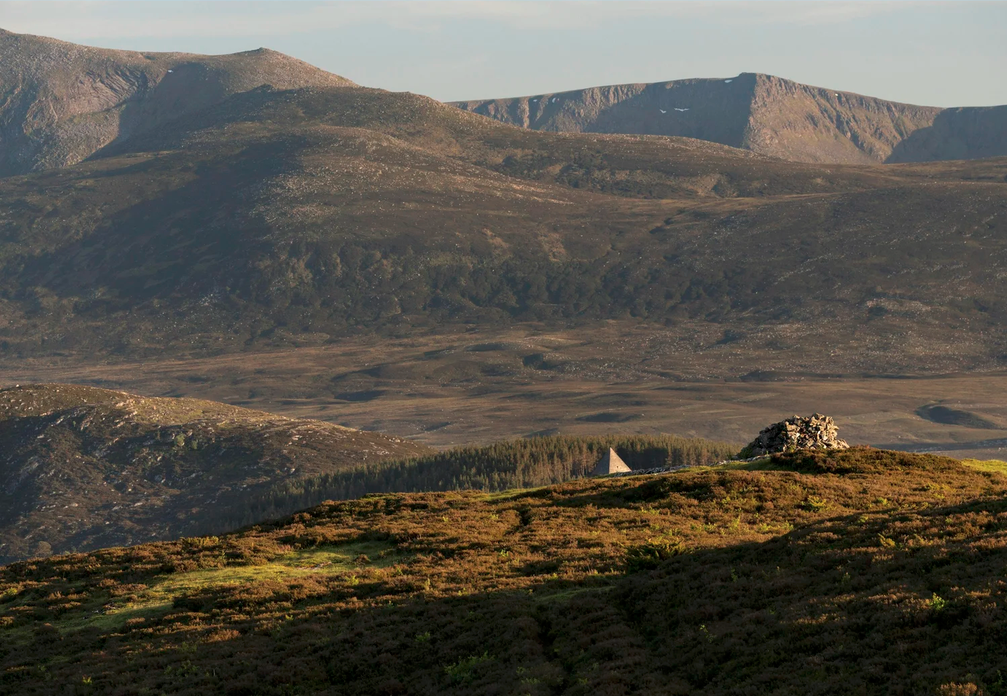
A stock photo of the Scottish Highlands, largely devoid of people or wildlife apart from some sitka spruce plantations, a cairn and what may be the top of the roof of a house.

The UK as a whole but Scotland in particular appears to be creeping ever closer to the inevitable realisation that a few people hoarding stores of wealth is inherently bad for society and that wealth should be taxed.

The debate at the moment is largely focused on how to do it. The simplest version is probably also the worst. That would be to have everyone whose net worth is above a certain threshold tally up the value of all of their possessions (from housing to company ownership to cars to artworks) and then pay a tax based on a percentage of that value.

It’s often hard enough to do this for someone’s estate when they die – it’s even harder when they are still alive enough to move their mobile assets around to hide them from the Revenuers or to move themselves to somewhere that’s quite happy to host the ultra rich trying to avoid their responsibilities. Richard Murphy makes this point though he also offers suggestions that would work at a UK level such as reforming capital gains tax and corporation tax and removing tax subsidies from high value pensions. His 2024 Taxing Wealth Report can be read here.

In Scotland in particular though, there is a very large store of wealth currently being relatively untaxed that could be directly addressed without fear of the billionaires fleeing – our land and the ownership of it.

No matter where someone resides in the world, they can’t take their owned land in Scotland with them and therefore the land itself can be taxed regardless of who owns it and where.

“Who Owns Scotland?” is a key question, however, and one that is strangely unanswered for a country like ours. Andy Wightman is the go-to source for detailed information of land ownership, especially where that ownership is obfuscated through corporate or financial structures, but even his database currently covers less than 80% of rural land. The Scottish Land Register is, after many years of missed deadlines, still incomplete.

We also know that the land reform legislation passed in the previous Parliament is unlikely to enact meaningful reform of ownership. It may well have positive impacts in the management of land but the regulations only cover the largest estates and there are ways to avoid its strictures (such as by breaking a single estate up and setting up trusts or companies to own each chunk separately, even if a single individual owns all of those companies thus still controls all of the land). Even the rules around forcing some sales to offer lots to communities are unlikely to be meaningful if the communities don’t have the resources to buy the lots.

This is where tax may have to play a role.

One of the barriers currently facing bringing in a land tax is the lack of data not just on ownership but on valuation. The latter isn’t insurmountable and there are ways to do it. The Scottish Land Commission is investigating various approaches to valuation, and these basically boil down to a few key approaches.

The first is an algorithmic approach similar to the way Zoopla values your house and is based on similar nearby sales. This is more complicated for land than housing because land sells less often and has more variation even field-to-field but it can give a rough idea (my own paper on taxing land took a not-dissimilar proxy approach by combining national sales data with agricultural soil grade information).

Another is obviously to update valuations when land is sold or transferred but could also include valuation data captured during events like the owner taking out a loan secured on the land, reinsuring it against damage or when applying for planning permission to build on it. There may also be bespoke site surveys which could happen either as the result of any of the above, randomly to help benchmark the algorithmic approach or if the landowner is unhappy with their algorithmic valuation and wants a manual correction (this last one could be subject to a fee and on the understanding that valuations could go up as well as down – this would deter people disputing their valuation without good reason).

“The good news for land reform campaigners is that there seems to be a lot of things about to happen quite quickly in Scotland.”

Another slightly more radical version – but one not without precedent – is to allow owners to self-value their land but to give local government or communities the right to enact a compulsory purchase at the taxable rate regardless of any potential market rate. If you state that your Highland estate is worth £1 for the purposes of tax, then the local community can purchase your estate for £1. This would naturally incentivise owners to value their land accurately (or, at least, higher than the price the community is able to pay – the land speculation bubble has already priced many of them off the land).

Bringing in a land tax will therefore help to value land. It’s less of a barrier before a tax can be brought in but more like a problem of the land being difficult to value because there’s no tax to compel it to be valued.

I’m increasingly coming to believe that the same might be true for the problem of ownership too. That the barrier isn’t that we can’t introduce a land tax because we don’t know who we’re taxing but instead we’ll very quickly be able to find out who we’re taxing once we start introducing a land tax.

What would happen here is that the owners of land would be responsible for paying their land tax at the end of the year and would connect their payment to their entry or entries on the Land Register. These records could be checked for land that is on the register but which doesn’t have a tax payment linked to it. If tax is not paid on a portion of land and the owner is known, notices to owners could be sent out (along with late fees etc).

If ownership is not known or if the land is not on the register at all, then a public notice could be made calling for the owner to come forward with proof of ownership and an application to register their land. If none present themselves within a reasonable time (say, three or five years) then procedures dealing with ownerless land can be initiated with the land itself being ultimately transferred to a public body (the traditional recipient in Scotland would be the Crown, but I would argue in this post-feudal age that ownerless land should be converted into Common Good ownership).

This is a win-win for Scotland. Either land that is not declared on the Land Register gets registered quick to avoid being chased for tax evasion, or it comes back into public ownership and from there can be better used by an identifiable owner.

The good news for land reform campaigners is that there seems to be a lot of things about to happen quite quickly in Scotland. There was a fear for a while that the passing of the Land Reform Act last year would take the wind of out the sails of reform while doing little in itself to create much change but while the latter may yet be true, the former does not.

I can’t say too much at this stage other than to suggest that eyes are turned to the party conferences this year as there may be some interesting things happening. The Revive Coalition, of which Common Weal is a member, will be at both the SNP and Green conferences this month talking about land reform and where policies like a land tax can help to push things forward.

The important thing to remember in this campaign and in all others is to look at challenges not as barriers to prevent change but merely as obstacles to overcome or bypass. If we think we can’t do something, just check to make sure that we’re actually right about that and if we can’t do it in the way we want to, maybe we can do it another way instead. Being focussed on the solutions rather than being stopped by the problems is what will create change.

Taxing wealth is important and popular. Taxing land is one way to do that in Scotland. How to get there, is up to us.


The Common Green logo Green text on a dark green background, above a version of the Common Weal "balance" logo.

The pension triple lock became a problem that a double lock won’t solve

“You’re mugging old ladies every bit as much if you pinch their pension fund” – Ben Elton

This blog post previously appeared in Common Weal’s weekly magazine. Sign up to our Daily Briefing and Weekly Magazine newsletters here.

If you’d like to support my work for Common Weal or support me and this blog directly, see my donation page here.

A pink piggy-bank wearing glasses and staring at a calculator

Andy Burnham has injected a case for optimism into the UK political sphere and has genuinely proposed some interesting ideas for the future. More crucially, as I point out in In Common in The National this week, his approach to making policy – by taking a step back and doing the detail work before trying to launch the idea – is the complete opposite of the Scottish Government’s approach of announcing an empty “Framework” then trying to backfill the detail on the fly. The Scottish Government could learn a lot from his approach to building a National Care Service just as Burnham should learn the lessons on why the Scottish attempt failed.

This attitude doesn’t necessarily extend too all aspects of the plans announced at the Labour conference this week and I think the one that is likely to have the longest term impact is the dropping of the state pension triple lock.

The triple lock is the mechanism by which the UK state pension was automatically uprated each year by the highest of the previous year’s rate of inflation, average rate of wage increases, or 2.5%.

It was brought in in 2010 by the Conservative/Lib Dem Coalition Government and it did have noble reasons behind it. It has often and for many years been pointed out that the UK’s rate of state pension income is amongst the lowest in the developed world. Pensioner poverty for those reliant only on the state pension was becoming a major political scandal and it was urgent that the state pension be increased.

The doesn’t tell the whole picture because it doesn’t include private pensions and other income but we’ll come back to that. It’s also important to note that the increase in the state pension came around the same time as rapid rises to state pension age and increasing protests from groups like the WASPI women and so an increase to the rate of pension was somewhat of a sweetener to offset the fact that people would have to work longer before receiving their pension.

And finally, it cannot be ignored that there was a very deliberate political element to this. The reason why the Conservatives were for increasing social security for older people and were and still are against increasing it for younger people comes right down to the voting patterns of those two groups. Political parties of all colours play to their respective bases when they can or must.

With that preamble being necessary to start to grapple with this very complex issue, we can now look at Burnham’s reform. To replace the triple lock with a double lock of only uprating pensions by the highest of inflation or 2.5%, without automatic reference to wages.

This means that if wages are consistently higher than inflation and if inflation remains above 2.5% (despite the Bank of England’s target to keep it around that level) then pensioners will not get any poorer with relation to prices but they also won’t get any richer in relation to workers.

There are a lot of “ifs” in that aspiration. For a start, I believe that the fear that pensioners were getting drastically wealthier as a result of the triple-lock is based on a faulty reasoning. This did happen in the past few years because of the very particular circumstances of the Covid pandemic. When we went into lockdown, wages dropped quite drastically for a lot of people while supply chains took a massive hit. This meant that in the lockdown year, even though inflation outstripped wage growth (wage decline at its worst) both were below the 2.5% triple lock floor and pensioners became relatively wealthier compared to both prices and workers.

“It’s a bit like your landlord saying that instead of them increasing your rent by £200 next year, they’ll only increase it by £100 so now you have £100 to spend on dinner tomorrow night.”

After lockdown, shifts in the economy caused a massive spike in wage growth not (mainly) because people wanted paid more to come back to work but because “returning to normal” suddenly was a big proportional spike up compared to the layoffs and furlough funding of the previous year. Pensioners benefited from wage growth going to 7% and rapidly outstripping prices. Then, in 2022, the invasion of Ukraine plus other geopolitical factors (and outright corporate profiteering) have seen inflation blow past the steady post-Covid wage increases and have again seen pensioners do well out of the whole process.

All this is to say that the last few years broke the triple lock model in a way that wasn’t envisaged when it was created (you can read more about this in our 2021 book All of Our Futures). I’m not convinced that moving from a triple lock to the double lock is a solution to the problem nor am I convinced that the problem they are trying to solve is one that is likely to happen again as it did in 2020.

Burnham is essentially gambling that wage increases will stay both higher than inflation and higher than 2.5% per year. This is the only way that the state pension will increase slower than it would under the triple lock but that scenario has also been a rarity in the years since the 2008 Financial Crisis. He also undermines this objective by stating that pensions won’t lose value in relation to wages in the long term. This makes sense if the objective is indeed to avoid model-breaking short term shocks, but it doesn’t make sense if the long term goal is to have pensions grow at a slower rate than wages.

His claim that he can use the “saved” money to fund a National Care Service is obviously a political sweetener itself – people are often happier with a bit of policy pain if they think something good will come from it – but I don’t see how that can add up either.

It’s trying to predict both inflation and wage growth decades into the future. This is perfectly valid as a modelling exercise and to do things like try to work out the potential impact on pensioner income and to the Barnett Formula as funding shifts from a reserved policy to a devolved one (or vice versa), but it’s harder to say for sure that you can “use” money that isn’t even a real saving but merely a slower-than-otherwise increase in future costs. It’s a bit like your landlord saying that instead of them increasing your rent by £200 next year, they’ll only increase it by £100 so now you have £100 to spend on dinner tomorrow night.

The triple lock served a purpose of reducing pensioner poverty but I’m also not convinced that either it or the double lock are fit for that purpose without making changes to the other side of pensions – the private sector.

When I said that the UK’s state pension is among the lowest in the developed world and that this doesn’t tell the full story, it’s because a large amount of total retirement income in the UK is derived from private pensions and from the “housing ladder” (wealth built up in housing that can be released by “downsizing” upon retirement). In All of Our Futures, we found that the UK’s total pensioner income was closer to the average of developed countries (so, still not great) but that around half of it comes from private pensions or housing wealth.

There is a very good argument to be made that the Thatcher era that created the marketisation of housing as a capital growth asset and which unleashed the previously restrained pension financial sector and turned them into GDP-boosting risk-machines allowed the UK to deliberately keep its state pension low for only the cost of turning housing and the financial sector into economic bombs that have gone off repeatedly and are likely to do so again.

So continuing the job of reducing pensioner poverty while maintaining fairness across generations and between pensioners and workers is not going to be possible without reining in the financial sector and private pensions while also decapitalising housing.

There are solutions. We should re-socialise the housing sector by aggressively replacing private rented housing with social housing (which will reduce the problem of pensioner poverty for those who retire without owning a house to downsize from, while reducing the wealth inequality caused by landlords who bought their houses when they were cheap). We should better regulate and seek to replaced the private pension sector with a public-owned workplace pension scheme (see Jim Osborne’s work on this which is closely in accord with but much more developed than the work we could do in our book).

And we should replace the state pension with a Universal Basic Income at not less than the same rate as this would help to deal with issues such as regions of the UK where high deprivation means people working during ill health or dying before state pension age (creating a tax transfer from poor areas to richer areas with higher life expectancy). A UBI would also help end the discrimination of “retirement age” where people who are able and do want to work past an arbitrary timeline are more than welcome to do so.

The most vital thing is that any attempt at social security reform – be it pensions or anything else – must not be used to divide society either young against old or workers against retired people. All this does is distract from more serious divisions such as the reasons why the super-wealthy have left us all poorer or how tech oligarchs are literally stealing the future of this planet out from under us.

I have a great deal of hope right now thanks to Burnham’s new optimism. I hope it rubs off elsewhere too and we start to see more exciting and better thought through policies from all governments. Early signs are good, though we must make sure that areas like pensions are treated with the respect due to the sheer complexity of the task of making sure that wherever we live, within the UK, within an independent Scotland or anywhere else, we build a country that all of us can be proud to grow older in.

The Common Green logo Green text on a dark green background, above a version of the Common Weal "balance" logo.

Burnham hasn’t changed the game, but he has taken to the field

“Opportunity does not waste time with those who are unprepared.” – Idowu Koyenikan

This blog post previously appeared in Common Weal’s weekly magazine. Sign up to our Daily Briefing and Weekly Magazine newsletters here.

If you’d like to support my work for Common Weal or support me and this blog directly, see my donation page here.

A Go board in an advanced state - to the lay observer, it is not clear whether white or black is winning.

Prime Minister Andy Burnham took a significant step into the independence debate recently when, at PMQS, he was questioned by SNP MP Chris Law on the disparity between the constitutional mechanism for Northern Ireland formally seceding from the UK (contained within the Good Friday Agreement) and for Scotland to do the same (there isn’t one). Burnham replied that the mechanism for Scotland was “exactly the same” as for Northern Ireland.

That is, when it “seems likely” to the Secretary of State for Scotland (currently Douglas Alexander) that public opinion is such that a referendum would return a result in favour of Scottish independence, then such a referendum should be arranged.

There are a whole bunch of caveats to this constitutional clause. It is still, by far, nowhere near the democratic right to self-initiated, self-governance (c.f. Article 4 of the Constitution of Liechtenstein which allows any of the municipal councils to self-organise a secession referendum at a time of their own choosing). The clause that an independence referendum could only happen if it “seems likely” to succeed is subject to the Secretary of State not being stubbornly and wilfully blind to rising sentiment on the ground.

It has certainly been the case over the last decade of constitutional squabbling that the UK Government and successive Scottish Secretaries have been quite happy to tangle a target that they thought was unreachable only to yank it away when they realised that it might be. Is “once in a generation” the “not less than seven years” contained within the GFA? Or is it 25 years? Or is it not until every single person who voted in 2014 is dead and buried? UK Government has floated all of these positions at some point or another.

The Scottish Government is, with merit, now trying to bed the principle that Scotland should have the same constitutional right as Northern Ireland into law to make it harder for Burnham or his successor to backslide later.

It is certainly the case however that while Burnham has set a firm and reachable target now, the actual position of the goalpost hasn’t materially changed. The process of becoming independent was never path dependent on a constitutional arrangement and this remains true. The core argument should never have been “How do we get a new independence referendum?” or even “How do we bypass the need for a referendum with this One Weird Trick Lawyers Don’t Want You To Know?”.

It was always “How do we convince a majority of the Scottish population to support independence such that the pressure of their collective voice could not be ignored?”

It we win that consensus, the route to bringing Westminster to the negotiating table to agree and sign the required documents was always going to be a relative formality.

So how do we answer that important question? The key is to understand the demographics of independence. When support for independence rises, it’s not picking people up at random. It’s better to think of the kind of person who would be the next person to change their mind when support rises from X% to X%+1.

We can split Scotland into four groups of people. The “Convinced Nationalists” are those for whom independence is a core part of their identity and will likely always vote for it given the chance. It’s likely that you are one of them. The “Convinced Unionists” are the opposite – with an identity linked to the Union as a concept as strong as a Nationalist’s desire to break away. They will never vote for independence – though they may accept it as the will of the people afterwards in the same way as anti-devolutionists did after 1997. These two groups make up something between half and two-thirds of the population. Neither of these two groups are the target audience right now. Their votes won’t change.

Instead, think of the two groups in the middle – Converted Supporters who were the kind of people who began to support independence during the 2014 campaign as sentiment rose from its pre-2011 baseline of about 25% (the Convinced Nationalists) to 45% on the day. I’m part of that group. Most of this group are now pretty solid in their views. It’s a lot harder to get someone to change their worldview twice than it is to change once. I had to be convinced to support independence. Convincing me not to now would be a challenge. This is the primary reason that, contrary to some expectations, independence support did not fall back to the Nationalist baseline after 2014.

This means that the really important group are the people who sit in that realm of independence support rising from about 50% up to the Unionist ceiling somewhere near 70 or 75% and we really only need to win over about half of them.

“If an independence referendum happened this afternoon and returned a 60% Yes, are we, as a movement, prepared for that?”

When you examine the social attitudes of the Convinced Nationalists and the Convinced Unionists, they tend to be (though aren’t exclusively) quite different from each other. Support for independence is wrapped up in a lot of other fairly ideological policies such as being pro-Europe (if not always pro-EU), anti-monarchy, anti-imperialist, anti-nuclear, pro-immigration, Left-of-Centre and quite a few other topics whereas Convinced Unionists are much more likely to be opposed to many or all of these things (again, not exclusively – your individual experience may vary and there plenty of people in the Left of Scottish politics who agree with each other on almost everything except independence even if that one small difference prevents collaboration on everything else).

It’s not the Nationalists who are the isolated group though. The groups in the middle – even the Not-Yet Supporters – tend to be a bit closer in view to the Nationalists and especially to the Converteds than they are to the Unionists. In other words, the type of person who’d vote Yes at 60% is more “winnable” than the type of person who’d vote No at 40%.

We’ve talked about this phenomenon before. That the people we just barely failed to convince in 2014 weren’t ideologically against us. They actually agreed with the kind of Scotland they thought we were presenting. The problem wasn’t the vision, but the execution. They didn’t believe we’d fulfil our promises. And, frankly, who could blame them?

This is the main issue we’ve squandered over the past decade. We’ve been arguing process instead of policy. We’ve been hoping for “One Weird Trick” like a previously unknown legal route to indy or a Unionist politician standing up and say “Ah, go on then”. We haven’t really been preparing for what to do if that happened.

Seriously ask that question now. If an independence referendum happened this afternoon and returned a 60% Yes, what would be the next step? Are we, as a movement, prepared for that?

Not only do we need to be prepared, the act of the preparation is the thing that will convince the people who would bring support from 50% up to 60%. The act of preparation is the thing that will apply the pressure on Andy Burnham and Douglas Alexander that is needed for them to decide that independence “seems likely”.

In 2018, Common Weal produced our book How to Start A New Country which detailed the steps that need to be taken between referendum day and formal independence day in order to create a viable, independent nation state. It went through all of the institutions Scotland would need to set up or reform in order to take over the jobs currently being done “for” us in London. It’s still a powerful book but it’s getting on a bit and the world has changed a lot since it was written (the long version of the book is also almost entirely sold out, though you can get a digital copy here and we still have plenty of copies of the shorter version). It could use a bit of a refresh itself especially if it “seems likely” that it’s going to be needed sooner rather than later.

Next week, we’ll tell you what we’re planning to do about that.

The Common Green logo Green text on a dark green background, above a version of the Common Weal "balance" logo.

Performative Cruelty over asylum hurts all of us

“Evil begins when you begin to treat people as things.” – Terry Pratchett

This blog post previously appeared in Common Weal’s weekly magazine. Sign up to our Daily Briefing and Weekly Magazine newsletters here.

If you’d like to support my work for Common Weal or support me and this blog directly, see my donation page here.

Buried under the higher profile news that the UK is embarking on a new push of ever-greater militarism – aiming to spend more than twice as much than it used to on the military and aiming to spend more than £10 on war for every £1 it will spend on foreign aid – is a new goal of further discriminating against asylum seekers and refugees, including those driven to flee their countries to the UK due to the UK’s own policies of spending more on war and less on aid.

The new plan is that there will be an additional tax placed on refugees who have had their asylum claim accepted that will see them bear a completely arbitrary debt of £10,000 to be paid back after they start working and earning and with any future application for indefinite leave to remain or citizenship blocked until the debt is paid.

Let’s start with the language used in the reporting around this. The policy is said to target “people granted asylum”. We have a word for people who have claimed asylum, found to have a valid claim and then asylum granted on that basis. They are refugees. This is important. Such is the dismal state of the public discussion around migration that far too many people hear the word “asylum seeker” in a manner that rhymes with “illegal migrant” and this is starting to bleed into the rhetoric on legal migrants too. There are politicians in Parliament right now who have made statements that would, if they became policies, would make it difficult or even impossible for my family to remain in this country safely.

Rather than resist the extremes of the right in the UK, the current Labour Government seems to be chasing them instead.

The full announcement of the proposed changes to asylum are here and do go beyond just that additional and arbitrary tax on migrants. Other punitive policies include significantly narrowing the definition of “family” for the purposes of human rights protections (did you flee a country with an uncle who is your only surviving relative after the war? You’re no longer “family” in the eyes of the UK Government), making it easier to subject people to slavery if they’ve found themselves with even a short custodial sentence in the UK (perhaps even due to a crime commit at the compulsion of their enslaver?) and by introducing a “legal route” to asylum that can only take place via individuals or organisations “sponsoring” a claimant which will almost certainly mean that those without the power to win a sponsor will be least able to claim asylum that they need.

There have also been proposals for annual caps on the number of admissions meaning that if you seek asylum then your ability to reach safety might depend on your arriving in June rather than in August. Welcome to Refugee Hunger Games, currently accepting applications from Districts Three through Six exclusively. Applicants from all other Districts, better luck next year!

Separately from this announcement, the UK is now also planning to bring in “age-verification technology” that they already know, from testing it, will result in children being falsely classified as adults and being stripped of their asylum rights. They also know that the tech is worse at distinguishing children from adults when the subject is Sub-Sarahan African compared to Eastern European and if they are female rather than male so this means that they are planning to bring in this tool despite knowing that it contains inbuilt, systemic racial and gender biases.

“Asylum is a right for all of us. You are not much more than one bad day away from becoming a refugee.”

Back on the £10k “success” fee for asylum seekers who become refugees. The fee itself appears to be arbitrary and only tangentially linked to the costs of supporting someone during their asylum process. That process itself can be entirely variable depending on whether someone is housed in a social house within a community, in a military barracks or in a privately run hotel that is squeezing the government and its residents for maximum profit extraction. It also entirely depends on the length of time it takes to process an application. The cuts to the Home Office over many years (likely to get worse now that Starmer is asking for even more cuts to public services to fund his expansion to the military) mean that the rising number of asylum seekers in the UK right now has as much to do with the failure to promptly process their cases and convert them to refugee status as it does with the number of people arriving. It would be entirely unfair to put the burden of “paying” for the extra costs of a service if the delays that increase those costs are due to the government, not the person.

If the £10k figure has been arrived at as a kind of average cost per applicant across all applicants though then it serves as a tacit admission from the Government that the actual cost of the asylum process is relatively small. The reporting says that the total cost of the asylum system is about £4bn per year (and this sum is likely to rapidly decline in coming years as we come off the peak of the last spike in claimants). Starmer casually announced this week that he wants to add almost four times that to the military budget. If the entire burden of these costs were placed on income tax payers alone (they aren’t. Income tax isn’t the sole tax in the UK) then this would mean that, on average, an income tax payer would see about £120 a year of their income tax go towards supporting asylum seekers and about £450 go towards Starmer’s military budget increase (on top of what is already being spent on war).

Not that the £10k repayment will actually save the Government or taxpayers any money. The Home Office’s own policy and financial assessment says as much – and their assessment of the stripping of slavery protections are likely to cost more money than they save due to the inevitably successful lawsuits.

If the problem of asylum seeking is that it costs too much money per seeker (and assuming that the problem isn’t actually that Centrist politicians are afraid of right-wing competitors courting racism and dividing society against marginalised groups) then there is a much, much better way to allow asylum seekers to support themselves while waiting on the Home Office to get its act together and that is to remove the prohibition that prevent asylum seekers from working. If people can support themselves and their own accommodation then the Government doesn’t need to spend so much money housing people in barracks or hotels.

Asylum is a right for all of us. You are not much more than one bad day away from becoming a refugee. It’s not just being married to an immigrant that brings this fact close to home for me. If you are a donor to Common Weal (if you are not and would like to, you can sign up here) then you pay me to agitate against the state. Our support for Scottish Independence is not just a political position. In some countries, doing what I do for Common Weal would be illegally promoting sedition and would be punishable with anything up to lengthy prison sentences or even capital punishment. I am literally only a bad government away from having to seek political asylum too.

This is why I’m so strident on human rights more generally. You cannot limit rights for one human without limiting them for every human. The UK is travelling a very dark path by playing the game set by right wing extremists. It only ever leads to an end where some people are declared to be less human than other humans, or to not really be human at all.