Scotland’s National Bank

The Croatian National Bank shall be the central bank of the Republic of Croatia.
The Croatian National Bank shall be autonomous and independent, and shall report on its work to the Croatian Parliament.
The Croatian National Bank shall be managed and its operations shall be conducted by the Governor of the Croatian National Bank.
The organisation, purpose, tasks and remit of the Croatian National Bank shall be governed by law.
Article 53, The Constitution of the Republic of Croatia.

Today sees the launch of my latest contribution to the Common Weal White Paper Project on the very important topic of Central Banking in an independent Scotland.

It has received a front page splash in The National which can be read here alongside a summary by me here.

And the paper itself can be downloaded here or by clicking the image below.

wppcentralbank

If, as I hope we should, Scotland uses the opportunity of independence to launch our own sovereign currency then one of the departments of government that we’ll need to set up is our own Central Bank. This paper outlines the principles that we’ll need to examine and follow as we design that bank.

Continue reading

We Need To Talk About: Central Bank Independence

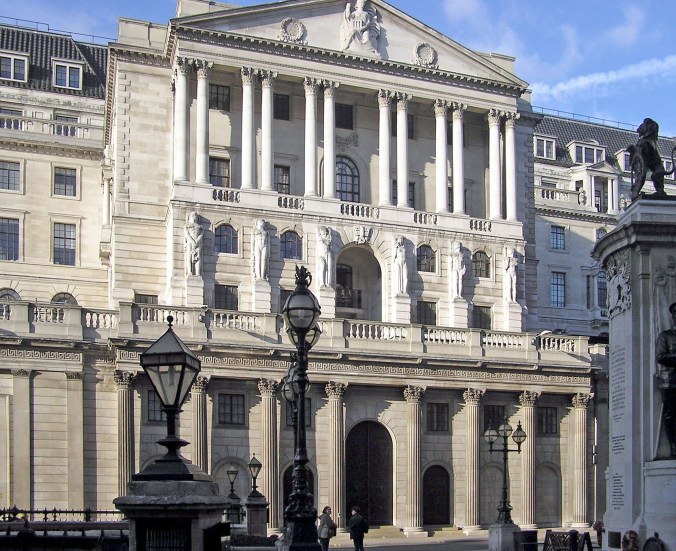
“The Treasury…may by order give the Bank directions with respect to monetary policy if they are satisfied that the directions are required in the public interest and by extreme economic circumstances” – Section 19, Bank of England Act 1998.

Theresa May is getting nervous. She’s seen the polls slip away from her. She’s seen the abject rejection of conservative politics first in Scotland and now in England too. She has just admitted that she jumped into her personal snap election whilst her party was completely unprepared to fight it. She is far from “strong and stable.

And now she’s getting worried by the growing pull towards the more interventionist economic policy advocated by Jeremy Corbyn and has responded with a speech defending Austerity and celebrating free market economics on the day of the 20th anniversary of the independence of the Bank of England. And so has begun fairly vapid tirades warning against the “dangers” of nationalism and populism.

OLYMPUS DIGITAL CAMERA Continue reading

Four Walls and a Roof

“It seems obvious: the reason only a tiny percentage of new…buildings and retrofits aren’t green isn’t cost. It’s lack of ingenuity or knowledge of new construction techniques — architects and builders wed to the ‘same-old,’ lenders leery of anything unconventional.” – Sustainable Energy Africa

Housing – buildings in general, in fact – needs to be about more than just four walls and a roof. It also needs to be about more than vague promises of “more houses built” or about a volume-based industry which tries to extract as much profit per square metre as possible or being about more than the landlords who swoop in afterwards to do the same.

And with around 53% of all energy use in Scotland being used for heating and only a small fraction of it coming from renewable resources, it needs to be about more than throwing up any old building and passing the costs and consequences on to those who’ll have to live and work in them for decades to come.

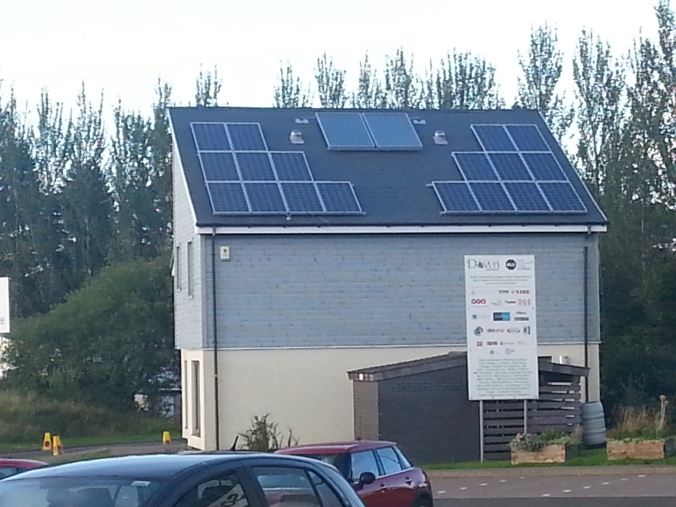
Recently, I got the chance to experience a glimpse of what a better future might look like in the form of a tour around South Lanarkshire College’s ‘Aurora’ Low Carbon House.

20170831_185420

Continue reading

A Government For All Of Us

“It’s a Common Weal program for government.” – In an email sent to Common Weal today.

Today saw the return of the Scottish Parliament for the 2017/18 session and the opening speech by the First Minster introducing her program for government. You can watch the full speech below.

After far too long of what seemed like the political doldrums of a couple of fairly drab elections and the ever endless string of intentionally depressing political headlines, this speech was a remarkably refreshing change of pace with some fairly strong statements of intent in several areas.

Notably, Common Weal appears to be finally having a significant influence on the political direction of government with several of our policies now being talked about openly or outright adopted as policy.

Continue reading

We Need To Talk About: GERS (2016-17 Edition)

“The GERS figures are not meant to be anything other than a way of showing the current position under the present arrangements.” – The BBC 

The annual Government Expenditure and Revenue report is out and, as with previous years, I’ve written an analysis of the report and what it means for Scotland. The GERS report itself can be downloaded here.

GERS banner

A more detailed analysis I have prepared for Common Weal can also be read here.

GERS CW Banner

The UK is a deeply unequal union and London continues to capture a greater and greater proportion of the wealth of the state to the detriment of everywhere else. This single fact has to frame everything we think and say about the finances of Scotland.

Continue reading

Social Security For All Of Us

“Scotland can, if it chooses to be bold, creative and ambitious, use the opportunity  presented by independence to build a social security system for all of us.”

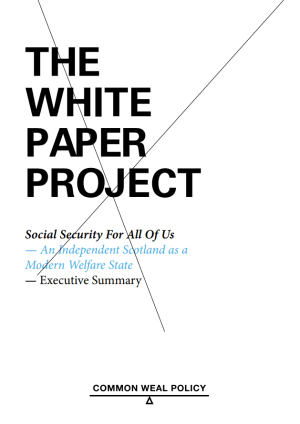
I’m proud to present my latest report for the Common Weal White Paper Project, Social Security For All Of Us – An Independent Scotland as a Modern Welfare State.

The report can be downloaded here or by clicking the images below. There has also been coverage in The National here and here.

Report CoverExec Summary Cover

Continue reading

Trading Places

“GDP is increasingly a poor measure of prosperity. It is not even a reliable gauge of production” – The Economist

There’s a bit of a story happening around Scotland’s oil trade since Wings Over Scotland highlighted an otherwise completely unreported change in the way the UK measures how much oil it trades with the world and where in the UK it comes from.
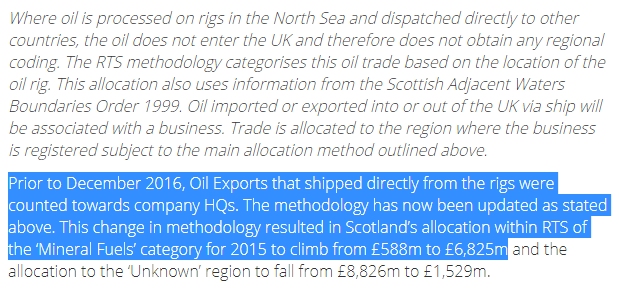
rtsur

The story stems from the way that the UK calculates its balance of trade with the rest of the world and specifically how it then decides which region of the UK is responsible for that trade. To do this, the UK is split into 12 regions based on the Government Office Regions of England plus Scotland, Wales and Northern Ireland. (These boundaries are also used by Eurostat for their NUTS 1 statistics)
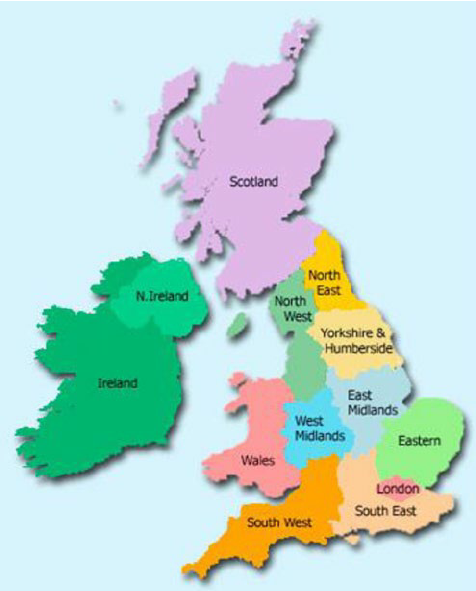
Fig-4-NUTS-1-regions-of-the-UK

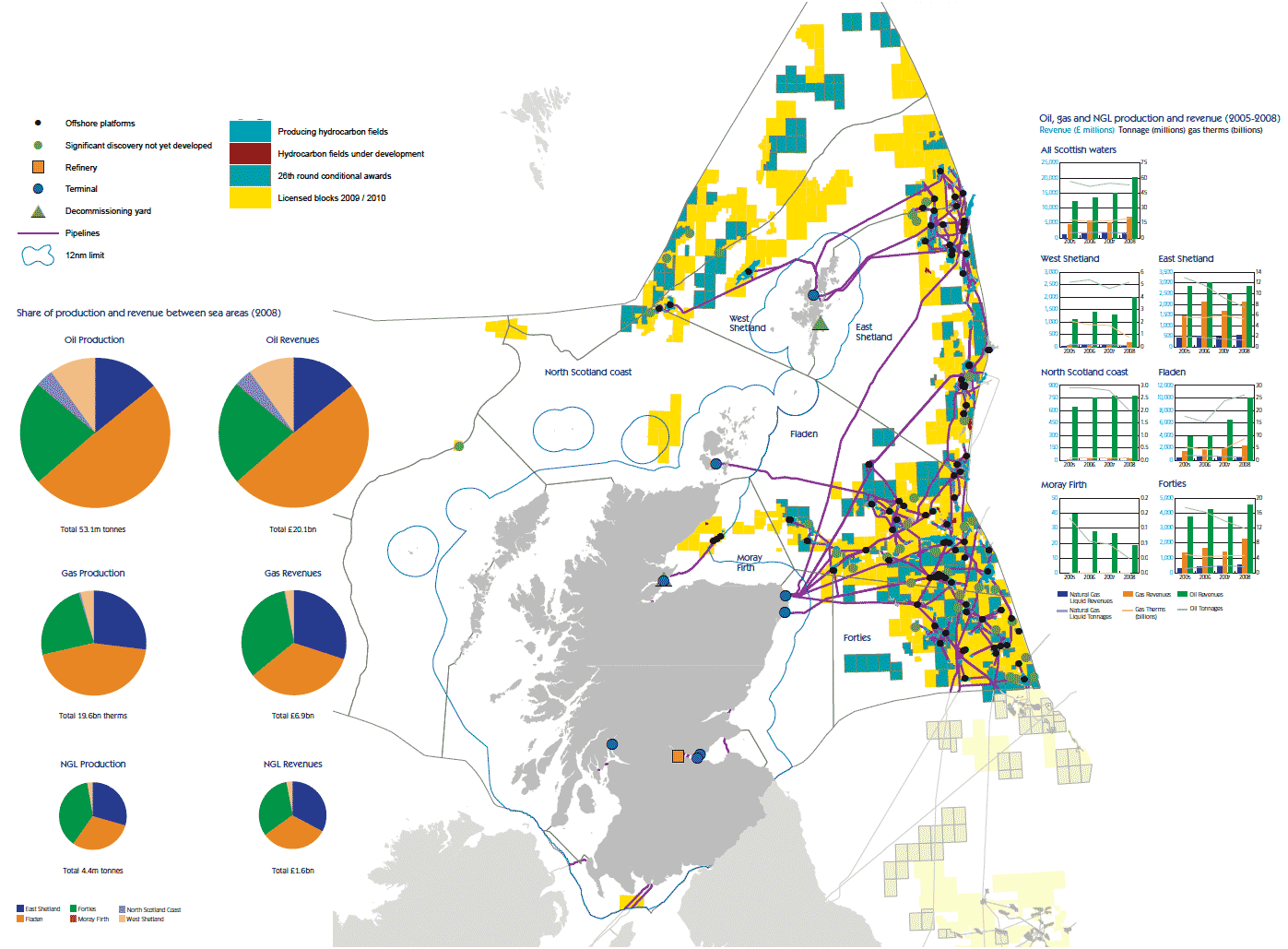
There’s another “region” of the UK not displayed on the map. Not all trade can be firmly allocated to a single region and not all trade can be allocated to a region at all. This is the “Unknown Regions” of the UK. Most prominent amongst this kind of trade, at least within Scottish political circles, is trade generated by offshore activities.

There are many different ways one could approach this allocation – the methodology – and the way you do it can result in very different results. Now, if you’re the UK and are looking at UK stats these figures don’t really matter so much but they do become very relevant if you’re looking at one part of the UK and what its economy might look like if it decided to, say, discuss holding a vote for independence. Suddenly, even UK government departments start getting very interested in Scottish trade.

The particular story here concerns a change in the trade methodology around offshore oil in Scotland waters. Particularly, oil which is exported out of the UK directly from the rigs without it ever touching the UK land boundaries. Previously, much of this oil has been allocated to the Unknown Region but the change now meant that it would be allocated to Scotland. This has led to an increase in the recorded value of Scottish minerals exports for 2015 from £588 million to £6,825 million. Quite a substantial jump and one which has spread around social media. Time for a wee breakdown of what it means and take the chance to clear up a few misunderstandings I’ve seen along the way.
(This is a complex topic, after all)

Continue reading

Passing Go

 “Let the children once see clearly the gross injustice of our present land system and when they grow up, if they are allowed to develop naturally, the evil will soon be remedied.” – Elizabeth Magie, inventor of “The Landlord’s Game”, the precursor to Monopoly.

For a game about rampant, exploitative capitalism and a race to deliberately bankrupt your mates, in some ways Monopoly looks remarkably egalitarian compared to modern Britain

Monopoly

Continue reading

Grim Drama Parked

“Tomorrow’s GDP figures will confirm whether or not Scotland entered a second quarter of economic downturn in the first three months of 2017.” – Scottish Conservatives. 4th July 2017.

The quarterly Scottish GDP figures were released today after a long build up in a press anxious to see if Scotland was on, as the Express put it, the “BRINK OF RECESSION” (their emphasis).

The figures themselves rather put a misstep into their charge.

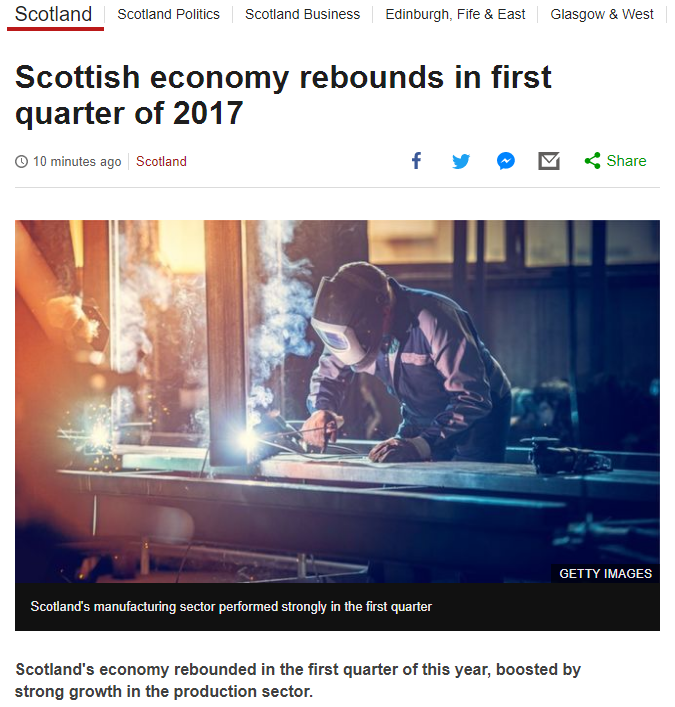
bbcgdp

The headline figures are that in Q1 2017, Scotland’s economy grew by 0.8% which is up substantially on the -0.2% contraction seen in Q4 2016. This positive growth also means that the two successive quarters of negative growth which define a technical recession were not met.

The UK’s GDP growth over Q1 2017 was 0.2% though in my last blog post I put substantial attention onto the point that we should treat such comparisons with a great deal of care given the large regional inequalities within the UK. I’d very much like to see the GDP of the UK broken down across its regions (especially London) before commenting too much on it.

And before we all start patting ourselves on the back at avoiding our “predicted” recession, it’s worth actually diving into the numbers and seeing what they do and do not tell us about the Scottish economy.

Continue reading