“It seems obvious: the reason only a tiny percentage of new…buildings and retrofits aren’t green isn’t cost. It’s lack of ingenuity or knowledge of new construction techniques — architects and builders wed to the ‘same-old,’ lenders leery of anything unconventional.” – Sustainable Energy Africa
Housing – buildings in general, in fact – needs to be about more than just four walls and a roof. It also needs to be about more than vague promises of “more houses built” or about a volume-based industry which tries to extract as much profit per square metre as possible or being about more than the landlords who swoop in afterwards to do the same.
And with around 53% of all energy use in Scotland being used for heating and only a small fraction of it coming from renewable resources, it needs to be about more than throwing up any old building and passing the costs and consequences on to those who’ll have to live and work in them for decades to come.
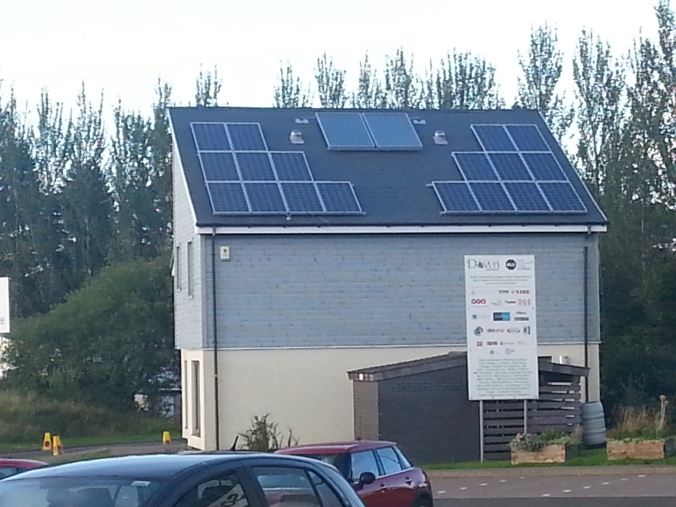
Recently, I got the chance to experience a glimpse of what a better future might look like in the form of a tour around South Lanarkshire College’s ‘Aurora’ Low Carbon House.
“It’s a Common Weal program for government.” – In an email sent to Common Weal today.
Today saw the return of the Scottish Parliament for the 2017/18 session and the opening speech by the First Minster introducing her program for government. You can watch the full speech below.
After far too long of what seemed like the political doldrums of a couple of fairly drab elections and the ever endless string of intentionally depressing political headlines, this speech was a remarkably refreshing change of pace with some fairly strong statements of intent in several areas.
Notably, Common Weal appears to be finally having a significant influence on the political direction of government with several of our policies now being talked about openly or outright adopted as policy.
“The GERS figures are not meant to be anything other than a way of showing the current position under the present arrangements.” – The BBC
The annual Government Expenditure and Revenue report is out and, as withpreviousyears, I’ve written an analysis of the report and what it means for Scotland. The GERS report itself can be downloaded here.
A more detailed analysis I have prepared for Common Weal can also be read here.
The UK is a deeply unequal union and London continues to capture a greater and greater proportion of the wealth of the state to the detriment of everywhere else. This single fact has to frame everything we think and say about the finances of Scotland.
“Scotland can, if it chooses to be bold, creative and ambitious, use the opportunity presented by independence to build a social security system for all of us.”
I’m proud to present my latest report for the Common Weal White Paper Project, Social Security For All Of Us – An Independent Scotland as a Modern Welfare State.
The report can be downloaded here or by clicking the images below. There has also been coverage in The National here and here.
“GDP is increasingly a poor measure of prosperity. It is not even a reliable gauge of production” – The Economist
There’s a bit of a story happening around Scotland’s oil trade since Wings Over Scotland highlighted an otherwise completely unreported change in the way the UK measures how much oil it trades with the world and where in the UK it comes from.
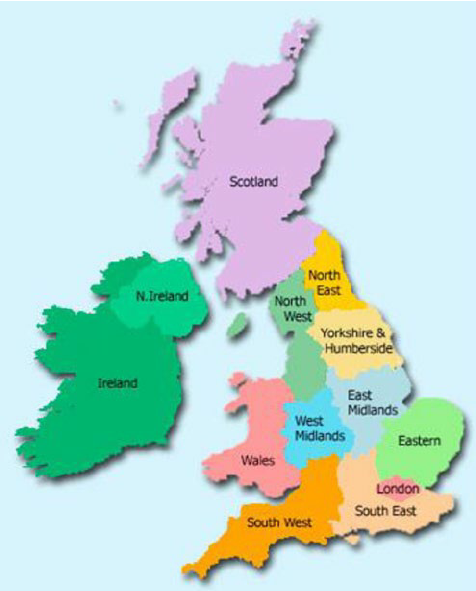
The story stems from the way that the UK calculates its balance of trade with the rest of the world and specifically how it then decides which region of the UK is responsible for that trade. To do this, the UK is split into 12 regions based on the Government Office Regions of England plus Scotland, Wales and Northern Ireland. (These boundaries are also used by Eurostat for their NUTS 1 statistics)
There’s another “region” of the UK not displayed on the map. Not all trade can be firmly allocated to a single region and not all trade can be allocated to a region at all. This is the “Unknown Regions” of the UK. Most prominent amongst this kind of trade, at least within Scottish political circles, is trade generated by offshore activities.
There are many different ways one could approach this allocation – the methodology – and the way you do it can result in very different results. Now, if you’re the UK and are looking at UK stats these figures don’t really matter so much but they do become very relevant if you’re looking at one part of the UK and what its economy might look like if it decided to, say, discuss holding a vote for independence. Suddenly, even UK government departments start getting very interested in Scottish trade.
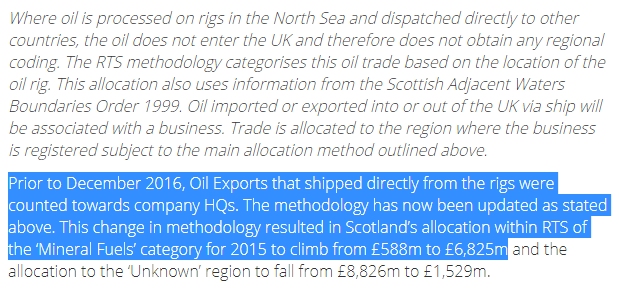
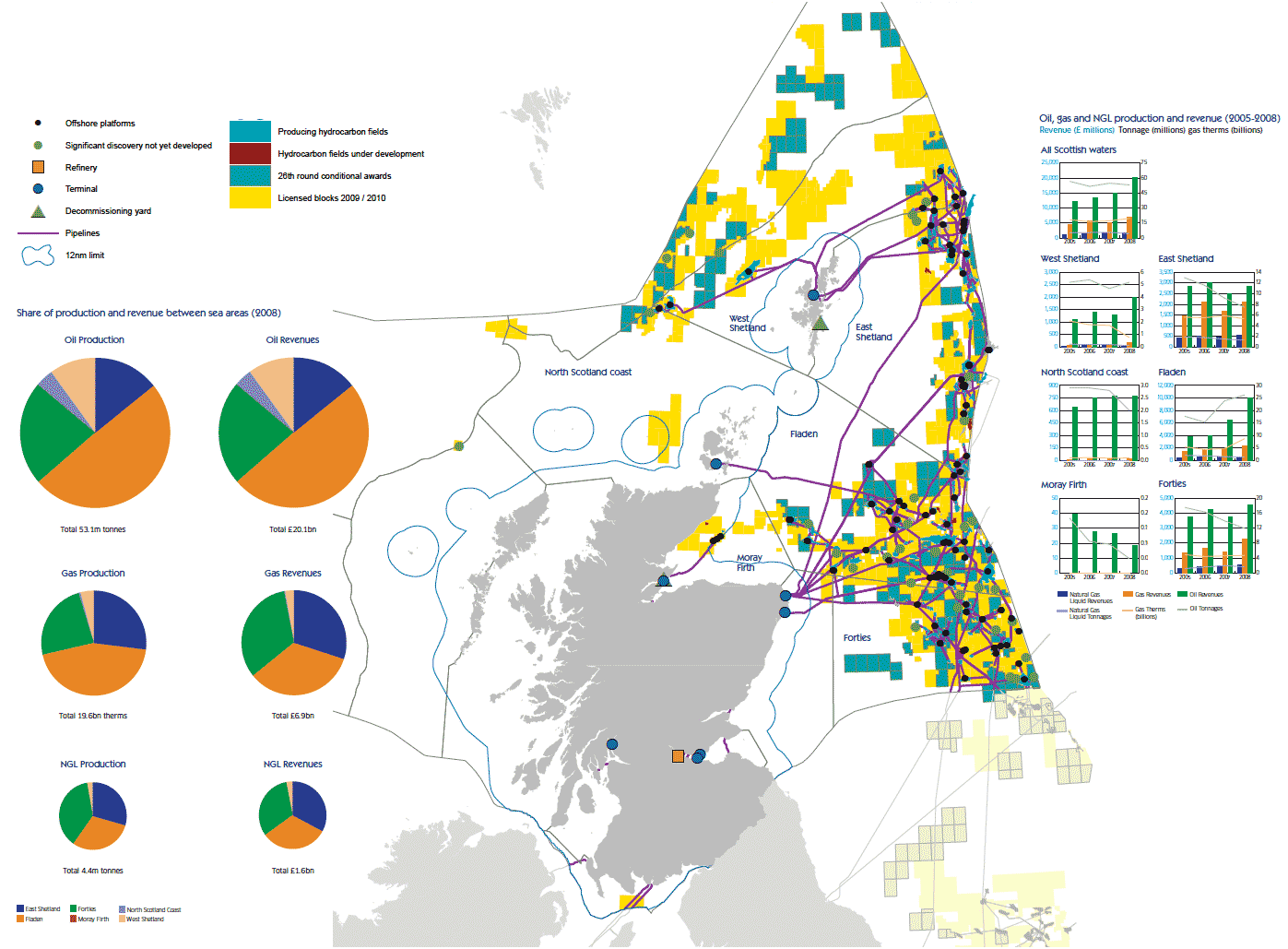
The particular story here concerns a change in the trade methodology around offshore oil in Scotland waters. Particularly, oil which is exported out of the UK directly from the rigs without it ever touching the UK land boundaries. Previously, much of this oil has been allocated to the Unknown Region but the change now meant that it would be allocated to Scotland. This has led to an increase in the recorded value of Scottish minerals exports for 2015 from £588 million to £6,825 million. Quite a substantial jump and one which has spread around social media. Time for a wee breakdown of what it means and take the chance to clear up a few misunderstandings I’ve seen along the way.
(This is a complex topic, after all)
“Let the children once see clearly the gross injustice of our present land system and when they grow up, if they are allowed to develop naturally, the evil will soon be remedied.” – Elizabeth Magie, inventor of “The Landlord’s Game”, the precursor to Monopoly.
For a game about rampant, exploitative capitalism and a race to deliberately bankrupt your mates, in some ways Monopoly looks remarkably egalitarian compared to modern Britain
“Tomorrow’s GDP figures will confirm whether or not Scotland entered a second quarter of economic downturn in the first three months of 2017.” – Scottish Conservatives. 4th July 2017.
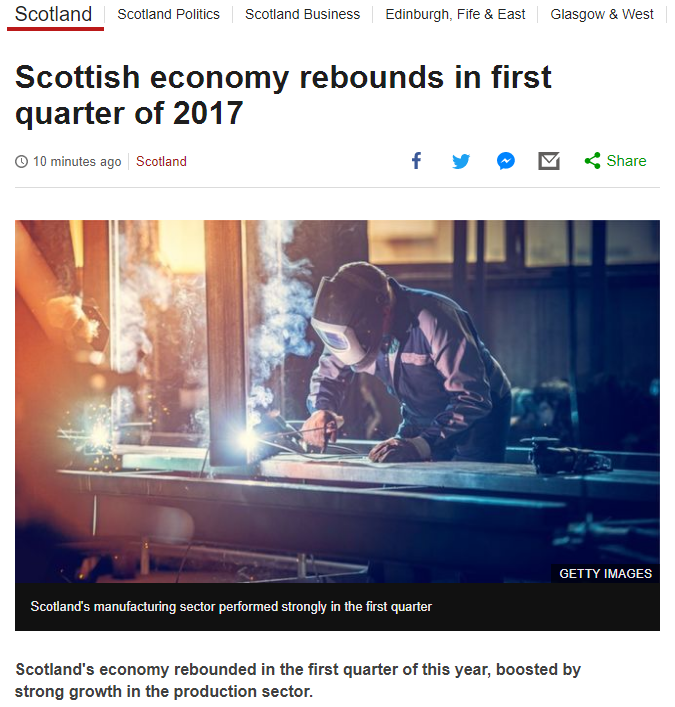
The quarterly Scottish GDP figures were released today after a long build up in a press anxious to see if Scotland was on, as the Express put it, the “BRINK OF RECESSION” (their emphasis).
The headline figures are that in Q1 2017, Scotland’s economy grew by 0.8% which is up substantially on the -0.2% contraction seen in Q4 2016. This positive growth also means that the two successive quarters of negative growth which define a technical recession were not met.
The UK’s GDP growth over Q1 2017 was 0.2% though in my last blog post I put substantial attention onto the point that we should treat such comparisons with a great deal of care given the large regional inequalities within the UK. I’d very much like to see the GDP of the UK broken down across its regions (especially London) before commenting too much on it.
And before we all start patting ourselves on the back at avoiding our “predicted” recession, it’s worth actually diving into the numbers and seeing what they do and do not tell us about the Scottish economy.
“Annual income twenty pounds, annual expenditure nineteen nineteen and six, result happiness. Annual income twenty pounds, annual expenditure twenty pounds ought and six, result misery.” – Dickens, David Copperfield
The shape of the next UK economic crisis has become apparent. It may have already begun and it’s not at all clear how it can be avoided or mitigated.
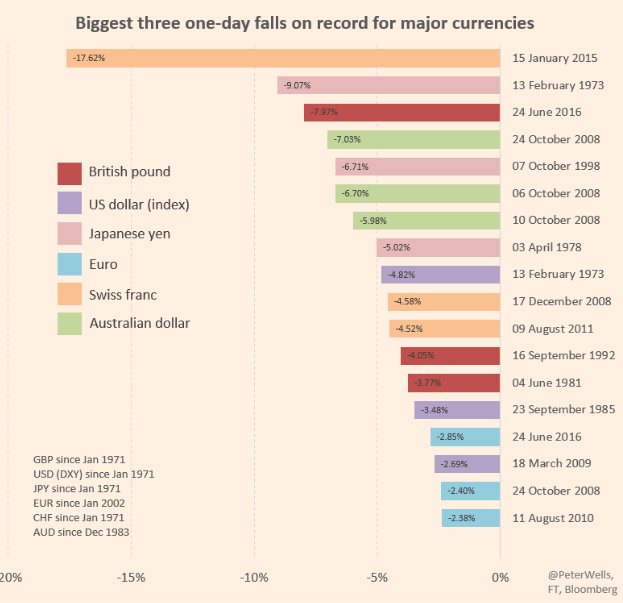
On the 23rd June 2016, the United Kingdom, for a variety of reasons, voted to leave the European Union. The immediate impact of this was an almost unprecedented drop in the value of the pound with respect to its major trading partner currencies.
Not much of a problem, the defenders said, as a weakened currency has its merits as well as demerits. Exports should become cheaper, which would boost foreign trade.
This may have been true in times gone by but economies have grown vastly more complex than this. Many products manufactured in the UK consist of sub-components drawn from multiple countries and globalised supply chains have grown STAGGERINGLY complex.
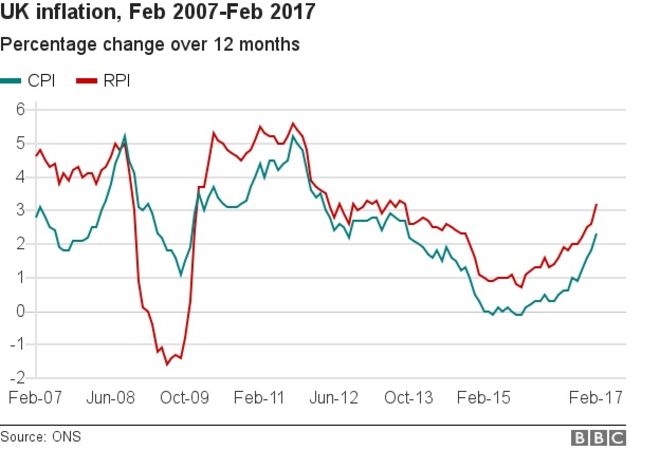
What this has meant is that even the goods that Britain manufactures here have seen their “input prices” increase, which has pushed up the price of goods even despite the fall in currency strength. Add to that, the fact that the UK imports far more than it exports – it has one of the largest trade deficits as %GDP in the OECD – and it becomes clear why prices have started rising again in Britain. After five years of declining inflation rates and almost a year of zero price increases, inflation has returned with a vengeance.
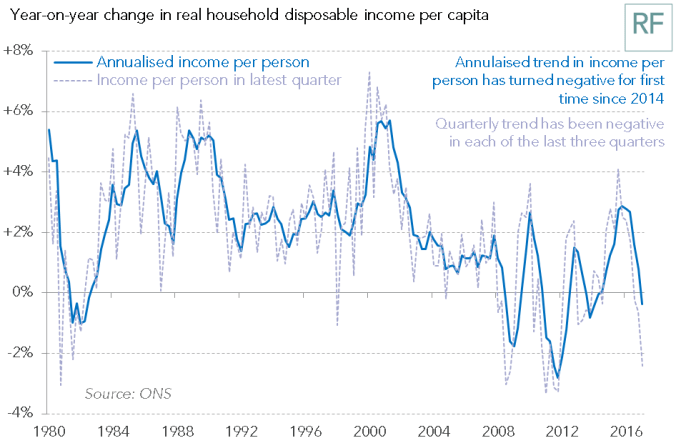
But this needn’t be a terrible thing. In fact, inflation can often be quite useful as it erodes the value of debts (which is why creditors and asset holders hate it so much). So long as wages keep up with the rising prices then for those who don’t depend on the rising value of assets or debts it can be manageable. So how are we doing on that point?
So inflation is rising and wages are declining, so we’re in the situation where meeting our needs and maintain a decent standard of living is becoming more and more difficult. But even this could be mitigated or reversed if the government were to step in and support the economy by investing or by otherwise injecting money into it.
And so this is the root of the coming crisis. Prices are rising, wages are stagnating, savings have been drained, credit cards have been maxed out, and the government is pulling out of the business of providing government and public services so you need to spend even more to replace it. We no longer have enough money to meet our basic needs, never mind the disposable income to buy the widgets we need to consume to keep the wheels of the economy turning.
Up here in Scotland, there are signs that the crisis is already upon us. The Fraser of Allander Institute published a report today warning about the precarious nature of the Scottish economy saying that it was stagnating with relation to the UK economy as a whole. Some will almost certainly be quick to blame this on the Scottish government (the phrase “uncertainty of a divisive second independence referendum” comes to mind). There are certainly some things that the Scottish Government could do to help – a National Investment Bank should be high on the list and a good shake up of the domestic agenda would be welcome – but the ultimate cause of this slow-down does not originate in Scotland nor will its solution come from here (at least until the levers of power are returned to the country upon independence).
The problem, ultimately, is that Britain isn’t Great. Britain is Weird. Britain is a deeply unequal country on a scale which, compared to its neighbours, is utterly baffling.
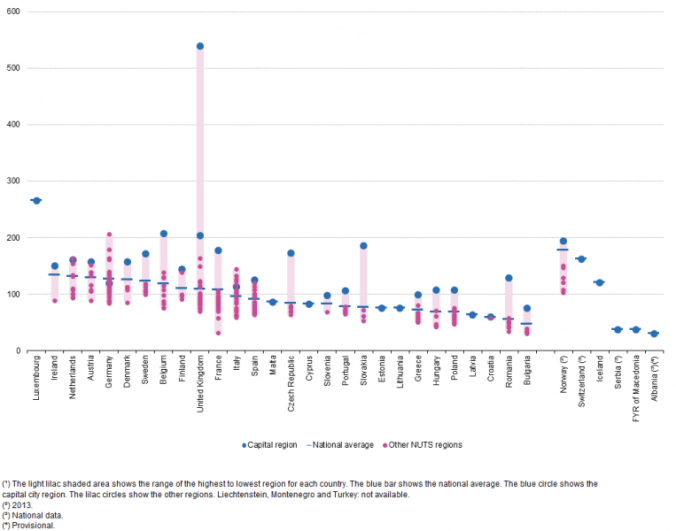
In many countries, the capital city will be the richest region of the nation. This is normal – Money wants to be close to power – but the UK’s disparity really needs to be seen to be believed. Here is the GDP/capita for each of the EU28 and EFTA countries broken down by region. Spot the odd one out.
(Note that the UK has two capital dots. The lower one is London as a whole. The upper one is just Inner London)
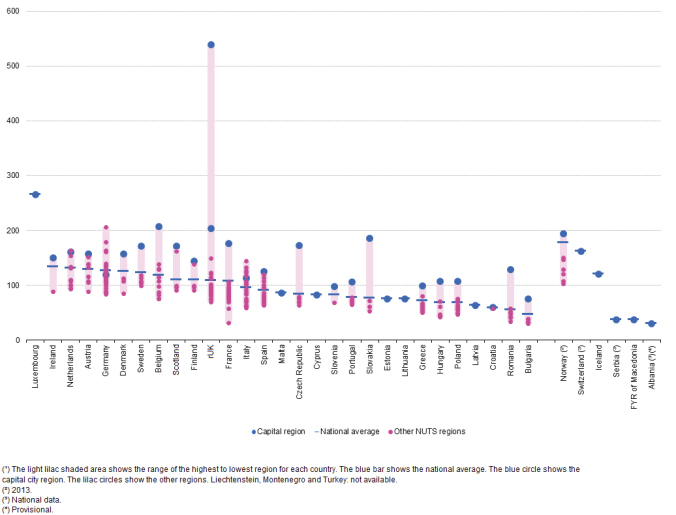
Whenever statistics about Scotland are produced, they’re often given with reference to the “UK average” or the “UK as a whole” but the extreme disparity of Britain masks the picture. Detailed analysis by Prof Mike Danson of Heriott-Watt University has shown that Scotland’s GDP per capita is the third highest region of the UK (after London and the South-East) and, if we were an independent state, we’d be the 9th highest in Europe. In fact, we can disaggregate out the Scottish data from the chart above and catch a glimpse what we’d look like as an independent country.
Taken on this view, Scotland no longer looks like a “below average” region of the UK but a fairly normal Western European country. Far more like Finland or Denmark than, say, Greece.
As Prof Danson says, the obsession with comparing Scotland to misleading “UK average” figures leads to commentators ending up unable to take a step back and ask what is happening across and within the UK and where the problems really are. Until this happens, Scotland will continue to stagnate within the UK as the overinvestment of London continues (and is likely to get worse through the Brexit process in a desperate attempt to prop up the financial sector there).
As said earlier, there is a way out of the coming credit crisis but it’s going to involve not more Austerity but a whole lot less. Economists are increasingly coming around to the realisation that the Government’s debt is your surplus and that governments can take on that debt almost without limit (unlike you who have hard limits on credit and the ability to repay it) and – if they have their own currency – can print money in order to provide services (unlike, again, you who would go to jail if you tried that).
Once again, there is a certain amount that the Scottish government can – and should – do at the moment to help but it will always be stymied by the very tight rules of devolution. There’s little to no hope of the UK changing course any time soon (even Corbyn’s Labour is solidly committed to “balancing the budget“) and the hard Brexit the Tories and Labour are both pursuing is being increasingly differentiated by the amount of damage the plans will cause rather than any attempt to prevent it. The Sick Man of Europe seems destined to return to the UK. I only hope that Scotland doesn’t catch its cold.
“Before you can start building [houses] on any scale, every single industry in society has got to be organised and stimulated into production.” – Aneurin Bevan, 1946.
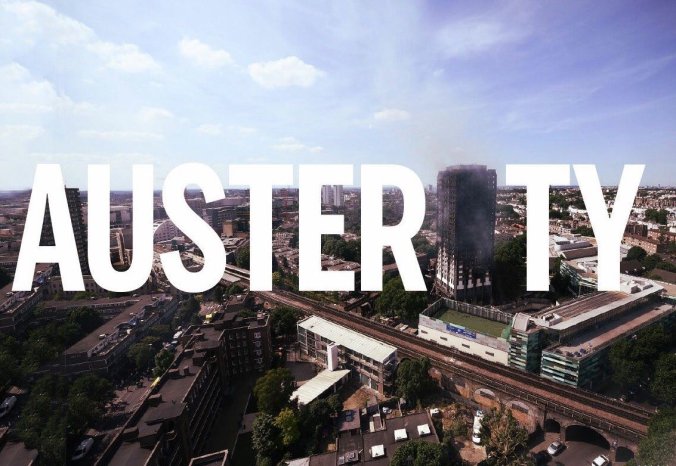
The inferno at Grenfell Tower has claimed many lives (as I write, the official estimate for people dead or missing and presumed dead is 58.), has likely wiped out entire families and will have irrevocably changed an entire community forever.
It’s still too early to be fully deconstructing the causes and blames of this disaster but a few things have become widely reported and will likely play into the debate in the months and years to come.
However the blaze started (early reports suggest a power surge igniting a fridge on the 4th floor) it appears that the flames spread rapidly up the insulating cladding on the outside of the building, engulfing the entire structure in minutes and trapping many inside.
It has also emerged that the cladding involved was the cheaper of two options provided by the supplier and of a construction which would be illegal in several countries including the US and Germany. The fire resistant version of the cladding appears to have cost fractionally more – just £2 per square metre, or £5,000 for the entire block of flats. Further, it appears that at least part of the motivation for the choice of cladding was to improve the appearance of the flats for the benefit of nearby luxury high rises.
The Grenfell Action Group has been warning of a catalogue or failures of construction, maintenance and accountability for years. And the complete failure of leadership in the wake of the disaster, especially from PM May, has been appalling. This interview by MP David Lammy, who lost a friend in the blaze, does much to exemplify the sense of frustration and anger felt by a community which justifiably feels betrayed and it is no wonder at all that protests have occurred (so far peacefully).
Of course, the building contractors will all tell us that they are not to blame as they met all applicable regulations. And they’d almost certainly be correct. This is the nature of the relationship between capitalism and government regulations. It will always be the case that companies will meet regulations by the barest minimum that cost allows and will always lobby for those regulations to be decreased if the cost of lobbying is lower than the savings due to the regulation cut (for, in this case, politics can be reduced to just another form of investment).
I’ve been particularly appalled by one article in Bloomberg which takes on the extreme libertarian approach to this stating that all fire regulations should be scrapped because in the perfect world of the libertarian, any regulation which increases cost is unacceptable. Instead, the people who lived in the tower should have rationally weighed the risks of living in the tower with that cost and, if they wanted to, could have moved to some (presumably more expensive) tower nearby which DID include the safety features.
I shouldn’t need to fully dismantle this worldview. The residents of Grenfell did not have the choice of a hypothetical “safe” building next door into which they could move. Even if they did, humans simply are not the machine-like “rational actors” demanded of libertarianism nor do they always have the perfect information required to make such a choice (Could you identify a flammable cladding from a non-flammable one? If the libertarian landlord tells you, could you completely trust them? Could you tell if they were lying? Without any regulations, how would you hold them accountable if they were?)
I have written before, in less tragic terms, on the need for regulations to go well above and beyond the bare minimum. It will be essential if we wish to meet our targets to reduce energy consumption (which will be good for the environment and save a lot of people a lot of money in heating costs). I now believe it’s time to go much further than this. The private sector will always be an anchor against attempts to increase decent housing stock (especially for the poor) and to get the UK’s housing price inflation under control. It’s time for the government to start intervening and build social housing again.
Unconstrained by the needs to seek profit, the government can apply its own regulations, well above the “legal minimum” if need be, and can do some proper planning to ensure that it’s not just housing that’s being built (this has long been the failure of many projects in the past such as the high rises and the out-of-town blocks such as Easterhouse in Glasgow). We need to think about the amenities and the jobs and all the other functions of a town which enables communities to thrive. Common Weal has recently published some proposals on how local areas can control their own land and ensure that their specific needs are addressed on their terms. We can’t keep treating housing as a commodity for the rich, constantly pushing folk to “climb the property ladder”, treating those who can’t to the slums and the land-baggers and simply abandoning them. We can’t keep segregating people and reinforcing the class and wealth divides and then blaming those on the bottom end for “just not striving hard enough“.
This isn’t to say that high-rises don’t have their place – endless suburban sprawls constantly bite into farmland and wild spaces and often fail to engender any sense of community at all, not to mention the health and climate effects caused by having to drive to reach anything other than your own house and the extra costs of delivering services to low density populations. Smart Cities, well designed with these factors in mind, may be a major factor towards a sustainable future (and I say this as someone who lives in a rural area).
And these cities need a lot of work to build. From brickies and plumbers, through planners and designers, past educators and mentors, to the computer experts who’ll get the smart systems going and keep them running, there is vast potential to employ a lot of people in this enterprise and to inject a huge amount economic activity into the country (in a far more productive manner than the zero-hours “gig” jobs that we’re being fed currently). If Austerity is to be ended, this could be one way to do it. And we know it works because the UK has been through exactly this before. An economy shattered by war from without (rather than Austerity from within) was reconstructed in the 1940’s and 1950’s and is still looked back on fondly as one of the UK’s golden ages. Here’s Nye Bevan talking in 1946 about his plans and how he got them started.
“That’s all great”, you say. “But how much will it cost and how do you pay for it?”
Government debt.
Did that put a shiver up your spine? Then you’ve been indoctrinated by the most dangerous ideas of the 21st century. The idea that government debt is a terrible thing.
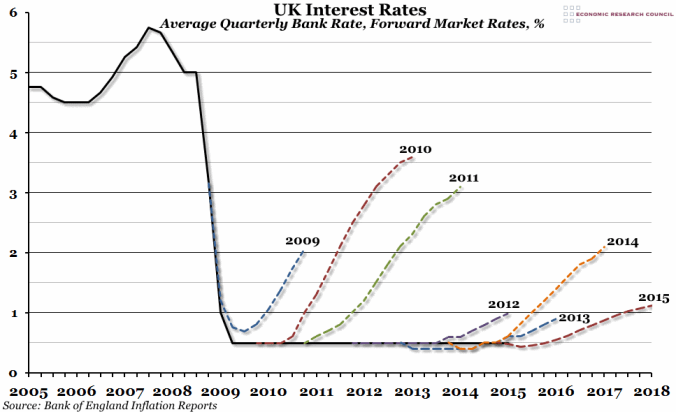
We’re living in an age where the UK government can borrow on a 30 year bond for 1.7%. Inflation is currently 2.9%. There has never been a better time to invest as right now the debt is (in real terms) cheaper than free!
Applied to the housing market, this could be a major game changer. Not withstanding the ability to directly target areas which badly need investment (preferably by allowing these areas to borrow themselves through a National Investment Bank), the advantages in cost to the occupier are significant.
Right now, a £90,000, 25 year mortgage on a 4% compound rate would cost you about £475 per month and you’d pay back £142,500 over the term. A mortgage based on a government bond at our 1.7% (simple interest, rather than compound) would pay back over the 25 years for a little over £425 per month and, as a particular advantage to the renter, that monthly rate could be fixed for the entire mortgage period (it needn’t even be uprated for inflation as the bond isn’t). Try asking your bank for a mortgage rate fixed beyond five years. Try asking them to predict what the interest rate will be on year six.
(The Bank of England can’t do it, and they’re the ones who SET the rates!)
One the debt is paid off, it could be up to the government to decide whether the house remains as a social house and the occupier continues to pay rent (thus subsidising other housing), continues to live in their home rent free for the remainder of their occupation (thus preserving communities long term), or allows them to purchase the house (which would require the government to replace stock in a way that wasn’t done under Right-To-Buy)
And, of course, you can adjust the numbers as required to ensure that everyone can afford a house, built to far higher standards than the private sector will supply, without the need to make obscene levels of profits while doing so and in a location and surrounded by the services required to make that house a home embedded in a community built by and for all of us.
We didn’t need the Grenfell tragedy to have this conversation. People have been speaking about it for years now. The systemic problems in the UK’s housing industry have been apparent and have been either ignored or actively encouraged for too long. Maybe it’s time we started listening and reassessing.
I don’t recall ever having been so conflicted about a vote than I am about the upcoming general election. This week’s interviews of Theresa May and Jeremy Corbyn did little to help with that.
As a brief review of the interviews themselves. I think Corbyn came across as quietly and surprisingly firm and upright. He had successfully anticipated the questions from both the audience and from Paxman and gave solid, if obviously rehearsed and briefed, answers. The perception of him in the press is that his policies are popular but his own personal factor is rather less so. Paxman attacked that weakness and went for the personal and tried to drag, sometimes fairly; sometimes unfairly, his already well aired skeletons out of their closets. Comparatively few questions from him were on policy. Corbyn probably came out as well as he could in the face of that.
May, on the other hand, showed why she’s been trying hard to run a Presidential campaign without actually appearing in front of people. Evasive and vague answers to questions and defenses of abysmal policies being literally laughed down. One question which particularly struck me was from the older gentleman who was very upset at the prospect of losing his house to pay for social care. Equally striking that when he was asked about it after the debate he admitted that while he was unhappy with the answer, he’d probably still vote for May. This is the calculation she’s made through this whole election campaign. She knows younger folk won’t vote for her (and – hopefully, from her POV, won’t vote at all) but she’s gambling that older voters won’t NOT vote for her (and will certainly turn out). If either or both of these assumptions turn out to be incorrect, she’ll be in for an abrupt surprise on June 9th. It seems incredible to say but my estimates of the impending Tory majority have dropped from 100+…to 6 points in some recent polls.
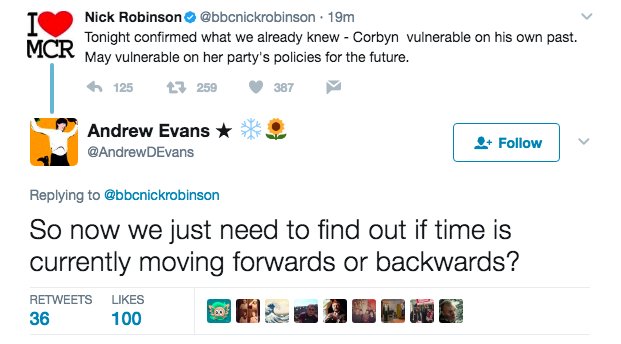
The whole debate was neatly summed up in a couple of tweets.
So why my conflict?
I don’t have a Green candidate to vote for in my constituency. Between cost, the inherent unfairness of FPTP with regard to smaller parties and a few other factors, we don’t have a candidate for the area and so my vote is up for grabs.
If I lived in England and couldn’t vote for the GPEW, it’d be a fair no-brainer. I’m actually excited by much of the Labour manifesto. Items like the program of nationalisation, the National Investment Bank, and their previous support for a scheme to look at a Universal Basic Income (though it hasn’t made it into the actual manifesto) are all policies that the Greens and Common Weal support and advocate for.
This isn’t to say that the manifesto is perfect. There have been compromises there to keep the ever recalcitrant PLP in line. Corbyn has all but admitted that he doesn’t like not being able to change the party stance on Trident and I certainly do not appreciate the manifesto’s stated opposition to Scottish independence. While reports more recently have somewhat softened that, i’d think it likely that he’d go into that negotiation from a stance of either offered Federalisation or finding some other way to try and “buy off” the nationalists rather than support a referendum.
But this isn’t the largest blocker towards my placing my vote in the Labour box. Quite frankly, I don’t trust Scottish Labour and Kezia Dugdale to support anything that Corbyn offers. Certainly not if opposing Corbyn helps them with their sole and over-riding goal of opposing the SNP at every possible avenue. I could believe that Corbyn would seek a coalition with the SNP to oust the Tories. I could equally believe that Dugdale would sabotage it to frustrate Sturgeon.
So my vote should go SNP then? Well…I can’t say I’m entirely impressed with their manifesto. There’s some good stuff in there – commitment to energy grid reform and the general pushback against Austerity is decent – but there’s a lot missing too. The SNP have been clearly outflanked on the National Investment Bank issue. They could have placed a commitment in there on that with the sweetener that they’d push for it in Scotland even if they couldn’t win power in Westminster. As a negative, I don’t like the continued push towards Carbon Capture – especially now that Scotland is free of coal power. As a technology, it’s looking more and more like another distraction from decarbonisation at best and an excuse to develop technology for ever more oil extraction at worst. The lack of push on corporation tax beyond “opposition to further cuts” is also disappointing.
This last concern brings me to another point. I’m struggling to see the balance between the overall promises to end Austerity and the commitment to “balancing the budget” within the next five years. When asked directly at their manifesto launch about whether these promises were costed, Nicola Sturgeon didn’t give a particularly straight answer. I think the party is still caught in the trap of believing that government deficit spending is a “bad thing” and that we can just grow our way to economic “success”. There are some very good reasons to believe that this economic model is badly flawed.
Overall, this is clearly a manifesto built for a party which knows it can’t win any more seats than it already has and is trying to avoid losing too many. It’s also clearly a manifesto written without much intent of being implemented. The party rhetoric has consistently been one of assuming a Tory majority in which Scotland’s MPs would be ignored.
Away from the national campaign and down to the local I’ve been having a look at who is standing in my own constituency. It’s currently an SNP seat with the Tories in a very distant second. Even if the Tories pick up every single non-SNP voter, they’d still be shy some 7,000 votes. This probably explains why, a week and a half out from the elections, I haven’t seen a single piece of campaign literature from anyone and why my choice of candidates have been…let’s say “less than stellar”. We have the incumbent MP (whom I do like and respect). The Lib Dems and UKIP are both running one of their recently failed council election candidates and, rather more seriously, the Tories and Labour are both running one of their recently ELECTED councilors. I can’t help but think that they’re not taking this election particularly seriously.
So that’s my dilemma. In terms of manifestos, I’m probably most attracted to Labour’s but their opposition to independence and my lack of faith in Scottish Labour’s commitment to their own party is a serious concern. Whilst I’m not quite so enthused by the SNP promises and they look more like a list of nice things than a complete vision of a country, I can more easily believe that they’d work towards them given the chance and that, at heart, they will be thinking of Scotland when making inevitable compromises.
I need to throw things out for advice. To the SNP – I’m yours to lose. Convince me that your numbers add up and you’re trying to build something more than just a list of nice soundbite policies. To Labour – I’m yours to win. Convince me that your party still has a place in politics north of the border.