Three things you might have missed in the UK Budget

“To implement a budget is to apply one’s ideas about life and spending to the real world.” – Zachariah Renfro

This blog post previously appeared in Common Weal’s weekly magazine. Sign up to our Daily Briefing and Weekly Magazine newsletters here.

If you’d like to support my work for Common Weal or support me and this blog directly, see my donation page here.

A stock photo of two small stacks of GBP coins of various denominations.

There’s been plenty to talk about in the UK Budget this week and the media has been largely focused on the smaller gestures designed to push attention in precisely that way. Dropping the gas standing charge (as well as hints at dropping the electricity one at some point in the future) are welcome as will be the direct £100 support payment for households in lower Council Tax bands (why this will result in payments going to fairly wealthy people in undertaxed houses and not to poorer people in overtaxed houses could be the topic of another article but I’ve written a lot about Council Tax Reform lately) but they aren’t the same as the reform needed to pull people out of fuel poverty. Instead, I’d like to point some attention at three stories that caught my eye in the budget that might have passed you by.

Less emphasis on Foreign Direct Investment, but more Public Private Partnerships

One of my constant gripes about the Scottish Government is its obsession with Foreign Direct Investment (also sometimes called Inwards Investment) as a means of economic development. I get why it happens especially in Scotland (due to a lack of public borrowing powers at Holyrood, and their lack of support for Councils to use their borrowing powers as a substitute) but this should be a problem to circumvent rather than one to be boosted. And we know the cost of it – tens of billions of pounds are extracted from the Scottish economy every year to feed the profits of the companies that “inwardly invested” here.

It’s a problem at the UK level too, albeit less so. The UK’s level of profit extraction is only slightly below the expected average for a state of its GDP per capita, rather than one of the worst in the world as is the case for Scotland. Where Scotland lost almost 5.6% of our GDP to net profit outflows in 2021 (still the most recent data we have despite Scottish Government promises to update it), the UK only lost 0.15% of its GDP to the same outwards extraction (about half of the difference can be attributed to Scottish profits being extracted to elsewhere in the UK, for example by London-HQ’d companies, but this doesn’t account for the gap beyond that).

The UK Government, in contrast to the Scottish Government, has decided that this is a problem and the budget promises to try to boost domestic investment, recognising that keeping the returns on those investments within the country is better than seeing them drift away (not that they’re promising to reduce FDI though, they still tout the UK’s place as the “second best” place to invest within the G7).

It’s not a completely rosy picture though. The “domestic investment” they want to focus on is on AI data centres and in the military. I spoke about the dangers of the former at a recent event with Pensioners for Indy and we wrote about the issues with Public Private Partnerships in the military in our Daily Briefing this week. I’d encourage you to watch the former at your leisure and to read the latter after you’ve read this. In short, PPPs are likely to be as much of a disaster for the UK’s military bases and for the long term financial security of the country as they were for the legacies of crumbling hospitals and schools that the previous rounds of PPP were but will be used anyway not to boost investment but to hide the cost of war from the public.

Income Tax for Mayors

If you were blindsided a few weeks ago when John Swinney came out with a proposal to radically reform Local Government in Scotland, so were we and so were a lot of folk who have been deeply involved in local reform for a long time (Lesley Riddoch discusses it in her podcast here). It’s not to say that it’s a bad plan (though it’s not nearly detailed enough yet) but the timing, I highly suspect, has much more to do with Andy Burnham than with Swinney having a sudden Damascene conversion towards the principles of subsidiarity and municipalism.

I believe that Swinney started to feel threatened by the idea that Burnham’s push for more and stronger regional mayors was creeping into Scotland and that they might even be forced upon him. Pushing back with democratic regional councils was a sensible counter-measure and one (subject to it being done right) I actually agree with. Putting power into the hands of a single person isn’t democratic, and so mayors (or, in Scotland, Provosts) cannot and should not hold executive power.

The budget more-or-less confirms those suspicions with English mayors being given a share of business rate income from their region and then, from 2028, a share of income tax raised in their region too. They won’t have the power to change income tax rates, but this will give mayors a substantial budget to deploy and their own discretion. There’s a serious risk of personal fiefdoms growing as a result. It’s far easier to lobby and corrupt one person than it is to corrupt half a council.

There’s a question over how this will work in the substantial areas of England that don’t have elected mayors (which will probably be answered by pressuring them to create the office) or how it will work in the three other nations which have very different setups and, of course, where income tax in Scotland is already substantially devolved. There is a good case to be made for regional or local authorities in Scotland to retain a share of income tax and there have been proposals in the past for a local income tax. As Scotland develops its local government reform, these issues will have to be sorted out to ensure that public services across all local, regional and national areas are sustainable and fair.

But that still doesn’t mean I want a couple of mayors having unilateral control over 20% of my income tax bill.

“So the situation is that in half a decade or so low income carers will no longer go into debt over earning a little on the side, but they’ll still be taxed at a higher rate than the very richest people in the country.”

Carer’s Allowance Reform

This is one of the items from the budget that leaked ahead of time (I’m old enough to remember when a Budget Minister would resign rather than see a single word of their budget appear in the press before it could be presented democratically to Parliament, but those days are long gone in favour of Chancellors leaking good news stories mixed in with catastrophic stories that can be “rolled back” on the day and replaced with mere “bad news”).

Right now, if you’re a carer in receipt of Carer’s Allowance and you deign to try to earn some income in addition it it, you are subject to extremely tight earnings limits. Go a single penny over that limit and you don’t just lose future allowance, but the government will actually claw money back off you. This is a particular problem where carers do freelance work that they can flex around their caring responsibilities as getting a lump sum for a project can easily push them over the weekly limit where a salaried sum spread across the year would not. However it happens, putting carers into debt over as little as a penny of “excess” earnings is not acceptable and the UK Government has finally realised this.

Instead, they have proposed a reform where carers will see their allowance taper off as they earn above the threshold just as it does with some other social security payments like Universal Credit.

There are a couple of kickers though. The first is that this won’t come in until after the next election (IT problems, apparently, which carers must continue to pay the price for). The second is that the taper rate will be £1 for every £1 earned above the threshold. In other words, carers who earn more than a pittance will face, effectively, a 100% income tax rate until they have earned more than their carer’s allowance. This is simply utterly wrongheaded.

Even Universal Credit “only” tapers at 55%, so that low income workers lose 55p of their social security for every £1 they earn.

Meanwhile, the top rate of income tax in the UK is only 45%, so someone earning more than £126,000 or so gets to KEEP 55p of every £1 they earn…and they’re salty enough about that to be pushing for it to come down.

So the situation is that in half a decade or so low income carers will no longer go into debt over earning a little on the side, but they’ll still be taxed at a higher rate than the very richest people in the country.

I think we need a rule that states that social security taper rates can never be steeper than the top rate of income tax. If the Government wants to tax carers at 100% then they should be willing to apply a 100% income tax on the very highest earners too. Since that is rather unrealistic, then carers should be taxed at not more than what the government thinks millionaires should be taxed at.

Even better would be to accept that all of these restrictions are really designed to punish poor people into compliance (I see the Government also wants to bring back face-to-face assessments of disabled people with the aim of ‘proving’ that those who can’t comply were probably faking and can have their welfare cut. We’re only a decade and two Labour leaders on from I, Daniel Blake but it seems that the outrage against welfare sanctions has faded enough for the government to bring them back). Instead of taxing carers who are trying to make ends meet in addition to providing care, we could have a Universal Basic Income that supports everyone to do what they want and need to do, including provide care, and start paying workers – especially those in undervalued jobs like care – enough to live on.

Conclusion

A “breathing space” budget this may have been but it was one with enough hidden edges to give pause to anyone who read below the headlines. The next question will be for the Scottish Government to respond to it with their own budget early next year. Some things, like the £100 energy payment, are likely to be copy and pasted but I already see landlords lobbying to avoid additional taxes coming their way for their English counterparts. This should, of course, be resisted and Scotland should perhaps go further and continue pushing for a housing sector that provides homes, not passive incomes for the already wealthy.

I’d be interested to hear your views too though. Was there anything beneath the headlines that stood out to you, good or bad? What do you think the Scottish Government should do in response?

How taxing land can help us find out who owns land

“Nothing is yours. It is to use. It is to share. If you will not share it, you cannot use it.” – Ursula K. Le Guin

This blog post previously appeared in Common Weal’s weekly magazine. Sign up to our Daily Briefing and Weekly Magazine newsletters here.

If you’d like to support my work for Common Weal or support me and this blog directly, see my donation page here.

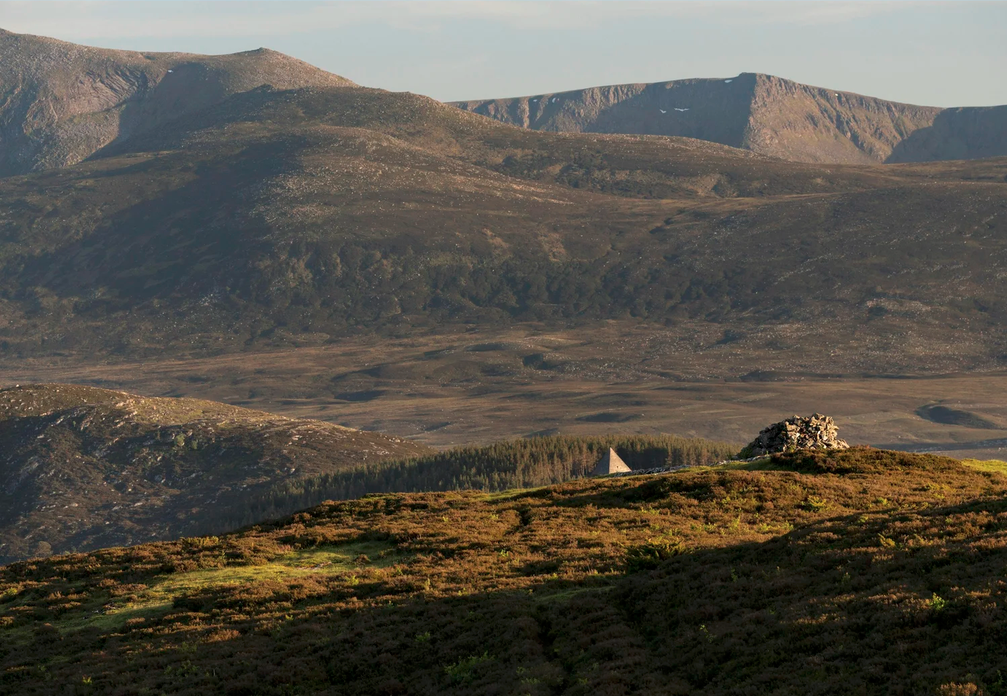
A stock photo of the Scottish Highlands, largely devoid of people or wildlife apart from some sitka spruce plantations, a cairn and what may be the top of the roof of a house.

The UK as a whole but Scotland in particular appears to be creeping ever closer to the inevitable realisation that a few people hoarding stores of wealth is inherently bad for society and that wealth should be taxed.

The debate at the moment is largely focused on how to do it. The simplest version is probably also the worst. That would be to have everyone whose net worth is above a certain threshold tally up the value of all of their possessions (from housing to company ownership to cars to artworks) and then pay a tax based on a percentage of that value.

It’s often hard enough to do this for someone’s estate when they die – it’s even harder when they are still alive enough to move their mobile assets around to hide them from the Revenuers or to move themselves to somewhere that’s quite happy to host the ultra rich trying to avoid their responsibilities. Richard Murphy makes this point though he also offers suggestions that would work at a UK level such as reforming capital gains tax and corporation tax and removing tax subsidies from high value pensions. His 2024 Taxing Wealth Report can be read here.

In Scotland in particular though, there is a very large store of wealth currently being relatively untaxed that could be directly addressed without fear of the billionaires fleeing – our land and the ownership of it.

No matter where someone resides in the world, they can’t take their owned land in Scotland with them and therefore the land itself can be taxed regardless of who owns it and where.

“Who Owns Scotland?” is a key question, however, and one that is strangely unanswered for a country like ours. Andy Wightman is the go-to source for detailed information of land ownership, especially where that ownership is obfuscated through corporate or financial structures, but even his database currently covers less than 80% of rural land. The Scottish Land Register is, after many years of missed deadlines, still incomplete.

We also know that the land reform legislation passed in the previous Parliament is unlikely to enact meaningful reform of ownership. It may well have positive impacts in the management of land but the regulations only cover the largest estates and there are ways to avoid its strictures (such as by breaking a single estate up and setting up trusts or companies to own each chunk separately, even if a single individual owns all of those companies thus still controls all of the land). Even the rules around forcing some sales to offer lots to communities are unlikely to be meaningful if the communities don’t have the resources to buy the lots.

This is where tax may have to play a role.

One of the barriers currently facing bringing in a land tax is the lack of data not just on ownership but on valuation. The latter isn’t insurmountable and there are ways to do it. The Scottish Land Commission is investigating various approaches to valuation, and these basically boil down to a few key approaches.

The first is an algorithmic approach similar to the way Zoopla values your house and is based on similar nearby sales. This is more complicated for land than housing because land sells less often and has more variation even field-to-field but it can give a rough idea (my own paper on taxing land took a not-dissimilar proxy approach by combining national sales data with agricultural soil grade information).

Another is obviously to update valuations when land is sold or transferred but could also include valuation data captured during events like the owner taking out a loan secured on the land, reinsuring it against damage or when applying for planning permission to build on it. There may also be bespoke site surveys which could happen either as the result of any of the above, randomly to help benchmark the algorithmic approach or if the landowner is unhappy with their algorithmic valuation and wants a manual correction (this last one could be subject to a fee and on the understanding that valuations could go up as well as down – this would deter people disputing their valuation without good reason).

“The good news for land reform campaigners is that there seems to be a lot of things about to happen quite quickly in Scotland.”

Another slightly more radical version – but one not without precedent – is to allow owners to self-value their land but to give local government or communities the right to enact a compulsory purchase at the taxable rate regardless of any potential market rate. If you state that your Highland estate is worth £1 for the purposes of tax, then the local community can purchase your estate for £1. This would naturally incentivise owners to value their land accurately (or, at least, higher than the price the community is able to pay – the land speculation bubble has already priced many of them off the land).

Bringing in a land tax will therefore help to value land. It’s less of a barrier before a tax can be brought in but more like a problem of the land being difficult to value because there’s no tax to compel it to be valued.

I’m increasingly coming to believe that the same might be true for the problem of ownership too. That the barrier isn’t that we can’t introduce a land tax because we don’t know who we’re taxing but instead we’ll very quickly be able to find out who we’re taxing once we start introducing a land tax.

What would happen here is that the owners of land would be responsible for paying their land tax at the end of the year and would connect their payment to their entry or entries on the Land Register. These records could be checked for land that is on the register but which doesn’t have a tax payment linked to it. If tax is not paid on a portion of land and the owner is known, notices to owners could be sent out (along with late fees etc).

If ownership is not known or if the land is not on the register at all, then a public notice could be made calling for the owner to come forward with proof of ownership and an application to register their land. If none present themselves within a reasonable time (say, three or five years) then procedures dealing with ownerless land can be initiated with the land itself being ultimately transferred to a public body (the traditional recipient in Scotland would be the Crown, but I would argue in this post-feudal age that ownerless land should be converted into Common Good ownership).

This is a win-win for Scotland. Either land that is not declared on the Land Register gets registered quick to avoid being chased for tax evasion, or it comes back into public ownership and from there can be better used by an identifiable owner.

The good news for land reform campaigners is that there seems to be a lot of things about to happen quite quickly in Scotland. There was a fear for a while that the passing of the Land Reform Act last year would take the wind of out the sails of reform while doing little in itself to create much change but while the latter may yet be true, the former does not.

I can’t say too much at this stage other than to suggest that eyes are turned to the party conferences this year as there may be some interesting things happening. The Revive Coalition, of which Common Weal is a member, will be at both the SNP and Green conferences this month talking about land reform and where policies like a land tax can help to push things forward.

The important thing to remember in this campaign and in all others is to look at challenges not as barriers to prevent change but merely as obstacles to overcome or bypass. If we think we can’t do something, just check to make sure that we’re actually right about that and if we can’t do it in the way we want to, maybe we can do it another way instead. Being focussed on the solutions rather than being stopped by the problems is what will create change.

Taxing wealth is important and popular. Taxing land is one way to do that in Scotland. How to get there, is up to us.

The Common Green logo Green text on a dark green background, above a version of the Common Weal "balance" logo.

The pension triple lock became a problem that a double lock won’t solve

“You’re mugging old ladies every bit as much if you pinch their pension fund” – Ben Elton

This blog post previously appeared in Common Weal’s weekly magazine. Sign up to our Daily Briefing and Weekly Magazine newsletters here.

If you’d like to support my work for Common Weal or support me and this blog directly, see my donation page here.

A pink piggy-bank wearing glasses and staring at a calculator

Andy Burnham has injected a case for optimism into the UK political sphere and has genuinely proposed some interesting ideas for the future. More crucially, as I point out in In Common in The National this week, his approach to making policy – by taking a step back and doing the detail work before trying to launch the idea – is the complete opposite of the Scottish Government’s approach of announcing an empty “Framework” then trying to backfill the detail on the fly. The Scottish Government could learn a lot from his approach to building a National Care Service just as Burnham should learn the lessons on why the Scottish attempt failed.

This attitude doesn’t necessarily extend too all aspects of the plans announced at the Labour conference this week and I think the one that is likely to have the longest term impact is the dropping of the state pension triple lock.

The triple lock is the mechanism by which the UK state pension was automatically uprated each year by the highest of the previous year’s rate of inflation, average rate of wage increases, or 2.5%.

It was brought in in 2010 by the Conservative/Lib Dem Coalition Government and it did have noble reasons behind it. It has often and for many years been pointed out that the UK’s rate of state pension income is amongst the lowest in the developed world. Pensioner poverty for those reliant only on the state pension was becoming a major political scandal and it was urgent that the state pension be increased.

The doesn’t tell the whole picture because it doesn’t include private pensions and other income but we’ll come back to that. It’s also important to note that the increase in the state pension came around the same time as rapid rises to state pension age and increasing protests from groups like the WASPI women and so an increase to the rate of pension was somewhat of a sweetener to offset the fact that people would have to work longer before receiving their pension.

And finally, it cannot be ignored that there was a very deliberate political element to this. The reason why the Conservatives were for increasing social security for older people and were and still are against increasing it for younger people comes right down to the voting patterns of those two groups. Political parties of all colours play to their respective bases when they can or must.

With that preamble being necessary to start to grapple with this very complex issue, we can now look at Burnham’s reform. To replace the triple lock with a double lock of only uprating pensions by the highest of inflation or 2.5%, without automatic reference to wages.

This means that if wages are consistently higher than inflation and if inflation remains above 2.5% (despite the Bank of England’s target to keep it around that level) then pensioners will not get any poorer with relation to prices but they also won’t get any richer in relation to workers.

There are a lot of “ifs” in that aspiration. For a start, I believe that the fear that pensioners were getting drastically wealthier as a result of the triple-lock is based on a faulty reasoning. This did happen in the past few years because of the very particular circumstances of the Covid pandemic. When we went into lockdown, wages dropped quite drastically for a lot of people while supply chains took a massive hit. This meant that in the lockdown year, even though inflation outstripped wage growth (wage decline at its worst) both were below the 2.5% triple lock floor and pensioners became relatively wealthier compared to both prices and workers.

“It’s a bit like your landlord saying that instead of them increasing your rent by £200 next year, they’ll only increase it by £100 so now you have £100 to spend on dinner tomorrow night.”

After lockdown, shifts in the economy caused a massive spike in wage growth not (mainly) because people wanted paid more to come back to work but because “returning to normal” suddenly was a big proportional spike up compared to the layoffs and furlough funding of the previous year. Pensioners benefited from wage growth going to 7% and rapidly outstripping prices. Then, in 2022, the invasion of Ukraine plus other geopolitical factors (and outright corporate profiteering) have seen inflation blow past the steady post-Covid wage increases and have again seen pensioners do well out of the whole process.

All this is to say that the last few years broke the triple lock model in a way that wasn’t envisaged when it was created (you can read more about this in our 2021 book All of Our Futures). I’m not convinced that moving from a triple lock to the double lock is a solution to the problem nor am I convinced that the problem they are trying to solve is one that is likely to happen again as it did in 2020.

Burnham is essentially gambling that wage increases will stay both higher than inflation and higher than 2.5% per year. This is the only way that the state pension will increase slower than it would under the triple lock but that scenario has also been a rarity in the years since the 2008 Financial Crisis. He also undermines this objective by stating that pensions won’t lose value in relation to wages in the long term. This makes sense if the objective is indeed to avoid model-breaking short term shocks, but it doesn’t make sense if the long term goal is to have pensions grow at a slower rate than wages.

His claim that he can use the “saved” money to fund a National Care Service is obviously a political sweetener itself – people are often happier with a bit of policy pain if they think something good will come from it – but I don’t see how that can add up either.

It’s trying to predict both inflation and wage growth decades into the future. This is perfectly valid as a modelling exercise and to do things like try to work out the potential impact on pensioner income and to the Barnett Formula as funding shifts from a reserved policy to a devolved one (or vice versa), but it’s harder to say for sure that you can “use” money that isn’t even a real saving but merely a slower-than-otherwise increase in future costs. It’s a bit like your landlord saying that instead of them increasing your rent by £200 next year, they’ll only increase it by £100 so now you have £100 to spend on dinner tomorrow night.

The triple lock served a purpose of reducing pensioner poverty but I’m also not convinced that either it or the double lock are fit for that purpose without making changes to the other side of pensions – the private sector.

When I said that the UK’s state pension is among the lowest in the developed world and that this doesn’t tell the full story, it’s because a large amount of total retirement income in the UK is derived from private pensions and from the “housing ladder” (wealth built up in housing that can be released by “downsizing” upon retirement). In All of Our Futures, we found that the UK’s total pensioner income was closer to the average of developed countries (so, still not great) but that around half of it comes from private pensions or housing wealth.

There is a very good argument to be made that the Thatcher era that created the marketisation of housing as a capital growth asset and which unleashed the previously restrained pension financial sector and turned them into GDP-boosting risk-machines allowed the UK to deliberately keep its state pension low for only the cost of turning housing and the financial sector into economic bombs that have gone off repeatedly and are likely to do so again.

So continuing the job of reducing pensioner poverty while maintaining fairness across generations and between pensioners and workers is not going to be possible without reining in the financial sector and private pensions while also decapitalising housing.

There are solutions. We should re-socialise the housing sector by aggressively replacing private rented housing with social housing (which will reduce the problem of pensioner poverty for those who retire without owning a house to downsize from, while reducing the wealth inequality caused by landlords who bought their houses when they were cheap). We should better regulate and seek to replaced the private pension sector with a public-owned workplace pension scheme (see Jim Osborne’s work on this which is closely in accord with but much more developed than the work we could do in our book).

And we should replace the state pension with a Universal Basic Income at not less than the same rate as this would help to deal with issues such as regions of the UK where high deprivation means people working during ill health or dying before state pension age (creating a tax transfer from poor areas to richer areas with higher life expectancy). A UBI would also help end the discrimination of “retirement age” where people who are able and do want to work past an arbitrary timeline are more than welcome to do so.

The most vital thing is that any attempt at social security reform – be it pensions or anything else – must not be used to divide society either young against old or workers against retired people. All this does is distract from more serious divisions such as the reasons why the super-wealthy have left us all poorer or how tech oligarchs are literally stealing the future of this planet out from under us.

I have a great deal of hope right now thanks to Burnham’s new optimism. I hope it rubs off elsewhere too and we start to see more exciting and better thought through policies from all governments. Early signs are good, though we must make sure that areas like pensions are treated with the respect due to the sheer complexity of the task of making sure that wherever we live, within the UK, within an independent Scotland or anywhere else, we build a country that all of us can be proud to grow older in.

The Common Green logo Green text on a dark green background, above a version of the Common Weal "balance" logo.

A Deal With The Devolved – Part Three

“It is a capital mistake to theorize before one has data. Insensibly one begins to twist facts to suit theories, instead of theories to suit facts.” – Sir Arthur Conan Doyle, Sherlock Holmes

(This blog post previously appeared in Common Weal’s weekly newsletter. Sign up for the newsletter here.)

Thanks to an FOI request, I now have evidence that the Scottish Government has applied its devolved Freeport tax cuts without any data saying that they will benefit the Scottish public purse or be offset by other taxes.

Continue reading →