“An advanced city is not one where even the poor use cars, but rather one where even the rich use public transport.”- Enrique Peñalosa Londoño
This blog post previously appeared in The National, for which I received a commission.
If you’d like to support my work for Common Weal or support me and this blog directly, see my donation policy page here.
As a policy-engineer this week’s coverage of the ins, outs, ups and downs of public transport has been a very enlightening read. I was very happy to be invited to help close out the session with some thoughts of my own, specifically around the topic of who should own our transport sector.
I think there are three ways we could deliver a service like transport. The least “public” is the competitive market model. Many of us have our own private car that we obtained having been given an overwhelming choice of multiple different cars to buy or lease (even if half of the models are all owned by the same few companies and the same few investment firms own shares of all of them so no-one is really “competing” with anyone).
We could consider running a bus service like this, where we arrive at the station and get a choice of several vehicles going our way with companies all jostling and competing on price or amenities, but that seems like a rather chaotic way to run a bus stop.
It’s an even worse way to run a train service which is why for many years we used a franchising model for that. Under franchising, a certain route, or area, or entire sector can be handed to a single operator to run as a monopoly for a certain amount of time.
This can work and it can be a fast substitute to proper infrastructure investment. But the downsides are pretty stark. Franchising hands a lot of power over to the service provider. It often doesn’t take long for them to start dictating terms to the government.
And given a limited time to maximise profits, it’s easy to cut corners to maximise profits. One only needs to compare the service provided by Abellio when it ran ScotRail with how they ran their domestic operations in the Netherlands. Strong regulation and strict use of break clauses (as was applied to ScotRail in 2022) are essential to keep a balance of accountability.
But this brings us to the third option: public ownership.
Different models of public ownership suit different types of transport. A national system probably suits trains and ferries as these tend to be highly capital intensive, long distance, fixed routes and, especially in the case of the ferries, the lifeline service is often more important than running at a profit. As we recently co-published with Living Rent and Get Glasgow Moving, there is a good case for regionally controlled public transport such as a Strathclyde Bus Company. And then there are city-run taxis and community bus services like the one the village next to mine runs.
Once you’ve made the case for public ownership of trains, ferries and taxis it becomes hard to not go further. If you own a private car, it almost certainly spends almost all of its time parked somewhere not being used. A community-owned car hire service could serve most people, most of the time and would free up vast areas of our landscape currently given over to car parks and reducing the massive expenditure we give over to leasing, buying and maintaining those cars (never mind the amount skimmed off in interest for hire/purchase agreements, insurance and other costs). These community cars can be paid for as pay-as-you-go, via a member subscription or even as a true free-to-use community service paid via local taxes.
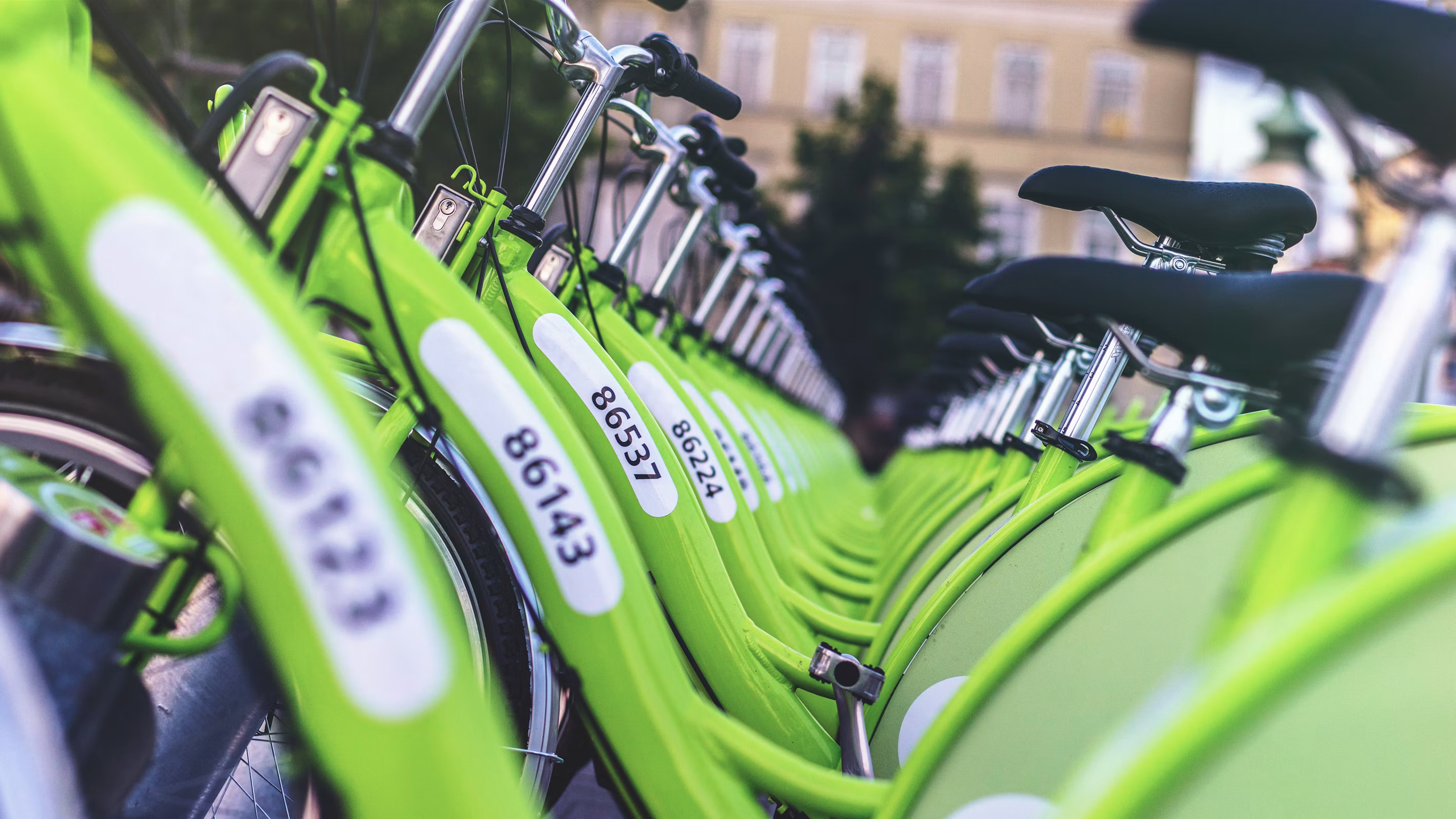
And the same goes for bicycles too. Not just the urban rental bikes that are expanding through Scotland, but for all communities in Scotland. I’m trying to design a modular system whereby any community can plug in their demographics and the system would tell them they need a pod containing X vans, Y cars (including accessible vehicles), and Z bikes (including cargo bikes) and would then cost it up for them. The vehicles could then be provided by a national transport agency, with funding from the Scottish National Investment Bank to support it until it becomes self-sustaining.
I think part of the problem is that we too often have the motivation for better public transport backwards. We look at current demand and then try to match it as best we can. If the Scottish Government wants to hold to its stated principle of encouraging active travel as the primary mode of transport, followed by public mass transit, with private cars only being a last resort, then it has to first build the transport network required to make that world the easiest and cheapest option. If they build it, we will come.
This could be achieved with private ownership of the bike, bus, train and car networks but doing it that way means accepting that vast amounts of the investment money and even more of the money in our pockets will leave Scotland as private profits for the often foreign owned companies involved. To avoid that, to make it easier for the public investments to reach the greatest public good and, above all, to ensure that the returns on those investments stay in Scotland and can be recycled into expanding and strengthening our transport sector, the future of transport – at all levels – should be public transport.

Discover more from The Common Green
Subscribe to get the latest posts sent to your email.

