Six more ideas to revitalise the high street

“Look at the sky: that is for you. Look at each person’s face as you pass them on the street: those faces are for you. And the street itself, and the ground under the street, and the ball of fire underneath the ground: all these things are for you.” – Miranda July

This blog post previously appeared in Common Weal’s weekly magazine. Sign up to our Daily Briefing and Weekly Magazine newsletters here.

If you’d like to support my work for Common Weal or support me and this blog directly, see my donation page here.

A photo of an above-shop flat in a high street in Glasgow. The building, apart from the shop, is entirely boarded up.

Andy Burnham’s tenure as UK PM hasn’t exactly been a fast take-off. He’s kept many of the more objectionable policies from the Starmer government and his ministerial appointments have been a mixed bag. His attitude towards constitutional reform has been similarly mixed. On one hand telling English regions that he wants to decentralise the UK, on the other telling them that he’ll centralise that power into the hands of mayors. On one hand telling Scotland that he will not discuss constitutional reform, on the other musing about codifying the UK’s constitution in a way that may give Scotland a codified exit mechanism from our voluntary union….or may make secession explicitly illegal or practically impossible.

He’s made some positive policy announcements though many of them have been cost-free or very inexpensive (at a UK level, anything that costs less than about £1 billion a year is a budgeting rounding error). One of those was made this week and while it’s small, it’s actually pretty good. He wants to make it easier for councils to regulate the opening of vape shops and betting shops so that he can revitalise high streets.

As a policy, it’s fine. Councils should have full subsidiarity over their local planning decisions and that they didn’t was a major oversight. Personally, I’d prefer that addictive products were regulated even further with things like vapes being reclassified as medical devices to be prescribed to those trying to quit smoking or, at the very least, sold in government owned stores the way strong alcohol is in many countries in Europe and elsewhere.

But if we just want to stick with better planning policy, that’s still a positive step. However, if Burnham seriously wants to revitalise high streets then there are other policies he could implement too. And yes, many of the policies I’m going to discuss are devolved issues so if Burnham doesn’t want to do them, Scotland could get on with it in his stead.

1) Redevelop high streets so that there are more people walking around them instead of cars driving through them.

One of the biggest drivers of custom to small businesses in High Streets is the ability for passers-by to just drop in. This is difficult to do if you’re driving past at 30mph and streets simply cannot be made in a way that allows for mass car parking outside the shops. Wherever this has been done, it contributes to lower pedestrian footfall and even fewer customers. Instead, converting roads to pedestrian-only or, at the very least, pedestrian-first streets allows for people to drop in to shops, even those they didn’t come to the high street specifically for.

2) Tax and regulate predatory online platforms like Amazon that push up prices and crush local businesses.

Cory Doctorow has written many times over many years about the predatory nature of online platforms like Amazon. It’s not just the ease-of-use of online shopping that means we don’t need to leave the house any more (believe me…I enjoy that too), but it goes worse than that. Amazon has a history of jacking up platform fees and forcing marketers to pay even more to ensure their product appears near the top of the search list.

Then Amazon copies their product and sells a knock-off version themselves (they can easily undercut on price because they don’t need to pay themselves platform fees, and they can adjust their own search algorithm to ensure that their products always appear top of the list). Worse, they’ve been known to enforce price controls such that if you try to sell your product in your own physical store at a lower price, they’ll kick you off Amazon.

So when you do go into the a shop, you might end up paying a price including platform fees. Rather than making goods cheaper, Amazon makes everything, everywhere more expensive, and then they still rip merchants off and steal their sales. We need to better regulate online platforms and properly tax them. Personally, I’d regulate such that a company that provides an online marketplace cannot also sell their own products on that market. They can either own the market, or they can sell through it – not both.

3) Bring vacant high-street houses back into use.

An interesting fact emerges in our increasing xenophobic politics. It is becoming received wisdom that immigrants are competing for houses and are pushing out native-born families and homeless households. This is, to put it bluntly, total crap. The problems in the housing sector are much more being driven by housing developers who drip-feed construction in order to keep their own profits high.

Another issue though is vacant housing. There are about 7,000 asylum seekers in Scotland right now. There are about 34,000 homeless households in Scotland. There are about 89,000 long term vacant homes in Scotland. This means that if we really wanted to, we could give every asylum seeker in Scotland, every homeless household TWO homes each…and there would still be more than 7,000 empty homes in Scotland.

Many of the empty homes in Scotland are flats sitting above high street shops. These are often cheaper to renovate up to appropriate standards as compared to building a brand new house somewhere – by some estimates, it might be possible renovate three houses for the price of one new one. Doing this would bring people into the heart of the high street and turn them into thriving 15 minute neighbourhoods. This, in turn, would bring entrepreneurs close to their place of work and close to their customers.

4) Pay workers enough and reduce their rent/utility bills enough so that they can afford to shop based on local quality instead of cheapest import.

Have you been feeling the pinch in terms of affordability lately? I know I have (reminder, Common Weal is almost entirely funded by small donations of an average of £10/month). Even where wages have somewhat kept up with inflation, there seems to be some data coming in that there is a shift in what we spend out money on.

This is going to be a bit of a research for me in the near future (right after a slightly different report on affordability currently in the pipeline..and another project that I’ll be talking about soon) but looking at data on what we actually spend our money on appears to be revealing that a greater percentage of that money is vanishing into rents/mortgages and energy bills. It’s no wonder therefore that we have to cut back on “discretionary spending”.

I certainly eat out far less often than I used to. And if we want a high street of local businesses, we can’t assume that they’ll be able to compete on cost with cheap imports. If we want people to buy quality goods or have quality experiences in the high street then we need to pay workers more and we need to aggressively reduce rents and utility bills so that people have more to spend and it doesn’t cost businesses so much to deliver their services.

“High Streets should be the heart of our towns and cities. They should be the places within our 15 minute neighbourhoods where we choose to go for most of our needs.”

5) More low emission zones and re-naturing of urban spaces to make them more comfortable to be in, especially during heat waves.

I was in Glasgow recently for the first time in several months and something struck me – the city was a lot quieter than I remembered. It wasn’t entirely down to reduced footfall either, the volume of traffic in the city was greatly reduced and the noise the vehicles were making was much less too. A good chunk of this is the transition to electric vehicles and legislation like the Low Emission Zone which keeps nosier combustion engines out of the area.

It also makes the air much cleaner. I remember the days working in our office in Union Street (a building that is now sadly lost to the recent fire – see the point above about regulating vape shops) and I remember getting to the end of the day with the rasp in my lungs due to the exhaust fumes. Imagine then living in that space. Air pollution is one of the biggest killers in our society and it makes even visiting a dense area like a high street simply unpleasant to be in at best and an active health hazard at worse. This goes double as the climate emergency bites further and our cities get hotter and more unsafe.

We could revitalise high streets by making them urban oases. We should Green our cities to provide shade, actively prevent heat islands and pull pollution out of the air while at the same time double down on LEZ legislation to reduce that pollution in the first place. Ignore the far-right and other climate deniers who claim to be fighting for ‘freedom’. Their promises to repeal low emission zones should be called out for what they are – policies that will kill thousands of people every year.

6) Create more deconsumerised community spaces.

I want you to think about your local area. Think about a place where you can go where you could: a) Accidentality meet someone you know. b) Stay as long as you like. c) Not have to make a purchase either to get in or once you’re there.

It’s quite likely that the place you’re thinking about is a park (unless you’re in England and it has an entry fee) or a library. It might be a museum. Maybe an art gallery? Might it even be a set of concrete steps? Does your community have any of those kinds of spaces? A major draw to the high street must be to do something other than to spend money.

We should be able to spend time there too, without having to spend money. Whatever the revitalised High Street has – men’s sheds, drop-in centres, community kitchens, art galleries, maker spaces so that locals can make art for the gallery, or whatever – we should be able to enjoy ourselves there in a multitude of different ways.

Conclusion

As hinted above, many of these suggestions are actually issues devolved either to Holyrood or to local authorities so, in Scotland, they aren’t Andy Burnham’s to do. This doesn’t mean they shouldn’t be done though. I’ll even throw in a secret seventh idea – one perhaps a bit more radical as I don’t necessarily approve of the gambling aspect within it.

In 1950s Taiwan where businesses were largely dealing in cash and were hiding their sales volumes to avoid tax, the government brought in an “invoice lottery”. Customers would get a lottery ticket printed on their receipts that would pay out a share of revenue from business rates. Now customers had a vested interest in businesses creating an official paper trail and revenue shot up – more than paying for the lottery. The scheme is still popular to this day.

With efforts to part-devolve VAT to Scotland still underway, perhaps we could do something similar. Perhaps Scottish-owned high street businesses could be registered for a similar state-owned invoice lottery – shop Scottish, maybe win a prize! As I say, I’m not keen on gambling myself, but it might well be a good nudge to choose a local high street shop over a bigger chain, even one next door.

High Streets should be the heart of our towns and cities. They should be the places within our 15 minute neighbourhoods where we choose to go for most of our needs – not just our shopping but to meet people and take part in our community. Letting them rot vacant or, worse, letting them get homogenised under the crushing weight of private equity does us no good as a society or for our economy.

Andy Burnham has started his tenure with a series of small but generally positive steps. He’s going to have to ramp up beyond the small if he wants to get anywhere (hint: calling a COBRA meeting to discuss the English drought and heatwaves and coming out after with a proposal to consider banning disposable BBQs isn’t looking beyond the small) but if he’s willing to make those small steps or even just a large series of those small steps then we could get somewhere positive.

And if he doesn’t, well – maybe Scotland should stop waiting for him to walk and start running ahead instead.
John Swinney Is Acting Like a Climate Denier

“Adults keep saying: “We owe it to the young people to give them hope.”
But I don’t want your hope.
I don’t want you to be hopeful.
I want you to panic.
I want you to feel the fear I feel every day.
And then I want you to act.
I want you to act as you would in a crisis.
I want you to act as if our house is on fire.
Because it is.”
– Greta Thunberg

This blog post previously appeared in Common Weal’s weekly magazine. Sign up to our Daily Briefing and Weekly Magazine newsletters here.

If you’d like to support my work for Common Weal or support me and this blog directly, see my donation page here.

There was a time when Scotland was proud of its climate credentials. The first national government in the world to declare a Climate Emergency, followed by many of its local councils. Setting ambitious, legally binding targets to reach Net Zero well ahead of the promises being made by peer countries. Even being the first nation in the world to officially admit that the Global North had a responsibility to repair and compensate Global South nations because of the damage we had and were causing to them.

I will grant you that Common Weal has been rightly critical of the actions that proceeded from these words. You should always watch what a politician does rather than what they say.

Scotland declared a Climate Emergency, then tried to avoid changing policies to match the severity of the problem – like someone who response to their home having a Roof Fire Emergency by turning off the gas stove then going back to bed.

The legally binding targets were legally bound but with no clear policy pathway to meeting them. The climate promises made, if added together, would not have created a Net Zero Scotland and we all knew that promises would be broken along the way so that the actual additive impact of actions would fall short by even further.

And while Scotland did put some cash into the fund for Global climate loss and damage, the amount was well short of the actual damage Scotland has caused. Scotland’s bill for our share of global climate emissions amount to something like £2.5 billion per year, every year until we reach Net Zero. Scotland promised a total of £100 million for the fund across just two pledges.

Still. Contrast those lofty promised followed by half-hearted actions with the current Government. This month, John Swinney has been campaigning hard on giving a massive tax bung to oil and gas companies. The same companies that have profited to the tune of trillions of pounds while setting the world on fire. The same companies that have actively lobbied to halt and prevent measures to stop them doing this. The same companies that even as they take more cash to help them make more profits are simultaneously shedding old assets in the same North Sea so that they don’t need to pay to decommission them.

It’s hard to show just how much of a U-turn this is for the Scottish Government but there is one thing that illustrates this.

Donald Trump – a man who vocally denies climate change and erroneously thinks that ‘windmills’ make people poorer and don’t exist in China, while actively waging illegal oil wars in the Middle East and Latin America – also believes that oil companies are making too much money. Right now, John Swinney is more extreme on oil subsidies than Donald Trump.

We can therefore safely assume – in the absence of actions to the contrary – that despite John Swinney serving in the Governments that made those previous commitments, he is himself is acting like a climate denier. He is looking at the Roof Fire Emergency and is actively turning all of the gas hobs to full burn before going back to bed.

I know that Trump isn’t claiming that oil companies are making too much money because he’s secretly a ‘nationalise all assets’ communist who has a strong moral conviction in public good. It’s because he wants the money for himself because if he isn’t personally benefiting from any ‘deal’ then he thinks he’s being taken advantage of and the last thing he wants to be is a ‘loser’.

“Our Common Home Plan remains the most comprehensive blueprint for a Scottish Green New Deal.”

Swinney doesn’t have this excuse though. He should know better. Actions speak far louder than words though and right now we’re seeing the actions of a man calling for oil companies to be able to make even more obscene profits at the expense of the planet at the same time that wildfires are raging through the Cairngorms and heatwaves have killed thousands of people in Britain this summer alone (never mind the thousands more across Europe and even more globally).

I know he still claims to cling to the policy that he’d only approve of new oil and gas extraction if it met certain “climate criteria” but he is yet to lay out what he thinks those criteria would be and whether he thinks any new extraction would pass it. What, precisely, does he think a “Net Zero” oil well would look like?

If I’m wrong and John Swinney is not a climate denier, if he does, in fact, still believe that we’re living in Climate Emergency and that emergency has only gotten worse since his government declared it, then I expect to see another set of actions. I expect him to endorse Monica Lennon’s proposed Ecocide Bill when it returns to Parliament and then to start aggressively prosecuting people who are committing ecocide. I expect him to align all public policy with what the science says Scotland must do to meet our obligations under the climate emergency.

Common Weal has already shown what he can do. Our Common Home Plan remains the most comprehensive blueprint for a Scottish Green New Deal. Following it through to its conclusion would lead us to a world where oil barons no longer have the power to lobby politicians for their own profit because that world simply won’t contain oil barons. This is, of course, why those oil barons continue to try to make sure politicians don’t take those actions.

Right now, John Swinney is taking the actions of a climate denier on behalf of those oil barons. If he wants his political legacy to be something other than that, he knows what he needs to do.

England isn’t going to steal Scotland’s water

“A lie can run round the world before the truth has got its boots on.” – Terry Pratchett

This is an original post, not published elsewhere. If you’d like to support my work for Common Weal or support me and this blog directly, see my donation page here.

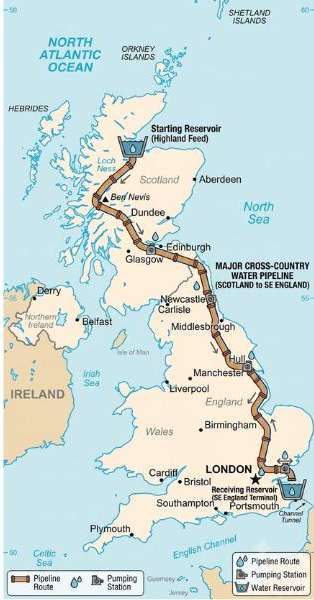
A viral image of an OS-style map showing a water pipeline running from Inverness to London

There’s an image going viral around Scottish nationalist circles right now about hypothetical plans to build an aqueduct to move water from Scotland to England. There are grains of rationality behind it. England is suffering widespread and worsening droughts due to climate change, Scotland still has reasonably abundant water and low demand, at least one UK Prime Minister has actively floated the idea in the past, and there is a long history of Scottish resources being exported from Scotland without the people of Scotland being adequately compensated.

The problem with this idea is that it won’t work – the physics is against it.

For water to flow under gravity, there needs to be a minimum gradient. Current British water pipe standards suggest about 1:100 as a rough rule of thumb – for every 100m the conduit runs horizontally, it needs to drop 1m vertically. The shallowest Roman aqueducts ran at 1:1,000 though they clogged up pretty quickly without constant maintenance. The longest Roman aqueduct – about a 5th of the length of this proposal – had a gradient of about 1:660 along much of its course.

The straight-line distance between Aberdeen and London is 720km. This means the pipe at Inverness would need to be between 720m-7,200m above sea level to drop the water down to London. If your reservoir is on top of a Munro and you can build like a Roman, you might make it so long as there are no other hills in the way. If you build to British water standards, I doubt you will.

Ah, but we have pumps! Pumps can lift water back up so you can make many small steps down instead on one large one. Yes. That’s the second issue. Pumps cost energy to run. To lift 1,000kg (1 cubic metre – enough for one household for 2-3 days) of water from sea level to between 720m and 7,200m and to transport it at a rate of 1 cubic metre per hour, will cost you between 2kWh and 20kWh. It doesn’t matter how much that costs or whether you get the power from fossil fuels or from solar panels, you still need that power.

To desalinate 1,000kg from sea water in the South East will cost you between 1kWh and 3.5kWh per cm/h.

Therefore, to make an aqueduct from Scotland to England economically viable [See Note] we need a) the capital costs of the longest aqueduct in the UK to be massively lower than that of a bunch of desalination plants and b) to build the pipes more efficiently than current British water standards.

And this is before we consider that a more effective means of supplying demand might be to introduce better, more local resource efficiency measures, to build more reservoirs to store water for the dry seasons or to nationalise the private water companies and prosecute the former directors to recover the costs to repair the leaking pipes.

We also need to consider that a transnational water conduit that the SE absolutely requires is going to be an absurd national security risk given that it could be burst open by a single drone anywhere along its length. Desalination plants are already vulnerable as we can see by the war crimes currently being committed by the US and Iran to that effect, but at least they can be distributed so that taking out one still means that some water can flow.

So no. England isn’t going to build an aqueduct to transport all of Scotland’s water away. It’s going to be much easier for England to build power cables to transport away Scotland’s energy to feed their desalinators instead.

Note:- There are extremely long water pipelines in the world – the longest feeds from a pressurised fossil aquifer so has a degree of head lift that surface water does not and others tend to drop down from mountains rather higher than Scotland’s.

There are also extremely long, economically viable pumped oil pipelines. Oil costs between a hundred and a thousand times more than water on a per litre basis, so the economics of energy use are very different.

Performative Cruelty over asylum hurts all of us

“Evil begins when you begin to treat people as things.” – Terry Pratchett

This blog post previously appeared in Common Weal’s weekly magazine. Sign up to our Daily Briefing and Weekly Magazine newsletters here.

If you’d like to support my work for Common Weal or support me and this blog directly, see my donation page here.

Buried under the higher profile news that the UK is embarking on a new push of ever-greater militarism – aiming to spend more than twice as much than it used to on the military and aiming to spend more than £10 on war for every £1 it will spend on foreign aid – is a new goal of further discriminating against asylum seekers and refugees, including those driven to flee their countries to the UK due to the UK’s own policies of spending more on war and less on aid.

The new plan is that there will be an additional tax placed on refugees who have had their asylum claim accepted that will see them bear a completely arbitrary debt of £10,000 to be paid back after they start working and earning and with any future application for indefinite leave to remain or citizenship blocked until the debt is paid.

Let’s start with the language used in the reporting around this. The policy is said to target “people granted asylum”. We have a word for people who have claimed asylum, found to have a valid claim and then asylum granted on that basis. They are refugees. This is important. Such is the dismal state of the public discussion around migration that far too many people hear the word “asylum seeker” in a manner that rhymes with “illegal migrant” and this is starting to bleed into the rhetoric on legal migrants too. There are politicians in Parliament right now who have made statements that would, if they became policies, would make it difficult or even impossible for my family to remain in this country safely.

Rather than resist the extremes of the right in the UK, the current Labour Government seems to be chasing them instead.

The full announcement of the proposed changes to asylum are here and do go beyond just that additional and arbitrary tax on migrants. Other punitive policies include significantly narrowing the definition of “family” for the purposes of human rights protections (did you flee a country with an uncle who is your only surviving relative after the war? You’re no longer “family” in the eyes of the UK Government), making it easier to subject people to slavery if they’ve found themselves with even a short custodial sentence in the UK (perhaps even due to a crime commit at the compulsion of their enslaver?) and by introducing a “legal route” to asylum that can only take place via individuals or organisations “sponsoring” a claimant which will almost certainly mean that those without the power to win a sponsor will be least able to claim asylum that they need.

There have also been proposals for annual caps on the number of admissions meaning that if you seek asylum then your ability to reach safety might depend on your arriving in June rather than in August. Welcome to Refugee Hunger Games, currently accepting applications from Districts Three through Six exclusively. Applicants from all other Districts, better luck next year!

Separately from this announcement, the UK is now also planning to bring in “age-verification technology” that they already know, from testing it, will result in children being falsely classified as adults and being stripped of their asylum rights. They also know that the tech is worse at distinguishing children from adults when the subject is Sub-Sarahan African compared to Eastern European and if they are female rather than male so this means that they are planning to bring in this tool despite knowing that it contains inbuilt, systemic racial and gender biases.

“Asylum is a right for all of us. You are not much more than one bad day away from becoming a refugee.”

Back on the £10k “success” fee for asylum seekers who become refugees. The fee itself appears to be arbitrary and only tangentially linked to the costs of supporting someone during their asylum process. That process itself can be entirely variable depending on whether someone is housed in a social house within a community, in a military barracks or in a privately run hotel that is squeezing the government and its residents for maximum profit extraction. It also entirely depends on the length of time it takes to process an application. The cuts to the Home Office over many years (likely to get worse now that Starmer is asking for even more cuts to public services to fund his expansion to the military) mean that the rising number of asylum seekers in the UK right now has as much to do with the failure to promptly process their cases and convert them to refugee status as it does with the number of people arriving. It would be entirely unfair to put the burden of “paying” for the extra costs of a service if the delays that increase those costs are due to the government, not the person.

If the £10k figure has been arrived at as a kind of average cost per applicant across all applicants though then it serves as a tacit admission from the Government that the actual cost of the asylum process is relatively small. The reporting says that the total cost of the asylum system is about £4bn per year (and this sum is likely to rapidly decline in coming years as we come off the peak of the last spike in claimants). Starmer casually announced this week that he wants to add almost four times that to the military budget. If the entire burden of these costs were placed on income tax payers alone (they aren’t. Income tax isn’t the sole tax in the UK) then this would mean that, on average, an income tax payer would see about £120 a year of their income tax go towards supporting asylum seekers and about £450 go towards Starmer’s military budget increase (on top of what is already being spent on war).

Not that the £10k repayment will actually save the Government or taxpayers any money. The Home Office’s own policy and financial assessment says as much – and their assessment of the stripping of slavery protections are likely to cost more money than they save due to the inevitably successful lawsuits.

If the problem of asylum seeking is that it costs too much money per seeker (and assuming that the problem isn’t actually that Centrist politicians are afraid of right-wing competitors courting racism and dividing society against marginalised groups) then there is a much, much better way to allow asylum seekers to support themselves while waiting on the Home Office to get its act together and that is to remove the prohibition that prevent asylum seekers from working. If people can support themselves and their own accommodation then the Government doesn’t need to spend so much money housing people in barracks or hotels.

Asylum is a right for all of us. You are not much more than one bad day away from becoming a refugee. It’s not just being married to an immigrant that brings this fact close to home for me. If you are a donor to Common Weal (if you are not and would like to, you can sign up here) then you pay me to agitate against the state. Our support for Scottish Independence is not just a political position. In some countries, doing what I do for Common Weal would be illegally promoting sedition and would be punishable with anything up to lengthy prison sentences or even capital punishment. I am literally only a bad government away from having to seek political asylum too.

This is why I’m so strident on human rights more generally. You cannot limit rights for one human without limiting them for every human. The UK is travelling a very dark path by playing the game set by right wing extremists. It only ever leads to an end where some people are declared to be less human than other humans, or to not really be human at all.

Burning Down The House of Cards

“What are the odds that people will make smart decisions about money if they don’t need to make smart decisions—if they can get rich making dumb decisions?” – Michael Lewis, The Big Short

This blog post previously appeared in Common Weal’s weekly newsletter. Sign up for the newsletter here.

If you’d like to support my work for Common Weal or support me and this blog directly, see my donation policy page here.

Image Credit: Dominic Alves

Rachel Reeves has signalled that she is “open minded” about the banks lobbying her to repeal regulations that came in after the 2008 Financial Crash. If she does, she will be accepting responsibility for the next one the banks inevitably cause.

One of the most important films dealing with the financial sector since the 2008 Financial Crash was 2015’s The Big Short. Comedic, irreverent and outright scathing of those involved, yet it remains one of the most incisive explanations of the 2008 Financial Crash and it managed to make the intentionally obscure world of financial alchemy accessible to the lay person. I’d go as far to say that it did for the idea of ‘sustainable investment banking’ as the films Threads and The Day After did for the idea of a “survivable nuclear war”.

If you haven’t seen it, please do so and pay particular attention to the scene explaining the concept of “synthetic CDOs” – where investors could effectively gamble on the possibility of you defaulting on your mortgage, and other investors could gamble on whether or not those investors will win their bet, and more investors could gamble on the outcome of those bets…all without knowing anything at all about your finances and the state of your mortgage.

One of the things that made these ‘financial instruments’ so destructive was that the ‘investment’ side of the banking sector – the bit that involves people effectively gambling amongst themselves with money that maybe was theirs and maybe wasn’t – was entirely leveraged on the ‘retail’ side of the banking sector – that’s the bit where you put money in your savings account and ask the bank for a mortgage to buy a house – but was completely divorced from it to the point that one side didn’t understand what the other side was doing.

When the housing boom of the early 2000s came to an end in late 2007 and people started defaulting on mortgages, this would have normally been tragic for those losing their homes and a sign of a substantial economic recession but would have ultimately resulted in a bounce back. But all of those ‘investment firms’ sitting on top of the sector were gambling with money that they ‘knew’ was ‘safe’ (because ‘safe as houses’) despite the houses not being nearly as safe as people assumed.

Not just assumed. The way the CDOs were structured made it functionally impossible for anyone to actually assess the risk of their failure. Because it was impossible to work how and if they might fail, the credit agencies declared them to be safe (yes, really) which encouraged banks to pile money into them.

It got so bad that the investment sector was gambling with something like $20 for every $1 actually involved in the mortgages. The investment gambling sector was many times larger than the value of thing they were gambling on. The liabilities on the banks ‘if’ their sure bet failed reached the point of being larger than the GDP of the countries they were based in.

It would only take a small increase in the percentage of mortgage defaults to utterly bankrupt the banks. An increase that might be caused by investment bankers encouraging retails bankers to take on ever riskier mortgages (with ever higher profit margins), paying exorbitant bonuses to bankers who could sell larger and larger mortgages to people who couldn’t afford to pay them.

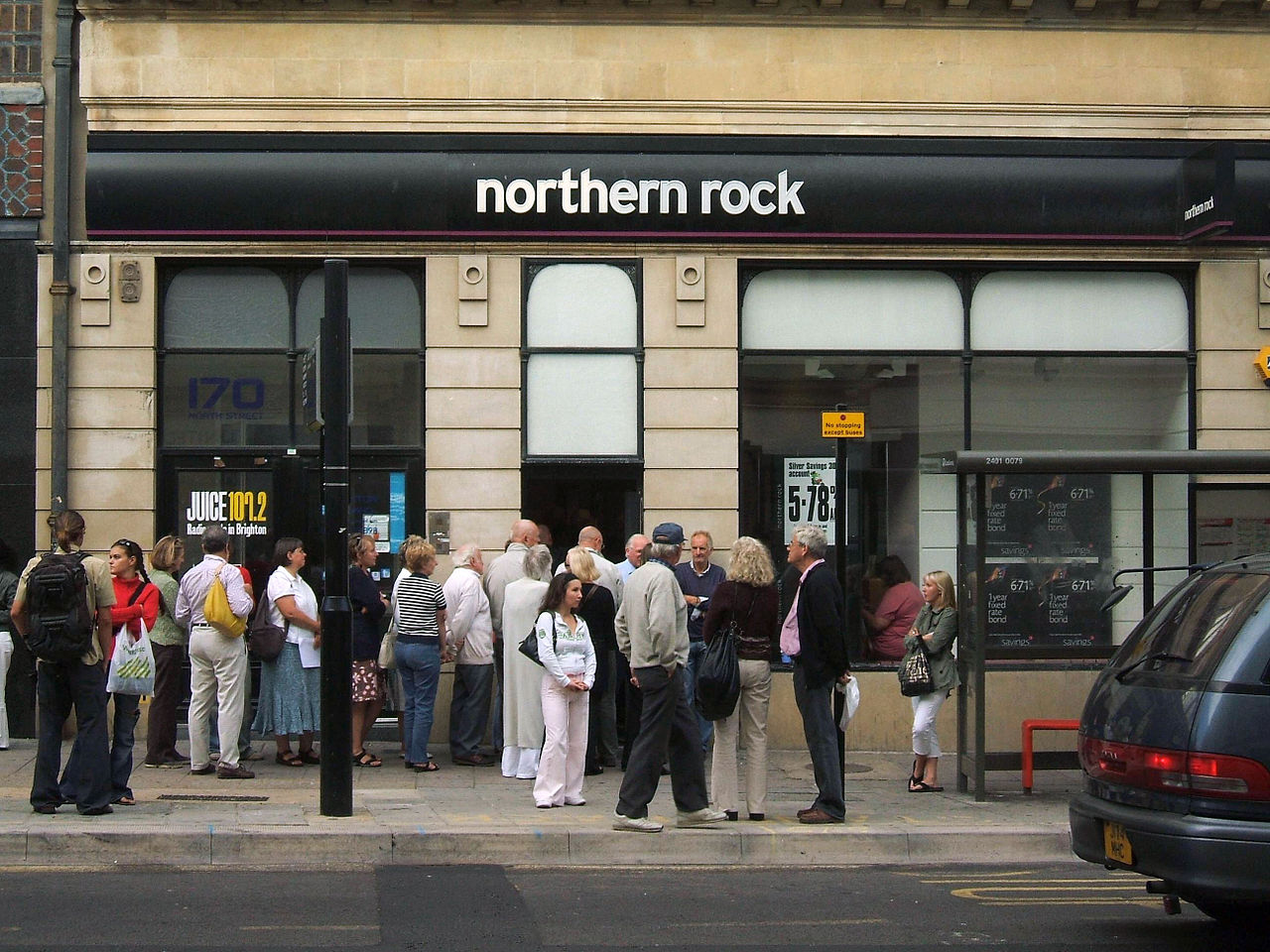
Which is what happened. And the backlash threatened to pull down other sectors of the economy because the bankers weren’t just gambling on mortgages but on everything just about up to and including whether or not the sky was blue and the fact that the investment wings were entwined with their retails wings meant that if their investment bank failed, the ATMs on the high streets could be shut down too (runs on banks like Northern Rock showed the visceral reality of people faced with losing their savings because of someone else’s mistakes).

Continue reading

The Lie Under The Nuclear Promise

“Ours is a world of nuclear giants and ethical infants. We know more about war than we know about peace, more about killing than we know about living. We have grasped the mystery of the atom and rejected the Sermon on the Mount.” – Omar N. Bradley

This is a rough transcript – edited for text medium – of the speech I gave at Scottish CND’s fringe meeting at the STUC Annual Congress on April 29th, 2025.

If you’d like to support this blog, you can throw me a tip at my Ko-Fi.

yellow and black road sign

When I was invited here, I was given a very broad remit for the topic of discussion. I thought I was going to talk today about the economics of nuclear bombs perhaps by way of talking about opportunity costs of investing in nuclear weapons – and what we could be building instead. Or maybe I’d talk about the cost of rebuilding a nuked city – though the images we’re seeing in real time from Palestine show that those costs can be visited upon humanity without us splitting a single atom. But when I sat down to decide what to actually say, something else came to mind entirely.

Here is my proposal for discussion: It is possible for an economy the size of the UK’s to sustain a civilian nuclear power sector without nuclear weapons. It is not possible for it to sustain a nuclear weapons sector without civilian nuclear power. Therefore, when politicians claim to back new nuclear power – especially in Scotland – despite renewables being cheaper, more effective, cleaner, faster to deploy and more secure, what they are actually doing is trying to shore up support for nuclear bomb infrastructure but they know they can’t say that.

To give a bit of a back story about myself and how I very nearly became an example of that proposal in action. Some here might know that I’ve not always been a policy wonk.
My degrees are in physics. I have a Masters in Laser Physics and Optoelectronics and a PhD in two-photon fluorescence with applications in distributed optical fibre sensing (don’t worry – no-one else understands it either).

Back in 2010, I was giving a lecture about my PhD work in London and got talking afterwards with someone who turned out to be from AWE Aldermaston. They were interested in some of the “extreme environment” applications for my research but amusingly, we had to cut the conversation short when he said “I don’t think I should say any more in case you start working out some secrets”. Probably for the best, though I’ll never know if my next thoughts were correct or not…

The point of that story is that I could very well have gone down that route. Several of my friends went into conventional military engineering. A couple went into civilian nuclear – including one who had to leave because he wasn’t willing to give up a dual citizenship for a promotion.

If we only had the couple hundred jobs sustained by the bomb sector, why would unis run those physics courses? As my friend Robbie [Mochrie] on this panel can attest – would he be teaching his courses if there were no jobs for his students to go into?

Where would the physicists and engineers who didn’t get those jobs go? Sure…some might become policy wonks…but while I love my job, I didn’t need to become a laser physicist to get it.

As an analogy, imagine trying to plan for an oil company and someone magics away all of the world’s plastic but nothing else changes. You’d lose a tiny fraction of your customer base but you’d still be selling oil to all the people with cars and gas boilers. You wouldn’t see much change in your business model.

A nuclear bomb sector without a civilian nuclear power sector is a bit like trying to run an oil company when all the cars are electric, the boilers are heat pumps and we recycle all of our plastics. The economics don’t work.

So bear this in mind when the politicians talk about bringing new nuclear power Scotland. There might well be a case for it – I’m not ideologically against it. But renewables are so cheap and Scotland’s potential so great that we don’t need that kind of civilian nuclear sector here. Unless…they want them here for the reason they know they can’t say.

Tariffs for Penguins

“Well, whiles I am a beggar I will rail,
And say there is no sin but to be rich,
And being rich, my virtue then shall be
To say there is no vice but beggary.
Since kings break faith upon commodity,
Gain, be my lord, for I will worship thee.”
― William Shakespeare, King John

This blog post previously appeared in Common Weal’s weekly newsletter. Sign up for the newsletter here.

If you’d like to support my work for Common Weal or support me and this blog directly, see my donation policy page here.

white and black penguin on snow covered ground during daytime

Note: This article was published on April 4th and the situation has developed substantially since then with the tariffs on most countries (with the notable exception of China) being reduced to 10% for the next few weeks or until Trump burps out some other policy after breakfast.

Trump’s tariffs are the product of a person who doesn’t understand the levers they are pulling, but the UK responding as if we achieved a victory is a flat out lie.

Donald Trump cannot conceive of a “positive sum game”, that is a deal where both parties end up coming away better off than they were before the deal was made. Collaborative community action is a positive sum game when the whole of the community is greater than the sum of its parts (watch once of those “Alone”-style survival programmes to get a glimpse into what true “individualism” actually means).

Trump believes that the only deal possible is a zero-sum game. If there is a “winner”, then there must be an equal and opposite “loser”.

Trump is also deeply narcissistic and believes that if he can perceive you “winning”, then HE must be the “loser” and that cannot be allowed to stand. In his “Art of the Deal”, a “fair” deal is one that he wins.

Now that the world is “fair” again, any attempt by any nation to apply a retaliatory tariff or other sanction will be met with fire, fury and injustice.

Don’t worry if you disagree with his logic or his assumptions here. The key to understanding the trade tariff announcements this week is not whether or not you think he’s right but whether or not HE thinks he is.

Sir Keir Starmer thinks he has won a diplomatic coup. That the “Special Relationship” has saved the UK from the wrath of Trump’s tariffs – at least compared to the EU. The UK got hit with a 10% tariff, the EU got 20%. This, if you watch the UK Government aligned media or commentators, is a sign that all of the begging and grovelling for concessions and special privileges helped take the edge off of a bad situation. Keir Starmer believes that his strategy is a vindication and that we must all “trust the process”.

Sir Keir Starmer is wrong. His actions played absolutely no role in how the tariff was applied to the UK. He could have begged harder and utterly prostrated himself in front of the golden throne. Or he could have stood straight and pushed back. It wouldn’t have mattered. Sir Keir Starmer is an irrelevance to Trump.

With a few exceptions like Trump’s hatred of foreign cars and the fact that these latest tariffs appear to be additional to the tariffs put on countries like China and Canada previously, the calculation of the rate for each country was disturbingly simplistic. For countries where the US has a trade surplus in goods (but not services – this will be important. Trump doesn’t believe that exports like Holywood movies, Microsoft Office subscriptions or licensing deals to produce goods outwith the USA under the Coca-Cola or McDonalds name are worth anything to the US), the rate is 10%. For countries where the goods trade balance is a deficit (i.e. a higher value of goods from country X enter the US that American goods leave for country X), then they took the value of the trade deficit (import value minus export value) and divided it by the value of imports. If a country sells $100 of goods to the US but only buys $60 worth back, then $100-$60 / $100 = 0.4, so they get an 40% tariff. Except Trump then halved the values above the 10% floor because he’s “being nice” (which, of course, undermines his stated purpose of the tariffs being the minimum amount required to restore a trade balance – once again, it doesn’t matter if you see why he’s wrong, only that he doesn’t).

This is why countries like Madagascar and some of the world’s poorest countries are high on the list. The largest single item that Madagascar exports to the USA is vanilla – one of the most valuable spices in the world at around $83 million per year. Goods experts from the USA to Madagascar are comparatively sparse. There isn’t much that the US can send that they can’t get from somewhere closer and, more crucially, high value goods are of limited value to a populace who can’t afford them. Madagascar isn’t “ripping the USA off”. They’re just selling spices that the USA is about to realise they used to really enjoy.

Other anomalies abound like the mention of sub-national states like the Falkland Islands and France’s “we don’t call them colonies any more” territory of St Pierre and Miquelon that sits off of Newfoundland in Canada. There are two main theories why these substates are included. One being that some Musk-ish techbro made the list by asking Grok or another chatbot for a “list of countries” and it returned a list of countries that have a country code top level internet domain like .uk or .eu (though if they did, I’m surprised that they had the awareness to remove .su so they didn’t try to apply a tariff on the Soviet Union despite America being somehow completely unable to export ANYTHING to them for going on 35 years now). The other is that they just copy/pasted the CIA Factbook list of notable polities which includes several sub-state territories of various kinds. (Fun Fact: I had to do this precise kind of filtering while writing our Profit Extraction paper because the World Bank’s database I used also includes various substates, suprastate regions like “West Africa” and multiple nations that no longer exist but did exist when the Bank started tracking their data).

The omissions are interesting too. Russia and Belarus were omitted “because we already have sanctions on them” but Iran – which is also under US sanctions – was not. There’s a very telling thing going on when you look at the nations that Trump is willing to break the sharpie out and deviate from the formula for.

There are two most “fun” additions to the tariff list. The British Indian Ocean Territory which is essentially exclusively inhabited by a US military base (the people who used to live there before the UK and USA ethnically cleansed them call them the Chagos Islands). The other, being widely reported, is the Australian external territory of the Heard and McDonald Islands. They got a 10% tariff as well (remember, 10% is the floor rate for countries where the US is already “winning” on trade). Major exports from these islands are…nothing. There is no trade. There are no people there. It’s mostly just penguins. Penguins aren’t widely known for their genius at negotiating international trade deals, but still somehow they managed to achieve the same level of success against Trump as Sir Keir Starmer.

And this is the core point. The Trump Trade War of 2025 has no logic to it (see Robin’s briefing this week on how nations SHOULD be applying tariffs as a means of correcting for pollution and other “externalities” that capitalism fails to pay for), it’s going to spiral worse for the countries that fight back, worse still for American consumers, and only marginally better for the countries that lick the boot to try to pick off country-specific, sector-specific or even just personal exemptions – at the cost of their own surrendering their own sovereignty to the Great Orange One.

But don’t be fooled by any of Starmer’s claims that he has steered the UK through the choppy waters better than, say, the EU. The numbers are there and plain to see. The UK got 10% not because of “winning”, or “losing”, or diplomatic ability, but because the UK simply doesn’t matter to Trump.

But still. “Trust the process”, Starmer asked us to believe, while failing to negotiate any better than a penguin.

Continue reading

DeepSunk Costs

A computer can never be held accountable. Therefore a computer must never make a management decision. – From an IBM staff presentation, circa 1979

This blog post previously appeared in Common Weal’s weekly newsletter. Sign up for the newsletter here.

If you’d like to support my work for Common Weal or support me and this blog directly, see my donate page here.

I don’t know how closely you’ve been following the developments in Generative Artificial Intelligence (GAI) lately but it’s been The Next Big Thing in the tech sector for the past few years. Even if you’ve gone out of your way to try to avoid it, it’s being crammed down your apps just as soon as the companies behind them can update them. You’ll have noticed your internet search engines adding “AI summaries” instead of giving you links to the website you want. The call centres you’re trying to navigate through have replaced overworked and underpaid scut-workers with AI chat bots that on a good day eventually pass you through to one of the remaining scut-workers and on a bad day it’ll break in ways that would be hilarious if not for the fact that these bots are being pushed into mission-critical roles too. You might even have noticed the news that Meta wanted to introduce GAI bots that would set up fake profile pages, post fake posts and then be responded to by fake comments from other bots – all in the name of harvesting ad revenue. That plan lasted less than a week, but will be back as soon as we’re distracted by something else.

Continue reading

Power For People, Not Parties

“We in the House of Lords are never in touch with public opinion. That makes us a civilised body.” – Oscar Wilde

This blog post previously appeared in Common Weal’s weekly newsletter. Sign up for the newsletter here.

If you’d like to support my work for Common Weal or support me and this blog directly, see my donate page here.

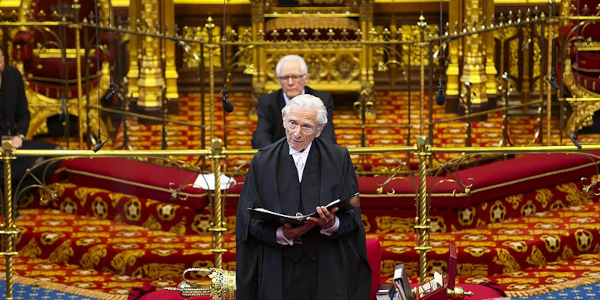
image_2024-11-18_101303424

Done badly, the only thing worse than an unelected House of Lords might well be an elected one.

Don’t worry, this isn’t a defence of the current system whereby the laws of the UK are made, in part, by people who got the job by dint of patronage to the right party, correct worship of the right deity, or descent from the right person but the proposals to reform the Lords that passed in the House of Commons this week threaten to take the closest mechanism we have of holding absolute power to account and making it even more beholden TO that power.

Continue reading

UK Budget Review – 2024

“Death, taxes and childbirth! There’s never any convenient time for any of them.” – Margaret Mitchell

This blog post previously appeared in The National, for which I received a commission.
You can read my donations and support policy here and if you’d like to throw me a wee tip to support this blog, you can here.

image_2024-11-06_110201644

The first budget of the new Labour Government and the first in 14 years is one that would have been more hotly anticipated if it wasn’t for the fact that the Government leaked so much of it to the media ahead of time – in direct contravention of Parliamentary procedure and in a way that would have seen Ministers resign not many years ago – and would have seen Labour complain about had they still been in Opposition. The Speaker rebuked them thoroughly, but – of course – lacks the power to actually sanction anyone involved (in Holyrood, the Presiding Officer could have technically cancelled the budget speech but even when the Scottish Government has leaked material like this, they’ve managed to stay on the side of a mere threat).

Nevertheless, the budget was delivered and it’s worth us taking a look at just a few of the things that happened that will affect Scotland.

Continue reading