Paying For It

“I would say is that every public-private partnership in Scotland has delivered new hospitals or new schools in Scotland on time and within budget and that’s the sort of success I want to see in every building.” – Jack McConnell, 2002
wall

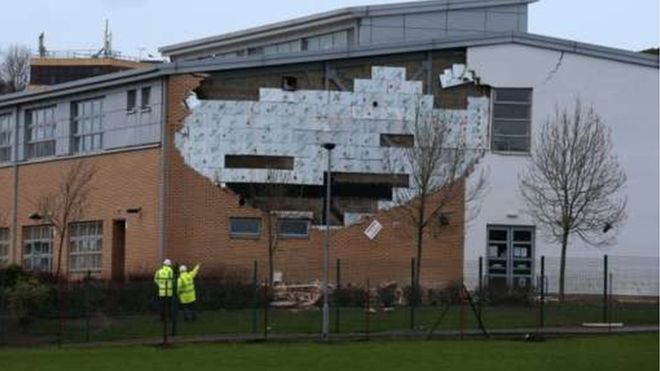
Oxgangs Primary School, 2016. Built by PFI in 2005

The dramatic news from Edinburgh in the past couple of weeks has put into sharp focus the failures of some of the finance models used by our regional councils to build schools, hospitals and other public buildings in recent years. Public/Private Partnerships (PPP), Private Finance Initiatives (PFI) and, less well known, Lender Option, Buyer Option (LOBO) Loans have burdened our councils with near-crippling financial obligations and, as we now know, have too often failed to deliver on even the basic standards of results required. Just what these deals are and why they have been used is a topic which requires a bit of discussion.

PPP/PFI

Public Private Partnerships, of which Private Finance Initiatives are a specific type, are a form of capital investment introduced to the UK in the early 1990’s by Major’s Conservative government as an alternative to tradition procurement methods of the time. In traditional public investment models a local authority might decide to build an asset such as a school itself in a purely publicly funded model or it might contract a private source to build the school and then take over the full running costs of the project afterwards. The Tories were driven by an ideological pledge to reduce the budget deficit (then known by the catchy title of “public sector borrowing requirement“) and identified the use of PFI as a means to do this.

Instead of paying for a project out of the capital budget either up-front or over the span of the construction phase, PFI would spread the costs over a medium or long term contract, often more than 20 years. This reduced the single year outlay and hence massaged the budget figures.

It was under the Labour government though that PFI really took off as it had the advantage of taking capital debts “off-book” and allowed Gordon Brown to simply stop counting them towards the deficit entirely. This gave the illusion of the fiscal prudence on which he banked much of his reputation. This was doubled down in Scotland by Jack McConnell’s Labour/Lib Dem government which led to Scotland, with 8.5% of the UK population, ending up with some 40% of the UK’s PFI funded schools.

The lie to the illusion can be found in the realisation that the private sector doesn’t work for free. These contracts almost certainly mean that the total cost to the council over the lifetime of the council is significantly larger than the up-front capital costs.
PFI

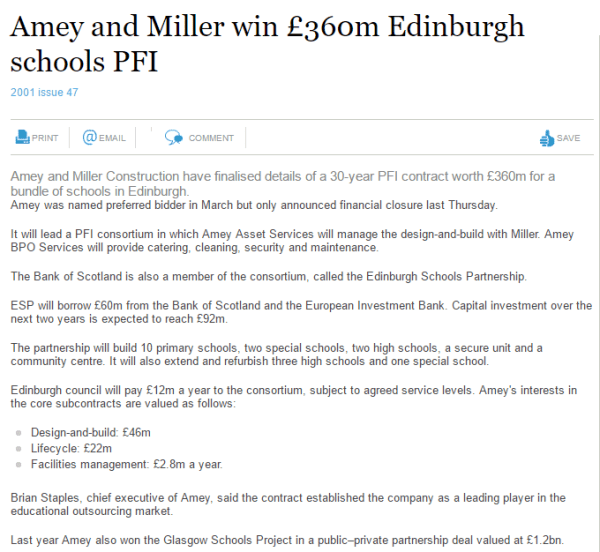
To take a recent example concerning some of the schools in Edinburgh, the private company involved will be paid £12 million per year for 30 years for a project valued at £68 million in up-front costs and an additional £84 million in management costs. Subtracting the running costs, this represents an annualised return on capital investment for the company of 10% per year. For contrast, David Cameron’s offshore tax haven shares “only” earned him about 6.75% per year.

And this doesn’t even represent the worst example of increased costs due to PFI. Contracts worth three or four times the capital investment are common. Some have been found to be worth a staggering ten or even twelve times the total outlay.

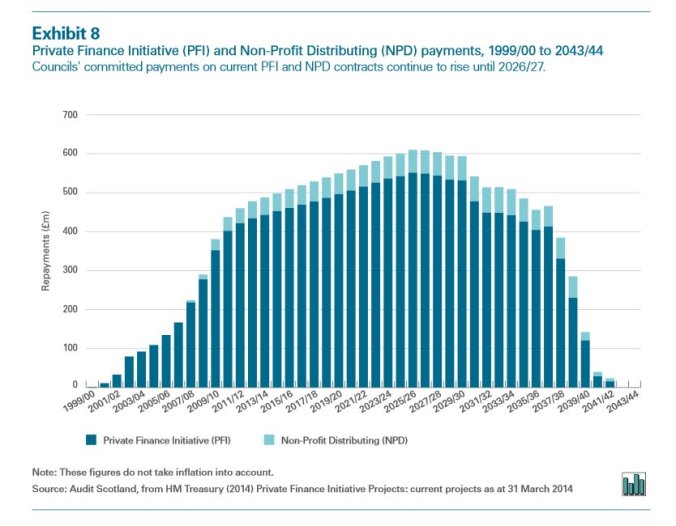
It is these ongoing payments which are particularly affecting our own regional councils and the problem is only going to get worse with the peak of the outgoing payments not expected to hit till the mid 2020’s.
PFI

Whilst one of the advantages of PPP’s often touted is the obligation for the private company to maintain the asset over the lifetime of the contract this can be a double-edged sword. One of the other “advantages”, mentioned in the UN ESCAP video above, is the “realisation of private sector efficiency savings”. That can mean “cutting-corners” to you and me. If the company is required to maintain a school for only 30 years but is then free from that obligation on year 31 then the inducement to build to the minimum possible standards to see out that contract is strong. Indeed, there is some anecdotal eyewitness evidence that exactly this has taken place. Schools which, by today’s standards are insufficient but which nonetheless stood for more than 100 years are being replaced with buildings designed to last less than a quarter of that and, has been seen, sometimes don’t even make it that far. This is not “long term planning”. It is certainly not helped by the generally low standards of our building regulations. A private company will rarely build at anything other than barely above the minimum legal standards so if we’re going to continue involving “the market” in our infrastructure projects then we’re going to need to have a discussion about increasing those standards to something more suitable for the 21st century. Whilst PFI specifically may have been abandoned in Scotland, this discussion over standards remains.

LOBO Loans

Lender Option, Buyer Option loans make up a far smaller proportion of council borrowing than PPP/PFI and have hit fewer headlines but they are still a symptom of the chronic dysfunction of our public borrowing system.

These loans were launched in 2000 as an alternative to the National Loans Fund which, whilst cheap and stable due to being funded by UK gilts, are sometimes quite limited in scope and therefore not always avaliable when required. Instead, the public body can approach a commercial bank for a long term, often more than 40 years, loan which is offered at an initially low “teaser rate” but which includes a clause which allows the lender to change the interest rate, usually upwards, are regular, often annual, intervals.

Sometimes these rate adjustments carry with them a contract exit clause but one can imagine the conversation in that case.

Bank: “So, we’re planning on increasing your interest rate from 2% to 5%. Under Section 4 of our contract, you can exit the loan by paying back the outstanding primary plus our exit fee.”
Council: “If we had that kind of money, we wouldn’t have needed the loan.”
Bank: “Ok. 5% it is. See you next year!”

These loans were often offered to and accepted by councils without the council quite appreciating the potential volatility and uncertainty that these changes would represent, which is quite understandable as these contracts have been criticised as being some of the most complex in the financial world and as our locally elected representatives aren’t necessarily chartered accountants it’s perhaps understandable that some would have simply been sucked in by those teaser rates which, at the time, undercut even those bonds offered by the NLF.

What Next?

I’m not going to pretend I have a magic solution to all of this. Some have discussed simply canceling and renationalising PFI funded assets but whilst I have some sympathy for this I have concerns also. Right now, we simply don’t know how far the record of substandard workmanship within the works built runs and, in fairness to the companies behind this disaster, they are upholding their obligation to pay the costs of repair and, if required, rebuild of these schools. If the contracts were canceled before we know the extend of the repair bill then we might simply be bailing out a huge debt. I can see some kind of scope for some kind of renegotiation over the annual payments or contract terms, perhaps with some kind of profit cap. Perhaps the companies could be offered an exit but made to put up a bond in case future issues arise although as we’ve seen from the coal and, more recently, the steel industry those bonds themselves need to be planned carefully lest they prove insufficient or evadable.

In future, a more sustainable method of public borrowing and investment needs to be examined. The Common Weal has a proposal to use a mutual limited company to leverage funds backed by Scottish issued bonds to invest in our public infrastructure which is perhaps one of the better ways to go about this issue although it is acknowledged that Scotland’s very limited borrowing powers even under the “new powers” of the Scotland Act 2015 will likely cap the viability of such a scheme. Obviously, an independent Scotland wouldn’t have that problem but until that’s sorted, we may need to think of something else.

tcg-logo5

Greening Tax

“Unless Scotland has the boldness and the courage of its convictions to use the abilities that the Scottish Parliament is going to have in the next session to have a fairer, more progressive approach to taxation…many more communities are going to find that the public services they rely on will continue to be under threat.” – Patrick Harvie

Yesterday, the Scottish Greens published our proposals for reform of both the national income tax and a replacement for the local council tax. The proposals themselves can be read by clicking on the image below but I’ll spend a bit of time here explaining how they work and what might have been missed in some of the media coverage about them.

Green Tax


First though we need to remember just what the purpose of tax is for. It’s so easy to get caught up in the arguments over how much more or less a particular tax or tax change would raise without considering the deeper impacts of what a particular tax is supposed to do.

The Principles of Taxation

Why do we tax people in the first place? It’s a substantial chunk out of your paycheck every month and there’s not one of us who has, at some point, wondered what they could have done with that money instead.

The reasons for taxation are broadly covered by three principles:

Revenue Generation:- There are many services, such as roads, emergency services, healthcare, education etc, which we, as a society, have decided are best funded collectively. We may argue over just how much is paid for in this way and how much is funded ad hoc or privately but there are vanishingly few full blown anarcho-libertarians, especially in Scotland, who believe that absolutely everything should be in private hands and that Government shouldn’t exist at any level. For everything else, taxes are collected to fund the State and its operations.

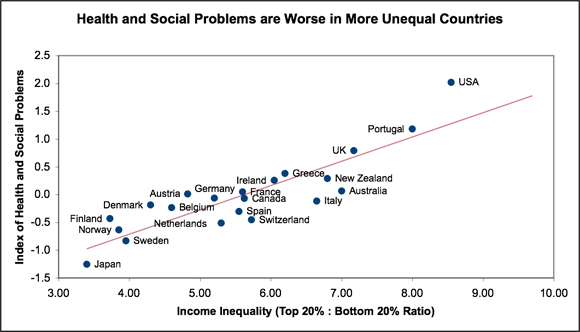
Redistribution:- Societies are rarely entirely equal at every level. Some people end up earning or accumulating more than others, some people end up not earning enough money to meet their basic needs. Some regions end up with a greater concentration of wealth than others. Some, due to size or geographical constraints (such as the Highlands and Islands) simply require more funds to deliver the same level of services than others. It is well known that more equal societies experience greater levels of wellbeing and lower levels of ill health and other negative effects. Most societies, therefore, employ tax, alongside policies such as social security and welfare, in a progressive manner such that the richer pay more according to their abilities and the poorer gain more according to their needs.

inequality

Reshaping:- This is the carrot-and-stick approach of taxation. Governments often develop policies designed to encourage their citizens towards certain activities or discourage them from others. One prominent example at the national level would be the levies on tobacco and alcohol which are, at least partly, there to try to encourage us to smoke and drink less (obviously, taxes can fall into multiple categories and the Revenue Generation aspects of these taxes cannot be discounted, especially when used improperly).

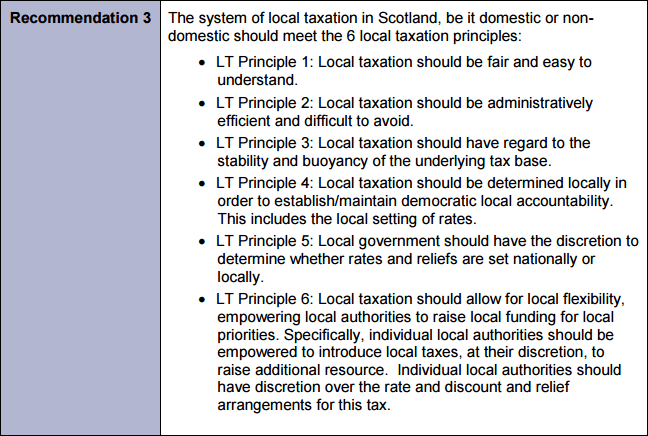
In addition to these principles on the purpose of a tax, we must consider how it is structured so that it works in an effective manner. In 2013, local council body COSLA published a report into the effectiveness of current local taxes and in it laid out six principles outlined below.

LT Prin

Essentially, these principles boil down to taxes being fair, easy to manage and employing a sense of subsidiarity whereby local powers should, wherever possible, be used to effect local solutions. Whenever discussing a potential tax, local or national, all of these principles must be upheld or accounted for.

Income Tax

SGP Tax Bands.png

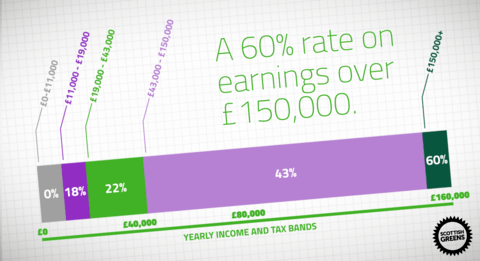
The Green proposal for the use of the income tax powers due to come with the implementation of the Scotland Act 2015 includes not just a tweaking of the rates nor the use of clumsy rebates as Labour (briefly) seem to have  considered but the full use of what powers we shall have to create new bands appropriate to Scottish income distribution.

The headlining feature of these proposals, as one may have suspected, was the inclusion of a 60% rate on earnings over £150,000.

This certainly did grab the headlines coming so soon after the SNP announced that they would not be raising the top rate past it’s current 45%. Their decision was based on this document which suggests that the “tax induced elasticity” (TIE) of the richest 1% in Scotland may be substantially higher than in the UK as a whole. Simply put, they fear that Scottish millionaires may flee elsewhere if we tax them at a higher rate than their southron counterparts. Their claim is that in the worst case scenario, enough high earners would leave that the actual revenue collected could be up to £30 million less than would be if tax rate remained as it is (one has to remember that if a top rate tax payer leaves, you also lose what they’ve paid in lower bands too).

Now, I have a couple of reasons to doubt this will impact as badly as they fear. In particular, having had a read through the book on which the UK TIE figures are based and having back-calculated their suggested maximum top-rate income tax for those UK figures, the implication appears that if the high end TIE rate the SNP suggests (0.75 compared to 0.46 for the UK) were to come to pass the maximum allowable income tax rate would be something on the order of just 30%. I would suggest therefore that the conviction attached to that worst case scenario is somewhat low as not even the Scottish Tories have went into this election on a platform of cutting the top rate of income tax.

My other reason for skepticism over this fear of tax flight in relation to internal tax boundaries is the case actually seen in the United States (In particular, as found by this paper by Young et al in their study of tax migration and border effects) where each state has far more control over many taxes than Scotland has and consequently sees quite sharp tax boundaries between states. Now this is not to say that that tax induced migration does not occur but in the words of the paper linked to above it seems to occur “only at the margins of statistical and socio-economic significance”. This appears to be true even at easily commutable borders so don’t be readily expecting a cluster of Scottish millionaires moving to Carlisle or Newcastle.
[Edit: Alternate link to the Young paper here.]

The reason for this is quite profound. As it turns out we can broadly place the richest echelons of society into to one of two groups. The “transitory millionaires” who really are just seeking somewhere to park as much of their wealth as possible without contributing much to society in general and the “embedded elites” who more closely fit that classic-to-the-point-of-cliché term of “job-creator”. These folk are the ones who have built a business in their locale and, as it turns out, it is not a simple case to uproot it and move it wholesale elsewhere (especially when higher property prices may make the operation of that business significantly more expensive). Perhaps, we in politics have been too quick to conflate these two distinct attitudes among the most well off in society. Perhaps we should instead be asking which of the two groups we would prefer to have influence our policy decisions?

On the Greens’ part, we are not making any prediction of revenue based on our 60% rate. We’re operating on the basis that our changes to the top rate of income tax will not attract any additional revenue (although the changes overall could bring in some £331 million per year) and this managed to attract some attention during the recent STV Leader’s Debate with the Tories asking what the point was if revenue didn’t change and asking how that would improve the economy. Well, we’ve seen the answer to that in the principles section above. The Green tax plan would significantly reduce inequality within Scotland. From a social standpoint, this should significantly improve general wellbeing within Scottish society and from an economic standpoint there will be benefits due to what’s known as the Marginal Propensity to Consume. Essentially, if you increase a multi-billionaire’s income by £100 then it means next to nothing to them or their lifestyle but if you increase the income or decrease the tax burden of a minimum wage worker by £100 then it will give them the ability to pay down debts or spend more on goods and services on which they would not otherwise have been able to do so. By this means, a revenue neutral tax change which decreases inequality most certainly can have a positive economic benefit. It reflects poorly on Ruth Davidson that during that debate she either didn’t know or didn’t want others to understand that fairly fundamental point.

Property Tax

Incidentally, the Young paper linked to in the previous section points out that a far more significant cause of high-earner migration than income tax is a draw towards expensive housing which is a famously immobile asset and which leads us neatly on to the second half of the Greens’ proposals.

Given how limited the set of devolved national taxes actually are and given how long overdue we have been for doing something, anything, about the Council Tax, it’s perhaps no surprise that a large proportion of the campaigning has been dedicated to those taxes over which Holyrood does have near unfettered control.

Faced with the increasingly loud rhetoric over the need for change from many parties and the cross-party consensus on the need for radical change laid down by the Commission on Local Tax Reform’s final report it’s therefore been a deep disappointment that it has been left to the Greens to be the only party to lay down a system of local residential property tax which is meaningfully different from the Council Tax. The Lib Dems have dropped their long standing aspiration towards a local income tax. RISE have stuck to the plan for an income based service tax inherited from the SSP but have appear to have opted to set rates nationally thus remove the advantages of local control. The SNP have decided to keep the present system, including the quarter century old, out of date valuations, but will increase the rate multiplier, nationally, on the top couple of bands. Labour have come up with a system of a per household flat rate poll tax with the addition of value based percentile tax (In my previous article I mischaracterised this as a banded tax due to a misunderstanding of their press statements on the topic. I was in error.) which, on the face of it, is an interesting change but their actual calculations will leave us again with a tax which is deeply regressive with respect to house value.

The Greens, however, have opted to levy a local property tax based entirely as a percentage of the property’s value. This Residential Property Tax would be nominally set to 1% of the property’s value but it will be entirely within the local council’s power to set that rate at whichever value they wish and will be coupled with a scheme of reliefs for low earners similar to the system currently in place.

Of course, such a large step change in the tax system requires careful management and people will need time to adjust their financial affairs to reflect the change so we also propose phasing in the new RPT over the course of the next five year Parliament by stepping over to the new system in 20% increments until Council Tax is fully abolished.

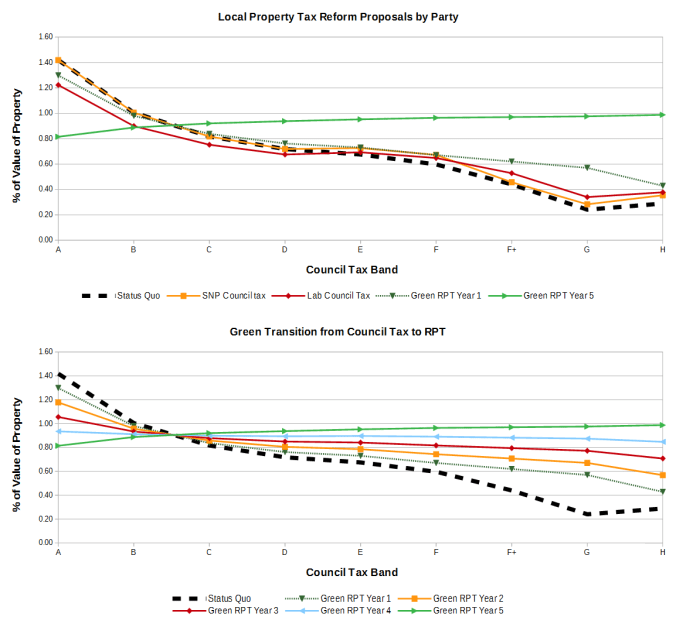
The graph below shows this transition as well as a comparison of the tax regimes proposed by the SNP and Labour as a percentage of a house’s value (RISE’s SST, being income rather than property based, isn’t directly comparable in this way).

Green RPT Both

The contrast is quite profound. Incidentally, the large change in nominally band “C” and above properties may look alarming but one must remember that the lack of revaluations since 1992 has led to many houses, some 57% of the total stock, sit now in the wrong council tax band. The house I’m currently in is a fairly graphic example of this being a band “D” house with a present market valuation of approximately £100,000. Converting from the present Council Tax to a 1% RPT would actually cut the bill here by some 10%.

Also of specific note within these plans is a system of redistribution across councils. Essentially, there are some council areas containing a lot of very expensive houses (Edinburgh, say) and some where property prices are comparatively cheap. It couldn’t be fair that one of the higher priced areas takes the decision that they could cut property taxes to a bare minimum and still fund local services, as happens in places like Westminster, whereas lower priced areas must pull those tax levers harder. Therefore, the block grant given to councils will be calculated on the assumption that they will charge the 1% RPT which will remove much of the temptation from those councils with higher property values from perpetuating the cycle of inequality. They still would have the power to reduce those rates, but they’d have to be accountable to their voters for doing so.

But what of land? Isn’t that a core tenant of Green policy? Well, herein lies an aspect of property tax which has been almost entirely missed by the media and yet lays the path towards possibly the greatest change within them. The RPT includes a slider which will allow a council to weight the RPT between taxing property and taxing land. If a council decided to, say, weight 100% towards property and 0% on land then the system would look most like the present council tax (albeit, as said, greatly more progressive) whereas if another council weighted 0% on property and 100% on land then the system would be functionally equivalent to a Land Value Tax and those who owned not just a large house but also a large estate would have to account for those holdings. In practice, many councils will seek some compromise between the two and the Green proposal lays out an example as currently used in Denmark where a typical weighting is something like 70% on property and 30% on land. Once again, localism is the key here. Council regions which are largely urban will likely wish to weight towards property whereas more rural areas, particularly those with patterns of unequal land ownership, may wish to weight towards land. Simply setting a national rate is unlikely to be sufficient or effective in every region of the country.

Conclusion

I  hope this then lays out our proposals for income and property taxation. I know. It’s a complicated issue which doesn’t soundbite very easily but we’re entering an interesting phase of Scottish politics whereby our Parliament will be getting more power than ever before and the need to use those powers effectively will become more important than ever before. Scotland Can be bolder if we want it to be.

tcg-logo5

My thanks to Andy Wightman for technical advice provided for this post. His blog Land Matters can be read here.

Scotland’s Song

Today in March with grey dawn’s break,
A nation slumbers, not yet awake.
Our dreams on hold

In Alba.

Strange is the day we await to rise,
As strange Vows fail before our eyes.
But stranger still is

This Alba.

But songs of hope we still shall sing,
By our hands that hope we shall bring,
And the sun shall shine on

Our Alba.

Song of this land, we feel your call,
Your touch gently shall yet reach all,
Soon shall we live in

Saor Alba.

tcg-logo5

Poem after “Cassilda’s Song” by Robert W. Chambers

Custom whisky glass from Glencairn

Reformers Reforming Reforms

“The present Council Tax system must end.” – The Commission on Local Tax Reform’s Final Report

Whilst we’re still just a bit too far away from the elections to get to see the actual manifestos, something resembling policy is now starting to trickle out from the parties.

Given the currently still limited nature of tax raising policy within Scotland it’s natural to focus on those areas where control is possible and since the publication and acceptance of the Commission on Local Tax Reform’s report on the need for an overhaul in local taxation in Scotland. So far, both the SNP and Labour have released their detailed plans and, so far, both have been somewhat lacking in ambition.

Continue reading

We Need To Talk About: GERS (2014-15 Edition)

Economics: The art of explaining why all of your models fail to predict either the future or the past.

GERS

Click image above for data

It’s that time of year again when everyone starts looking at the first page of a dense booklet of economic data and uses it to wildly forecast despite long known limitations in doing so. So it’s also, once again, time for me to try looking a little further to tease out some details that others might have missed.

First, to get some of the headline figures out of the way. There has been a slump in offshore oil revenue due, largely, to the crash in the oil price resulting from the ongoing economic conflict going on between Saudi Arabia and the US.

This has caused oil revenues to drop from £4.0bn in 2013-14 to £1.8bn in these current figures. And thus came sic a cry of a “>£2 billion BLACK HOLE” from certain sources…

…except…total current revenue is only down £600 million. Down from £54.050 billion last year to £53.443 billion this year. That’s just a touch over 1% of a change and is comparable to some of previous year’s “budget underspends“, thus it could even be said to be within the margin of error of budget estimates. So what is going on?

Continue reading

One Year of The Common Green

The Common Green blog just hit its first anniversary.

Initially started as a continuation of my monthly column in Yes Clydesdale’s Aye Magazine and to help support and expand on points made during my pitch as a potential list candidate in the upcoming Holyrood elections, it has grown to a rather larger audience than I had expected with over 32,000 visitors dropping by to read articles.

Several of those articles even went fairly viral, as these things sometimes inexplicitly do, with my early discussion of last year’s GERS figures, the prototype for my “We Need To Talk About:” series in which I pull some details out of under-reported stories, (look out for an updated version later this week when this year’s figures are published) and my dissection and explanation of the Holyrood election voting system doing particularly well (the latter article has even been republished and incorporated into a couple of school and university courses).

By far and away the most popular article I’ve written so far though was a take down of one of last year’s big scare stories. “We Need To Talk About: Budget Underspends” accounts for one in four of this site’s pageviews and was a reaction to the near blanket media coverage of an SNPBAD story which could have been neatly resolved by any political journalist with a pocket calculator (or, as it turned out, a Green activist without one!). Whilst it’s probably no surprise that an article in support of the SNP on a Green page is more likely to find favour among supporters than one critical of them, I think it spoke also to a deeper sense of despair with the way the media still tries to treat a Scotland which went through a political awakening and education during the indyref and is showing very little sign of letting that go yet. That story was a lesson that we’re not going to let politicians just make spurious claims any more and not question them. And we’re not going to let them get away without answering those questions either.

So thank you to everyone who helped this blog get to where it is, to those in the 110 countries and territories who have enjoyed reading what I’ve greatly enjoyed writing and thank you to everyone who shared the articles around (I get trackback links from the strangest places sometimes) and I’m glad to have helped people learn and talk about issues which would have otherwise passed us by.

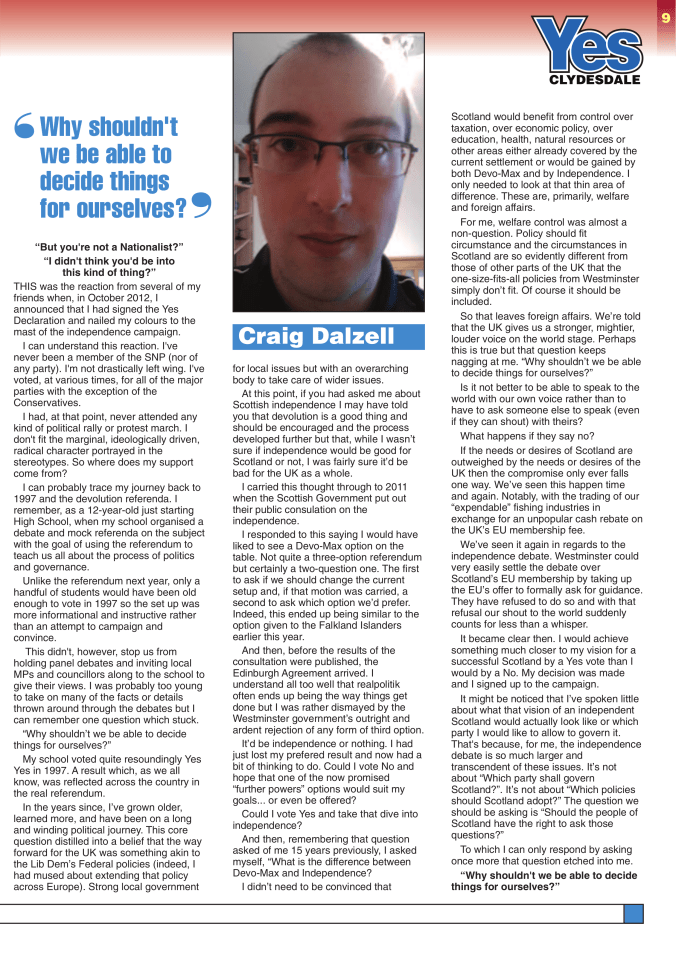
Here’s to 2016 and beyond and, as a little bonus, below is a copy of my first formally published piece of political writing (long before I had joined a political party) for the Aye Magazine back in November 2013. Final thanks to Bill Oliphant for convincing me to do it. You knew not what you had wrought.

Why Shouldnt.png

tcg-logo5

We Need To Talk About: The “Tactical Vote”

“People who think about politics every day greatly overestimate how much time the average person spends thinking about politics” – A maxim that every political activist should pin on their wall.

Wheel.png

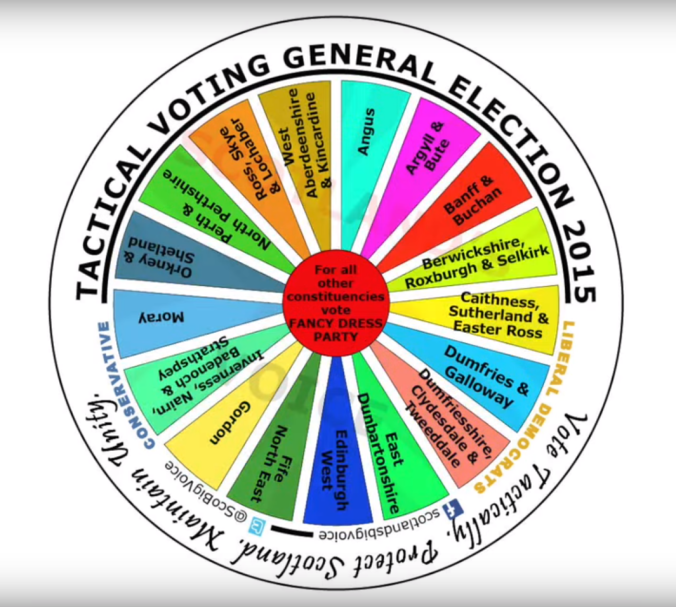
One of the many, many parodies of the #SNPOUT “Tactical Voting Wheel” seen in the run up to the 2015 UK General Election. Source: Youtube

We’re just about to cross into the single digit weeks remaining before the 2016 Holyrood elections and among a subset of the political campaigning community the inevitable debate over the “tactical vote” rumbles on. I, myself, have had a couple of fairly interesting conversations with a few such voters over the past couple of days which crystalised a few thoughts in my head about it.

Continue reading

The Devolution Journey: Part 1 – The Treaty of Union

This is Part 1 of what shall become a companion piece to my previous history of devolution and tax powers which can be read here.

As we edge closer to the the May elections and (maybe) to the passing of the Scotland Act 2015 we can continue our reflection on the process and “journey” of devolution. My last piece on the subject looked solely at the transfer of tax powers to the Scottish Government since 1999. This one will look at several of the other functions of governance and the process of the transfer of power over other important areas. To do this though, we need to look back a little further.

Continue reading

The Most Shameful Smear

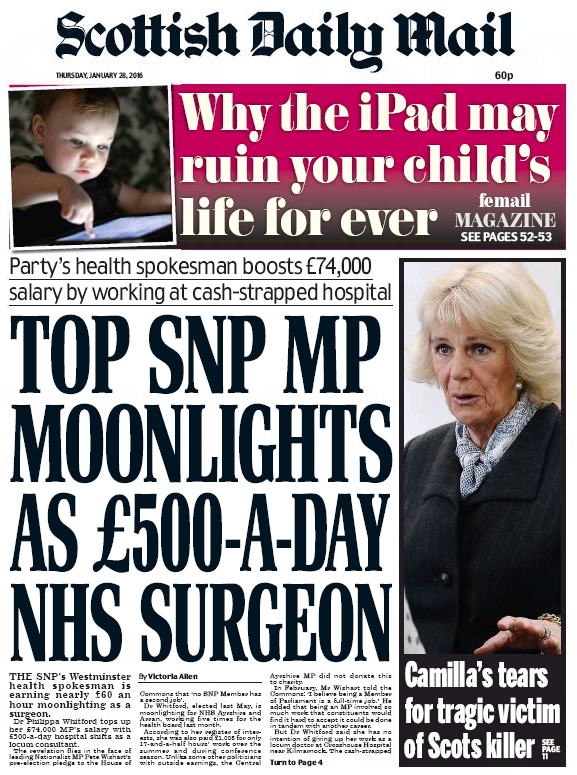
It’s (hopefully) no secret that I’m not a member of the SNP so some may question my stepping in to this current scandal. I am, however, a member of Yes Clydesdale and it was through them that I first met Philippa Whitford (in fact, it was a talk organised by our group which went viral and was responsible for launching her political career).

Through the course of the indyref I had the opportunity to sit on Q&A panels alongside Philippa and can find absolutely nothing but praise to say about her.

She is a person of incredible knowledge and inspiration who took the incredibly brave step of moving from a hard fought career in healthcare to casting herself into the thankless kindergarten where people make animal noises” which is the House of Commons.

So to today and Dr Whitford finds herself the target of the latest and lamest SNPBAD smear yet.

whitford1.jpg

The actual story is that she gave up a substantial chunk of her Christmas and New Year holiday to cover for a sick colleague. She spent 5 days saving lives while others in the benches opposite hers spend their “moonlighting” days being paid to destroy the very NHS in which she works. (As Wings Over Scotland points out, she is also compelled to work a certain number of days as a surgeon per year if she is to maintain her license to practice so it’s hardly a job she’s just doing to top up her pocket money)

A little further digging reminds us of the increasing problems with medical staff in England causing more hospitals to hire locum doctors at fees of, on average, £1,700 per day.

That Labour’s Jackie Baillie would have the temerity to be complicit in this transparent smear is just one more notch on that party’s slide into irrelevance. If even they cannot resist their urge to try to find just one more SNPBAD story then I cannot see any reason why any voter would think them worthy of being the party of opposition in next year’s Parliament.

I’d put out a call asking the Baillie and Daily Mail to retract and apologise for this piece but I know how futile that would be. I do hope that everyone, even those on the other side of the political landscape from Dr Whitford and myself, feel as utterly appalled and ashamed for the state of the press as I do. We deserve so much better.

tcg-logo5

This Could Be Home

“It seems obvious: the reason only a tiny percentage of new…buildings and retrofits aren’t green isn’t cost. It’s lack of ingenuity or knowledge of new construction techniques — architects and builders wed to the ‘same-old,’ lenders leery of anything unconventional.” – Sustainable Energy Africa

TCBH-SMALL-FB

Sign the petition or get involved here.

The Scottish Greens have launched our new #ThisCouldBeHome campaign aimed at greatly strengthening the current movements towards better land reform.

There are currently around 11,000 hectares of land in Scotland current derelict or un- or underused which, through the application of a Land Value Tax, could be freed up to build a new generation of affordable housing. Here is Andy Wightman introducing the campaign.

As the campaign points out, the current UK housing bubble is pushing rents up beyond the affordability of far too many people and those increasingly fortunate few who can scrape together a deposit and have secure enough employment to sustain a mortgage are looking with trepidation towards the day that the Bank of England starts pushing interest rates back up towards pre-2008 levels. For hard pressed people who can barely afford to pay the bills as it is, moves like this could result in yet another crash in the housing market and more families facing default, foreclosure and eviction.

We also live in a country with the second highest level of excess winter mortality of any European country north of the Alps, driven in large part by our lax building standards and fuel poverty.

For this reason, we should take this opportunity to ensure that those new houses which are built adhere to strict building regulations which push the limits of our technological abilities to ensure that energy bills and the other ongoing costs of running a building are kept at an absolute minimum. Of course, buildings are themselves often constructed to meet only the very minimum standards set by law as to do otherwise would eat into the private construction industry’s precious profit margin.

Of course, as the headline quote states, cost isn’t nearly the greatest obstacle to greener housing development and, as I have written previously, the Scottish government will soon be handed the power to borrow money far cheaper than can any bank or private company (As an alternative, the Common Weal has also pointed out that the Government has the power, today, to set up Scottish Housing Company to perform the same function) and could use that money, paid back through rents, to undercut the private industry and ensure that the highest green standards are adhered to. The precedent for this already exists in Scotland where, according to official government figures, the social rented housing stock are generally more energy efficient than private builds and contain a higher percentage of B and C grade housing (where the overall Scottish average is merely grade D). If we are willing to push things as far as we need to to reach a zero-carbon economy then a greater pool of cheap, efficient housing will force the private sector to either step up its game or step aside.

Passivhaus

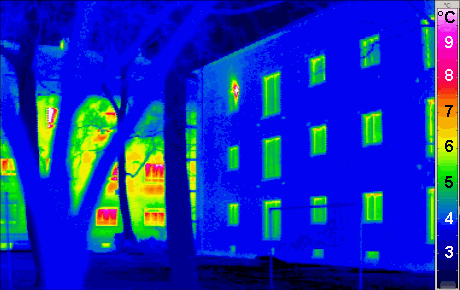
A Thermal image of an energy efficient “Passive House” compared to a more traditional, less well insulated dwelling behind it. Source: Passivhaus Institut

But how do we get everyone to A grade? One pathway can be found in the Passivhaus Standard which employs a strict understanding and approach to engineering and techniques such as solar thermal panels on roofs, underfloor ground source heat pumps, insulation throughout the house and architectural elements designed in from the start to minimise heat loss and maximise the amount of energy which can be harvested from the environment. Properly employed, these standards reduce a house’s heating requirements to below 15 kWh per square metre per year. By comparison the average Scottish house requires approximately 140 kWh per square metre per year to keep it warm. It’s no wonder so many of us struggle in winter. (Fun fact about Passivhaus, they have built a compliant dwelling now on every continent on Earth. Including Antarctica!)

With heating making up 55% of Scotland’s overall annual energy demand and only 10% of that heating coming from renewable sources (including renewable electricity) then it is clear that this is the area which, if targeted, will have the most potential to reduce our requirement to run a carbon based economy. This needs to be stressed. Whilst the Scottish Government has made great strides in pushing renewables (and despite the UK government’s increasingly hostile attitude towards them) if we only focus on meeting of our current electrical demands then we’ll still be reliant on fossil fuels for over three quarters of our energy and this doesn’t factor in the doubling of electrical demand which will come if we translate our transport system over to electric vehicles (assuming we don’t also reduce demand there too).

To achieve this may seem to require brave choices. But we can’t sustain the “same old” attitude for much longer. Pretty soon, doing nothing will be even “braver” (in the Yes Minister sense). I believe that a strong Green voice in the Scottish Parliament from May will help the government make those brave choices and your vote for the Greens in May will help that happen. As noted earlier, it’s not a problem of money or power holding us back here. Merely the will to roll up our sleeves and do it. We’ll be glad for it once we have. We’ll wonder why we didn’t do it sooner.

tcg-logo5