Extracting Oil and Profits

“No idea is above scrutiny and no people are beneath dignity.” – Maajid Nawaz

The following are two short articles I had published last week. The first, on Foreign Direct Investment, appeared in The Herald and the second, on Ed Milliband ending oil licences, appeared in The National.

If you’d like to throw me a wee tip to support this blog, you can here.

image_2024-07-15_125309614

Scotland must drop its addiction to foreign investment

Ian McConnell’s highlighting of Scotland’s continued dependency on “foreign direct investment” offers a welcome opportunity to once again explain why the policy – supported by multiple Scottish Governments – is acting to the detriment of the Scottish economy.

All investment demands an expectation of a return on that investment and the fact that the investment is coming from outwith Scotland obviously means that those returns must leave via the same route. Scottish Government figures show that since the start of devolution, more than a quarter of a trillion pounds has been net extracted from Scotland and that around £10 billion was extracted from Scotland in the most recent year we have data for. Further analysis by Common Weal shows that as a proportion of our economy, this is the highest rate of profit extraction of any of our peer nations with the exception of a handful of micro-states and tax havens as well as higher than any of the World Bank’s income groups, including the poorest and most indebted nations. Scotland, in that sense, runs an economy with European levels of economic development but with West African levels of foreign exploitation and profit extraction.

This isn’t just an issue of money. Companies that are mobile enough to invest in Scotland are mobile enough to remove that investment unless they get the political kickbacks they want (see the discussions around Scotland’s Green Freeports, for example. Or Grangemouth.) and thus present a direct intervention against our democracy. They also tend to more weakly embed jobs and skills in the economy and are more willing to leave workers on the scrapheap if some other nation decides to attract their “investments” instead of us.

The Scottish Government should drop its addition to FDI and should concentrate on building up domestic sources of investment (starting with reforms to the Scottish National Investment Bank) and should focus not on quick “GDP Growth” and accelerations of shareholder profits but on sustainable development not just of companies but of their workforces and the wellbeing of the communities in which they live.

Ed Miliband’s stance is welcome but it does not go far enough

The news that Ed Milliband has halted new oil and gas licences is a very welcome change of direction for UK politics and effectively brings the UK Government into line with what was the Scottish Government’s policy on new oil and gas in January last year. As it stands now though, the Scottish Government has backtracked on their opposition to new oil and has been extremely vague about the conditions under which it would support a ban. To be clear, it is one thing to state that you’d only support a licence if environmental checkpoints are met but if you don’t state what those checkpoints are or what a properly compliant oil licence would look like, then all you are doing is deferring responsibility for the decision either way.

The Supreme Court’s ruling last month that oil extraction must fully account for all oil emissions is significant here. Until then, a case was being built that a “Net Zero” oil rig would be one that transported workers to and from it without burning fossil fuels (Scope 1 emissions) and was powered by renewable energy instead of a fossil fuel power plant (Scope 2 emissions) but that basically washed its hands of whatever happened to the oil it extracted (Scope 3 emissions). If you bought some of their oil and burned it, that wasn’t their problem. This can no longer be the case and so brings into question the very possibility of a compliant oil rig. The Scottish Government should outright admit that either their support for oil must be ditched, or their remaining climate policies must.

As welcome as Milliband’s decision is, it likely doesn’t go far enough. He’s equally stated that he won’t revoke licences already granted but not yet being exploited nor will he shut down oil wells that are still economically producing oil. Half a decade ago in 2019, Friends of the Earth’s “Sea Change” report found that if the world is to meet its collective climate targets then not only must new licences be blocked and unexploited licences revoked, at least 20% of the economic oil in wells that are currently open must stay in the ground.

A Just Transition for workers is vital and I sympathise with Unite’s “no ban without a plan” slogan, but I fear that the politicians will stick to the easy option of “no ban” rather than what they should do, which is to bring those workers into the room immediately and help them design the plan that grants them the Just Transition they want and deserve before another political deferral forces a chaotic collapse of the oil industry and sees oil workers dumped just like their predecessors in the coal industry were.

TCG Logo 2019

Democratic Mandate

“Democracy is the recurrent suspicion that more than half of the people are right more than half of the time.” – E.B. White

This post and the research underpinning it is undertaken in my own time and outwith other political work that I do. It is presented here free to access as a public service but if you’d like to throw me a wee tip to support this work, you can here.

image_2024-07-03_181437509

It’s time to do a democracy.

Between 7am and 10pm on the 4th of July 2024, the people of the UK (well, those who are allowed to vote) will choose the next government of the UK. If polls are to believed, this could be the most significant election in almost a decade and a half though whether that is a good or a bad thing will be a subject best answered between you and the pencil in the Polling Station.

Even if no-one in your constituency has won your vote, I would still ask you to turn out and spoil your ballot if that is the best option you can think of. As someone said to me recently, not voting says that you are happy with the result regardless of what it is while spoiling the ballot tells the politicians that you’re not happy with any of the choices given to you.

If, however, you have made up your mind, remember that your chosen candidate won’t get your vote if you don’t cast it so please make every effort to do so.

If you’re still not sure how your vote translates into seats and power, read my guide here.

And if you’re still not sure who to vote for, then check out my manifesto library which might help you come to a decision.

I’ll be back after the results come out to let you know what I think and where Scotland may be going from there.

And to all of the candidates brave enough to subject themselves to this contest, Be true to the reasons you’re standing, and good luck!
TCG Logo 2019

Selling The Earth

“Privatize everything, privatize the sea and the sky, privatize the sea and the sky, privatize justice and the law, privatize the passing cloud, privatize the dream, especially if it’s during the day and open eyed. And finally, for the embellishment of so many privatizations, privatize the States, surrender once and for all their exploitation to private companies through international share offering. There lies the salvation of the world…” – José de Sousa Saramago

(This blog post previously appeared in The National. You can throw me a tip to support this blog here.)

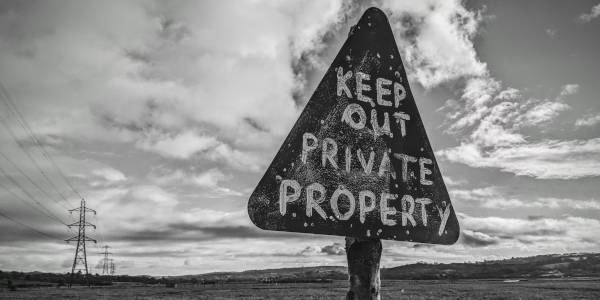
Private

“Natural capital is our geology, soil, air, water, plants and animals.”

Remember that definition, for it is the one the Scottish Government uses to introduce their “Market Framework for Natural Capital”, which they are consulting on at the moment.

Not content with their previous attempts to privatise nature in Scotland (see their “PFI For Trees” scandal last year and their “Green Investment Portfolio” a few years before that), the Government now wants to expand the remit of potential privatisation to all aspects of Natural Capital:- our geology, soil, air, water, plants and animals.

Continue reading

UK General Election 2024:- The Manifestos

“Democracy cannot succeed unless those who express their choice are prepared to choose wisely. The real safeguard of democracy, therefore, is education.” – Franklin D. Roosevelt

(This post and the research underpinning it is undertaken in my own time and outwith other political work that I do. It is presented here free to access as a public service but if you’d like to throw me a wee tip to support this work, you can here.)

Vote

The campaign for the 2024 UK General Election is underway and parties are now laying out their positions and are courting your votes. As I have with every other election since I started this blog, I’ll continue keeping a place here for party neutral information, including a post aimed at first time voters on how to vote in the elections and how that vote is translated into seats. I have written a guide on how to vote in the upcoming election and how your vote is translated into MSPs’ seats. You can read that guide here.

As a voter, it can be difficult to find information on what each of the parties are promising you – their websites can be confusing and there may be a lot of them. In this post I intend to gather as many of the political party manifestos as I can as they are published so that you can find them in one place. Unfortunately, I can’t cover independent candidates fairly and whilst I would like to be as inclusive as possible I may miss a few of the smaller parties or they may not be publishing a full manifesto (particularly if they are a single issue party). As this is a Scotland-focused blog my general rule is that for inclusion the manifesto must from from a registered political party that is standing at least two candidates across at least two constituencies in Scotland. However, I shall try to include manifestos from parties campaigning outwith Scotland but elsewhere in the UK. If parties release a distinctly Scottish version of their manifesto in addition to their UK version, I shall link to both. If you spot the publication of a manifesto before I do, please let me know and I’ll add it. I shall also welcome advance notice from party representatives themselves of when they plan to publish their manifesto.

All of the manifestos below are presented for your information and the presence or absence of any of them should not be taken as an endorsement or otherwise of any of the parties or of any of the policies that they may be promoting.

Note:- Parties marked in square brackets are placeholders for now and the prospective list may change as manifestos are published, parties emerge or, indeed, parties drop out of the electoral race.

Continue reading

How Scotland Votes: A Guide to the 2024 UK General Election

“Ankh-Morpork had dallied with many forms of government and had ended up with that form of democracy known as One Man, One Vote. The Patrician was the Man; he had the Vote.” – Terry Pratchett

(This post and the research underpinning it was undertaken in my own time and outwith other political work that I do. It is presented here free to access as a public service but if you’d like to throw me a wee tip to support that work, you can here.)

Vote

Disclosure and Disclaimer: Although I am politically active – albeit not a member of any political party – this guide is intended to be objective and politically neutral. This is a guide on how to vote and is written with a first time voter in mind. It is not a blog to try to convince you to vote for or against any particular person or party but to help you cast your vote and to understand how that vote translates and contributes to the final result.

For the first time since 2015, the UK has managed to complete a relatively normal length of time between General Elections, though since the repeal of the Fixed Term Parliament Act, a “normal” period of time is no longer the fixed period of five years but may be called at any time by the incumbent Prime Minister so long as not more than five years has passed. The absolute deadline for the current term was January 2025 but Prime Minister Rishi Sunak has pulled the trigger a little earlier than that (and a little earlier than most commentators expected as many thought we’d see an election around September or October). Whatever his reasons – and he doesn’t strictly need any – Parliament has been dissolved, all of our MPs have lost their jobs and many of them – as well as a slew of other potential candidates – are now courting your vote to try to win a seat in the House of Commons. This vote will take place on Thursday 4th July 2024.

If you want to take part in this election, and particularly if it’s your first time ever doing so or if it’s not but you’d like to know how your vote translates into seats and MPs, then this guide is for you. If you’re looking for someone to tell you who to vote for, then I won’t do that here but please do check out my list of all of the published party manifestos which may help guide your vote.

Continue reading

“Ankh-Morpork had dallied with many forms of government and had ended up with that form of democracy known as One Man, One Vote. The Patrician was the Man; he had the Vote.” – Terry Pratchett

(This post and the research underpinning it was undertaken in my own time and outwith other political work that I do. It is presented here free to access as a public service but if you’d like to throw me a wee tip to support that work, you can here.)

Vote

Disclosure and Disclaimer: Although I am politically active – albeit not a member of any political party – this guide is intended to be objective and politically neutral. This is a guide on how to vote and is written with a first time voter in mind. It is not a blog to try to convince you to vote for or against any particular person or party but to help you cast your vote and to understand how that vote translates and contributes to the final result.

For the first time since 2015, the UK has managed to complete a relatively normal length of time between General Elections, though since the repeal of the Fixed Term Parliament Act, a “normal” period of time is no longer the fixed period of five years but may be called at any time by the incumbent Prime Minister so long as not more than five years has passed. The absolute deadline for the current term was January 2025 but Prime Minister Rishi Sunak has pulled the trigger a little earlier than that (and a little earlier than most commentators expected as many thought we’d see an election around September or October). Whatever his reasons – and he doesn’t strictly need any – Parliament has been dissolved, all of our MPs have lost their jobs and many of them – as well as a slew of other potential candidates – are now courting your vote to try to win a seat in the House of Commons. This vote will take place on Thursday 4th July 2024.

If you want to take part in this election, and particularly if it’s your first time ever doing so or if it’s not but you’d like to know how your vote translates into seats and MPs, then this guide is for you. If you’re looking for someone to tell you who to vote for, then I won’t do that here but please do check out my list of all of the published party manifestos which may help guide your vote.

Continue reading

Burning Money

“When you want to know how things really work, study them when they’re coming apart.” – William Gibson

(This blog post previously appeared in Common Weal’s weekly newsletter. Sign up for the newsletter here.)

image_2022-10-28_075709175

Britain is heading into one of the worst winters of a generation. The rising cost of living combined with multiple crises from energy, food supplies and general government incompetence mean that we’re facing price rises, empty shelves and potentially the highest rents and mortgage burdens ever seen in this country (headline interest rates /might/ not quite reach the peaks of the early 90s but house prices are so much higher now than then and wages haven’t increased by nearly as much so a greater proportion of our wage will end up being devoured by our bank and/or landlord). Folk trying to buy a house over the winter, who are trying to renew a mortgage reaching the end of its fixed rate or who are renting from a landlord trying to do one of the above are particularly vulnerable to price shocks that could equal or exceed the energy crisis.

Continue reading

Here Comes The New Boss, Worse Than The Old Boss

“A president cannot defend a nation if he is not held accountable to its laws.” – DaShanne Stokes

(This blog post previously appeared in Common Weal’s weekly newsletter. Sign up for the newsletter here.)

Look. I’m not in any way going to defend Boris Johnson. The disastrous policies – from his disorganised Brexit to his Rwanda human trafficking scheme – are causing real harm, his Covid policies have killed over 200,000 people while enriching his cronies and his constant power grabbing have pulled power into the UK Executive (read: the PM) and have disrupted our ability to vote freely, destabilised the autonomy of the devolved Parliaments, the primacy of the UK Parliament and he has torn up the last tattered shreds of what passes for the UK Constitution. He should not go down in the annals of history as one of the UK’s “great” politicians.

And yet…who comes next is looking very likely to be even worse.

image_2022-07-19_092706877

Continue reading

Parting Ways

“When two people decide to get a divorce, it isn’t a sign that they ‘don’t understand’ one another, but a sign that they have, at last, begun to.” – Helen Rowland

This article is an expanded version of a paper I wrote for the Scottish Independence Convention in 2021. You can read the original here but this version runs to almost twice the length and includes historical case studies of separations between countries.

Parting Ways – How Scotland and the remaining UK could negotiate the separation of debts and assets.

Introduction

The negotiations around Brexit – and whether they are deemed to be a success or a failure – will no doubt raise once again arguments around how Scotland and the remaining United Kingdom (henceforth “the rUK”) will negotiate their mutual separation should Scotland choose to become an independent country in the near future. Opponents of independence already raise concerns about the potential for those negotiations to be fraught, bitter or too complex to deal with in a timely manner. Unlike the Treaty on European Union, the UK Constitution does not have an equivalent of the “Article 50” within its Treaty of Union and therefore does not have a codified mechanism to provide for Scotland to unilaterally withdraw from the Union (although it does not prohibit such an action either) and nor does it provide a structure for separation negotiations to take place such as giving an explicit trigger to begin negotiations or an explicit time limit within which to conclude them. In some ways, this is to Scotland’s advantage as the Brexit process’s two year time period for negotiations inevitably resulted in higher pressure to conclude the negotiations rapidly rather than well. However, the UK also enjoyed the ability – largely foregone – to simply not trigger Article 50 and start that countdown until a time of its choosing which, had it taken advantage of this, would have allowed the UK to prepare its own negotiating positions ahead of time rather than finding itself at the negotiating table without a clear idea of what Brexit meant.

After an independence referendum or similar democratic event, Scotland will be under immense pressure to begin negotiations almost immediately – the 2014 Scotland’s Future White Paper envisaged those negotiations beginning the week following the referendum – and so it is imperative that Scotland is fully aware of its own rights, responsibilities and asks before these negotiations begin. Scotland must also take the time now, well before a decision to become independent takes place, to plan and prepare so that it does not find itself repeating the mistakes of Brexit and being forced into a disadvantageous deal due to a lack of understanding of what it wanted and what it already had.

This paper is largely an update of my 2016 paper for Common Weal, Claiming Scotland’s Assets, and shall explain the principles of one aspect of those negotiations – the division of debts and assets between separating states – along with a choice of strategies that Scotland could hypothetically deploy as it negotiates its independence.

Continue reading

Scotland’s New Black Gold

While big business gain subsidies and political access, small businesses drown in red tape, and individuals now risk being classified as terrorists for complaining about it. – Zac Goldsmith

(This blog post previously appeared in Common Weal’s weekly newsletter. Sign up for the newsletter here.)

Did you hear about the latest story in Scottish land reform policy and the Scottish Government’s programme to restore peatlands as part of our Net Zero transition? You’d be forgiven if you didn’t. There hasn’t been much said about it in the Scottish or even in the UK media (at least until the last day or two). The American press, however, has been different. This week, the New York Times published a long-form study of what has been happening in Scotland’s peatlands lately and while I must encourage all of you to look it I must also warn that it doesn’t make for the happiest read.

photo of muirburn

Continue reading

Building Tomorrows

“Never doubt that a small group of thoughtful, committed, citizens can change the world. Indeed, it is the only thing that ever has.” ― Margaret Mead

(This blog post previously appeared in Common Weal’s weekly newsletter. Sign up for the newsletter here.)

I’ve talked before about how proud I am of our Care Reform Working Group. Two years ago when the impact of the pandemic on Scottish care homes highlighted previous systemic failings in the care sector, it became clear across Scotland that the recovery from the pandemic should include as radical a reform of care as WWII and the Beveridge Report ended up being for health. We need a National Care Service. To that end, a group of some of the best minds and practitioners in the sector came together into our group and began to work on what that should look like.

Care Reform Group celebrate with dinner

(Image above: Left to Right: Des, Carmen, Colin, Marion, Craig, Nick, Mark, Kathy and Neil)

Continue reading