“Work as if you live in the early days of a better nation.” – Alasdair Gray
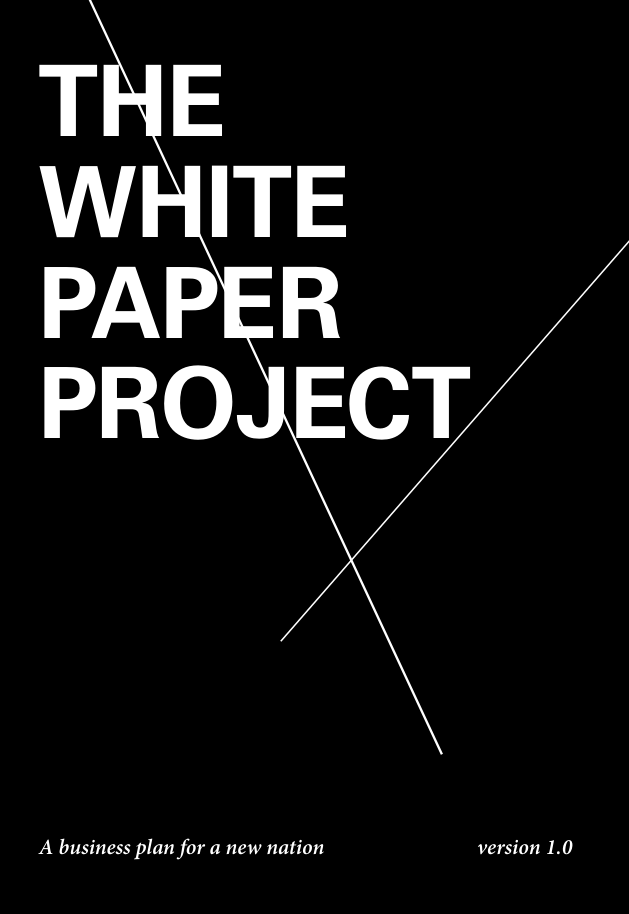
Today I get to announce the launch of a very long awaited project I and the rest of Common Weal have been working on for quite some time now. We announced back in September that we have been working on renewing the case for Scottish independence by publishing a successor to the Scottish Government’s “Scotland’s Future” document.
Version 1.0 of the Common Weal White Paper can be download here or by clicking the image above.
This is a leaner document than Scotland’s Future was. That document was as much a party political campaign device as it was a blueprint for independence. It not only sought to describe the powers which would come to Scotland independence but also sought to convince voters of the SNP’s own vision for independence. There was nothing inherently wrong with this latter task per se and other parties too sought to promote their own distinct visions as well – as they will all do so again throughout the next independence campaign but this is not the task of an independence White Paper. This paper shall, as far as possible, not seek to propose a list of policy ideas which an independent Scotland could do nor shall it attempt to convince you of the merits of those policies. It merely lays out the technical and structural requirements which must be in place for Scotland to become an independent country once we, the voters, decide that it should become so.
It is a “consolidated business plan for the establishment of a new nation state”.
To this end, the White Paper is split into several broad sections. Part 1, Process and Structures, covers the foundation of a National Commission – a cross party and cross administration body which will be tasked with designing and implementing the institutions and systems which need to be set up in the time between the independence referendum and the formal independence day. It is one thing to state, for instance, “There shall be a Scottish Central Bank”. It is quite another to decide how large it needs to be, where it needs to be based and who needs to be hired to run it. The National Commission shall also be given interim borrowing powers so that it is able to issue bonds, raise capital and fund the construction of the vital infrastructure Scotland would need to either move from rUK or build from fresh.
Part 2, Key Institutions of an Independent Scotland, covers all those things we kept being asked questions about during the last referendum. Would we have a constitution? A currency? What would we do about borders? Defence? All these and more. Of course it’s not yet possible to answer every question in this regard. Some of it will be up for negotiation with rUK, some of it will be dependent on the shape of the Brexit deal between the UK and the EU and Scotland’s relationship with both in the run up to independence but we’re making a stab at as much as we can and this is the section which will perhaps be most expanded upon as the Project is iterated in future versions.
Speaking of negotiations, Part 3 covers the prospective shape of some of these – chiefly the allocation of debt and assets and what rUK’s response to our leaving shall mean for our claim on them. Also covered to some degree is how Scotland will interact with various international and supranational organisations although it should be stated once again that no case shall be strongly made for Scotland’s joining or refusal to join any of these organisations. That shall be left to the party or parties which seek to form the first independent Scottish parliament.
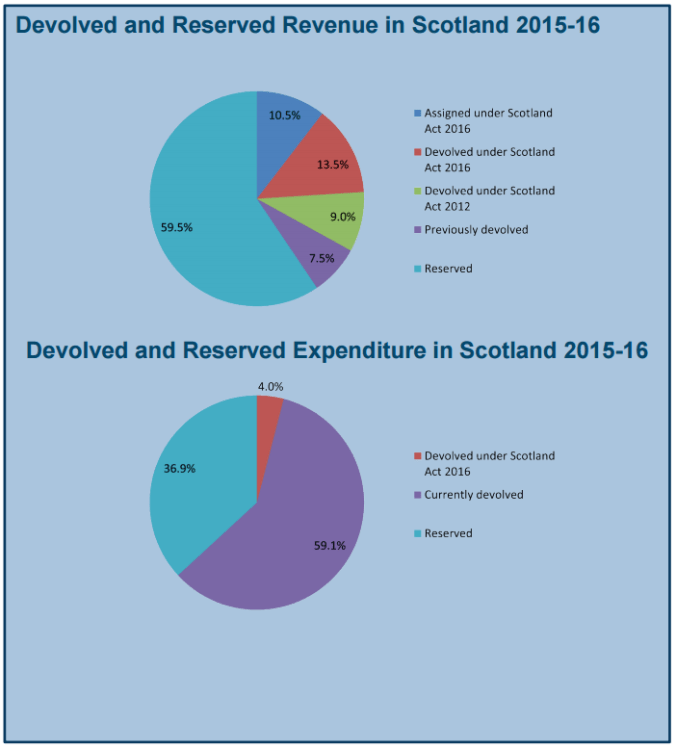
Finally, Part 4 outlines the position of Scotland as far as finance and borrowing goes as well as outlining as best we can the default fiscal budget for year one of independence. It is, of course, almost impossible to place any kind of actual certainty or promise on such a budget as it is based on several key assumptions such as the desire to keep both public spending and the various tax revenue streams broadly similar to their position at present. If a party decided to scrap the entire tax system and replace it with one of their own devising then it would have to be up to them to explain how that worked and project the revenue to be gained from it and how it would be spent. Other assumptions include Scotland spending the money assigned to it in GERS for various “UK projects” on projects of similar value and in similar accounting lines (so that, to pick an arbitrary example, our “share” of UK economic development funding spent outside Scotland but from which Scotland “benefits” would instead be spent on economic development within Scotland). Again, whether or not this happens will be a case for the individual parties to make and will depend entirely on accurately and precisely how the current fiscal projections for a devolved Scotland within the UK map onto the fiscal situation of an independent Scotland.
Once again, this is not the completion of the White Paper. This is the beginning. You will see that there are several sections which need to be expanded and built upon and items like costs and figures will be updated as time goes on (the default budget, for instance, is based on 2015-16 figures but – as we’ve probably noticed by now – Scotland didn’t become independent in 2015-16 so these precise figures will be revised as and when they should be). Some areas require the attention of people with specific experience and expertise in them to be able to complete so we are openly calling for those experts who are able and willing to contribute. Please contact us if you want to be involved. Let’s work to build the early days of our better nation.