“Why speculate when you can calculate?” – John Baez, American mathematical physicist
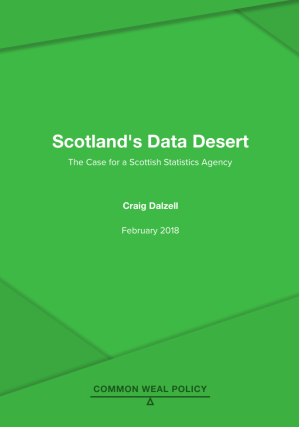
Last week saw the release of Common Weal’s latest policy paper, Scotland’s Data Desert, which examined the gaps in statistical data for Scotland and called for a Scottish Statistics Agency to help fill them.
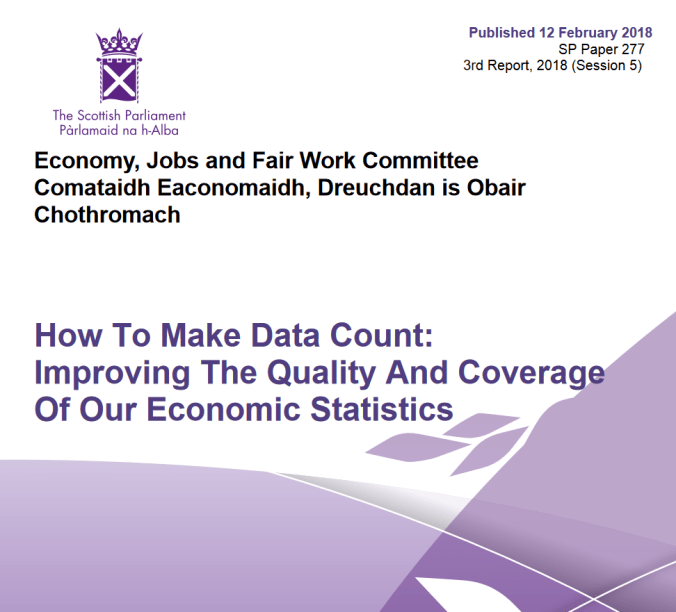
We weren’t the only ones studying the problem of the dearth of data in Scotland. As part of a year-long program of research into this topic, we got involved with the Scottish Parliament’s Economy, Jobs and Fair Work Committee who had launched their own public consultation looking specifically at the state of economic data in Scotland.
Our response to that consultation led to us being invited to present evidence directly to the committee in September 2017.
The final report from the committee’s investigations was published a few days ago and we are very pleased to say that many of our recomendations have been accepted in the conclusions of the report.
My latest policy paper for Common Weal – Scotland’s Data Desert – has just been published and can be read here or by clicking the image below. There has also been coverage of the report in The National here and here.
As a region of the UK, Scotland is in many ways better served by data gathering and analysis than its counterparts. However, as Scotland takes greater control over domestic issues and as the constitutional debate continues to look towards a future in which Scotland takes full responsibility for its own affairs the question is raised as to whether even this level of data provision is adequate for current or future needs – especially in a world where data becomes ever more vital in the development and support of policy. Well served though Scotland may be as a region, as a country it remains a relative “data desert” compared to nearby independent countries.
Many times we’ve watched as politicians and activists have misused data in the public sphere. Sometimes this manifests as a simple misunderstanding of what the data actually says (As when people ask how much of Scotland’s trade leaves the UK via “English ports”). Sometimes though, it’ll be used to make a political point in ways that the data doesn’t really support (such as discussions which use GERS to project beyond what it actually says on Scotland’s finances). There have also been instances of policies being implemented on the basis of limited evidence or of policies being implemented and then left to run without any program in place to monitor their effectiveness.
My latest policy paper for Common Weal is the culmination of over a year of research into the gaps and limitations of data provision in Scotland and discussion with people within the data sectors and civil service in Scotland and the UK. As a political lobbying and research organisation, we are – like many others – dependent on access to data to be able to inform our work and many times we have hit barriers where key data couldn’t be released or simply did not exist.
A Scottish Statistics Agency could help address many of these issues by expanding, co-ordinating and codifying data gathering within Scotland.
An independent Scotland will certainly need its own data and statistics agency but this isn’t just an independence issue as it could be done right now in a devolved Scotland and there are compelling reasons to do so. As said, Scotland already goes above and beyond the UK’s data gathering in many areas but there is certainly room to grow further.
The SSA could well take the form of a monolithic, centralised agency – a bit like the UK’s ONS – in which most or all policy level data is gathered by or for them. It could equally take the form of a more decentralised system whereby a central body co-ordinates and issues targets and directives but the actual gathering could be done by specialised bodies, statisticians embedded within government departments and even by academics and think-tanks. If this model was employed then a system of “kitemarks” could be used to mark data which meets the stringent Code of Practice which would identify data as being good enough for policy-making.
This kitemark system is already used by the UK Statistics Agency (the governing body which regulates the ONS) but could be used to either reflect a Scotland which applies even higher standards than the UK or could be expanded to identify data from outside of government (such as academics and think tanks) which meet those standards. This could allow for greater prespectives to influence government but could also limit the misuse of data by third parties by setting a benchmark to meet.
Of course, this isn’t just a problem of gathering data. As said above, often the data is gathered but difficult to find, difficult to manipulate or cannot be easily combined with other data due to conflicts in their methodologies. Where data can be combined, it has been a reported problem that different groups may be doing the same processing independently. This increases the chance of errors creeping in and also, crucially, results in a lot of time wasted between those groups.
An SSA could therefore be charged with ensuring that policy data meets high standards of trust, transparency, usability and consistency. It could also be responsible for maintaining a central data portal – much like Eurostat or the Gapminder Project – which would allow access to as much data as possible but can do it in a way which makes that data easy to view whether the viewer is an interested member of the public or an expert researcher.
People will, of course, ask how much an SSA would cost and, in truth, the answer is difficult unless we know the precise model – it’s harder to count the budget of a decentralised model than a centralised one – but where Scotland’s proportional share of the UK’s spend on statistics may be around £15 million, other nearby countries like Denmark and Sweden spend several times this figure and create several hundred highly skilled jobs in the process. Even these sums are comparatively small in terms of national budgets but will surely pay for themselves in terms of better targeted, better monitored and, quite simply, better policies.
Common Weal’s ability to do research of this kind is entirely reliant on the generosity of our donors and supporters, both one-off and regular. If you would like to contribute, please visit our website at: allofusfirst.org/donate/
“Though the principles of the banking trade may appear somewhat abstruse, the practice is capable of being reduced to strict rules. To depart upon any occasion from these rules, in consequence of some flattering speculation of extraordinary gain, is almost always extremely dangerous, and frequently fatal to the banking company which attempts it.” – Adam Smith, The Wealth of Nations
Do we expect our schools to be run as profit-making enterprises? How about our police services? Fire services? Hospitals? Roads? Rail? How about our utilities like electricity and water?
How you answer those questions will very likely correlate with the political party you most affiliate with and may even depend on where in the UK you live. Some of these may be precious, lifeline public services. Some used to be but were sold off. Some have always been privately run.
Some may work best as purely private institutions – where the market can use efficient competition to create choice and maintain low prices.
Some may work best as entirely public institutions – it can be difficult to “choose” another rail operator if the only trains at your station are run by one company. or if your house is burning to the ground because you had the “wrong” fire mark on the wall or because you can’t pay them to put out the blaze.
Some others may work in a “mixed” system – Perhaps you genuinely can choose to get your healthcare from an NHS hospital or pay for private treatment elsewhere.
“Distinctions must be kept in mind between quantity and quality of growth, between costs and returns, and between the short and long run. Goals for more growth should specify more growth of what and for what.” – Simon Kuznets, developer of the measurement of GDP on the limitations of the statistic.
There’s a measurement of technological advancement in science and science fiction circles known as the Kardashev Scale. It measures how advanced a civilisation is by how much energy it consumes or is able to harness using its technology.
A Type 1 civilisation is able to use the same amount of energy as falls on their home planet from their home star. For Earth-Sol, this is a power consumption of about 7×10¹⁷ Watts.
A Type 2 civilisation is able to harness the entire energy output of its home star – either by colonising many star systems or by fully enclosing their home star by energy gathering technology like a Dyson Sphere. For our star, this is about 4×1026 Watts or about 500 million times the energy consumption of a Type 1 civilisation.
Finally, a Type 3 civilisation has the technology to harness the entire energy output of a galaxy – a feat rarely reached in even the most ambitiously scoped sci-fi but see Stephen Baxter’s Xeelee Sequence for beings which are capable of at least this and more. This level of tech involves the consumption of about 4×1037 Watts or about 100 billion times the power used by a Type 2 civilisation.
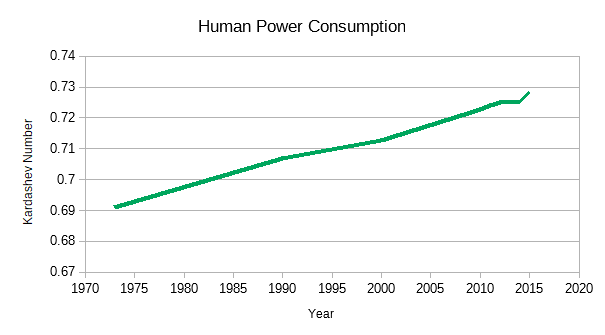
And where does our wee planet sit in all of this? Carl Sagan extrapolated from these points to create a more comprehensive mathematical formula for calculating a given civilisation’s Kardashev number. He also estimated in 1973 that humans generated an average of 8 Terawatts of power which gave us a Kardashev Number of about 0.70. As of 2015, our energy generation has increased to an average of about 19 TW which makes us now a Type 0.73 civilisation. Extrapolating out linearly, we should hit Type 1 around the year 2325.
Imagine that the only thing that the scientific community really cared about was our progress up this scale. All of science was bent towards our expanding our power generation and consumption base. And all that politicians cared about was their “Kardashev Growth per year”. It wouldn’t matter if your discipline was physics, chemistry, biology or whatever. Anything that grew the Kardashev number was funded. What would we be missing if that was all we cared about?
(For my academic friends who want to draw parallels with the current obsession with citation number and impact factors…you’re not wrong, but…next time.)
It’s worth noting that whilst total global power generation has increased by a factor of 2.4 since 1973, global population has only increased by a factor of about 1.8. The “global average human” today is using about 33% more power than the “global average human” of 1973. This is due to a massive reduction in global poverty and an unbelievable expansion of buying power and access to technology around the globe.
Of course, there are limits to this kind of measurement. Technology doesn’t just get more powerful and more widespread as it develops, it also gets more efficient. The fitness band I’m wearing right now weighs less than 100g but has orders of magnitude more computing power and uses orders of magnitude less electrical power than my first desktop PC from the mid-1990s – never mind the room-sized behemoths of the early days of computing in the 1950s and ’60s.
We also must think about the environmental impact of our technology – another major difference between 1973 and now is the exponential expansion of renewable energy technology at the expense of fossil fuels.
So obviously, rendering a civilisation’s level of technological development down into a single number and then measuring the growth of that number might be interesting and may be useful as a very broad comparator but it probably doesn’t tell anything useful about the shape of that society or what’s going on inside it.
So why do we expect the same from other renderings such as Gross Domestic Product?
This measure – essentially the sum value of all economic activity within a country in a year – was developed in its modern form in the 1930s and has since become the gold standard of national statistics. Huge swathes of statistics are measured either in relation to it (think of “national debt as a % of GDP”) or as a derivative of it (GDP growth” or “GDP per capita”, for instance).
But even at its inception, the creator of it noted the limitations. A measure of the growth of GDP says very little about how that growth has occurred or who has benefited from it.
I was able to discuss some of these issues when I visited the Scottish Parliament’s Economy, Jobs and Fair Work Committee earlier this week as well as in an article in CommonSpace yesterday.
The Scottish Government has, to its credit, tried to improve some of the measurements it uses via program like the National Planning Framework. One of these is the idea of “inclusive growth” which explicitly states that measures should be taken to ensure that when economic growth occurs, it should not simply accumulate with the top few percent.
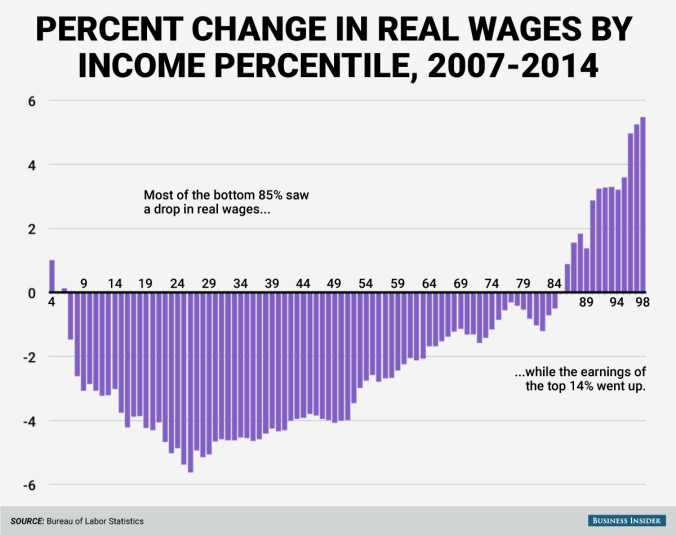
It’s a laudable goal but I still have my reservations in that the metric is still pinned onto the concept of “growth”. Just as a growing economy may accumulate wealth in the top, it’s possible that a recession could increase inequality too. Imagine a drop in the economy that causes mass unemployment, reduction in working hours, an increase in casual, part time and “gig” labour whilst at the same time the wealthiest are bailed out by the state. You know…a bit like what happened in 2008.
Just as it’s possible to try to ensure inclusive growth, it should also be possible to ensure inclusive de-growth when recessions come and inclusive stasis when economies are themselves static. The government would be well advised to focus as much on inclusivity as it does on growth, maybe more so.
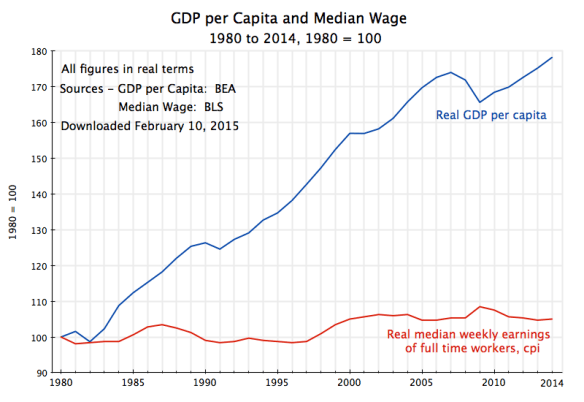
To be fair, there was at least some logic to using GDP as our measure of economic development. For many years, wage growth was pretty firmly linked to economic growth. If the company you worked for did well, you did well. But two great shifts have happened in the past 40 years. The first came in 1979 with the rise of neoliberalism. The economic programs enacted by Thatcher and others were coupled with a decoupling of wages and growth such that the latter started to pull away from the former. The gutting of the unions and the reduction of collective bargaining was perhaps chief among those reforms.
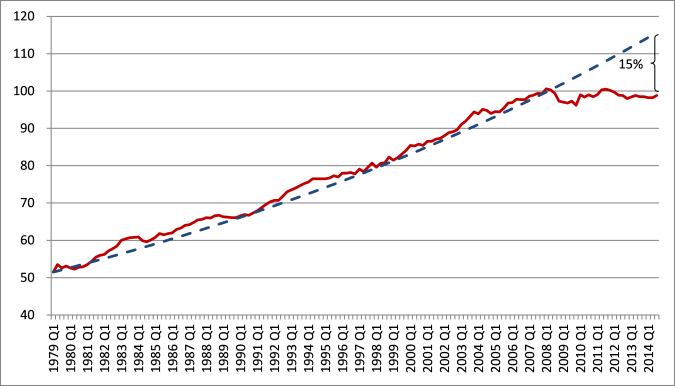
The second decoupling came in the wake of the 2008 Financial Crisis. This time it came in “productivity” – the amount of GDP generated by a given hour’s labour. It’s a complex topic but part of this has come from the rise of the “gig economy” where folk have – often through somewhat convoluted means – become “self-employed” and have lost access to even individual bargaining. With no commitment at all to the company that they “service” (rather than work for), it’s no surprise that innovation and investment have declined. Not that it’s the fault of those workers. With no commitment to them, the company needn’t care beyond short term profit extraction and share price either.
Another possible reason for the decoupling of productivity and wages (as well as the stagnation of productivity overall) is the rise of certain sectors of the economy that don’t quite fit with older measures such as “added value” and suchlike. I’m talking here about jobs like personal care. It could be possible to “increase productivity” in personal care but if that means “service more clients per shift” then what you’re asking carers to do is cut visiting times from 30 minutes down to 15 minutes down to 10 minutes…
So maybe we don’t want “productive” care. I’d prefer effective care. And maybe jobs like care don’t produce huge feedback multipliers in the economy but there are other ways that such care could be considered “valuable”. Especially to the person receiving that care.
So, just as the Kardashev Scale is for technology, GDP should only be dubiously taken as the be-all-and-end-all of economic development. Politicians really should start taking note of what’s going on underneath that headline number. It’s a harder story to tell, true, but economies are far too complex for the “simple” story to be sufficient.
And if it turns out we’re simply not measuring enough to answer our questions, well…that’s a story for another day.
It has been an interesting year. On one hand, a lot of dirt has been cast about and many of us are feeling just a bit covered in it all. On the other, a lot of seeds have been planted. A few have already started to sprout. It’s a good time to have a look back over the blog this past year and see where we’ve been.
The Sunday Times has published a hack-job of a piece attacking the Scottish Government’s proposed plans to change the rates and bands of income tax in Scotland.
They’ve clearly tried to use the Scottish Conservative’s current favourite economic soundbite, the Laffer Curve, to try to build their case that we should be cutting taxes and have sought out a quote from the originator of the idea to try to back it up.
The problem is, I’m not entirely sure that the paper really understands what this idea actually says about tax.
“70% of taxpayers get a tax cut as a result of yesterday’s budget” – Nicola Sturgeon
“One million Scots to pay more income tax than rest of UK” – The Scotsman
Yesterday saw the unveiling of the first draft of the Scottish budget for 2018-19. You can read the proposals by clicking here or on the graphic below.
My own brief comments have already been published via Common Weal and in The National but I wanted to expand on a few of the points here too.
Income Tax
Of course, this is the big headline grabbing policy change. Last year was the first year that Scotland had the power to adjust rates and bands of income tax and it used those powers then to not uplift the Higher Rate by inflation as was done in the rest of the UK. Cue howls of outrage from the Tories that for folk earning more than £44,000 per year, Scotland was now the “highest taxed part of the UK”.
This year, the Scottish government spend a good deal of time consulting with the other parties about their proposals for what to do next with income tax as well as offering several options of their own.
In the end, the government has written their budget around a plan which doesn’t quite look like any of the proposals brought up before. From next year, Scotland’s income tax bands will change from this
Income up to
Tax Rate
£11,500
0%
£43,000
20%
£150,000
40%
>£150,000
45%
to this
Income up to
Tax Rate
£11,850
0%
£13,850
19%
£24,000
20%
£44,273
21%
£150,000
41%
>£150,000
46%
Two new bands have been added – one “Starter Rate” on income between £11,850 and £13,850 which offers a 1% tax cut and one on income between £24,000 and £44,273 which offers a 1% tax rise compared to last year – and the Higher and Additional rates have been increased by 1%.
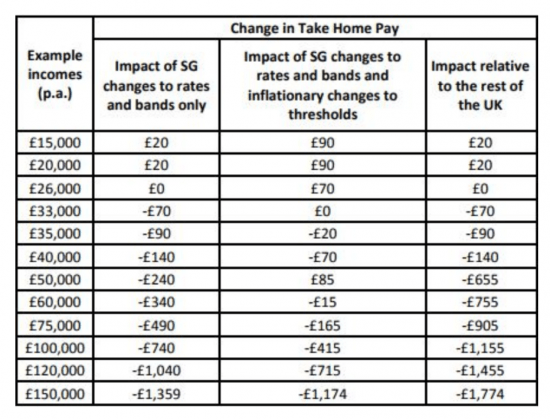
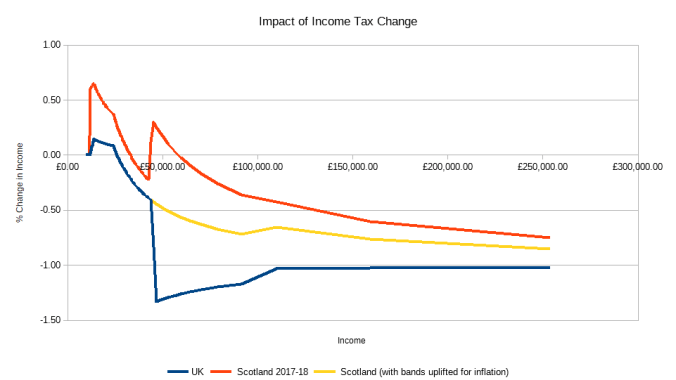
Folk online have been arguing about who will be better or worse off under this plan. The truth is, it depends on what you’re comparing to. You could compare to the Scottish tax rates last year. You could uplift the bands by inflation and leave the rates as they were last year or you could compare to the 2018-19 UK rates.
At my most cynical, I can see immediately that the comparison to the rest of the UK gives the Scottish Government a soundbite with which to counter the Tories. For folk earning less than £26,000 per year, Scotland now has the lowest income tax rate in the UK.
These changes are quite small though. Only about 1% up or down across the income scale. The overall changes are projected to bring in only about an extra £160 million per year and greater increases in the upper rates were ruled out for fears that those on higher incomes would leave Scotland or otherwise evade or avoid the tax increase. This idea is, of course, subject to a great deal of dispute by the various parties.
There is substantial evidence that tax does not cause a great deal of migration across borders. The rich are people with friends, families and connections to the place they live just as much as everyone else.
On the other hand, the frankly Byzantine tax code in the UK does make it easy to move money around so the experience of other states and countries may not reflect onto Scotland and the data about upper income tax flight in the UK is very limited (see from 50min in the video above and from 56min for information about Scotland). The bold might say that there’s only one way to find out…
Far more important than the actual revenue impact of the income tax changes is the willingness to change itself. Scotland now has a more progressive tax system than the rest of the UK and has now set a precedent for adjusting tax to suit the needs of Scotland rather than to just constantly look over the shoulder at what the UK is doing. It will be interesting to see how this idea beds in and develops in coming years.
It remains a shame that Scotland still can’t have a comprehensive discussion about taxation and we’re reduced to either lumping everything on income tax or tinkering around with the more minor devolved taxes. I’ve spoken at length about the Air Departure Tax but even I can’t work up much excitement about the prospect of radical change to the Aggregate Levy.
Public Sector Pay
There was a pleasant addition to the budget here. After years of pay being capped at 1%, public sector workers will be getting a pay increase of 3% if they earn less than £30,000 per year, 2% if they earn less than £80,000 per year and a flat increase of £1,600 if they earn more than that.
Of course, their taxes are likely to be changing too but only if said worker is earning in the region of £170,000 or more would the increase to their taxes exceed their pay rise (and I’m reasonably certain that there won’t be too many in that position).
This is welcome news although it should be tempered by the fact that inflation is now running at 3.1% and rising. This pay increase still represents a wage squeeze for public sector workers and doesn’t even begin to start undoing the damage caused by the years of the cap. This increase certainly isn’t news to be condemned but it’s still not much more than a short term salve.
Housing
The housing policies in the budget don’t seem to be making too many waves. There’s extra money for housing but a good deal of it seems to be aimed at the private market which has already been the recipient of substantial subsidy.
The proposal to cut the Land and Buildings Transaction Tax for first-time buyers is a major error of judgment. Unlike the divergence with the rest of the UK on income tax, this proposal is a mirroring of the UK policy. Under this cut, 80% of first-time buyers will no longer pay LBTT on properties priced below the threshold. At least they recognised the lower house prices in Scotland and set the threshold at £175,000 instead of the UK’s threshold of £300,000.
But the logic of the tax relief is similarly misplaced though. If you can afford a house at £175,000 without the tax relief, you can afford the house with it. But if you can’t afford the house at £175,000 then it’s very unlikely that a £600 discount is going to make any difference.
This means that there is absolutely no barrier at all to the seller increasing the price of the house by £600 and swallowing up the tax. This cut will merely cause £5 – £7 million per year worth of tax revenue to transfer to those who are selling property.
Regional Council Funding
When the UK budget came out last month and we were told by Westminster that the Scottish government was gaining money in the capital budget but losing it in the revenue budget but if the Scottish Government wanted to make up the different by raising taxes then it was absolutely free to either do so otherwise it could take responsibility for passing on the cuts.
Well, this same rhetoric appears to have been repeated from the Scottish Government with regard to our regional councils. Their revenue budgets will be frozen in cash terms but with inflation running at 3% this means quite a substantial real terms cut. In addition, the public sector pay increase will likely have to come out of that regional authority resource budget which will further increase pressure on councils. The have the “freedom” to increase council tax to make up the shortfall but it remains to be seen how many choose to do so, especially now with every council in Scotland governed by coalitions of various stripes.
This is the area where I expect most of the fighting to occur during the negotiations before the budget is actually voted on in Parliament next year. The SNP can’t pass it on their own. They’re going to need another party to either vote for it or at the very least abstain to get it through.
The Greens were fairly enthusiastic about the approach to income tax but have set this funding freeze as a red line against their support for the budget as a whole. I don’t believe the Lib Dems are any happier with it and with the Tories certain to oppose and Labour not much less so, there’s going to be a bit of trading required to gain enough support to pass the final bill. I wouldn’t be surprised if Derek Mackay has another rummage down the back of the sofa for some extra cash as he did last year.
One more radical solution would be to recognise that wealth inequality is far higher in Scotland than income inequality and that maybe it is time to explore news forms of local taxation like local land taxes or other taxes on wealth.
Scottish National Investment Bank
Now here is a real good news story. The SNIB is on its way! The first two year tranche of funding, totaling £340 million, has been included in this budget as has the planning and infrastructure to continue that funding beyond the first two years. The Common Weal plan called for the bank to be capitalised to a total of £2 billion over several years so this is a very good first step. If we were a fully sovereign nation with full control over monetary policy it would, of course, be trivial to fully capitalise this bank but we’re not and Scotland only has limited capital spending powers so we need to build up the funds over several years. This is fine though, the bank still needs to be set up and ramped into operation anyway.
The bank is still in the very early planning stages but discussions with the government about its design and the need for it to look out for the common good have been received very positively.
In the long term, this bank will be a major factor in supporting local economies and helping Scotland’s overall economy remain flexible and adaptable in a rapidly changing world. This, if we stick at it and do it right, could be the most transformational policy of the decade.
Conclusion
In terms of political maneuvering, this budget sent out many of the right signals. Increased progressiveness on taxes, more money for public sector workers, the start of better economic investment. They are all good moves and show a willingness for Scotland to not just be different from the rest of the UK but for Scotland to be Scotland without having to compare itself to the UK in the same way that the UK doesn’t constant compare itself to Ireland or France when setting budgets.
But, and it is a big but, many of changes aren’t themselves going to do all that much. A <1% change in take home pay isn’t going to save the day or break the bank for many folk.
As a stepping stone though? As a definite signal that Scotland is willing to be better? I’ll take that. Let’s try to build on it next year and beyond.
The news the closure of 1 in 4 RBS branches across Scotland is coupled with the now grimly ironic relaunch of their “Royal Bank for Scotland” advert. Once again, this bank, like others before it, is withdrawing its physical presence from many areas of the country and, as before, it cites the rise of online banking as the principal reason.
1 in 4 branches might not sound too bad to some. It might sound largely bearable. But this figure doesn’t account for regional disparities. For example, of the ten RBS branches within 25km of where I live, eight of them are now scheduled to close.
There will be places, particularly in rural Scotland, where the loss of their branch will result in the total loss of all physical banks in their community.
It is true that many people now do their day-to-day banking online but for those who don’t, this may be devastating news.
Perhaps more importantly than personal banking will be the loss of business banking services. Many small businesses require access to banks on a daily basis, particularly if they handle cash. This move, compounded with others like it past and future, may cause significant harm to the Scottish SME ecology.
Once again, the losses incurred during RBS’s casino banking glut have infected the real economy and, once again, we cannot hope to see the kind of bail-out that they were given.
Which brings up a point. RBS is more than 70% owned by the UK Government. What part have they played in these closures? Probably very little. As far as I can see, the strategy of the UK Government towards the nationalised banks has been to do absolutely nothing with them – to just let them keep doing what they would have done had they never been nationalised – and then to sell them off again.
A sensible and forward thinking government would have taken a far more proactive role in actually using its majority stake in the company. I’m not saying it would have been easy given the underlying structural issues within RBS – this is a bank which used to deliberately bankrupt small companies so that it could make a profit on seized assets – but if the UK Government had had the will to do so, it could have transformed the company into a network of local and regional banks which just solely focused on the business of providing deposits, credit and cash handling services. It could have dispensed entirely with the arcane financial shenanigans which have nearly crippled the country’s economy and could have become a very stable, very successful (if not quite so overtly profitable), “boring bank“.
Many folk will still remember how banking used to be. How you knew your bank manager and they knew better than almost anyone save yourself your business and your financial circumstances. They knew when a loan would be good for you or when it would be a burden. These things cannot be replicated via an automated helpline on a website or by an ever more complex next of “financial products” which are often more about extracting profits from you rather than supporting your business. The idea that you could become the product – to be sold and traded at the banks whim – would be utterly alien to such a system.
Of course, the UK Government isn’t going to do this. Financial gambling is just about the only thing that they have left in their economic strategy so they’re not going to say anything against it. I’m not sure if the Scottish Government has the powers to do so but it should certainly look into the possibility of setting up or encouraging the founding of a “boring bank” network – separate from but working mutually alongside the local development wings of a Scottish National Investment Bank.
Do this we’ll have a bank for Scotland. Till then, I fear that we’ll just be days or weeks or months away from another round of closures and “efficiency measures” which will be about pleasing shareholders or preparing for the next round of “investment opportunities” than it will be about actually supporting local economies and local customers.
(Apologies if my scant Latin has mangled that translation. If someone corrects it, I’ll see about writing it out 100 times on the walls of the Palace.)
It seems that all news is canceled this week. All of it. There’s nothing happening. Our state broadcaster (which is totally unlike other state broadcasters in that when it promotes its state’s national interests, this is a good thing and not the most hideous evil to ever despoil the airwaves) has told us that the only thing of note happening anywhere is that someone is marrying someone with Magic Blood.
This is to be a ceremony that we’ll all proudly take part in, by which they mean that we are to pay for it, despite not even being invited to the party. We’re not even getting a day off work because that would apparently cost too much.
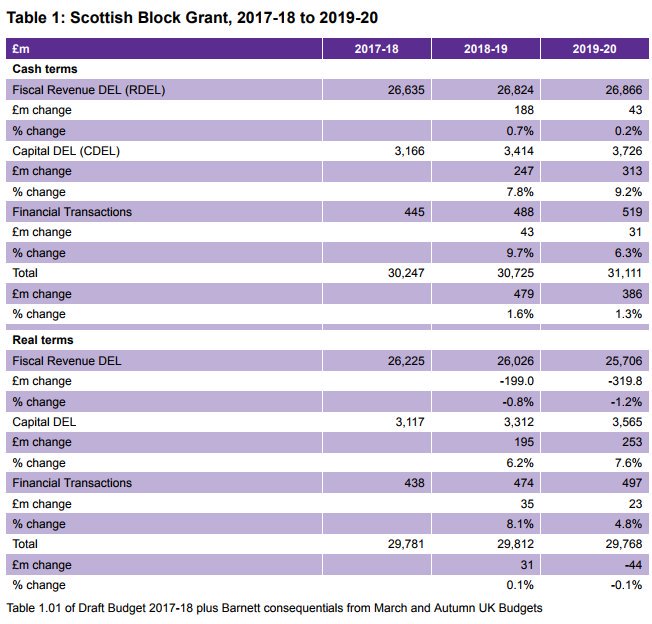
Those in power are definitely not going to use this event to sneak out the devastating news that benefits are to be frozen again this year – that’s effectively a 3% cut after adjusting for inflation. I’m certain that they’ll be bending all effects towards sorting the gaping holes in the UK VAT system which allows more than £1 billion to be evaded every year.
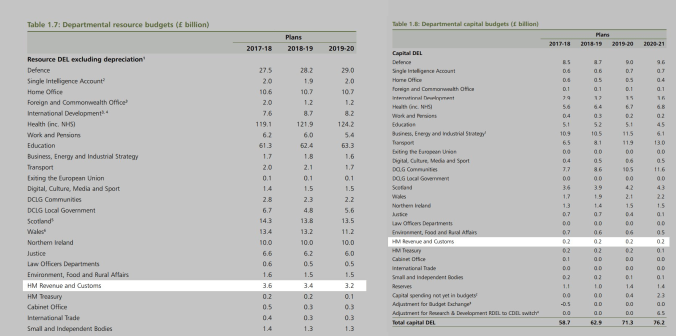
They absolutely wouldn’t be cutting HMRC’s budget by £400 million per year RIGHT before the UK is going to leave the largest Customs Union in the world, would they?. They certainly would be breaking ground on all the new checkpoints and infrastructure that are going to be needed. The department should be awash with capital spending in preparation, shouldn’t it?
They certainly wouldn’t big up their having done some furiously detailed groundwork on the impact of Brexit when they hadn’t actually done any such thing and were just hoping that no-one would ask to read them…till they did.
The UK has some seriously skewed priorities and it goes from the bottom right to the top of the structure of governance. Scotland needs to have a good, hard discussion about what role it plays in all of this.
The Scottish Parliament already has a far fairer voting system than the one used for UK elections (despite the comparative complexity of the former) but should we take the step of becoming an independent country then we’ll have to have a think about some other levels of government too.
I’ve already said a fair amount about the state of Scotland’s local government so today I’d like to look at what we’d want to do ABOVE the level of the present Scottish Parliament.
For instance, we may well decide to create an Upper House to scrutinise legislation but what we absolutely shouldn’t do is copy the UK method of stuffing it full of Lords and paying them to sleep off their hard day of…doing what ever they do for £300 a day.
Far better would be a Citizen’s Assembly. Think of it as Jury Duty writ large. We’ve already decided that the best way to determine if someone has transgressed our laws is by a jury of randomly selected citizens so we could easily set up a method by which randomly selected citizens can determine if the laws themselves are just, fair and easily understood.
And for above that? How do we represent the nation of Scotland to the world?
If you had asked me in 2014, I would have said that I didn’t really mind too much and was pretty content with the Scotland’s Future plan of keeping the monarchy in the same way that Canada and Australia have.
But I’ve shifted somewhat since then. I’m not sure I’d really welcome the appointment of a Governor General as Scotland’s nominal Head of State nor am I completely clear on what duties they would actually have in practice. The First Minister already does most of the Head-of-State meet-and-greet stuff when folk come to Scotland and it seems a little strange for that to stop.
Nor do I want a restored and separate Scottish monarchy. Again, I’ve no time for someone to tell me what to do by dint of their divine appointment or Magic Blood even if Scotland does maintain a tradition of the Scottish Monarch being subordinate to the people of Scotland. Nor should a country professing to be a democracy pride itself on its locking citizens out from ever obtaining any governmental office even in theory.
So, if we choose to have an official Head of State separate to the First Minister then it’ll have to be an elected President and that seems straightforward enough to arrange.
Though we still need to have that discussion about what we want them to DO. As said, the First Minister already does most of the Head of State meet-and-greet stuff when folk come to Scotland so we’re faced with the choice of either actually empowering our Head of State and giving them executive controls like the power to veto laws, sign their own legislative orders or other such powers (i.e. similar to the President of the USA) or we continue to have a head of state with a ceremonial role but little actual power.
And as I think on it…whilst I think it would be an upheaval too far to actually empower a Head of State, I don’t think I feel so enthused about swapping an unelected but powerless leader with an elected but still powerless leader. It just doesn’t feel as if it’s a decision rooted in the practical. On the other hand, I’m somewhat nudged by the argument that a Head of State separate from the government may be able to say and do some things without constraint by that government (though it’s noted that our current monarch maintains a “strict” rule against saying anything at all unless they think they can get away with it).
But maybe I’m wrong.
So help me out here. What would you want from a Head of State of an independent Scotland? How would someone gain that position? And what kind of person would you expect to see in the role?
“Cut the EU red tape choking Britain after Brexit to set the country free” – The Telegraph
The EU (Withdrawal) Bill is currently moving through Parliament. The purpose of this bill is to transfer the laws currently governed by the EU into UK law so that there are no breaks or holes in legal competence once Brexit happens. Of course, there are also opportunities to make changes, big and small, to the laws being transfered as they come in and when something of this size comes through there is precious little time for detailed oversight of the process and the opportunity for some of these changes to fit ideological ends can become irresistible.
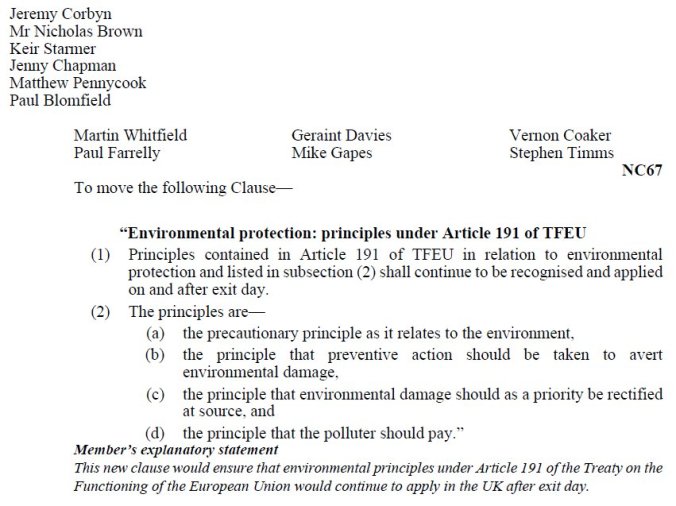
For example, last night Labour put up an amendment which would have ensured that the EU’s “precautionary principle” over environmental legislation would be protected and the Tories voted is down 313-297.
This represents the clearest sign yet that the Tories are planning a post-Brexit regulatory slash-and-burn.
It’s important to consider just what the precautionary principle is and why it is important.